Author: Amiel Pineda

  • The Influence of Filipino Music on Global Pop Culture

    The Influence of Filipino Music on Global Pop Culture

    P-pop's global influence stems from its unique blend of traditional Filipino music and Western pop styles. This fusion is evident in the music of groups like SB19 and Bini, which have achieved success on international platforms such as Billboard and Spotify. Their songs often incorporate Tagalog lyrics, showcasing Filipino identity and resonating with a global fanbase. This fanbase is passionate and actively promotes P-pop, further expanding its reach and influence. The genre's future looks promising, with continued growth and exciting collaborations on the horizon.

    A Unique Musical Blend

    eclectic sound fusion experience

    P-pop's unique sound is a deliberate blend of diverse musical styles****. This fusion of sounds isn't accidental, but rather a thoughtful crafting of a sound that's both familiar and uniquely Filipino.

    Western pop, K-pop, and J-pop influences are skillfully blended, resulting in a vibrant tapestry of sounds. Upbeat tempos and catchy hooks are instantly recognizable elements borrowed and adapted from these genres.

    Lyrics in P-pop reflect the country's linguistic diversity**. Tagalog lyrics create a strong connection to Filipino audiences, while Taglish, a mix of Tagalog and English, reflects the country's linguistic reality**. Regional dialects sometimes appear, adding another layer of authenticity and cultural depth. This thoughtful integration resonates with a broad spectrum of listeners.

    P-pop's genre fusion extends beyond lyrics to its rhythm and instrumentation. Influences from various sources are creatively interwoven to produce something refreshingly new.

    This conscious blending of sounds speaks volumes about P-pop's evolution and its position on the global stage****. It's not merely a matter of imitation; it's a masterful act of creation, demonstrating the power of genre fusion to create something truly unique.

    Global P-Pop Recognition

    Filipino pop music, or P-pop, has achieved significant global recognition****. This is evident in its ability to transcend national borders, fueled by streaming platforms and a passionate global fanbase.

    SB19 and Bini are leading ambassadors of this genre, captivating audiences worldwide with their unique blend of Filipino and international sounds.

    International recognition is tangible, with Sarah Geronimo's Billboard Women in Music Award solidifying P-pop's growing influence.

    Collaborations with international artists have opened doors for Filipino artists to showcase their talent on a global stage. The success of groups like Bini, with millions of views on their music videos, demonstrates the genre's appeal.

    P-pop can compete with and even surpass established international artists on popular streaming platforms, further cementing its global presence.

    P-pop's increasing popularity has boosted the overall visibility of the Filipino music industry, attracting international attention. The fusion of traditional Filipino elements with global sounds has led to a uniquely vibrant and widely appreciated musical style.

    This global success is driven by catchy tunes and the artists' ability to share their culture confidently through music.

    Cultural Significance

    cultural importance and influence

    P-pop is a powerful vehicle for cultural preservation and global exchange. It incorporates elements of Filipino culture, including Tagalog lyrics and regional dialects, which showcase the country's linguistic diversity and strengthen cultural identity.

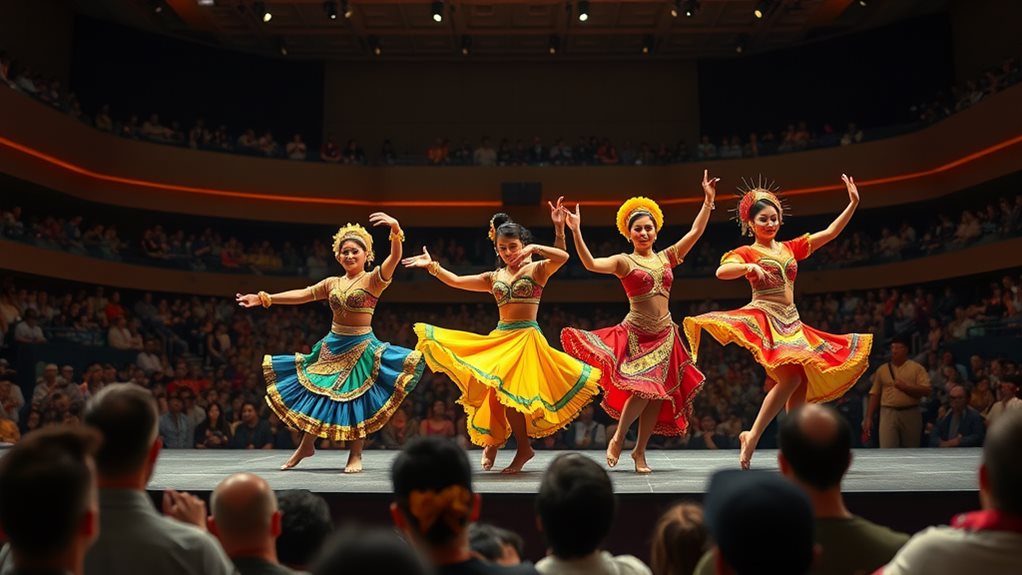
    For example, music videos often feature traditional Filipino houses and costumes, highlighting the nation's rich heritage.

    P-pop directly addresses themes of Filipino identity, resilience, and pride. Artists like VXON and ALAMAT create multifaceted portrayals of what it means to be Filipino, using Filipino languages to preserve and promote the country's musical traditions.

    This cultural significance is evident in their work, which explores the complexities of Filipino identity.

    P-pop's global reach contributes to cross-cultural understanding. Streaming platforms connect the genre with diverse audiences worldwide, fostering a global exchange of ideas and perspectives.

    Collaborations with international artists expand its appeal, introducing Filipino culture to new listeners.

    Relatable themes and issues in P-pop create a dialogue across cultures, building appreciation for Filipino values and traditions.

    P-pop celebrates both the country's rich heritage and modern trends. It seamlessly blends Western and Asian influences, creating a fresh sound while remaining firmly rooted in its cultural identity.

    The genre's impact extends beyond music, influencing fashion, social activism, and cultural conversations within Filipino society. This has led to a renewed sense of Pinoy pride and boosted tourism.

    Ultimately, P-pop acts as a vibrant ambassador, showcasing the Philippines' vibrant cultural identity on a global stage.

    Industry Influence

    Filipino pop music's cultural impact extends to the music industry itself.

    P-pop artists have gained international recognition, with SB19 and Bini receiving global acclaim**. This is further solidified by Sarah Geronimo's recognition at the Billboard Women in Music Awards**, demonstrating the genre's global presence.

    P-pop's dominance on music streaming platforms is a significant trend. Filipino pop tracks consistently top local charts, sometimes even outperforming international superstars. This surge in streaming has created new revenue streams for Filipino artists, highlighting the genre's immense potential.

    Artist collaborations have bridged cultural gaps and garnered international attention. P-pop groups have embarked on international tours, expanding their fanbase and influencing global industry trends. The unique blend of Western and Asian musical elements in P-pop has made it relatable and appealing to a diverse global audience.

    The economic impact of P-pop is undeniable. It has contributed to the growth of the Filipino music industry and boosted the country's tourism sector through its growing international popularity.

    This growth has also led to greater diversity within the broader OPM landscape, as Filipino artists experiment with new sounds and styles.

    The Power of Fandom

    fandom s influence and impact

    The Power of Fandom Fuels P-pop's Global Rise****

    A dedicated fan base drives P-pop's global success. Fans' passionate engagement is key to this success, going beyond just listening to actively participating in the creation and dissemination of P-pop's narrative.

    Fan-created content amplifies artists' reach. Online, fan-made content spreads quickly, increasing artists' visibility and influence. This is evident in the rapid spread of fan art, fan fiction, and fan videos on social media platforms.

    A global community builds around shared passion for P-pop. Across geographical boundaries, fans connect and share their love for P-pop, fostering a sense of community and belonging. This is seen in the numerous online forums, social media groups, and fan meetups dedicated to P-pop.

    Fan engagement fuels artists' recognition and industry growth. The fan-driven ecosystem directly influences the industry's trajectory, with fan engagement playing a significant role in building lasting impacts beyond streaming numbers.

    For instance, fans' enthusiastic support has led to P-pop artists performing at international music festivals and winning prestigious awards.

    Fan engagement translates to global recognition and cultural ambassadorship. Fans act as cultural ambassadors, showcasing Filipino culture and P-pop's unique blend of Western and Asian influences worldwide.

    This is evident in the global response to P-pop's music videos, which often feature traditional Filipino clothing, dance, and instruments.

    Strong fan communities build global audiences and drive measurable success. Passionate fans aren't just listeners; they're active participants, transforming P-pop into a global movement.

    This is seen in the significant increase in streaming numbers, social media virality, and concert ticket sales, all driven by fan enthusiasm and dedication.

    Broader Cultural Impact

    P-pop's Global Rise Fosters Cultural Exchange and Social Change

    P-pop's global popularity extends beyond entertainment, significantly impacting Filipino culture and its global perception. P-pop influences social identity by shaping fashion trends and lifestyle choices among Filipino youth. For instance, P-pop fashion often blends Western and Asian styles, promoting cultural diversity and creating a unique aesthetic that resonates globally.

    P-pop artists serve as role models, promoting positive values and addressing social issues. Their music fosters dialogue on mental health and national unity, using their platform to create positive social change. P-pop's global reach promotes Filipino culture, introducing traditions, language, and values to a wider audience. This cultural exchange enriches both Filipino and international perspectives, generating increased tourism and revenue.

    P-pop's broader cultural impact is multifaceted:

    Positive Impact Emotional Resonance
    Fashion trends influenced by P-pop Youth emulate style; sense of belonging
    Promoting self-love and mental health Empowerment, hope, and healing
    Showcasing Filipino cultural heritage Pride, connection to roots
    Economic growth through tourism Opportunity, prosperity
    Global cultural exchange Understanding, appreciation

    This cultural impact strengthens social identity by promoting cultural diversity and empowering Filipinos globally. P-pop's captivating power drives a dynamic interplay between music, culture, and social change.

    Filipino Music's Evolution

    filipino music s cultural transformation

    The Evolution of Filipino Music****

    Filipino music has a rich and vibrant history shaped by centuries of cultural exchange and artistic innovation. Its evolution is marked by a constant interplay between traditional influences and musical fusion.

    Pre-colonial music laid the foundation with instruments like the kulintang and gong. These traditional instruments set the stage for the cultural exchange that would follow.

    Spanish colonization introduced Western melodies and dances, enriching the existing musical landscape. This blending of styles can be seen in the traditional Filipino dance, Tinikling, which combines Spanish footwork with indigenous rhythmic patterns.

    American influence brought in jazz, blues, and rock and roll, sparking the creation of genres like Philippine rock.

    The 1950s and 1960s saw the rise of OPM (Original Pilipino Music), showcasing a unique blend of traditional and Western elements.

    OPM reflected the musical fusion of indigenous rhythms and Western harmonies. The Manila Sound of the 1970s, characterized by upbeat disco influences, captivated a generation.

    Later, Pinoy rock and pop emerged, showcasing the country's talent for adapting and reinventing global trends.

    From folk songs to modern OPM, Filipino music continues to evolve, a testament to the enduring creativity of Filipino musicians.

    The blending of traditional influences with contemporary styles continues to shape the ongoing narrative of Filipino music, constantly pushing boundaries and inspiring future generations.

    P-Pop's Global Reach

    P-pop's Global Reach

    Filipino pop music, or P-pop, has achieved significant global recognition by building on the foundation of OPM's innovative fusion of traditional and Western sounds. P-pop artists like SB19 and Bini have charted on Billboard and Spotify, showcasing the genre's international appeal.

    Social media platforms like TikTok, Instagram, and YouTube play a crucial role in P-pop's global reach by facilitating direct artist-fan interaction, fostering strong global communities, and fueling international collaborations. The virality of P-pop music videos and songs on these platforms generates millions of views and streams, expanding their reach exponentially.

    P-pop's cultural significance contributes to its global appeal. Its unique blend of Western and Asian sounds with Tagalog lyrics creates a relatable yet exciting soundscape for both Filipino and international audiences. This fusion showcases Filipino culture while fostering a sense of Pinoy pride.

    P-pop's achievements on various platforms include:

    Platform Impact Example
    Billboard Charts Global chart success SB19, Bini
    Spotify Charts Streaming dominance in Philippines and beyond Bini
    YouTube Massive viewership of music videos Sarah Geronimo's "Tala"

    Technological advancements have also fueled P-pop's global expansion. Digital streaming and virtual concerts have broadened access to this music, facilitating international collaborations and enhancing P-pop's variety and appeal.

    Future of Filipino Music

    evolving sounds cultural expression

    The future of Filipino music looks promising, driven by several factors. The music events market is expected to grow, reaching $83.58 million by 2024, as people, especially younger generations, prefer experiential spending. The increasing popularity of global genres like K-pop and EDM also contributes to this trend.

    International collaborations are on the rise, with the Philippines being a "trigger market" for global music trends. This is evident in collaborations between local and international artists, such as K-pop group BTS with Filipino singer-songwriter Inigo Pascual.

    Digital platforms will play a key role in the future of Filipino music, with online ticketing and streaming services becoming more prominent. This will make it easier for artists to reach a wider audience and for fans to access music.

    The unique Filipino sound****, which blends Tagalog, English, and other influences, will continue to attract a global audience.

    Regional music scenes, such as those in Cebu and Davao, are also gaining momentum, diversifying the musical landscape beyond Manila.

    The integration of local languages****, including "Taglish," will continue to resonate internationally. This, combined with projected revenue growth and increased ticket sales, indicates sustained expansion in the music industry.

    Embracing digital platforms and international collaborations** is crucial for the Philippine music industry to create a lasting global impact** and build a truly global Filipino musical identity.

    Questions and Answers

    What Are the Biggest Challenges Facing P-Pop?

    Intense competition is a significant challenge facing P-Pop, with numerous groups vying for attention in a crowded market. For instance, the K-Pop industry, which heavily influences P-Pop, has over 100 active groups, making it difficult for P-Pop groups to stand out.

    Management issues also hinder industry growth, as poor management can lead to misunderstandings between artists and their teams, affecting the quality of music and performances. For example, disagreements over creative direction or contractual obligations can result in delayed album releases or cancelled tours.

    Cultural appropriation concerns are another challenge, as P-Pop groups may be accused of borrowing cultural elements from other countries without proper understanding or credit. This can lead to backlash from fans and critics, damaging the group's reputation and credibility.

    Balancing fan engagement with artist well-being is crucial, as excessive fan demands can negatively impact artists' mental and physical health. For instance, constant requests for content and interactions can lead to burnout, while ignoring fan engagement can result in a loss of popularity.

    How Does P-Pop Compare to K-Pop and J-Pop?

    P-pop's unique blend of cultural fusion sets it apart from K-pop and J-pop. Unlike K-pop, which has been heavily influenced by Western music styles, P-pop combines different cultural elements to create a distinct sound. J-pop, on the other hand, is characterized by its diverse range of Japanese music styles. While P-pop's global reach is expanding, it still lags behind K-pop in terms of international success.

    Which P-Pop Artists Are Most Popular Globally?

    Sarah Geronimo and SB19 are the most popular P-Pop artists globally. They have gained international recognition through their collaborations and appearances at various festivals, increasing their global reach. BINI and BGYO are emerging as rising stars, further expanding the global presence of P-Pop.

    Is P-Pop Profitable for Filipino Artists?

    P-pop revenue streams are diverse and profitable for Filipino artists. The market expansion of P-pop has led to various revenue streams, including merchandise sales, concert tickets, music streaming, and brand deals. For instance, Filipino P-pop groups like SB19 and 4th Impact have generated significant income from merchandise sales, such as T-shirts, posters, and other items, during their concerts and fan meets. Additionally, these groups have also earned money from concert tickets, with some shows selling out quickly. Streaming platforms like Spotify, Apple Music, and YouTube Music have also contributed to their revenue through royalties. Furthermore, brand deals with companies like food chains, beverage brands, and clothing lines have added to their income.

    How Has P-Pop Impacted Filipino Identity?

    P-pop has become a powerful tool for Filipino identity formation, fostering a sense of pride and unity among Filipinos worldwide.

    This is evident in the way P-pop fuels cultural expression, allowing individuals to connect with their heritage and express themselves through music. For instance, P-pop groups like SB19 and 4th Impact have gained massive followings, inspiring fans to learn more about Filipino culture and language.

    P-pop has also bridged the gap between diaspora communities, creating a shared experience that transcends geographical boundaries.

    Through social media platforms and online music streaming, P-pop has reached Filipinos living abroad, providing a sense of connection to their roots. For example, P-pop concerts and events have become a hub for Filipino communities to gather, celebrate their heritage, and feel a sense of belonging.

  • Filipino Dance Notation Systems: Past and Present

    Filipino Dance Notation Systems: Past and Present

    Early Filipino dance lacked standardized notation**. Traditional methods relied on oral transmission** and observation, making it difficult to document and preserve dances. This approach was limited, as it relied on the memory and skills of the dancers and instructors.

    Modern notation systems offer more precise documentation. Labanotation and Benesh are two examples of modern systems that provide a more detailed and accurate way of recording dance movements. However, adapting these systems to Filipino dance styles presents unique challenges, such as capturing the nuances of indigenous and colonial influences.

    Aquino's system provides a valuable framework. Specifically, it is well-suited for indigenous dances, offering a more comprehensive approach to documenting and preserving these traditional dances.

    The future of dance notation involves digital tools and collaborations. Integrating digital tools and collaborations will enable the creation of a comprehensive archive, providing a more efficient and effective way of documenting, preserving, and sharing Filipino dances.

    A History of Filipino Dance

    evolution of filipino dance

    Filipino dance is a rich tapestry of cultural influences, reflecting the country's complex history. From its pre-colonial roots to its modern manifestations, Filipino dance has been shaped by various cultural traditions.

    Indigenous movements played a significant role in pre-colonial life. These dances served spiritual, celebratory, and narrative purposes. For example, the Dugso, Sohten, and Lawin-Lawin dances, preserved by groups like the Higaonon, showcased cultural storytelling through mimicry and ritual.

    The Binalayan dance, which vividly portrays a hen, chicks, and hawk, demonstrates the power of indigenous movements in recreating nature.

    The arrival of Muslim traders in the 14th century introduced new influences. The Singkil, a Maranao dance, exemplifies this, narrating a princess's escape from an earthquake through graceful movements. This dance reveals how cultural storytelling blended Islamic narratives with local customs.

    Similarly, the Yakan's Pangsak, with its intricate footwork, showcases the fusion of traditions.

    Spanish colonization further blended cultural influences. Dances like Maglalatik, a mock war between Moro and Christian dancers, reflect the syncretism of colonial times. The Maria Clara dances, incorporating Spanish court style, demonstrated the adaptation and evolution of indigenous movements.

    Modern Filipino dance continues to thrive. Ancient dances are performed in vibrant costumes at festivals, preserving cultural storytelling. The Tinikling, a popular example, has even entered the international arena.

    While the preservation of tribal dances continues, modern iterations reflect a constant evolution, demonstrating the enduring power of Filipino dance.

    Systems of Dance Notation

    Dance notation systems are essential for preserving and analyzing dance movements. They allow for detailed documentation and reconstruction of movements, which is crucial for movement analysis. These systems range from general methods applicable across dance styles to those specific to a particular genre.

    Labanotation uses symbols for direction and quality, while Benesh employs a musical stave to represent body parts. Eshkol-Wachman focuses on body coordinates, and the older Beauchamp-Feuillet system is primarily used for Baroque dance. The now-obsolete Stepanov system is significant for its role in documenting Imperial Russian Ballet.

    Specific dance notation systems cater to unique needs. Kahnotation is used for tap, Tango Notation for Argentine tango, Chamo's system for Korean dance, and Sutton DanceWriting is applicable across several forms. Early computerized systems, like DOM, represent a technological leap.

    The following table summarizes some of the general and specific dance notation systems:

    General Systems Specific Systems
    Labanotation Kahnotation
    Benesh Movement Notation Tango Notation
    Eshkol-Wachman Movement Notation Chamo System of Dance Notation
    Beauchamp–Feuillet Notation Sutton DanceWriting
    Stepanov System DOM (Dance on Microprocessor)

    These notation systems offer diverse approaches to movement analysis, each with strengths and limitations depending on the dance style, level of detail required, and technological resources available. Applications extend beyond mere documentation and include choreography reconstruction, copyright protection, and education. The evolution of these systems reflects dance's own dynamic nature.

    Safeguarding Cultural Heritage

    protecting cultural heritage sites

    Safeguarding Cultural Heritage through Dance Documentation****

    The Philippines' rich cultural heritage is reflected in its diverse folk dances, which require multifaceted strategies for preservation. Six volumes of dance documentation using Francisca Reyes Aquino's system**** have been published, detailing dances from various regions and incorporating indigenous dance terms to highlight their importance.

    Preserving Indigenous Recognition****

    To promote indigenous recognition, the documentation categorizes dances into "Dances of Non-Christian Filipinos" and "Dances of Christian and Lowland Filipinos," showcasing the nation's diverse heritage.

    Dance portrays the local narrative, reifying cultural identities and maintaining heritage despite external influences.

    Research Methods

    National workshops, interviews, and observations contribute to the research, with university faculty from music conservatories and physical education departments assisting in documentation.

    Community engagement is vital, with community members participating in documenting their traditions and collecting money during performances like the Pantomina.

    Cultural Preservation through Adaptation

    Dances are adapted while respecting their core meanings, as seen in the Cariñosa and Pandanggo sa Ilaw.

    This nuanced approach to cultural preservation ensures the dances' continued relevance.

    Groups like the Bayanihan showcase dances nationally and internationally, further promoting cultural heritage.

    Diverse Forms of Dance

    The Philippines is home to a diverse array of traditional dances, reflecting its rich cultural heritage and historical influences.

    The country's folk dances are a testament to its complex history, with each style carrying unique stories and traditions. For instance, the Cariñosa is a Spanish-influenced courtship dance characterized by its grace and elegance, while the Pandanggo sa Ilaw is a vibrant dance performed with oil lamps balanced precariously on the head and hands.

    Regional variations in dance styles are striking. In the southern region of Mindanao, the Kappa Malong-Malong is a traditional Maranao dance that celebrates the malong garment, whereas the Singkil is a visually stunning dance characterized by its intricate movements and bamboo poles.

    The indigenous traditions of the Higaonon and Kalinga peoples are also well-documented, with their dances meticulously notated to preserve their unique steps and cultural significance.

    Filipino dance is a blend of indigenous and Western influences. The Pantomina, a wedding dance with pantomime elements, showcases this fusion of styles. In contrast, Hispanized and Christianized dances, such as the Rigodon and Cuadrilla, reflect lowland Filipino traditions and demonstrate the interplay between historical contexts and cultural expressions.

    Future of Dance Documentation

    evolving dance preservation strategies

    Filipino dance documentation requires embracing digital advancements to preserve its vibrancy and complexity.

    Digital notation software is revolutionizing the way dance movements are created, edited, and animated. For instance, sophisticated software integrates motion capture for unparalleled precision, allowing choreographers to refine their craft.

    Online platforms offer collaborative tools, fostering global connections among choreographers and dancers. This shared digital archive will be accessible worldwide, preserving cultural heritage.

    Virtual and augmented reality (VR/AR) presents groundbreaking opportunities for dance documentation.

    Virtual dance studios enable remote learning and practice, fostering international collaborations. 3D models in VR/AR enhance visualization, providing a clearer understanding of complex movements.

    Interactive feedback mechanisms within VR/AR refine technique, resulting in more accurate and nuanced notations. Digital libraries and searchable databases will categorize dance styles, notations, and relevant historical contexts.

    Education will undergo a significant transformation.

    Dance notation will be integrated into curricula alongside interactive learning tools, making it more accessible.

    Training programs for notation specialists and online courses will ensure a skilled workforce capable of utilizing digital advancements.

    Collaborative tools, such as online forums and shared document platforms, will facilitate international collaborations on projects, simplifying the process of documenting various forms of Filipino dance.

    The future of dance documentation is about creating a living, evolving archive—a testament to Filipino dance's dynamic spirit.

    Questions and Answers

    Who Invented the Most Common System?

    Francisca Reyes Aquino developed the most common system of Philippine dance. This system is a cornerstone of Philippine dance's historical development and cultural significance, impacting its preservation and education.

    Are There Online Dance Notation Resources?

    Online dance notation resources are available. These resources include digital archives, notation software, online tutorials, and community forums dedicated to dance notation. For instance, the Dance Notation Bureau provides an online archive of dance scores and publications. LabanWriter and DanceForms are examples of notation software that allow users to create and edit dance scores. Online tutorials, such as those found on YouTube, offer step-by-step instructions on how to use notation systems like Labanotation. Additionally, community forums, such as DanceNotation.org, provide a space for users to ask questions, share knowledge, and discuss dance notation.

    How Accurate Is Dance Notation, Really?

    Dance notation's historical accuracy varies. The accuracy of dance notation depends on the notation system used. Older systems lack detail, making it difficult to accurately recreate a dance. For example, the Feuillet notation system, developed in the 17th century, only indicates the movement of the feet and legs, leaving out important details about arm and hand movements.

    Modern notation systems offer greater anatomical accuracy. These systems, such as Labanotation and Benesh Movement Notation, provide more detailed descriptions of body movements, including the position and orientation of body parts. They can't capture nuances of performance, however, such as the dancer's expression, energy, and style.

    Is It Costly to Learn Dance Notation?

    The cost of learning dance notation depends on various factors.

    Learning resources play a significant role in determining the cost. For instance, using specialized software like DanceForms or LifeForms can be expensive, with prices ranging from $200 to $500. On the other hand, online tutorials and YouTube videos can be free or low-cost.

    Additionally, tuition fees for dance notation classes vary depending on the instructor, location, and duration of the course. Private lessons can cost between $30 to $100 per hour, while group classes may range from $10 to $50 per session.

    Before committing to learn dance notation, it is essential to consider your budget and available learning resources to make an informed decision.

    Can Anyone Learn Dance Notation Easily?

    Mastering dance notation requires effort and dedication. The accessibility of dance notation systems for beginners varies greatly, depending on the chosen learning method. For instance, the Labanotation system uses abstract symbols to represent movement, making it challenging to learn for those without prior dance experience. On the other hand, the Benesh Movement Notation system is more visual, using stick figures to illustrate movement, which might be more accessible to beginners with a background in dance or visual arts. Dedicated study and practice are essential to overcome the unique complexities of each system.

  • The Role of Music in Philippine Indigenous Rights Movements

    The Role of Music in Philippine Indigenous Rights Movements

    Music plays a vital role in Philippine indigenous rights movements. It helps preserve cultural heritage by promoting shared identity and creating economic opportunities through cultural tourism. For example, the T'boli people of Mindanao showcase their traditional music and dance to tourists, generating income and pride in their cultural traditions.

    Music is a powerful tool for raising awareness and advocating for indigenous rights. Protest songs and musical narratives bring attention to issues like land rights, which are enshrined in the Indigenous Peoples' Rights Act (IPRA). The song "Lupa at Langit" by the Philippine indigenous group Kalinga, for instance, highlights the struggle for ancestral land and self-determination.

    Cross-cultural collaborations are essential in expanding the reach of indigenous music. These collaborations foster innovation while preserving traditional music styles. The fusion of indigenous music with modern genres, such as rock and pop, has created a new wave of indigenous artists who appeal to a broader audience. This, in turn, raises awareness about indigenous issues and promotes cultural understanding.

    The combination of cultural preservation, community building, and political action is crucial in the ongoing struggle for indigenous rights. Music has become an integral part of this struggle, empowering indigenous communities to assert their rights and defend their cultural heritage.

    Preserving Cultural Heritage

    protecting cultural traditions today

    Preserving Cultural Heritage through Music

    In Philippine Indigenous communities, music plays a vital role in maintaining cultural identity. Cultural documentation is essential for preserving this heritage. The kulintang ensemble, consisting of five traditional instruments – kulintang, agung, dabakan, babandir, and gangingan – is a prime example. These instruments are crucial for the unique sound of Indigenous Filipino music, and their preservation requires hands-on teaching, ensuring direct engagement with the instruments themselves.

    This active learning helps retain Indigenous practices, resisting external influences.

    Comprehensive cultural documentation is crucial for preserving cultural heritage**. Video recordings** and archives, such as those found in the Samar Island Natural Park archives, capture the wisdom of elders and their cultural practices. Research initiatives, like *MusikaPilipinas*, meticulously map and define the Philippine music industry, including its socio-cultural and economic dimensions.

    Archival materials – documents and recordings – are invaluable for understanding and preserving the history of Indigenous music. Digital archiving makes this heritage accessible to wider audiences and future generations; collaborations between universities and research institutions are key in this endeavor.

    Effective preservation incorporates the use of traditional instruments within ongoing cultural practices****. This approach ensures the continuation of cultural heritage and prevents the loss of Indigenous traditions.

    Empowering Indigenous Communities

    Preserving Indigenous Musical Heritage Empowers Communities

    Preserving Indigenous musical heritage is a powerful tool for community empowerment that goes beyond documentation. Music workshops facilitate cultural memory recall** by encouraging community storytelling and the sharing of knowledge through hands-on instrument handling and peer teaching. This approach fosters a sense of shared musical identity** as community members participate in new music composition and professional recordings, strengthening their cultural self-definition.

    Traditional Music Education Innovates for the Future

    Promoting traditional music education isn't just about rote learning; it's about engaging with the past while innovating for the future. Hands-on teaching methods and the incorporation of modern genres alongside traditional ones enrich cultural expression, strengthening community bonds through shared experiences.

    For example, active participation in cultural festivals and rituals**** connects community members with diaspora communities, strengthening their storytelling and musical identity.

    Community Engagement Fosters Collective Identity****

    Community engagement extends beyond workshops, involving collaborative projects that foster a sense of collective identity. Collective inquiry and experimentation, grounded in social history, strengthen community members' sense of belonging and allow for the exploration of their musical identity.

    For instance, creating sustainable livelihoods through tourism and cultural performances**** while preserving traditional methods and ecological sustainability empowers communities to shape their own future.

    Legal and Political Advocacy

    justice and equality promotion

    The Philippines has established legal frameworks to protect indigenous peoples' rights, but significant challenges remain.

    The Indigenous Peoples Rights Act (IPRA) of 1997 recognizes ancestral land rights and self-determination, but faces enforcement issues**. The National Commission on Indigenous Peoples (NCIP), tasked with overseeing these rights, has been criticized for its ineffectiveness**.

    Litigation strategies are vital tools in protecting ancestral lands. However, indigenous communities often lack the resources to engage in protracted legal battles.

    Policy advocacy, driven by organizations like the Cordillera Peoples' Alliance (CPA), has played a crucial role in shaping legislation. The CPA's successful lobbying for IPRA's inclusion demonstrates the power of sustained advocacy.

    Threats against advocacy efforts exist, including red-tagging and violence against activists.

    The Bangsamoro Organic Law (BOL) offers a different model, granting the Bangsamoro government considerable authority over indigenous rights within its territory. This involves a shift in focus from national policy advocacy towards regional legislative action to address local jurisdictional challenges.

    International support helps mitigate some threats, providing indigenous communities with crucial external backing for both litigation strategies and broader policy advocacy efforts.

    Cultural Exchange and Innovation

    Indigenous Filipino Music: A Balance of Tradition and Innovation

    Indigenous Filipino music, particularly kulintang, demonstrates a dynamic interplay between tradition and innovation, actively shaping how cultural heritage is maintained and disseminated. The instruments—kulintang gongs, agung, dabakan, babandir, and gangingan—are central to preserving this tradition. This isn't solely about rote learning; it's about hands-on teaching and imitation, fostering a deep connection to the music's cultural significance.

    Kulintang Music as a Symbol of Indigenous Identity

    Kulintang music, used in various festivities, functions as a potent symbol of Indigenous identity. For example, it is often played during rituals, ceremonies, and celebrations, emphasizing its importance in Filipino cultural heritage.

    Cross-Cultural Collaborations: Preserving Tradition and Attracting New Audiences

    Cross-cultural collaborations are transforming how this music is experienced. Modern musicians are incorporating kulintang into contemporary genres, creating exciting traditional adaptations, while ensuring respectful context. These innovations are keeping the tradition relevant to younger audiences.

    Types of Collaborations and Their Impact

    Type of Collaboration Description Impact
    International collaborations Filipino musicians abroad working with local artists Expands the music's reach, preserving traditions in the diaspora
    Local collaborations Universities, organizations in the Cordillera Supports teaching, research, and community engagement
    Cross-genre collaborations Blending kulintang with hip-hop, R&B, electronic music Attracts new audiences, creates unique soundscapes
    Intergenerational collaborations Master musicians mentoring young people Ensures the continuity of traditional knowledge and performance
    Community-based collaborations Festivals, workshops, performances engaging local communities Raises awareness, strengthens cultural identity

    The Power of Music: Building Bridges and Celebrating Diversity

    These collaborations aren't simply about blending sounds; they're about building bridges, fostering understanding, and celebrating diverse cultural expressions. The ability of music to transcend boundaries and connect people across generations and cultures is a powerful tool for cultural exchange and innovation.

    Economic and Social Impact

    economic and social effects

    The preservation of Filipino indigenous music has significant economic benefits. Revenue is generated through sales of recordings and performances, directly supporting local economies. For instance, the folklorization of traditions like the Maguindanao kulintang attracts cultural tourism, further boosting economic activity within indigenous communities.

    Government initiatives, such as the Philippine Creative Industry Law (PCIL), aim to foster economic sustainability within the creative sector, including indigenous music, through strategic funding and planning.

    Moreover, music often underscores the importance of protecting ancestral lands, crucial for the economic well-being of communities threatened by unsustainable practices like mining and logging. This economic empowerment, facilitated by music, strengthens indigenous communities' ability to defend their land rights against external pressures.

    The power of music also raises awareness about indigenous struggles and rights, influencing public opinion and policy. It fosters community unity and cultural identity, particularly amidst urbanization and external threats.

    Protest songs conveying messages against violence and oppression contribute to social movements, stimulating public engagement and activism. Music workshops and recordings validate indigenous cultural practices, offering platforms for storytelling and preserving historical knowledge. This ensures intergenerational transmission of cultural practices, maintaining continuity.

    Music becomes a central tool in promoting cultural tourism, showcasing the richness and diversity of Philippine indigenous cultures, and contributing to their economic sustainability.

    Educational Community Engagement

    Educational initiatives are crucial in preserving and promoting Philippine indigenous music**. These initiatives foster community engagement and intergenerational knowledge transfer through community workshops**.

    Participatory learning methods are used in these workshops, where hands-on instruction and peer-to-peer learning encourage immediate instrument engagement. For example, workshops often focus on traditional instruments like the kulintang, blending traditional and contemporary musical forms.

    The success of these programs relies on mentorship from master musicians****. They pass down knowledge through demonstration and direct instruction. Initiatives like the House of Gongs combine traditional methodologies with innovative approaches, such as video recording and archiving, to preserve indigenous wisdom.

    This documentation ensures the transmission of cultural expressions across generations, safeguarding them for posterity.

    Collaborative projects with universities and community organizations amplify the impact. These partnerships increase the engagement of younger generations through community workshops and educational programs.

    The integration of modern elements, while preserving authenticity, ensures the continued relevance of indigenous music. This approach emphasizes accountability in maintaining tradition while embracing innovation.

    The Future of Indigenous Music

    empowering indigenous musical heritage

    Preservation is key to the future of Philippine indigenous music. To achieve this, it's essential to prioritize digital preservation by meticulously archiving audio and video recordings of traditional performances and the knowledge of elders. This involves supporting community-led initiatives and promoting instrumental heritage, such as the kulintang.

    Community engagement is vital. Actively engaging communities is necessary to foster intergenerational transmission of musical skills and the production of traditional instruments. This can be achieved by supporting community-led initiatives and promoting instrumental heritage.

    Adaptation to modern contexts is necessary. The adaptation of indigenous music to modern contexts is crucial. This can be done by exploring global fusion, integrating traditional sounds into contemporary genres. For example, collaborations with artists from diverse backgrounds can leverage technology to expand reach and accessibility via streaming platforms.

    However, it's essential to address the economic implications of this fusion, including low payouts from streaming services.

    Policy support is essential. Stronger legislative frameworks are necessary to protect intellectual property rights and provide funding for research, documentation, and educational programs focused on indigenous music.

    Comprehensive research, such as Musika Pilipinas, can inform policy decisions and ensure that support mechanisms are evidence-based. This includes prioritizing digital preservation strategies within these policy frameworks.

    Questions and Answers

    What Specific Legal Cases Used Music as Evidence?

    Specific legal cases have used music as evidence.

    One notable example is the "Blurred Lines" copyright infringement case. In 2015, the jury ruled that Robin Thicke and Pharrell Williams' song "Blurred Lines" infringed on Marvin Gaye's 1977 song "Got to Give It Up." The court considered the similarities in the songs' melodies, harmonies, and rhythms as evidence.

    Another example is the "Stairway to Heaven" copyright infringement case. In 2016, the jury ruled that Led Zeppelin's iconic song "Stairway to Heaven" did not infringe on Spirit's 1968 song "Taurus." The court analyzed the songs' musical compositions, including their guitar intros and chord progressions, as evidence.

    These cases demonstrate how music can be used as evidence in legal disputes, highlighting the importance of copyright law in the music industry.

    How Does Music Affect Inter-Tribal Relations?

    Music plays a significant role in fostering inter-tribal relations. When different tribes come together to share and celebrate their unique cultural expressions through music, it strengthens community bonding and promotes understanding among diverse groups. For example, in Africa, the Festival in the Desert brings together Tuareg and other tribes from across the Sahara region to share their traditional music and dance, promoting cross-cultural understanding and cooperation. Similarly, in North America, the Powwow gatherings bring together Native American tribes to celebrate their rich cultural heritage through music, dance, and storytelling, fostering unity and mutual respect among participating tribes.

    What Are the Ethical Considerations of Music Commercialization?

    Commercializing music raises ethical concerns that must be addressed. When music is commercialized, it's essential to consider the cultural context and authenticity of the music. Cultural appropriation, where one culture takes and uses elements of another culture without permission or proper understanding, is a significant ethical concern. For example, a music artist using traditional African rhythms without giving proper credit or compensation to the original creators is an instance of cultural appropriation.

    Fair profit sharing models are crucial for equitable compensation. This means that all contributors to the music, including songwriters, producers, and performers, should receive a fair share of the profits. A fair profit sharing model ensures that everyone involved in creating the music is compensated appropriately, avoiding exploitation of any individual or group.

    How Is Music Used in Healing Ceremonies?

    Music plays a vital role in Philippine healing ceremonies. In these ceremonies, music is used to summon spirits, believed to facilitate the healing process. For instance, in some rituals, shamans use specific melodies to call upon ancestral spirits, seeking their guidance and assistance. Music also aids in conflict resolution by creating a calm atmosphere, allowing participants to open up and resolve disputes peacefully. Furthermore, music promotes community cohesion by bringing people together, fostering a sense of unity and collective healing.

    What Role Do Women Play in Indigenous Music?

    Women play a vital role in indigenous music, actively participating in cultural preservation and female empowerment. They shape the creation, performance, and transmission of indigenous music in various ways. For instance, in many indigenous cultures, women are the primary keepers of traditional songs and stories, passing them down to younger generations through oral tradition. Additionally, women often take on leadership roles in music and dance performances, showcasing their cultural heritage and promoting cultural understanding. By doing so, they not only preserve their cultural identity but also empower other women to take pride in their heritage.

  • Filipino Dance in Education: Teaching Cultural Heritage

    Filipino Dance in Education: Teaching Cultural Heritage

    Integrating Filipino Dance into Education

    Filipino dance can be effectively taught in educational settings to promote cultural heritage. Structured curricula are essential, combining traditional and modern techniques to provide a comprehensive understanding of Filipino dance. Teacher training is crucial, equipping educators with diverse pedagogical strategies to ensure they can effectively teach Filipino dance.

    Community Involvement is Vital

    Community involvement is key to strengthening Filipino dance education. Involving local communities in dance performances and workshops fosters engagement and showcases the beauty of Filipino dance. This approach helps to build relationships between schools and communities, promoting a deeper appreciation for cultural heritage.

    Overcoming Challenges

    Declining interest in Filipino dance is a significant challenge. Innovative teaching methods, such as incorporating technology, can help to revitalize interest and make Filipino dance more appealing to students. Developing interactive online resources and virtual dance classes can also help to increase accessibility and engagement.

    Preserving Cultural Heritage

    The preservation of Filipino dance as a vital aspect of cultural heritage requires a multifaceted approach**. By integrating Filipino dance into education, providing robust teacher training**, and involving local communities, we can ensure the continued appreciation and preservation of this important cultural tradition.

    The Importance of Filipino Dance

    cultural significance of dance

    Filipino dance is a vital part of the nation's heritage and identity. The Philippines' rich dance history reflects its complex cultural past, showcasing influences from indigenous movements and various cultures that have interacted with the country. For example, the Cariñosa dance from the Spanish colonial period highlights the nation's history.

    Learning Filipino dance is more than just memorizing steps. It involves understanding the cultural context and appreciating the intricate details that tell stories of the past and the lives of Filipino people. By engaging with this intangible cultural heritage, individuals can develop a sense of national identity and pride.

    Filipino dance promotes cross-cultural understanding and empathy****. Understanding these dances allows people to engage with other cultures and appreciate their unique histories and traditions. This fosters global citizenship and a deeper connection with the community.

    Participating in Filipino dance has numerous benefits. It demands physical skill, developing agility, coordination, and rhythm.

    Integrating Dance Into Curricula

    Effective Integration of Filipino Dance into Educational Curricula

    Effective integration of Filipino dance into educational curricula requires a well-structured approach. This approach must encompass curriculum design, pedagogical strategies, and the strategic use of technology. A well-structured course design is crucial for curriculum integration. This design should focus on content, form, atmosphere, and student interaction, adhering to established standards to ensure consistent learning outcomes.

    Dance Pedagogy and Student Engagement

    Dance pedagogy should prioritize personalized teaching and engaging activities to enhance learning efficiency. Incorporating Philippine folk dances into physical education programs presents a unique opportunity for cultural heritage preservation. However, limited class time and complex routines can hinder student engagement. To overcome this, teachers can break down complex routines into simpler steps and provide individualized feedback to students.

    Strategic Use of Technology

    Technology offers valuable tools for curriculum integration. Platforms like YouTube and learning management systems can enhance accessibility and engagement. However, technology should be used strategically to avoid over-reliance. The Technology Acceptance Model highlights the importance of perceived ease of use and usefulness in driving technology adoption. Teachers can create video tutorials and online discussion forums to supplement traditional teaching methods.

    Curriculum Design and Technology Integration

    Curriculum Aspect Strategy Outcome
    Curriculum Design Structured courses, standardized learning Consistent learning, improved understanding
    Dance Pedagogy Personalized teaching, engaging activities Increased student engagement, improved skills
    Technology Integration Strategic use of online platforms Enhanced accessibility, improved knowledge

    Student Interest and School Engagement

    Student interest in Filipino dance shows little variance across demographics. However, school engagement differs significantly across institutions. A strong positive correlation exists between individual interest and school-level engagement, underlining the crucial role of both in cultural heritage preservation. This highlights the importance of teachers and schools promoting cultural heritage and encouraging student participation.

    The Educators' Crucial Role

    empowering student success together

    Educators Play a Crucial Role in Preserving the Philippines' Cultural Heritage****

    The preservation of the Philippines' rich cultural heritage relies heavily on educators' ability to effectively teach traditional Filipino dances. As an educator, your responsibility isn't only to teach the steps and movements but also to convey the historical and social significance of these dances. This task requires understanding educator responsibilities that go beyond mere instruction.

    Challenges in Teaching Traditional Filipino Dances

    Teaching traditional Filipino dances can be complex, demanding extra time and effort. Additionally, modern influences and students' preference for contemporary styles often compete for their attention. Simply incorporating these dances into the curriculum isn't enough; educators need innovative strategies to engage students.

    Leveraging Technology to Enhance Learning

    Leveraging technology, such as YouTube and Facebook, offers opportunities to enhance the learning experience. For example, educators can use online tutorials to demonstrate dance routines, share videos of traditional Filipino dances, or create online communities to discuss the cultural significance of these dances.

    However, educators must carefully manage technology use to avoid distractions and ensure it supports the learning process.

    Fostering Student Engagement and Appreciation

    Student engagement is crucial to successful cultural transmission. Research shows that individual interest strongly correlates with school engagement, and technology can significantly boost this engagement.

    To foster a genuine love for traditional Filipino dances, educators must highlight their inherent beauty and value, counteracting the allure of more contemporary styles.

    Professional Development for Effective Teaching

    Ongoing professional development is essential for educators to hone their skills and adapt their teaching methods for maximum impact. This includes staying updated on best practices in teaching traditional Filipino dances, attending workshops and seminars, and networking with other educators to share effective strategies.

    Community Centers' Contributions

    Community centers play a vital role in preserving Filipino cultural heritage through dance. Their contributions involve offering educational programs that teach various dance forms, including those influenced by Spanish and indigenous cultures.

    These programs cater to diverse age groups and skill levels, allowing for intergenerational participation and knowledge transmission.

    Their approach to cultural preservation includes organizing performances and events. Community centers organize cultural performances showcasing a full repertoire of Philippine dances and music.

    These events often incorporate live Rondalla and Kulintang music, serving as platforms for cultural exchange between community members and artists.

    Community involvement is essential to their mission. Community centers actively engage with local communities through interactive workshops and events.

    They build connections with other organizations to broaden their reach and impact, encouraging participation not only as audience members but also as active learners and performers.

    This involvement is vital to the sustainability of their programs.

    Community centers function as non-profit organizations, relying on external support. They rely on donations, volunteers, and grants to support their mission.

    These centers have also adapted to the digital age, extending their reach through online programs.

    Their commitment to fostering cultural diversity and understanding is evident in their diverse programming and community outreach initiatives.

    Challenges and Future Steps

    future challenges ahead

    Challenges in Preserving Filipino Dance

    Filipino dance faces significant challenges in its transmission to younger generations. Student engagement is dwindling due to the appeal of modern dance styles and the perceived complexity of traditional routines. Moreover, the limited exposure of Filipino dance within school curricula exacerbates this issue.

    Addressing the Challenges

    To overcome these challenges, improved teacher training and curriculum development are crucial. Integrating Filipino dance into physical education programs and other subjects can raise its profile and make it more appealing. Incorporating technology and interactive elements can boost student engagement.

    Key Areas Needing Attention

    The following table highlights the key areas that require attention:

    Challenge Solution
    Declining Student Interest Diversify teaching methods; incorporate technology
    Curricular Limitations Develop richer, more comprehensive curriculum
    Lack of Teacher Training Provide ongoing professional development
    Limited Visibility Integrate dance into school events
    Rapid Societal Change Emphasize cultural relevance and value

    Ensuring Cultural Preservation

    Effective cultural preservation requires a multifaceted approach. Investing in teacher training, curriculum reform, and innovative teaching strategies is essential. By fostering student engagement and emphasizing the importance of cultural heritage, Filipino dance can remain a vibrant and integral part of the nation's identity.

    Questions and Answers

    What Are Some Common Filipino Dance Styles?

    Filipino dance styles showcase cultural diversity and regional heritage.

    Pandanggo sa Ilaw, a traditional dance from Lubang Island, involves balancing three oil lamps on the head and hands while performing intricate footwork. This dance style highlights the Filipino's skill and grace. In contrast, Tinikling, a popular folk dance from the Visayas region, involves tapping bamboo poles on the ground and dancing in between them. This dance style showcases the Filipino's agility and rhythm. These dances exemplify the rich cultural heritage of the Philippines.

    How Can I Find a Filipino Dance Class Near Me?

    Find Filipino dance classes near you by exploring local options and online resources.

    Check local schools, community centers, and cultural organizations in your area that offer Filipino dance instruction. These institutions often provide classes or workshops taught by experienced instructors.

    Search online for Filipino dance schools or studios that specialize in teaching traditional dances like Tinikling, Rigodon, or Pangalay. You can also look for online platforms that offer virtual classes or tutorials.

    Verify the credentials and experience of the instructors or schools you're interested in to ensure you're learning from qualified teachers.

    Are There Any Age Restrictions for Dance Classes?

    There are no age restrictions for dance classes. Dance programs cater to diverse age groups, offering age-appropriate instruction and ensuring accessibility for all. For example, some dance studios offer classes specifically designed for children as young as three years old, while others provide classes tailored to seniors or adults.

    What Are the Costs Associated With These Classes?

    Tuition fees vary widely due to several factors. Equipment costs are a significant expense, as programs may require specialized gear or machinery. For instance, a culinary class might need professional-grade kitchen appliances, while a photography course might require high-end cameras and lighting equipment. Venue expenses also impact overall costs, as programs may be held in rented spaces or require specific facilities. Additionally, instructor salaries are a major consideration, as experienced instructors often command higher rates. When budgeting, it's essential to consider these factors to get an accurate estimate of the total program cost.

    What Benefits Do Children Gain From Learning These Dances?

    Learning cultural dances brings numerous benefits to children.

    Cultural appreciation is one of the significant advantages, as it allows children to understand and respect diverse traditions and customs. For instance, learning traditional African dances helps children appreciate the rich cultural heritage of African communities.

    Physical fitness is another benefit, as these dances require physical movement, which improves overall health and well-being. Improved coordination results from the repetitive movements involved in dances like ballet or tap dancing. Teamwork is also developed, as many cultural dances require children to work together to perform intricate steps and formations.

    Self-expression is also enhanced, as children can convey emotions and ideas through movement. Furthermore, learning cultural dances helps children develop emotional intelligence, as they learn to recognize and manage their emotions. Creativity is also fostered, as children experiment with different dance styles and movements.

  • Modern Applications of Traditional Filipino Music in Therapy

    Modern Applications of Traditional Filipino Music in Therapy

    Traditional Filipino music can be used in therapy to improve mental and physical well-being. This approach has been shown to reduce stress and anxiety, improve mood, and even manage chronic pain. For example, the familiar melodies of the "Kundiman" or "Harana" can connect individuals to their cultural identity and unlock pent-up emotions, promoting emotional release and healing.

    Group sessions can build community and improve social interaction. In a group setting, participants can engage in activities such as playing traditional Filipino instruments, singing, or dancing together. This collective engagement can foster a sense of belonging and social connection, which is essential for overall well-being.

    Personalized sessions can tailor music therapy to specific needs. In one-on-one sessions, a trained therapist can use traditional Filipino music to address individual needs, such as managing pain or improving cognitive function. For instance, a therapist might use the "Tinikling" rhythm to help a patient with motor skills rehabilitation.

    The multisensory engagement of traditional Filipino music can enhance cognitive function and motor skills. By combining music, movement, and cultural expression, individuals can experience improved cognitive processing and motor control. This holistic approach can be particularly effective in healthcare settings, such as rehabilitation centers or hospitals.

    Cultural Significance in Healing

    healing through cultural practices

    Filipino music plays a significant role in healing, deeply rooted in the country's rich cultural heritage.

    The Kulintang, a pre-colonial musical ensemble from southern Philippines, is an example of this. Passed down through generations, the indigenous gongs weren't just music but a conduit for spiritual connection. The rhythmic beats and melodic patterns facilitated communication with the spirit world, forming a crucial part of healing rituals.

    Music is used for spiritual connection and healing in various Filipino cultures.

    In Maguindanao culture, chanting is used in shamanic practices to summon spirits and aid healing processes. The Babaylan and Baylan, traditional Filipino shamans, also incorporated music into their rituals. For example, the Ata Manobo's oral chants, passed down through generations, demonstrate the link between music, cultural heritage, and spiritual healing.

    These traditional practices are still maintained today through cultural regeneration initiatives.

    The Tao Foundation for Culture and Arts spearheads such initiatives, demonstrating the enduring significance of music in Filipino society.

    Modern perspectives on the therapeutic power of music have been shaped by these traditions, showcasing the interwoven nature of cultural heritage and spiritual connection in healing. The vibrations and frequencies of traditional music resonate not only with the physical body but also with the spirit, fostering a sense of well-being and deeper understanding of one's cultural identity.

    Therapeutic Uses of Music

    Music Therapy: A Wide-Ranging Therapeutic Tool****

    Music therapy is a powerful tool that has numerous applications in managing various physical and mental health conditions. It can significantly reduce anxiety and stress levels, potentially surpassing the effects of some prescription medications. This is achieved through carefully designed music interventions that can be tailored to individual needs.

    For instance, listening to music can lower stress hormones, while active music-making in therapy sessions, such as singing, playing instruments, or songwriting, can further alleviate stress.

    Therapeutic Outcomes of Music Interventions

    Research consistently shows that music interventions have a positive impact on therapeutic outcomes. Music therapy can improve mood, reduce pain perception, and better manage chronic conditions. Additionally, the physiological effects of music therapy are impressive, with potential benefits including lowered blood pressure, improved respiration, and increased overall relaxation.

    Cognitive and Motor Benefits

    Music therapy can also have a positive impact on cognitive function, particularly in individuals with neurodegenerative diseases. It can enhance motor skills and coordination, benefiting those with movement disorders. Furthermore, music-based interventions can be particularly beneficial for children and adolescents, helping to ease anxiety and improve emotional regulation.

    Key to Sustained Benefits****

    To experience sustained benefits from music therapy, consistent engagement with music-based interventions is essential. By incorporating music therapy into treatment plans, individuals can improve their overall well-being and quality of life.

    Multisensory Engagement

    interactive sensory experience

    Music therapy engages multiple senses, making it a unique therapeutic approach. This multisensory experience is particularly effective with Filipino music, which features diverse rhythms and melodies. For instance, traditional instruments like the kulintang and rondalla provide tactile stimulation and encourage sensory integration.

    Playing musical instruments enhances motor coordination and develops fine motor skills. By actively participating in creating music, individuals improve their fine motor skills through instrument play and gross motor skills through dance. The vibrant colors and movements associated with some performances add a visual element, further enriching sensory integration.

    The rhythmic nature of Filipino music naturally promotes motor coordination. This kinesthetic engagement is evident when people tap their foot, clap their hands, or sway to the beat. Such actions contribute to improved rhythmic skills and overall body awareness.

    Music therapy is a fun and engaging way to improve motor coordination. It offers a tailored approach to refining both fine and gross motor control through carefully chosen instruments and exercises.

    The multisensory nature of music therapy sessions aids in processing and integrating sensory input. This results in improved coordination and overall functional abilities. By providing a fun and engaging experience, music therapy helps individuals overcome challenges with motor coordination and develop their skills in a supportive environment.

    Social Interaction Benefits

    Social Interaction Benefits of Music Therapy Using Filipino Music****

    Participating in group music therapy sessions using Filipino music improves social interaction and group dynamics. Engaging in activities like singing kundiman or playing traditional instruments like the kulintang fosters collaboration, encouraging turn-taking and active listening. This creates a supportive environment where individuals can comfortably interact with others, building confidence and reducing feelings of isolation.

    The inherent rhythmic and melodic qualities of Filipino music provide a non-threatening avenue for self-expression. Filipino music helps bridge potential communication gaps by allowing individuals to communicate more effectively through nonverbal cues and expressions. This is particularly valuable for individuals with communication challenges. The shared experience of creating music together strengthens bonds and builds a sense of community.

    Key benefits of music therapy using Filipino music include:

    • Improved communication skills that extend beyond the therapy room, positively impacting daily interactions.
    • Familiar melodies that help individuals feel more at ease during sessions, fostering a sense of belonging and safety.
    • Opportunities to practice and improve social skills like sharing and collaboration in a group setting.

    The structured yet flexible nature of group music therapy sessions, combined with the inherent social aspects of making music together, creates significant opportunities for personal and social growth. By participating in group music therapy sessions, individuals can learn to navigate group dynamics more effectively while enhancing their communication skills.

    Emotional Expression

    feelings in words

    Music therapy using Filipino music is a powerful tool for emotional expression and healing. This approach utilizes familiar melodies and rhythms to create a strong emotional resonance, facilitating deeper self-understanding and tapping into one's personal musical identity. For instance, traditional Filipino songs like "Bahay Kubo" can evoke potent emotional responses, bypassing verbal barriers and allowing individuals to access feelings they might struggle to articulate otherwise.

    Music therapy provides a unique outlet for emotional expression through a multi-sensory experience. This experience engages both auditory and visual senses, offering a safe space to explore complex emotions and address the stigma surrounding mental health. By using familiar songs to discuss personal experiences and challenges, individuals can experience a sense of validation and reduced feelings of isolation often associated with mental health struggles.

    This approach is particularly beneficial for individuals with special needs and the elderly. Music therapy enables nonverbal communication and emotional processing, which can be especially helpful for individuals with communication difficulties. For example, children with communication difficulties may find solace and expression through music, while elderly individuals may experience enhanced memory and reduced anxiety.

    Cultural music's ability to facilitate connection means that people from diverse backgrounds can find common ground and experience the healing power of shared musical identity and emotional resonance.

    The therapeutic process allows individuals to tap into the power of music as a self-healing process. This process strengthens the connection to one's cultural identity, enriching emotional well-being and providing a profound impact on one's journey toward emotional healing.

    Validation and Catharsis

    Filipino Music Therapy Provides Validation and Catharsis****

    Filipino music therapy is effective in providing validation and catharsis, primarily due to its ability to resonate deeply with patients and foster a strong emotional connection. Traditional Filipino music validates patients' cultural identity, which is particularly helpful when dealing with language barriers or patients suffering from dementia. The familiar melodies and rhythms offer a sense of comfort and recognition, easing communication difficulties. This cultural resonance strengthens the therapeutic relationship, building trust and encouraging openness.

    The use of familiar songs can evoke surprisingly potent positive reactions, deepening the patient's sense of being seen and understood. For example, a patient with dementia may respond strongly to a traditional Filipino lullaby, evoking memories of their childhood and providing a sense of comfort and familiarity.

    Catharsis is also a key element of Filipino music therapy. Traditional Filipino music can unlock pent-up emotions, providing a safe space for expression. Listening to or singing these songs acts as a conduit for emotional release, particularly beneficial for those struggling to verbalize their feelings. For instance, a patient struggling with grief may find solace in singing a traditional Filipino song that allows them to express their emotions in a healthy way.

    The therapeutic power of Filipino music therapy also provides valuable insights into a patient's emotional state. The patient's response to familiar songs can reveal cues often missed through verbal interaction, such as a change in mood or a sudden emotional reaction. Utilizing specific songs can target particular memories or emotions, guiding patients toward self-discovery and understanding.

    For example, a music therapist may use a traditional Filipino song to help a patient process a traumatic event, allowing them to work through their emotions in a safe and supportive environment.

    Clinical Applications

    medical treatment implementation strategies

    Music therapy has diverse clinical applications in the Philippines. It's integrated into hospitals, clinics, and rehabilitation centers as part of broader multidisciplinary treatment plans. This approach reduces anxiety and depression symptoms, improves mood, enhances cognitive function, and decreases stress**** in patients.

    Music therapy involves various activities, including singing, playing instruments, or composing music, tailored to individual needs. For instance, a patient may participate in singing traditional Filipino songs or playing instruments like the kulintang, a set of gongs.

    The effectiveness of music therapy depends on the patient's overall health management. Active participation and commitment to health practices significantly enhance the therapy's long-term impact. This includes making deliberate decisions to improve psychological well-being and sustaining the positive effects of music therapy.

    Incorporating traditional Filipino music into therapy creates a culturally relevant and resonant experience. This approach fosters engagement and enhances the therapeutic process** by leveraging the emotional power of familiar melodies. For example, a therapist might use the Tinikling, a traditional Filipino dance, to create a sense of cultural connection** and facilitate healing.

    Ongoing research continually refines music therapy protocols to ensure the best possible outcomes in clinical settings.

    Tailored Therapy Sessions

    Tailored Music Therapy Sessions for Optimal Outcomes

    Tailored music therapy sessions in the Philippines focus on individual needs, utilizing culturally relevant music and personalized song selections to achieve optimal therapeutic outcomes. By incorporating traditional Filipino songs, strong cultural connections are fostered, creating a sense of comfort and familiarity. This approach is particularly effective in bridging communication gaps with patients who've limited verbal abilities or cognitive impairments. As a result, improved relaxation and reduced anxiety are achieved through familiar melodies.

    Collaborative Playlist Creation

    Personalized playlists are created collaboratively with the patient, their family, and the music therapist. This process ensures the selected songs hold deep personal meaning, evoking cherished memories and emotions. The therapist actively listens and observes the patient's responses, adapting the session to their unique needs and preferences. By doing so, the music resonates deeply and enhances the therapeutic relationship****.

    Therapeutic Music Selection

    The selection of songs often includes traditional lullabies or popular songs from the patient's youth, strengthening cultural connections between the patient and their heritage. The therapist adapts the tempo, volume, and instrumentation of the music to suit the patient's current state and help them achieve their therapeutic goals. Carefully created playlists evoke a stronger emotional response to the music, deepening the effectiveness of the therapy.

    The Therapeutic Process****

    The therapeutic process utilizes music as a tool to facilitate communication, emotional expression, and memory recall. A supportive environment is created, where the patient's cultural heritage is valued and integrated into their healing journey. Through this personalized approach, music therapy becomes a powerful tool for improving overall well-being****.

    Diverse Therapeutic Settings

    varied healing environments

    The effectiveness of personalized music therapy extends across diverse settings, impacting patients' lives in various ways.

    In hospice and palliative care, music therapy provides comfort during life's final stages**. Incorporating patients' favorite songs, like traditional Filipino tunes** such as "Harana," enhances the therapeutic effect. Family members can also participate in sessions to create a more personal experience. This approach helps bridge cultural and language barriers, particularly benefiting patients with dementia.

    Music is a powerful tool in mental health treatment, alleviating stress, anxiety, and depression. Artists like Coeli San Luis use their music to combat stigma. Personalized playlists can elevate moods and positively impact behavior. Integrating music therapy into schools and community health centers makes it more accessible to a wider population. Incorporating various genres creates a more inclusive environment.

    For individuals with intellectual disabilities, music therapy improves speech, motor skills, and social interaction. Multi-sensory experiences engage students effectively, while non-verbal communication through music benefits those with limited verbal skills.

    Group settings foster collaboration and promote community integration. This integration is seen in events that raise awareness and funds for mental health causes.

    Questions and Answers

    What Instruments Are Commonly Used?

    Traditional instruments are commonly used in therapy.

    You'll find traditional instruments like the kulintang (a set of eight gongs) and rondalla (a string ensemble) frequently used in therapeutic settings. Their cultural significance enhances therapeutic benefits. Specifically, the kulintang's melodic sounds and the rondalla's harmony stimulate emotional responses, impacting patients' emotional and cognitive well-being.

    How Much Does Music Therapy Cost?

    The cost of music therapy sessions varies. Individual sessions typically cost between $50 and $120. Group sessions are often less expensive.

    Insurance coverage for music therapy sessions is not uniform. It varies depending on the insurance provider and policy. As a result, it's essential to check with your insurance provider to determine the extent of coverage.

    The frequency of sessions also impacts the overall cost. More frequent sessions will increase the total cost, while less frequent sessions will reduce it. When considering music therapy, it's crucial to factor in both the cost per session and the frequency of sessions to determine the best fit for your budget.

    Are There Any Age Restrictions?

    No age restrictions apply to music therapy. This form of therapy offers benefits across various age groups. Research has shown that music therapy can enhance emotional well-being in individuals of all ages. For example, music therapy has been used to help children with developmental disabilities, while also providing comfort and relaxation to older adults dealing with dementia. Additionally, music therapy promotes cultural relevance by incorporating music from different cultures and genres, making it accessible to people from diverse backgrounds.

    How Long Are Typical Sessions?

    Typical sessions last between 15 minutes and two hours. Session length is determined by individual needs and desired therapeutic benefits. Short sessions, typically 15-30 minutes, are used to focus on specific goals, allowing for concise and targeted work. Longer sessions, ranging from 45 minutes to two hours, enable deeper therapeutic work, providing more time for exploration and self-discovery.

    Where Can I Find a Qualified Therapist?

    Finding a qualified therapist can be done through various channels. Professional associations, such as the American Psychological Association (APA) or the National Association of Social Workers (NASW), often have directories that list licensed therapists in your area.

    You can also search online directories, like Psychology Today or GoodTherapy, which allow you to filter therapists based on location, insurance, and areas of specialty. These directories often include therapist profiles, which can give you an idea of their qualifications and experience.

    Additionally, you can check with institutions, such as hospitals or universities, to find therapists who are affiliated with these organizations. Many institutions have mental health departments that offer therapy services.

    When searching for a therapist, it's essential to confirm their qualifications by checking their licensure and credentials. You can also read reviews from previous clients to get an idea of their experience and effectiveness.

  • The Impact of Spanish Colonization on Filipino Dance Forms

    The Impact of Spanish Colonization on Filipino Dance Forms

    Spanish colonization had a profound impact on Filipino dance forms. The infusion of Spanish dances like the fandango and waltz into indigenous forms created unique dances such as the Tinikling and Cariñosa.

    One significant influence of Spanish colonization on Filipino dance was the incorporation of new rhythms and choreography. Polka and mazurka rhythms enhanced the footwork and choreography of traditional Filipino dances.

    Filipino dance also became a reflection of the colonial hierarchy, with social dances showcasing both Spanish elegance and Filipino ingenuity. For example, the Jota, a regional dance, emerged with variations that demonstrated cultural adaptation and resilience.

    The resulting fusion of Spanish and indigenous influences created unique Filipino dance identities. These dance forms, such as the Tinikling and Cariñosa, are a beautiful blend of old and new, telling a rich story of cultural adaptation and resilience.

    A Legacy of Spanish Dances

    heritage of spanish rhythms

    Spanish dances significantly impacted Filipino dance forms. Many traditional Filipino dances showcase Spanish influence, resulting from the blending of styles. The fandango, a lively Spanish dance, contributed to the rhythmic complexity and quick footwork in dances like Tinikling and Pandanggo. The fandango's rhythmic complexity was adopted in Tinikling and Pandanggo.

    Similarly, the waltz, with its elegant grace, influenced the Cariñosa and Sayaw Santa Isabel.

    The polka and mazurka further enriched the Filipino dance repertoire. These dances, along with the jota, a centuries-old Spanish dance, demonstrate the pervasive nature of Spanish influence on Filipino choreography. The adaptation involved a fusion of Spanish steps and rhythms with indigenous movements and musical instruments. This resulted in unique Filipino dances that retained the spirit of their Spanish origins while incorporating local elements.

    The Rigodon is an example of this fusion. Influenced by the Spanish waltz, the Rigodon features elegant movements. The Pandanggo's intricate footwork echoes the Malagueña.

    The lanceros, a reflection of European quadrilles, and the escotis, adapted from the Scottish schottische, further exemplify this creative process. The integration of Spanish musical instruments, like the guitar and castanets, into existing ensembles and creating new ones, such as the rondalla, also played a key role in this process.

    Religious Dances' Transformation

    Spanish colonization profoundly shaped Filipino religious dance traditions. The introduction of Catholic rituals and festivals significantly altered the landscape of Filipino religious expression. For example, indigenous rhythms and ritual symbolism were integrated into newly adopted Catholic celebrations, resulting in dances like the Sinulog, a vibrant blend of indigenous and Catholic elements.

    The transformation of indigenous dances was a complex process. Existing indigenous dances evolved, with their movements and themes subtly altered to align with Catholic practices. Religious themes became prominent, reflecting the new faith's influence.

    Spanish musical instruments were incorporated, enriching the sonic tapestry of religious dance. Regional variations arose, testament to the resilience of local cultures in adapting and reinterpreting the imposed forms.

    Dance performances became integral to fiestas, honoring saints and commemorating religious events. Local communities actively participated, using dance to express their faith.

    The deeper meaning of these dances evolved, reinterpreting religious stories and themes through movement, making dance itself a potent form of devotion. The continued use of indigenous rhythms and ritual symbolism within this new context exemplifies both cultural preservation and subtle resistance to colonial erasure.

    Birth of Fusion Dances

    emergence of fusion dances

    European colonial rule significantly influenced the development of Filipino dance**. As a result, Filipino dance underwent a dramatic transformation, absorbing and adapting numerous European forms. For instance, the waltz's elegant sway is incorporated into dances like the Cariñosa**.

    The fusion of European and Filipino dance styles created unique fusion identities**. The fandango's energetic rhythm influenced the Tinikling's quick footwork, while the jota, a Spanish courtship dance, evolved into regional variations like the Jota Cagayana and Jota Isabela**. Polkas and mazurkas also gained popularity, enriching the dance repertoire.

    Filipino dances adopted elements from European forms while maintaining local adaptations. The Rigodon, derived from the French quadrille, and the Lanceros, adapted from the lancers, became staples of social gatherings and formal balls.

    The Pandanggo integrated elements of the Malagueña, and the Jota Moncadeña blended Spanish and Ilocano styles. Regional variations, such as Cavite's Jota with its bamboo castanets, further demonstrate this creative dance evolution.

    These fusion dances became integral parts of Filipino culture****. They weren't merely imitations; they became vessels for expressing Filipino identities, weaving indigenous movements and styles into the new forms.

    The dances became integral parts of festivals and celebrations, solidifying their place within Filipino culture.

    New Musical Instruments Arrive

    The fusion of European and Filipino dance styles led to the introduction of new instruments. This fusion not only affected choreography but also instrumentation. The guitar, a pivotal instrument in the musical adaptation of traditional dances, was introduced during this period. Other instruments, such as the octavina and bajo de uñas, which were adaptations of Spanish instruments, also enriched the soundscape.

    The Spanish guitar's use led to a process of musical adaptation. The plectrum, traditionally used in Spanish music, was readily adopted for Filipino stringed instruments, influencing playing styles. For example, the rondalla ensemble, featuring Spanish-introduced instruments like the banduria, laud, and guitar, became a powerful symbol of this musical adaptation. This ensemble became integral to dances like the Pandanggo and Jota, showcasing a seamless blend of cultures.

    Regional variations of Spanish dances were enhanced and reinterpreted through the use of new instruments. The Fandango and Malagueña, for instance, were reinterpreted in rural and indigenous dance forms. This is evident in the rhythmic patterns in Tinikling, which reveal the subtle influences of the Fandango, further amplified by the accompaniment of these new instruments.

    Similarly, the Rigodon's courtly gestures, performed to the tempo of a Spanish Waltz, gained a richer sonic tapestry.

    The new instruments left a lasting legacy in modern Filipino folk dances. The sounds and cultural identities of these dances were shaped by these instruments, preserving a unique blend of cultural identities. This legacy can be seen in the continued use of these instruments in modern Filipino music and dance.

    Dance in Social Gatherings

    celebration through movement together

    Traditional Filipino dances played a significant role in social gatherings during the Spanish colonial era and beyond. Various dances, such as the Carinosa and Jota, were frequently performed at weddings and other festive occasions. These performances showcased a blend of Spanish and Filipino traditions, reflecting the cultural exchange between the two.

    Formal balls featured elaborate dances that displayed European elegance. The Rigodon and Lanceros were commonly performed at government functions and other formal settings, highlighting the influence of European culture on Filipino social gatherings. In contrast, community events like the guling-guling incorporated the Jota, demonstrating its widespread appeal.

    Regional variations of traditional dances emerged, showcasing unique cultural fusions. The Jota Moncadeña, for example, combined Spanish and Ilocano styles, while the Jota Cagayana and Jota Manileña were significant in courtship rituals.

    Courtship dances were an essential part of Filipino social gatherings. The Carinosa, originating in Panay, depicted courtship without physical contact. The Pandanggo sa Ilaw, with its Southeast Asian roots, incorporated Spanish tempos like the jota and polka, becoming a staple of social gatherings.

    The fusion of Spanish and indigenous styles created unique dances. The Polkabal and Jotabal, for instance, were products of this cultural exchange. The Rigodon and Tinikling evolved over time, absorbing American influences while retaining their Spanish and indigenous cores.

    Filipino dances were performed in diverse settings, reflecting their deep integration into Filipino culture. From grand ballrooms to humble community gatherings, these dances left a lasting legacy in Filipino society. Rondalla ensembles provided musical accompaniment, adding to the richness of these cultural performances.

    Spanish Dance and Hierarchy

    Spanish colonization had a profound impact on Filipino dance, resulting in a rigid social hierarchy reflected in dance styles and performance contexts. The introduction of European dances like the waltz, polka, and fandango created a system of dance patronage reflecting the Spanish hierarchy.

    Wealthier Filipinos adopted elaborate costumes and formal styles, such as the elegant rigodon, to showcase their status. This formal dance style, characterized by slow and elegant movements, was often performed at grand balls. Conversely, dances adapted from folk traditions retained a more informal, regional character. For example, the fandango, a lively and energetic dance, was often performed in simpler settings.

    Dance styles themselves became stratified, with different social connotations. The waltz, with its elegant movements, was associated with the elite, while the fandango was associated with the common people. Performance contexts also reflected this social hierarchy. Grand balls featuring European-style dances were the domain of the elite, while simpler dances were performed in more informal settings.

    Costume was another marker of social status. Elaborate gowns and formal attire signaled wealth and high social standing. The evolution of the Maria Clara dress and the Barong Tagalog reflected the Spanish cultural influence on Filipino attire.

    The careful observation of dance styles and attire reveals a complex interplay between Spanish cultural influence and the existing social fabric of the Philippines. This social stratification is evident in the very choreography and costuming of Filipino dance, reflecting the enduring impact of the Spanish colonial period.

    Cultural Preservation Efforts

    protecting heritage and traditions

    Filipino dance forms have shown remarkable resilience despite centuries of colonial influence. This is evident in the complex interplay between adaptation and preservation of traditional dances.

    Francisca Reyes Aquino, a researcher, played a crucial role in meticulously documenting and reviving these dances.

    Educational initiatives have been instrumental in safeguarding Filipino cultural heritage. Universities have established folk dance groups, providing training and nurturing future generations of dancers and musicians.

    For instance, the University of the Philippines' dance company has been actively involved in preserving traditional dances.

    Community involvement is key to preserving Filipino cultural identity. Spanish-influenced dances, such as the Tinikling, are integral parts of social gatherings, fiestas, and religious processions like the Sinulog.

    These dances are woven into the fabric of Filipino social life, adorning weddings and even government functions.

    The fusion of indigenous and Spanish elements demonstrates adaptation and preservation of cultural identity. This is evident in the Cariñosa, a traditional dance that combines Spanish and Filipino elements.

    The ongoing use of these dances adapts Spanish forms to local customs and preferences, reflecting a dynamic exchange rather than mere imitation.

    The power of dance as a vehicle for cultural resistance and continuity is evident in Filipino cultural identity. The rich interplay between tradition and innovation has shaped a unique and enduring Filipino cultural identity.

    The Waltz in the Philippines

    The Waltz in the Philippines: A Legacy of Cultural Exchange****

    The introduction of the waltz in the Philippines during the Spanish colonial period had a lasting impact on the country's dance traditions. By the 19th century, the waltz had gained popularity and was integrated into various Filipino dances. This cultural exchange is evident in dances like the balitaw, a lively courtship dance that incorporates waltz movements.

    The waltz's influence on Filipino dance forms is undeniable. Dances like the Balse, popular in Marikina during Spanish times, and the Jotabal, a fusion of jota and valse, showcase the waltz's impact. The waltz's 3/4 time signature became a common rhythm in many Filipino dances. These dances were often performed after religious processions, accompanied by bamboo instruments, and reflected the elegance and formality of the waltz.

    The waltz also introduced European instruments like the guitar, which became integral to many Filipino dances. The rondalla, a small string orchestra, incorporated instruments like the banduria, laud, and guitar, all adapted from Spanish originals. These ensembles enriched the musical landscape and influenced the development of Filipino folk music.

    The waltz played a significant role in Filipino social life, particularly in formal events. It was performed at formal balls and government functions, reflecting the social standing of those who embraced it.

    The waltz also became a part of Filipino social gatherings, such as weddings and fiestas, and fostered the creation of fusion dances that blended Spanish and indigenous elements.

    Polka's Filipino Adaptation

    filipino version of polka

    The Polka's Integration into Filipino Dance Traditions****

    The polka, a European dance form popularized in 1859, found its way into the Philippines and became a staple at local fiestas and social gatherings. As it was adopted, the polka underwent cultural fusion, resulting in regional adaptations such as Polka sa Nayon in Batangas, Polka Tagala in Bataan, and Polka Antigo in Negros Occidental.

    Regional Variations and Local Preferences****

    These variations weren't mere copies; they reflected local preferences in terms of formations and styles. For example, in Batangas, dancers performed in sets of four pairs, while in Bataan, ladies showcased their petticoats with a flourish.

    Local adaptations were characterized by distinct formations and styles that set them apart from the original European polka.

    Incorporation into Existing Filipino Dances

    The basic polka step, a step-close-step pattern, was incorporated into existing Filipino dances such as Tinikling and Pandanggo sa Ilaw.

    The polka step added a new layer of energy to these dances, resulting in a playful and lively quality. This blending of European rhythms with indigenous movements enriched the cultural identity of the dances.

    Rhythmic Adaptation and Cultural Fusion

    The incorporation of the polka into Filipino dances wasn't just about steps; it was about a distinctive, rhythmic adaptation reflecting the creative cultural fusion of European and indigenous dance styles.

    The result was a vibrant tapestry of movement, showcasing the power of cultural exchange.

    Fandango's Lively Influence

    The fandango, a Spanish colonial influence, significantly impacted the evolution of Filipino dance. Its introduction to the Philippines led to a unique blend of Spanish flair and indigenous Filipino movement vocabularies.

    The fandango, originating in Spain, underwent cultural adaptation in the Philippines. Filipino dancers integrated its characteristic footwork into existing movement styles, creating a distinctive fusion.

    Key characteristics of the fandango's influence on Filipino dance include:

    • Lively, intricate steps that reflect both Spanish and Filipino sensibilities.
    • Rondalla music and other instruments, such as guitars and bandurrias, which accompany the dance.
    • Seamless fusion of Spanish and Filipino dance elements, demonstrating the ability of Filipino artistry to absorb and transform external influences.

    The fandango's impact extends beyond aesthetics. It became a staple at fiestas and social gatherings, showcasing the cultural exchange of the colonial period.

    Its enduring popularity demonstrates the power of cultural synthesis, allowing Filipino artistry to shape foreign influences into something uniquely its own.

    Jota's Regional Variations

    jota s diverse regional styles

    The jota is a dance form with diverse regional variations across the Philippines, shaped by Spanish colonization. These variations reflect the cultural significance of the jota within each community.

    The Jota Manileña, from Manila, is characterized by its use of bamboo castanets and Spanish-inspired costumes. This jota incorporates these elements into its Castilian base.

    The Jota Caviteña, from Cavite, blends Spanish and Filipino steps and music. This blend is often accompanied by the Philippine rondalla. Other regional variations include the Jota Moncadeña from Tarlac and the Jota Paragua from Palawan's Cuyo Islands.

    Regional adaptations of the jota aren't just stylistic choices but reflect the cultural significance within each community. The use of the Philippine rondalla and bamboo castanets adds unique rhythms and textures to the music.

    The music alternates between fast and slow tempos, mirroring Spanish airs. Regional instrumentation further diversifies the sound.

    Choreographically, variations in footwork, arm movements, and props are prominent. Zapateados and cubrados are particularly prominent in the Jota Paragua. Props like mantón, parasols, fans, and kerchiefs are also used.

    The flounced dresses of the Jota Paragua recall the Sevillana style.

    These regional jotas are testaments to the dynamic interplay between Spanish colonial influences and Filipino ingenuity. Their evolution, from social gatherings to choreographed performances in zarzuelas and films, highlights their enduring cultural significance.

    Maria Clara's Graceful Steps

    The Maria Clara dance is a traditional Filipino dance that emerged from the Spanish colonial era, embodying a blend of Spanish and Filipino traditions.

    The dance is named after the iconic character from José Rizal's Noli Me Tángere**. It isn't a single dance, but rather a suite of dances reflecting Spanish influence** adapted to local culture.

    The dance's cultural expression is evident in the costumes, with women wearing elegant saya, camisa, tapis, and panuela, while men wear the barong Tagalog. These garments, along with fans and handkerchiefs, contribute to the dance's overall elegance.

    The dance's movements are characterized by graceful steps, often resembling a waltz, sometimes depicting courtship. The dancers' movements, whether lively or demure, are a blend of Spanish and Filipino styles.

    The music, often played by a rondalla, further enhances this blend, with lively melodies perfectly complementing the dancers' steps.

    The Maria Clara dance's historical significance lies in its ability to showcase the cultural fusion between Spanish and Filipino traditions. The dance isn't simply a performance but rather a testament to the enduring legacy of Spanish colonization on Filipino cultural expression.

    The Maria Clara dance's elegant steps represent a unique aspect of Filipino cultural heritage.

    Cariñosa's Courtship Charm

    cari osa s enchanting romantic dance

    The Cariñosa: A Traditional Filipino Dance with Spanish Influences****

    The Cariñosa is a traditional Filipino dance that originated in the 17th century on Panay Island during the Spanish colonial era. Its roots are intertwined with Spanish influences, reflecting a cultural fusion evident in its steps and symbolism. This dance is part of the Maria Clara suite, which showcases intricate costumes and lively music.

    The Dance's Courtship Symbolism****

    The Cariñosa's hide-and-seek movements represent a subtle, coded language of courtship. The elegant swaying and expressive hand gestures mirror the careful advances and responses in traditional courtship rituals. These movements aren't random, but carefully choreographed steps and gestures designed to convey meaning.

    For example, the quick footwork underscores the excitement and energy of young love.

    Partnership and Regional Variations****

    The partnership between the gentleman and lady is crucial, reflecting societal norms during the colonial era. The gentleman leads, and the lady responds, their interaction a subtle ballet of trust and nonverbal communication.

    The flirtatious teasing is a key element, enriching the courtship symbolism. The dance's regional variations add to its richness, showcasing diverse interpretations of flirtation techniques within the broader framework of Filipino courtship.

    The Significance of the Cariñosa

    The Cariñosa isn't just a dance, but a vibrant testament to cultural exchange and the enduring power of courtship rituals. Its use of a fan or handkerchief as central props in the flirtation techniques employed by the dancers highlights the dance's emotional depth.

    The Cariñosa's ability to convey meaning through movement and gesture makes it a unique and captivating dance.

    Questions and Answers

    How Did Dance Resist Spanish Rule?

    You resisted Spanish rule through dance by blending cultural traditions.

    Indigenous people subtly resisted Spanish rule by incorporating their folk traditions into the colonial framework. They combined Spanish dance styles with their own cultural identity. This blend allowed them to preserve their heritage while still adhering to the imposed Spanish culture.

    Examples of resistance through dance include the use of indigenous instruments and movements. In many Latin American countries, traditional dances incorporated Spanish styles, such as the waltz or flamenco, but still maintained elements of indigenous culture. For instance, the Mexican 'jarabe tapatío' dance combines Spanish and indigenous influences, reflecting the blending of cultural identities.

    The persistence of indigenous movements and instruments played a significant role in preserving cultural heritage. Despite the imposition of Spanish rule, indigenous people continued to perform their traditional dances, often incorporating Spanish elements to avoid persecution. This allowed them to maintain their cultural identity while still adhering to the colonial framework.

    What Dances Predate Spanish Influence?

    Many traditional Filipino dances originated before Spanish colonization. These dances showcase indigenous rituals and cultural symbolism, reflecting diverse pre-colonial Filipino traditions. For example, the Tinikling is a traditional dance that mimics the movement of a bird, demonstrating the community's connection to nature. Another example is the Singkil, a dance that expresses the community's respect for their ancestors. These dances express community life and beliefs.

    What Other Colonizers Impacted Dances?

    Multiple colonizers impacted Filipino dances. The Philippines experienced influence from various countries, including the United States, Japan, and China. American influence, for example, led to the adaptation of Western-style ballroom dances such as the waltz and foxtrot. In contrast, the Japanese occupation resulted in the incorporation of martial arts elements into traditional Filipino dances, such as the use of sticks and swords. Additionally, Chinese integration contributed to the development of dances like the Lion Dance, which is often performed during Chinese New Year celebrations. Despite these external influences, indigenous traditions persisted, blending with these external forces to create a unique cultural identity in Filipino dance.

    Did Filipino Music Influence Spain?

    No evidence suggests that Filipino rhythms impacted Spanish melodies.

    The cultural exchange during Spanish colonization of the Philippines was primarily one-way. This means that Spanish culture, including music, was imposed on the Philippines, rather than the other way around. As a result, Spanish styles had a significant influence on Filipino music, but there is no clear evidence to suggest that Filipino rhythms had a noticeable impact on Spanish music.

    How Did Dance Reflect Social Class?

    Dance has historically reflected social class through various elements, including costumes and performance settings.

    Dances showcasing upper-class status were often elaborate. These dances, such as the Minuet, featured intricate steps and required formal training. In contrast, simpler forms of dance, like folk dances, were more accessible and offered broader cultural expression.

    For example, in the 18th century, the upper class would often host balls featuring complex dances like the Quadrille. These events were held in luxurious settings and required participants to wear formal attire, such as corsets and tailcoats. In contrast, folk dances like the jig were performed in more casual settings and required minimal training or formal attire.

    The distinction between upper-class and lower-class dances was also reflected in their performance settings. Upper-class dances were often performed in grand ballrooms or theaters, while lower-class dances were performed in village squares or community centers.

  • Understanding Filipino Music Scales and Modes

    Understanding Filipino Music Scales and Modes

    Filipino music features diverse scales and modes. Five-tone scales are commonly used in indigenous traditions****, creating unique melodic possibilities. For example, the traditional Filipino instrument, the kulintang, often uses a five-tone scale.

    The introduction of Christianity in the Philippines led to the incorporation of diatonic scales in Filipino music. However, regional variations persist. The use of different scales and modes contributes to the rich musical heritage of the country.

    Different modes are used to evoke various emotions in Filipino music. The Ionian mode is often used to convey joy, as seen in traditional Filipino celebrations. On the other hand, The Aeolian mode is often used to evoke sadness, as seen in Filipino ballads. Contemporary Filipino music blends these modes, showcasing a dynamic interplay between tradition and innovation.

    Traditional Filipino Scales

    authentic filipino musical scales

    Traditional Filipino music is built on diverse melodic structures that play a significant role in its unique soundscapes. The diatonic scale is a key component of Philippine folk music, unlike the prevalent pentatonic scales of other Asian musics.

    Regional variations across the archipelago contribute to the diversity of these melodic structures. In the southern region, kulintang, agung, and gangsa are commonly used instruments, while the northern region features unbossed gongs.

    Indigenous tribes from Taiwan also brought their unique musical traditions and scales to the Philippines. For example, the Cordillera region boasts distinctive flat gongs (gangsà) used in ways that differ significantly from the bossed gongs of Muslim and animist groups in the south.

    These melodic structures aren't solely dependent on the instruments themselves, as individual preferences and geographic location also contribute to their diversity. The precise tuning of kulintang instruments varies, reflecting individual preferences and contributing to the unique sonic character of each ensemble.

    Rhythmic patterns also show great variety, depending on the instrumentation and geographic location. The interplay between melodic structures and the rhythmic patterns in the dabakan and gandang accompanying gong music is a prime example of this complexity.

    Five-Tone and Six-Tone Scales

    Philippine Folk Music Scales

    In addition to the diatonic scale, Philippine folk music features scales with fewer tones, including five-tone and six-tone scales. These scales are commonly played on traditional instruments like the *kutiyapi* and *kulintang* gongs.

    Five-Tone Scales

    Five-tone scales are widely used in indigenous traditions and are integral to the musical dialects of numerous Philippine societies. These scales have unique interval patterns that differ from Western scales, offering a distinct melodic depth. They often involve interlocking repeated parts, allowing for extensive melodic improvisation. For example, the *kutiyapi*, a traditional stringed instrument, is often played using five-tone scales, enabling musicians to create complex and varied melodies.

    Six-Tone Scales

    Six-tone scales, though less common, are another significant aspect of Philippine music. They may reflect the influence of Christianized music, adapting diatonic scales to local tastes. These scales can exhibit greater harmonic complexity and may have led to instrumental innovation and changes in performance styles. For instance, adapted versions of traditional instruments are often used to play six-tone scales, showcasing the blending of cultural influences in Philippine music.

    Comparison of Five-Tone and Six-Tone Scales

    Feature Five-Tone Scales Six-Tone Scales
    Prevalence Widely used in indigenous traditions Less common than five-tone scales
    Instrumentation Traditional instruments like *kutiyapi* and *kulintang* gongs Adapted versions of traditional instruments
    Melodic Structure Often involves interlocking repeated parts May exhibit greater harmonic complexity

    The unique characteristics of five-tone and six-tone scales contribute to the rich tapestry of Philippine music, showcasing a complex musical landscape resulting from cultural exchange and influences.

    Indigenous Musical Practices

    traditional indigenous music traditions

    The Philippines is home to numerous ethnolinguistic groups, which contributes to the incredible diversity of its indigenous musical practices. Instruments such as the kutiyapi, kubing, tongatong, babendil, and kulintang ensembles showcase this diversity. The kutiyapi, for example, is a stringed instrument originating from Mindanao and the Visayas, while the kubing is a bamboo instrument used in rituals and social gatherings.

    The tongatong, babendil, and kulintang ensembles, prevalent in southern islands, further exemplify this diversity.

    Indigenous music in the Philippines plays a crucial role in cultural storytelling. It transmits history and traditions through generations, often through the accompaniment of instruments like the kutiyapi in narratives. Many instruments are integral to rituals, ceremonies, and life-cycle events, from births to funerals. Their use carries profound meaning, invoking blessings, warding off evil spirits, or communicating with ancestors.

    Regional variations in indigenous music are notable, with the kulintang music of the Maguindanao and Maranao being particularly noteworthy. These ensembles, often featuring gongs and drums, demonstrate the vibrant tapestry of Filipino indigenous musical practices. The emphasis on hands-on teaching, alongside modern adaptations that respect tradition, ensures the survival of this rich heritage.

    The resilience of indigenous music in the Philippines underscores its enduring power in shaping cultural identity and preserving the nation's diverse artistic heritage. Oral transmission and hands-on teaching methods have ensured the continuity of these traditions, preserving the unique musical identities of diverse indigenous communities.

    Christian Music Influence

    Christian Music Influence in the Philippines

    The introduction of Christianity in the Philippines significantly impacted the country's musical landscape. A blend of Western and indigenous musical traditions led to the development of a unique Filipino musical identity.

    Changes in Scales and Modes

    Before Christian influence, Filipino music primarily used pentatonic and hexatonic scales. In contrast, after Christian influence, diatonic scales (major and minor) became prevalent. This shift also led to the adoption of Western modes such as Ionian, Aeolian, Mixolydian, and Dorian.

    Harmony and Instrumentation

    Prior to Christian influence, harmony in Filipino music was limited or absent. However, with the introduction of Christianity, major, minor, and dominant seventh chords became integral to the harmonic texture of Filipino music. Additionally, indigenous instruments were integrated with Western instruments, creating a distinctive sound.

    Melodic Adaptation and Indigenous Integration

    The melodic adaptation of Christian hymns in the Philippines often incorporated traditional instruments and vocal styles, such as trills and vibrato. Repetitive melodic structures from indigenous practices were also incorporated into Christian songs, demonstrating the interplay between traditions.

    Feature Before Christian Influence After Christian Influence
    Scales Pentatonic, hexatonic Diatonic (major, minor)
    Modes Indigenous modes Ionian, Aeolian, Mixolydian, Dorian
    Harmony Limited or absent Major, minor, dominant seventh chords
    Instrumentation Indigenous instruments Integration of Western and indigenous instruments

    Regional Musical Variations

    cultural sound diversity exploration

    The Philippines is home to a diverse range of musical traditions, reflecting the nation's various ethnic groups and geographical regions. This diversity is evident in indigenous music, which has been shaped by cultural exchanges and unique instrumentations. For example, gong music differs significantly between the Cordillera region's flat gongs (gangsà) and the bossed gongs used in Mindanao and Palawan.

    Kulintang music, prevalent in southern Philippines, has a rich history that predates colonial influence. This music features a variety of instruments, including the kutiyapi, basal, and babarak, each with its distinct sound and use. Gangsa music, on the other hand, showcases intricate rhythmic patterns through its pattong and toppaya styles.

    Other regional instruments, such as the palas, sulibao, and kimbal drums, further highlight the diversity of Filipino music.

    Vocal styles in the Philippines are equally varied, incorporating techniques like trills, vibrato, and glottal stops. Shamans, for instance, use a unique blend of speech and melodic vocal undulations. These vocal and instrumental techniques are integral components of larger aesthetic and spiritual practices.

    Instrument construction and tuning also vary significantly, reflecting individual preferences and contributing to the region's unique sonic character.

    Filipino ensemble music is a vibrant tapestry of different traditions, including kulintang ensembles, gong music, and vocal groups. These ensembles reflect not only local traditions but also the historical and cultural exchanges that have shaped the nation's music.

    Ethnic Group Differences

    Musical practices in the Philippines exhibit significant diversity across ethnic groups, reflecting unique cultural values and historical influences. The use of different instruments, such as the Kalinga's gangsa and the Ibaloy's kalsa and pinsak, contributes to this regional diversity. These instruments showcase the importance of traditional craftsmanship in shaping a group's musical identity.

    Instrumentation and tuning variations also highlight individual and group preferences. For example, kulintang sets have different tuning variations, which impact performance authenticity. Indigenous scales, often five- or six-tone, differ from those in Christianized music, demonstrating historical influences on cultural expressions.

    Performance styles further diversify Filipino music. The Kalinga's pattong and toppaya playing techniques, along with the Ibaloy's drum accompaniment, illustrate rhythmic variations. Melodic structures range from melismatic to syllabic, reflecting different approaches to cultural storytelling.

    For instance, the use of interlocking repeated parts in Kalinga music shows a communal participation in shaping the musical landscape.

    Aesthetically, the emphasis on individual timbres showcases local preferences. Improvisation plays a vital role in these musical traditions, reflecting their living nature.

    The content of songs often serves as the chief aesthetic component, highlighting the importance of music in social contexts and its role in reinforcing cultural values.

    Cordillera Music Traditions

    cultural heritage of cordillera

    Cordillera Music Traditions: A Rich Cultural Heritage

    Cordillera music traditions showcase a diverse array of indigenous musical practices, reflecting the region's numerous ethnic groups. The gangsa, a flat gong, is central to many Cordillera musical expressions. These gongs are played using different techniques, including the patong style, which employs hard sticks, and the toppaya style, which uses the palm.

    Instrumentation and Playing Styles

    The Ibaloy people utilize a variety of instruments, including gangsa, kalsa, pinsak, and palas. No two sets of instruments are tuned identically, showcasing individual artistry. The patong and toppaya styles are used to play the gangsa, creating complex rhythms.

    Musical Structure and Cultural Significance

    The music's structure often involves interlocking repeated parts, as seen in Kalinga saggeypo. Melodic variations range from highly ornamented to speech-like. Improvisation plays a significant role in Cordillera music. Vocal techniques include trills, vibrato, and glottal stops. The music's context is deeply spiritual and social, accompanying dances, strengthening community bonds, and reflecting individual expression.

    Performance Styles and Preservation Efforts

    Cordillera music performances often feature dynamic movement and seated performances, accompanying dancers. The Ibaloy people, for example, use gangsa to accompany dancers. Efforts to preserve these traditions are ongoing, ensuring the unique sounds of the Cordillera continue to resonate.

    Key Features of Cordillera Music Traditions

    Feature Description Example
    Instrumentation Gangsa, kalsa, pinsak, palas Ibaloy gong ensembles
    Playing Styles Pattong (sticks), Toppaya (palm) Rhythmic variations in gangsa music
    Musical Structure Interlocking repeated parts, melismatic ornamentation Kalinga saggeypo
    Cultural Significance Spiritual ceremonies, social functions, community bonding Ifugao gangha playing
    Performance Styles Dynamic movement, seated performances, accompanying dancers Ibaloy gongs accompanying dancers

    Palawan and Maguindanao Music

    Palawan and Maguindanao music showcase distinct aspects of the Philippines' rich musical heritage.

    Palawan's musical style is largely defined by its modal usage. The Ionian mode is used in 94% of analyzed Palawan songs, creating a bright and joyful sound****. This is evident in the prevalent use of the Ionian mode in many Palawan songs. In contrast, The Aeolian mode**, found in around 5% of songs, evokes feelings of sadness or contemplation**. A notable example of this style can be heard in Lisa Sandei's recordings.

    Additionally, the Mixolydian mode and the Yonanuki minor pentatonic scale, as seen in "Kmal Kmo Kau," add unique flavors to Palawan music. These diverse modes contribute to the emotional depth and rich stylistic range of Palawan music.

    Maguindanao music presents a different musical landscape. The strong influence of Islamic and indigenous cultures is evident in Maguindanao rhythms. These rhythms often incorporate pentatonic and hexatonic scales typical of Southeast Asian traditions.

    The music frequently reflects the region's history and cultural heritage, incorporating call-and-response patterns and potentially integrating Islamic chant melodies. This blend creates a vibrant musical landscape distinct from Palawan's modal focus. The integration of cultural influences shapes the unique character of Maguindanao musical expression, showcasing a different facet of Filipino musical diversity.

    Traditional Instruments

    heritage music tools

    The Philippines' traditional instruments reflect a diverse cultural landscape. The country's varied musical heritage is showcased through its array of aerophones, chordophones, membranophones, and idiophones. Each instrument carries significant cultural significance, with craftsmanship that highlights the skill and artistry of Filipino artisans.

    These instruments can be categorized by their material and method of sound production. The instrument families reveal the breadth of the nation's musical heritage.

    • Aerophones are made from materials such as bamboo and wood. Examples include the Bulungudyong, Palendag, and Tongali, used by the Pinatubo Ayta and Kalinga groups.
    • Chordophones include instruments like the Kudyapi, Litguit, and Faglong, made from materials such as wood and metal. These are used by communities in Mindanao, Aeta, and B'laan.
    • Membranophones are made from animal hide and wood. Examples include the Dabakan, Gandang, and Libbit, used by the Maranao and Ifugao groups.

    These instruments play a vital role in ceremonies, rituals, and social gatherings. For instance, the kulintang ensemble holds a prominent place in various cultural celebrations. Intricate designs and symbolic elements incorporated into many instruments further underscore their cultural value.

    Regional variations in instrument design and playing styles can be observed, providing insights into the history, beliefs, and artistic expressions of diverse Filipino communities.

    Studying these instruments offers a deeper understanding of the Philippines' rich cultural heritage. By examining the different instrument families and their cultural significance, we can gain a broader appreciation for the country's unique musical traditions.

    Performance Styles and Techniques

    Filipino musical performances are characterized by diverse styles and techniques. They showcase the country's varied cultural heritage through a range of melodic structures, from simple to highly ornamented and melismatic passages.

    For example, vocal techniques like trills and glottal stops add expressive nuances to the performance.

    Improvisation plays a significant role in Filipino music. Performers frequently embellish melodic themes or create entirely new musical phrases on the spot. This spontaneous creation allows for personal expression within established frameworks.

    For instance, in rhythmic improvisation, performers create complex and repetitive patterns.

    Rhythmic patterns form the backbone of many Filipino musical traditions. These patterns, often interlocking and repetitive, create complex rhythmic textures.

    The gangsa and kulilal instruments demonstrate sophisticated use of polyphony****, where individual timbres and tonal resonance contribute to the overall aesthetic effect.

    The social and ceremonial context heavily influences the performance style. It shapes the way music is experienced and interpreted.

    In traditions like sanghiyang, a shift from speech-like chanting to more melodic vocalizations is observed, showcasing the diverse nature of Filipino musical performances.

    Vocal and Instrumental Music

    singing and playing instruments

    Filipino Music: A Blend of Indigenous Traditions and External Influences****

    Filipino vocal and instrumental music is a rich tapestry of sound that combines indigenous traditions with external influences. Five- or six-tone scales are used in some regions, and intricate vocal techniques like trills and vibrato are common. The melodic structures of Filipino music range from ornamented to speech-like, reflecting the importance of the lyrics.

    The harana and kundiman are popular lyrical songs that demonstrate the impact of Spanish rhythmic patterns on Filipino music. The adoption of diatonic scales** also shows the influence of Western music. Vocal improvisation** and ad-libbing are common in Filipino music, enriching the musical storytelling.

    Indigenous Instruments and Ensembles

    Filipino music features indigenous instruments like the kutiyapi and gangsa, as well as the kulintang ensemble. These instruments represent a rich musical heritage and are played in distinct styles across different regions.

    The kulintang ensemble is particularly noteworthy for its intricate interplay of gongs and percussion.

    The Role of Music in Filipino Life

    Both vocal and instrumental music play significant roles in social events and ceremonies in the Philippines. The emotional context of music is deeply woven into the fabric of Filipino life, and musical storytelling is paramount in expressing cultural identity.

    Emotional Expression in Music

    Filipino Music Effectively Conveys Emotions Through Various Modes and Scales

    Filipino music utilizes different modes and scales to convey a wide range of emotions. The Ionian mode, equivalent to the major scale, evokes bright and joyful feelings****, commonly used in celebratory music. This is because the major scale's pattern of whole and half steps creates a sense of resolution and finality, contributing to its uplifting quality.

    On the other hand, the Aeolian mode, or the natural minor scale, lends itself to expressing sorrow and melancholy****. This is due to the minor scale's pattern of whole and half steps, which creates a sense of tension and uncertainty, contributing to its somber quality.

    Other modes also play a significant role in expressing emotions in Filipino music. The Dorian mode, with its raised sixth, offers a hopeful minor feel, as seen in its use in various folk songs.

    In contrast, the Phrygian mode, with its characteristic flat second, creates a darker, more dramatic sound, often found in flamenco music. Additionally, the Lydian mode, with its raised fourth, adds a mystical quality, showcasing the versatility of these scales in expressing nuanced emotions.

    The cultural significance of these modes in Filipino music is undeniable. The use of specific modes in Filipino music shapes its emotional landscape, reflecting the depth and complexity of Filipino cultural experiences.

    Mood and Atmosphere Creation

    crafting emotional environments effectively

    Mood and atmosphere play crucial roles in Filipino music, and they're achieved through a combination of various musical elements.

    The sonic textures created by instruments like gongs and kulintang shape mood dynamics. For example, the expressive timbres of these instruments contribute to distinct atmospheric elements. In a kulintang ensemble, the layered, interlocking parts evoke a powerful sense of shared heritage. This contrasts with the intimate emotional landscapes portrayed in harana and kundiman. In these genres, major and minor keys, along with specific metrical choices, define the mood.

    The introduction of Spanish colonial influence significantly impacted the development of Filipino music. New rhythmic patterns and melodic structures were introduced, creating syncretic forms that blend indigenous and Western elements. For instance, the use of binary and ternary forms builds dynamic shifts, while rondo form offers predictable returns that influence the overall atmospheric effect.

    Vocal interpretation techniques, such as vibrato and trills, add emotional depth to Filipino music. Additionally, the choice of modes, like Ionian, Dorian, and Aeolian, significantly impacts the emotional landscape.

    The interplay of various musical elements contributes to the diverse and nuanced mood dynamics of Filipino music. The combination of instrumental timbre, rhythmic influences, and modal choices creates a rich and complex musical experience that's unique to the Philippines.

    Modern Musical Fusions

    Modern Filipino music combines traditional practices with global influences to create a unique sound. The fusion of traditional modes and Western musical theory results in a rich harmonic landscape.

    This blend is evident in the integration of Western scales, such as major and minor, alongside traditional melodies. For example, the use of Western instruments, like guitars and drums, alongside traditional instruments, such as the kulintang and kutyapi, expands the sonic palette. This combination pushes creative boundaries and showcases the dynamic interplay between indigenous and global influences.

    Global genres like jazz and rock have also influenced Filipino music. The bluesy feel of the Mixolydian mode is often used in modern Filipino rock, while jazz improvisation techniques are evident in Filipino jazz. This fusion isn't just additive; it's transformative. Modern Filipino musicians experiment with unconventional uses of modes, creating entirely new soundscapes.

    The key elements of modern Filipino music include:

    • Integration of Western musical theory with traditional Filipino modes
    • Innovative use of traditional Filipino instruments in modern contexts
    • Significant influence of global music genres on Filipino musical styles
    • Creative experimentation with modes and harmonic structures resulting in unique sounds
    • Preservation of cultural identity through the incorporation of traditional elements

    This creative fusion has led to a revitalization of Filipino music, appealing to both local and international audiences.

    The result is a vibrant, evolving musical tradition that respects its heritage while embracing the future.

    Contemporary Musical Applications

    modern music usage today

    Contemporary Filipino Musical Expressions Blend Tradition and Modernity****

    Contemporary Filipino musical expressions combine traditional and modern elements, creating a unique sound. This blend is evident in the continued use of traditional scales and modes within various genres. For example, the kulintang ensemble incorporates Javanese influences alongside indigenous scales, while harana and kundiman employ major and minor keys while retaining their traditional melodic structures.

    Incorporating Traditional Scales into Modern Music

    The Manila Sound, a product of the 1970s, seamlessly integrated traditional scales into a modern pop format. Original Pilipino Music (OPM) showcases this fusion further, incorporating influences from across Asia, Spain, and America. This blending of styles is also seen in the fusion of traditional Filipino music with Western structures and instruments.

    For instance, traditional vocal techniques like trills and vibrato are incorporated into contemporary vocal styles, and innovative instrumental applications of instruments like the kutiyapi and kulintang are used.

    Preserving Traditional Scales and Modes

    Composers like Lucio San Pedro and Antonino Buenaventura played a crucial role in preserving traditional scales and modes by notating folk songs. Contemporary compositions skillfully utilize various modes, including Ionian, Dorian, and Phrygian, reflecting a deep understanding of traditional musical structures.

    Chord progressions, melodic structures, and harmonic innovations all build upon this foundation, allowing for a unique sound that's both distinctly Filipino and modern in its approach.

    Carrying Forward Traditional Music into Contemporary Performance

    The rich cultural expression evident in traditional music is carried forward into contemporary performance through improvisation, dynamic range, distinctive timbral qualities, and audience engagement****.

    These elements allow contemporary Filipino music to remain connected to its roots while still innovating and evolving.

    Questions and Answers

    How Are Scales Taught to Filipino Musicians?

    In the Philippines, scales are taught to musicians through a blend of traditional teaching methods and Western influences. Cultural influences significantly shape the learning process, combining oral transmission with formal music theory. This unique approach emphasizes the importance of improvisation and practical experience in mastering scales.

    For instance, Filipino musicians often learn scales through oral transmission, where they listen to and imitate their instructors or experienced musicians. This method helps them develop their ear and internalize the sound patterns of different scales.

    In addition to oral transmission, Filipino musicians also study formal music theory to gain a deeper understanding of scales and their applications. Formal music theory provides a foundation for musicians to analyze and create complex melodies and harmonies. By combining oral transmission with formal music theory, Filipino musicians develop a strong foundation in scales and music theory.

    What Notation Systems Are Used?

    The Filipino notation systems combine traditional methods with Western influence, reflecting the cultural significance of the music. The Solfege system and the Staff notation system are commonly used in the Philippines. These systems vary in practice depending on the region, with no single system being dominant. For instance, in Western-influenced music, the staff notation system is widely used, while traditional Filipino music may use a combination of staff notation and solfege.

    Are There Any Unusual Intervals Used?

    Unusual intervals are indeed used. These variations are found in indigenous music, which incorporates unique intervallic structures not present in Western music. For instance, in some Native American music, intervals such as the "neutral third" (an interval between a major and minor third) are used, adding distinctiveness to the music. Similarly, in certain African musical traditions, microtones (intervals smaller than a semitone) are employed, further expanding the range of possible intervals.

    Which Modes Are Most Popular Today?

    Hip-hop and P-pop are the most popular music modes today. These genres showcase a mix of traditional influences and contemporary adaptations. For instance, hip-hop combines American and Filipino styles, while P-pop blends pop music with local themes and rhythms. Another notable genre is Manila Sound, which persists by blending different genres, such as rock, folk, and funk. Additionally, folk music has gained renewed popularity, with many artists incorporating traditional Filipino instruments and melodies into their music.

    How Do Scales Change Over Time?

    Scales are dynamic and have changed over time. Their evolution is a reflection of various cultural influences. As societies shift and musical exchange occurs, scales adapt and blend, sometimes leading to their disappearance.

    For example, the ancient Egyptian scale system was different from what we use today. The introduction of new instruments and musical styles led to the creation of new scales and the evolution of existing ones. The Western major and minor scales, commonly used in music today, have their roots in ancient Greek scales, which were modified and adapted over time through cultural exchange and musical innovation.

    The historical evolution of scales demonstrates their ability to change and adapt. This process is driven by the blending of different musical traditions and the introduction of new instruments and musical styles.

  • The Evolution of Filipina Dance Costumes Through the Centuries

    The Evolution of Filipina Dance Costumes Through the Centuries

    Filipina dance costumes reflect a rich history of cultural influences and evolution.

    The introduction of Spanish colonization in the Philippines brought new textiles and styles that blended with indigenous materials, creating iconic garments like the Maria Clara. This traditional costume is characterized by a long skirt, a blouse, and a scarf or shawl, showcasing the integration of Spanish and local materials. The Maria Clara remains a prominent symbol of Filipino culture and is often worn during traditional dances and celebrations.

    The American colonial period further impacted fashion, leading to the terno's prominence.

    During the American colonial period, the terno emerged as a popular dance costume. It consists of a butterfly-shaped sleeves and a flowing skirt, often made of lightweight fabrics and adorned with intricate designs. The terno is a unique representation of Filipino fashion, reflecting the country's cultural identity and artistic expression.

    Regional variations showcase diverse cultural influences.

    Regional variations in Filipina dance costumes demonstrate the country's cultural diversity. For example, vibrant Visayan hues are characteristic of costumes from the Visayas region**, often featuring bright colors and lively patterns. In contrast, the elegant styles of Luzon are marked by simplicity and sophistication**, reflecting the region's cultural heritage.

    Modern designers now revive traditional elements, incorporating sustainable practices and contemporary aesthetics.

    Today, modern designers are reinterpreting traditional Filipina dance costumes, incorporating sustainable practices and contemporary aesthetics. This revival of traditional elements not only promotes cultural preservation but also showcases the country's commitment to innovation and artistic expression.

    Spanish Colonial Era Influences

    cultural heritage and architecture

    The Spanish colonial era significantly impacted the Philippines, resulting in a multifaceted influence on Filipina dance costumes. The use of Spanish textiles alongside indigenous materials like piña showcases a fascinating cultural blending.

    This cultural blending is evident in the incorporation of intricate lace and embroidery techniques, reflecting colonial aesthetics. Vibrant colors and patterns, such as bright hues like red, blue, and yellow, retained a connection to the local environment and rich heritage.

    To adapt to the humid climate, lightweight fabrics like silk and cotton were used.

    The intricate embroidery on piña fabric is a testament to the combined skills of Spanish and indigenous influences. Ornate accessories like beaded jewelry, fans, and headpieces carried costume symbolism, reflecting social status and cultural identity.

    These embellishments weren't merely decorative but served as expressions of cultural pride.

    Regional variations reveal the adaptive nature of the process. The Visayan Cariñosa, for instance, demonstrates a unique style, integrating local materials and designs while maintaining a distinct cultural identity.

    This wasn't a simple adoption of European fashion elements but a negotiation between colonial aesthetics and pre-existing traditions. The resulting costumes represent a complex interplay of influences, a testament to the resilience and ingenuity of Filipino artistry.

    Dance costumes thus served as subtle forms of resistance and expressions of cultural pride.

    The Maria Clara's Significance

    The Maria Clara costume holds significant cultural importance in the Philippines, with its origins tracing back to the Spanish colonial era. The name "Maria Clara" is derived from the mestiza heroine in José Rizal's novel *Noli Me Tángere*.

    The Maria Clara costume emerged around 1890 as an aristocratic version of the traditional *baro't saya*, blending indigenous and Spanish influences. It consists of four main components: the *baro* or *camisa* (a blouse), the *saya* (a floor-length skirt), the *pañuelo* (a wide scarf), and the *tapis* (a shorter overskirt). These elements together represent the idealized Filipina woman****.

    The Maria Clara costume plays a prominent role in Philippine culture, symbolizing the fusion of Filipino and Spanish cultures. It is used extensively in folk dances and theatrical performances showcasing Filipino heritage****. The costume also represents the virtues and nobility often associated with Filipina women.

    Its elegant design has served as inspiration for modern interpretations and variations, such as the *terno*.

    The Maria Clara costume isn't just a historical artifact; it's a living testament to Filipino identity and cultural pride. It is often worn at significant events, from political gatherings to weddings.

    The costume's enduring presence in Philippine society showcases its lasting cultural significance. Its cultural symbolism continues to inspire and resonate with Filipinos today, as seen in modern adaptations.

    American Colonial Impact

    colonial influence on america

    Filipino Fashion Underwent a Significant Transformation After the Spanish-American War

    Following the transfer of colonial power in 1898, Filipino fashion evolved under American influence. The baro't saya, a blend of indigenous and Spanish styles, transformed into the terno, a key example of colonial fashion. The terno showcased a fusion of Filipino and American aesthetics, with broadened sleeves similar to American evening gowns and a slimmed skirt.

    Traditional Clothing Adapted to American Styles and Daily Life

    Traditional clothing was viewed as impractical for daily life, giving way to American styles for many Filipinos. However, traditional garments retained significance for special occasions and as a symbol of cultural resistance. The terno became a statement of Filipino identity, worn proudly alongside American clothing.

    Contextual Attire Usage

    Context Traditional Attire American Attire
    Daily Life Less frequent Increasingly common
    Special Occasions Predominant Less frequent
    Educational Settings Alternating use Often preferred
    Social Gatherings Dependent on context Increasing use

    The Pensionado Act and Cultural Exchange

    The Pensionado Act, which sent Filipino students to the US, accelerated cultural exchange. Exposure to American trends influenced clothing choices and the perception of traditional Filipino garments. This led to the strategic adoption of American clothing in certain social settings, countering negative stereotypes perpetuated at events like the 1904 World's Fair.

    Regional Costume Variations

    Regional variations in Filipino costumes are characterized by distinct styles across the archipelago, reflecting diverse cultural heritages.

    The Visayan region features lively and playful costumes. These costumes are made from lightweight fabrics in bright hues and are often adorned with intricate embroidery.

    The movements in Visayan dances blend traditional Filipino steps with Spanish influences.

    Mindanao styles showcase a fusion of indigenous Muslim and Christian traditions. This fusion is influenced by Spanish and American styles, which is evident in the vibrant fabrics and metallic accessories used in their costumes.

    The movements in Mindanao dances incorporate elaborate hand movements and footwork, reflecting the styles of the Tausug and Sama tribes.

    Luzon is known for its elegant movements and costumes. The region's dances often feature Maria Clara gowns and barong tagalog, demonstrating a strong sense of nationalism.

    The costumes are elegantly designed and colorful, showcasing Luzon's rich heritage and cultural pride.

    Bicol's unique dance steps and complicated footwork involve handkerchiefs. The costumes in Bicol dances are often in vibrant colors and traditional fabrics, reflecting the region's unique cultural heritage.

    Each region in the Philippines has its unique cultural elements, which are reflected in their costumes and dance styles.

    Indigenous Dance Attire

    cultural traditional dance clothing

    Foundational Elements of Indigenous Filipino Dance Attire****

    Indigenous Filipino dance attire is characterized by simplicity, reflecting the practical needs of the humid climate. This simplicity doesn't diminish the attire's significance. Traditional attire is made from natural materials and crafted using traditional techniques, highlighting the wearer's connection to nature and cultural heritage.

    Traditional Attire Components and Their Significance

    The attire of men and women traditionally consists of the following components:

    • Upper Body: Often bare or draped with fabric, serving multiple purposes such as practicality, ritual exposure, and body adornment.
    • Lower Body: Men wear loincloths, while women wear wrapped fabric around the waist, showcasing modesty and cultural identity.
    • Adornments: Necklaces, ankle bells, and face paint are used in rituals, symbolizing social status, and warding off evil.

    Ritual Significance and Expression

    The ritual significance of these costumes is undeniable. They're integral to ceremonies and dances, expressing community life and cultural identity. The attire represents a complex intersection of practicality, ritual, and cultural history.

    Examples of Traditional Craftsmanship and Expression

    • The intricately woven costumes of the Yakan tribe showcase traditional craftsmanship.
    • The incorporation of bamboo in dance props demonstrates a deep connection to nature.
    • The use of face paint in rituals like the *Pangsak* and ankle bells in dances like the *Singkil* highlights the strategic use of adornments in traditional dances.

    Regional Variations and Cultural Expression

    While the foundational elements of indigenous Filipino dance attire are consistent, regional variations exist. These variations are a testament to the rich cultural diversity of the indigenous Filipino communities.

    Modern Terno Adaptations

    Modern adaptations of the terno, a traditional Filipino dress, showcase a dynamic interplay between heritage and innovation**. Designers experiment with diverse fabrics like silk, satin, and lace, incorporating unconventional materials to add intriguing textures and visual variety. For instance, the use of locally sourced materials minimizes environmental impact**.

    Additionally, recyclable materials are incorporated into the terno's construction to support sustainable fashion.

    The traditional color palette has expanded dramatically, offering a wider range of hues and tones. Designers are no longer limited to traditional colors and can now choose from a broader spectrum of shades. This expansion allows for more intricate embellishments—beadwork, embroidery, appliqué—to enhance the terno's visual appeal.

    The terno's evolution reflects a desire to reconnect with cultural heritage**. Contemporary designers** like Rajo Laurel and Michael Leyva draw inspiration from historical designs like the Traje de Mestiza and Maria Clara. These designers reimagine traditional elements with modern aesthetics, resulting in unique and modern terno designs.

    Initiatives like TernoCon further showcase the terno's evolution, fostering mentorship and collaboration.

    The terno continues to evolve, adapting for various occasions, from formal events to everyday wear. This adaptability reflects national pride on a global stage.

    With a focus on sustainable fabrics and eco-friendly practices**, the terno has become a symbol of Filipino culture and innovation** in the fashion industry.

    Contemporary Filipiniana Styles

    modern filipino fashion trends

    Contemporary Filipiniana Styles Blend Tradition and Modernity****

    Contemporary Filipiniana styles effectively merge traditional techniques with modern aesthetics, creating clothing that's both culturally relevant and stylishly contemporary. This fusion is achieved by incorporating innovative materials like jusi and organza, as well as contemporary silhouettes, which enhance comfort and versatility.

    Additionally, mixed colors and intricate embroidery set these designs apart from their traditional counterparts.

    Innovative Materials and Sustainable Fashion****

    The conscious integration of innovative materials with indigenous textiles supports sustainable fashion practices. This blending of old and new elevates the overall style and wearability of the clothing.

    For instance, designers often combine traditional textiles with modern materials, resulting in unique and eco-friendly pieces.

    Evolution of Traditional Elements

    Contemporary designers cleverly fuse traditional elements with modern aesthetics, appealing to a younger generation. The iconic terno, for example, has evolved into diverse modern silhouettes, featuring streamlined designs, fitted shapes, and new weaves.

    Hand-painting and beadwork add decorative flair, transforming the traditional ensemble.

    Global Visibility and Widespread Appeal****

    The evolution of Filipiniana has propelled it onto the global stage, achieving significant global visibility.

    Beauty pageants, in particular, have been instrumental in showcasing these designs internationally. Overseas Filipinos and foreigners now frequently incorporate Filipiniana into special events, demonstrating its widespread global appeal.

    Preserving Traditional Craftsmanship and Versatility

    Local artisans and weavers collaborate with designers, preserving traditional craftsmanship.

    This collaboration has led to a resurgence of interest in traditional fashion, both locally and internationally. Modern Filipiniana isn't confined to formal occasions; it has become versatile enough for everyday wear.

    Custom options cater to both traditional and modern preferences, making this clothing more accessible than ever.

    Cultural Preservation Efforts

    Preserving Filipiniana's Cultural Significance

    The enduring appeal of Filipiniana relies heavily on the dedicated efforts to preserve its cultural significance. Traditional costumes, like the baro't saya and barong Tagalog, have become symbols of national identity, reflecting a rich history interwoven with indigenous and foreign influences.

    Costume sustainability is key to preserving these traditions. This involves understanding the artistry and craftsmanship involved in creating these garments, often passed down through generations.

    Supporting Preservation Efforts

    To actively participate in preserving Filipiniana, one can:

    • Support community events showcasing traditional dances in their original costumes, such as the Tinikling or the Singkil.
    • Encourage educational programs that teach the history and significance of Filipiniana, highlighting the cultural nuances behind the design and use of traditional costumes.
    • Patronize artisans and designers who make sustainable, ethically produced costumes, promoting the continuation of traditional crafts and art forms.
    • Advocate for policies that support the preservation of traditional crafts and art forms, ensuring the longevity of Filipiniana.
    • Learn about the symbolism embedded within the costumes themselves, understanding the cultural context behind their design and use.

    Ensuring Relevance and Accessibility

    By valuing the historical and cultural context of these costumes, one contributes to their continued relevance, ensuring the vibrant traditions aren't only maintained but thrive.

    Conscious engagement fosters both costume sustainability and dance accessibility, securing Filipiniana's place in the cultural landscape.

    Promoting Traditional Dances

    preserving cultural dance heritage

    Promoting Traditional Dances

    Traditional Filipino dances are preserved and promoted through various strategies. Dance festivals and community workshops are key drivers in this effort. These events showcase traditional dances like Tinikling, blending traditional and modern elements to attract a wider audience.

    Festivals and Workshops

    Festivals and workshops play a significant role in promoting traditional Filipino dances. Dance festivals provide a platform for showcasing traditional dances, often incorporating modern elements to increase appeal. Community workshops, on the other hand, offer in-depth training, covering the steps and historical context of the dances. Experienced dancers and experts conduct these workshops, ensuring a deep understanding of the heritage.

    Educational Initiatives

    Educational initiatives also contribute to the preservation of traditional Filipino dances. Institutions offer programs and workshops that teach not only the steps but also the historical context. These programs highlight the evolution of the dances, showcasing influences across different eras. By educating the public about the significance of these dances, these initiatives successfully pass traditions to future generations.

    Community Engagement and Collaboration

    Community engagement and collaboration fuel the promotion of traditional Filipino dances. Community gatherings and festivals provide crucial platforms for collective celebration. Events like TernoCon inspire designers, promoting both dress and dance. Social media expands the reach, sharing performances globally. Collaboration between traditional and contemporary artists creates innovative performances, integrating traditional dances with styles like breaking to attract diverse audiences.

    Key Promotion Methods

    Promotion Method Description
    Dance Festivals Showcase traditional dances, often incorporating modern elements for wider appeal.
    Community Workshops Offer in-depth training, covering steps and historical context.
    Educational Programs Teach the evolution of dances, highlighting influences across different eras.

    Cultural Identity and Heritage

    Filipino Dance Costumes Reflect a Blend of Indigenous Traditions and Foreign Influences****

    Filipino dance costumes have evolved over time, showcasing a unique cultural tapestry that combines indigenous traditions and foreign influences. The Baro't Saya, a traditional Filipino garment, is a product of Spanish colonization, blending European modesty with native fabrics and elements like the Tapis. This blend reflects the complex negotiation between imposed cultural norms and the persistent assertion of Filipino identity.

    The Maria Clara, with its conservative design, symbolized adherence to Catholic values imposed during the Spanish era. However, its fabrics and embroidery hinted at underlying cultural pride.

    The Traje de Mestiza and the Terno, which evolved later, refined the silhouette while retaining intricate embroidery and traditional textile symbolism. These garments demonstrate a continuous effort to balance foreign influence with the preservation of cultural heritage.

    Key Features of Filipino Dance Costumes****

    • Integration of Foreign Elements: The Baro't Saya cleverly combined Spanish modesty with native fabrics.
    • Cultural Expression: The Maria Clara represented a period of cultural imposition but also resilient cultural expression.
    • Refined Elegance: The Traje de Mestiza and Terno showcase refined elegance while retaining traditional roots.
    • Textile Symbolism: Textile symbolism, through embroidery and fabric choice, consistently conveyed cultural pride.

    Modern Revival of Traditional Garments

    Modern designers revive traditional garments, fostering cultural heritage while embracing modern sensibilities. This revival highlights the skillful integration of foreign elements into the very fabric of Filipino dance costumes.

    The enduring legacy of these garments lies not just in their aesthetic appeal but also in their ability to narrate a story of adaptation, resilience, and the continuous reaffirmation of cultural identity.

    Questions and Answers

    What Fabrics Were Traditionally Used in Making Filipiniana?

    Filipiniana traditional clothing typically utilized indigenous materials for its fabric. Cotton, abaca, and piña were the primary textiles used in making Filipiniana attire. These native textiles were common choices due to their availability and durability. Abaca, for instance, is a strong fiber derived from the abaca plant, making it suitable for creating sturdy fabrics. Piña, on the other hand, is a delicate and soft material obtained from pineapple leaves, often used for more elegant and intricate designs.

    How Did Men's Attire Evolve Alongside Women's?

    Men's attire evolved over time, mirroring cultural influences throughout history. This parallel development is evident in the evolution of the Barong Tagalog, a traditional Filipino garment. The Barong Tagalog's design and fabric changed in response to various cultural and historical events, mirroring the evolution of women's attire in the Philippines.

    Historical events significantly influenced men's fashion. For example, during the Spanish colonization of the Philippines, the Barong Tagalog was designed with a more Westernized style, featuring a collar and buttons, to reflect the cultural influence of the colonizers. This change in men's attire mirrored the adoption of Western-style clothing by Filipino women during the same period.

    Cultural exchange also shaped men's fashion. The Barong Tagalog's embroidery and fabric designs, for instance, were influenced by Chinese and Islamic cultures, which traded with the Philippines. This cultural exchange is also evident in the evolution of women's attire in the Philippines, with the incorporation of Chinese and Islamic elements in traditional garments.

    Men's attire continues to evolve, reflecting changing cultural values. Today, the Barong Tagalog is a symbol of Filipino heritage and is often worn on special occasions. Its evolution alongside women's attire demonstrates the dynamic and interconnected nature of fashion and culture throughout history.

    What Are Some Common Accessories Worn With Dance Costumes?

    Common dance costume accessories include headpieces, jewelry, and ornate fans. These items can greatly enhance the overall aesthetic of the costume. For example, headpieces may be simple or elaborate, depending on the type of dance. Jewelry can range from simple earrings to intricate necklaces and armlets. Ornate fans, on the other hand, are often used in traditional or cultural dances to add a touch of elegance.

    Embellishments on sleeves, pañuelos, and tapis are also popular. These items can add an extra layer of visual interest to the costume. Embellished sleeves, for instance, can feature intricate designs or patterns that match the rest of the costume. Pañuelos, which are traditional scarves, can be worn around the neck or on the head, adding a pop of color and texture. Tapis, or decorative panels, can be attached to the costume to create a dramatic effect.

    In some cases, bells and even weapons may be worn as part of the costume. These items can serve a functional purpose, such as creating musical sounds or adding a dramatic element to the performance. Bells, for example, can be attached to the ankles or wrists to create a rhythmic sound. Weapons, on the other hand, may be used in traditional or cultural dances to represent strength or bravery.

    Are There Any Significant Color Symbolism in Costumes?

    Colors hold cultural significance in Filipino costumes. These meanings reflect tribal identity, spiritual beliefs, and social status. For instance, the T'boli people of southern Philippines use red and yellow in their traditional clothing to signify their connection to nature and the spirits that inhabit it. The Ifugao people, known for their skilled farming practices, wear earth-toned costumes to symbolize their link to the land. Over time, indigenous and colonial influences have blended together to create the rich color meanings seen in Filipino costumes today.

    How Has Globalization Impacted Modern Filipiniana?

    Globalization has significantly impacted modern Filipiniana by blending traditional elements with global trends. This cultural fusion is evident in contemporary designs, such as the incorporation of Western fabrics and styles into traditional Filipino attire like the barong tagalog and terno. The use of modern materials and techniques has also influenced the evolution of Filipiniana, resulting in innovative and evolving styles. For instance, designers now use computer-aided designs and 3D printing to create intricate patterns and accessories, showcasing the fusion of traditional craftsmanship with modern technology.

  • Filipino Musical Instruments Made From Recycled Materials

    Filipino Musical Instruments Made From Recycled Materials

    Filipino musicians create unique instruments from recycled materials. The Pas-ing, a notable example, combines cans, rubber bands, and matchsticks to produce an innovative sound. Artist Noi Narciso uses scrap materials to craft instruments, demonstrating the art form's creative possibilities.

    These instruments serve both functional and aesthetic purposes. They are not only playable but also visually appealing, making them sustainable works of art. Workshops focused on environmental awareness and cultural preservation teach techniques for upcycling materials into instruments.

    The art of upcycling has a rich history in the Philippines. This tradition continues to evolve, with a promising future for innovative instrument-making. The unique sounds produced by these instruments reflect their origins and contribute to the country's vibrant cultural heritage.

    Upcycled Instruments: A Showcase

    creative reuse of instruments

    Upcycled instruments are a form of musical creativity that transforms discarded objects into unique and functional works of art.

    The use of recycled materials in instrument design is exemplified by Davao artist Noi Narciso, who fashions instruments from scrap materials. His innovative instrument designs, such as the Pas-ing instrument, demonstrate that resourcefulness needn't compromise artistry. The Pas-ing instrument, for example, is made from empty cans, rubber bands, and matchsticks.

    Transforming discarded objects into musical instruments isn't just about recycling, but also about pushing the boundaries of instrument design.

    By reusing materials, artists breathe new life into them, imbuing them with sound and story. This eco-friendly approach encourages people to rethink waste and transform it into something beautiful and functional. For instance, a discarded object like an empty can can be transformed into a resonant tool.

    The process of creating upcycled instruments is a journey of sound exploration and personal reflection.

    Through upcycled creativity, individuals can discover new ways to express themselves by experimenting with unusual materials and sounds. Workshops and exhibits, like Narciso's "Ugong Sa Tig-ani," showcase the potential of this movement and demonstrate its educational value and community impact.

    These platforms also provide opportunities for people to learn how to build their own instruments, fostering a deeper appreciation for art and sustainability.

    Key initiatives are making upcycled instrument design more accessible.

    Online tutorials, for example, have democratized access to this unique form of instrument design. By joining this movement, individuals can help transform waste into music.

    Bamboo's Musical Legacy

    Bamboo's Role in Filipino Musical Heritage****

    Bamboo has been an integral part of the Philippines' musical heritage for centuries. The unique acoustics of bamboo make it an ideal material for creating a wide range of instruments, each with its distinct voice and contribution to the country's rich musical tapestry.

    Unique Bamboo Instruments

    The versatility of bamboo lends itself to the creation of various instruments, such as:

    • Kubing: a small, handheld instrument that produces delicate sounds when plucked.
    • Sloli: an instrument that produces vibrant melodies.
    • Onuk: a set of instruments that create lilting notes when played together.
    • Klin-tang sokong: a set of instruments that produce rhythmic sounds, often played during community celebrations.

    Cultural Significance and Sustainability****

    The use of bamboo in musical instruments goes beyond functionality; it's a testament to sustainable practices and cultural identity. Bamboo is a renewable resource, making it an eco-friendly choice for instrument crafting.

    The instruments themselves become a reflection of traditional knowledge and artistry, preserving melodies and supporting local artisans.

    Preserving Traditional Knowledge and Musical Heritage

    The crafting of bamboo instruments supports local artisans, ensuring the continuation of traditional knowledge and the preservation of the Philippines' rich musical heritage.

    Indigenous Filipino Instruments

    traditional filipino musical instruments

    The Philippines is home to a diverse array of indigenous musical instruments, each with its unique sound and cultural significance.

    In the realm of drums, the Tambuli ensemble from Mindanao is vital in rituals, while the Dabakan is a goblet drum favored by the Maranao. Conical drums, such as the Ifugao's Libbit and the Ibaloi's Sulibao, add to the traditional soundscapes. War drums like the Gambal, used by Visayan lumads, speak of a rich history.

    Indigenous craftsmanship shines through in stringed instruments. A notable example is the Kudyapi, a two-stringed lute from Mindanao carved from a single piece of wood. Other examples include the T'boli's Hegalong, a boat-shaped lute, the Aeta's Litguit, a three-stringed bamboo violin, the Butting, a single-stringed bow, and the B'laan's Faglong, a two-stringed lute.

    The Philippines is also known for its unique wind instruments. The mournful Tongali nose flute and the Palendag lip-valley flute of the Kalinga showcase the ingenuity of indigenous craftsmanship. Other notable examples include the Tumpong and Tulali flutes, along with the Negrito's Bansik.

    Gongs and idiophones are equally impressive. The Kulintang, a set of tuned gongs, creates powerful sounds. The Gandingan, a set of large gongs, the Agung, Babandil, and the Gabbang bamboo xylophone round out this diverse collection of instruments, born from indigenous craftsmanship and contributing to the Philippines' vibrant traditional soundscapes.

    Community and Cultural Uses

    Filipino communities deeply integrate traditional instruments into their cultural practices**. These instruments are often featured in community celebrations such as weddings and conflict resolutions, where their melodies enhance the events. They symbolize cultural identity**, passed down through generations, showcasing Filipino craftsmanship.

    Traditional instruments are made from recycled materials, reflecting environmental consciousness and sustainability. For instance, the bamboo kubing is a traditional instrument that reinforces cultural identity. Its construction and use echo generations of Filipino artistry.

    Community celebrations and festivals showcase the significance of these instruments. In festivals like the Halabon, musicians gather to celebrate their shared heritage. Learning to make and play these instruments is vital for cultural transmission and preserving traditions.

    Local artisans and musicians play a crucial role in preserving cultural heritage. They readily share their knowledge with younger generations, ensuring these traditions continue. This knowledge sharing fosters community spirit and preserves cultural identity.

    Participating in musical traditions supports the preservation of Filipino heritage. By supporting local artisans and participating in these traditions, individuals contribute to the preservation of Filipino cultural identity.

    Recycled Materials in Action

    sustainable resource utilization efforts

    Resourceful artisans can transform discarded materials into unique instruments. This approach proves that sustainability and artistry can coexist. Artists like Noi Narciso craft instruments from scrap materials, showcasing sustainable sound in exhibitions like 'Ugong Sa Tig-ani'.

    The construction of instruments like the Pas-ing demonstrates recycled creativity in action. The body of the Pas-ing is formed by empty cans covered in brown construction paper. Rubber bands serve as strings, positioned using matchsticks for optimal sound production. Uniform colors and added decorations enhance the aesthetic appeal, showcasing ingenuity.

    Using recycled materials promotes a sustainable sound, which is environmentally responsible and economically viable. By using discarded materials, you directly contribute to a reduction in waste. Supporting local artisans and sustainable development through patronage also has a positive impact.

    The educational value of recycled creativity extends beyond the artistic. Making music with recycled materials teaches you and others about recycling and upcycling****. This process incorporates personal memories and experiences into creations, making it a reflective and engaging activity.

    Bamboo and Traditional Crafts

    Bamboo's Role in Filipino Traditional Crafts and Music

    Bamboo plays a significant role in Filipino traditional crafts and music, particularly in instrument making. This versatile material is central to crafting various instruments, showcasing the ingenuity of Filipino artisans. The use of bamboo reflects a rich cultural heritage that has been passed down through generations.

    Preserving Cultural Heritage Through Bamboo Weaving Techniques****

    The intricate designs and patterns found in bamboo instruments represent the mastery of bamboo weaving techniques.

    These skills are honed over years and passed down through families, preserving a tradition that's both artistic and sustainable.

    The process involves weaving and shaping bamboo into various forms, which requires great skill and practice.

    Examples of Bamboo Instruments and Their Significance

    * The kubing is a bamboo instrument that's shaped through rhythmic tapping.

    This process requires practiced ease and skill, highlighting the artisan's expertise.

    * The intricate weaving found in bamboo instruments creates patterns that tell stories of generations.

    These patterns aren't just aesthetically pleasing; they represent the artisan's mastery of bamboo weaving techniques.

    The Importance of Preserving Traditional Bamboo Crafts

    The craftsmanship involved in creating bamboo instruments isn't just about creating a musical instrument;

    it's about preserving a culture.

    The enduring legacy of bamboo artisans' skills is evident in the intricate details passed down through generations and demonstrated in each piece they create.

    By supporting these time-honored traditions, individuals support sustainable development and the preservation of invaluable cultural heritage.

    Bamboo Instruments: A Living Connection to the Past****

    Bamboo instruments represent a living connection to the past,

    bridging traditional methods with modern creativity.

    These instruments aren't just musical;

    they demonstrate a commitment to sustainability and artistic expression.

    The Kutiyapi and Other Instruments

    traditional filipino musical instruments

    The Philippine traditional music scene features a diverse array of unique instruments, with the kutiyapi being one of the most distinctive.

    The kutiyapi originates from the indigenous communities of Mindanao and the Visayas, dating back to ancient times. Its construction involves carving a single piece of wood, typically jackfruit, into a hollow body and long neck. The kutiyapi typically features two strings. Variations exist, but it often has frets made from beeswax or bamboo, and strings that were once animal gut are now frequently nylon or wire.

    The kutiyapi holds immense cultural significance. It's a symbol of Filipino identity and artistic tradition, recognized for its importance by the NCCA. Understanding kutiyapi construction and cultural significance is crucial to appreciating the breadth and depth of the country's musical heritage.

    Another notable instrument is the kubing, crafted from a single piece of bamboo with evenly spaced slits. The kubing is played by plucking the bamboo tongue, producing a unique twang. Its dimensions are typically around 8-12 inches. It's used in ensembles and accompanies folk songs, dances, and storytelling. For some, it holds spiritual significance.

    These instruments, including the kutiyapi and kubing, demonstrate the ingenuity and artistry of Filipino craftsmanship. They transcend mere musicality, embodying cultural identity and connecting generations.

    Music in Filipino Life

    Music plays a vital role in Filipino life, deeply integrated into the country's cultural fabric. It's an essential part of daily life, from family gatherings to community festivals, and serves as a powerful force shaping social interactions, preserving cultural heritage, and expressing human emotions.

    Traditional music in the Philippines is a continuous process, with new styles emerging while older ones are preserved. For example, the lively sounds of the Agung, bungkaka, and gambal are often heard during the Halabon festival, showcasing the country's rich musical heritage.

    Filipino families often gather to play music at home, sharing stories and creating lasting memories. This practice not only strengthens family bonds but also helps preserve cultural traditions.

    Traditional music also plays a significant role in significant ceremonies, enhancing their spiritual weight. For instance, the respectful silence during a traditional music performance at a ceremony highlights the importance of music in Filipino culture.

    The Philippines is home to a diverse range of musical instruments and styles, reflecting the country's regional and cultural influences. The kulintang ensemble, for example, is a traditional instrument from the southern Philippines, showcasing the country's rich cultural diversity.

    Music plays an active role in conflict resolution, community bonding, and the transmission of cultural knowledge across generations. Supporting local artisans and musicians is crucial in preserving the Filipino identity and cultural heritage.

    The creation and performance of traditional music are closely linked to the country's unique history and identity. Modern innovations, such as using recycled materials, ensure that the tradition of music-making continues to evolve and thrive. This demonstrates a profound connection between creativity, sustainability, and national pride.

    Handcrafted Musical Treasures

    artisan crafted music instruments

    Filipino musical instruments showcase the country's rich cultural heritage and adaptability. The instruments often feature handcrafted techniques passed down through generations. For example, the Kubing, a bamboo jaw harp, and the Kutiyapi, a stringed instrument carved from a single piece of wood, demonstrate the skill and artistry of their creators.

    The intricate designs on these instruments reflect the creators' dedication to their craft. Even instruments made from recycled materials, such as empty cans, rubber bands, and matchsticks, showcase resourcefulness and creativity. The Pas-ing, an instrument made from upcycled materials, is a testament to the power of innovation.

    Traditional instruments like the Agung, a set of gongs crafted from bronze or brass, produce resonant tones due to meticulous craftsmanship. Similar attention to detail is evident in instruments made from natural materials like bamboo and wood.

    For instance, the Sloli, a charming flute, and the Bungkaka, a percussion instrument, demonstrate the versatility of these materials and the ingenuity of Filipino artisans.

    These handcrafted instruments aren't just functional objects, but also living testaments to a rich cultural legacy. They express Filipino identity through sound and artistry, showcasing a unique blend of tradition and innovation.

    Noi Narciso and Recycled Art

    Noi Narciso: Transforming Discarded Materials into Unique Musical Instruments****

    Davao-based artist Noi Narciso transforms discarded materials into functional art, showcasing the power of recycling and creativity. His innovative approach combines nostalgic inspirations and creative reuse. Narciso is a 2021 and 2022 awardee of the National Commission for Culture and the Arts (NCCA) and has collaborated with Japanese artist groups.

    Narciso's Approach to Art and Music

    Narciso's work is a blend of nostalgia and creativity. He creates unique musical instruments from discarded materials, such as plastics, metals, and wood.

    The body of a flute made from repurposed plastics, for example, showcases vibrant colors and functional art. Similarly, meticulously arranged metal scraps create a percussive ensemble with rhythmic clanging. Wood reclaimed from old furniture forms the heart of a soulful string instrument with warm resonance.

    The Pandemic's Impact on Narciso's Work

    The pandemic refined Narciso's technique and fueled his passion for creative reuse.

    He transformed discarded items into functional art, promoting environmental responsibility**. His work isn't just about recycling; it's about healing, reflection, and the transformative power of art**.

    Sharing His Vision

    Narciso shares his message and showcases his craft through his YouTube channel and interactive exhibits.

    His exhibits offer a unique opportunity to engage with his vision and appreciate the beauty found in discarded materials. By witnessing the beautiful melodies his creations produce, viewers can understand the beauty of creative reuse and the power of art.

    Preserving Cultural Heritage

    safeguarding historical cultural legacy

    Preserving Traditional Filipino Musical Instrument Craftsmanship is Crucial for Cultural Heritage****

    Traditional Filipino musical instruments, such as the Kutiyapi and Agung, are significant for maintaining cultural heritage. These instruments, crafted from locally sourced materials like bamboo, wood, and rattan, reflect the cultural identity of Filipino artisans and ensure cultural preservation.

    The Role of Traditional Instruments in Filipino Culture

    Instruments like the Kubing, Kutiyapi, and Agung play a vital role in traditional Filipino music.

    They are integral to cultural festivities, rituals, and social gatherings, providing robust and resonant accompaniment. Their unique sounds evoke the country's cultural soul, fostering a strong sense of community.

    Instruments in Social Functions

    Instruments like the Kesal, Kumbing, and Sloli are played at weddings and during conflict resolution.

    These instruments highlight music's social function, enhancing interactions. They're played in various settings, from festivals to private gatherings, seamlessly incorporating younger members into traditional music.

    Heritage Transmission and Preservation

    Cultural masters teach younger generations, sharing their knowledge with tourists and students alike.

    The non-standardized measurements reflect individual craftsmanship, a key aspect of heritage transmission**. Ethnomusicologists document and study these instruments, ensuring their cultural significance** is preserved for future generations.

    Sustainable Musical Innovation

    Filipino Musical Innovation Embraces Sustainability

    Filipino musical instrument makers incorporate recycled materials and sustainable practices into their craft, highlighting the nation's commitment to cultural preservation and environmental sustainability. This innovative approach not only promotes eco-awareness but also showcases unique designs and resourcefulness.

    The transformation of waste into functional instruments** is a hallmark of Filipino musical innovation. For instance, a *Kubing* crafted from sustainably harvested bamboo produces a rich tone that reflects the maker's artistry and environmental responsibility. Similarly, the *Pas-ing* instrument, made from repurposed matchsticks and empty cans, demonstrates the power of upcycling** and resourcefulness.

    Sustainable practices in instrument making involve using renewable resources like bamboo and reducing waste. This approach contributes to a circular economy by promoting the use of eco-friendly materials and minimizing environmental impact.

    Local artisans are supported through the preservation of traditional techniques, combined with innovative designs.

    Community engagement and education** play a vital role in promoting sustainable musical innovation. Workshops where participants learn to transform waste into musical creations help pass on sustainable practices to future generations. This approach fosters community engagement** through music and education, creating a legacy of sustainable artistry.

    The economic benefits of sustainable instrument making extend to local communities, providing income opportunities while minimizing environmental impact.

    This innovative approach to musical instrument making showcases Filipino ingenuity and cultural pride, highlighting the nation's commitment to environmental sustainability and cultural preservation.

    Questions and Answers

    Where Can I Buy These Instruments?

    You can find sustainable music instruments from various sources. Local artisans often sell their handmade instruments at exhibits, where you can see and try out the instruments before making a purchase. Online marketplaces like Etsy and eBay are also great places to find unique, eco-friendly instruments. Additionally, local markets and cultural festivals often feature artisans selling sustainable instruments. Another way to find these instruments is through cultural organizations that support local artisans and sustainable practices.

    Are Workshops Available for Instrument Making?

    Yes, workshops are available for instrument making. These workshops come in the form of DIY classes and community programs. They often provide hands-on instruction in instrument creation, including the use of recycled materials. For example, some workshops focus on teaching traditional instrument-making techniques, such as woodworking and stringing. Others emphasize sustainable crafting methods, like repurposing old materials to create unique instruments.

    How Much Do These Instruments Typically Cost?

    Instrument prices range from affordable to expensive, depending on the materials used. The cost of an instrument can vary depending on the type and source of materials. Instruments made from recycled materials are generally cheaper due to lower material costs.

    Prices can vary widely depending on the artisan and design. For example, a violin made by a skilled artisan using high-quality, sustainably-sourced wood may cost $5,000 to $10,000 or more, while a similar instrument made from recycled materials might cost $1,000 to $3,000.

    What Sounds Do the Recycled Instruments Make?

    Recycled instruments produce a wide variety of sounds. These sounds can be percussive, such as the thundering beat of a drum made from a metal oil barrel, or string-like, like the twang of a guitar constructed from a wooden crate and metal wires. Some instruments even generate flute-like tones, for example, the airy whistle of a flute crafted from a plastic pipe and wood.

    Are There Online Resources for Learning More?

    Yes, there are numerous online resources available for learning more about DIY instrument making. Online courses and educational videos can be found by searching for specific topics, such as crafting instruments from recycled materials. Many tutorials offer step-by-step instructions and demonstrations, making it easier to learn and understand the process.

  • The Role of Dance in Filipino Indigenous Healing Practices

    The Role of Dance in Filipino Indigenous Healing Practices

    Dance plays a crucial role in Filipino indigenous healing practices. It connects individuals to the spiritual world and fosters community well-being.

    In these practices, specific dances like *Binaylan* showcase humility and gratitude. This dance is performed to honor the gods and the community, promoting spiritual growth and harmony.

    Other dances, such as *Dugso*, actively dispel negative energies****. This is achieved through the use of rhythmic movements and traditional instruments, which promote emotional release and balance.

    These healing practices address mental, emotional, and spiritual health needs. They integrate seamlessly with thanksgiving and blessing ceremonies, offering a holistic approach to well-being.

    The interwoven significance of these traditions highlights their therapeutic power. The connection between dance, spirituality, and community is a key factor in the effectiveness of these healing practices.

    Traditional Filipino Dances

    cultural heritage through movement

    The Philippines' rich cultural heritage is reflected in its diverse indigenous dances**, each showcasing unique regional identities and historical influences. Dance symbolism** plays a crucial role in conveying narratives, emotions, and cultural values.

    Luzon's dances, such as the Pandanggo sa Ilaw, require balancing lamps, while the Itik-Itik mimics a duck. These dances blend indigenous and Spanish influences, demonstrating regional variations. The Tinikling demands precision and agility with its intricate steps between bamboo poles, whereas the Sayaw sa Bangko highlights balance and acrobatic skill.

    In the Visayas region, the Cariñosa is a courtship dance using handkerchiefs, while the Kuratsa is a three-part courtship dance that depicts a waltz, chase, and mating ritual. The Pantomina, or "Dance of the Doves," simulates bird courtship through symbolic movements.

    La Jota Moncadeña reflects the cultural exchange with Spain, combining Spanish and Ilocano steps.

    Mindanao boasts unique dance styles, including the Singkil, which narrates the epic "Darangan" with precise footwork around bamboo poles. The Pangalay, a Tausug dance, displays intricate hand movements that mirror the fluidity of water and the flight of birds.

    These regional variations in dance symbolism, form, and function demonstrate the Philippines' rich cultural diversity and heritage.

    Cultural and Historical Background

    Filipino indigenous healing practices have a complex and rich history, shaped by various cultural influences and historical events.

    The development of these practices reflects a blend of cultural traditions and influences that predate both Islam and Christianity. Ancient rituals, such as the Maguindanaon Sagayan dance and Ipat ritual, demonstrate the enduring legacy of indigenous healing in the Philippines.

    Pre-colonial traditions were influenced by Chinese, Indian, Indonesian, Malay, Spanish, and American cultures. This is evident in the southern Philippines, where Hindu, Arabic, and Indo-Malayan influences are particularly noticeable. The integration of these cultural influences further shaped the indigenous healing practices.

    Spanish colonization introduced Western elements to Filipino healing practices, but indigenous methods persisted. This was especially true in remote communities, where traditional healing practices continued to be used. The persistence of these practices highlights the enduring strength of Filipino cultural and religious beliefs.

    Understanding the cultural influences on Filipino indigenous healing is crucial to appreciating the nuances of these practices. The blend of indigenous and external elements created unique healing practices that incorporate spiritual and physical elements. For example, the Sagayan dance combines spiritual and physical elements to promote healing and well-being.

    Analyzing the historical and cultural factors that have shaped Filipino indigenous healing is essential to understanding its complex role in dance. By examining the evolution of these practices over centuries, we can gain a deeper understanding of the adaptability and resilience of Filipino culture.

    Healing Rituals and Dances

    spiritual healing through movement

    Indigenous healing rituals and dances in the Philippines are deeply rooted in spiritual and physical practices, reflecting the cultural beliefs and social structures of various communities.

    The Aeta's *Anituan* ritual, for example, is a group healing session where participants are covered with a red cloth, symbolizing illness, to facilitate contact with benevolent spirits. This dramatic performance is characterized by its trance-like quality and powerful healing symbolism.

    In the Mamanwa community, the *Binaylan* or *Tinambajon* dance is performed by a healer and involves offerings to the gods and spirit possession. The dance showcases steps expressing humility and gratitude, accompanied by the percussive sounds of the *gimbar/gimbe-e* and gong, which strengthen the spiritual connection between the healer and the divine.

    Dance plays a vital role in healing practices among Cordillera communities, as seen in the *Cañao* rituals. These dances, performed with sticks and gongs, alongside prayers and offerings, aim to gain the favor of supernatural beings, reflecting the community's values.

    The Higaonon's *Dugso*, a sacrifice dance, utilizes vibrant costumes and rhythmic movements to dispel negative spirits and promote well-being****. This dance is often performed during thanksgiving and blessing ceremonies, forging a strong spiritual connection with the community.

    Dance Music and Instruments

    Filipino Traditional Dance Music and Instruments

    Traditional Filipino dances are accompanied by a rich tapestry of music produced by diverse instruments reflecting the archipelago's unique cultural heritage. The specific instruments used vary greatly depending on the region and the specific dance.

    Gongs are a key element in Filipino traditional dance music. Kulintang and agung gongs provide a powerful, resonant foundation, while smaller gongs like the babendil add intricate details to the rhythmic patterns.

    Drums, including the dabakan, libbit, and sulibao, contribute a driving pulse with tonal qualities ranging from deep resonance to sharp, percussive accents. For example, the dabakan drum is a single-headed drum that provides a deep, resonant sound, while the libbit drum is a double-headed drum with a sharper, more percussive sound.

    Stringed instruments, such as the kudyapi and various lutes, introduce melodic lines and textures to the music. The kudyapi is a two-stringed lute that produces a melancholic sound, while other lutes can produce celebratory sounds depending on the context.

    Bamboo instruments like the bansik and gabbang add a unique timbre to the music, contrasting with the metallic clang of gongs and the rhythmic thud of drums.

    These dance instruments are integral to the healing process in Filipino traditional dances. The rhythmic patterns generated by these instruments often mimic the heartbeat or the cyclical nature of life, creating a hypnotic effect that aids in trance-inducing rituals.

    The interplay between the instruments and the dance movements creates a powerful synergy, fostering a deep connection between the dancer, the music, and the spiritual realm.

    Community and Social Roles

    social engagement and responsibility

    Traditional Filipino music and dances play a significant role in shaping community life and social structures. They extend beyond therapeutic applications, profoundly impacting community bonding and social cohesion. For instance, in dances like the Dinugso, participants join hands to form a circle, symbolizing the tribe's unity and shared reverence for ancestral beliefs.

    These dances are crucial for collective healing and social bonding. They provide a space for congregation and emotional expression, as seen in the Higaonon's Kaligaon festival. Ancestor veneration, a vital aspect of many dances, ensures the community's well-being and spiritual protection. This is evident in the ritual significance of every movement, which permeates every dance.

    The dances also contribute to cultural preservation. By wearing traditional costumes and passing down knowledge through generations, cultural identity is maintained. Researchers employ methods like Francisca Reyes-Aquino's notation system to document and preserve these intricate movements, ensuring continued cultural transmission. This educates younger generations about their heritage, promoting community pride.

    The dances reflect historical events and myths, and are integrated into life-cycle events. For example, the Singkil dance is connected to the Maranao epic, and dances are performed at weddings and harvest celebrations. This reinforces community values and provides a framework for understanding the past, present, and future.

    The dances are a living testament to the interwoven nature of healing, spirituality, and social cohesion in Filipino indigenous communities.

    Dance as a Performance Art

    Filipino Indigenous Dances as a Performance Art****

    Filipino indigenous dances function as a powerful performance art, deeply intertwined with ritual, spirituality, and social life. These performances are vibrant expressions of cultural identity that serve as a form of expressive storytelling.

    The intricate choreography in these dances reflects deep spiritual beliefs. For instance, the traditional Tinikling dance from the Visayan region involves quick steps and footwork between bamboo poles, symbolizing the struggle between good and evil.

    Traditional costumes and props also enhance the narrative. The colorful attire and adornments worn by the dancers, such as the Ifugao people's bahag and tapis, hold symbolic meanings that add to the story being told.

    Music plays a vital role in setting the mood and guiding the dancers. Traditional instruments like gongs and drums create a captivating rhythmic expression that underpins the dance. The Sakuting dance, a war dance from the Mountain Province, features the use of gongs and drums to simulate the sounds of war, creating an intense atmosphere.

    The incorporation of props adds layers of meaning to the expressive storytelling. For example, the use of spears and votive torches in the Sagayan dance from the Maranao people serves as a representation of their rich history and cultural heritage.

    The skillful incorporation of traditional instruments and costumes, combined with complex choreography and rhythmic coordination between dancers and musicians, creates a unified and powerful performance.

    This dynamic interplay between music, movement, and symbolism showcases the dances' role as a powerful performance art form deeply rooted in Filipino indigenous culture.

    The Significance of Edel Dance

    edel dance s cultural impact

    The Edel Dance serves as a therapeutic tool for the bereaved in the Tagakaulo tribe of Davao Occidental. Performed three days after a burial, it plays a crucial role in their healing process. This dance embodies the tribe's holistic worldview, combining physical, emotional, and spiritual well-being.

    The Edel Dance intertwines with the tribe's afterlife beliefs. It isn't just a mourning ritual but a means to connect with ancestral guidance. Three women perform the dance with votive torches, while men play the udol, a long wooden instrument, creating a rhythmic backdrop for their movements. The dance reflects the women's grief, with the men's frenzied movements symbolizing the release of raw emotion.

    A male priest plays a vital role in the Edel Dance. He invokes spirits to guide the deceased's soul, strengthening the spiritual connection at the heart of the ritual. The "pasapling" practice, smelling plants and flowers, adds a sensory dimension to the complex ritual.

    The Edel Dance isn't just about commemorating death; it's about emotional release and restoring balance. It's a testament to the Tagakaulo tribe's deep-seated belief in the interconnectedness of the physical and spiritual realms.

    Through the Edel Dance, we witness how dance facilitates healing and strengthens community bonds in the face of loss, providing a channel for grief to be processed and reinforcing their faith in a peaceful afterlife.

    Preservation of Indigenous Dances

    Preserving Filipino Indigenous Dances Requires a Multi-Faceted Approach

    Filipino indigenous dances are deeply rooted in tribal life, serving as vital expressions of beliefs and significant life events. To protect these dances, we must address cultural practices, community involvement, historical context, and documentation efforts.

    Cultural Significance and Community Involvement

    These dances are performed to honor ancestors, seek blessings, and ward off misfortune****. Elders play a crucial role in ensuring the continuity of these dances by passing them down to younger generations.

    Community involvement is key to preserving this heritage, as family participation in these dances ensures knowledge transfer across generations. Supporting initiatives that promote cultural transmission through active teaching and learning can help preserve these traditions.

    Historical Context and Cultural Influences****

    Understanding the historical context of Filipino indigenous dances is crucial, as they've been impacted by interactions with various cultures.

    However, these dances have retained their core essence, often predating colonial influence. For example, the Tinikling dance, which originated in the Visayas region, is a traditional dance that has been influenced by Spanish and American cultures but still maintains its originality.

    Documentation and Preservation Efforts****

    Systematic dance documentation is vital to preserving these traditions. This includes written records and research, as well as visual documentation such as films and photographs that capture the subtleties of movement, costume, and context.

    Educational programs that incorporate these documentation efforts contribute significantly to the preservation and understanding of these invaluable cultural treasures. By actively engaging in these processes, we can ensure that these dances thrive for generations to come.

    The Future of Dance Healing

    healing through dance movement

    Preserving Traditional Dance Healing for Future Generations****

    The preservation of traditional dances requires considering their future application in healing practices. Integrating traditional Filipino dance healing with Western and Eastern holistic approaches is essential for its future application. This blending of approaches can be seen in therapeutic encounters that bridge indigenous and Western healing methods, particularly in addressing trauma through dance. For instance, the use of Filipino dance healing in conjunction with Western techniques can create a unique approach to trauma recovery.

    Facilitating Cultural Exchange and Community Engagement****

    Facilitating cultural exchange between local healers and international practitioners is crucial for incorporating dance healing into broader health strategies. Community engagement is key to ensuring cultural sensitivity and effectiveness in program development. Local communities should be involved in program development to ensure that the practices are culturally sensitive and effective. By doing so, the programs can foster holistic well-being, encompassing physical, emotional, and spiritual dimensions.

    Leveraging Technological Advancements****

    Technological advancements offer exciting possibilities for preserving and promoting traditional dance healing. Utilizing digital technologies to document and archive these invaluable dances is essential for their preservation. Virtual workshops and online training programs can be developed to disseminate these practices globally. For example, mobile health applications can be created to incorporate indigenous dance rituals and movements, and dance healing can be integrated into telehealth services to broaden access.

    Formal Education and Training

    Formal educational programs should incorporate indigenous dance healing into curricula for future healthcare professionals. Establishing structured apprenticeship programs under experienced healers is vital for the transmission of knowledge. Workshops and seminars can be organized for practitioners to learn about indigenous dance healing. Interdisciplinary research, combining anthropology, health sciences, and dance studies, can provide a comprehensive understanding of dance healing. Certification programs can be developed to ensure high standards and authenticity.

    Community-Based Initiatives and Cultural Revitalization****

    Community-based initiatives promoting dance healing, combined with robust social support networks, are essential for long-term success. Leveraging dance healing for cultural revitalization can help preserve indigenous practices and promote cultural understanding. Integrating faith and spirituality, central to many indigenous practices, into community health programs can achieve holistic well-being. By doing so, dance healing can become a vital component of community health programs.

    Questions and Answers

    How Are Dancers Chosen for Healing Rituals?

    Dancers are chosen for healing rituals based on a combination of factors. Their lineage, dancing skills, and understanding of the dance's cultural significance play a crucial role in the selection process.

    In many traditional societies, spiritual connection and community approval are also essential for becoming a ritual dancer. For instance, in some Indigenous cultures, ritual dancers must demonstrate their ability to connect with the spiritual realm and receive guidance from elders and community leaders. Spiritual connection and community approval are vital for a dancer's selection, as they ensure the dancer's ability to perform the ritual effectively and respectfully.

    Are There Age Restrictions for Participation?

    There are no strict age limits for participation. This is due to the cultural significance of intergenerational involvement, where elders take on leadership roles and youth participate in the learning process. As a result, all community members, regardless of age, are encouraged to contribute to community healing.

    What Happens if a Ritual Fails?

    Ritual failure can have severe consequences on the community and individuals involved.

    When a ritual fails, it can lead to a diminished sense of significance and impact the community's response to the event. This, in turn, can cause strained relationships among community members and create spiritual unrest. As a result, the community may reevaluate their practices and question their effectiveness.

    Strained relationships and spiritual unrest can lead to health and emotional consequences. For example, community members may experience anxiety, depression, or feelings of guilt and shame. They may also become withdrawn or isolated, which can further exacerbate the negative effects of the ritual failure.

    Reevaluating practices can be a positive outcome of ritual failure. By examining what went wrong and how to improve, the community can refine their practices and create a more meaningful and effective ritual experience. This process can help to rebuild relationships and restore spiritual balance within the community.

    Do All Tribes Use Similar Healing Dances?

    Tribal healing dances are not uniform and instead reflect the distinct cultural practices of each tribe. Each tribe's healing dance possesses unique cultural significance, reflecting diverse beliefs and practices. For example, in some Native American tribes, the Sun Dance is performed to promote healing and spiritual growth, while in other tribes, the Ghost Dance is performed to communicate with spirits and seek guidance.

    How Is Dance Training Passed Down?

    Dance training is passed down through various methods.

    Traditionally, dance techniques are learned through apprenticeships, where an experienced dancer guides a novice. This hands-on approach allows the student to learn by observing and imitating the mentor's movements. For example, a young ballet dancer might train under the supervision of a renowned ballet master to master the art.

    Mentorship is another key factor in passing down dance knowledge. An experienced dancer shares their expertise and provides personalized feedback to the student. This close relationship enables the student to refine their skills and develop their unique style. For instance, a contemporary dancer might work with a choreographer to learn specific techniques and perfect their performance.

    Oral traditions also play a significant role in preserving dance heritage. Dancers pass down stories, legends, and historical context through verbal accounts, ensuring the cultural significance of the dance is maintained. Community involvement is essential in this process, as it allows dancers to share their knowledge and learn from one another. For example, traditional folk dancers might gather to share their experiences and teach each other new steps, refining their skills through collective practice.