Category: Traditional Arts and Crafts
  • The Evolution of Tool Technology in Filipino Woodworking

    The Evolution of Tool Technology in Filipino Woodworking

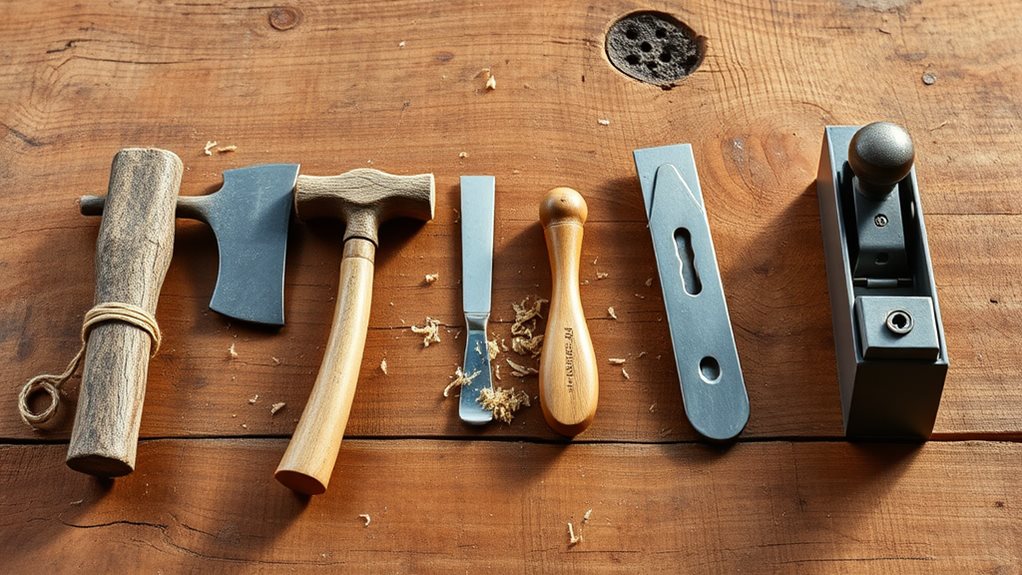
    You'll discover that Filipino woodworking began in the Paleolithic era, using flake tools. Neolithic advancements introduced ground stone tools aiding early agriculture. The Metal Age revolutionized woodworking with copper, bronze, and iron implements. Notice indigenous designs like the bolo, panabas, and kampilan demonstrate sophisticated craftsmanship. Modern techniques use power tools and even engineered wood. Regional variations exist, each with cultural significance. Understand how tools embody cultural values and historical experiences in Filipino woodworking. Further exploration enriches your understanding.

    Paleolithic Beginnings: Stone Age Tools

    Early Filipinos employed flake tools crafted from stone and shell materials through striking methods for cutting and scraping in their Paleolithic beginnings. You'll find evidence of this early craftsmanship if you study tools from Tabon Caves, where they used red jasper, white chert, and andesite. Across regions like Cagayan Valley and Palawan, you see these early technological innovations. You shouldn't underestimate the importance of these tools; they improved hunting and gathering practices. You can see how the selection of chert and jasper showed resourcefulness. Moreover, denticulate tools illustrate an understanding of woodworking and hide processing needs. Burial practices also occurred during this period. You see these simple tools marking the starting point of Paleolithic technology, affecting society. Their resourcefulness aided survival and pushed technological progression.

    Neolithic Advancements: Ground Stone and Early Agriculture

    As we transition from the Paleolithic era, we see Neolithic advancements ushering in an era defined by ground stone tools and early agriculture.

    You'll notice that Neolithic tools, like polished adzes and axes, showcase advanced craftsmanship. These tools enabled more efficient cutting and shaping of wood, refining woodworking techniques. With the advent of polished stone, crafting intricate wooden structures and furniture became more achievable.

    Early agriculture, introduced around 2,200 BC, brought agricultural innovations and stable settlements. You can see how crops like rice and millet necessitated wooden tools for cultivation and storage. The woodworking traditions of the Ifugao and Kankana-ey groups involved creating adze-hewn deities, highlighting the continued importance of woodworking in agricultural societies.

    Agricultural practices influenced cultural evolution and woodworking, creating demand for wooden containers. Ground stone technology supported both agriculture and woodworking, reflecting the era's progress.

    Across regions, we find evolving woodworking styles adapting to both materials and techniques.

    Metal Age Revolution: Copper, Bronze, and Iron

    Around 500 BC to 1000 CE, metal's arrival ushered in a transformative era for Filipino woodworking. Copper, bronze, and iron tools revolutionized the scope and complexity of what you could achieve. Metalworking techniques enhanced tool durability and fostered craft specialization.

    Consider the historical significance of copper, being versatile yet softer, giving way to bronze, an alloy of copper and tin that made tools sharper. You'll see archaeological evidence of copper, then bronze's widespread usage. The Sa Huynh culture traded beads and bronze mirrors extensively with the Philippines during this period, influencing tool designs and availability.

    Then comes the Iron Age, around the 9th century, where iron tools were used for precision crafts. You'll notice that there's an improvement to societal and economic development.

    • Adzes used for shaping wood
    • Chisels for finer detail work
    • Knives for cutting and carving
    • Bronze axes for felling larger trees
    • Iron tools for heavy-duty woodworking

    Indigenous Designs: Bolo, Panabas, and Kampilan

    Consider the *panabas*: originating from Mindanao and used by groups like the Maranao, its curvature-edged sword displays traditional craftsmanship. The Maranao's avoidance of figural representations in their carvings, instead prioritizing de-natured natural forms, is mirrored in their weaponry designs.

    You'll notice the *kampilan*, traditionally linked to leadership, stood as a symbol of power.

    These weren't merely instruments of war but objects carrying deep cultural impact and showcasing that tools played dual roles as functional items and representations of status.

    Seeing how each design reflects its region shows the rich martial background of the Philippines.

    The Versatile Bolo: A Cultural Icon

    A central motif in Filipino tool technology is the bolo, a tool adapted for agriculture, combat, and cultural symbolization. You'll find its curved, single-edged blade, often forged from recycled steel, widened towards the tip, enhancing its chopping ability.

    Handle materials range from hardwood to carabao horn, reflecting agricultural adaptability and regional styles like the Itak and Pinuti showcase its versatility. The bolo is more than just a tool, it's a potent symbol deeply ingrained in Filipino culture. It's an enduring cultural icon. Various types exist, catering to the diverse needs of different ethnic groups.

    • Farmers harvesting rice with rhythmic swings
    • "Bolomen" fiercely defending their land
    • Arnis practitioners demonstrating precise strikes
    • Historical reenactments showing bolo wielders.
    • Modern blacksmiths forging new blades

    Its bolo symbolism permeates history, from its role in the Katipunan to its presence in WWII. Despite technological advancements, the bolo remains relevant, embodying resilience and self-reliance and you can see, it remains integral to the narrative of the Filipino people.

    Traditional Metalworking Techniques

    Beyond the bolo's iconic silhouette, you'll discover the intricate realm of traditional metalworking techniques that have shaped Filipino artistry and functionality for centuries.

    You'll find ancient influences blended with colonial impacts that underscore its cultural significance. Mastery takes generations, with artisans refining skills learned through cultural exchange. The Spanish colonial period's introduction of new techniques influenced many eras of craftsmanship, including the creation of ornate religious objects like candlesticks.

    Fire manipulation is key; you're using it to shape metals. Artisans rely on hand-forged tools—hammers, anvils, tongs—each crucial for precision crafting.

    You'll see designs incorporating nature-inspired and tribal symbols. Expect extensive physical labor, reflecting the dedication to traditional craftsmanship.

    Indigenous tribes, like the Igorots and Lumads, contribute unique techniques. Natural materials influence crafts, and regional specialties reflect local practices.

    Foreign influences blend with indigenous methods, enriching designs. Apprenticeships are preserving this vital knowledge.

    Contemporary metalworkers adapt to modernity while maintaining practices. You're witnessing sustainability, education, and artistic expression, all reinforcing its cultural icon status.

    Modern Woodworking: Power Tools and Machinery

    Transitioning to the modern era, we'll explore how power tools and machinery have revolutionized woodworking in the Philippines. Contemporary workshops integrate an array of electrically powered saws, drills, sanders, and lathes to enhance production speed, precision, and versatility in crafting furniture, structures, and artistic creations.

    Investing in power tool advancements marks a significant leap, enabling artisans to achieve woodworking efficiency previously unattainable.

    Consider these tools that have become commonplace:

    • Circular saws for straight cuts.
    • Router technology for intricate designs. The use of specialized router bits, such as straight, chamfer, and cove bits, allows for intricate designs and detailing.
    • Planers that ensure uniform wood thickness.
    • Jointers that create flat and square edges.
    • Miter saws designed for precise angled cuts.

    Power tools empower you with increased productivity. You can complete projects faster, with unmatched accuracy compared to hand tools.

    Safety features integrated into these tools reduce risks, while their reliability ensures that you get consistent results. Leading brands like SawStop and Festool are shaping your workshop's capabilities.

    Engineered Wood and Contemporary Practices

    You'll find engineered wood has become vital, reflecting contemporary woodworking's shift toward optimized resources and durability, offering a cost-effective alternative by efficiently utilizing wood and reducing waste, while resisting common issues like warping and shrinkage, due to compositional stability.

    Engineered wood benefits are realized through efficient manufacturing and increased lifespan compared to solid wood. Considering the commitment to sustainable practices at GRM Biowood Interiors Corporation, engineered wood aligns with green building initiatives.

    Contemporary woodworking practices now incorporate materials like Biowood, which offers termite, mold, and fire resistance, ensuring longevity.

    You'll see increased demand for eco-friendly options like PalmEco Board, sourced from palm fiber waste, leading to more durable and lower-maintenance woodworking applications. This commitment supports sustainable practices.

    Also, you should consider GRM's products, blending strength and aesthetics, alongside FSC-certified timber from sources like Filtra Timber.

    Technological advancements boost eco-friendliness and durability, reshaping contemporary woodworking practices for sustainable solutions in the Philippines.

    Regional Variations in Tool Design

    Consider these images:

    • The crescent-shaped *lukong* carving rounded edges on an Ifugao bulul.
    • A craftsman smoothing edges with an *uchip* after using chisels.
    • Someone using a *korikor* for basket weaving. *Simpa*, a flat-bladed chisel, is part of an apprentice's tool set.
    • A *panabas*, originally used as an agricultural tool.
    • An artisan hollowing a wooden bowl using a *chipya* chisel.

    You could also observe how modern woodworking adapts traditional methods, conserving original tools while also incorporating contemporary materials.

    Tools as Cultural Artefacts

    Tools transcend mere utility; they embody the cultural values, historical experiences, and artistic ingenuity of Filipino woodworking traditions.

    You'll find indigenous influences prevalent; wood served precolonial societies for religious and cultural practices. Consider how communities once revered trees—balete trees especially—and how only spiritual leaders interacted with their spirits. Spanish colonization impacted these beliefs, but indigenous communities persisted. Technological advancements now drive mechanization in the craft.

    The cultural significance of woodworking tools extends to tool symbolism, with many artisans using them to create religious artifacts expressing enduring spirituality.

    Paete's wood carving tradition exemplifies this; artisans use Narra and Kamagong to depict religious and secular themes, impacting the local economy.

    Though power tools' integration has transformed woodworking, blending old and new techniques preserves cultural heritage, demonstrating the vital role artisans' skills play in maintaining these traditions.

  • Wood Species Native to the Philippines Used in Traditional Crafts

    Wood Species Native to the Philippines Used in Traditional Crafts

    You'll find Philippine traditional crafts are deeply rooted in native wood species. Narra, the national tree, symbolizes strength. Molave offers remarkable durability for intricate crafts. Kamagong, like ebony, creates durable furniture. Acacia's versatility shines in sustainable kitchenware, and Banaba connects decor to Philippine flora. Wood carving traditions reflect pre-colonial beliefs and colonial adaptations. Boat builders use hardwoods, like balayong, integrating traditional knowledge. Discover the economic and ecological importance of these trees. Explore further for a holistic view of the art.

    Narra: The Golden Hardwood

    Narra stands as a testament to the Philippines' rich biodiversity and cultural heritage. You'll admire its impressive size; it's a hardwood tree that can reach up to 40 meters. The Matic Hub's thematic focus on materials makes it a great venue to share information about Narra's usage.

    Narra characteristics include its asymmetrical, corrugated trunk and yellow flowers that bloom briefly. The tree's thin bark renders it susceptible to fires.

    As the national tree, it symbolizes strength, but you should consider its "Endangered" status. You'll find that overexploitation has severely impacted Narra populations and understand that the species population is projected to decline as much as 80% over the next century without Narra conservation efforts.

    Current reforestation projects attempt to help, though challenges remain. Recognize its cultural significance and help preserve this golden hardwood.

    Molave: Durability in Crafts

    Beyond Narra's national symbolism, you'll find Molave—an indigenous tree species now protected by Philippine law—exhibits remarkable strength, durability, and ornamental beauty, rendering it invaluable for traditional crafts deeply connected to the Philippines' rich cultural heritage and enduring craftsmanship. Molave craftsmanship shines through its material strength and its resistance to decay. Because artisans can create detailed designs, you'll find these crafts stand the test of time. It's a cultural cornerstone that supports the preservation of Filipino heritage. We have a responsibility to ensure Molave sustainability so future generations can enjoy this beautiful wood. One striking example is a late 20th-century sculpture, circa 1970s, crafted from organic molave root. It has garnered appreciation because of its unique features and legal protections, and you'll see that its limited availability enhances its value.

    Feature Benefit
    Material Strength Enables intricate designs
    Durability Ensures longevity of crafts
    Decay Resistance Suitable for diverse environments
    Limited Supply Increases value of Molave crafts
    Legal Protection Supports Molave sustainability efforts

    Kamagong: Crafting With Ebony

    As you explore Philippine hardwoods, you'll discover Kamagong (Diospyros spp.), a species revered for its ebony-like qualities, presenting unique challenges and cultural significance in local craftsmanship. Its distinctively dark, dense wood—sometimes called "iron wood"—makes it invaluable for creating durable furniture, intricate decorative items, and traditional chess pieces, deeply rooted in Filipino heritage.

    You'll find its hardness requires specialized Kamagong craftsmanship techniques ensuring artisans don't damage their tools.

    Beyond its timber, its fruit, known as Mabolo, adds to its local appreciation. However, know that this "iron wood" isn't easy to come by; illegal logging and overexploitation threaten its survival. Consequently, Kamagong conservation efforts aim to preserve this endangered species, now protected by Philippine law. Due to its density, Kamagong timber is well-suited to knife handles.

    You'll note its export is heavily regulated, demanding permits. Despite these challenges, Kamagong remains significant in Filipino culture, contributing to unique art pieces and sustaining local economies.

    Acacia: A Versatile Timber

    A cornerstone of sustainable Philippine woodworking, you'll immediately notice acacia (Acacia spp.) as a prime example of a versatile timber; its legal and sustainable cultivation offers a stark contrast to hardwoods facing endangerment.

    You'll observe its widespread use in various applications, ranging from furniture to kitchenware, showcasing its adaptability. Its relatively lightweight yet durable nature facilitates crafting processes, reflecting both its economic import, sustainable forestry practices, and its value in local craftsmanship.

    Focusing on acacia sustainability, you see plantations manage Acacia Mangium to lessen pressure on Philippines' natural forests. You'll find that the fine grain and lustrous finish make it a choice material.

    As hardwood bans increase, Filipino woodcarvers, even those in Ifugao, select acacia. The acacia craftsmanship produces plates, bowls, and cutting boards that are integral to Filipino homes, and local artisans skillfully shape the material into decorative pieces, sometimes mimicking the stylized okkil motif.

    Products from acacia wood are globally exported, driving economic value while maintaining a dedication to environmental sustainability.

    Banaba: Beyond Medicine

    From acacia's proven utility, we now turn to banaba (Lagerstroemia speciosa), a plant you'll most often encounter in the context of traditional medicine, yet its relevance extends into heritage and environmental realms. You'll see its influence ripple through art and decor, imbuing spaces with Banaba symbolism.

    While its wood isn't a traditional crafting material, its image thrives. You might spot floral patterns adorning home items, highlighting Philippine flora. Banaba conservation efforts gain momentum as you see the tree used in reforestation. Planting strengthens urban biodiversity, fostering a connection to nature, and awareness of native species. Like raffia fiber, Banaba's image holds color well for various fabric applications.

    You can support local economies by purchasing Banaba-inspired products. You will want to consider: what feelings do these images evoke?

    Visual Element Associated Emotion
    Floral Patterns Domesticity
    Artistic Prints Cultural Pride
    Murals Community Harmony
    Posters Environmental Awareness
    Reforestation Projects Hope

    Imagine the impact!

    The Art of Furniture Making

    Transitioning from banaba's symbolic essence, we explore the concrete artistry of furniture making, where cultural heritage and skilled craftsmanship converge to shape functional and aesthetic pieces.

    You'll see Filipino furniture embodies centuries of tradition, blending indigenous artistry with Spanish influences. Materials like narra, molave, rattan, and bamboo are cornerstones, with regions like Cebu and Pampanga showcasing unique styles. The earliest examples featured intricate weaves reflecting community ingenuity.

    Contemporary designs now fuse traditional 'artisan techniques' with modern 'furniture aesthetics', like metal accents and minimalist lines.

    Consider these core components as an enthusiast:

    • Historical Roots: Grasp the narrative embedded in each piece.
    • Material Science: Respect the properties of native wood.
    • Market Dynamics: Acknowledge the rise of sustainable and custom designs.

    Kenneth Cobonpue and Vito Selma exemplify this blend, crafting pieces celebrated globally.

    Innovation, combined with a focus on sustainability, ensures Filipino furniture thrives on the world stage.

    You're witnessing a beautiful fusion.

    Wood Carving Traditions

    Beyond furniture's functional artistry, you'll find the storied realm of wood carving, where the Filipino cultural identity is etched into tangible forms using techniques honed over centuries.

    Wood carving, dating back to pre-colonial times, served essential and ceremonial purposes, such as narra wood carvings used for ancestral spirit figures ("anitos"). You'll see how colonization influenced these skills, adapting them for religious statues. Romblon's woodcarving traditions have even gained international recognition for their exquisite craftsmanship, spreading Filipino artistry across borders.

    The cultural significance of these carvings can't be overstated; they preserve heritage and traditional beliefs. Different regions offer distinct styles; Paete showcases detailed artistry in narra wood.

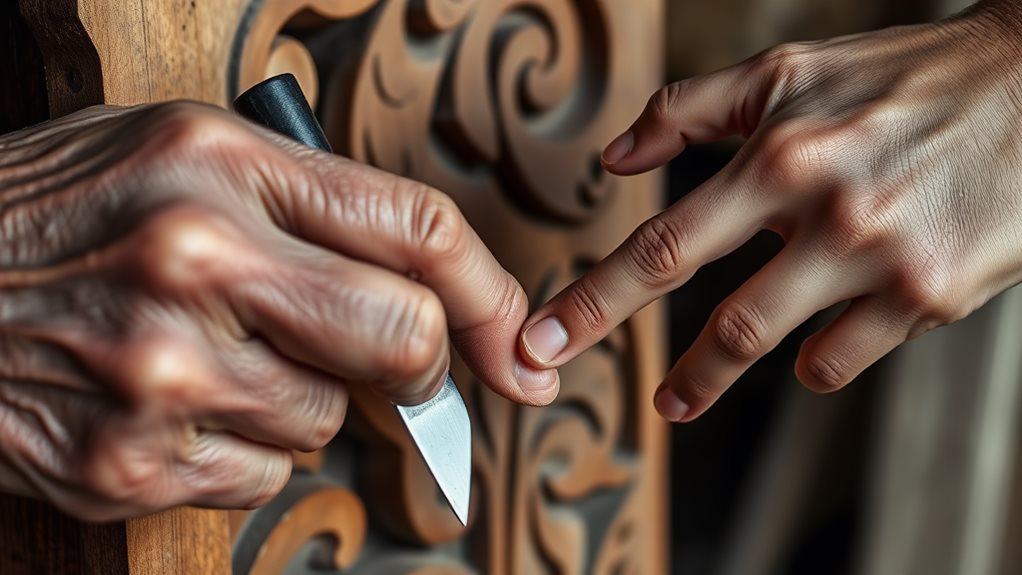
    You'll use traditional techniques with simple tools – knives, chisels – to transform molave or kamagong into decorative items with okir designs. Nature inspired patterns abound, reflecting the local environment.

    You'll understand that foreign influences blend seamlessly, creating works that reflect evolving Filipino identity.

    Boat Building With Native Wood

    Boat building, integral to the Philippines' maritime heritage, reflects a blend of indigenous knowledge and resourcefulness using materials like balayong and niyog.

    You'll observe this craft highlighting the traditional techniques of skilled artisans shaping durable sea vessels. You're witnessing centuries-old designs ensuring efficiency and stability. Wooden pegs and dowels secure components, showcasing meticulous joinery, demonstrating traditional techniques.

    What makes Philippine boat building unique? Consider this:

    • Native hardwoods, such as molave and guijo, boast natural resistance to water damage. Recognizing the historical significance of wood in boat construction, some builders are drawn to the aesthetic appeal and mystique of Philippine Mahogany.
    • Outriggers, or "katig," provide enhanced stability for navigating Philippine waters.
    • Sustainable practices are increasingly critical, involving sourcing wood wisely and replacing old boats, to protect forests.

    You're participating in the preservation of cultural heritage when you appreciate these traditions of traditional techniques.

    You'll find traditional boat designs showcase cultural expressions and emphasize the ingenuity of sustainable practices. You're seeing that integrating modern tools with sustainable practices preserves authenticity, enabling continued craftsmanship.

    Economic Contributions of Wood Crafts

    Turning from maritime applications, you'll find wood crafts significantly bolster the Philippine economy. Craftsmanship centers, like Paete, thrive because of the employment their artisanal livelihoods generates. Deforestation issues have prompted international conservation initiatives, which in turn support local economies centered around woodcraft.

    Cultural tourism flourishes, as visitors are drawn to witness the creation of these intricate wooden works. You're contributing to the country's GDP when you buy these products.

    The global demand for Filipino woodcraft highlights its export potential, aligning with broader furniture export trends.

    You should note that securing economic sustainability requires addressing wood scarcity and market volatility. Supporting artisans, improving market access, and promoting sustainable forestry practices secures the long-term viability of this industry.

    Preserving Native Trees

    You'll find that preserving native trees is both an ecological imperative and a cultural responsibility given the critical status of many Philippine native tree species facing endangerment or extinction.

    It's crucial to protect these trees, which are vital to maintaining biodiversity, aiding climate resilience, and ensuring healthy ecosystems.

    Consider EDC's BINHI initiative; it exemplifies native species conservation through arboreta and vegetative material reproduction facilities.

    Here's what you can do to support this effort:

    1. Support rainforestation farming which merges native tree planting with sustainable economic benefits.
    2. Participate in native tree planting projects that involve indigenous communities like the Manobo.
    3. Advocate for policies that prioritize native species over non-native species like mahogany, which can harm biodiversity.

    Increasing community involvement is key, stressing education and collaboration with the government. The Manobo, for example, are integral collaborators in environmental initiatives.

    Know too that sustainable programs are imperative in keeping our environment and the native craft species in it alive.

  • The Role of Apprenticeship in Philippine Woodcarving Traditions

    The Role of Apprenticeship in Philippine Woodcarving Traditions

    You'll find that apprenticeships are crucial for keeping Philippine woodcarving alive. You're preserving traditions passed down through generations, particularly in places like Paete. As an apprentice, you learn techniques and gain cultural understanding beyond just copying. Mentorship dynamics are important as you learn and refine your skills through workshops. Understand that economic challenges and resource scarcity exist. You'll integrate modern designs and eco-friendly practices to combat decline. Discover additional insights.

    Maintaining Tradition Through Apprenticeship

    Maintaining tradition through apprenticeship is vital, as local governments support programs integrating woodcarving into senior high school curricula.

    Training students with experienced craftsmen to revive interest among younger generations and mitigate the decline caused by modern influences is crucial. You're now part of a system designed to ensure woodcarving's survival. Given that many locals seek opportunities abroad for higher pay, these apprenticeships serve as a direct countermeasure to the craft's potential disappearance.

    The success hinges on mentorship dynamics. You'll learn traditional techniques, preserving methods passed down through generations.

    These relationships aren't just about skill transfer; they're about cultural continuity. You must understand the core values that make this craft unique.

    Formal education reinforces that the woodcarving tradition isn't just a skill, but integral to Philippine heritage.

    As you apprentice, consider your role in sustaining this legacy, keeping traditional methods alive, and shaping its future.

    A Historical Glimpse of Philippine Woodcarving

    Understanding traditional methods and cultural values, as you've explored, sets the stage for appreciating woodcarving's deep roots in the Philippines.

    Before the Spanish, you carved essential items, revealing the cultural significance woven into daily life. You used indigenous techniques and local woods to create totems, protecting villages, showcasing artistic expression.

    Then, Spanish influence brought religious art. You developed skills creating religious statues, a cultural synthesis that improved carving intricacy and bolstered local economies. Early carvings were more centered around these worship images.

    Paete, Laguna, emerged as the "Carving Capital," where families passed down woodcarving techniques, favoring Narra hardwood.

    Looking at carvings, you see more than art. "Santos" exemplify religious devotion, yet modern artists create diverse pieces. These express historical events, selling locally and abroad.

    Woodcarving, you'll find, supports tourism and promotes cultural heritage, showcasing skill innovation. You can't deny its value!

    Pressing Challenges

    You'll see that Philippine woodcarving, beyond its rich history, faces significant challenges. Deforestation and strict logging bans have created significant sourcing challenges, limiting access to traditional woods like batikuling, and increasing reliance on alternative materials. The inability to fully load websites may also create further access issues.

    Sustainability efforts exist, but propagation of endangered trees takes decades, revealing the complexities of sourcing materials.

    You're also dealing with intense market competition. Mass-produced alternatives threaten the livelihoods of artisans creating handmade wood carvings. You need to adapt to global trends and educate consumers about the value of handmade craftsmanship to secure market share.

    Economic factors like inflation have increased production costs, further complicating the situation. While Paete's recognition as the Carving Capital highlights government support, you still await more comprehensive policies that address the operational challenges you face.

    Apprentice Training

    Apprentice training is crucial in ensuring the longevity of Philippine woodcarving traditions, particularly in regions like Paete, where you can immerse yourself in the craft's historical roots. As you experience apprentice training, you would typically find yourself learning in grade school between grades 3 to 8. You're immersed in observing artisans, background, and the hands-on practice that you may find using study manuals and organizers effective for learning and helps integrate with values that you may utilize as a craftsman. Learning traditional woodcarving art in a relaxed environment like the described island apprenticeship can allow for skills to be honed over time.

    The apprentice experiences encompass more than just tool handling; they require you to use interdisciplinary learning to truly understand cultural context. The training techniques go beyond copying existing works; you will have to design your projects. Programs use workshop participation and project showcases to refine.

    Element Description Benefit
    Observation Watching seasoned artisans at work Understanding workflow and finesse
    Hands-On Direct engagement with carving tools Developing muscle memory and control
    Cultural Study History and significance of carvings Fostering appreciation and connection
    Evaluation Quizzes, projects, and feedback sessions Measuring progress identifying areas to grow

    Skill Development in Practice

    Skill development in practice is where you'll actively engage with time-honored techniques, tools, and materials to hone your craft. You'll acquire skills in workshop settings, absorbing knowledge from master artisans and peers alike. Expect regular feedback to guide your technique refinement. You're not just copying; you're learning to carve with precision.

    You'll familiarize yourself with intricate designs, learn to select the right wood, and master specific tools. Through hands-on experience and error correction, you'll develop fundamental carving techniques. Learning to manipulate wood becomes second nature. Since the area was declared the wood carving capital in 2005, many more opportunities have developed for apprentices to practice their art.

    Mentorship nurtures your growth, encouraging exploration of personal artistic style through creativity enhancement. Expect an increase in attention to detail and the development of problem-solving skills, critical for producing high-quality carvings.

    You'll expand your aesthetic understanding, preparing you to appeal to diverse markets.

    Cultural Impact

    Woodcarving in the Philippines isn't just about aesthetics; it significantly shapes cultural identity, preserves traditions, and drives economic activity. You see this in Paete, declared the "carving capital", which showcases how deeply embedded woodcarving is in the nation's heritage.

    You're looking at a melting pot when you observe Filipino woodcarvings, reflecting indigenous styles blended with Chinese and Spanish influences. Reflecting this fusion, Batikuling seed propagation is one community initiative to combat resource scarcity issues. As a result, cultural exchange enriches the artistic landscape.

    Apprenticeships are vital; they ensure these techniques endure, passing on knowledge that honors both local and global inspiration.

    Woodcarving strengthens community identity. By participating in festivals and preserving local narratives through art, artisans boost cultural pride.

    You, too, can help by supporting woodcarvers and acknowledging their resilience in maintaining traditions.

    Economic Impact

    Beyond its cultural significance, you'll find that the economic impact of this art form in the Philippines is keenly felt, especially as it offers livelihoods to artisans and craftsmen in areas such as Paete.

    You're sustaining traditions that add significant economic value to the wood processing industry, providing employment nationwide.

    Think about the market trends. You can enhance the Philippines' reputation as a center for craftsmanship. You can adapt to changing demands by learning contemporary designs, opening new market opportunities.

    Apprenticeships play a role. These programs are contributing to economic sustainability through cultural tourism. Understand that artisans face competition from mass-produced items which is why you've got to support economic and artistic growth.

    You'll contribute to employment by transitioning into master carvers. Local economies grow exponentially when artisans sustain the demand for woodcarving.

    The future is bright when apprenticeships are prioritized.

    The Future of Apprenticeships

    Looking ahead, you'll notice the future of apprenticeships in this discipline isn't just about preserving tradition; it's about dynamically adapting these time-honored methods to meet modern challenges and harness emerging opportunities.

    You see more skills-based hiring and expanding apprenticeships beyond traditional sectors. States invest in opportunities across various industries, with inclusive practices improving program diversity. To access these state opportunities, the Youth Apprenticeship Readiness Grants site requires a login.

    You'll find these programs incorporate future technologies, such as digital tools for more flexible learning. The surge in remote work fosters digital apprenticeships, offering global accessibility. These changes let you adapt to global trends.

    Here's what you should also know:

    • Bipartisan support helps program stability.
    • Funding strategies address cost advantages.
    • Practical training prepares you for immediate employments.
    • Apprenticeships offer economic mobility.
    • Programs easily adapt to technological changes.

    Education and Woodcarving

    As you explore the realm of education and woodcarving in the Philippines, you'll uncover a multifaceted approach that blends formal training, community engagement, and cultural preservation. You'll see cultural integration at play as schools weave woodcarving into curricula, mainly Arts and Social Studies, boosting cultural literacy. Experiential learning flourishes through study tours to woodcarving hubs, for example, Paete, giving you hands-on experience. It's important to note that local artisans and workshops are fundamental educational resources, offering crucial practical knowledge. You'll see how hands-on projects breed creativity and teamwork.

    Here's a view of how it works:

    Education Aspect Details
    Curriculum Integration Arts and Social Studies include woodcarving traditions.
    Experiential Learning Study tours to workshops (e.g., Paete).
    Community as Resources Artisans and workshops vital for practical skills .

    You'll find that TESDA provides formal training programs, offering Wood Carving Level II certification for standardization. Furthermore, understand that workshops and festivals like Ukit-Taka promotes interaction with tradition.

    Strategies for Revival

    To revitalize Philippine woodcarving, you'll need multiple strategies that address collaboration, market dynamics, sustainability, innovation, and cultural preservation.

    You should focus on fostering community engagement by actively getting locals involved. Think about integrating modern designs with traditional motifs. The gradual decline of native crafts can be combatted by promoting local traditions in woodcarving.

    Market expansion is key: use digital platforms to up visibility and educate consumers on cultural significance. You can consider creating exclusive collections with contemporary artists for luxury markets.

    Sustainable practices are crucial; you should adapt sustainable wood sourcing and eco-friendly treatments. Reforestation programs can support conservation along with the use of reclaimed wood.

    Don't forget innovation; integrate modern tools and incorporate storytelling for depth.

    Here are some essential strategies:

    • Promote cultural appreciation.
    • Incorporate modern designs.
    • Adapt sustainable practices.
    • Integrate modern tools.
    • Collaborate with institutions.
  • Restoring Antique Filipino Wooden Furniture: Expert Techniques

    Restoring Antique Filipino Wooden Furniture: Expert Techniques

    You'll restore antique Filipino furniture by first identifying authentic pieces. Look for elaborate carvings, solid woods like narra, and examine joinery. Gently clean with mineral spirits, avoiding excess water. Replicate mortise and tenon joints using hand tools. Sand carefully, progressing to finer grits to prep surfaces. Apply authentic finishes such as hand-rubbed waxes, understanding historical dyes. Maintain humidity and protect from sunlight. Expert techniques await your deeper exploration.

    Discovering Authentic Pieces

    Discovering authenticity in antique Filipino furniture demands meticulous attention to detail, beginning with recognizing telltale signs of Spanish colonial influences, as you'll often see elaborate carvings and woodwork on pieces from this era.

    Solid wood, such as mahogany and walnut, is common, but you've got to be sharp enough for identifying replicas using cheaper materials. Maker's marks can offer you critical insights, but they aren't always present. Professional appraisal can offer in-depth evaluation, combining various techniques for assessment.

    Understanding regional styles is crucial. You'll find Batangas pieces displaying Chinese and Spanish influences, while Baliuag pieces are famed for their intricate bone and wood inlays.

    You can evaluate the craftsmanship by seeking quatrefoil patterns, geometric inlays, and ecclesiastical symbols, indicative of artisanal practices.

    Don't forget to check for motifs revealing historical context. Spotting hand-cut inlays speaks volumes about pre-industrial artistry.

    Assessing Condition and Origin

    Condition and origin assessment necessitates a layered approach, beginning with age evaluation through historical research that reveals the era's design style and influences. You'll need to perform careful *condition evaluation*. You're trying to establish the story of each piece beyond just aesthetics. Closely examine joints, noting if they're hand-cut dovetails—a hallmark of older craftsmanship. The patina speaks volumes; genuine antiques often show wear with subtle color shifts.

    You'll move on to *origin identification*. Consider the materials. Local woods like maple, oak, walnut, birch, cherry, and pine were frequently utilized in American Colonial furniture, which can indicate age and origin. Is that kamagong? Or maybe narra? These woods point to distinct crafting traditions. Design patterns also provide clues. Remember, though; prior repairs impact authenticity. Now, let's break down key identifiers:

    Feature Key Indicators Historical Significance
    Wood Type Grain, Color Period Popularity
    Joinery Type Hand-cut or Machine-made Construction Era
    Design Motifs Carvings, Inlays Cultural influences

    Don't forget meticulous documentation. Accurate records safeguard authenticity and value. Photographic evidence and expert appraisals provide the best assurances.

    Gentle Cleaning Protocols

    With a firm grasp of assessment, you'll find the journey into cleaning protocols is the next step in antique furniture restoration; it's where preservation truly begins.

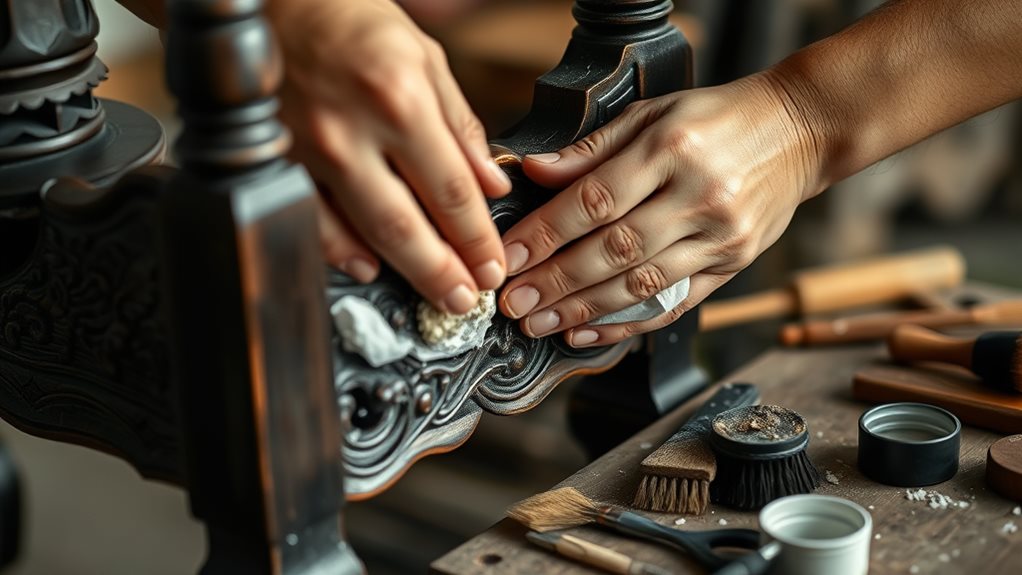
    Before applying any cleaning solutions, vacuum loose dust. Then, working with the grain, use soft cloths and circular motions.

    For wax finishes, stick with odorless mineral spirits preserving the patina. Shellac finishes? Give 'em gentle wiping then dry quickly.

    When it comes to veneer, less is more, so avoid excess water. And if you get mildew, a one-to-one vinegar solution can't be beat. The use of harsh chemicals can damage the finish.

    Don't go harsh; protect that original finish by testing discreet areas first. Remember, we're talking about antiques, not modern furniture.

    For maintenance tips, dust regularly and consider a finishing wax. Control the humidity and keep it from sunlight.

    Disassembly Strategies

    You'll find that employing thoughtful disassembly strategies offers a controlled approach to restoring antique Filipino furniture to its former glory.

    Start by gathering your tools: screwdrivers, a hammer, pliers, and a rubber mallet. Don safety gloves and goggles. Begin with drawers and shelves, securing small parts in labeled bags.

    Joint identification is critical. Look for screws, nails, or pegs. Some furniture might require specialized tools. Carefully assess each piece; is it strong enough for disassembly? Protective gear is paramount.

    For stubborn joints, apply heat cautiously; softening old animal glue, common in older pieces due to its primitive but strong makeup. Gently pry apart the elements. Don't rush.

    Document your disassembly techniques with photos or notes. Label everything! Store components safely for reassembly.

    Assess the furniture's construction to use the appropriate disassembly techniques. If the piece is heavily glued or nailed, professional help may be best.

    Always prioritize safety over speed to avoid damage or injury.

    Rebuilding Original Joinery

    Rebuilding original joinery is where you'll strengthen the sinews of antique Filipino craftsmanship.

    Look closely at the old joinery. Original joinery techniques, like mortise and tenon seen in Batangas furniture, bear testament to regional craftsmanship skills. You'll find examples of dowel joints, permitting complex designs, or dovetail joints, common in drawers. The high-quality craftsmanship present in Batangas furniture is credited to Batangas Masters from this region.

    Your approach will replicate traditional techniques. Select the right tools; hand tools such as chisels recreate old craftsmanship skills. Native woods, such as narra, are vital for durability.

    Careful preplanning aids reconstruction. The quality of the reconstructed joinery mirrors the past craftsmanship skills, reflecting regional joinery techniques.

    Your restoration preserves heritage and furniture's cultural identity. Your work will serve as an example of traditional artisanship passed down.

    Stripping Old Finishes Safely

    Stripping old finishes safely involves a meticulous process necessitating historical awareness and technical skill. When tackling this part of restoration, prioritizing your well-being is key. Adhere to strict safety precautions. Traditional paint strippers often contain toxic chemicals, so you'll want to use chemical-resistant gloves, splash-proof goggles, and ensure excellent ventilation.

    Now, consider your stripper types. Selecting the correct one is crucial. You've got options:

    • Semi-paste: Best suited for vertical surfaces.
    • Liquid: Works well on flat surfaces.
    • Non-toxic/Ecological: Gentler, safer for continuous use.
    • MC Content: Higher concentration usually means faster action.

    Spread a thick coat of selected stripper quickly, only in one-shot motions, and avoid back-and-forth strokes. Let it sit until wrinkling occurs, then use plastic or metal scrapers to peel off the finish.

    Never expose the furniture or yourself to dripping strippers that aren't collected. Clean-up thoroughly with appropriate residue removers, and ensure the piece is totally dry.

    Sanding for a Smooth Surface

    Following the careful removal of aged finishes, sanding is crucial to achieve a flawlessly smooth surface. You'll employ specific sanding techniques for optimal results.

    Always sand with the wood grain, preventing scratches and unevenness. For flat areas, use sanding blocks to apply even pressure; switch to foam padding for curved parts. Be careful with pressure control as it can gouge the surface. Patience is essential for a high-quality finish.

    Now, focus on grit selection. Begin with coarser grits, #120 is advisable, then progressively transition to finer ones. Generally, stop at #220 for softwoods and #180 for hardwoods as over-sanding messes with stain adhesion.

    Remember to vacuum or use a tack cloth between grits to eliminate dust.

    For carvings, use extra-fine-grit sandpaper (5/0 or 6/0) and a light touch to avoid flattening. Carefully sand into deep carvings with your fingertips to preserve detail.

    Be especially vigilant with end-grains, which drink up more stain. Before finishing, wipe surfaces with tack cloth.

    Applying Authentic Finishes

    With the surface prepared, you're now ready to focus on techniques for finish application that honor the piece's origins. When enhancing wood grain patterns, hand-rubbed finishes are essential where your work ensures coverage and emphasizes the wood's grain. The resurgence of fossil stone furniture in Cebu, spearheaded by figures like Steffanie Ball, echoes the importance of preserving local craftsmanship.

    You'll also want to consider mineral-based stains here, as they enhance wood grain without covering the texture. For restoring traditional colors, replicating wood tones involves carefully selected finish types such as waxes and natural oils.

    Here's what you should consider when applying finishes:

    • Understanding original dyes used.
    • Applying shellac for a rich, warm glow.
    • Using waxes to protect the tone.
    • Maintaining patina for character.

    You aren't just refinishing a surface; you're preserving a piece of history. Authentic aging techniques, like aniline dyeing and crackling finishes, are also a consideration. These methods should blend seamlessly with the wood's existing character; achieving authenticity with these aging techniques is a delicate balance.

    Preservation Best Practices

    To preserve antique Filipino furniture, you must employ specific environmental, pest, stain and spill management, restoration preparation, and cleaning techniques.

    For environmental concerns, preventing sunlight exposure is key. To further protect against the effects of direct sunlight, use curtains or blinds to block or disperse it. For the wood protection, ensure humidity control by maintaining relative humidity between 40-45% and avoid extreme temperature changes.

    You'll have to act fast for stain and spill management. Immediately blot spills with soft cloth, and use warm water with mild soap for cleaning. Avoid harsh chemicals, and dry surfaces thoroughly.

    Pest management involves identifying termites or powderpost beetles early. Clean hidden areas, and seal small openings to prevent entry.

    During restoration, assess the condition and research authentic materials. Assemble tools like wax and sandpaper, plus prepare your workspace.

    When cleaning, use mild soap, apply light paste wax, and buff regularly. Don't over-polish, and consider using a low-heat iron for stain removal.

    Long-Term Care and Display

    Beyond immediate preservation actions, long-term care and display techniques significantly impact the longevity and appreciation of antique Filipino furniture.

    You'll want to focus on long term maintenance, crucial for pieces fashioned from hardwoods like Narra. Sunlight and humidity are enemies; control environmental conditions. Dust gently; harsh chemicals damage the patina, diminishing value. The methods like relief carving should be considered when preserving the furniture.

    Display considerations are just as critical.

    Optimal display involves:

    • Soft, indirect lighting to safeguard the wood and highlight detailing.
    • Stabilized temperature and humidity levels to prevent warping.
    • Strategic spacing to allow airflow and viewing.
    • Elevated platforms protecting against floor moisture.

    You aren't just preserving an object; you're safeguarding history. Engage experts for complex issues, and always document restoration work. Protecting your antique's authenticity ensures its enduring legacy.

  • The Japanese Influence on Philippine Woodworking Techniques

    The Japanese Influence on Philippine Woodworking Techniques

    You'll find Japanese techniques are enhancing Philippine woodworking. Sashimono provides you precise wood processing and durable joints. Hikimono allows refined wood-turning skills. These contrast with pre-colonial carvings depicting ancestral spirits and Spanish-influenced religious themes. Now the integration of CNC machining and molded plywood enables complex forms. Ultimately, collaboration and preservation blend cultural aesthetics. More is uncovered as you explore further.

    Philippine Woodworking: A Historical Overview

    Philippine woodworking's roots are evident in archaeologically recovered artifacts. You'll notice boat-shaped coffins dating to the fourteenth century with animal carvings, signs of ritual and healing practices. Spanish missionaries saw carved idols and decorated boat prows during the sixteenth century; early forms intertwined with religious expression.

    Over time, it evolved, absorbing diverse influences. In Northern Luzon, various indigenous groups employed woodworking in crafting objects like bulol, rice cutters, and ritual boxes. The spiritual and decorative use of woodcarving then spread. Filipinos throughout the islands even created functional objects—such as walking canes and saddles—demonstrating the craft's versatility in daily life usefulness.

    As you examine this art form, you can see it showcases pre colonial techniques and skill. These cultural traditions across the archipelago reflect regional identities. The cultural exchanges that occurred have shaped it, especially in the Cordillera, Mindanao, and Sulu regions.

    You notice that their regional specializations illustrate the creative adaptations of woodworking for both practical and spiritual purposes.

    Understanding Sashimono

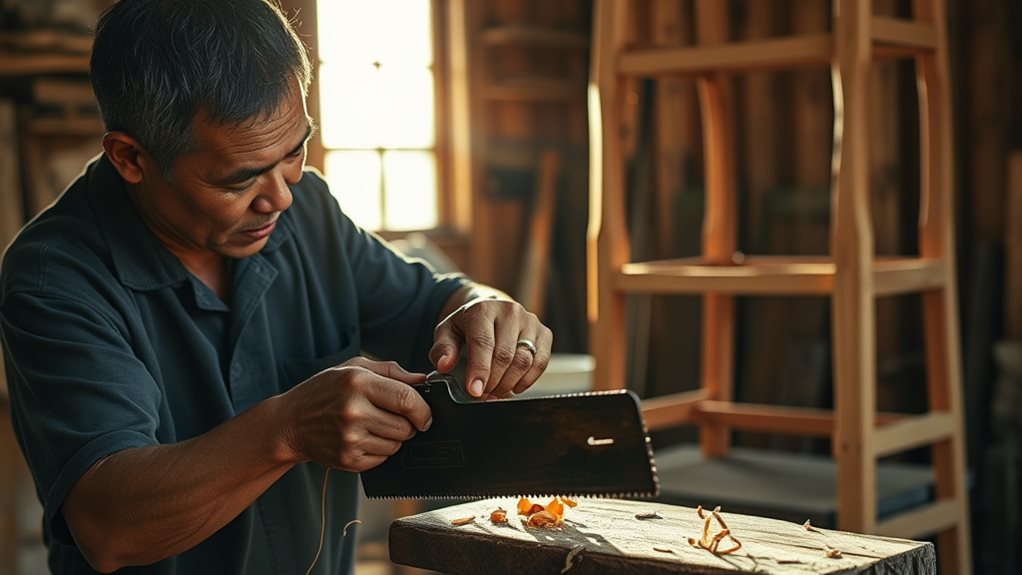
    Sashimono techniques entail traditional Japanese woodworking methods hinging on the precise processing and joining of wood to forge durable and aesthetically pleasing products. You'll find these methods historically evolved, particularly thriving in Japan's Edo period. The focus is on structural strength and artistic appeal, particularly for furniture construction.

    In Sashimono, you're looking at precise shaping and interlocking wood ends, achieving nearly imperceptible joints that boost durability. These methods often eliminate adhesives or nails. They showcase an ecological stance, ensuring relevance in modern woodworking. Sashimono techniques are widely used in creating Japanese furniture like chests and desks. Now, let's consider some specifics:

    Technique Description Key Feature
    Arigumizugi Creates multiple tongues & recesses for strong connections Ant-head resemblance
    Tsutsumi Interlocking parts enhancing structural integrity No metals required
    Kane Tsugi Right-angle corner joint known for strength & aesthetics Traditional appeal
    Kanawa Tsugi Half-blind scarf for joining wood ends Splicing strength
    Precision Crafting Ensures joints are imperceptible Improved durability

    Sashimono techniques highlight fine wood joinery, merging utility with artistry.

    Exploring Hikimono

    Exploring Hikimono, you'll find a wood-turning technique steeped in history, evolving from ancient practices into a refined art form. Evidence indicates that Hikimono techniques originated roughly 2,000 years ago. Sashimono emphasizes skill and meticulous attention to detail, enhancing the overall quality of Japanese woodworking techniques.

    Tools, like chisels, shape the wood as it spins on a lathe to produce items, such as bowls. The practice showcases precision and control.

    Hikimono has given rise to a variety of items.

    • Circular containers
    • Tableware
    • Lacquerware
    • Rounded decoratives

    Woods yielding to precision control are often selected. This tradition has roots. Its *cultural significance* is profound.

    Artisans pass skills to the next generation and it preserves an important legacy. Hikimono has been carefully managed over generations. The *cultural significance* extends beyond borders.

    Export helps spread Japanese craftsmanship worldwide. Modern adaptations integrate current technology while preserving time-honored *Hikimono techniques*. Japanese woodworking has a deep respect for craftsmanship and tradition.

    Pre-Colonial Filipino Woodcarving

    A craft deeply rooted in the archipelago, wood carving in the Philippines dates back to pre-colonial times and tells countless stories.

    You'll find that native Filipinos carved boats, plows, arrows, and spears, displaying incredible skill. Ornamental patterns denoted tribal hierarchies and marked celebrations. Early craftsmen used stones, shells, and animal remains as tools. Cultural beliefs were visibly interwoven in the carvings, depicting ancestral spirits and natural forces. Figurines, such as the "Tanod," served as totems for village protection.

    These early woodcarvings carry immense cultural significance. You see, these carvings featured in tribal rituals and symbolized status.

    Traditional techniques involved stones, shells, bolos, and improvised chisels. Ifugao woodcarvers, for instance, employed a bolo for rough shaping. Tagbanwa carvers blacken wood to give emphasis to designs. Polishing involved plant leaves or soot.

    You should know this art form underscores community involvement. Wood selection depends on regional availability. The Ifugaos favor gutmu, while Paete artisans choose narra.

    Every region adds unique design elements. These carvings demonstrate the resourcefulness of ancient Filipinos.

    Hispanic and American Influences

    Upon the arrival of Spanish colonizers, Philippine woodworking experienced a profound transformation as European techniques, ornate designs, and a focus on religious themes were introduced, particularly impacting regions like Paete, which soon became a hub for Hispanic-style woodcarvings.

    The influx of Spanish artisans fostered a cultural exchange. You'll see how Hispanic craftsmanship led to unique Filipino-Spanish carvings crafted from local woods like molave and narra. Religious themes dominated, reflecting Catholicism's influence. Notably, Willy Tadeo Layug, a renowned woodcarver from Betis, Pampanga, embodies this legacy of exceptional craftsmanship in woodcarving.

    Furthermore, woodcarvings became integral to colonial architecture.

    Later, American modernization reshaped the landscape. American rule introduced modern machinery, boosting production efficiency.

    You'll note a shift towards:

    • Efficient manufacturing
    • Educated artisans
    • Expanded markets in Filipino wood.
    • Modern designs

    While American designs weren't as pervasive as Hispanic ornamentation, their influence is visible in functional furniture.

    The market expanded, and formal education indirectly bolstered woodworking skills. You witness a transition towards modern techniques, yet the blend of indigenous and Hispanic craftsmanship will later highlight uniquely Filipino pieces.

    Impact on Contemporary Practices

    Aspect Japanese Techniques Relevance to Filipino Woodworking
    Material Use Hinoki, Sugi (local to Japan) Primarily local Philippine Wood
    Disaster Resistance Seismic and fire resistant techniques Not widely observed in traditional Filipino Structures
    Technique Transfer Limited documented transfer of advance practices Indirect influences through global exchange. Technological advancements, such as those seen in CNC woodworking, have broader reaching implications.

    You'll see any influence remains minimal, contrasting sharply with the strong Hispanic and American impacts, with Filipino woodworking rooted in its cultural identity.

    Modern Technological Adoption

    Regarding modern technological adoption, you'll observe Philippine woodworking increasingly integrates Japanese-inspired innovations across various sectors.

    You're seeing this across training, market expansion, and cultural exchanges. The focus often centers on blending traditional techniques with modern advancements. Philippine workshops now utilize computer numerical control (CNC) machines and automated sanding, ensuring precision and efficiency. This allows them to create intricate details more easily than by hand.

    You're witnessing the adoption of Japanese molded plywood techniques, or seikei-gohan, for crafting complex, curved forms. It's boosting global market presence. What's more?

    • Using thermal bending enhances design capabilities.
    • Philippine artisans use sustainable materials, such as assorted woods inspired by Japan.
    • Introduction of precision tools supports detailed work.
    • You'll find joint initiatives for skill transfer programs.

    Through adoption, you might see a renaissance of local woodwork.

    Comparing Approaches

    You'll find that comparing Japanese and Philippine woodworking approaches reveals distinct techniques, cultural influences, and varying levels of technological integration.

    Japanese precision emphasizes quality and long-term durability honed over centuries. Techniques like hikimono (using a potter's wheel) and magemono (bending sliced wood) stand out.

    Contrast this with Philippine artistry, where indigenous practices, like bulul carving, blend with Hispanic influences seen in Paete.

    Diverse regional styles thrive, as exemplified by Ifugao rice spoons and Tboli carvings. You can observe historical events, like colonization, molding unique stylistic blends in both countries. In Japan, the preservation of woodworking is a deep cultural value, and centuries of history proves it.

    Japanese woodworking frequently uses woods like Hinoki and Sugi, guided by minimalist design which harmonies with nature.

    In contrast, Philippine approaches utilize local materials, resulting in more decorative styles.

    Ultimately, both traditions showcase cultural preservation, exchanging aesthetic preferences and influencing each other.

    Future Innovations

    Considering these comparative approaches, it's important to explore the future of woodworking in both countries.

    You'll see a shift towards integrating technology and sustainability. Future trends prioritize precision and efficiency through laser cutting and CNC machining. Computer-aided design facilitates complex project visualization, while 3D printing enables creation of intricate joints. The Japan Woodworking Machinery Fair remains a central event for showcasing these advancements.

    Further, you'll likely observe:

    • Adoption of modular designs
    • Integration of local woods with Japanese techniques
    • Development of sustainable materials
    • Enhanced workshop training programs

    These innovative techniques will lead to eco-friendly glues and recycled materials promotion. Sustainability will be emphasized through green building initiatives and sustainable harvesting.

    This evolution transforms woodworking into a blend of tradition, technology, and environmental consciousness. You can anticipate an increase in collaborative innovations that leverage both Japanese and Philippine woodworking philosophies.

    Collaboration and Preservation

    As we examine the interplay between Japanese and Philippine woodworking, collaboration emerges as an essential element in preserving traditional techniques and expanding cultural knowledge. You'll find that cultural exchange isn't just about sharing; it's about mutually enriching artisanal skills. Artisan collaboration, particularly through international projects and cross-cultural employment, demonstrates the power of shared learning. You see how integrating Western tools with Japanese wood processing elevates practices. The emphasis on aesthetics, typical of Japanese work, enhances Philippine woodworking. We are trying to sustain historical preservation through community support and educational programs. Aren't you trying to help revitalize these crafts?

    Collaboration Aspect Preservation Technique
    Cultural exchange Historical preservation
    Artisan collaboration Craft revitalization
    Technical integration Documentation

    You're invited to champion documentation and government initiatives. The goal? It's simple: to preserve cultural heritage crafts, ensuring that what's been learned from these interwoven traditions isn't lost but thrives. You'll agree that these efforts are vital.

  • Modern Interpretations of Traditional Filipino Wood Design

    Modern Interpretations of Traditional Filipino Wood Design

    You'll see how contemporary Filipino design merges heritage with innovation. Native materials like wood, rattan, and bamboo ensure airflow. Notice traditional woodcarvings revived with modern finishes. Observe open floor plans that promote cross-ventilation, plus high ceilings for hot air dissipation. Appreciate bamboo structures' resilience during typhoons, plus soil health benefits from its cultivation. See how motif applications embody cultural values. Discover the blend of ancestral craftsmanship and contemporary aesthetics.

    The Allure of Natural Materials

    Consider the allure of natural materials in Filipino wood design, from aesthetics to structural components.

    You'll find that local wood varieties, such as Mahogany, Acacia, and Ash, aren't just functional; they're canvases displaying unique textures and varied durability. These aren't machine-made surfaces; they're the tangible results of slow growth and varying climate conditions. Filipino homes often integrate woodwork as an essential element, showcasing its importance in Filipino architecture.

    Filipino wood design often emphasizes these natural textures and the inherent wood warmth they bring to interior spaces.

    You're engaging with more than just furniture; you're experiencing cultural values through material expression. From flooring to furniture, wood's versatility anchors the design, while local craftsmanship guarantees that each piece embodies heritage.

    You're connecting with tradition when you value Filipino woodwork's distinct look, made possible by wood's natural beauty.

    Sustainable Practices in Filipino Design

    You'll find sustainable practices in Filipino design integrating materials like reclaimed wood, bamboo, and laterites to minimize environmental impact. Reclaimed wood decreases the carbon footprint and conserves forests, aligning with eco friendly design.

    Bamboo, known for rapid regeneration, is a staple, aiding local economies through sustainable sourcing. You utilize laterites for effective thermal insulation.

    Recycled timber is found in structural components, curtailing demand for new lumber. Wood slats enhance insulation and maintain aesthetic integrity with minimal environmental disruption.

    You're actively reducing methane emissions by diverting wood from landfills. The integration of these materials preserves cultural heritage and fosters community engagement. It supports the recycling culture in the country.

    You also boost local economies as growing consumer demand drives economic growth in sustainable sectors. Buildings with these materials may gain long-term value, demonstrating a commitment to ecological stewardship.

    Weaving Tradition With Modernity

    Beyond sustainable practices, Filipino design intricately weaves tradition with modernity through material selection, techniques, and spatial arrangements.

    Observe how designers are combining rattan, bamboo, and wood, ensuring airflow, which is essential for the climate. You'll see the revival of traditional woodcarvings enhanced with innovative wood finishes and metallic accents. This blend, mixing vintage with modern, shows an understanding of spatial cohesion.

    Consider how modern craftsmanship integrates capiz shells into decorative fixtures, seamlessly merging heritage with contemporary style.

    Notice too, how pieces are designed functionally, balancing artistic value with ergonomic considerations. Through integrating local textiles into the decor, you're adding layers of cultural symbolism and authenticity.

    You'll find that these woven elements create not just furniture, but functional art, adding depth to home design.

    Cultural Roots, Contemporary Living

    Rooted deeply in historical influences, Filipino design melds cultural heritage with contemporary living through sustainable materials and artisanal craftsmanship.

    You'll see echoes of indigenous, Spanish, and global trends in everything from the architectural forms to the furniture. Designs honor family dynamics, creating spaces for large gatherings. These functional designs accommodate large groups for social interaction.

    You're not just buying furniture; you're investing in a narrative.

    Think how you can incorporate these elements:

    1. Material Selection: Use native wood, rattan, and bamboo to honor Filipino heritage. You'll connect visually and tactilely with the soul of the culture.
    2. Motif Application: Integrate carvings and designs that respect nature. This creates a harmonious visual palette that's both elegant and meaningful.
    3. Artisan Support: Choosing pieces from local craftsmen supports economic sustainability. You champion skills which preserve tradition by purchasing locally and deliberately.

    You champion cultural values while embracing today's living standards by choosing to include these details.

    Optimized Home Layouts for Tropical Climates

    Because airflow is critical in tropical architecture, you'll optimize residential layouts through strategic natural ventilation and passive cooling techniques.

    Consider open floor plans which promote optimal cross-ventilation. You'll benefit from high ceilings that assist hot air dissipation. Building orientation is vital; you'll align it that maximizes wind, minimizes direct sunlight exposure. The implementation of large windows can greatly maximize the amount of natural light in your home, making the space feel bigger and brighter.

    Strategic window and door placement, opposite each other, aids humidity and heat reduction. Shaded external areas, like wide eaves, mitigate direct sunlight, fostering an environment of comfort.

    Implement innovative measures like rainwater collection systems for sustainability.

    Moreover, elevate structures, a tactic that improves airflow and guards against floods. Space optimization comes from integrating indoor and outdoor spaces seamlessly, providing ventilation and light.

    For effective airflow management, install insulated roofs and vertical shading.

    The Role of Artisans

    Artisans are pivotal in Filipino wood design, as they blend heritage with innovation. You'll find that these individuals are integral to skill preservation, maintaining the legacy of techniques like solihiya making and intricate woodcarving seen in places like Paete.

    The artisans' craftsmanship isn't just about replicating old styles; they're innovating, incorporating modern aesthetics into functional pieces, broadening their appeal.

    Here's how you can see their impact:

    • Artisan collaboration boosts economic growth by providing opportunities within their communities, especially since artisans customize designs which will lead to the client's needs being met. Freden Handicrafts, for example, provides "continuous livelihood programs" for both out-of-school youth and local artisans.
    • They carefully select materials—meranti, European pine, Western Red Cedar—focusing on the wood properties optimal for each project.
    • You see skill preservation efforts, often through workshops with the goal of inter-generational engagement.

    You'll note, the artisan's dedication makes Filipino wood design rich in both tradition and modernity.

    Bamboo: A Sustainable Staple

    As you examine materials for sustainable Filipino design, bamboo stands out, offering varied applications, from structural components to decorative accents.

    You'll find its rapid growth, maturing in 3-5 years, beneficial compared to traditional wood. Look into it: half a hectare of bamboo can sequester up to 400 tonnes of carbon.

    Consider how bamboo cultivation promotes soil health and prevents landslides, showcasing ecological benefits. You're helping reverse deforestation because we now have an alternative to traditional wood.

    It's cost-effective; bamboo houses are significantly cheaper than concrete.

    Think about bamboo architecture. Engineered bamboo is as strong as steel and tough as concrete. Because the Philippines faces approximately 20 typhoons annually, the structural integrity of buildings is crucial.

    You'll see it bend without breaking during typhoons, showcasing resilience. Bamboo's adaptability makes it optimal for cyclone-prone areas.

    Structures that use bamboo are lightweight and possess strong insulating properties, too. You're supporting a circular economy.

    Updating Traditional Motifs

    How do contemporary Filipino wood designs adeptly merge heritage with innovation?

    You'll see traditional motifs retrofitted into modern forms, expressing Filipino values. Traditional craftsmanship isn't lost; it's reimagined. You can see this in how intricate wood carvings from old Filipino designs are now found in modern furniture. The blending of practicality, simplicity in design, and Filipino artistry inspires current architectural trends.

    Updating these motifs involves blending traditional craftsmanship with modern aesthetics that seamlessly integrate into contemporary spaces.

    Consider these key applications:

    • Traditional wood carvings become central features in modern furniture design.
    • Rattan weaving techniques are adapted, ensuring cultural continuity in contemporary styles.
    • Geometric patterns meet traditional wood features, showcasing a unique fusion.

    With adaptable design elements, you get both a visually appealing product and a nod to ancestral crafting techniques.

    You retain the old while achieving the new.

    Blending Openness and Privacy

    Modern Filipino wood designs address the duality of social interaction and personal space by integrating both open and private areas into the structure of homes.

    You'll find this balance through thoughtful architectural planning.

    Consider how open design facilitates airflow and interaction. Large windows and sliding doors, an adaptation to the tropical climate, seamlessly merge indoor and outdoor spaces. The bahay kubo inspires these communal spaces. The incorporation of local textiles enhances authenticity in ways that bring cultural elements to the forefront.

    Yet, personal space remains essential. The designs incorporate subtle privacy solutions: sliding partitions which offer flexibility, allowing you to adjust areas as needed.

    Plants act as natural barriers, delineating shared areas from private nooks. Even within open floor plans, cozy areas provide privacy.

    Modern Filipino homes celebrate communal spirit while respecting individual needs.

    Supporting the Local Economy

    1. Promoting Local Craftsmanship: You help preserve tradition. Local woodcrafters are vital, blending skill with modern needs. They maintain cultural importance through exceptional artisanry, ensuring Filipinos can continue to appreciate the durability and versatility of wood in furniture.
    2. Enhancing Economic Growth: You're boosting job creation in rural areas, helping communities thrive. Wood markets grow, bolstered by investment in technology.
    3. Fostering Market Demand: You're encouraging designers to blend modern innovation with historical context. Local craftsmanship shines through unique, historically relevant artifacts, ensuring they remain competitive.
  • Sustainable Forestry Practices for Philippine Woodcraft

    Sustainable Forestry Practices for Philippine Woodcraft

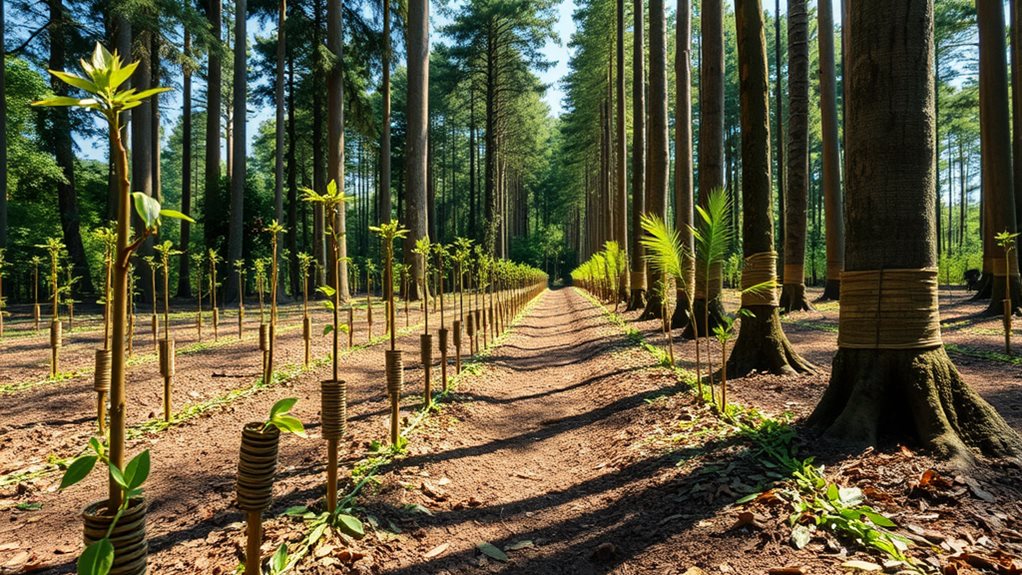
    You can bolster the Philippine woodcraft sector through sustainable forestry. Prioritize selective logging and replanting to promote natural regeneration. You'll want to limit soil disturbance and enhance wildlife habitats. Implement the Philippine Sustainable Forest Management Strategy. Community-Based Forest Management empowers local communities. It gives them rights and promotes responsible forest stewardship. Reforestation boosts domestic wood production and reduces imports. Stay up to date as you explore policy changes that further promote sustainability and growth.

    The State of Philippine Forests

    As of 2022, the Philippines' forest cover stands at approximately 7.22 million hectares, constituting 24.07% of the nation's land area.

    You're looking at a predominantly open forest landscape, constituting 66.8% of the total, with closed forests at 28.9%, and mangroves at just 4.3%.

    Unfortunately, deforestation remains a critical problem. You should know it's attributable to logging, mining, urbanization, and agricultural expansion. This reality underscores the urgent need for effective forest restoration projects, like the National Greening Program, where over 33 million seedlings have been planted. Logging is a major driver of forest loss, impacting local ecosystems.

    Prioritizing native species, you'll be working toward long-term ecological balance.

    You've got to understand that the Philippines is one of the planet's mega-biodiverse countries, and protecting its forests is essential for biodiversity conservation.

    Protected areas, spanning over 1.6 million hectares, are key, but they aren't enough.

    Community-Based Forest Management

    CBFM, officially adopted in the Philippines in 1995 via Executive Order No. 263, is the principal strategy for sustainable forest management; it aims to democratize access to forest resources while simultaneously improving the socio-economic conditions of upland communities. The program was launched with support from international donors and NGOs.

    You'll find that the implementation of CBFM involves a wide range of concerns related to environmental and natural resources management. As of 2018, more than 1.6 million hectares were under CBFMAs managed by nearly 1,900 People's Organizations.

    Crucially, CBFM emphasizes community rights and responsible forest stewardship.

    It's vital that you understand its broader implications:

    • Imagine the generations of skilled artisans unable to access the resources they need.
    • Picture the forests, once vibrant ecosystems, slowly degraded by unsustainable practices.
    • Envision our heritage of unique Philippine woodcraft disappearing.

    We need to streamline harvesting and community participation, because bureaucratic hurdles complicate access to resources undermining community-based initiatives.

    We should ensure sustainable external support to improve forest-based livelihoods.

    Ecological Benefits of Sustainable Forestry

    You'll see several ecological benefits from sustainable forestry, including maintaining biodiversity, supporting carbon sequestration, and promoting overall forest health.

    Through practices like selective logging and replanting, you ensure continuous forest cover and promote natural regeneration. Sustainable methods limit soil disturbance, support healthy soil conditions, and enhance wildlife habitats. This helps to preserve biodiversity by protecting habitats and minimizing ecosystem fragmentation.

    When you implement sustainable forestry, you directly contribute to climate change mitigation. Forests absorb and store atmospheric carbon dioxide, which is crucial for reducing greenhouse gases.

    Sustainable harvesting methods maintain forest health and maximize natural carbon sequestration capabilities. You also protect against landscape deforestation.

    Consider how riparian buffer preservation filters runoff and protects aquatic habitats. Erosion control from reduced soil erosion preserves overall water quality.

    Sustainable forestry will assist your watershed protection and ensure long-term watershed function.

    Empowering Communities for a Green Future

    Beyond the ecological gains from sustainable forestry, empowering communities is vital for fostering long-term environmental stewardship and economic growth.

    You've likely seen community-based forest management (CBFM) touted as key, and you're right to consider it. Through community education, people gain skills in resource management and forest protection. Over 5,500 CBFM projects exist, yet face unstable policies and funding shortages. With forest cover dwindling to only 24% percent in 2003, the need for effective community involvement is clear.

    You can help address these challenges—the Sustainable Forest Management Act can strengthen forest governance if you champion it. Community capacity building, through training and education, ensures CBFM implementation improves with time.

    Consider the profound impact:

    • Think about families losing their ancestral lands and livelihoods due to unsustainable logging.
    • Imagine communities effectively managing forests, improving biodiversity.
    • Envision the future where your actions ensure thriving forests for generations.

    Increasing formal CBFM involvement in decision-making and bolstering government support ensures community empowerment.

    Your action ensures long-term sustainable forest management.

    Economic Opportunities in Woodcraft

    Transitioning to economic prospects, woodcraft presents considerable opportunities bolstered by sustainable forestry.

    You'll see that the sector's poised for substantial growth, potentially reaching a $20 billion valuation through sustainable practices. Reforestation efforts can boost domestic wood production, cutting down on imports. The local wood industry can grow into a $20 billion sector, which signifies its immense potential.

    Focus on the industry's robust export potential; wooden furniture alone generated $211 million in 2023. Japan constitutes the largest market, though exports to the U.S., Singapore, and South Korea are also significant.

    Favorable trade conditions and low labor costs position the Philippines as an attractive manufacturing hub. Market expansion relies on meeting rising global demand, indicating that as export potential scales, the industry may increasingly rely on sustainably sourced materials.

    Government support, enacted through robust policy and regulation, is vital to industry support, too.

    Balancing Conservation and Livelihoods

    As you've seen, economic viability hinges on sustainably sourced materials; however, policies, funding, and community engagement must all align to safeguard Philippine forests.

    You've got to recognize that the Sustainable Forestry Act empowers community resilience through community-based forest management (CBFM). You must push to ensure sustainable practices through a national forest certification system. With current deforestation rates leading to just 22% forest cover, a national forest certification system will enhance sustainability.

    Limited funding and inconsistent policy impede CBFM's long-term viability, potentially leading to:

    • Families losing access to vital resources.
    • Children facing food insecurity due to dwindling forest products.
    • Communities facing displacement due to unsustainable practices.

    You enhance biodiversity and support local livelihoods by integrating agroforestry.

    Long-term commitment from communities and governments ensures CBFM project sustainability. You'll reduce pressure on forests if you promote community resilience via eco-tourism and sustainable agriculture.

    Despite successes, equity in benefit distribution remains a challenge.

    Addressing Deforestation Challenges

    Addressing deforestation challenges requires multifaceted strategies, as illegal logging, slash-and-burn agriculture, and mining activities deplete Philippine forests. The Philippine Forest Management Bureau plays a key role in overseeing forest management and implementing relevant policies.

    You're seeing forest loss exacerbate soil erosion where deforestation causes landslides. It isn't just about the trees; it's about endangered endemic species losing habitat and potentially facing extinction.

    You contribute to or combat this. You understand that weak law enforcement fails to deter illegal logging. You need alternative livelihoods planned for to reduce pressure; you can't ignore community welfare.

    Recognize conflict between forest conservation, agriculture expansion, and urban expansion which require tough resolutions. Protecting activists is vital, as their safety's paramount for integrity.

    You can mitigate the impact of urban expansion on native forests. Prioritizing certified sourcing limits supporting illegal logging.

    Policy and Funding for Sustainability

    You'll see that policy and funding are critical for ensuring sustainability, so you must thoroughly understand available support mechanisms.

    Policy frameworks, like the Philippine Sustainable Forest Management Strategy (PSFMS) and Community-Based Forest Management (CBFM), guide sustainable practices, supporting key laws such as the National Integrated Protected Area System Act and the Indigenous People Rights Act. Legislative changes aim to promote sustainable forest management.

    You've got to know that the Revised Forestry Code needs updating, driving the push for the Sustainable Forest Management Act.

    These policies won't mean much without funding mechanisms to support them. You can tap into various sources, like Department of Environment and Natural Resources (DENR) initiatives, to drive sustainable forest management.

    Incentives aim to encourage investment in forest plantations and management.

    • Witnessing forests disappear.
    • Struggling to create sustainable livelihoods.
    • Dealing with outdated and unenforced regulations.

    Furthermore, forest certification incentivizes cooperation among stakeholders.

    Training builds crucial capacity for implementing certification systems.

    The Role of International Cooperation

    Explore some programs impacting the Philippines. Through the Forestland Management Project (FMP), the Japan International Cooperation Agency (JICA) collaborates with the Department of Environment and Natural Resources (DENR) to save critical watershed systems in the Philippines. JICA supports the Denr partnership to address climate change and improve livelihoods.

    Program/Agreement Focus Area Key Activities
    AFoCo Regional Collaboration Forest fire prevention, reforestation
    JICA (FMP) Capacity Building Watershed management, expert training
    ITTO Sustainable Management Standards and criteria development
    PEFC Forest Certification NGB establishment, training for stakeholders

    Future of Sustainable Woodcraft

    Having seen the impact of international forestry programs in regions like the Philippines, we now consider the evolving landscape of sustainable woodcraft.

    You'll see an intensified focus on eco-friendly practices, reducing waste and conserving energy. Technological innovations, such as digital transformation and solar-powered tools, are revolutionizing efficiency. Wood's renewable nature is a key reason for its ongoing use as a sustainable material.

    We're entering an era of increasing demand for sustainable products. You must adapt.

    Here's what drives this shift:

    • The raw, palpable loss seeing hectares of forest turned into barren land.
    • The silence of habitats that previously teemed with life.
    • The guilt experienced knowing that our choices affect future generations.

    Consumers increasingly seek sustainable woodcraft driving market trends.

    Expect greater emphasis on customization trends offering bespoke pieces reflecting personal style using materials like FSC-certified wood and bamboo.

    Local workshops cultivate green woodworking communities.

    Prepare for a future where sustainability defines excellence in woodcraft.

  • Religious Iconography in Filipino Wood Sculpture

    Religious Iconography in Filipino Wood Sculpture

    You'll find religious iconography deep-rooted in Filipino wood sculpture. Santos, depictions of Catholic saints, are central. These figures emerged during Spanish colonization, replacing pre-colonial carvings. Cultural integration and artistic adaptation define their evolution. Local artisans localized European models. Faith and cultural identity are vividly expressed in these carvings. These intricate figures carry sacred spiritual symbolism passed down through generations. Through historical context, discover what's imparted from this unique cultural lens.

    Significance of Wood Sculpture

    Discussing the significance of Philippine wood sculpture goes beyond mere aesthetics to encompass its profound cultural, economic, technological, and historical importance.

    You'll find that these carvings stand as powerful expressions of faith and tradition, serving as visual representations of Filipino culture. Beyond religious iconography, they depict myths and legends, becoming integral to the cultural identity of various regions. The bulul figures, often passed down through generations, are prime examples of this symbolic preservation.

    You also help maintain cultural heritage when you pass down wood carving techniques across generations.

    You'll see Filipino wood sculptures are testaments to artistic prowess, demonstrating creativity, while also providing significant employment opportunities, particularly in places like Paete.

    It benefits immensely from being the "Carving Capital," attracting art enthusiasts and contributing to the national economy through exports.

    The meticulous craftsmanship transforms raw wood into art, with the choice of wood, design, and execution enhancing the aesthetic appeal of each piece.

    You can witness the symbolic representation through artistic storytelling that merges local myths with enduring creativity.

    Origin of Santos

    From the artistic storytelling and symbolic representation found in wood sculpture, let's turn our attention to the origin of Santos.

    You'll discover that these religious images emerged in the Philippines during Spanish colonization. Missionaries introduced them to propagate Catholicism, marking a significant cultural shift.

    Within this historical context, you'll find that the tradition of carving saints, prevalent throughout the Americas and Asia, flourished in the Philippines. It replaced pre-colonial carvings of nature spirits, or anitos.

    Paete, Laguna, became a prominent hub, harnessing local materials like batikuling wood for these creations. You'll see they've endured as a vibrant folk art tradition in the Philippines and other regions.

    Understanding the origin reveals a story of cultural integration and artistic adaptation. You witness how a colonial influence became deeply embedded in Filipino identity, continuously evolving through generations.

    Influences on Style

    Several pathways helped shape the style of Filipino wood sculpture.

    You'll notice pre-Hispanic carvings of deities and ancestors served as a crucial foundation. These early forms, often integral to rituals, contributed to the incorporation of indigenous motifs into later religious imagery.

    The arrival of Spanish colonizers prompted colonial adaptation, where Catholic imagery was integrated and subsequently localized by Filipino artisans. The establishment of the Philippines as a Spanish colony influenced religious practices and artistic expression during this time.

    You see how European models of saints evolved through the incorporation of local styles? The painting classes led by the Jesuit Antonio Sedeño further fostered this fusion.

    The Manila Galleon trade also facilitated an exchange, adding Asian motifs and techniques from other Pacific regions.

    Floral estofado, glass eyes, and repoussé illustrate the blending of local artistry with imported techniques, further enriching the stylistic landscape.

    Wood Selection

    Historically, artisans utilized readily available woods such as acacia.

    However, the scarcity of premium woods like Narra necessitates sustainable sourcing. You'll notice a modern shift toward eco-conscious practices, as artisans focus on conservation. The use of wood aligns with the folk art aspect of Philippine Santos, highlighting the blending of artistry and religious expression.

    Considering the cultural significance tied to these woods, such as Narra representing national identity, you're safeguarding both tradition and natural resources. Over time, wood selection has adapted to cultural values and environmental concerns.

    Carving Techniques

    Woodcarving techniques in the Philippines reflect a rich tapestry of cultural influences and historical evolution. Over centuries, artisans have blended pre-colonial methods with Spanish traditions to achieve distinctive 'carving styles'.

    You'll find that 'tool usage' includes knives, chisels, and hammers, crucial for creating intricate designs. We're going to now examine aspects of method.

    Consider these key aspects:

    • Sketching a design on the wood's surface.
    • Carefully carving the wood with knives and chisels.
    • Sanding to achieve a smooth surface.
    • Staining or painting to highlight features.

    Artisans in workshops, such as those in Paete, dedicate themselves to refining these techniques. The town of Paete, Laguna Province's gem, is known for being the home of many of these artisans. Indigenous influences remain, with tribal motifs and symbols embedded in contemporary works.

    It's also important to appreciate designs often carry symbolic meanings, linking back to spirituality and cultural identity. Modern carvings often integrate traditional methods with innovative designs influenced by globalization.

    Depiction of Saints

    Beyond carving techniques, notice the religious sculptures in the Philippines, particularly the depictions of saints, which stand as remarkable examples of artistic expression intertwined with cultural identity. These sculptures often date to the 18th and 19th centuries, reflecting colonial influences. You'll find that each saint sports symbolic attributes, aiding identification.

    The choice of materials matters. Molave and batikuling woods are favored, and polychrome finishes and bone and glass inserts enhance the realism. Observe how regional styles inform interpretations. Bohol's folk style contrasts Paete's mastery with naturalistic rendering and refined details. Many figures have glass eyes and bone teeth, increasing the naturalism. We see St. Joseph, St. Martin of Tours, or St. Isidore, each carving speaks to the cultural significance and artistic interpretation, showing their reverence.

    Emotion Artistic Style Spiritual Connection
    Reverence Naturalistic Faith
    Awe Regional Styles Devotion
    Piety Symbolic Attributes Prayer

    The Virgin Mary in Sculpture

    • Mary is presented with dark skin and Asian features.
    • You see the employment of elements like pandan leaves and traditional clothing.
    • The image appears in simpler attire, underscoring maternal nature.
    • You'll find materials like coconut shells, emphasizing local craftsmanship; molave wood is often the base material for these sculptures.

    These artistic choices exemplify *Marian symbolism* and *local craftsmanship*.

    These images of Mary show intricate details reflecting the skill of Filipino artisans.

    Polychrome techniques add vibrant colors that enhance the sculptures.

    These historical artworks embody not only religious devotion but cultural expression.

    Look closely, and you'll appreciate the fusion of faith and cultural identity these carvings embody.

    Spiritual Messages

    From depictions of the Virgin Mary, you can observe the spiritual messages embedded within Filipino wood sculpture. You find deep faith and tradition reflected in each carving, acting as a visual cultural representation of Filipino life.

    Saints—Santos—stand out as key to Filipino religious iconography. These intricately carved figures broadcast sacred spiritual symbolism; cherubs give you divine blessings and deliver inspiration. You see faith made tangible through artistic expression. The San Lorenzo wood carved figure, dating back to circa 1800, represents a historical piece of religious art.

    Through these sculptures, you don't just view art; you experience cultural narratives passed down through generations. Artisans use Narra, Molave, and Kamagong woods to root their work in nature.

    You witness folk art traditions come alive, offering you spiritual guidance and comfort. By studying these sculptures, you're not just seeing wood; you're understanding the heart of Filipino artistic inspiration.

    Economic Support for Artisans

    Consider these focal points to imagine the industry:

    1. Partnerships between local governments and universities secure lumber supply.
    2. Interest-free loans aid small businesses. Local governments review and must provide consensus based on the loan requests of small businesses.
    3. Workshops help to adapt to new techniques.
    4. Infrastructure development supports artisans and tourism.

    Despite this, artisans still require long-term help with market access and further opportunities.

    Limited resources and bureaucratic processes can still impede potential progress.

    You'll acknowledge that sustained support is vital for preserving this intricate craft.

    Cultural Preservation

    You enable storytelling through art, expressing the diverse culture of the Philippines.

    It's clear that specific woods and designs symbolize values, reinforcing cultural identity. The meticulous attention to detail found in each piece reflects the artist's dedication and cultural heritage.

    Aren't you preserving Paete's carving legacy?

    By fostering community involvement, you encourage cultural education and awareness.

    You should appreciate how Filipino wood carvings gain global recognition, showcasing craftsmanship and promoting exchange.

  • Paete’s Master Carvers: Profiles of Living National Treasures

    Paete’s Master Carvers: Profiles of Living National Treasures

    Paete's master carvers embody centuries of tradition. You'll find their skills passed down through generations. They use chisels to create intricate designs on narra and batikuling wood. Their carvings reflect faith, Filipino life, and pre-colonial beliefs, boosting the economy. The St. James the Apostle Parish Church showcases their artistry. Community workshops and competitions highlight their brilliance. You'll discover Mariano Madriñan's example, and the role of the Paete Church. Paete sustains its legacy through dedicated artisans. Observe how culture is reflected in artwork.

    A Glimpse Into Paete's History

    Founded in 1580 by Spanish friars Juan de Plasencia and Diego de Oropesa, Paete's early inhabitants came from Borneo.

    During the Spanish colonial era, the town's artisans honed woodcarving skills for churches and artifacts. You'll find that Paete's history is deeply intertwined with its identity as the Carving Capital of the Philippines, a title conferred in 2005. The title acknowledges the exquisite talent in woodcarving that Paeteños are known for.

    As you delve deeper, you'll understand how the town's waterfront position along Laguna de Bay factored into its development, providing resources and trade routes.

    You'll notice the colonial influence shaped Paete's cultural landscape, especially through the historical legacy of the Franciscan Order. The artistic evolution throughout the centuries turned this town into a cultural landmark.

    You've got to appreciate Paete's role as bearer of Philippine history. You might also find out the town's name came from "paet," a chisel.

    Enduring Artisan Skills

    You'll find that the enduring appeal of Paete's artisan skills lies in a rich combination of time-honored techniques, generational knowledge transfer, as well as a blend of traditional artistry with modern adaptations. These skills, passed down through generations, involve using artisan tools like chisels, knives, and hammers to meticulously shape wood. Carvers often choose narra wood for its durability but also batikuling wood due to its soft characteristics. Today, you'll observe that due to scarcity, they're also adapting alternative materials like santol and acacia. Many carvers in Paete have generations of experience honing their craft.

    Technique Material Tool
    Woodcarving Narra Chisel
    Sculpting Batikuling Knife
    Shaping Santol Hammer

    These traditional techniques, honed over generations, are evident in the detailed woodcarvings you'll see. Design planning starts with patterns sketched on cardboard. You'll come to see how workshops and local government initiatives preserve these skills. Paete isn't just preserving techniques; it's evolving. You'll notice how modern innovations coexist with traditional methods, ensuring this cherished art form thrives.

    Cultural and Symbolic Importance

    Beyond enduring artisan skills, carvings are more than aesthetic; they embody Paete's cultural and symbolic importance. As the "Carving Capital," Paete's legacy is woven into the Philippines' heritage. You'll see artistic expressions reflecting pre-colonial beliefs and the shift towards Christian iconography. You connect with history, tracing cultural symbolism in every motif.

    Paete's artistry tells stories. In religious carvings, you perceive Christian traditions. The designs mirror Filipino life. Taka toys express innocence through curvilinear forms. The use of Batikuling adds another dimension, valued for its workability and serving as a natural termite repellent. Acacia and molave woods add layers of meaning. These carvings are tangible pieces of cultural narratives.

    From a friar's misunderstanding shaping the town's name to St. James Church's intricate details, you're seeing the town's timeline. By the 16th century, artisans built retablos for Laguna churches.

    Paete is historical preservation. You witness cultural exchange embedded in taka toy evolution. Each carving shows the story.

    Economic Benefits of Carving

    Paete's woodcarving artistry isn't just culturally significant; it's also a key economic driver. You see the benefits ripple through the community. The woodcarving industry provides crucial employment; many artisans depend on it. We're talking about income generation, ensuring financial stability for countless families; you're helping secure their livelihoods.

    Paete's economy diversifies because of the craft. Its products travel globally, enhancing the town's reach. You contribute to the town's local economic boost. The craft also promotes further engagement by the local community to keep woodworking alive.

    During tough times, like the pandemic, online sales provided a lifeline, showing resilience. The industry's success hinges on artisan earnings and hinges on market growth that promotes financial stability.

    The industry is adapting; embracing new strategies for sustainable income, and that's good for everyone.

    Architectural Marvels in Paete

    Diving into Paete reveals architectural marvels deeply rooted in its history of artistry.

    You'll quickly notice that Paete's historical architecture reflects centuries of artistic heritage, particularly the Baroque and Neoclassical styles merged within St. James the Apostle Parish Church. Franciscan friars constructed it during the Spanish colonial era, and its facade features sculptures of saints, angels, and biblical figures. This construction aligns with the spread of Christianity, influencing architectural designs.

    The church, a centerpiece, showcases:

    1. Ultrathick buttresses characteristic of Baroque design.
    2. Grand chandeliers and retablo inside.
    3. Capiz window panels—a hallmark integrating traditional Filipino architectural elements.

    You'll find that preservation efforts actively sustain Paete's cultural significance.

    Tourism, boosted by the Philippine Experience Program, supports the town's dedication to protecting its artistic heritage.

    Evolving Artistry

    Artistry in Paete evolves, rooted in a rich wood carving tradition dating back to pre-Spanish times, flourishing under Spanish influence as carvers produced religious icons and retablos.

    You'll see how the shift occurred from purely religious pieces to encompass secular art, reflecting changes in society. Paete's wood workshops are prevalent, especially in downtown.

    Paete's carvers adapted, integrating modern techniques while honoring tradition. What was once solely for churches now graces homes and galleries.

    The legend of "paet" underscores the deep connection between the town and the craft.

    We see that artistry also transformed through the lens of artistic collaborations. Carvers are actively seeking opportunities to work with other artists, blending skills to produce carvings, which allows them to explore new themes or styles.

    This blend ensures Paete's wood carving tradition continues to evolve, inspiring future generations. This helps to maintain Paete's legacy as the wood carving capital.

    Mariano Madriñan: A Shining Example

    A testament to Paete's legacy, Mariano Madriñan stands as the town's official hero due to his profound contributions to woodcarving.

    You see, his Mater Dolorosa isn't just a carving; it's a symbol of Paete's artistry. Imagine the recognition—an award from the King of Spain in Amsterdam way back in 1882! This recognition highlights Paete's long history, traced back to 1580.

    Madriñan's Techniques obviously showcases Paete's exemplary craftsmanship.

    The impact extends to today's artisans; they're inspired by his excellence.

    Consider these aspects:

    1. The lifelike quality of his Mater Dolorosa.
    2. His contribution to Paete's international recognition.
    3. How his work epitomizes the town's cultural heritage.

    Madriñan's artistry, fueled by Artistic Inspirations rooted in Paete exemplifies cultural appreciation and skills.

    You'll find hints of these in works exported worldwide, which includes the Vatican.

    He represents a fusion of tradition and skill, solidifying Paete as the "Carving Capital of the Philippines" since 2005.

    His legacy continues to shape Paete's identity as a cultural hub.

    The Role of Paete Church

    Beyond Mariano Madriñan's individual contributions, you'll find Paete Church embodies the town's cultural legacy. Established by Franciscan friars, its history stretches back to the 1600s, solidifying its church significance. You'll see a blend of Baroque and Neoclassical architectural styles featuring detailed carvings by local artisans. Bartolome Palatino designed its nail-less retablos. Founded in 1580, the church has a long history of artistic devotion.

    The church is more than just a building; it's a symbol. You observe how the Spanish friars' introduction of Christianity sparked the development of Paete's wood carving tradition, enhancing its artistic heritage.

    Feature Significance Artisan
    Retablos Intricate Designs Bartolome Palatino
    Walls Witnessed History N/A
    Sculptures Biblical Figures Local Carvers

    It's a testament to the town's past and the enduring craftsmanship. The church showcases carvers' skills, demonstrating how Paete continues to produce amazing artisans. The iconic imagery embodies the community's faith and art.

    Community Involvement

    Recognized as a cultural heritage site for its woodcarving tradition, Paete enhances local identity and community pride.

    You'll see artisans heavily involved in festivals and educational programs that boost local culture. Local government aids this by providing training that hones artisans' capabilities. This involvement goes beyond just practice; it fuels Paete's economic growth through tourism.

    You're likely aware that Paete's cultural preservation weaves through local folklore and historical narratives. Community-led initiatives are pushing you to revitalize traditional techniques, and you're seeing community workshops flourish.

    Artisan collaborations are key, shown in several avenues:

    1. Competitions, like the Jose D. Caancan Memorial Sculpture Competition, foster creativity.
    2. Exhibitions showcase the brilliance of master carvers and their art.
    3. Tourism significantly benefits from your craftsmanship.

    Sustaining the Legacy

    You've probably noted the community's profound commitment; sustaining Paete's legacy requires constant nurturing.

    Considering the historical foundation rooted in Spanish colonial influence, you'll see the significance of tradition preservation. The Philippine Experience Program, a form of institutional support, bolsters these efforts.

    Furthermore, artisan mentorship features prominently, with master carvers, like Ebong Cadayona and Arnold Padol, passing generational skills.

    You'll witness how techniques evolve, yet maintain their core. It's a blend visible even in paper-mache, often combined with wood carvings. Taka symbolizes Filipino folk art.

    To sustain viability, you're going to see that local markets promote Paete's unique artistic flair. Recognizing the crafts as national heritage contributes directly to community recognition.

    Educational programs also help maintain tradition preservation. You're witnessing cultural identity upheld.

  • The Art of Narra Wood Furniture Making in the Philippines

    The Art of Narra Wood Furniture Making in the Philippines

    You'll discover Narra wood furniture making has a rich Philippine history. Influenced by Spanish styles, artisans use techniques like mortise and tenon. Centers such as Batangas excel in detailed work. Narra, the national tree, offers durability and beauty. Craftsmen value its unique grain and rose scent. Demand is high, but sustainability is key due to endangerment from logging. You can see cultural preservation through apprenticeships. More awaits you.

    A Legacy of Woodworking

    Philippine furniture-making's legacy is interwoven with historical influences, like the introduction of new designs and techniques from Spanish colonization.

    You'll find that traditional methods, such as mortise and tenon joinery, share similarities to those used by Chinese migrants, particularly in Batangas.

    As you explore this craft, you'll recognize the "Three B's"—Batangas, Baliuag, and Bohol—as key craftsmanship centers, embodying the nation's cultural heritage. Established in 1987, furniture makers built their reputation on woodworking skill.

    Traditional techniques flourish in these regions. Baliuag stands out with its intricate wood inlay (hilas) and bone inlay (imbute), showcasing beautiful works using kamagong and lanite woods. These materials are often used in embellishments.

    From made-to-order beginnings to international recognition, you see how woodworkers like those at Isabela House of Narra expanded.

    You'll appreciate how local communities are kept alive by the employment and training of young craftsmen; these provide economic growth while maintaining competitive pricing.

    The Allure of Narra

    A symbol of the Philippines, Narra's allure begins with its deep roots in the nation's identity, representing resilience and strength as the national tree. You'll find it captivating due to its majestic presence, with trees reaching impressive heights. The Matic Hub website, built on WordPress, makes accessing information about such national symbols simple.

    Narra aesthetics are a major draw. The wood's heartwood displays a spectrum of golden yellow to reddish-brown, a beauty you can appreciate. Interlocked grain and good natural luster further enhance it.

    For woodworking techniques, the durability, resistance to wear, and decay resistance are what you need. Its resistance to termites makes it highly sought after.

    Its use in various crafts only expands its charm. You can appreciate how easily this wood can be transformed into detailed carvings, musical instruments, or beautiful sculptures.

    You'll find that quarter sawn surfaces reveal patterns like ribbon-stripe and mottled figures, and the rose scent makes it a treasure to have.

    Crafting Timeless Pieces

    Crafting timeless pieces from Narra requires you to understand the wood's characteristics. Its durability guarantees that your pieces will endure. You'll appreciate its workability, making it easy to turn and carve. You can nail or glue it easily, and it takes stains and finishes well. Understanding that tropical woods often have natural oils affecting glue adhesion is essential for a strong bond.

    Shellac helps seal oily surfaces, improving finish adhesion whereas hand-rubbed oil finishes enhance the Narra aesthetics.

    You'll find that Narra woodworking traditions involve careful sourcing. Narra's status as the national tree affects its availability. You need to comply with the law and source only legally obtained wood.

    Here's what you need to think about when sourcing:

    • Ensuring correct origin
    • Complying with local ordinances
    • Ensuring ethical wood harvesting
    • Limiting waste production

    Given these constraints, you need to value sustainably sourced wood. This ensures that crafting your heirloom pieces doesn't contribute to the further endangerment of this culturally significant and beautiful wood.

    Design Versatility

    You'll find design versatility is a hallmark of Narra wood furniture as it effortlessly bridges traditional and modern aesthetics. Its adaptability doesn't stop there; its inherent beauty compliments both indoor and outdoor spaces. Because of its workability, Narra is used in almost all furniture types. Solid construction, a key attribute, ensures the furniture remains stable and durable over the years.

    Furthermore, consider the impact of Filipino culture because it shapes the designs which results in both aesthetic and functionality. This blend of tradition and modernity is highly sought after. You'll appreciate that Narra easily accommodates custom styles, reflecting personal tastes. Its spatial adaptability shines through in creating pieces that fit your specific dimensions. You can mix it with other materials, enhancing both aesthetics and functionality.

    Design Characteristic Influence Application
    Aesthetic Appeal Cultural Heritage Living Room Furniture
    Space Optimization Family-Focused Designs Dining Room Furniture
    Style Adaptability Indigenous Materials Bedroom Furniture
    Customization Options Sustainability Patio and Outdoor Spaces

    From Forest to Furniture

    From forest to furniture, understanding Narra's journey involves navigating its source and sustainability.

    You'll find Narra, the Philippines' national tree, facing endangerment due to illegal logging. Responsible sourcing is vital, as harvesting is now regulated due to its vulnerable status. You'll see reclaimed and legally sourced wood used. The scarcity of Narra trees stands in stark contrast to the immigrant father who arrived in the US in 1931 from the Philippines.

    Then, careful selection takes place. Craftsmen choose only heartwood. Narra wood is generally easy to work with. It's great for nailing and gluing. However, its density can be a challenge. Preparation requires specialized woodworking tools.

    • Selection of Heartwood
    • Careful use of Woodworking Tools
    • Legally Sourced Lumber
    • Application of Traditional Techniques

    You'll notice how it stains and finishes well. However, high oil content might affect the finishing.

    Also, the quality of the wood is there because it's durable and resistant to decay. You're seeing a transformation from raw material to valued cultural symbol.

    Narra in Different Applications

    Understanding Narra's adaptability is next, as it appears in numerous forms across different sectors. Throughout history, you'll see that communities use Narra not just for furniture. They're also applying it in construction, particularly for flooring, because of its Narra durability. Now, you're also seeing Narra in boats, musical instruments, and decorative carvings. I bet you're impressed by the Narra aesthetics, isn't it? Its rich reddish-brown color makes it a visually appealing choice for many applications.

    Application Advantage Benefit
    Furniture Durability, Aesthetics Longevity, Beauty
    Flooring/Construction Resistance to Decay Structural Integrity
    Boat Building Seawater Resistance Lasting Vessel

    However, the demand for Narra, which includes international acclaim and the value of its craftsmanship, puts pressure on this resource. As Narra's utilization grows, you've got to acknowledge the increase in price and its endangered status.

    Sustainability and Sourcing

    Because Narra trees face endangerment from overexploitation, conservation efforts, like the Philippine government's 1987 ban on cutting them in natural stands, have become vital.

    You'll find that ethical sourcing now takes precedence because illegal logging greatly reduces the population of Narra. The high demand coupled with limited availability makes acquiring this wood difficult, so remember that these efforts involve:

    • Regulating the cutting of Narra trees;
    • Supporting the DENR;
    • Planting Narra trees;
    • Conserving the genetic diversity of the Narra population.

    Since 2011, more programs arose, like Executive Order No. 26, making schools participate in tree planting.

    Reforestation projects expand Narra populations, but keep in mind that its high price reflects its scarcity. It's durable and resistant to weathering, but the wood's unique colorations vary from yellowish to purplish hues. Its large size can impact ecosystem biodiversity.

    The historical and cultural value also adds to the economic side. You'll see conservation efforts trying to strike a balance between using this valued wood and preserving this national treasure.

    Addressing the Challenges

    You'll find that crafting furniture from Narra wood presents a series of complex hurdles, compounded by the delicate balance of ecological preservation and cultural heritage. Initially, legal restrictions implemented in 1987 made acquiring Narra a struggle, given its endangered status. Addressing these issues demands robust conservation strategies. Public and private reforestation endeavors, such as those by the Mindanao Baptist Rural Life Center, help, but aren't enough. You've also got density, resin presence, and necessary shellac application to consider.

    To maintain traditional craftsmanship, you need artisan collaborations to pass down knowledge. The high cultural esteem and desires for authentic pieces add pressure, while economic value fuels illegal logging. Given Narra's average weight of 41 pounds per cubic foot, its density makes it a challenging wood to work with, requiring specialized tools and techniques. This table frames the core issues:

    Challenge Category Specific Challenge
    Sourcing Limited Access to Mature Trees
    Technical Wood Density and Resin Content
    Cultural Preservation of Techniques
    Environmental Limited Fire Tolerance
    Socioeconomic Workforce Training

    Market Reach and Impact

    The market reach of Narra wood furniture extends far beyond local artisans, and its impact is multifaceted and significant. You'll find Philippine craftsmanship highly valued globally, opening up significant export opportunities. The reputation for quality and the cultural significance of these pieces drives demand. The industry's growth supports economic stability and job creation. Our competitive designs and pricing allow us to effectively reach various market segments.

    Here's how narra wood furniture maintains its market position:

    • Consistent quality standards attract buyers.
    • Competitive pricing allows for market penetration.
    • Craftsmanship preserves Filipino heritage.
    • The pieces attract collectors of traditional and historical items.

    Digital platforms and international exhibitions are key in expanding reach. Participating in such events will boost visibility.

    Addressing global trends, collaborations with designers can introduce Narra wood to modern aesthetics. This will appeal to a younger, broader audience.

    Nurturing the Craft

    Now, let's delve into nurturing the craft of Narra wood furniture-making, which involves several key aspects that ensure its longevity and relevance.

    You'll see that preserving the art begins with recognizing its rich cultural heritage. The usage of Narra wood in traditional furniture holds profound cultural significance, and preserving this artistry demands dedication.

    You're safeguarding woodworking talents through apprenticeships. Young artisans are learning from experienced Narra wood furniture makers, ensuring essential skill transfer.

    Traditional techniques are still alive. Don't forget the significance of proper maintenance, because cleaning with warm water and mild soap can preserve the wood's finish. Regular waxing protects the pieces. To further protect the finish, furniture should be kept away from direct sunlight to avoid fading.

    The future will require balancing costs and sustainability. You've got to adapt using alternative woods like Molave or Tugas when Narra's unavailable.

    Finally, innovative marketing and regulations adherence play a huge role.