Author: Amiel Pineda

  • How Artificial Intelligence Is Helping Preserve Filipino Cultural Heritage

    How Artificial Intelligence Is Helping Preserve Filipino Cultural Heritage

    Filipino culture has survived centuries of change.

    From oral traditions to handwritten manuscripts, from community fiestas to diaspora communities abroad, preservation has always depended on people passing knowledge forward.

    Today, that responsibility is expanding into the digital world.

    Artificial intelligence is quietly becoming a tool that helps communities document, organize, and protect cultural heritage — especially for Filipinos spread across the globe.

    Let’s explore how.

    The Challenge of Preserving Culture in the Digital Era

    Cultural preservation used to happen through:

    • Storytelling
    • Dance
    • Festivals
    • Community gatherings
    • Printed books and archives

    But modern Filipino communities now live online.

    Cultural groups operate through:

    • Facebook groups
    • Discord servers
    • Telegram channels
    • Online learning platforms

    The problem?

    Digital spaces create massive amounts of scattered information.

    Stories get buried. Files get lost. Conversations disappear.

    Without structure, digital heritage becomes fragmented.

    How AI Is Changing Cultural Documentation

    Artificial intelligence can help communities:

    • Organize historical documents
    • Summarize long discussions
    • Categorize cultural resources
    • Archive oral history recordings
    • Automate content indexing

    Instead of manually managing hundreds of files and conversations, AI agents can assist with structure.

    This doesn’t replace cultural leaders.

    It supports them.

    Supporting Filipino Communities Online

    Many Filipino diaspora groups now run:

    • Cultural preservation communities
    • Language learning servers
    • Heritage discussion forums
    • Regional history archives

    Managing these digital spaces requires:

    • Moderation
    • File organization
    • FAQ management
    • Event coordination
    • Knowledge archiving

    That’s where autonomous AI systems can help — especially when they operate locally and securely.

    For example, modern agent-based systems can help automate moderation, archive important conversations, and generate weekly summaries for cultural community leaders. Platforms that explore this kind of structured automation, such as OpenClawForge, provide resources on how these tools can be applied in environments like Discord-based cultural communities.

    A Practical Example

    Imagine a Filipino heritage Discord server with:

    • 2,000 members
    • Daily historical discussions
    • Shared archival photos
    • Language lessons
    • Event announcements

    Over time, valuable insights disappear into chat history.

    An AI agent could:

    1. Extract key historical discussions.
    2. Organize them into structured archives.
    3. Generate summaries.
    4. Tag recurring cultural themes.
    5. Flag misinformation.

    This strengthens preservation.

    It does not replace tradition — it supports it.

    Protecting Privacy in Cultural Communities

    Many Filipino cultural groups value privacy.

    Some discussions involve:

    • Family stories
    • Regional history
    • Sensitive community issues
    • Indigenous knowledge

    Using locally hosted AI systems allows communities to:

    • Maintain data control
    • Avoid uploading sensitive files to public cloud tools
    • Define clear permissions

    Technology must respect culture — not exploit it.

    That balance matters.

    Common Misconceptions About AI and Culture

    Some worry that AI will dilute tradition.

    That’s a fair concern.

    But AI does not create culture.

    People do.

    When used responsibly, AI simply:

    • Organizes
    • Structures
    • Indexes
    • Automates repetitive tasks

    The human element remains central.

    In fact, structured documentation may help preserve traditions that would otherwise fade.

    The Future of Filipino Cultural Preservation

    Cultural survival has always required adaptation.

    Printing presses once modernized storytelling.

    Radio amplified folk music.

    Television expanded reach.

    Now, digital automation is becoming part of that evolution.

    Filipino communities around the world are increasingly digital-first. The question is no longer whether technology will play a role in preservation.

    It’s how thoughtfully we choose to use it.

    When guided by respect, transparency, and community values, AI can become another tool in protecting Filipino heritage for future generations.


  • 2025 GameZone Tablegame Champions Cup (GTCC) Winners

    2025 GameZone Tablegame Champions Cup (GTCC) Winners

    In a powerful testament to the strength of friendship and family, 62-year-old Benigno De Guzman Casayuran from Candelaria, Quezon Province rose as the Grand Champion of this year’s GTCC (GameZone Tablegame Champions Cup). But more than the trophy and the prize, it was the road he took to get there that truly touched hearts.

    Tatay Benigno holding his Trophy


    Benigno almost didn’t make it to the competition. Facing financial constraints due to his wife’s ongoing battle with Stage 2 breast cancer, he was unsure if he could attend the event. But in a remarkable display of unity and compassion, his friends, relatives, and family members stepped in collecting funds and sending money just so Benigno could travel and represent their community.

    Tatay Benigno Winning Moments


    “Para sa pagpapa-chemotherapy ng misis ko,” Benigno shared tearfully when asked where he would use his winnings. His wife, 65, began chemotherapy treatments just this June. “Pag naka-recover siya, sana makapag-travel din kami sa ilang lugar dito sa Pilipinas.” His dream is simple yet profound: to see his wife healed and to explore the beauty of the country together.

    Tatay Benigno with the Press


    Benigno’s story moved many in the crowd, a reminder that champions are not just defined by talent, but by love, purpose, and perseverance. His victory is not his alone; it belongs to his friends, relatives and family who believed in him, his wife who gives him strength, and everyone who has ever fought for something bigger than themselves.

    Crowd reaction


    While 1st Place Winner: Ryan Dacalos, 38, from Lipa City, Batangas, plans to use his prize to build a home and support the education of his children, especially his eldest who is entering college next year. “Kung may matitira,” he said, “pang malit na negosyo gaya ng sari-sari store.”

    Ryan Dacalos hugging Tatay Benigno


    And the 2nd Place Winner: Cesha Myed A. Tupas, 37, from Rizal, will use her prize money to pay off loans and contribute to the renovation of their home to build a better space for her family.


    Cesha receiving her rewards


    Together, this year’s GTCC winners reminded us that behind every contestant is a story worth telling stories of sacrifice, resilience, and dreams for a better tomorrow. There are more stories that are yet to unfold next season. This is just the beginning!

  • Twice Colonized, First Republic: Distinctive Markers of the Philippine Nation-State

    Twice Colonized, First Republic: Distinctive Markers of the Philippine Nation-State

    The Philippines stands as a compelling case study in global history, uniquely shaped by its prolonged colonial encounters with two Western powers—Spain and the United States—and its pioneering role as the first Asian nation to establish a republic through an anticolonial revolution. 

    This intricate past has fostered a syncretic culture, where external influences are not merely adopted but actively reshaped to fit local conditions and preferences, creating a distinctive blend of East and West. Understanding the Philippine nation-state requires delving into the layers of its colonial legacy, its revolutionary spirit, and the enduring characteristics that define its identity.

    The Spanish Imprint: “Three Centuries in the Convent”

    Spanish colonization of the Philippines, beginning with Ferdinand Magellan’s arrival in 1521, was driven by the twin goals of profit and religion. Over more than three centuries, Spanish rule profoundly impacted the archipelago, though its control was never absolute.

    Conquest and Administration: In 1571, Miguel Lopez de Legazpi conquered Maynilad, the pre-colonial Muslim community at the site of present-day Manila, establishing it as a meticulously planned, walled city known as Intramuros. This physical transformation symbolized the power and permanence of Hispanic colonialism. Manila quickly became a “first global city” by the early 1600s due to the galleon trade, a highly lucrative monopoly linking Spanish America (Mexico) with the Philippines and China. This trade made the fortunes of Spanish individuals and institutions, with Manila serving as the crucial transshipment point for Chinese silk and other Asian luxury goods demanded in Europe, financed by Mexican silver.

    Spanish control over the natives depended significantly on the mendicant orders of friars—Augustinians, Franciscans, Dominicans, Jesuits, and Recollects. These religious orders served as official agents of the colonial state, tasked with Christianizing the inhabitants. They established an administrative structure that mobilized labor and collected tributes, granting encomiendas (the right to collect tribute and draft labor) to Spanish soldiers and officials.

    Limited Control and Indigenous Resilience: Despite their long presence, the Spaniards never fully conquered the entire archipelago. Muslim Mindanao was never subjugated, and people in areas like the Cordillera lived freely, resisting missionary attempts. Generally, interior and mountain regions, such as central Mindoro or Sierra Madre, remained outside direct Spanish oversight. This limited reach was partly due to the Spanish focus on Manila and the galleon trade. Indigenous reactions to colonialism included upland retreat from colonial intrusion and rival state building in the south, exemplified by the powerful Maguindanao and Sulu sultanates. These sultanates maintained their independence and continued to operate a slave economy, which was a significant source of wealth and power for their leaders.

    Cultural and Economic Transformations: The indigenous culture of the Philippines proved resilient, selectively integrating aspects of Spanish culture based on their acceptability to pre-existing traditions. While Spanish became the language of the colonizer, fostering a modern national consciousness and literature by transcending dialectic differences, most natives never learned much Spanish. The friars generally proselytized in the vernacular languages, resulting in a common faith and ethical precepts but not a common language or a unified sense of community by the end of the Spanish era in 1898.

    The 19th century brought significant economic changes with the agricultural commercialization led by British and American trading houses and Chinese traders. This process notably empowered a new landed elite, predominantly Filipino-Chinese mestizos, whose economic base was firmly outside the state bureaucracy. The rise of the sugar industry, fueled by foreign capital for sugar centrals and narrow-gauge railroads, greatly enriched this mestizo planter community, whose children would later lead the nation. A system called pactos de retro, where moneylenders would buy land with a repurchase option that original owners rarely could afford, often led to land dispossession. Spain’s efforts to modernize the colonial economy also included policies like the tobacco monopoly, which centralized production and sales to generate revenue. These economic and social transformations fostered a gradual emergence of a new “Filipino” identity.

    The Birth of a Republic: A Revolutionary Leap

    By the late 19th century, a potent blend of an impoverished and discontented peasantry alongside a wealthy but disgruntled elite challenged Spanish rule. This era saw the rise of the Ilustrados, an educated Filipino elite, often of mestizo descent, who articulated the distinctiveness of Philippine society and advocated for reforms. Jose Rizal’s novels, Noli Me Tangere and El Filibusterismo, were key literary works that criticized Spanish colonial rule and fueled nationalist sentiments.

    The call for independence culminated in the Philippine Revolution of 1896, led by Andres Bonifacio and the Katipunan, a secret society of Filipino patriots. This revolution directly led to the declaration of the First Philippine Republic in 1898 at Malolos, making the Philippines the first nation in Asia to establish a republic through an anticolonial nationalist revolution. The newly drafted Malolos Constitution provided for a representative government, a detailed Bill of Rights, separation of church and state, and a dominant legislative branch, reflecting Filipino aspirations against colonial oppression.

    However, the birth of the nation was also marked by internal class conflict. The revolution saw tension between the lower classes who initiated it and the elites who joined later. The elite domination of the Malolos Republic and the early surrender of many of its leaders to the incoming Americans highlighted this divide. This period demonstrated that there was not a single “Filipino nationalism” but rather multiple “Filipino nationalisms,” shaped by class and conceptual differences. Nevertheless, both “reform” and “revolution” are recognized as intertwined streams that ultimately forged the idea and reality of the Philippines.

    American Influence: “Fifty Years in Hollywood”

    The nascent Philippine Republic was short-lived, as the United States swiftly replaced Spain as the colonial power after the Philippine-American War. The period of American rule (approximately 50 years) ushered in a new set of influences, described by inhabitants as “fifty years in Hollywood,” reflecting a significant cultural shift.

    Educational and Linguistic Impact: The American regime strongly emphasized education in English and rapidly constructed schools in its initial decades. This enthusiastic promotion led to English gaining ascendance in Philippine literature, with many talented Filipino writers emerging in the language. The United States became a “cultural, socioeconomic, and political magnet,” with Filipino children educated by the first American teachers, the “Thomasites,” being taught a highly romanticized notion of the United States that continues to influence Philippine culture. However, the sources note that this English facade often covered an underlying Asian soul.

    Political Development and Economic Control: American colonial rule paradoxically nurtured the quest for a “Filipino nation” while simultaneously exacerbating class divides. The Americans introduced a system of “colonial democracy,” establishing municipal and provincial governments through elections, starting in 1901. Filipino elites quickly understood this system, leveraging their local networks, family ties, and party affiliations (like the Nacionalistas) to gain political power. They also sought the backing of an American padrino (patron) to advance their careers.

    Economically, American business interest remained weak, leaving much of the Philippine economy in Filipino hands, particularly the landed elite in agriculture and emergent crony capitalists in industrial and service sectors. State corporations, such as the Philippine National Bank (PNB), were often used as vehicles for material enrichment through a spoils system. Yet, even with corruption, some Filipino officials demonstrated competence, compelled by the need to prove their capability for eventual self-governance.

    In terms of language, while English was promoted, the press largely favored Tagalog, which became the basis for the national language, Filipino. This move, however, was not without controversy, as Cebuano speakers, for instance, resented the imposition of Tagalog as the national tongue.

    Distinctive Markers of the Philippine Nation-State

    The unique history of the Philippines has resulted in several defining characteristics:

    • Syncretic Culture: The ability to adopt and reshape external influences to fit local conditions is a hallmark of Philippine culture, evident in areas like its widely varied cuisine which combines influences from many other cultures to create new dishes.
    • Predominantly Roman Catholic Nation with Asian Soul: Approximately 85% of Filipinos are Roman Catholics, a strong legacy of Spanish rule. Yet, underneath this Western veneer, an Asian soul persists, with Filipinos sharing many values and attitudes with other Asian people. The challenge remains for the nation to integrate its members of pre-existing religions, particularly Islam.
    • Linguistic Diversity: The Philippines boasts remarkable linguistic diversity, with at least 165 languages spoken, most belonging to the Austronesian family. While Tagalog was rebranded as “Filipino” for political reasons, linguistic variety and regional identity remain strong.
    • Enduring Internal Conflicts: The nation has faced persistent communist insurgencies and Muslim separatist movements in the post-Cold War era. Groups like the Moro National Liberation Front (MNLF) and the Moro Islamic Liberation Front (MILF) have historically sought greater autonomy or independence for Muslim-dominated regions of Mindanao.
    • Complex Social Interactions: Filipino social behavior is characterized by concepts like “saving face,” indirect communication, and the multifaceted nature of smiling. Filipinos often use phrases like “maybe” or “I’ll try” when they mean “no,” expecting the other person to understand the implied refusal. The concept of hiya (personal sense of modesty or shame) controls social behavior, motivating individuals to uphold dignity and avoid embarrassment for themselves and others. A smile can convey not only contentment but also embarrassment, confusion, apology, criticism, or disagreement, often to avoid confrontation and maintain pakikisama (smooth interpersonal relations).
    • Economic Dynamics: The modern Philippine political economy emerged from 19th-century agricultural commercialization and the rise of a powerful landed elite. The services sector has consistently shown positive growth and appears to have a highly elastic employment coefficient, acting as a potential “last resort” employment option.

    In conclusion, the Philippines’ journey as a nation-state is a narrative of profound complexity and resilience. From the selective absorption of Spanish and American influences into a pre-existing indigenous culture to the revolutionary declaration of Asia’s first republic, and the ongoing negotiation of internal identities and external pressures, the Philippines continues to forge its distinct path. Its history of being twice colonized and the first republic in Asia truly underscore the distinctive markers of the Philippine nation-state, making it a captivating subject for study and a vibrant, evolving society.

  • GameZone TableGame Champions Cup: Where Filipino Card Game Legends Are Born

    GameZone TableGame Champions Cup: Where Filipino Card Game Legends Are Born

    In the ever-evolving landscape of digital entertainment, the GameZone TableGame Champions Cup (GTCC) stands as a beacon of Filipino gaming culture. This prestigious event is not just another tournament; it’s a grand celebration of strategic brilliance, cultural significance, and community spirit inherent in Filipino card games. The GTCC has successfully transformed traditional pastimes like Tongits, into a high-stakes arena where skill, strategy, and mental fortitude reign supreme.

    The Essence of GTCC

    At its core, the GameZone TableGame Champions Cup serves as GameZone’s premier competitive event, meticulously designed to showcase the upper echelon of Filipino card game talent. With participants hailing from across the Philippines and even from overseas, the tournament fosters a diverse yet unified gaming community. The GameZone TableGame Champions Cup is a fervent tribute to the country’s deep-rooted gaming traditions, seamlessly blending time-honored gameplay with cutting-edge digital innovation.

    GameZone TableGame Champions Cup


    Strategic Depth and Skill

    While chance undeniably plays a minor role in card games, the GTCC distinguishes itself by emphasizing skill, strategic acumen, and adaptability. Each match serves as a rigorous examination of a player’s ability to make rapid, informed decisions while adeptly outmaneuvering their opponents amidst intense pressure.

    Take Tongits, for example. Knowing precisely when to “chicken” (fold) versus when to pursue a win aggressively can be the deciding factor between victory and defeat. Players must constantly assess their hand, read their opponents, and make split-second decisions that could make or break their tournament run.

    The Journey to Glory

    The path to earning the coveted title of GameZone Champion is an arduous yet fulfilling journey, characterized by several crucial stages:

    1. Registration: Aspiring participants can quickly register through the user-friendly GameZone app or website. This streamlined process grants them immediate access to a vibrant ecosystem of competitive opportunities, fostering inclusivity and encouraging widespread participation.
    2. Earning Points: Players accumulate points through active participation in ranked matches and seasonal qualifiers. Every strategic play, match victory, and successful tournament run contributes to a player’s overall ranking, propelling them up the leaderboard and closer to their championship aspirations.
    3. Qualifying Rounds: The journey often begins with fiercely contested events such as the Tongits Free Bonanza, where players can earn valuable qualifier tickets based on their weekly leaderboard rankings. These qualifying rounds serve as a rigorous filter, narrowing the field and ensuring that only the most dedicated, skilled, and strategically astute players advance further in the tournament.
    4. Tournament Structure: The GameZone TableGame Champions Cup features a meticulously designed multi-phase structure that includes group stages, promotional rounds, and elimination rounds. This complex structure ensures that only the most consistent, adaptable, and strategically versatile players progress to the final stages, adding layers of depth and challenge to the competition.
    5. Semi-Finals and Grand Finals: The semi-finals unite the top players in an electrifying series of intense matches, showcasing the highest level of skill and strategy. The best performers from this round then advance to the prestigious Grand Finals, where the stakes reach their absolute zenith.
    6. The Grand Finale: In the Grand Finals, the pressure reaches unbearable levels as competitors vie for substantial prizes, widespread fame, and the revered title of GameZone TableGame Champion. The final three players engage in a grueling, mentally taxing 100-round championship game that tests their endurance, strategic depth, and mental fortitude to determine the ultimate winner.

    Rewards and Recognition

    Achieving victory in the GTCC transcends mere bragging rights; it serves as a gateway to substantial rewards and enduring recognition within the Filipino gaming community:

    1. Significant Cash Prizes: The GameZone TableGame Champions Cup boasts a lucrative prize pool, with the champion receiving a life-altering sum of money. For instance, the GTCC Summer Showdown featured a prize pool of ₱10,000,000, with the champion claiming a staggering ₱5,000,000. This substantial financial reward underscores the seriousness and prestige of the competition.
    2. Exclusive Digital Accolades: Champions receive exclusive digital items and perks, further elevating their status within the GameZone community and providing them with unique in-game advantages and recognition.
    3. VIP Privileges: GameZone TableGame Champions Cup winners gain access to exclusive VIP privileges, enriching their overall gaming experience through personalized services, special event invitations, and enhanced community engagement opportunities.
    4. Hall of Fame Induction: More than just a win, victory in the GTCC is about etching one’s name into Filipino digital gaming history. Champions are formally inducted into the GameZone Hall of Fame, immortalizing their accomplishments and ensuring their lasting legacy within the community.

    Impact on Filipino Gaming Culture

    The GameZone TableGame Champions Cup has grown into a transformative cultural phenomenon that celebrates Filipino gaming heritage, fosters strategic thinking, and cultivates a strong sense of community and camaraderie. It has successfully bridged the gap between traditional card games and modern digital platforms, ensuring that these beloved pastimes continue to thrive in the digital age.

    The tournament has also played a significant role in elevating the status of Filipino card games on the global stage. By showcasing the strategic depth and competitive potential of games like Tongits and Pusoy, the GTCC has attracted international attention and respect for Filipino gaming culture.

    Moreover, the GTCC has become a source of national pride, with champions being celebrated as cultural ambassadors who represent the best of Filipino gaming talent. Their success stories inspire countless others to hone their skills and pursue their dreams of becoming the next GameZone TableGame Champion.

    Conclusion

    In summation, the GameZone TableGame Champions Cup is a profound testament to the unwavering passion, exceptional skill, and vibrant community spirit that define Filipino card gaming. It stands as an event where legends are forged, and the exhilarating thrill of competition is matched only by the deep appreciation for Filipino culture and traditions.

    As it continues to grow and evolve, the GameZone TableGame Champions Cup is not just a tournament; it’s a movement that celebrates the rich tapestry of Filipino gaming culture. It ensures that the timeless allure of card games remains vibrant in the digital age, inspiring future generations of players and firmly establishing its role as the premier battleground for Filipino card game legends.

  • From Sari-Sari Store to Shopping Mall: The Evolution of Filipino Retail Culture

    From Sari-Sari Store to Shopping Mall: The Evolution of Filipino Retail Culture

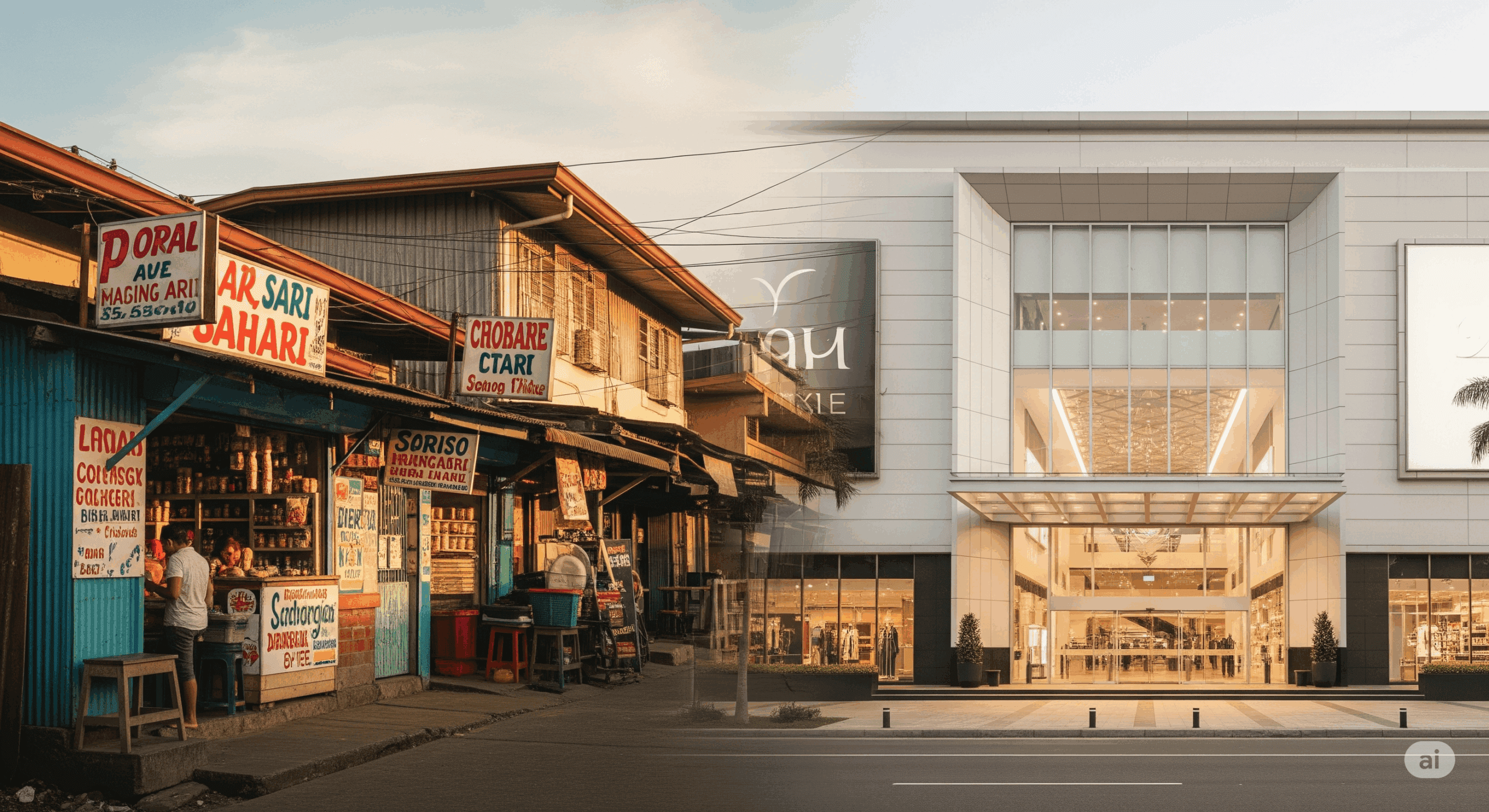
    The Filipino commercial landscape is a vibrant tapestry woven with threads of ancient tradition, colonial influence, and modern innovation. From the humble, ubiquitous sari-sari store that dots nearly every neighborhood corner to the colossal, air-conditioned shopping malls that have become modern-day agoras, the way Filipinos buy, sell, and interact around commerce tells a profound story about our history, community, and evolving aspirations. This journey is not merely about changing storefronts; it’s about the transformation of Filipino lifestyle, social dynamics, and economic drive.

    The Genesis: Pre-Colonial Barter and Early Trade Networks

    Long before the arrival of Ferdinand Magellan in 1521, the islands that would become the Philippines were already bustling with sophisticated trade. Archaeological evidence and early chronicles point to extensive inter-island commerce and flourishing trade relationships with neighboring Austronesian peoples, as well as with Chinese, Japanese, Indian, Siamese, and Arab merchants. The primary mode of exchange was barter – goods for goods. Coastal communities traded sea salt, fish, and pearls for the agricultural products of inland settlements like rice, cotton, and root crops.

    These early Filipinos were skilled seafarers and navigators, utilizing boats like the balangay to traverse the archipelago and beyond. Ports like Butuan, Cebu, and Manila served as vital trading posts. Chinese traders, in particular, brought silk, porcelain, and iron, exchanging them for local products like gold, beeswax, tortoise shells, and civet cats. This pre-colonial period established the foundational elements of Filipino commercial spirit: resourcefulness, an understanding of supply and demand, and the ability to engage with diverse trading partners. There were no formal stores, but designated market areas (talipapa or tiangge in later terms) would emerge for these exchanges.

    The Spanish Imprint: Tiendas, Tiangges, and the Galleon Trade

    The Spanish colonization, beginning in the 16th century, dramatically reshaped the economic and social fabric of the islands. The introduction of a monetized economy, albeit one that initially favored the colonizers, gradually replaced widespread barter. The Spanish established Manila as the central hub of the famed Galleon Trade (Kalakalang Galyon) connecting Asia with the Americas (specifically, Acapulco, Mexico) and Europe. While this trade primarily benefited the Spanish elite and Chinese merchants who often acted as intermediaries, it transformed Manila into a cosmopolitan port city.

    During this era, more permanent trading structures began to appear. The tiangge (from the Mexican Spanish tianguis, derived from Nahuatl tiyānquiztli for “open-air market”) became more formalized, often located near churches or town plazas. These were typically open-air markets where agricultural produce, local crafts, and other goods were sold.

    Simultaneously, the tienda (Spanish for “shop” or “tent”) emerged. These were small, often family-run stores, sometimes attached to homes, selling a variety of goods. Many tiendas were operated by Chinese immigrants and mestizos, who played a crucial role as retailers and creditors. These early tiendas can be seen as precursors to the modern sari-sari store, offering basic necessities and small conveniences to the local populace. The Spanish also introduced more structured commercial districts, particularly in Intramuros and Binondo, which became Manila’s primary Chinese commercial center.

    The American Era: The Dawn of Department Stores and Modern Merchandising

    The arrival of the Americans at the turn of the 20th century ushered in a new wave of commercial modernization. American influence brought in new products, business practices, and a consumerist culture. Escolta Street in Binondo, Manila, blossomed as the premier shopping destination, often dubbed the “Queen of Streets.” It was here that the Philippines saw the rise of its first true department stores.

    Establishments like H.E. Heacock Co., known for its jewelry, watches, and luxury goods, and Beck’s Department Store, which offered a wider variety of imported American merchandise, became icons of this era. These stores introduced concepts like fixed pricing (a departure from the haggling common in tiangges), window displays, and a more sophisticated shopping experience. They catered to the growing Filipino middle and upper classes, as well as the American expatriate community, offering a taste of Western lifestyle and consumption.

    This period also saw the growth of infrastructure – roads, railways, and improved port facilities – which facilitated the movement of goods and further stimulated commerce across the archipelago. While these grand department stores represented the pinnacle of retail, the traditional palengke (public market) and the neighborhood tienda continued to be vital for everyday needs.

    The Enduring Icon: The Sari-Sari Store – A Microcosm of Filipino Life

    No discussion of Filipino retail culture is complete without paying homage to the sari-sari store. The term “sari-sari” itself, meaning “variety” or “assorted” in Filipino, perfectly encapsulates its nature. These small, often home-based convenience stores are a ubiquitous feature of the Philippine landscape, found in bustling city barangays and remote rural villages alike.

    The sari-sari store is more than just a place to buy goods; it’s a deeply ingrained socio-economic institution.

    • Accessibility and Convenience: They offer essential household items – from cooking oil, vinegar, and soy sauce (often sold in small, affordable single-use packets known as tingi), to snacks, candies, soft drinks, toiletries, and school supplies. Their proximity means residents don’t have to travel far for immediate needs.
    • The Tingi System: The practice of selling items in small portions (tingi) makes essential goods affordable for low-income households who may not be able to buy in bulk. A single cigarette, a small sachet of shampoo, a cup of rice – the sari-sari store caters to this micro-purchasing power.
    • Credit and Community (Lista): Many sari-sari store owners extend credit (utang or lista) to trusted neighbors, a system built on personal relationships and community trust. This informal credit line is crucial for families to tide them over until the next payday.
    • Social Hub: The store often serves as an informal gathering spot, a place where neighbors catch up on local news and gossip (chismis), play a game of chess, or simply pass the time. It’s a vital node in the community’s social network.
    • Micro-Entrepreneurship: Sari-sari stores provide a livelihood for millions of Filipino families. They are often run by stay-at-home mothers, supplementing the family income with minimal startup capital. According to various estimates, there are over a million sari-sari stores across the country, forming a significant part of the grassroots economy. The Department of Trade and Industry (DTI) often cites them as key players in the micro, small, and medium enterprise (MSME) sector.

    Despite the rise of larger retail formats, the sari-sari store has proven remarkably resilient, adapting to changing times by incorporating services like mobile phone e-loading, bill payments, and even acting as cash-in/cash-out points for digital wallets.

    The Palengke: The Beating Heart of Freshness and Local Commerce

    Alongside the sari-sari store, the palengke or public market remains a cornerstone of Filipino retail. These are typically larger, often government-owned or -regulated markets, where a wide array of fresh produce, meat, seafood, dry goods, and household items are sold by numerous individual vendors.

    The palengke is a sensory explosion: the vibrant colors of fruits and vegetables, the calls of vendors hawking their wares (suki, bili na!), the smell of fresh fish and spices, and the general hubbub of a community engaged in the daily ritual of sustenance. It’s where one can practice the art of tawad (haggling) to get the best price, and where strong relationships between vendors and regular customers (suki) are forged.

    For many Filipinos, especially those outside the major urban centers, the palengke is the primary source for fresh food. It supports local farmers and fishermen by providing a direct channel to consumers. While facing competition from supermarket wet markets, the palengke endures due to its lower prices, wider variety of local and indigenous ingredients, and the irreplaceable cultural experience it offers.

    The Rise of the Malls: Air-Conditioned Havens and Lifestyle Centers

    The post-World War II era saw gradual economic recovery and the emergence of a more defined middle class. By the 1970s and 1980s, the Philippines began to witness the dawn of a new retail phenomenon: the shopping mall. Early pioneers included Shoppesville in Greenhills, San Juan (opened in 1970s), a more specialized shopping center, and Ali Mall in Cubao, Quezon City (opened in 1976), one of the first fully enclosed, integrated, and air-conditioned shopping malls in the country.

    However, it was in the late 1980s and particularly the 1990s onwards that mall culture truly exploded, spearheaded by giants like SM (founded by Henry Sy Sr.), Ayala Malls, and Robinsons Malls. Several factors contributed to this “malling” phenomenon:

    • Climate: In a tropical country like the Philippines, the allure of a large, air-conditioned space offering respite from the heat and humidity is undeniable.
    • One-Stop Shop Convenience: Malls evolved beyond just retail stores. They integrated supermarkets, department stores, cinemas, food courts, restaurants, banks, service centers (for bill payments, government services like NBI clearance or passport renewal), and even chapels. This made them incredibly convenient.
    • Safety and Security: Malls offered a perceived sense of safety and cleanliness compared to crowded outdoor markets or streets.
    • Entertainment and Leisure: “Malling” became a popular Filipino pastime, a form of family entertainment and social activity. It wasn’t just about shopping; it was about strolling (pasyal), dining, watching movies, or simply hanging out.
    • Aspirational Lifestyle: Malls became symbols of modernity and progress, offering access to both local and international brands, catering to the aspirational desires of a growing consumer base.

    Today, the Philippines has some of the largest shopping malls in the world. These are no longer just commercial spaces; they are sprawling lifestyle centers, community hubs, and even tourist destinations. They host events, concerts, and provide a significant number of jobs.

    The Digital Shift: E-Commerce and the New Retail Frontier

    The 21st century, particularly the last decade, has introduced another transformative force: e-commerce. Platforms like Lazada, Shopee, and Zalora, along with countless independent online sellers utilizing social media platforms like Facebook and Instagram, have revolutionized how Filipinos shop.

    The COVID-19 pandemic acted as a massive accelerator for e-commerce adoption. With physical stores closed or operating under restrictions, consumers turned to online platforms for everything from groceries and medicines to gadgets and fashion. This shift has brought:

    • Unprecedented Convenience: Shopping from home, 24/7 access, and doorstep delivery.
    • Wider Selection: Access to a virtually limitless array of products from local and international sellers.
    • Competitive Pricing: Easy price comparison and frequent online sales and promotions.

    However, e-commerce in the Philippines also faces challenges:

    • Logistics and Infrastructure: In an archipelagic nation, efficient and reliable logistics can be difficult, especially outside major urban areas.
    • Digital Divide: Not everyone has stable internet access or is comfortable with digital transactions.
    • Payment Preferences: While digital payments are growing, cash-on-delivery (COD) remains a popular option, reflecting trust issues and the unbanked segment of the population.
    • Trust and Security: Concerns about scams, fake products, and data privacy persist.

    The Modern Filipino Retail Landscape: Coexistence and Hybridization

    Today’s Filipino retail culture is not about one form replacing another entirely; it’s about dynamic coexistence and hybridization.

    • Sari-sari stores are adapting by becoming community e-hubs, offering digital services. Some are even being aggregated into networks by tech startups to improve their supply chain and offer financial services.
    • Malls are enhancing experiential retail, offering more entertainment, unique dining concepts, and “Instagrammable” spaces to draw foot traffic in the age of online shopping. They are also integrating omnichannel strategies, with stores offering click-and-collect services.
    • Convenience stores like 7-Eleven and Ministop (now Uncle John’s) have proliferated, bridging the gap between sari-sari stores and supermarkets, offering 24/7 access to a curated selection of goods and services, including ready-to-eat meals and bill payments.
    • Franchising has become a significant driver of retail growth across various sectors – from food and beverages (Jollibee, Mang Inasal, various milk tea brands) to services (laundry shops, tutorial centers). This model allows for rapid expansion and provides entrepreneurial opportunities, leveraging established brand names and operational systems. Exploring a comprehensive resource like a franchise directory for the Philippines can reveal the sheer breadth of these opportunities that are shaping the modern retail scene.

    Conclusion: A Tapestry Ever-Evolving

    The evolution of Filipino retail from ancient barter systems and humble sari-sari stores to sprawling malls and the borderless world of e-commerce is a testament to the Filipino’s adaptability, entrepreneurial spirit, and deep-seated connection to community. Each iteration has not erased the past but rather added new layers to this complex commercial tapestry.

    The Filipino consumer today navigates this diverse landscape with ease, perhaps buying fresh produce from the palengke in the morning, grabbing a snack from a sari-sari store in the afternoon, enjoying a family dinner at a mall restaurant, and then Browse online deals before bed. This journey reflects not just changing economic tides, but the enduring Filipino quest for convenience, connection, and a better quality of life. As technology and consumer preferences continue to evolve, one thing is certain: Filipino retail culture will continue its dynamic transformation, always reflecting the unique spirit and ingenuity of its people.


  • The Evolution of Tool Technology in Filipino Woodworking

    The Evolution of Tool Technology in Filipino Woodworking

    You'll discover that Filipino woodworking began in the Paleolithic era, using flake tools. Neolithic advancements introduced ground stone tools aiding early agriculture. The Metal Age revolutionized woodworking with copper, bronze, and iron implements. Notice indigenous designs like the bolo, panabas, and kampilan demonstrate sophisticated craftsmanship. Modern techniques use power tools and even engineered wood. Regional variations exist, each with cultural significance. Understand how tools embody cultural values and historical experiences in Filipino woodworking. Further exploration enriches your understanding.

    Paleolithic Beginnings: Stone Age Tools

    Early Filipinos employed flake tools crafted from stone and shell materials through striking methods for cutting and scraping in their Paleolithic beginnings. You'll find evidence of this early craftsmanship if you study tools from Tabon Caves, where they used red jasper, white chert, and andesite. Across regions like Cagayan Valley and Palawan, you see these early technological innovations. You shouldn't underestimate the importance of these tools; they improved hunting and gathering practices. You can see how the selection of chert and jasper showed resourcefulness. Moreover, denticulate tools illustrate an understanding of woodworking and hide processing needs. Burial practices also occurred during this period. You see these simple tools marking the starting point of Paleolithic technology, affecting society. Their resourcefulness aided survival and pushed technological progression.

    Neolithic Advancements: Ground Stone and Early Agriculture

    As we transition from the Paleolithic era, we see Neolithic advancements ushering in an era defined by ground stone tools and early agriculture.

    You'll notice that Neolithic tools, like polished adzes and axes, showcase advanced craftsmanship. These tools enabled more efficient cutting and shaping of wood, refining woodworking techniques. With the advent of polished stone, crafting intricate wooden structures and furniture became more achievable.

    Early agriculture, introduced around 2,200 BC, brought agricultural innovations and stable settlements. You can see how crops like rice and millet necessitated wooden tools for cultivation and storage. The woodworking traditions of the Ifugao and Kankana-ey groups involved creating adze-hewn deities, highlighting the continued importance of woodworking in agricultural societies.

    Agricultural practices influenced cultural evolution and woodworking, creating demand for wooden containers. Ground stone technology supported both agriculture and woodworking, reflecting the era's progress.

    Across regions, we find evolving woodworking styles adapting to both materials and techniques.

    Metal Age Revolution: Copper, Bronze, and Iron

    Around 500 BC to 1000 CE, metal's arrival ushered in a transformative era for Filipino woodworking. Copper, bronze, and iron tools revolutionized the scope and complexity of what you could achieve. Metalworking techniques enhanced tool durability and fostered craft specialization.

    Consider the historical significance of copper, being versatile yet softer, giving way to bronze, an alloy of copper and tin that made tools sharper. You'll see archaeological evidence of copper, then bronze's widespread usage. The Sa Huynh culture traded beads and bronze mirrors extensively with the Philippines during this period, influencing tool designs and availability.

    Then comes the Iron Age, around the 9th century, where iron tools were used for precision crafts. You'll notice that there's an improvement to societal and economic development.

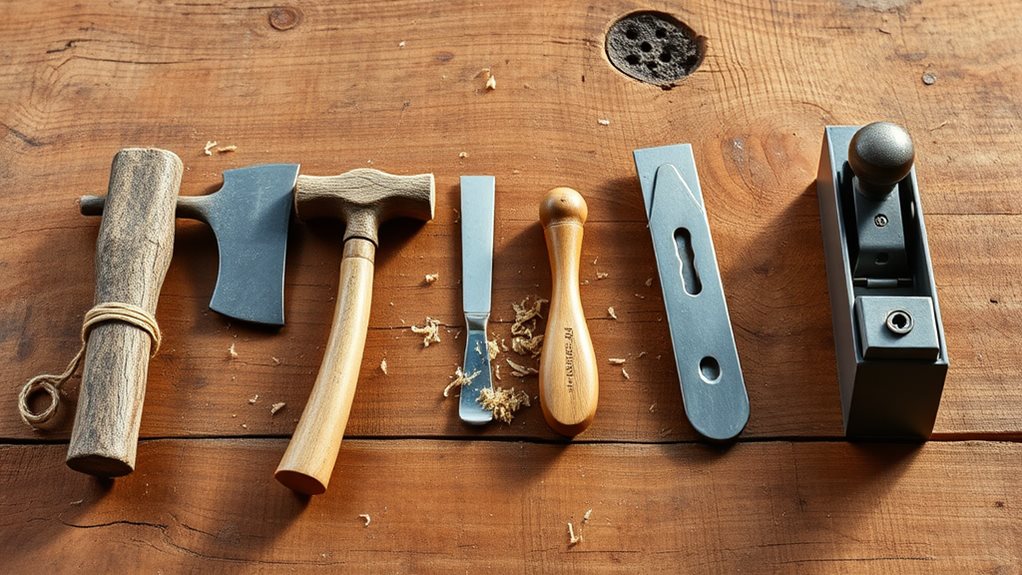
    • Adzes used for shaping wood
    • Chisels for finer detail work
    • Knives for cutting and carving
    • Bronze axes for felling larger trees
    • Iron tools for heavy-duty woodworking

    Indigenous Designs: Bolo, Panabas, and Kampilan

    Consider the *panabas*: originating from Mindanao and used by groups like the Maranao, its curvature-edged sword displays traditional craftsmanship. The Maranao's avoidance of figural representations in their carvings, instead prioritizing de-natured natural forms, is mirrored in their weaponry designs.

    You'll notice the *kampilan*, traditionally linked to leadership, stood as a symbol of power.

    These weren't merely instruments of war but objects carrying deep cultural impact and showcasing that tools played dual roles as functional items and representations of status.

    Seeing how each design reflects its region shows the rich martial background of the Philippines.

    The Versatile Bolo: A Cultural Icon

    A central motif in Filipino tool technology is the bolo, a tool adapted for agriculture, combat, and cultural symbolization. You'll find its curved, single-edged blade, often forged from recycled steel, widened towards the tip, enhancing its chopping ability.

    Handle materials range from hardwood to carabao horn, reflecting agricultural adaptability and regional styles like the Itak and Pinuti showcase its versatility. The bolo is more than just a tool, it's a potent symbol deeply ingrained in Filipino culture. It's an enduring cultural icon. Various types exist, catering to the diverse needs of different ethnic groups.

    • Farmers harvesting rice with rhythmic swings
    • "Bolomen" fiercely defending their land
    • Arnis practitioners demonstrating precise strikes
    • Historical reenactments showing bolo wielders.
    • Modern blacksmiths forging new blades

    Its bolo symbolism permeates history, from its role in the Katipunan to its presence in WWII. Despite technological advancements, the bolo remains relevant, embodying resilience and self-reliance and you can see, it remains integral to the narrative of the Filipino people.

    Traditional Metalworking Techniques

    Beyond the bolo's iconic silhouette, you'll discover the intricate realm of traditional metalworking techniques that have shaped Filipino artistry and functionality for centuries.

    You'll find ancient influences blended with colonial impacts that underscore its cultural significance. Mastery takes generations, with artisans refining skills learned through cultural exchange. The Spanish colonial period's introduction of new techniques influenced many eras of craftsmanship, including the creation of ornate religious objects like candlesticks.

    Fire manipulation is key; you're using it to shape metals. Artisans rely on hand-forged tools—hammers, anvils, tongs—each crucial for precision crafting.

    You'll see designs incorporating nature-inspired and tribal symbols. Expect extensive physical labor, reflecting the dedication to traditional craftsmanship.

    Indigenous tribes, like the Igorots and Lumads, contribute unique techniques. Natural materials influence crafts, and regional specialties reflect local practices.

    Foreign influences blend with indigenous methods, enriching designs. Apprenticeships are preserving this vital knowledge.

    Contemporary metalworkers adapt to modernity while maintaining practices. You're witnessing sustainability, education, and artistic expression, all reinforcing its cultural icon status.

    Modern Woodworking: Power Tools and Machinery

    Transitioning to the modern era, we'll explore how power tools and machinery have revolutionized woodworking in the Philippines. Contemporary workshops integrate an array of electrically powered saws, drills, sanders, and lathes to enhance production speed, precision, and versatility in crafting furniture, structures, and artistic creations.

    Investing in power tool advancements marks a significant leap, enabling artisans to achieve woodworking efficiency previously unattainable.

    Consider these tools that have become commonplace:

    • Circular saws for straight cuts.
    • Router technology for intricate designs. The use of specialized router bits, such as straight, chamfer, and cove bits, allows for intricate designs and detailing.
    • Planers that ensure uniform wood thickness.
    • Jointers that create flat and square edges.
    • Miter saws designed for precise angled cuts.

    Power tools empower you with increased productivity. You can complete projects faster, with unmatched accuracy compared to hand tools.

    Safety features integrated into these tools reduce risks, while their reliability ensures that you get consistent results. Leading brands like SawStop and Festool are shaping your workshop's capabilities.

    Engineered Wood and Contemporary Practices

    You'll find engineered wood has become vital, reflecting contemporary woodworking's shift toward optimized resources and durability, offering a cost-effective alternative by efficiently utilizing wood and reducing waste, while resisting common issues like warping and shrinkage, due to compositional stability.

    Engineered wood benefits are realized through efficient manufacturing and increased lifespan compared to solid wood. Considering the commitment to sustainable practices at GRM Biowood Interiors Corporation, engineered wood aligns with green building initiatives.

    Contemporary woodworking practices now incorporate materials like Biowood, which offers termite, mold, and fire resistance, ensuring longevity.

    You'll see increased demand for eco-friendly options like PalmEco Board, sourced from palm fiber waste, leading to more durable and lower-maintenance woodworking applications. This commitment supports sustainable practices.

    Also, you should consider GRM's products, blending strength and aesthetics, alongside FSC-certified timber from sources like Filtra Timber.

    Technological advancements boost eco-friendliness and durability, reshaping contemporary woodworking practices for sustainable solutions in the Philippines.

    Regional Variations in Tool Design

    Consider these images:

    • The crescent-shaped *lukong* carving rounded edges on an Ifugao bulul.
    • A craftsman smoothing edges with an *uchip* after using chisels.
    • Someone using a *korikor* for basket weaving. *Simpa*, a flat-bladed chisel, is part of an apprentice's tool set.
    • A *panabas*, originally used as an agricultural tool.
    • An artisan hollowing a wooden bowl using a *chipya* chisel.

    You could also observe how modern woodworking adapts traditional methods, conserving original tools while also incorporating contemporary materials.

    Tools as Cultural Artefacts

    Tools transcend mere utility; they embody the cultural values, historical experiences, and artistic ingenuity of Filipino woodworking traditions.

    You'll find indigenous influences prevalent; wood served precolonial societies for religious and cultural practices. Consider how communities once revered trees—balete trees especially—and how only spiritual leaders interacted with their spirits. Spanish colonization impacted these beliefs, but indigenous communities persisted. Technological advancements now drive mechanization in the craft.

    The cultural significance of woodworking tools extends to tool symbolism, with many artisans using them to create religious artifacts expressing enduring spirituality.

    Paete's wood carving tradition exemplifies this; artisans use Narra and Kamagong to depict religious and secular themes, impacting the local economy.

    Though power tools' integration has transformed woodworking, blending old and new techniques preserves cultural heritage, demonstrating the vital role artisans' skills play in maintaining these traditions.

  • Wood Species Native to the Philippines Used in Traditional Crafts

    Wood Species Native to the Philippines Used in Traditional Crafts

    You'll find Philippine traditional crafts are deeply rooted in native wood species. Narra, the national tree, symbolizes strength. Molave offers remarkable durability for intricate crafts. Kamagong, like ebony, creates durable furniture. Acacia's versatility shines in sustainable kitchenware, and Banaba connects decor to Philippine flora. Wood carving traditions reflect pre-colonial beliefs and colonial adaptations. Boat builders use hardwoods, like balayong, integrating traditional knowledge. Discover the economic and ecological importance of these trees. Explore further for a holistic view of the art.

    Narra: The Golden Hardwood

    Narra stands as a testament to the Philippines' rich biodiversity and cultural heritage. You'll admire its impressive size; it's a hardwood tree that can reach up to 40 meters. The Matic Hub's thematic focus on materials makes it a great venue to share information about Narra's usage.

    Narra characteristics include its asymmetrical, corrugated trunk and yellow flowers that bloom briefly. The tree's thin bark renders it susceptible to fires.

    As the national tree, it symbolizes strength, but you should consider its "Endangered" status. You'll find that overexploitation has severely impacted Narra populations and understand that the species population is projected to decline as much as 80% over the next century without Narra conservation efforts.

    Current reforestation projects attempt to help, though challenges remain. Recognize its cultural significance and help preserve this golden hardwood.

    Molave: Durability in Crafts

    Beyond Narra's national symbolism, you'll find Molave—an indigenous tree species now protected by Philippine law—exhibits remarkable strength, durability, and ornamental beauty, rendering it invaluable for traditional crafts deeply connected to the Philippines' rich cultural heritage and enduring craftsmanship. Molave craftsmanship shines through its material strength and its resistance to decay. Because artisans can create detailed designs, you'll find these crafts stand the test of time. It's a cultural cornerstone that supports the preservation of Filipino heritage. We have a responsibility to ensure Molave sustainability so future generations can enjoy this beautiful wood. One striking example is a late 20th-century sculpture, circa 1970s, crafted from organic molave root. It has garnered appreciation because of its unique features and legal protections, and you'll see that its limited availability enhances its value.

    Feature Benefit
    Material Strength Enables intricate designs
    Durability Ensures longevity of crafts
    Decay Resistance Suitable for diverse environments
    Limited Supply Increases value of Molave crafts
    Legal Protection Supports Molave sustainability efforts

    Kamagong: Crafting With Ebony

    As you explore Philippine hardwoods, you'll discover Kamagong (Diospyros spp.), a species revered for its ebony-like qualities, presenting unique challenges and cultural significance in local craftsmanship. Its distinctively dark, dense wood—sometimes called "iron wood"—makes it invaluable for creating durable furniture, intricate decorative items, and traditional chess pieces, deeply rooted in Filipino heritage.

    You'll find its hardness requires specialized Kamagong craftsmanship techniques ensuring artisans don't damage their tools.

    Beyond its timber, its fruit, known as Mabolo, adds to its local appreciation. However, know that this "iron wood" isn't easy to come by; illegal logging and overexploitation threaten its survival. Consequently, Kamagong conservation efforts aim to preserve this endangered species, now protected by Philippine law. Due to its density, Kamagong timber is well-suited to knife handles.

    You'll note its export is heavily regulated, demanding permits. Despite these challenges, Kamagong remains significant in Filipino culture, contributing to unique art pieces and sustaining local economies.

    Acacia: A Versatile Timber

    A cornerstone of sustainable Philippine woodworking, you'll immediately notice acacia (Acacia spp.) as a prime example of a versatile timber; its legal and sustainable cultivation offers a stark contrast to hardwoods facing endangerment.

    You'll observe its widespread use in various applications, ranging from furniture to kitchenware, showcasing its adaptability. Its relatively lightweight yet durable nature facilitates crafting processes, reflecting both its economic import, sustainable forestry practices, and its value in local craftsmanship.

    Focusing on acacia sustainability, you see plantations manage Acacia Mangium to lessen pressure on Philippines' natural forests. You'll find that the fine grain and lustrous finish make it a choice material.

    As hardwood bans increase, Filipino woodcarvers, even those in Ifugao, select acacia. The acacia craftsmanship produces plates, bowls, and cutting boards that are integral to Filipino homes, and local artisans skillfully shape the material into decorative pieces, sometimes mimicking the stylized okkil motif.

    Products from acacia wood are globally exported, driving economic value while maintaining a dedication to environmental sustainability.

    Banaba: Beyond Medicine

    From acacia's proven utility, we now turn to banaba (Lagerstroemia speciosa), a plant you'll most often encounter in the context of traditional medicine, yet its relevance extends into heritage and environmental realms. You'll see its influence ripple through art and decor, imbuing spaces with Banaba symbolism.

    While its wood isn't a traditional crafting material, its image thrives. You might spot floral patterns adorning home items, highlighting Philippine flora. Banaba conservation efforts gain momentum as you see the tree used in reforestation. Planting strengthens urban biodiversity, fostering a connection to nature, and awareness of native species. Like raffia fiber, Banaba's image holds color well for various fabric applications.

    You can support local economies by purchasing Banaba-inspired products. You will want to consider: what feelings do these images evoke?

    Visual Element Associated Emotion
    Floral Patterns Domesticity
    Artistic Prints Cultural Pride
    Murals Community Harmony
    Posters Environmental Awareness
    Reforestation Projects Hope

    Imagine the impact!

    The Art of Furniture Making

    Transitioning from banaba's symbolic essence, we explore the concrete artistry of furniture making, where cultural heritage and skilled craftsmanship converge to shape functional and aesthetic pieces.

    You'll see Filipino furniture embodies centuries of tradition, blending indigenous artistry with Spanish influences. Materials like narra, molave, rattan, and bamboo are cornerstones, with regions like Cebu and Pampanga showcasing unique styles. The earliest examples featured intricate weaves reflecting community ingenuity.

    Contemporary designs now fuse traditional 'artisan techniques' with modern 'furniture aesthetics', like metal accents and minimalist lines.

    Consider these core components as an enthusiast:

    • Historical Roots: Grasp the narrative embedded in each piece.
    • Material Science: Respect the properties of native wood.
    • Market Dynamics: Acknowledge the rise of sustainable and custom designs.

    Kenneth Cobonpue and Vito Selma exemplify this blend, crafting pieces celebrated globally.

    Innovation, combined with a focus on sustainability, ensures Filipino furniture thrives on the world stage.

    You're witnessing a beautiful fusion.

    Wood Carving Traditions

    Beyond furniture's functional artistry, you'll find the storied realm of wood carving, where the Filipino cultural identity is etched into tangible forms using techniques honed over centuries.

    Wood carving, dating back to pre-colonial times, served essential and ceremonial purposes, such as narra wood carvings used for ancestral spirit figures ("anitos"). You'll see how colonization influenced these skills, adapting them for religious statues. Romblon's woodcarving traditions have even gained international recognition for their exquisite craftsmanship, spreading Filipino artistry across borders.

    The cultural significance of these carvings can't be overstated; they preserve heritage and traditional beliefs. Different regions offer distinct styles; Paete showcases detailed artistry in narra wood.

    You'll use traditional techniques with simple tools – knives, chisels – to transform molave or kamagong into decorative items with okir designs. Nature inspired patterns abound, reflecting the local environment.

    You'll understand that foreign influences blend seamlessly, creating works that reflect evolving Filipino identity.

    Boat Building With Native Wood

    Boat building, integral to the Philippines' maritime heritage, reflects a blend of indigenous knowledge and resourcefulness using materials like balayong and niyog.

    You'll observe this craft highlighting the traditional techniques of skilled artisans shaping durable sea vessels. You're witnessing centuries-old designs ensuring efficiency and stability. Wooden pegs and dowels secure components, showcasing meticulous joinery, demonstrating traditional techniques.

    What makes Philippine boat building unique? Consider this:

    • Native hardwoods, such as molave and guijo, boast natural resistance to water damage. Recognizing the historical significance of wood in boat construction, some builders are drawn to the aesthetic appeal and mystique of Philippine Mahogany.
    • Outriggers, or "katig," provide enhanced stability for navigating Philippine waters.
    • Sustainable practices are increasingly critical, involving sourcing wood wisely and replacing old boats, to protect forests.

    You're participating in the preservation of cultural heritage when you appreciate these traditions of traditional techniques.

    You'll find traditional boat designs showcase cultural expressions and emphasize the ingenuity of sustainable practices. You're seeing that integrating modern tools with sustainable practices preserves authenticity, enabling continued craftsmanship.

    Economic Contributions of Wood Crafts

    Turning from maritime applications, you'll find wood crafts significantly bolster the Philippine economy. Craftsmanship centers, like Paete, thrive because of the employment their artisanal livelihoods generates. Deforestation issues have prompted international conservation initiatives, which in turn support local economies centered around woodcraft.

    Cultural tourism flourishes, as visitors are drawn to witness the creation of these intricate wooden works. You're contributing to the country's GDP when you buy these products.

    The global demand for Filipino woodcraft highlights its export potential, aligning with broader furniture export trends.

    You should note that securing economic sustainability requires addressing wood scarcity and market volatility. Supporting artisans, improving market access, and promoting sustainable forestry practices secures the long-term viability of this industry.

    Preserving Native Trees

    You'll find that preserving native trees is both an ecological imperative and a cultural responsibility given the critical status of many Philippine native tree species facing endangerment or extinction.

    It's crucial to protect these trees, which are vital to maintaining biodiversity, aiding climate resilience, and ensuring healthy ecosystems.

    Consider EDC's BINHI initiative; it exemplifies native species conservation through arboreta and vegetative material reproduction facilities.

    Here's what you can do to support this effort:

    1. Support rainforestation farming which merges native tree planting with sustainable economic benefits.
    2. Participate in native tree planting projects that involve indigenous communities like the Manobo.
    3. Advocate for policies that prioritize native species over non-native species like mahogany, which can harm biodiversity.

    Increasing community involvement is key, stressing education and collaboration with the government. The Manobo, for example, are integral collaborators in environmental initiatives.

    Know too that sustainable programs are imperative in keeping our environment and the native craft species in it alive.

  • The Role of Apprenticeship in Philippine Woodcarving Traditions

    The Role of Apprenticeship in Philippine Woodcarving Traditions

    You'll find that apprenticeships are crucial for keeping Philippine woodcarving alive. You're preserving traditions passed down through generations, particularly in places like Paete. As an apprentice, you learn techniques and gain cultural understanding beyond just copying. Mentorship dynamics are important as you learn and refine your skills through workshops. Understand that economic challenges and resource scarcity exist. You'll integrate modern designs and eco-friendly practices to combat decline. Discover additional insights.

    Maintaining Tradition Through Apprenticeship

    Maintaining tradition through apprenticeship is vital, as local governments support programs integrating woodcarving into senior high school curricula.

    Training students with experienced craftsmen to revive interest among younger generations and mitigate the decline caused by modern influences is crucial. You're now part of a system designed to ensure woodcarving's survival. Given that many locals seek opportunities abroad for higher pay, these apprenticeships serve as a direct countermeasure to the craft's potential disappearance.

    The success hinges on mentorship dynamics. You'll learn traditional techniques, preserving methods passed down through generations.

    These relationships aren't just about skill transfer; they're about cultural continuity. You must understand the core values that make this craft unique.

    Formal education reinforces that the woodcarving tradition isn't just a skill, but integral to Philippine heritage.

    As you apprentice, consider your role in sustaining this legacy, keeping traditional methods alive, and shaping its future.

    A Historical Glimpse of Philippine Woodcarving

    Understanding traditional methods and cultural values, as you've explored, sets the stage for appreciating woodcarving's deep roots in the Philippines.

    Before the Spanish, you carved essential items, revealing the cultural significance woven into daily life. You used indigenous techniques and local woods to create totems, protecting villages, showcasing artistic expression.

    Then, Spanish influence brought religious art. You developed skills creating religious statues, a cultural synthesis that improved carving intricacy and bolstered local economies. Early carvings were more centered around these worship images.

    Paete, Laguna, emerged as the "Carving Capital," where families passed down woodcarving techniques, favoring Narra hardwood.

    Looking at carvings, you see more than art. "Santos" exemplify religious devotion, yet modern artists create diverse pieces. These express historical events, selling locally and abroad.

    Woodcarving, you'll find, supports tourism and promotes cultural heritage, showcasing skill innovation. You can't deny its value!

    Pressing Challenges

    You'll see that Philippine woodcarving, beyond its rich history, faces significant challenges. Deforestation and strict logging bans have created significant sourcing challenges, limiting access to traditional woods like batikuling, and increasing reliance on alternative materials. The inability to fully load websites may also create further access issues.

    Sustainability efforts exist, but propagation of endangered trees takes decades, revealing the complexities of sourcing materials.

    You're also dealing with intense market competition. Mass-produced alternatives threaten the livelihoods of artisans creating handmade wood carvings. You need to adapt to global trends and educate consumers about the value of handmade craftsmanship to secure market share.

    Economic factors like inflation have increased production costs, further complicating the situation. While Paete's recognition as the Carving Capital highlights government support, you still await more comprehensive policies that address the operational challenges you face.

    Apprentice Training

    Apprentice training is crucial in ensuring the longevity of Philippine woodcarving traditions, particularly in regions like Paete, where you can immerse yourself in the craft's historical roots. As you experience apprentice training, you would typically find yourself learning in grade school between grades 3 to 8. You're immersed in observing artisans, background, and the hands-on practice that you may find using study manuals and organizers effective for learning and helps integrate with values that you may utilize as a craftsman. Learning traditional woodcarving art in a relaxed environment like the described island apprenticeship can allow for skills to be honed over time.

    The apprentice experiences encompass more than just tool handling; they require you to use interdisciplinary learning to truly understand cultural context. The training techniques go beyond copying existing works; you will have to design your projects. Programs use workshop participation and project showcases to refine.

    Element Description Benefit
    Observation Watching seasoned artisans at work Understanding workflow and finesse
    Hands-On Direct engagement with carving tools Developing muscle memory and control
    Cultural Study History and significance of carvings Fostering appreciation and connection
    Evaluation Quizzes, projects, and feedback sessions Measuring progress identifying areas to grow

    Skill Development in Practice

    Skill development in practice is where you'll actively engage with time-honored techniques, tools, and materials to hone your craft. You'll acquire skills in workshop settings, absorbing knowledge from master artisans and peers alike. Expect regular feedback to guide your technique refinement. You're not just copying; you're learning to carve with precision.

    You'll familiarize yourself with intricate designs, learn to select the right wood, and master specific tools. Through hands-on experience and error correction, you'll develop fundamental carving techniques. Learning to manipulate wood becomes second nature. Since the area was declared the wood carving capital in 2005, many more opportunities have developed for apprentices to practice their art.

    Mentorship nurtures your growth, encouraging exploration of personal artistic style through creativity enhancement. Expect an increase in attention to detail and the development of problem-solving skills, critical for producing high-quality carvings.

    You'll expand your aesthetic understanding, preparing you to appeal to diverse markets.

    Cultural Impact

    Woodcarving in the Philippines isn't just about aesthetics; it significantly shapes cultural identity, preserves traditions, and drives economic activity. You see this in Paete, declared the "carving capital", which showcases how deeply embedded woodcarving is in the nation's heritage.

    You're looking at a melting pot when you observe Filipino woodcarvings, reflecting indigenous styles blended with Chinese and Spanish influences. Reflecting this fusion, Batikuling seed propagation is one community initiative to combat resource scarcity issues. As a result, cultural exchange enriches the artistic landscape.

    Apprenticeships are vital; they ensure these techniques endure, passing on knowledge that honors both local and global inspiration.

    Woodcarving strengthens community identity. By participating in festivals and preserving local narratives through art, artisans boost cultural pride.

    You, too, can help by supporting woodcarvers and acknowledging their resilience in maintaining traditions.

    Economic Impact

    Beyond its cultural significance, you'll find that the economic impact of this art form in the Philippines is keenly felt, especially as it offers livelihoods to artisans and craftsmen in areas such as Paete.

    You're sustaining traditions that add significant economic value to the wood processing industry, providing employment nationwide.

    Think about the market trends. You can enhance the Philippines' reputation as a center for craftsmanship. You can adapt to changing demands by learning contemporary designs, opening new market opportunities.

    Apprenticeships play a role. These programs are contributing to economic sustainability through cultural tourism. Understand that artisans face competition from mass-produced items which is why you've got to support economic and artistic growth.

    You'll contribute to employment by transitioning into master carvers. Local economies grow exponentially when artisans sustain the demand for woodcarving.

    The future is bright when apprenticeships are prioritized.

    The Future of Apprenticeships

    Looking ahead, you'll notice the future of apprenticeships in this discipline isn't just about preserving tradition; it's about dynamically adapting these time-honored methods to meet modern challenges and harness emerging opportunities.

    You see more skills-based hiring and expanding apprenticeships beyond traditional sectors. States invest in opportunities across various industries, with inclusive practices improving program diversity. To access these state opportunities, the Youth Apprenticeship Readiness Grants site requires a login.

    You'll find these programs incorporate future technologies, such as digital tools for more flexible learning. The surge in remote work fosters digital apprenticeships, offering global accessibility. These changes let you adapt to global trends.

    Here's what you should also know:

    • Bipartisan support helps program stability.
    • Funding strategies address cost advantages.
    • Practical training prepares you for immediate employments.
    • Apprenticeships offer economic mobility.
    • Programs easily adapt to technological changes.

    Education and Woodcarving

    As you explore the realm of education and woodcarving in the Philippines, you'll uncover a multifaceted approach that blends formal training, community engagement, and cultural preservation. You'll see cultural integration at play as schools weave woodcarving into curricula, mainly Arts and Social Studies, boosting cultural literacy. Experiential learning flourishes through study tours to woodcarving hubs, for example, Paete, giving you hands-on experience. It's important to note that local artisans and workshops are fundamental educational resources, offering crucial practical knowledge. You'll see how hands-on projects breed creativity and teamwork.

    Here's a view of how it works:

    Education Aspect Details
    Curriculum Integration Arts and Social Studies include woodcarving traditions.
    Experiential Learning Study tours to workshops (e.g., Paete).
    Community as Resources Artisans and workshops vital for practical skills .

    You'll find that TESDA provides formal training programs, offering Wood Carving Level II certification for standardization. Furthermore, understand that workshops and festivals like Ukit-Taka promotes interaction with tradition.

    Strategies for Revival

    To revitalize Philippine woodcarving, you'll need multiple strategies that address collaboration, market dynamics, sustainability, innovation, and cultural preservation.

    You should focus on fostering community engagement by actively getting locals involved. Think about integrating modern designs with traditional motifs. The gradual decline of native crafts can be combatted by promoting local traditions in woodcarving.

    Market expansion is key: use digital platforms to up visibility and educate consumers on cultural significance. You can consider creating exclusive collections with contemporary artists for luxury markets.

    Sustainable practices are crucial; you should adapt sustainable wood sourcing and eco-friendly treatments. Reforestation programs can support conservation along with the use of reclaimed wood.

    Don't forget innovation; integrate modern tools and incorporate storytelling for depth.

    Here are some essential strategies:

    • Promote cultural appreciation.
    • Incorporate modern designs.
    • Adapt sustainable practices.
    • Integrate modern tools.
    • Collaborate with institutions.
  • Restoring Antique Filipino Wooden Furniture: Expert Techniques

    Restoring Antique Filipino Wooden Furniture: Expert Techniques

    You'll restore antique Filipino furniture by first identifying authentic pieces. Look for elaborate carvings, solid woods like narra, and examine joinery. Gently clean with mineral spirits, avoiding excess water. Replicate mortise and tenon joints using hand tools. Sand carefully, progressing to finer grits to prep surfaces. Apply authentic finishes such as hand-rubbed waxes, understanding historical dyes. Maintain humidity and protect from sunlight. Expert techniques await your deeper exploration.

    Discovering Authentic Pieces

    Discovering authenticity in antique Filipino furniture demands meticulous attention to detail, beginning with recognizing telltale signs of Spanish colonial influences, as you'll often see elaborate carvings and woodwork on pieces from this era.

    Solid wood, such as mahogany and walnut, is common, but you've got to be sharp enough for identifying replicas using cheaper materials. Maker's marks can offer you critical insights, but they aren't always present. Professional appraisal can offer in-depth evaluation, combining various techniques for assessment.

    Understanding regional styles is crucial. You'll find Batangas pieces displaying Chinese and Spanish influences, while Baliuag pieces are famed for their intricate bone and wood inlays.

    You can evaluate the craftsmanship by seeking quatrefoil patterns, geometric inlays, and ecclesiastical symbols, indicative of artisanal practices.

    Don't forget to check for motifs revealing historical context. Spotting hand-cut inlays speaks volumes about pre-industrial artistry.

    Assessing Condition and Origin

    Condition and origin assessment necessitates a layered approach, beginning with age evaluation through historical research that reveals the era's design style and influences. You'll need to perform careful *condition evaluation*. You're trying to establish the story of each piece beyond just aesthetics. Closely examine joints, noting if they're hand-cut dovetails—a hallmark of older craftsmanship. The patina speaks volumes; genuine antiques often show wear with subtle color shifts.

    You'll move on to *origin identification*. Consider the materials. Local woods like maple, oak, walnut, birch, cherry, and pine were frequently utilized in American Colonial furniture, which can indicate age and origin. Is that kamagong? Or maybe narra? These woods point to distinct crafting traditions. Design patterns also provide clues. Remember, though; prior repairs impact authenticity. Now, let's break down key identifiers:

    Feature Key Indicators Historical Significance
    Wood Type Grain, Color Period Popularity
    Joinery Type Hand-cut or Machine-made Construction Era
    Design Motifs Carvings, Inlays Cultural influences

    Don't forget meticulous documentation. Accurate records safeguard authenticity and value. Photographic evidence and expert appraisals provide the best assurances.

    Gentle Cleaning Protocols

    With a firm grasp of assessment, you'll find the journey into cleaning protocols is the next step in antique furniture restoration; it's where preservation truly begins.

    Before applying any cleaning solutions, vacuum loose dust. Then, working with the grain, use soft cloths and circular motions.

    For wax finishes, stick with odorless mineral spirits preserving the patina. Shellac finishes? Give 'em gentle wiping then dry quickly.

    When it comes to veneer, less is more, so avoid excess water. And if you get mildew, a one-to-one vinegar solution can't be beat. The use of harsh chemicals can damage the finish.

    Don't go harsh; protect that original finish by testing discreet areas first. Remember, we're talking about antiques, not modern furniture.

    For maintenance tips, dust regularly and consider a finishing wax. Control the humidity and keep it from sunlight.

    Disassembly Strategies

    You'll find that employing thoughtful disassembly strategies offers a controlled approach to restoring antique Filipino furniture to its former glory.

    Start by gathering your tools: screwdrivers, a hammer, pliers, and a rubber mallet. Don safety gloves and goggles. Begin with drawers and shelves, securing small parts in labeled bags.

    Joint identification is critical. Look for screws, nails, or pegs. Some furniture might require specialized tools. Carefully assess each piece; is it strong enough for disassembly? Protective gear is paramount.

    For stubborn joints, apply heat cautiously; softening old animal glue, common in older pieces due to its primitive but strong makeup. Gently pry apart the elements. Don't rush.

    Document your disassembly techniques with photos or notes. Label everything! Store components safely for reassembly.

    Assess the furniture's construction to use the appropriate disassembly techniques. If the piece is heavily glued or nailed, professional help may be best.

    Always prioritize safety over speed to avoid damage or injury.

    Rebuilding Original Joinery

    Rebuilding original joinery is where you'll strengthen the sinews of antique Filipino craftsmanship.

    Look closely at the old joinery. Original joinery techniques, like mortise and tenon seen in Batangas furniture, bear testament to regional craftsmanship skills. You'll find examples of dowel joints, permitting complex designs, or dovetail joints, common in drawers. The high-quality craftsmanship present in Batangas furniture is credited to Batangas Masters from this region.

    Your approach will replicate traditional techniques. Select the right tools; hand tools such as chisels recreate old craftsmanship skills. Native woods, such as narra, are vital for durability.

    Careful preplanning aids reconstruction. The quality of the reconstructed joinery mirrors the past craftsmanship skills, reflecting regional joinery techniques.

    Your restoration preserves heritage and furniture's cultural identity. Your work will serve as an example of traditional artisanship passed down.

    Stripping Old Finishes Safely

    Stripping old finishes safely involves a meticulous process necessitating historical awareness and technical skill. When tackling this part of restoration, prioritizing your well-being is key. Adhere to strict safety precautions. Traditional paint strippers often contain toxic chemicals, so you'll want to use chemical-resistant gloves, splash-proof goggles, and ensure excellent ventilation.

    Now, consider your stripper types. Selecting the correct one is crucial. You've got options:

    • Semi-paste: Best suited for vertical surfaces.
    • Liquid: Works well on flat surfaces.
    • Non-toxic/Ecological: Gentler, safer for continuous use.
    • MC Content: Higher concentration usually means faster action.

    Spread a thick coat of selected stripper quickly, only in one-shot motions, and avoid back-and-forth strokes. Let it sit until wrinkling occurs, then use plastic or metal scrapers to peel off the finish.

    Never expose the furniture or yourself to dripping strippers that aren't collected. Clean-up thoroughly with appropriate residue removers, and ensure the piece is totally dry.

    Sanding for a Smooth Surface

    Following the careful removal of aged finishes, sanding is crucial to achieve a flawlessly smooth surface. You'll employ specific sanding techniques for optimal results.

    Always sand with the wood grain, preventing scratches and unevenness. For flat areas, use sanding blocks to apply even pressure; switch to foam padding for curved parts. Be careful with pressure control as it can gouge the surface. Patience is essential for a high-quality finish.

    Now, focus on grit selection. Begin with coarser grits, #120 is advisable, then progressively transition to finer ones. Generally, stop at #220 for softwoods and #180 for hardwoods as over-sanding messes with stain adhesion.

    Remember to vacuum or use a tack cloth between grits to eliminate dust.

    For carvings, use extra-fine-grit sandpaper (5/0 or 6/0) and a light touch to avoid flattening. Carefully sand into deep carvings with your fingertips to preserve detail.

    Be especially vigilant with end-grains, which drink up more stain. Before finishing, wipe surfaces with tack cloth.

    Applying Authentic Finishes

    With the surface prepared, you're now ready to focus on techniques for finish application that honor the piece's origins. When enhancing wood grain patterns, hand-rubbed finishes are essential where your work ensures coverage and emphasizes the wood's grain. The resurgence of fossil stone furniture in Cebu, spearheaded by figures like Steffanie Ball, echoes the importance of preserving local craftsmanship.

    You'll also want to consider mineral-based stains here, as they enhance wood grain without covering the texture. For restoring traditional colors, replicating wood tones involves carefully selected finish types such as waxes and natural oils.

    Here's what you should consider when applying finishes:

    • Understanding original dyes used.
    • Applying shellac for a rich, warm glow.
    • Using waxes to protect the tone.
    • Maintaining patina for character.

    You aren't just refinishing a surface; you're preserving a piece of history. Authentic aging techniques, like aniline dyeing and crackling finishes, are also a consideration. These methods should blend seamlessly with the wood's existing character; achieving authenticity with these aging techniques is a delicate balance.

    Preservation Best Practices

    To preserve antique Filipino furniture, you must employ specific environmental, pest, stain and spill management, restoration preparation, and cleaning techniques.

    For environmental concerns, preventing sunlight exposure is key. To further protect against the effects of direct sunlight, use curtains or blinds to block or disperse it. For the wood protection, ensure humidity control by maintaining relative humidity between 40-45% and avoid extreme temperature changes.

    You'll have to act fast for stain and spill management. Immediately blot spills with soft cloth, and use warm water with mild soap for cleaning. Avoid harsh chemicals, and dry surfaces thoroughly.

    Pest management involves identifying termites or powderpost beetles early. Clean hidden areas, and seal small openings to prevent entry.

    During restoration, assess the condition and research authentic materials. Assemble tools like wax and sandpaper, plus prepare your workspace.

    When cleaning, use mild soap, apply light paste wax, and buff regularly. Don't over-polish, and consider using a low-heat iron for stain removal.

    Long-Term Care and Display

    Beyond immediate preservation actions, long-term care and display techniques significantly impact the longevity and appreciation of antique Filipino furniture.

    You'll want to focus on long term maintenance, crucial for pieces fashioned from hardwoods like Narra. Sunlight and humidity are enemies; control environmental conditions. Dust gently; harsh chemicals damage the patina, diminishing value. The methods like relief carving should be considered when preserving the furniture.

    Display considerations are just as critical.

    Optimal display involves:

    • Soft, indirect lighting to safeguard the wood and highlight detailing.
    • Stabilized temperature and humidity levels to prevent warping.
    • Strategic spacing to allow airflow and viewing.
    • Elevated platforms protecting against floor moisture.

    You aren't just preserving an object; you're safeguarding history. Engage experts for complex issues, and always document restoration work. Protecting your antique's authenticity ensures its enduring legacy.

  • The Japanese Influence on Philippine Woodworking Techniques

    The Japanese Influence on Philippine Woodworking Techniques

    You'll find Japanese techniques are enhancing Philippine woodworking. Sashimono provides you precise wood processing and durable joints. Hikimono allows refined wood-turning skills. These contrast with pre-colonial carvings depicting ancestral spirits and Spanish-influenced religious themes. Now the integration of CNC machining and molded plywood enables complex forms. Ultimately, collaboration and preservation blend cultural aesthetics. More is uncovered as you explore further.

    Philippine Woodworking: A Historical Overview

    Philippine woodworking's roots are evident in archaeologically recovered artifacts. You'll notice boat-shaped coffins dating to the fourteenth century with animal carvings, signs of ritual and healing practices. Spanish missionaries saw carved idols and decorated boat prows during the sixteenth century; early forms intertwined with religious expression.

    Over time, it evolved, absorbing diverse influences. In Northern Luzon, various indigenous groups employed woodworking in crafting objects like bulol, rice cutters, and ritual boxes. The spiritual and decorative use of woodcarving then spread. Filipinos throughout the islands even created functional objects—such as walking canes and saddles—demonstrating the craft's versatility in daily life usefulness.

    As you examine this art form, you can see it showcases pre colonial techniques and skill. These cultural traditions across the archipelago reflect regional identities. The cultural exchanges that occurred have shaped it, especially in the Cordillera, Mindanao, and Sulu regions.

    You notice that their regional specializations illustrate the creative adaptations of woodworking for both practical and spiritual purposes.

    Understanding Sashimono

    Sashimono techniques entail traditional Japanese woodworking methods hinging on the precise processing and joining of wood to forge durable and aesthetically pleasing products. You'll find these methods historically evolved, particularly thriving in Japan's Edo period. The focus is on structural strength and artistic appeal, particularly for furniture construction.

    In Sashimono, you're looking at precise shaping and interlocking wood ends, achieving nearly imperceptible joints that boost durability. These methods often eliminate adhesives or nails. They showcase an ecological stance, ensuring relevance in modern woodworking. Sashimono techniques are widely used in creating Japanese furniture like chests and desks. Now, let's consider some specifics:

    Technique Description Key Feature
    Arigumizugi Creates multiple tongues & recesses for strong connections Ant-head resemblance
    Tsutsumi Interlocking parts enhancing structural integrity No metals required
    Kane Tsugi Right-angle corner joint known for strength & aesthetics Traditional appeal
    Kanawa Tsugi Half-blind scarf for joining wood ends Splicing strength
    Precision Crafting Ensures joints are imperceptible Improved durability

    Sashimono techniques highlight fine wood joinery, merging utility with artistry.

    Exploring Hikimono

    Exploring Hikimono, you'll find a wood-turning technique steeped in history, evolving from ancient practices into a refined art form. Evidence indicates that Hikimono techniques originated roughly 2,000 years ago. Sashimono emphasizes skill and meticulous attention to detail, enhancing the overall quality of Japanese woodworking techniques.

    Tools, like chisels, shape the wood as it spins on a lathe to produce items, such as bowls. The practice showcases precision and control.

    Hikimono has given rise to a variety of items.

    • Circular containers
    • Tableware
    • Lacquerware
    • Rounded decoratives

    Woods yielding to precision control are often selected. This tradition has roots. Its *cultural significance* is profound.

    Artisans pass skills to the next generation and it preserves an important legacy. Hikimono has been carefully managed over generations. The *cultural significance* extends beyond borders.

    Export helps spread Japanese craftsmanship worldwide. Modern adaptations integrate current technology while preserving time-honored *Hikimono techniques*. Japanese woodworking has a deep respect for craftsmanship and tradition.

    Pre-Colonial Filipino Woodcarving

    A craft deeply rooted in the archipelago, wood carving in the Philippines dates back to pre-colonial times and tells countless stories.

    You'll find that native Filipinos carved boats, plows, arrows, and spears, displaying incredible skill. Ornamental patterns denoted tribal hierarchies and marked celebrations. Early craftsmen used stones, shells, and animal remains as tools. Cultural beliefs were visibly interwoven in the carvings, depicting ancestral spirits and natural forces. Figurines, such as the "Tanod," served as totems for village protection.

    These early woodcarvings carry immense cultural significance. You see, these carvings featured in tribal rituals and symbolized status.

    Traditional techniques involved stones, shells, bolos, and improvised chisels. Ifugao woodcarvers, for instance, employed a bolo for rough shaping. Tagbanwa carvers blacken wood to give emphasis to designs. Polishing involved plant leaves or soot.

    You should know this art form underscores community involvement. Wood selection depends on regional availability. The Ifugaos favor gutmu, while Paete artisans choose narra.

    Every region adds unique design elements. These carvings demonstrate the resourcefulness of ancient Filipinos.

    Hispanic and American Influences

    Upon the arrival of Spanish colonizers, Philippine woodworking experienced a profound transformation as European techniques, ornate designs, and a focus on religious themes were introduced, particularly impacting regions like Paete, which soon became a hub for Hispanic-style woodcarvings.

    The influx of Spanish artisans fostered a cultural exchange. You'll see how Hispanic craftsmanship led to unique Filipino-Spanish carvings crafted from local woods like molave and narra. Religious themes dominated, reflecting Catholicism's influence. Notably, Willy Tadeo Layug, a renowned woodcarver from Betis, Pampanga, embodies this legacy of exceptional craftsmanship in woodcarving.

    Furthermore, woodcarvings became integral to colonial architecture.

    Later, American modernization reshaped the landscape. American rule introduced modern machinery, boosting production efficiency.

    You'll note a shift towards:

    • Efficient manufacturing
    • Educated artisans
    • Expanded markets in Filipino wood.
    • Modern designs

    While American designs weren't as pervasive as Hispanic ornamentation, their influence is visible in functional furniture.

    The market expanded, and formal education indirectly bolstered woodworking skills. You witness a transition towards modern techniques, yet the blend of indigenous and Hispanic craftsmanship will later highlight uniquely Filipino pieces.

    Impact on Contemporary Practices

    Aspect Japanese Techniques Relevance to Filipino Woodworking
    Material Use Hinoki, Sugi (local to Japan) Primarily local Philippine Wood
    Disaster Resistance Seismic and fire resistant techniques Not widely observed in traditional Filipino Structures
    Technique Transfer Limited documented transfer of advance practices Indirect influences through global exchange. Technological advancements, such as those seen in CNC woodworking, have broader reaching implications.

    You'll see any influence remains minimal, contrasting sharply with the strong Hispanic and American impacts, with Filipino woodworking rooted in its cultural identity.

    Modern Technological Adoption

    Regarding modern technological adoption, you'll observe Philippine woodworking increasingly integrates Japanese-inspired innovations across various sectors.

    You're seeing this across training, market expansion, and cultural exchanges. The focus often centers on blending traditional techniques with modern advancements. Philippine workshops now utilize computer numerical control (CNC) machines and automated sanding, ensuring precision and efficiency. This allows them to create intricate details more easily than by hand.

    You're witnessing the adoption of Japanese molded plywood techniques, or seikei-gohan, for crafting complex, curved forms. It's boosting global market presence. What's more?

    • Using thermal bending enhances design capabilities.
    • Philippine artisans use sustainable materials, such as assorted woods inspired by Japan.
    • Introduction of precision tools supports detailed work.
    • You'll find joint initiatives for skill transfer programs.

    Through adoption, you might see a renaissance of local woodwork.

    Comparing Approaches

    You'll find that comparing Japanese and Philippine woodworking approaches reveals distinct techniques, cultural influences, and varying levels of technological integration.

    Japanese precision emphasizes quality and long-term durability honed over centuries. Techniques like hikimono (using a potter's wheel) and magemono (bending sliced wood) stand out.

    Contrast this with Philippine artistry, where indigenous practices, like bulul carving, blend with Hispanic influences seen in Paete.

    Diverse regional styles thrive, as exemplified by Ifugao rice spoons and Tboli carvings. You can observe historical events, like colonization, molding unique stylistic blends in both countries. In Japan, the preservation of woodworking is a deep cultural value, and centuries of history proves it.

    Japanese woodworking frequently uses woods like Hinoki and Sugi, guided by minimalist design which harmonies with nature.

    In contrast, Philippine approaches utilize local materials, resulting in more decorative styles.

    Ultimately, both traditions showcase cultural preservation, exchanging aesthetic preferences and influencing each other.

    Future Innovations

    Considering these comparative approaches, it's important to explore the future of woodworking in both countries.

    You'll see a shift towards integrating technology and sustainability. Future trends prioritize precision and efficiency through laser cutting and CNC machining. Computer-aided design facilitates complex project visualization, while 3D printing enables creation of intricate joints. The Japan Woodworking Machinery Fair remains a central event for showcasing these advancements.

    Further, you'll likely observe:

    • Adoption of modular designs
    • Integration of local woods with Japanese techniques
    • Development of sustainable materials
    • Enhanced workshop training programs

    These innovative techniques will lead to eco-friendly glues and recycled materials promotion. Sustainability will be emphasized through green building initiatives and sustainable harvesting.

    This evolution transforms woodworking into a blend of tradition, technology, and environmental consciousness. You can anticipate an increase in collaborative innovations that leverage both Japanese and Philippine woodworking philosophies.

    Collaboration and Preservation

    As we examine the interplay between Japanese and Philippine woodworking, collaboration emerges as an essential element in preserving traditional techniques and expanding cultural knowledge. You'll find that cultural exchange isn't just about sharing; it's about mutually enriching artisanal skills. Artisan collaboration, particularly through international projects and cross-cultural employment, demonstrates the power of shared learning. You see how integrating Western tools with Japanese wood processing elevates practices. The emphasis on aesthetics, typical of Japanese work, enhances Philippine woodworking. We are trying to sustain historical preservation through community support and educational programs. Aren't you trying to help revitalize these crafts?

    Collaboration Aspect Preservation Technique
    Cultural exchange Historical preservation
    Artisan collaboration Craft revitalization
    Technical integration Documentation

    You're invited to champion documentation and government initiatives. The goal? It's simple: to preserve cultural heritage crafts, ensuring that what's been learned from these interwoven traditions isn't lost but thrives. You'll agree that these efforts are vital.