Author: Amiel Pineda

  • Evolution of OPM: From Kundiman to Contemporary Pop

    Evolution of OPM: From Kundiman to Contemporary Pop

    You trace the evolution of OPM from the emotionally rich Kundiman to the vibrant sounds of contemporary pop. Kundiman, with its traditional structure and themes of love and nationalism, emerged in the late 19th century. By the 1970s and 1980s, American rock, R&B, and disco influenced OPM, leading to the rise of Manila Sound and the blending of Western pop with Filipino lyrics. The 1990s saw Pinoy Rock and hip hop emerge, reflecting cultural identity through diverse genres. Today, Pinoy Pop with high production values and influences from K-pop and EDM continues to evolve. Exploring further, you can uncover more about the cultural fusion and the ongoing impact of independent artists on the genre.

    Definition of Kundiman

    filipino love song tradition

    Although the term "kundiman" translates to "My Country," this traditional Filipino love song is more than just a patriotic expression; it's a deeply emotional and lyrically rich genre that also conveys personal love, reflecting themes of affection for both romantic partners and one's homeland.

    Emerging in the late 19th century, kundiman became a significant part of Filipino music, blending Western musical traditions and local folk elements to serve as a form of resistance against colonial rule. Notable composers like Francisco Santiago and Nicanor Abelardo contributed to its development and popularization, integrating modern influences while preserving the genre's traditional soul.

    These musicians recognized the power of the kundiman to unite Filipinos through its emotional resonances and culturally rooted lyrics, transforming it into a beloved expression within the broader spectrum of Filipino music.

    Kundiman Structure

    In a kundiman, you encounter a three-part structure that begins with an introduction, followed by a fan usage section, and culminates in a love declaration, enabling a clear emotional progression through the narrative. This structure is hallmark of the music culture in the Philippines, allowing kundiman, love songs, to express deep emotions to their audience. The ¾ time signature typically starts in a minor key, evoking a sense of longing and sentimentality. Lyrical melodies are smooth and flowing, utilizing traditional Filipino scales and rhythms that enhance the emotional impact. Accompaniment by piano or small ensembles supports the vocal lines, contributing to the overall emotional depth of the performance.

    Part of Structure Purpose
    Introduction Sets the scene, minor key for sentiment
    Fan Usage Section Builds anticipation, traditional rhythms
    Love Declaration Climax of emotion, love confession
    Outro Resolves emotions, returns to calmness

    Kundiman Themes

    filipino love poetry tradition

    Exploring beyond the structure of kundiman reveals a rich tapestry of themes that resonate deeply within the Filipino experience. In kundiman, love for a romantic partner and for the country, encapsulating Filipino nationalism, emerges as a central motif.

    These songs are replete with emotional expressions, painting a vivid picture of heartache, longing, and devotion that align with Filipino cultural values. Historically, kundiman served as a poignant form of resistance against colonial rule, subtly infused with patriotism in its lyrical content.

    The intimate and often melancholic portrayal of love in kundiman isn't merely fleeting but deeply intertwined with a broader sense of national pride. Through the smooth, flowing melodies and traditional Filipino scales, kundiman expresses both personal and communal emotions, creating a powerful connection with listeners' hearts and minds.

    This dual focus on love and nationalism showcases the intricate emotional expressions within kundiman, highlighting its significance in OPM.

    Kundiman Origins

    Originating in the late 19th century during the Philippine Revolution, kundiman emerged as a form of resistance against colonial rule while simultaneously expressing deep emotional and nationalistic sentiments.

    The term "kundiman" translates to "My Country," reflecting its dual themes of love for both the homeland and romantic partners, often intertwined in its lyrical content.

    Characterized by a ¾ time signature and typically starting in a minor key, kundiman features smooth, flowing melodies accompanied by piano or small ensembles to enhance its emotional depth.

    Key figures like Francisco Santiago and Nicanor Abelardo were instrumental in the development of kundiman, integrating Western musical traditions with Filipino folk elements.

    • Emphasized the use of minor keys and melodic grace, adding emotional resonance
    • Incorporated Western harmonies into traditional Filipino folk melodies
    • Often performed to uplift spirits and foster a sense of national pride
    • Most frequently featured lyrics of longing for lost loves and the country

    Kundiman Evolution

    filipino musical love tradition

    A kundiman's journey through time has seen its musical structure and themes evolve, adapting to contemporary tastes while preserving its rich cultural heritage.

    Emerging in the late 19th century during the Philippine Revolution, kundiman blended Western musical traditions with Filipino folk elements. With its typical three-section format and ¾ time signature starting in minor keys, kundiman conveyed resistance against colonial rule and later reflected themes of love and nationalism through compositions by pivotal figures like Francisco Santiago and Nicanor Abelardo.

    Over time, the genre integrated modern influences into its traditional roots, seeing revival efforts in the late 20th century to maintain its cultural importance.

    Through these changes, kundiman retained its lyrical melodies and traditional scales, articulating profound themes of love and patriotism that deeply resonate with Filipino values and emotions.

    Cultural Identity Impact

    Drawing on the rich tapestry of traditional kundiman, OPM evolved to embody themes of love for the country and personal relationships, deeply rooted in Filipino cultural values and heritage.

    This evolution allowed OPM to become a significant carrier of cultural identity, blending Western pop influences with Filipino lyrics to create a sound distinctly your own.

    During the 1970s and 80s, OPM artists began to tackle societal issues and personal sentiments, strengthening the genre's link to Filipino identity. Your musicians often incorporated indigenous musical elements and themes, fostering pride in traditional Filipino culture while appealing to modern tastes.

    The nostalgic quality of these songs evokes shared memories among Filipinos, creating a collective identity that spans generations and underscores the importance of music in your social life.

    • Crafting lyrics that resonate with Filipino cultural values
    • Integrating Western pop with indigenous folk music
    • Addressing societal issues and personal sentiments to reinforce identity
    • Utilizing traditional musical elements to foster a sense of pride

    Colonial Influence Analysis

    colonial impact assessment study

    The evolution of Original Pilipino Music reflects the profound interplay between colonial rule and native musical traditions, with Spanish and American influences merging to transform and enrich the Filipino sonic landscape, integrating folk elements with Western styles to forge a unique cultural identity.

    Analyzing the colonial influence on OPM, one observes how the kundiman, a traditional Filipino love song emerging in the late 19th century, blends indigenous melodies with Western musical structures. This form not only expresses deep emotional sentiments but also serves as a form of resistance against colonial oppression.

    During Spanish colonization, the introduction of Catholic themes led to the incorporation of religious motifs in Filipino music, influencing the development of choral and zarzuela genres, where both sacred and secular compositions coexist, demonstrating a complex synthesis of cultures.

    By the American colonial period, exposure to Western pop and rock further altered the musical landscape. These influences laid the groundwork for later developments in the Manila sound, though the latter will be discussed separately.

    The revival of traditional forms like the kundiman in contemporary OPM highlights a nostalgic return to cultural roots, while also adapting to modern musical trends, showcasing the ongoing dialogue between past and present in Filipino music.

    Manila Sound Influence

    Manila Sound emerged in the 1970s, blending Western pop music with Filipino lyrics to create catchy melodies and danceable rhythms, significantly influencing the evolution of Original Pilipino Music (OPM).

    This genre popularized by artists like VST & Company and the Apo Hiking Society introduced disco and funk elements, making OPM more mainstream.

    The Manila Sound reflected cultural shifts and aspirations, diverging from the kundiman's sentimental themes to focus on youth, love, and social issues.

    This fusion helped establish a sense of national identity through music, laying foundations for diverse genres in contemporary Filipino music.

    • Key artists like VST & Company and the Apo Hiking Society popularized disco and funk elements
    • Manuel Tobias of the Apo Hiking Society brought new themes like youth and social issues to OPM
    • The Manila Sound served as a bridge between kundiman and contemporary pop styles
    • This influence led to the development of Pinoy rock and pop, enriching the Filipino music landscape

    OPM in Different Languages

    opm language variations

    Several original Pilipino music (OPM) compositions feature songs in a multitude of Philippine languages beyond Tagalog, showcasing the country's linguistic richness.

    You find artists incorporating Cebuano, Ilocano, and Hiligaynon into their OPM, reflecting the nation's diverse linguistic tapestry.

    English and Taglish also play significant roles, particularly in contemporary pop and rock songs, appealing to younger audiences and the global Filipino diaspora.

    By mixing Tagalog with English, songs like "Tadhana" by Up Dharma Down enhance relatability and emotional connection.

    The evolution of OPM leads to multilingual compositions, with artists such as Ben&Ben blending Filipino languages with English lyrics to reach broader audiences.

    This incorporation not only enriches the musical landscape but also serves as a cultural bridge, allowing for the expression of diverse Filipino experiences and identities.

    Pinoy Pop Overview

    In branching out from traditional Filipino pop, Pinoy Pop (P-pop) emerged in the 2010s as a vibrant revival, characterized by high production quality and a diverse array of musical styles that draw from K-pop, J-pop, and EDM influences. Notable P-pop artists include Regine Velasquez, Sarah Geronimo, and SB19, who've garnered both national and international recognition, contributing to the genre's growing popularity.

    The resurgence of Pinoy Pop coincided with the rise of social media and streaming platforms, allowing artists to reach wider audiences and engage with fans directly.

    • High production values that blend global trends with local aesthetics
    • Catchy melodies and lyrics that reflect contemporary societal themes
    • Increased focus on original songwriting competitions and music festivals
    • Use of social media and streaming platforms to expand reach and engagement

    P-pop's sound often incorporates catchy melodies and relatable lyrics, resonating with the Filipino youth and reflecting contemporary societal themes and experiences.

    The genre has seen an increase in original songwriting competitions and music festivals, such as Himig Handog and the Philippine Popular Music Festival, promoting local talent and fostering a vibrant music scene.

    Pinoy Rock Era

    filipino rock music revolution

    The Pinoy Rock era, which emerged in the late 1950s and gained prominence in the 1990s, saw the rise of influential bands like Eraserheads, who not only popularized the genre but also brought it into the national spotlight.

    Inspired by American rock, folk, and blues, Pinoy Rock blended local languages and cultural themes, resonating with Filipino youth and addressing societal issues.

    Eraserheads' album "Cutterpillow" in 1995 marked a significant milestone, solidifying the genre's popularity.

    During this period, bands such as Rivermaya, Parokya Ni Edgar, and Yano further diversified the sound and lyrical content of Pinoy Rock.

    The DIY music culture and independent labels nurtured a thriving underground scene, leading to the organization of rock festivals that highlighted local talent, establishing Pinoy Rock as an influential part of popular music.

    Pinoy Jazz Integration

    Pinoy jazz, a musical tapestry, emerged during the American occupation in the early 20th century, blending Afro-American jazz influences with local musical traditions to create a uniquely Filipino sound.

    Artists like Luis Borromeo and Mon David have gained recognition for integrating indigenous rhythms and scales into their work, showcasing Filipino jazz that reflects cultural heritage while aligning with contemporary jazz styles.

    Vibrant music venues such as Freedom Bar support this evolution, serving as platforms for emerging musicians to perform and innovate.

    This genre continues to diversify, with musicians experimenting with various influences, resulting in a dynamic and rich jazz scene in the Philippines.

    • Notable Filipino jazz artists gain international recognition
    • Indigenous musical elements integrated into contemporary jazz
    • Music venues support emerging jazz musicians
    • Filipino jazz evolves with diverse influences

    Hip Hop Rhythms

    beats and lyrical flow

    Rising from the late 1980s, hip hop's presence in your music landscape has grown into a formidable genre within Original Pilipino Music (OPM), each artist weaving American hip hop culture with local languages, slang, and cultural references to forge a distinctive sound that speaks to you and your peers. This integration not only brings a global beat into your local scene but also provides a platform to discuss social issues and national identity through lyrics. The underground hip hop scene has nurtured independent artists, leading to the emergence of various sub-genres like Pinoy rap and trap music. Notable Filipino hip hop groups and artists, such as Francis M., Gloc-9, and Abra, have gained popularity by blending these elements, ensuring their music resonates deeply within Filipino communities. Platforms like YouTube and social media have further amplified their reach and direct engagement with fans.

    Artist/Group Notable Tracks Themes Addressed
    Francis M. "Wake Me Up", "Sa South" Personal struggles, social issues
    Gloc-9 "Anak Kong Probinsya", "Lock-up" National identity, local culture
    Abra "I Love You", "Para sa Anong Buwan" Relationships, cultural happenings

    Protest Music Role

    From the late 1980s onward, hip hop's influence on OPM brought global beats into the local scene, blending rhythms with cultural identities and social issues.

    Protest music played a pivotal role during the martial law era, with artists like Freddie Aguilar using their songs to critique societal injustices and inspire activism. Songs such as "Bayan Ko" became anthems of the People Power revolution in 1986, reflecting the national desire for freedom and democracy.

    • Artists echoed the sentiments of the marginalized, addressing political and social struggles.
    • "Bayan Ko" embodied the spirit of resilience against oppression.
    • Contemporary OPM continues to carry the torch, engaging with themes of poverty and human rights.
    • Festivals like "Himig Handog" amplify protest songs, underscoring music's power as a social force.

    How Has the Evolution of OPM Influenced Modern Interpretations of Bahay Na Bato Design?

    The evolution of OPM has significantly influenced modern interpretations of Bahay Na Bato design. By blending traditional elements with contemporary aesthetics, architects now create spaces that honor heritage while embracing innovation. This fusion results in a modern bahay na bato design reimagined for today, creating functional homes that reflect cultural identity and progress.

    Cultural Fusion Trend

    blending diverse cultural influences

    Incorporating Spanish and indigenous musical elements, the cultural fusion trend in OPM lays a foundation for modern Filipino pop music, blending traditional sounds with global genres like rock, R&B, and hip hop, and evolving further with each new influx of diverse influences. This trend started with the integration of Spanish and indigenous musical elements in kundiman, which became a cornerstone for what later developed into Philippine pop. During the 1970s and 1980s, influences from American rock, R&B, and disco were added, bridging the gap between indigenous aesthetics and Western music. Artists like Aegis exemplify this fusion by using traditional Filipino vocal techniques in modern power ballad styles, continuing the trend into the contemporary era. The introduction of Pinoy rock and hip hop in the 1990s and 2000s further diversified Philippine pop, integrating local cultural identity with global trends. Recently, independent acts such as Ben&Ben and IV of Spades have shown a renewed focus on cultural fusion by combining folk songs with modern pop and rock elements, signaling an ongoing evolution in the cultural landscape of OPM.

    Era Influences Artists
    1970s-80s American rock, R&B Bobi Evangelista, Freddie Aguilar
    1990s-2000s Pinoy rock, hip hop Bamboo, Barney Raymundo
    2010s Folk, modern pop Ben&Ben, IV of Spades

    Questions and Answers

    Is Kundiman a Contemporary Music?

    Kundiman, with its lyrical characteristics and emotional expression, isn't solely contemporary but evolves through modern interpretations, maintaining cultural significance in today's OPM.

    How Has Music Evolved in the Philippines?

    Music in the Philippines evolves through blending traditional instruments with cultural fusion, featuring dynamic music festivals and shifting lyrical themes that resonate with contemporary society's personal and social issues.

    What Is the History of OPM Music?

    You uncover the history of OPM music by exploring its roots in Filipino Identity, Musical Heritage, Cultural Expression, and Artistic Innovation, blending Western influences with traditional sounds to reflect societal changes.

    Is Kundiman Spanish Influenced?

    Kundiman origins blend indigenous Filipino traditions with Spanish heritage, influencing musical characteristics like minor keys and lyrical themes, enhancing cultural significance through romantic expressions.

  • How to Play the Gangsa: Step-by-Step Guide to Cordilleran Gong Music

    How to Play the Gangsa: Step-by-Step Guide to Cordilleran Gong Music

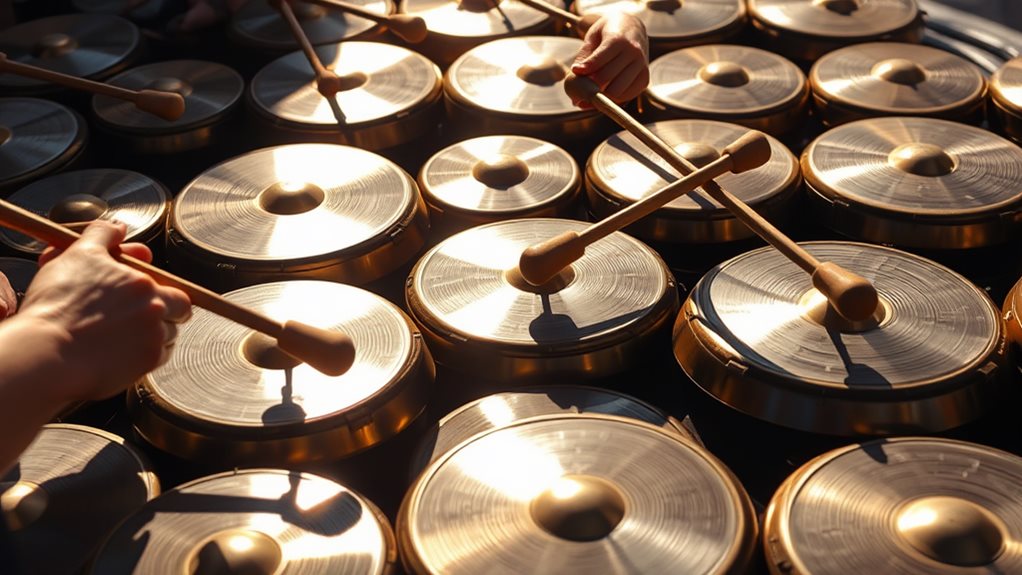
    Position the gangsa on your lap with the playing surface facing up, maintaining a comfortable, straight-backed posture. Use wooden mallets with padded heads to strike near the center for fuller tones. Keep fingers relaxed for smooth movement and control dynamics by adjusting your strike force. Practice striking at perpendicular angles to achieve clear notes. Focus on syncopation and study polyrhythm patterns for complex rhythms. Participate in community events to foster pride and collaborative performances. Exploring further develops mastery in Cordilleran gong music.

    Understand the Gangsa

    comprehend the traditional instrument

    To truly grasp the essence of the Gangsa, within the context of the Cordillera region, you must familiarize yourself with its construction from bronze or brass, and how it produces a resonant tone when struck.

    This gong instrument is hand-held with a smooth surface and a narrow rim, allowing for a variety of playing techniques and sound variations. You can play the Gangsa using a mallet or even your palms, and mastering these techniques requires precision and practice to produce the best sound quality.

    Typically, the Gangsa is part of an ensemble, where coordination and synchronization are key to achieving harmonious music.

    During cultural celebrations and rituals, the Gangsa not only provides musical accompaniment but also serves as a medium for storytelling and heritage preservation, making it a vital part of the Cordillera region's cultural tapestry.

    Hold the Instrument Properly

    Placing the Gangsa on your lap with the playing surface facing upwards maximizes resonance. Sit in a comfortable position with your back straight to facilitate better control and endurance during play.

    Keep your fingers relaxed, positioned on the edge of the gong, to allow for fluid movement when striking. Use your palm to strike the surface of the Gangsa, ensuring that the impact point is near the center for a fuller sound.

    Adjust your grip to avoid excessive pressure, allowing the instrument to vibrate freely for optimal sound quality. Holding the instrument this way aligns it with the traditional methods, which the Gangsa is usually played, ensuring you capture the true essence and depth of its vibrations.

    Remember, while the Gangsa may complement the nasal flute in some traditional settings, understanding how to hold and play each instrument separately is crucial.

    Cancel anytime if you feel uncomfortable or need to make any posture adjustments.

    Use Mallets Effectively

    mastering mallet techniques efficiently

    A key element in mastering the gangsa involves using mallets effectively. Choose a wooden mallet with a padded head; this choice enhances mallet materials by producing a warm, resonant tone while protecting the gangsa's surface.

    When adjusting striking techniques, aim for a perpendicular angle to the gong to elicit a clear, vibrant note. Alter the force of your strikes to control sound dynamics; softer taps create mellow sounds, whereas harder strikes yield louder, more pronounced tones.

    Experiment with various striking locations on the gong; hitting the center for a fuller sound or the edge for sharper tones can enrich your playing.

    Hold the mallet with a relaxed grip, facilitating smooth wrist movement essential for executing complex rhythms and dynamics.

    Strike Evenly for Tone

    Ensuring you hit the center of the gong with even force, which is essential for producing a clear and resonant tone, you should use a wooden mallet and adjust your grip to maintain control and precision throughout your performance.

    This involves holding the mallet loosely but firmly, positioning your fingers around the handle for maximum support.

    Focus on your striking techniques, fine-tuning your wrist movement to strike straight down from various heights to vary the impact and tonal quality.

    Tonal exploration requires shifting the angle of the mallet slightly, experimenting with edge strikes for bolder sounds or softer center taps for delicate notes.

    Rhythmic precision calls for disciplined timing, listening to the gong's resonance and aligning your strikes to fit within the broader musical context.

    Regular practice sharpens your ability to execute these techniques consistently, enhancing sound quality and allowing you to deliver nuanced performances with ease.

    Practice Ensemble Techniques

    collaborative music performance skills

    Maintaining precise timing and rhythm when playing with others is key to achieving harmony in ensemble performances. To develop these skills, start by focusing on timing coordination. Listen attentively to the other musicians, and aim to match their beats precisely. Practice clapping along with a recording of the piece or using a metronome to refine your sense of timing.

    Next, consider ensemble dynamics. Experiment with varying the intensity of your striking force and adjust your mallet angle to blend with the overall volume and timbre of the group. This collective practice will ensure a balanced and cohesive auditory experience.

    Lastly, adopt effective rehearsal strategies. Regularly attending rehearsals, reviewing your parts, and addressing any discrepancies or irregularities promptly can significantly improve the synchronization and musicality of the ensemble.

    Following these guidelines will help you perform in unison, enhancing the cultural and musical significance of the gangsa in your ensemble.

    Learn Traditional Rhythms

    Traditional rhythms in Gangsa music are based on intricate patterns that emphasize syncopation and polyrhythms, reflecting the cultural heritage of the Cordillera region.

    To learn these rhythms, you start by mastering syncopation techniques, focusing on off-beat placements within a measure to add complexity. Simultaneously, studying polyrhythm patterns, where multiple conflicting rhythms are played simultaneously, enhances your rhythmic vocabulary.

    Learning these rhythms relies heavily on the oral tradition, so pay close attention to experienced musicians, practicing by listening and imitation.

    Rhythmic structures cycle and repeat, allowing for motif development and unity among ensemble players. Understanding the cultural context of these rhythms, their roles in rituals and celebrations, deepens your appreciation and performance quality.

    Incorporate Regional Styles

    embrace local design influences

    Exploring various regional styles of Gangsa playing reveals a plethora of cultural traditions and musical nuances specific to different Cordillera tribes.

    To effectively incorporate regional styles, you should:

    1. Study historical and cultural significance: Delve into the history and context of how the Gangsa is used in specific regions. This understanding will help you appreciate the deeper meaning behind each style.
    2. Master local techniques: Practice the unique striking forces and mallet angles used by performers in your area. These local techniques produce sounds that are distinct and culturally important.
    3. Participate in collaborative performances: Work with local musicians to blend different styles during live performances. Collaboration fosters a richer musical experience and honors diverse cultural expressions.

    Preserve Cordilleran Heritage

    By delving into the rich and varied traditions of the Gangsa in Cordilleran communities, you not only cherish the integral role it plays in celebrations and rituals but also ensure its cultural heritage is passed down to future generations. Engaging in community classes and workshops allows you to learn the musical heritage of the Gangsa, while also fostering community engagement. Schools collaborate with local musicians to integrate Gangsa lessons into their curriculum, teaching students about the cultural significance of their heritage. Online resources provide further study materials, enhancing your skills. Here is a breakdown of effective strategies for preservation:

    Strategy Method Impact
    Community Classes Organize regular playing sessions Increases familiarity and skill among all ages
    School Integration Incorporate Gangsa in music classes Educates youth about cultural heritage
    Online Resources Access digital tutorials and videos Facilitates self-paced learning and accessibility
    Performances Participate in community events Strengthens community pride and identity
    Collaborative Efforts Work with cultural groups and NGOs Combines resources for broader cultural impact

    Questions and Answers

    How Is Gong Cordillera Played?

    Gong traditions in Cordillera involve cultural significance through ensemble performances, using varied striking techniques with mallets or hands for dynamics and rhythm, requiring practice and coordination.

    How Do You Play the Gangsa?

    To play the gangsa, hold it on your lap, use your bare palms, and master technique variations. Understand its cultural significance and adapt to varied performance settings for a rich musical experience.

    What Is the Gangsa Instrument of Cordillera?

    The Gangsa, with its rich history and cultural significance in Cordillera, plays essential roles in community events. Variations across sizes produce diverse pitches, enhancing ensemble music quality.

    How Is a Gong Played?

    Playing a gong involves striking it with techniques using mallets, sometimes palms, generating diverse tones, emphasizing cultural significance, and integrating into various musical styles.

  • Traditional Music of the Tboli: Beyond the Hegelung

    Traditional Music of the Tboli: Beyond the Hegelung

    Exploring traditional Tboli music reveals a rich tapestry beyond the renowned hegelung. Kulintang and agung feature prominently, their entwined melodies narrating myths and seeking spiritual harmony. These instruments, along with traditional Tboli language, play crucial roles in rituals and ceremonies, ensuring cultural continuity. Festivals like Tnalak and Lemlunay showcase these performances, fostering community spirit and pride. Leadership structures, like the role of the Datu, uphold these traditions, blending cultural values with community consensus. Efforts to document and preserve Tboli music face challenges from globalization, yet projects such as the Utom Project and youth engagement programs aim to maintain cultural identity. By exploring further, one gains deeper insights into the cultural significance and preservation of Traditional Tboli music.

    Tboli Music Overview

    traditional tboli musical heritage

    In the context of exploring the rich tapestry of Tboli culture, utom, or Tboli music, emerges as an essential element serving to preserve cultural identity through intricate melodies and rhythms.

    You engage with traditional Tboli music through various instruments such as the hegelung, kulintang, and agung, each playing a crucial role in the music's composition. The hegelung, a small two-stringed lute, produces melodies that accompany storytelling and rituals.

    Meanwhile, the kulintang, a set of gongs, and the agung, a larger gong, collectively produce rhythmic patterns that underscore the spiritual and ceremonial aspects of Tboli life. Tboli songs frequently convey myths, legends, and spiritual beliefs, echoing the community's deep connection to nature and their ancestors.

    Celebrations like Lemlunay and Tnalak prominently feature Tboli music, these festivals serving as platforms for traditional performances that enhance community spirit and cultural pride.

    Beyond entertainment, Tboli music is integral to rituals and ceremonies, reinforcing themes of spirituality, ancestral reverence, and overall cultural heritage.

    Cultural Identity Through Music

    The Tboli people, with a population of around 80,000, employ music as a significant means to express and preserve their cultural identity. This expression is evident in the storytelling medium of utom, which conveys Tboli myths and legends, preserving the community's oral history and cultural practices.

    Traditional instruments such as the hegelung (a two-stringed lute) and kulintang (a gong ensemble) are integral to Tboli music, reflecting a deep connection to nature and spirituality. Festivals like Tnalak and Lemlunay highlight music's role in fostering social unity and cultural pride among the Tboli people, showcasing their artistic expressions.

    The Tboli language, with its unique seven-vowel system, often interwoven into musical compositions, further reinforces your cultural identity through linguistic expression. Thus, music plays a crucial role in defining and maintaining your cultural roots and traditions.

    Spirit and Ritual Music

    sacred sound and tradition

    Spirit music weaves through rituals, invoking offerings called densu to appease nature spirits like Dwata and FunKoyu, reflecting deep spiritual beliefs.

    Tboli instrumental music is central to these rituals, employing the hegelung and agong to create a Sounding Pantheon of Nature. The hegelung, a two-stringed lute, emits melodic lines that narrate ancestral stories, ensuring cultural continuity and spiritual guidance.

    Meanwhile, the agong produces rhythmic patterns that connect participants with the divine, reinforcing communal identity.

    Ritual music serves during significant life events to influence the spiritual realm, with melodies tailored for protection, healing, or blessings.

    Community participation is essential, as music acts as a medium for collective expression and social cohesion, reinforcing the Tboli's bond with nature and their shared spiritual heritage.

    Role of Leadership

    Within the Tboli community, where music plays a pivotal role in rituals and spiritual life, leadership holds a position of authority and responsibility.

    The Datu, as the tribal leader, is chosen by a council of leaders, tasked with demonstrating strong leadership, communication skills, and a deep understanding of Tboli traditions.

    Leadership in the Tboli community is grounded in the Sebila, or Friendship Pact, symbolizing unity and often formalized through a blood compact between families.

    The Datu resolves conflicts, presiding over disputes and employing traditional trials for offenses like adultery and theft.

    Beyond governance, the Datu acts as a mediator, upholding harmony and cultural integrity among Tboli people.

    The leadership structure reflects a blend of traditional practices and community consensus, ensuring decisions align with cultural values.

    Social Festivals and Music

    celebration of sound and community

    During the month of November, in celebration of Helobung and July's Tnalak, music intertwines with traditional attire and community participation to showcase rich cultural heritage, while in September's Lemlunay, it highlights artistic expressions and fosters unity among Tboli members, attracting both locals and visitors.

    Music serves as a central element in these festivals, acting as a storytelling medium that conveys myths and cultural narratives, strengthening communal identity.

    Community involvement in festival preparations and performances is crucial, enhancing cultural pride and awareness, and allowing the Tboli to share their traditions.

    Each event brings together the Tboli to engage in traditional dances and rituals, reinforcing their cultural heritage through active participation and shared experiences.

    Through these social festivals, music not only entertains but also educates, preserving the Tboli culture for future generations.

    Instruments and Sounds

    Music serves as a focal element in Tboli social festivals, enriching communal identity through storytelling and cultural celebration. You explore a variety of traditional musical instruments, each contributing uniquely to Tboli music.

    The hegelung, a two-stringed lute, stands out for its distinct playing technique involving nail usage that enhances expressiveness and creates a tonal quality reflecting cultural narratives. The kulintang, a set of gongs, plays a central role in Tboli music, present in both communal gatherings and formal ceremonies.

    Here are details on its elements:

    1. The kulintang consists of a row of eight graduated gongs, played with wooden mallets to produce complex melodies.
    2. Bamboo jaws harps (kumbing) add a high-pitched, clear sound, emphasizing nature's resonance in Tboli music.
    3. Drums, including the agong (a large gong), provide rhythmic depth, supporting the kulintang and other instruments.
    4. Traditional musical instruments in Tboli music are designed to replicate nature's sounds, embodying spiritual connections of the community.

    Dance and Music Integration

    rhythm and movement harmony

    Tboli festivals bring together dance and music for expressive storytelling, reflecting cultural beliefs and strengthening community bonds. This dance and music integration is evident in performances of Tboli dances like Madaltahu, depicting a mythical hero, and Madal soyow, showcasing warriors.

    Traditional Tboli music, featuring instruments such as the hegelung and kulintang, accompanies these dances, enhancing the narratives and cultural expressions. Festivals such as Tnalak and Helobung prominently feature this integration, with community members in traditional attire merging rhythmic steps with melodic storytelling.

    The interplay between dance and music not only entertains but preserves cultural identity and fosters closer communal ties. Musical rhythms and patterns intricately link to the choreography of Tboli dances, with specific steps and formations designed to complement the musicality of the instruments.

    Spiritual Beliefs

    Spirituality weaves through the fabric of daily life, centering around the worship of nature spirits such as Dwata, the god of creation, and FunKoyu, the spirit of the forest, with rituals and offerings made to appease them.

    In southern Philippines, these beliefs are integral to the Tboli community, influencing various aspects of their culture including their music in the making.

    Offerings, known as densu, play a pivotal role, involving gifts of food, tobacco, and other items to maintain harmony with the spirits.

    Death is perceived as a transformative journey, where the deceased are guided on a soul boat to the afterlife with specific burial rites to honor them and ensure their passage.

    The Tboli maintain a profound connection to nature, valuing herbal knowledge and remedies for illnesses, all stemming from their spiritual beliefs.

    Here are key elements of the ritual process:

    1. Cooking specific foods intended for offerings to the spirits.
    2. Preparing herbal teas and potions as part of appeasing rituals.
    3. Selecting sacred locations or temples for ritual ceremonies.
    4. Invoking the spirit names and requesting protection or blessings.

    Healing Practices

    holistic well being techniques

    When illnesses arise, often seen as punishments from angry deities, rituals and offerings are conducted by mwanga and mtonbu to appease these spirits and restore health, drawing on traditional herbal remedies that reflect your deep connection to nature and spirituality.

    These healers utilize local plants, meticulously documented within your culture, to treat various ailments, showcasing a wealth of traditional knowledge passed down through generations.

    The rituals not only address physical ailments but also reinforce cultural beliefs and values, enhancing social harmony and community cohesion.

    Music plays a crucial role in these practices; songs and instrumental performances enhance the effectiveness of rituals and connect individuals to the spiritual realm.

    Scholars from the Musicological Society have noted the importance of these musical elements, underscoring their integral role in the broader cultural context of the Tboli community in Lake Sebu.

    Death and Burial Rituals

    In the aftermath of illness and death, seen as a journey in a boat to another realm, rituals and offerings play a pivotal role in honoring the deceased and ensuring a safe passage. The Tboli believe that this spirit journey isn't just a physical transition but a transformation influenced by the life and the manner of death.

    Death symbolism is deeply rooted in these beliefs, manifesting in various burial offerings that prepare the soul for the afterlife. These offerings can vary widely depending on whether the deceased is an adult or a child, each stage of life having its own set of rituals and offerings to appease and guide the spirit safely.

    For adults, the process involves a series of steps aimed at safeguarding the soul:

    1. The body is washed and prepared with specific herbs, believed to purify and protect the deceased.
    2. Additional items, such as clothing and tools, are placed in the grave to assist the spirit in its new realm.
    3. Offerings of food and drink are provided to nourish the spirit during its journey.
    4. Finally, musical performances and prayers are conducted to honor the deceased and request favorable guidance.

    Respect for the deceased pervades each step, emphasizing the importance of a dignified and spiritually satisfying transition.

    These rituals, meticulously enacted, underscore the Tboli's belief in maintaining a harmonious balance with the spirit world.

    Woman Shaman Songs

    spiritual empowerment through music

    Singing woman shaman songs integrates deeply into the spiritual and healing practices of Tboli culture, performed by female shamans who invoke nature spirits and ancestral guidance.

    These songs employ rich shamanic symbolism, reflecting the oral tradition and conveying cultural meanings through variations in storytelling. Distinctive melodic structures characteristic of woman shaman songs often feature low-pitched vocals, rooted in ancestral connections that bind the community to its mythology.

    During rituals and festivals, these performances serve both as healing practices and cultural expressions, preserving traditional knowledge.

    The documentation and translation of these songs have become crucial for promoting awareness of Tboli culture and ensuring the transmission of ancestral wisdom to future generations.

    Musical Connections Regionally

    Several musical similarities link the Tboli to other Austronesian cultures, particularly in the use of gong-row ensembles, which mirror Indonesian traditions.

    This interconnectedness further manifests through the incorporation of instruments like the kulintang and agung, staples in the southern Philippines and Borneo.

    The two-stringed lute, the hegelung, also bridges cultural exchanges across regional borders, emphasizing shared musical practices.

    The Tboli's melodic patterns, influenced by their unique seven-vowel language system, resonate with those of other Austronesian languages in the region.

    Festivals such as Lemlunay feature collaborative performances that draw upon this shared musical heritage, strengthening regional cultural ties.

    Here are the key aspects:

    1. Use of gong-row ensembles similar to Indonesian traditions
    2. Incorporation of kulintang and agung from southern Philippines and Borneo
    3. Presence of two-stringed lute hegelung across regional cultures
    4. Melodic patterns resonating with other Austronesian languages

    Documentation Challenges

    navigating complex documentation issues

    Frequently, the documentation of Tboli traditional music suffers from imprecise descriptions and vernacular names, making it difficult to grasp the full cultural significance of their instruments.

    Musical transcription methods often fall short, failing to capture nuances in performance techniques unique to the Tboli.

    Oral tradition preservation efforts lag behind, as there are few publishers translating Tboli songs, limiting access to lyrical content and its cultural context.

    An album featuring Tboli music provides an atmospheric snapshot but lacks detailed insights into performance practices crucial for a comprehensive cultural significance exploration.

    These challenges underscore broader difficulties in documenting indigenous cultures, where oral traditions may be inadequately recorded, risking loss of valuable knowledge over time.

    Cultural Preservation Efforts

    While documenting Tboli traditional music faces challenges such as imprecise descriptions and limited transcription methods, efforts to preserve their cultural heritage are gaining momentum.

    Community involvement plays a central role, with the Utom Project supporting awareness through recordings and live performances that feature traditional instruments. Cultural storytelling is integral, emphasizing oral traditions and local legends within these initiatives.

    Youth engagement is crucial for sustainability; programs like Lemlunay and Tnalak engage younger generations, fostering pride in Tboli identity.

    Collaborative projects with ethnomusicologists and filmmakers improve preservation by documenting practices and introducing them to broader audiences. Funding from organizations such as The Wallace Alexander Gerbode Foundation aids in these endeavors.

    1. Recording traditional music and performances
    2. Raising awareness through artist collaborations
    3. Educational programs engaging youth
    4. Documenting practices with ethnomusicologists and filmmakers

    Utom Music Composition

    utom music creation process

    Florante Aguilar's Utom is a musical composition comprising eight movements that narrate the legend of Lake Sebu, integral to Tboli culture and identity.

    Utom movements analysis reveals a structured yet flexible framework, where each segment builds on the narrative complexity of the preceding ones. The composition employs Tboli narrative techniques, blending oral storytelling traditions with musical expression to convey spiritual and historical messages.

    Instruments such as the kulintang and agung are central, resonating with themes of nature and spirituality. Aguilar's arrangement allows for contemporary interpretations, enabling non-traditional musicians to engage with the kulintang, merging traditional Tboli influences with modern musical forms.

    Performance enhancements include short film footage, adding a visual dimension that enriches the audience's engagement with Tboli culture.

    Questions and Answers

    What Traditional Musical Instrument Was Popularized by the T Boli Tribe?

    You explored the traditional musical instruments of the Tboli tribe, emphasizing the kulintang's cultural significance and role in music festivals.

    What Is the Tradition of Tboli?

    The Current Question addresses Tboli rituals, cultural significance, community gatherings, highlighting shared traditions fostering unity, oral literature, and spiritual connections within Tboli society.

    What Is Mo Ninum?

    Mo ninum significance lies in greeting and welcoming visitors. Its performance showcases rich vocal traditions. Symbolism includes unity, friendship, community values.

    What Is the Most Famous Art of the T Boli Tribe?

    The most famous art of the Tboli tribe is Tboli weaving, producing intricate Tnalak fabric, reflecting Tboli rituals, storytelling, and cultural significance through vibrant patterns and spiritual inspiration.

  • Filipino Street Dance Culture: From Budots to Contemporary Urban Moves

    Filipino Street Dance Culture: From Budots to Contemporary Urban Moves

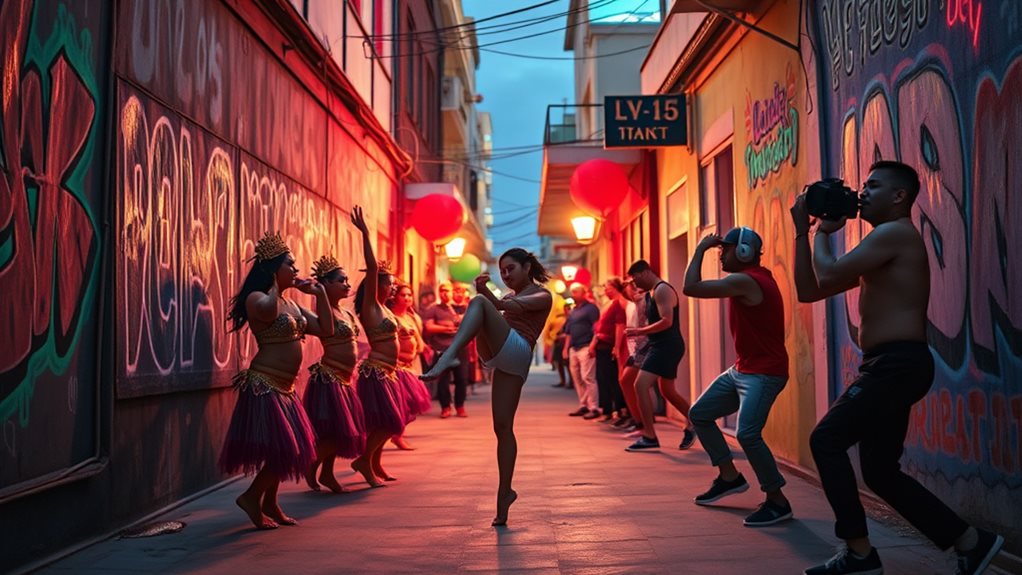
    Exploring Filipino street dance culture unveils a dynamic journey from Budots to contemporary moves. Originating in Davao City around 2006, Budots emerged as a street dance phenomenon, embodying local identity and cultural pride. Characterized by worm-like motions and heavy percussion, Budots fuses indigenous sounds with electronic beats, primarily using Bisayan languages in lyrics. This genre has evolved, influencing cultural and political expression, and was notably used in political campaigns, enhancing populist images. Budots' viral presence on platforms like TikTok has brought Filipino culture to global attention, fostering international recognition and inspiring new artists and remix cultures. Understanding this evolution reveals the rich, ever-changing landscape of Filipino street dance.

    Budots Etymology

    dance music origin explained

    The term "Budots" emerges from the linguistic tapestry of Bisaya slang in Davao City, Philippines, signifying "slacker" and thus encapsulating the informal and spontaneous origins of this street dance culture.

    Initially perceived as a slang word for slacker, Budots reflects the characteristics of glue-sniffing youth known as rugby boys, who popularized the dance. An alternative etymology traces Budots to "tabudots," emphasizing the dance's unpredictable and playful movements.

    DJ Love, also known as Sherwin Calumpang Tuna, formalized Budots as a dance craze by mixing local sounds in 2009. This integration of regional music into the dance solidified Budots' place in Filipino culture, demonstrating its evolution from informal slacker behaviors to a recognized and celebrated form of urban expression in Davao City.

    Academic research from UP Mindanao underscores the linguistic roots and cultural significance of Budots, illustrating its profound impact on Filipino street dance culture.

    Origins of Budots

    A street dance phenomenon emerges in Davao City around 2006, originating from the local slang term "Budots," which means "slacker."

    Budots gains traction as DJ Love, also known as Sherwin Calumpang Tuna, blends indigenous sounds with electronic music, fostering a unique dance style among Davaoeño youth.

    Initially, Budots was associated with glue-sniffing youth known as "rugby boys," but as Sherwin Tuna continued to produce music that amalgamated traditional Filipino sounds with contemporary electronic beats, Budots transformed into a cultural phenomenon reflecting Davaoeño pride and self-identity.

    Through his work, Sherwin Tuna encouraged the youth to develop their own dance moves, creating a fusion that spoke to their distinct experiences and background in the vibrant urban landscape of Davao City.

    Budots Characteristics

    unique dance music genre

    Eleven years after its emergence in Davao City, Budots music maintains a tempo of 140 BPM, marked by four-on-the-floor patterns and off-beat basslines, which support its energetic and dynamic dance styles.

    When engaging with Budots music, you find that dance moves are characterized by worm-like, ragdoll motions, with an emphasis on hip wriggling and squatting. These movements embody the informal and playful nature of the genre, resonating deeply with Filipino street culture.

    Budots songs incorporate catchy whistle hooks and heavy percussion, blending traditional Filipino dance elements into contemporary rhythms. The off-beat basslines add to the unique auditory landscape, encouraging freestyle dancing that mirrors the spontaneity and creativity of the community.

    Lyrics, primarily in Bisayan languages, often act as vocal samples, grounding the music in local cultural influences while providing an engaging auditory experience.

    As a form of community expression, Budots contributes significantly to the shaping of Filipino contemporary culture in Davao City, reflecting the city's vibrant, localized street dance and music scene.

    Budots Music Genres

    Crafting an electronic dance music soundscape that fuses kick-snare patterns and off-beat basslines, Budots subgenre dynamic beats resonate at 140 BPM, integrating techno and house influences with piercing whistle hooks and heavy percussion to catalyze freestyle dancing.

    This unique blend defines budots music, a genre deeply rooted in the creative energy of Davaoeño youth. By incorporating Bisayan languages in lyrics, artists enhance cultural expression while maintaining the high-energy rhythm characteristic of the subgenre.

    Budots music's immersive soundscape draws from a rich tapestry of cultural sounds, reflecting the vibrant and innovative dance culture of Southeast Asia. Related genres such as Tagonggo, Funkot, and Vinahouse contribute to the diverse array of Southeast Asian electronic dance music, further emphasizing the genre's cultural contextualization and its relevance to contemporary urban moves.

    Cultural Impact

    cultural influence and legacy

    Budots, with its distinctive 140 BPM beats and cultural lyrics, has evolved not only as a musical subgenre but also as a significant aspect of contemporary Filipino culture.

    Its viral presence on TikTok has garnered millions of views, exposing Filipino culture to a global audience and igniting curiosity about its unique dance moves.

    Beyond social media, Budots has made inroads into mainstream culture through advertisements and media coverage, such as featuring in the Lucky Me! Pancit Canton campaign, thereby elevating its status from regional phenomenon to national and international recognition.

    This genre serves as a powerful tool for cultural expression, fostering a sense of community and identity among urban dancers.

    Amidst contemporary challenges, Budots provides a platform for social engagement, encouraging youth to connect with their cultural roots while expressing themselves through music and dance.

    Political Influence

    A notable political figure, former Mayor Rodrigo Duterte, incorporated a distinctive musical genre into his 2016 presidential campaign, enhancing his populist image in Visayan culture through a series of videos dancing to Budots.

    By deploying these videos on social media, Duterte tapped into a vibrant, underrepresented scene, using Budots as a bridge to connect with younger, more technologically inclined voters.

    This strategic use of music genre demonstrated the potent political influence that street dance culture could wield.

    DJ Love, the creator of Budots, however, expressed concerns over unauthorized usage of his music, highlighting the nebulous line between cultural expression and political co-optation.

    Senator Bong Revilla also capitalized on Budots for his political advertisements, further embedding the genre into the national political discourse.

    These instances underscored how Budots transcended its origins to serve both entertainment and political messaging, often overshadowing complex policy discussions.

    Through such engagements, street dance culture, particularly Budots, became an integral part of the political landscape, reflecting changing dynamics between popular culture and governance in the Philippines.

    Budots Reception

    energetic dance music event

    While music journalists often criticized Budots for its repetitive nature, they also acknowledged its role as a cultural reinterpretation of Western music genres by Davao locals, which has allowed the genre to not only survive but also evolve in the contemporary Filipino street dance scene.

    DJ Love's mix videos, particularly those supporting Duterte's policies, showcased Budots intertwined with political narratives, reinforcing its significance.

    In 2024, TikTok trends propelled Budots back into the spotlight with DJ Johnrey Masbate's "Emergency Budots," a remix that garnered millions of views across over 500,000 TikTok videos.

    Political figures like Sen. Bong Revilla utilized Budots in campaign ads, demonstrating its cultural reach and impact.

    These budots mixes not only attracted voter attention but also highlighted the genre's evolving place within broader Filipino street dance culture.

    Media Presence

    Featuring in the 2019 documentary "Budots: The Craze," exploring its origins and cultural significance in Davao City, you gain significant media attention. This exposure not only highlights the unique beats of Davao but also underscores the broader trajectory of Filipino music influencing global street dance trends.

    Following this, Budots dance videos start to proliferate on social media platforms, with brands like Lucky Me! Pancit Canton incorporating them into advertising campaigns to tap into a younger demographic. Political figures, including Senator Bong Revilla, leverage the dance form in their electoral strategies, amplifying its cultural relevance and widespread appeal.

    Particularly noteworthy is DJ Johnrey Masbate's "Emergency Budots" challenge, which leads to over 500,000 performances and videos, driving Budots into the mainstream and elevating its profile. Major international news outlets, such as The Guardian, report on the phenomenon, attributing Budots' surge in popularity to its dynamic cultural significance and its ability to redefine global perceptions of Filipino music within urban dance movements.

    Through these various media channels, Budots solidify its place not just in Davao City, but within a global discourse on street dance and cultural expression.

    Notable Events

    significant historical occurrences

    Dancing through cultural anniversaries and festive gatherings, Budots continues to assert its presence and significance, garnering attention at events like the Manila Community Radio's spotlight in 2023, where it showcased both its cultural importance and community engagement.

    Such exhibitions underscore Budots' role in local traditions, emphasizing its deep roots in Filipino street dance culture. Furthermore, Budots has become a prominent feature in various local Christmas parties and celebrations, reinforcing its impact on festive gatherings in the Philippines.

    The genre's integration into broader dance scenes has been evident in your participation in competitions such as the World Of Dance Philippines, where DSquared Cru represented Budots, highlighting its growth and versatility.

    Notably, the popularity of Budots in social events is enhanced by the inclusion of DJ Love's mixes, which seamlessly blend with the dance moves, creating dynamic atmospheres in clubs and parties.

    Additionally, political figures, including Bong Revilla, have engaged with Budots culture, employing it during campaigns and public appearances to connect with constituents, thereby elevating its social and cultural significance within communities.

    Through these events, Budots establishes itself as a vibrant and influential element of Filipino street dance, bridging traditional and contemporary expressions.

    Future Trends

    In the evolution of Budots, new artists emerge and remix culture diversifies its sound, reflecting contemporary trends in electronic dance music, pushing the genre beyond traditional boundaries and into innovative territories.

    DJ Love's introduction of bomb-tek in "Budots World (Reloaded)" exemplifies this innovation, blending Budots with bombastic foreign electronic dance music.

    The 2023 Manila Community Radio grant underscores institutional support for Budots, recognizing its cultural significance.

    Meanwhile, viral trends on TikTok, like the "Emergency Budots," have globalized the genre, drawing millions to its dance moves and outfits.

    These factors set the stage for international recognition, potentially placing Budots alongside other Filipino cultural icons.

    1. Budots fusion with bomb-tek marks a significant boundary push.
    2. Manila Community Radio grant highlights Budots' growing cultural value.
    3. TikTok's "Emergency Budots" trend showcases global visibility.
    4. Potential international recognition looms, likening Budots to traditional dances.

    Budots Evolution

    dance music genre evolution

    Budots, a genre that emerged in Davao City around 2006, transformed from a local dance style linked to glue-sniffing youths into a mainstream electronic dance phenomenon, largely due to DJ Love's pioneering efforts.

    Initially characterized by its unique sound featuring tiw-tiw whistles, heavy bass, and infectious rhythms, Budots encouraged freestyle dancing. Over time, the genre gained viral popularity, with tracks like "Emergency Budots" being sampled and used in over 500,000 TikTok videos by mid-2024.

    These sounds reflected the Davaoeño culture and spirit. Budots dance moves have evolved to incorporate a variety of influences from other Filipino cultural dances, merging traditional and contemporary styles.

    The resurgence of the genre has seen the participation of local artists and DJs, leading to new sounds such as "bomb-tek," which push the boundaries of Budots while honoring its cultural roots.

    Through DJ Love's innovative contributions and the integration of cultural elements, Budots continues to evolve as a significant part of Filipino street dance culture.

    International Recognition

    Could the turning point in international recognition for Budots have been DJ Love's performance at the Margins United Festival in the UK, where diverse East and Southeast Asian artists were showcased? This event marked a significant moment, signaling the genre's potential to transcend national boundaries.

    1. DJ Love's Margins United performance exposed Budots to a global audience, fostering initial interest.
    2. Viral remixes like "Emergency Budots" by DJ Johnrey Masbate, with millions of views on TikTok, amplified this interest.
    3. Media coverage in The Guardian highlighted Budots' cultural significance, driving broader recognition.
    4. The genre's acceptance during political campaigns, especially during the Duterte administration's "Duterte dancing," solidified its status as a cultural phenomenon.

    The Manila Community Radio's initiative to spotlight Budots through grants further underscores the growing international demand for cultural engagement and exchange.

    These collaborative efforts not only promote Budots but also integrate it into wider cultural narratives, enhancing its global appeal and understanding.

    Questions and Answers

    What Is the Culture of the Budots Dance?

    Exploring the culture of Budots dance involves understanding its dance expressions, community gatherings, and social dynamics, heavily influenced by cultural traditions and street performance styles, with music genres like electronic house, fostering youth engagement.

    What Is Budots in the Philippines?

    Budots in the Philippines represents a vibrant music, fashion, and dance scene, with Budots challenges, community events, and influential DJs driving its evolution and cultural impact.

    Where Do Emergency Budots Come From?

    Emergency Budots emerge from Budots history, evolving Dance evolution with Urban influences, gaining Social impact, reflecting Music genres mix, embodying Cultural significance in dynamic Performance styles.

    What Is the Origin of the Word Budots?

    Recognizing Budots Evolution, tracing its origins ties to socio-cultural factors, blending Dance Influence, Music Genres, regional practices, highlighting Cultural Significance, Social Gatherings, Dance Competitions, grounded in youth subculture commentary.

  • The History and Significance of Kapampangan Folk Songs

    The History and Significance of Kapampangan Folk Songs

    Exploring the history and significance of Kapampangan folk songs reveals their integral role in shaping cultural identity. Learned in childhood, these songs function as storytelling mediums, preserving Aláya, the intangible life force essential to Kapampángan heritage. Symbolizing cultural ties and serving as sacred anthems for revolutionaries, they embody resilience and spirit during conflicts. Following the basultu form, a unique syllable pattern, folk songs adapt to seasonal events and festivals, celebrating cultural richness. Globalization poses threats, urging community initiatives like the Arti Sta. Rita Foundation to promote cultural revival. Contemporary artists reimagine traditions, integrating new genres and global music elements. Artists such as Lea Salonga and Apl.de.ap connect Kapampangan roots with international stages, enhancing cultural significance. By uncovering these layers, one gains insight into the deep cultural roots and evolving musical landscape of Kapampángan society.

    Kapampangan Cultural Heritage

    preserving kapampangan traditions

    Singing Kapampangan folk songs, such as "Atin Ku Pûng Singsing," weaves integral threads into your cultural identity, learned from childhood and echoing the heritage of the Kapampángan people.

    These folk songs serve not only as a medium for storytelling but also as a way to preserve history and reflect the values and beliefs of your community.

    The tradition of seasonal music, featuring specific soundtracks for events like Halloween (gosu), Christmas (pastorela), and Lent (pasyun), underscores the rich musical diversity of Kapampangan heritage.

    The premiere of "Ing Managpe," the first Philippine zarzuela in vernacular, highlights your significant contribution to broader Filipino theatrical traditions.

    Festivals and community celebrations, such as the serenata, further emphasize the role of music in fostering cultural identity and collective memory among the Kapampángan people.

    Through these cultural expressions, your musical heritage not only entertains but also educates, strengthening your cultural identity.

    Historical Context and Symbolism

    Your culture's folk song "Atin Ku Pûng Singsing" encapsulates layers of historical significance and symbolic meaning, serving as a tangible link to Kapampángan heritage. This folk song symbolizes a lost inherited ring, representing deeper cultural ties and identity. Historically, "Atin Ku Pûng Singsing" functioned as a sacred anthem among Kapampángan revolutionaries, embodying resistance against colonial threats and preserving cultural heritage. Its structure follows the basultu form, a pattern distinct to traditional Kapampángan music. During conflicts, folk songs like "Atin Ku Pûng Singsing" were utilized as both communication tools and morale boosters among the people.

    Aspect Explanation
    Symbolism Represents a lost ring, symbolizing deeper cultural meanings and identity
    Historical Context Functioned as a sacred anthem in resistance against colonial threats
    Basultu Form Follows a specific syllable pattern, exemplifying traditional music
    Communication Tool Used during conflicts to convey warnings and boost spirits

    This folk song not only celebrates the cultural richness of Kapampángan people but also embodies their resilience and spirit through hidden symbolic layers intertwined with historical events.

    Concept of Aláya

    al ya consciousness and existence

    The concept of Aláya encapsulates the intangible life force and spirit that's fundamental to the completeness of Kapampángan identity and culture, underscoring the intrinsic connection between spirituality and cultural heritage in every facet of life.

    This concept, integral to cultural preservation, is vividly represented in the folk song "Atin Ku Pûng Singsing," where the lost ring symbolizes Aláya, highlighting the significance of heritage and cultural roots in Kapampángan society.

    Facing colonial threats meant to erase cultural uniqueness, the concept of Aláya became a rallying point, emphasizing the importance of maintaining Kapampángan identity.

    Music, particularly folk songs, became vital vessels for preserving and passing down Aláya, enabling the community to connect with their cultural heritage across generations.

    Emphasizing Aláya underscores the urgent need for cultural preservation efforts among younger generations to ensure the continuation of Kapampángan traditions and identity.

    Cultural Preservation Challenges

    In facing today's cultural preservation challenges, Kapampángan language and identity increasingly find themselves at odds with the advancing tide of globalization and assimilation, leaving younger generations to grapple with the struggle of learning and using their native dialect amidst a growing preference for dominant languages and cultural practices. The urgency to protect and preserve cultural practices becomes paramount as the extinction of native music threatens Kapampángan heritage. Losing traditional folk songs and customs can lead to a disconnection from cultural roots, underscoring the importance of recognizing and rediscovering these elements. Community initiatives, such as those by Arti Sta. Rita Foundation Inc., work to enhance cultural awareness among the youth, involving them in preserving Kapampángan traditions.

    Initiatives Goal Methodology
    Arti Sta. Rita Foundation Inc. Cultural awareness Workshops, performances, educational programs
    Language revitalization programs Nativization Language classes, cultural expos, public speaking
    Folklore documentation Patrimony preservation Oral histories, archiving, research
    Social media campaigns Promotion Sharing, advocacy, engagement
    Government policies Structural support Funding, legal framework, cultural policies

    The ongoing evolution of cultural identity necessitates a commitment from both local communities and government entities to sustain and promote Kapampángan music and practices. These efforts are critical for the cultural preservation of Kapampángan heritage.

    Call to Future Generations

    inspire tomorrow s leaders today

    Active engagement with Kapampángan language and identity, sparked by community initiatives and government policies, now calls upon future generations to maintain their cultural heritage.

    Learning and speaking the Kapampángan language are crucial for preserving your cultural identity and heritage. Embracing Kapampángan culture through participation in traditional practices and music, especially folk songs, ensures these traditions remain vibrant.

    The ongoing evolution of cultural identity is pivotal for fostering pride and connection to your roots. Initiatives like Aldo ning Kapampángan, which celebrates cultural festivals and community involvement, underscore the importance of these efforts.

    It becomes your responsibility to pass down this knowledge, ensuring Kapampángan folk songs continue as a living part of your culture. This active continuation will secure the cultural wealth for future generations.

    Political and Social Influence

    Exploring backwards reveals how Kapampangan music has woven into the fabric of political and social change, playing a crucial role in mobilizing collective action and identity.

    In the 1920s-1930s, Kapampangan music introduced socialist ideas to local peasants through the "Pasyon ding Talapagobra," reimagining Christ as a socialist figure to resonate with the economic struggles of the community.

    During World War II, resistance fighters used Kapampangan music to boost morale, performing songs during marches and battles to unify and inspire comrades amidst conflict.

    Survivors of wartime atrocities in Candaba utilized music as a coping mechanism, expressing their experiences and communicating their traumas through song.

    The emergence of "Apat-Apulung Aldo" after the 1972 flood in Pampanga demonstrated how Kapampangan music reflects resilience and solidarity in the face of hardship.

    Throughout these periods, Kapampangan music has historically served as a means of resistance and communication, conveying messages of hope, identity, and social change essential for navigating and transforming difficult times.

    Modern Musical Evolution

    contemporary sound development trends

    Kapampangan culture's possessive tradition of theatrical performances continues to evolve, as evidenced by the staging of the original zarzuela "Ciniong" to celebrate the 75th birthday of a beloved archbishop. This modern musical evolution not only maintains cultural significance but also integrates American elements into age-old forms, reflecting global influences on regional art.

    Contemporary artists actively revive musical genres like Ara Muna and RocKapampangan, updating traditional polosas and kantang ukbu to resonate with today's audiences. Through these adaptations, folk song traditions aren't discarded but rather reimagined, allowing new generations to connect with old melodies and themes.

    Mon David and O.K. Musica exemplify this trend by introducing jazz influences into love songs, demonstrating Kapampangan music's adaptability and its ability to incorporate diverse sounds while preserving its core essence. Additionally, Kapampangan hymns cover all liturgical seasons, showcasing a diverse musical repertoire that evolves through the lens of liturgical practice.

    This multifaceted evolution illustrates the dynamic relationship between traditional music and contemporary artistic expression in Kapampangan culture.

    Notable Kapampangan Artists

    Among the diverse forms of cultural expression that highlight the adaptability and richness of Kapampangan music, the contributions of notable artists stand out as significant markers of artistic achievement and cultural pride.

    Fides Cuyugan Asencio, for instance, as an opera diva, has made considerable contributions to classical music and performance arts, exemplifying the cultural significance of Kapampangan talent.

    International recognition also graces Cecile Licad, a pianist renowned for her performances in prestigious venues globally, reinforcing Kapampangan musical prowess.

    Lea Salonga, a Broadway star famous for her roles in "Miss Saigon" and "Les Misérables," embodies the region's artistic talent on global stages, significantly enhancing Kapampangan cultural significance.

    Furthermore, apl.de.ap, a member of the Grammy Award-winning group Black Eyed Peas, incorporates his Kapampangan roots into his music and advocacy, illustrating the broad reach of Kapampangan influence in contemporary music.

    Mon David, a jazz musician celebrated for his unique vocal style, further impacts the modern music scene by highlighting Kapampangan culture, enriching Kapampángan Studies.

    Each of these individuals exemplifies the depth and breadth of Kapampangan artistic expression.

    Questions and Answers

    What Folk Song Originated in Pampanga?

    Atin Ku Pûng Singsing originated in Pampanga, embodying Kapampangan traditions, themes of cultural preservation, and used at community gatherings, often with musical instruments, reflecting deep heritage.

    What Is the Significance of Folk Songs?

    Significance of folk songs includes preserving cultural identity through oral tradition, fostering community bonding, maintaining historical preservation, and facilitating artistic expression across generations.

    What Is the Story Behind Atin Cu Pung Singsing?

    Atin Cu Pung Singsing explores cultural identity through musical heritage, using storytelling techniques and regional variations tied to traditional instruments to preserve Kapampangan spirit and heritage.

    What Is the Most Famous Kapampangan Folk Song Used in the Sinukwan Festival?

    Atin Ku Pûng Singsing, representing Kapampangan cultural heritage, evolves through Sinukwan festival traditions, using local musical instruments and community storytelling methods to reflect unity and history.

  • Modern Interpretations of Pangalay: How Contemporary Dancers Are Preserving Tradition

    Modern Interpretations of Pangalay: How Contemporary Dancers Are Preserving Tradition

    You explore how contemporary dancers integrate traditional Pangalay techniques with modern elements. By mastering intricate hand movements, youth are learning and preserving the cultural heritage. These practitioners blend traditional instruments with contemporary music, enhancing emotional resonance while staying true to roots. Digital archiving plays a crucial role, capturing performances and sharing them globally. Workshops and mentorship programs ensure generational continuity. Through events abroad, cultural exchange is facilitated, maintaining Pangalay's relevance. By incorporating digital visuals, modern interpretations honor traditional roots yet innovate, hinting at a deeper understanding of the dance's evolution.

    Origins and Significance

    historical roots and importance

    Originating in the 14th century within the royal courts of the Sulu Archipelago, the Pangalay dance is deeply rooted in the nobility and cultural exchanges of its time, performed primarily by the Tausug and Samal tribes.

    This traditional dance reflects the complex maritime heritage of the Sulu region, with intricate hand movements that mimic ocean waves, symbolizing fluidity and grace intrinsic to Tausug culture.

    Fingernail decoration in Pangalay carries significant cultural meaning, with long, ornate nails not only enhancing aesthetic appeal but also serving as a percussive element during performances.

    The cultural significance of Pangalay extends beyond its aesthetic function, as it's deeply intertwined with Tausug cultural identity. It's often performed during celebrations and important events, reinforcing community pride and preserving cultural heritage.

    The historical significance of Pangalay has spurred modern preservation efforts, aiming to ensure that this traditional dance adapts to contemporary interpretations while remaining true to its origins.

    Traditional Costumes

    Reflecting the rich cultural heritage of the Tausug people, traditional costumes in the Pangalay dance weave intricate stories of their connection to the land. These costumes, crafted from silks, cottons, and natural fibers, embody a deep reverence for tradition through their meticulous design. Intricate patterns, beads, and sequins, each with symbolic meanings in Tausug society, enhance the visual vocabulary of the dance. Attention to detail is paramount, as artisans skillfully craft elaborate headdresses, ensuring every element speaks volumes about cultural narratives.

    Element Symbolism Craftsmanship
    Silks, cottons Unity, organic connection to earth Hand-woven fabrics
    Beads, sequins Status, wealth, community bonds Time-intensive sewing
    Headdresses Leadership, spiritual connection Precise embroidery

    These traditional costumes not only preserve cultural heritage but also create a mesmerizing visual impact, highlighting the beauty and fluidity of the Pangalay dance.

    Hand Movement Techniques

    gestures for effective communication

    A dancer must emphasize intricate hand movements, which demand years of practice to master, highlighting the critical role of finger independence and dexterity in crafting mesmerizing gestures. Each subtle flick of the wrist and delicate arm wave contributes to the fluidity and grace evocative of the region's maritime heritage.

    These gestures, a blend of traditional and contemporary cultural practice, require precise timing and control. Dance performances rely on these movements to narrate stories and engage audiences deeply without words.

    Here are key elements to focus on:

    1. Finger Independence: Practice isolating individual finger movements to create complex patterns that resemble the dance of ocean waves.
    2. Wrist Flicks: Perfect the art of subtle wrist flicks to add a dynamic flair that enhances the overall performance's fluidity.
    3. Arm Waves: Use precise arm waves to complement finger movements, ensuring that all gestures contribute to the seamless storytelling.
    4. Rhythm Integration: Sync hand movements with the rhythms of the accompanying music to strengthen the link between traditional cultural practices and modern interpretations, preserving the essence of the Tausug people's artistic expression.

    Musical Elements

    Strong rhythmic emphasis, notably driven by traditional instruments like the kulibit and kulintang, characterizes the music in Pangalay. These instruments, rooted in cultural heritage, provide a foundational layer that enhances the dance's emotional resonance. Rhythmic patterns and melodic phrases serve as narrative devices, intertwining with the dancers' expressions to elevate the storytelling aspect. However, contemporary dancers are not bound by tradition alone. They blend traditional sounds with modern adaptations, incorporating elements from jazz and rock to attract new audiences while preserving essential musical components.

    Traditional Instruments Role in Pangalay
    Kulibit Accents rhythmic sections
    Kulintang Provides melodic variety
    Gabbang Supports complex rhythms
    Balloan Adds high-pitched fills
    Agong Marks significant moments

    This integration of modern and traditional musical elements fosters an immersive experience, allowing audiences to connect deeply with the cultural heritage and emotional depth of the dance.

    Innovations in Choreography

    creative dance techniques emerge

    Incorporating fusion styles, contemporary choreographers are reinterpreting Pangalay, blending traditional movements with modern and urban dance elements to create innovative performances that speak directly to younger audiences' tastes.

    These adaptations involve several critical strategies:

    1. Projection screens during performances integrate vibrant visuals to enhance storytelling and provide a modern context for the traditional dance.
    2. Emphasis on emotional and meditative aspects of Pangalay allows dancers to express personal narratives through the rich vocabulary of movements rooted in tradition.
    3. Workshops led by experienced instructors focus on the precision and control required for intricate hand movements of Pangalay, ensuring authenticity while exploring new interpretations.
    4. Digital platforms showcase contemporary adaptations, fostering a global community of dancers engaged with the traditional art form, encouraging further creativity and exploration.

    Through these innovations in choreography, contemporary dancers balance the preservation of Pangalay's essence with the evolution of art to remain relevant to modern tastes.

    Digital Preservation Efforts

    Among the strategies employed for safeguarding Pangalay, digital preservation efforts stand out by archiving performances, costumes, and historical records, ensuring the dance's cultural significance endures for future generations.

    These digital archiving efforts leverage online platforms and social media to showcase Pangalay globally, fostering a sense of community and connection.

    Collaborations with local communities capture authentic representations, enriching the understanding of cultural heritage.

    Educational programs use digital media to teach younger generations about Pangalay's techniques and historical context, making them accessible and engaging.

    Funding from cultural organizations has bolstered these efforts, allowing broader outreach to diverse audiences interested in traditional arts.

    While these initiatives highlight the potential of technology in preserving Pangalay, the critical analysis must also consider the challenges of maintaining authenticity and sustainability in digital forms.

    Cultural Legacy

    heritage and traditions preserved

    The cultural legacy of Pangalay is a profound reflection of the Tausug people's artistic heritage, woven deeply into the fabric of their identity and community pride across the Sulu Archipelago.

    As you explore the traditional aspects of Pangalay, it becomes clear that the dance embodies a rich history of Islamic expression and cultural significance.

    Here are four key reasons why Pangalay remains a crucial element of this cultural heritage:

    1. Symbol of Identity: Pangalay fosters a sense of Islamic identity and community pride, making it an integral part of Tausug cultural practices.
    2. Craftsmanship Representation: Traditional costumes and intricate hand movements in Pangalay showcase the Tausug people's craftsmanship and cultural significance, emphasizing their artistic traditions.
    3. Generational Continuity: Efforts to preserve Pangalay involve community outreach programs that document and teach the dance to younger generations, ensuring its continuation as a vital cultural heritage.
    4. Balancing Tradition and Modernity: Modern interpretations honor Pangalay's traditional roots while integrating contemporary elements, maintaining its status as an important cultural legacy within the Filipino identity.

    Your critical engagement with these aspects underscores the dance's enduring relevance and artistic value.

    Future Performances

    A new era of Pangalay emerges as dancers blend traditional artistry with modern technology, enhancing storytelling and attracting diverse audiences. By integrating elements like projection screens and digital visuals, you not only modernize the Pangalay dance but also deepen its narrative, making it more accessible and engaging to a younger generation.

    To preserve Pangalay, workshops and mentorship programs are crucial, passed down by experienced practitioners to ensure techniques and narratives survive. Experimenting with fusion styles, you merge Pangalay with modern and urban dance forms, adding layers of innovation while honoring core movements. Such fusion not only diversifies the form but also sparks interest in its cultural roots.

    Events and festivals showcasing Pangalay abroad facilitate cultural exchange, broadening its reach and recognition globally. Research and documentation efforts are vital to archiving performances and historical records, reinforcing Pangalay as a significant piece of cultural heritage.

    These strategies collectively shape the future of Pangalay, ensuring its enduring relevance and artistic value.

    Questions and Answers

    What Is the Importance of Pangalay Dance?

    Understanding Pangalay dance highlights its cultural significance, serving as artistic expression and reinforcing community identity through intricate movements and shared heritage.

    What Best Describes Pangalay Folk Dance?

    What best describes pangalay folk dance? It features elegant movements,承载 cultural symbolism, exhibits regional variations, balancing tradition with evolving interpretations.

    What Is the Importance of This Folk Dance in Preserving the Philippine Culture and Tradition?

    The importance of this folk dance in preserving Philippine culture and tradition lies in its reinforcement of cultural identity through unique artistic expression, all while fostering community engagement in historical and modern contexts.

    How Does the Philippine Folk Dances Reflect the Communities Culture and Tradition?

    How do Philippine folk dances reflect the community identity, cultural heritage, and social values? They showcase unique traditions, beliefs, emphasizing artistic expression and cultural significance, reinforcing community bonds and pride through intricate movements and costumes.

  • 10 Lesser-Known Filipino Musical Instruments That Are Nearly Extinct

    10 Lesser-Known Filipino Musical Instruments That Are Nearly Extinct

    The Philippines is home to a diverse array of lesser-known musical instruments that are on the brink of extinction.

    These instruments are an integral part of the country’s indigenous music and symbolize the creativity and resourcefulness of the Filipino people. They also hold significant cultural and spiritual importance.

    Ancient bamboo percussion instruments, such as the Bungkaka and Patteteg, are examples of these lesser-known instruments. The Bungkaka is a bamboo instrument used in the Cordillera region, while the Patteteg is used in the southern region of Mindanao.

    Rare wind instruments, like the Palendag and Tulali, are also on the verge of extinction. The Palendag is a flute-like instrument used by the Maguindanao people, while the Tulali is a nose flute used by the Kalinga people.

    Learning about these forgotten melodies can uncover the timeless beauty of the Philippines’ musical past. By discovering more about these instruments, one can gain a deeper appreciation for the country’s rich cultural tapestry.

    Ancient Bamboo Percussion Instruments

    traditional bamboo musical instruments

    Ancient Bamboo Percussion Instruments of the Philippines****

    Traditional bamboo percussion instruments have played a vital role in shaping the Philippines’ musical heritage. Five unique instruments showcase bamboo craftsmanship: Bungkaka, Patteteg, Tongatong, Kalutang, and their regional variations.

    Each instrument has distinct characteristics, uses, and cultural significance. Bungkaka’s buzzing sound is integral to Filipino folk music and dance performances. For instance, the Ifugao, Kalinga, and Ibaloi tribes have their own Bungkaka traditions, with unique playing techniques that set them apart.

    Patteteg, or the bamboo leg xylophone, holds cultural and spiritual significance among the Cordillera tribes. Similarly, Tongatong is used to communicate with spirits in Kalinga rituals, believed to have healing properties.

    Craftsmanship played a vital role in traditional music in the Cordillera, with instruments featuring resourcefulness and creativity, passed down through generations.

    Instruments were integral to the cultural practices of these indigenous groups, used in ritual and everyday life in Katagalugan provinces.

    Understanding bamboo craftsmanship and the cultural significance of these traditional instruments requires attention to nuanced details.

    Rare Wind Instruments of the Philippines

    Lesser-Known Filipino Musical Instruments That Are Nearly Extinct

    Rare Wind Instruments of the Philippines

    The Philippines is home to a diverse array of wind instruments, each with its own unique cultural significance. Historical contexts have influenced the development of these instruments.

    In the northern Philippines, traditional wind instruments like the Palendag and Tulali are used in ceremonial and folk music contexts. The Palendag, a wooden flute, is played during traditional ceremonies and celebrations.

    The Tulali, a type of flute used by the Talaandig people, is known for its distinct sound and cultural importance.

    In the southern Philippines, wind instruments are influenced by Muslim and indigenous cultures, such as the Tumpong nose flute. Other regions, like Luzon Island and the Visayas and Mindanao, have their own unique wind instruments, each with its own historical and cultural significance.

    For example, the Saggeypo, a flute-like instrument from northern regions, is used in folk music and rituals.

    Preserving these rare wind instruments and their playing techniques is crucial to maintaining cultural heritage and traditional music practices in the Philippines.

    Endangered Field-Plays on String

    endangered string instrument performances

    The preservation of traditional string instruments in Filipino indigenous communities is crucial. These instruments hold significant cultural importance and are an integral part of the community’s identity.

    Examples of Traditional String Instruments

    • Karatok: A string instrument used by the T’boli people of Mindanao, known for its distinctive sound and cultural importance, where music plays a central role in their religious and daily life.
    • Toto: A traditional string instrument from the Kalinga province, used in various cultural celebrations and ceremonies, passed down through generations.
    • Kabbir: A string instrument from the Ifugao province, known for its unique sound and cultural significance, particularly in their traditional music and dance performances.

    Cultural Significance of Traditional String Instruments

    These instruments have a profound influence on the cultural identity of Filipino indigenous communities. They’re often used in traditional music, dance, and storytelling, passing down cultural values and traditions from one generation to the next.

    Impact on Traditional Music and Cultural Significance

    The use of traditional string instruments has a significant impact on the cultural significance of traditional music. For example, the Karatok is used in traditional T’boli music, which is an essential part of their cultural heritage, highlighting the importance of preserving musical traditions.

    Importance of Preserving Traditional String Instruments

    It is essential to preserve traditional string instruments to maintain the cultural identity and heritage of Filipino indigenous communities, where music and dance are essential aspects of their daily life.

    Lost Arts in Traditional Ensembles

    reviving traditional art forms

    The Philippines’ traditional musical ensembles are vanishing, leaving behind a fragmented legacy of instruments and practices.

    The country’s cultural heritage is unraveling due to colonial and religious influences, which have shaped many traditional instruments and diluted indigenous practices over time. For instance, the kulintang ensemble, once a staple of traditional music, is now mainly practiced in specific regions like Mindanao.

    The decline of traditional instrumentation is a multifaceted issue.

    Several factors contribute to the disappearance of traditional ensembles, including limited documentation, cultural exchange and influence, modernization and urbanization, lack of apprentices, and war and disruption. The Litguit, Butting, and Budlong instruments, for example, are less commonly used in contemporary music.

    The cultural significance of these instruments can’t be overstated.

    Their loss would be a significant blow to music education in the Philippines. Preserving these instruments and practices is crucial for future generations.

    Efforts to document and promote traditional music are underway, but much work remains to be done to ensure the survival of these valuable cultural assets.

    Under the Shadows of Tradition

    Preserving Traditional Filipino Instruments Safeguards Cultural Heritage****

    The preservation of lesser-known traditional Filipino instruments is crucial for the future of the country’s indigenous music and cultural heritage. These instruments hold the key to understanding the cultural practices and customs of the indigenous communities.

    The Bulungudyong, a vertical flute of the Pinatubo Ayta people, is an exemplary representation of the Philippines’ rich musical heritage. Similarly, the Pas-ing, a two-stringed bamboo instrument with a hole in the middle used by the Apayao people, showcases the country’s diverse musical traditions.

    These instruments provide a window into the cultural practices and customs of the indigenous communities.

    Documentation and conservation efforts are necessary to ensure the continued existence of these instruments. The preservation of these instruments requires a thorough documentation of their history, construction, and playing techniques.

    This will enable future generations to learn from and appreciate these cultural treasures. Conservation efforts will safeguard the musical heritage of the Philippines and its indigenous communities.

    Orphaned Melodies of the Past

    lost echoes of history

    Traditional musical instruments often have mysterious origins and cultural significance****. For instance, the Bulungudyong, a vertical flute from the Pinatubo Ayta people, and the Palendag, a lip-valley flute of the Kalinga people, are well-known examples.

    However, many other instruments have faded into obscurity, leaving behind only echoes of their sounds and meanings.

    The Litguit, a three-stringed bamboo violin of the Aeta people, is a prime example of an orphaned melody****. This instrument is rarely seen today, making it a lost part of the Philippines’ rich cultural heritage.

    Similarly, the Diwas, a traditional flute with unknown origins and use, is another forgotten instrument****. The Faglong, a two-stringed lute-like instrument of the B’laan people, is also on the brink of extinction.

    These instruments, along with many others, are a testament to the Philippines’ diverse cultural heritage, and their disappearance is a loss for both local communities and the world of music.

    Timeless Beauty of Oblivion

    The Forgotten Melodies of Filipino Musical Instruments****

    Embracing the Cultural Significance of Ancient Instruments****

    As the last wisps of sunlight fade, the beauty of oblivion is often most pronounced, drawing listeners to the forgotten melodies of the past. Filipino musical instruments evoke cultural echoes of the past, transporting us to ancient Filipino tribes. The Bulungudyong, Bansik, and Litguit instruments transport us to ancient Filipino tribes, while the Kulintang’s rich harmonies evoke a musical legacy that predates colonial influences.

    Instrumental Reminders of Cultural Heritage

    The Kubing, a bamboo mouth harp, is a poignant reminder of our cultural heritage, its gentle melodies an expression of the storytelling traditions that span generations. The babendil, a small gong, is another symbol of cultural significance, used in ceremonies and festivities among the Maguindanao and Maranao peoples.

    Innovative Instrument-Making

    The Kudyapi, a unique boat lute, demonstrates the ingenuity of ancient instrument-makers, crafting a soundbox from a single piece of wood like jackfruit or langka. Historical context of instrument-making

    The Universality of Music

    The dabakan, babandil, and gandingan, integral to the musical culture of the Southern Philippines, form a testament to the universality of music as a common language, transcending cultural boundaries. These instruments not only communicate emotions but also convey cultural values and traditions.

    Uncovering Musical Legacies

    As we delve into the world of these forgotten melodies, we uncover the rich tapestry of musical legacies that have been woven over centuries, awaiting rediscovery and revival through ongoing research and restoration projects.

    Extinct Instruments Remain Lively

    reviving forgotten musical heritage

    Idiophones, including the Agung a tamlang and Bungkaka, enriched Filipino music with depth and texture.

    These traditional instruments also symbolized cultural heritage, making their preservation crucial.

    Music schools and cultural centers have been established to preserve these instruments, ensuring their continued significance in Filipino culture.

    Raising awareness about the importance of these instruments is essential to guarantee their survival and transmission to future generations.

    Are There Any Filipino Musical Instruments That Can Enhance My Online Tongits Gameplay Experience?

    Filipino musical instruments can add a lively backdrop to your online Tongits gameplay. Consider using a kulintang or marimba to create a vibrant atmosphere that immerses players. These instruments can evoke traditional sounds, making it easier to upgrade your tongits experience from offline and engage more deeply with the game.

    Forgotten Pieces of Eras Gone

    Traditional Instruments are Fading Away****

    Many unique sonic landscapes that defined Filipino music are slowly eroding, leaving behind a dwindling number of performers who continue to keep traditional instruments alive.

    The Bulungudyong and Palendag are no longer widely documented, making it difficult for researchers to study their craftsmanship and cultural significance.

    Decline of Instrument Use

    The use of traditional instruments such as the Litguit and Butting has greatly declined.

    This trend is likely to continue unless efforts are made to preserve their use. In some regions, languages and musical practices are struggling to survive, and musicians are turning to modern innovations to keep their cultural sounds alive.

    Rediscovering Forgotten Pieces****

    As you explore the world of Forgotten Pieces of Eras Gone, you’ll discover hidden gems that hold the essence of our collective musical storytelling, waiting to be revisited and rediscovered.

    The forgotten rhythms of ancient times continue to reverberate through the ages, whispering secrets of the past to those willing to listen.

    Questions and Answers

    Q: What Happened to Traditional Filipino Instruments Being Replaced by Modern Ones?

    Traditional Filipino instruments have largely been replaced by modern ones.

    This shift can be attributed to historical colonial influences, which introduced Western music and instruments to the Philippines. As a result, traditional Filipino instruments, such as the kulintang, kudyapi, and kolitong, were gradually pushed aside.

    Urbanization also played a significant role in this decline. As people moved from rural areas to cities, they were exposed to modern instruments and Western music, leading to a decrease in the use and appreciation of traditional instruments.

    Furthermore, education systems prioritized Western music and instruments, further contributing to the decline of traditional Filipino instruments. In schools, students were taught to play Western instruments, such as the piano and guitar, rather than traditional ones. This lack of exposure and education in traditional instruments has led to a decline in their use and cultural significance.

    Q: How Do Local Musicians Pass Down Traditional Musical Instruments to Younger Generations?

    Local musicians use a combination of learning methods to pass down traditional instruments to younger generations.

    These methods include observation, where young learners watch and imitate experienced musicians, and apprenticeship, where they work closely with a master musician to learn the intricacies of the instrument. Oral tradition also plays a significant role, as experienced musicians share stories and techniques with their apprentices.

    For example, in some cultures, young learners might spend hours watching a master musician play a traditional instrument, such as the sitar or kora, to learn the proper techniques and nuances. In other cases, they might work alongside an experienced musician to learn how to craft and maintain the instrument.

    Cultural immersion, where young learners are surrounded by the sights, sounds, and traditions of their community, also helps to foster a deep understanding and appreciation of traditional instruments. Oral storytelling is another important aspect, as experienced musicians share the history and significance of the instruments, as well as the cultural context in which they are played.

    Q: What Are Some Factors Causing the Decline of Traditional Instruments in the Philippines?

    Economic pressures, including the high cost of instrument maintenance and the low income of musicians, contribute to the decline of traditional instruments in the Philippines. For instance, the production of a single traditional Filipino instrument, the kulibit, can cost up to ₱50,000 (approximately $1,000 USD), making it difficult for musicians to afford.

    Lack of documentation also hinders the preservation of traditional instruments. Many Filipino instruments have been passed down through oral tradition, and their history and playing techniques have not been formally recorded. As a result, the skills and knowledge of traditional instrument makers and musicians are not being documented and preserved.

    Limited instrument craftsmanship is another factor contributing to the decline. The art of crafting traditional instruments is slowly disappearing as artisans age and retire, and there are few young apprentices to take their place. This lack of skilled craftsmen makes it difficult to produce high-quality instruments, which in turn affects the sound quality and overall performance of traditional Filipino music.

    Q: Can Modern Music Genres Incorporate Traditional Instruments to Keep Them Alive?

    Incorporating traditional instruments into modern music genres can help preserve cultural heritage and spark musical innovation.

    This fusion of old and new can be achieved through intentional experimentation, careful adaptation, and creative fusion. For instance, a contemporary rock band might incorporate the sitar, a traditional Indian stringed instrument, to add a unique sound to their music. Similarly, a hip-hop artist might use the djembe, a West African drum, to infuse their beats with African rhythms. By combining traditional instruments with modern styles, artists can create something fresh and exciting while paying homage to their cultural roots.

    Q: How Can Music Enthusiasts Contribute to Preserving Filipino Traditional Musical Instruments?

    Attend music workshops to learn about traditional Filipino instruments and contribute to their preservation.

    By participating in music workshops focused on traditional Filipino instruments, enthusiasts can gain knowledge about their cultural significance and master playing techniques. For instance, learning to play the kulintang, a set of gongs native to the Philippines, can help preserve this ancient instrument’s cultural importance. Moreover, these workshops provide a platform to connect with other enthusiasts and community members, fostering a sense of shared responsibility to preserve traditional Filipino music.

    Perform at cultural festivals to promote traditional instruments and generate community interest.

    After acquiring skills and knowledge, music enthusiasts can contribute to preservation efforts by performing at cultural festivals and events. For example, playing the tambuli, a traditional Filipino drum, at a cultural festival can help raise awareness and appreciation for this instrument among a wider audience. Furthermore, these performances can inspire others to learn and appreciate traditional Filipino music, thereby ensuring its continuation.

  • Complete Guide to Paseo De Magallanes

    Complete Guide to Paseo De Magallanes

    Paseo De Magallanes: A Symbol of Manila’s Rich Cultural Heritage****

    Paseo De Magallanes is a historic thoroughfare in Manila that embodies the city’s complex cultural identity**. This iconic street has evolved over time, reflecting the city’s transition from Spanish colonization to modern-day cultural hub**.

    Origins as a Symbol of Spanish Navigation

    In the 16th century, Paseo De Magallanes was a major route for Spanish navigators, including Ferdinand Magellan**, who led the first expedition to circumnavigate the globe. The street was named in his honor, recognizing his role in shaping Manila’s history**.

    Cultural Exchange and Resilience

    Over time, Paseo De Magallanes became a melting pot of cultures, with Spanish, Chinese, and Filipino influences blending together. The street witnessed the rise of Filipino nationalism****, as the country fought for independence from Spanish rule.

    Modern-Day Cultural Hub

    Today, Paseo De Magallanes is a thriving cultural destination, hosting various festivals and events that celebrate Manila’s diverse heritage. The street is lined with historic landmarks, such as the Magallanes Church and the Plaza Magallanes, which testify to the city’s rich history****.

    History of Paseo De Magallanes

    paseo de magallanes history

    The Construction of Paseo de Magallanes****

    The construction of Paseo de Magallanes began in 1848, initiated by Spanish Governor General Narciso Claveria. Originally intended for Cebu, the monument was later built in Manila instead. Voluntary contributions and donations made the construction possible, showcasing the community’s spirit and civic engagement during the Spanish era.

    Design and Significance

    The Paseo de Magallanes was designed to honor Ferdinand Magellan as a navigator and explorer. The monument features a marble pedestal supporting a high column pillar adorned with bronze ornaments imported from Europe. This architectural piece represents Spanish Navigation and Colonial Commemoration, recognizing Magellan’s groundbreaking achievement as the first to circumnavigate the globe in 1521.

    Historical Significance and Symbolism

    As a symbol of Spanish colonial presence and influence in Manila, the Paseo de Magallanes holds great historical significance. The monument served as a prominent landmark for ships entering Manila through the Pasig River. Its significance is comparable to that of the Statue of Liberty, making it an iconic representation of Spanish colonial history in the city.

    Location and Development of Paseo De Magallanes

    Location of Paseo De Magallanes****

    Paseo de Magallanes is strategically situated in the heart of Magallanes Village, Makati City, at the intersection of South Luzon Expressway (SLEX) and EDSA. This prime location provides easy access to major business and commercial establishments in the city, as well as top shopping centers like Alphaland Southgate Mall, Makati Square, and Greenbelt Mall.

    Nearby healthcare facilities include Makati Medical Center and Philippine Orthopedic Center.

    Development of Paseo De Magallanes

    Paseo de Magallanes is part of the elite subdivisions developed by Ayala Land in the early 20th century. It’s adjacent to Galeria de Magallanes, a luxury low-rise condominium development****.

    The area features a mix of residential, commercial, and recreational spaces, and is equipped with world-class facilities and amenities. This strategic development provides easy access to destinations within Metro Manila and southern provinces like Laguna and Batangas.

    Benefits of Paseo De Magallanes

    The strategic location and development of Paseo de Magallanes make it an attractive place to live, work, and play.

    The area’s urban planning and community engagement initiatives cater to the needs of its residents and visitors, providing a convenient and accessible lifestyle.

    The Magallanes Monument: A Landmark of Spanish Manila

    spanish manila landmark monument

    The Magallanes Monument: A Testament to Spanish Colonialism****

    The Magallanes Monument stands as a significant landmark in Magallanes Village, Makati City, commemorating the legacy of Spanish colonialism in the Philippines. This monument honors the explorer Ferdinand Magellan, who navigated the uncharted waters of the Pacific.

    The monument’s design features a marble structure inspired by Roman Doric columns, topped with a bronze globe symbolizing Magellan’s navigational achievements. The anchor and laurel symbols on the capital-like ornamentation reflect the colonial era’s appreciation for his feats. The inscription “A HERNANDO DE MAGALLANES 1848” on the plinth celebrates Magellan’s bravery.

    Built as a Colonial Commemoration of Magellan’s role in Philippine history, the monument served as a landmark and greeting point for ships entering Manila via the Pasig River.

    Although it was destroyed during World War II, its legacy lives on through black-and-white photographs and illustrations. Remnants of the monument, such as Magallanes Drive, remain as a reminder of its former presence.

    The Magallanes Monument is a poignant reminder of the country’s rich history****, and its story is worth remembering.

    Cultural Significance of Paseo De Magallanes

    Paseo De Magallanes is more than just a stroll through a popular outdoor destination in Makati City; it’s an immersive experience that invites you to uncover the rich history and cultural significance that lies beneath its bustling streets.

    Cultural Exchange and Impact

    The introduction of Catholicism by the Spanish had a profound impact on the local culture.

    Local leaders like Rajah Colambu and Rajah Siagu participated in early Catholic rituals, illustrating the significant cultural exchange that took place.

    Economic Significance

    The Manila-Acapulco galleon trade was a crucial economic factor,

    linking Spanish silver with East Asian goods and facilitating the spread of goods throughout the Spanish New World.

    Architectural Legacy

    The Spanish established various architectural and infrastructural projects,

    such as the Santa Cruz Bridge and the Carriedo waterworks, which reflect a blend of Spanish and local influences.

    Social Dynamics

    Local and Chinese intermediaries played crucial roles in the spread of Catholicism and the economic basis of the colony, highlighting the complex social dynamics at play.

    Historical Significance

    The area has served as a hub of activity,

    with public spaces like Plaza Goiti and Plaza Sta. Cruz becoming centers of social and cultural activity.

    Connections to Other Landmarks in Intramuros

    intramuros landmark connections

    Paseo de Magallanes is a gateway to the rich cultural landscape of Intramuros, connecting to other historical landmarks in the district. This historic street is closely tied to other historical pathways and architectural connections that define the district.

    One connection is the Puerta de Isabel II, located near the end of Paseo de Magallanes, which was the last gate built in Intramuros in 1861. From there, you can walk towards the nearby Dominican Monastery, visible from Paseo de Magallanes, associated with the Sto. Domingo Church.

    The Intendencia Building and Commission of Census Building are also nearby, highlighting the administrative activities in the area.

    Paseo de Magallanes connects to other historical areas through the Postigo del Palacio, a gate built in 1662 that’s part of the Intramuros fortifications.

    You can also visit the Palacio del Gobernador, a significant historical building in Intramuros, and the Manila Cathedral, a major landmark within Intramuros and part of its historical fabric.

    The Spanish Colonial Influence on Paseo De Magallanes

    Paseo de Magallanes: A Testament to Spanish Colonial Influence****

    Paseo de Magallanes, a historic street in Intramuros, showcases the enduring legacy of Spanish Colonial Influence on the city’s architecture, history, and identity.

    Architectural Grandeur

    The street’s colonial-era architecture features grand buildings with ornate facades****, reflecting the Spanish style’s emphasis on grandeur and opulence.

    These structures demonstrate the use of arches, columns, and ornate details****, characteristic of Spanish colonial architecture.

    Economic Hub

    The layout of Paseo de Magallanes, with its central plaza and surrounding streets, was designed to facilitate trade and commerce****, highlighting the Spanish focus on economic growth.

    This design enabled the efficient exchange of goods and services, contributing to the street’s importance as a commercial center.

    Cultural Exchange

    The history of Paseo de Magallanes is marked by the presence of Chinese contractors and laborers, who played a crucial role in the city’s development under Spanish rule.

    Their involvement introduced new construction techniques and architectural styles, enriching the city’s cultural landscape.

    Religious Legacy

    The street’s many churches and shrines reflect the significant influence of the Catholic faith on the local population.

    These religious structures testify to the Spanish colonizers’ efforts to spread Christianity, shaping the city’s cultural identity.

    Enduring Impact

    The Paseo de Magallanes’ role in shaping the city’s cultural and economic identity underscores the significant impact of the Spanish Colonial Influence on this historic street.

    This influence has left an indelible mark on the city, continuing to influence its architecture, history, and identity.

    The Role of Paseo De Magallanes in Spanish Manila

    historical significance of paseo

    Paseo de Magallanes: The Heart of Spanish Manila‘s Grandeur

    Located at the confluence of the Pasig River and the city’s center, Paseo de Magallanes stands as a testament to Spanish Manila’s rich history, architecture, and identity.

    This iconic path is a window into the city’s past, where its history pulsates through its streets.

    The Magellan Monument: A Tribute to Exploration****

    As you stroll along Paseo de Magallanes, you’ll notice the remnants of the Magellan Monument, a tribute to the famous explorer built in 1848.

    This monument symbolizes the significant role of exploration in shaping the city’s identity.

    Social Interactions and Community Building****

    Paseo de Magallanes is a prime example of how community strong social interactions can lead to effective social organizations.

    The area’s design facilitated social gatherings, fostering a sense of community among its residents.

    A Hub for Trade and Commerce****

    The strategic location of Paseo de Magallanes, adjacent to the Pasig River, made it an ideal spot for trade and commerce with other Spanish colonies and New Spain.

    Local and international trade networks flourished in this location, contributing to Spanish Manila’s economic vitality.

    Honoring Grandeur through Infrastructure

    The layout and infrastructure of Paseo de Magallanes reflect efforts to honor the city’s grandeur.

    Its design showcases the city’s attempt to create a sense of pride and identity through its architecture.

    The Evolution of Paseo De Magallanes Over Time

    Complete Guide to Paseo De Magallanes: the Forgotten Dance of Spanish Manila

    The Evolution of Paseo De Magallanes Over Time

    Originally a park and leisure area during the Spanish Colonial Era, Paseo de Magallanes was a hub of activity. It was a major landing stage for boats with the Magallanes Monument greeting passengers upon docking.

    During the American Colonial Era, the area underwent expansion and modification. The Magallanes Monument was relocated, and new roads were constructed.

    In the Modern Era, the area transformed into a commercial center. Today, it features various restaurants, banks, offices, clinics, supermarkets, and learning institutions.

    The area’s diverse establishments cater to both residential communities in Makati and Pasay.

    Established in 2003, the lifestyle hub is an ideal place for recreation and business.

    Throughout its evolution, Paseo de Magallanes has demonstrated its resilience in the face of historical transformations and urban development.

    Today, it remains a significant part of Manila’s urban landscape, a testament to its enduring legacy.

    The Legacy of Paseo De Magallanes in Modern Manila

    historical influence on manila

    The story of Paseo de Magallanes is a significant part of Manila’s narrative, reflecting the city’s urban development and historical significance.

    Originally built to commemorate Portuguese explorer Ferdinand Magellan, the monument was meant to serve as a prominent landmark and park for city residents.

    Today, Magallanes Drive has evolved into a busy street with offices and a route to the Binondo/Escolta district, demonstrating the area’s adaptation for various uses. This urban transformation has raised concerns among preservationists.

    Despite the monument’s destruction during WWII, its legacy continues to influence the surrounding urban landscape.

    The importance of preserving historical landmarks in Manila is underscored by the story of Paseo de Magallanes. Even with the complexities of historical rediscovery, preserving cultural memory is crucial.

    The “Expedicion Maritima Mexico-Filipinas 1564-1964” monument serves as a poignant reminder of Manila’s rich history and capacity for resilience.

    Rebuilding the Magallanes Monument: A Complex Issue

    Rebuilding the Magallanes Monument requires a nuanced approach that acknowledges both its historical significance and the concerns surrounding its legacy.

    Magellan’s legacy is viewed differently by the public, with some seeing him as a symbol of colonialism and others as a navigator who opened the Philippines to the world. For example, his expedition led to the introduction of Christianity and the establishment of Spanish rule in the Philippines, which had both positive and negative consequences.

    Critique and reevaluation of Magellan’s legacy are necessary in light of its negative historical impact. This is because his expedition led to the exploitation and oppression of indigenous peoples, as well as the suppression of local cultures and traditions.

    Rebuilding the monument has both supporters and opponents**. Supporters argue that it has historical preservation value** and can educate future generations about the past. Opponents, on the other hand, believe that it glorifies colonialism and should be removed or recontextualized.

    Rebuilding efforts require careful consideration of the feelings and perspectives of indigenous and Filipino communities. This includes involving them in the decision-making process and ensuring that their voices are heard.

    Design and location decisions are crucial to avoid perpetuating colonial narratives. For instance, the monument could be relocated to a museum or a historical site, where it can be presented in a more nuanced and balanced way.

    Finding a solution that acknowledges both perspectives is essential. This can be achieved by engaging in open and respectful dialogue with all stakeholders, including historians, indigenous peoples, and local communities.

    The Cultural Heritage of Paseo De Magallanes

    paseo de magallanes heritage

    Paseo de Magallanes: A Cultural Heritage Site****

    A Hub of Historical Significance****

    Paseo de Magallanes, a former vibrant park and public gathering place in Manila, holds significant cultural importance. Its history is a testament to the Philippines’ rich heritage, shaped by the intersection of Spanish, American, and Filipino influences.

    A Blend of Cultural Influences****

    The area’s cultural identity is characterized by the blending of three distinct influences: Spanish, evident in the architectural style of surrounding buildings; American, reflected in the area’s urban planning; and Filipino, seen in the local traditions and customs that have evolved over time.

    The Magellan Monument: A Symbol of Exploration

    The Magellan Monument, a prominent landmark in Paseo de Magallanes, commemorates the explorer Ferdinand Magellan’s arrival in the Philippines in 1521.

    The monument’s marble pedestal and bronze ornaments serve as a tangible connection to the country’s colonial past****.

    Understanding the Weight of History

    As you explore Paseo de Magallanes, you begin to appreciate the significance of its history, which continues to shape the country’s identity and inform its culture.

    The area’s historical narratives have a profound impact on our understanding of ourselves and our place in the world.

    How Has K-Pop Influenced Dance Events at Paseo De Magallanes?

    Paseo De Magallanes has embraced vibrant dance events, largely due to kpop’s influence on dance. Choreographies inspired by K-Pop energize performances, attracting enthusiastic crowds. Local dancers showcase their skills, blending traditional moves with contemporary styles, while fans celebrate their favorite idols, creating a dynamic fusion of culture and entertainment.

    Preserving the History of Paseo De Magallanes

    Preserving the History of Paseo de Magallanes is crucial to maintain its cultural and historical significance.

    The monument’s historical context is complex, with its original purpose being to honor Ferdinand Magellan, the Portuguese-born explorer who led the first expedition to circumnavigate the globe.

    The monument’s legacy is tainted by its association with colonialism****, leading to debates about its rebuilding.

    The monument’s design and construction highlight its grandeur and elegance, making it a significant part of Manila’s historical heritage.

    Rebuilding efforts could potentially perpetuate colonial legacy or honor Magellan’s achievements, sparking controversy among stakeholders.

    Alternative tributes, such as a digital memorial or a replica of the monument’s design, could be considered as a way to preserve the historical memory of Paseo de Magallanes.

    Careful consideration of its cultural and historical significance is required to determine the best approach to preservation.

    Questions and Answers

    Is Paseo De Magallanes Still Used as a Major Landing Stage for Boats Today?

    Paseo de Magallanes is no longer a major landing stage for boats today. Its historical significance is still visible, but modern transportation has replaced its former use.

    How Did the American Colonial Period Affect the Development of Paseo De Magallanes?

    Paseo de Magallanes reflects the blend of American influence and Colonial architecture. This historic area showcases how Spanish-era designs were adapted to accommodate new trade routes and transport during the American Colonial period. The adaptation of Spanish-era designs was necessary to facilitate the growth of trade and commerce. For instance, the construction of new roads and infrastructure enabled the efficient transportation of goods and services, promoting economic development. The area’s historic significance remains evident today, with many preserved buildings and landmarks serving as testaments to the era’s cultural and economic exchange.

    Are There Any Other Monuments or Landmarks in Manila Dedicated to Ferdinand Magellan?

    Yes, there are other monuments and landmarks in Manila dedicated to Ferdinand Magellan. Besides the Magallanes Monument, the Magellan Cross is a significant landmark, a Catholic church that houses a wooden cross believed to be a fragment of the original cross planted by Magellan on Limasawa Island in 1521. Additionally, the Magellan’s Cross Site Marker is another monument that honors the explorer’s historical significance. These landmarks collectively represent Magellan’s legacy in Manila, paying tribute to his exploration and discovery of the Philippines.

    Can Visitors Access the Historical Ruins of Bastión De Maestranza and Puerta De Almacenes Near Paseo De Magallanes?

    Visitors can access the historical ruins of Bastión De Maestranza and Puerta De Almacenes near Paseo De Magallanes. However, accessing these historical sites can be challenging due to restricted areas and limited information. The ruins are open to the public, but certain sections might be closed for maintenance or restoration. It is recommended to check with local authorities or tourist information centers for guided tours or access restrictions before visiting.

    Are There Any Plans to Reconstruct the Original Magallanes Monument in Its Original Location?

    There are no plans to reconstruct the original Magallanes monument in its original location. This decision is likely due to the complex historical significance of the monument, which may be viewed as controversial or problematic by some. Instead, alternative initiatives may be explored to honor Magellan in a way that acknowledges his contributions while also considering the monument’s complicated history.

  • Evolution of Filipino Hip-Hop: From Manila Sound to Modern Rap

    Evolution of Filipino Hip-Hop: From Manila Sound to Modern Rap

    The evolution of Filipino hip-hop spans decades, from its roots in the 1980s to its modern-day explosion. This genre has been shaped by African-American and Latino cultures, which Filipino youth have adapted and infused with local languages, folklore, and slang.

    Early hip-hop addressed social issues through creative storytelling. Breakthrough albums, such as those by Francis Magalona, tackled topics like poverty and inequality, paving the way for future generations of rappers. These artists challenged societal norms, using their music as a powerful platform for self-expression and social commentary.

    Today, Filipino hip-hop continues to grow and evolve. Emerging artists bring fresh perspectives, expanding the global presence of Filipino hip-hop. Rappers like Gloc-9 and Abra have gained international recognition, showcasing the genre’s diversity and creativity.

    Early Influences and Beginnings

    foundational origins and inspirations

    Filipino youth were introduced to hip-hop culture in the 1980s through American military bases in the Philippines. These bases, such as Clark Air Base and Subic Bay Naval Base, served as hubs for cultural exchange between African-American, Filipino-American, and Latino servicemen and the local population.

    The influence of African-American artists like DJ Hollywood and Grandmaster Flash, played a significant role in shaping the early sound of Filipino hip-hop.

    The early pioneers of Filipino hip-hop were followed by the rise of mobile DJ crews and local breakdancing groups. These crews and groups further amplified the cultural exchange between American and Filipino youth.

    By the early 1980s, Filipino youth had already been exposed to American disco. Local clubs that catered to both Filipino and international crowds played a significant role in introducing American disco to the Filipino youth.

    Rise of Local Breakdancing and Rap

    Breakdancing and rap in the Philippines emerged due to American military base influence and early hip-hop adopters.

    The Golden Age of Manila Sound

    manila sound s golden era

    Manila Sound: A Fusion of International Styles and Filipino Sensibilities

    Manila Sound emerged in the mid-1970s in Metro Manila, born from the cultural and social change of the decade. Cultural changes in the Philippines, driven by Western influences through radio and the American military presence, played a significant role in shaping this unique sound.

    Bands like Hotdog and Cinderella, known for songs like “Manila” and “Bato Sa Buhangin,” and VST & Company for hits like “Awitin Mo at Isasayaw Ko,” are icons of this golden age of Manila Sound.

    The legacy of Manila Sound can be heard in Filipino popular culture today, as it paved the way for the development of Original Pilipino Music (OPM).

    Recent artists pay homage to the classic Manila Sound by blending retro with modern elements. The essence of the past merges with the sensibilities of the present, making Manila Sound a significant influence on contemporary music.

    Breakthrough Albums and Social Awareness

    Breakthrough Albums and Social Awareness marked a pivotal moment in the evolution of Filipino hip-hop. Pioneering artists like Francis M, Bass Rhyme Posse, Andrew E, and others began to address pressing social issues in their lyrics, setting a new standard for the genre.

    Francis M’s Early Experimentation Rap is Francis M” (1992) and Bass Rhyme Posse’s self-titled album (1991) are seminal works that tackled themes of drug addiction, corruption, and colonial mentality. These albums showcased raw and honest social commentary and critique, characteristic of the early days of Filipino hip-hop.

    These breakthrough albums and artists taught us that hip-hop can be a powerful tool for social commentary and critique.

    They challenged societal norms and expectations by addressing pressing issues and paving the way for future generations of Filipino rappers to explore and express their creativity and social consciousness.

    Themes of Personal Life and Culture

    cultural identity and personal experiences

    The evolution of Filipino hip-hop is reflected in its themes of personal life and culture. The intersection of personal identity and cultural heritage is a dominant force in the genre. Personal narratives are woven throughout their tracks, shedding light on the struggles and triumphs that shape their lives.

    Evolution of Lyrics and Content

    Filipino hip-hop has undergone a significant transformation in its lyrical scope, evolving from early [parody] and novelty to a distinctive genre rooted in personal narratives and socio-political commentary.

    Early rap tracks addressed nationalistic themes and social issues, setting the stage for a more mature lyrical landscape. For instance, Francis Magalona’s “Rap Is Francis M” tackled drug addiction, political corruption, and colonial mentality, showcasing the genre’s capacity for socio-political commentary.

    The entry of rap into the mainstream occurred with Francis Magalona’s debut album “Yo!” in 1990, marking a significant turning point in the genre’s trajectory.

    The 1990s saw the rise of artists like Andrew E. and Michael V., who popularized humorous and sometimes problematic content.

    The emergence of artists like Gloc-9 and Ez Mil further diversified the lyrical scope, tackling serious social and political issues.

    Today, Filipino hip-hop continues to engage in social commentary, empowering Filipinos to protect their freedom.

    With its rich thematic diversity, the genre has solidified its position as a significant voice in contemporary Philippine culture.

    The Rise of Rap Battles and Platforms

    rap battles gain popularity

    FlipTop Battle League: A Cornerstone of Contemporary Philippine Rap****

    With millions of subscribers and billions of views, FlipTop Battle League has become a cornerstone of contemporary Philippine rap, catapulting the genre to unprecedented heights. This platform has created a new ecosystem for creatives to showcase their skills, with FlipTop’s battle league being a pioneering force in the Pinoy battle rap scene.

    Fusion of Traditional and Modern Rap

    The league combines traditional Balagtasan, a poetry-based debating approach, with modern freestyle rap battles. The judging criteria, which include creativity, verses, and audience appeal, set a high standard for participants to strive for.

    This fusion has led to a surge in innovative content, with local and international collaborations further boosting the global reach of Filipino hip-hop.

    Increased Exposure of Contemporary Rap Music

    Thanks to platforms like YouTube and social media, fans are benefiting from the increased exposure of contemporary rap music. The evolution of rap battles and platforms has opened doors for talented artists to showcase their work, pushing the genre to new heights.

    Talented artists can now showcase their work, and fans are embracing the changing landscape of Philippine hip-hop.

    A Vibrant Community****

    The rise of rap battles and platforms has created a vibrant community that’s embracing the changing landscape of Philippine hip-hop.

    The community is excited to see where this creative journey will take us, with new talents emerging and collaborations pushing the genre forward.

    Contemporary Scene and Battle Rap

    The Philippine hip-hop scene has gained international recognition, characterized by its unique sound and vibrant culture.

    Diverse Artists and Genres contribute to the scene’s growth. Filipino artists like Gloc-9 and regional groups such as Dice & K9 experiment with genres, creating a distinct sound.

    Bilingual rapping reflects the language’s diversity, showcasing the artists’ versatility.

    The scene features an array of talented artists, with 20 new talent showcases annually. Notably, 40% of artists perform rap, and 25% use trap as their primary rhythm.

    Independent indie artists have achieved success through strong content, highlighting their creativity and skill.

    Battle rap competitions, such as FlipTop, emphasize exceptional lyrical ability, encouraging artists to push their limits.

    Collaborative performances between established and innovative artists inspire new styles, essential for the evolution of hip-hop and electronic dance music (EDM).

    Influence of Filipino Culture and Identity

    filipino culture and identity

    Rap music plays a vital role in expressing values and beliefs, empowering individuals to convey emotions through verbal expression.

    This genre has become a powerful tool for identity representation, allowing artists to express themselves authentically. By sharing their experiences and perspectives, Filipino rappers contribute to a diverse storytelling landscape, enriching their society and engaging their audience.

    Global Recognition and Diaspora Contributions

    Rap music has become a powerful medium for Filipino artists to express their collective identity, sparking a cultural renaissance that has garnered international attention. Filipino artists are making a significant impact on the global hip-hop scene.

    Rap has played a key role in promoting Philippine culture, with its incorporation of elements such as bahasa, Filipino folklore, and local slang.

    Breaking into the Global Scene

    One notable example is Shanti Dope’s “Amatz”, which was featured in Marvel’s Falcon and the Winter Soldier series, introducing the genre to a global audience.

    Ez Mil’s collaboration with Eminem and Dr. Dre’s labels has cemented his status as a global phenomenon.

    Furthermore, O Side Mafia’s historic achievement of reaching number one on the Billboard Philippines Songs Charts solidifies Filipino hip-hop’s presence in the international spotlight.

    Blending Heritage with International Styles****

    Filipino artists like Ez Mil, Apl.de.ap, and Cassie Ventura blend their Filipino heritage with international styles, creating a unique sound.

    These trailblazers serve as role models for younger artists, inspiring them to pursue global recognition.

    Their impact on the Filipino diaspora is profound, with local artists performing sold-out shows in the US and Canada, maintaining cultural ties and providing a sense of home.

    Fusion of Traditional and Modern Sounds

    blending old and new melodies

    The Filipino hip-hop scene is distinct due to its integration of local languages and dialects. Artists incorporate Tagalog, Chavacano, and other Philippine languages into their rap lyrics, creating a relatable sound for the local audience. Filipino language use is a key aspect of the genre, with many artists drawing on their own experiences and cultural heritage. Rapasia’s debut album in 1991 and Francis M’s music addressed social and political issues through local languages, demonstrating the power of cultural fusion.

    How Has the Evolution of OPM Influenced the Development of Filipino Hip-Hop?

    Tracing the journey of opm music reveals its profound influence on Filipino hip-hop. As original Pilipino music evolved, it embraced diverse genres and cultural elements, paving the way for unique sounds in the hip-hop scene. This rich tapestry fosters creative expression, showcasing the dynamic identity of Filipino artists today.

    Future Directions and Emerging Talent

    Emerging artists are revolutionizing the genre with fresh perspectives and innovative styles, pushing the boundaries of music and contributing to the growth and diversification of the scene.

    [They are breaking cultural barriers by collaborating with artists from different regions and backgrounds, showcasing the diversity and richness of Filipino culture.]

    Emerging artists are using hip-hop as a platform for self-expression and identity through innovative storytelling. They are taking advantage of [global opportunities to share their music with a wider audience.]

    Filipino hip-hop is gaining global recognition, paving the way for a global audience. Artists like Midnasty and Cookie$ are gaining traction in international markets, demonstrating the global appeal of Filipino hip-hop. This increased recognition is opening doors for Filipino artists to reach a broader audience.

    As the scene continues to evolve, new talent and innovative collaborations are shaping the future of Filipino hip-hop.

    Cultural collaborations are pushing the boundaries of music and contributing to the growth and diversification of the scene.

    Questions and Answers

    What Percentage of Filipino Hip-Hop Artists Have Been Signed to Major Record Labels?

    A small percentage of Filipino hip-hop artists have been signed to major record labels. For instance, Zack Tabudlo and Moira Dela Torre have been signed to UMG Philippines, while Deny and the Tu$ Brother$ have been signed to Def Jam Philippines.

    How Many Students Have Received Scholarships for Studying Music in the Philippines?

    Around 5,000 students in the Philippines receive scholarships for music education every year. These scholarships are offered by various institutions and organizations, providing grants, awards, and full-ride scholarships to support access to music education.

    Are There Any Notable Filipino Hip-Hop Artists With Ties to the Mainstream Music Industry?

    Filipino hip-hop artists have successfully collaborated with the mainstream music industry.

    Notable artists like Ez Mil, Shanti Dope, and Loonie have gained international recognition, bridging cultural gaps through their music. This has marked a significant impact, demonstrating the growing influence of Filipino hip-hop globally.

    What Percentage of Filipino Rap Lyrics Address Social and Environmental Issues?

    About 80% of Filipino rap lyrics tackle social and environmental issues. These issues include the drug war, air pollution, and other pressing concerns that affect the Filipino community. Through lyrical themes and social commentary, many Filipino rap artists provide nuanced insights into these problems, offering a unique perspective on the country’s challenges.

    How Many Filipino Hip-Hop Artists Have Performed at International Music Festivals?

    Several Filipino hip-hop artists have performed at international music festivals. These artists have shared the stage with global talents at festivals like Axean Music Festival in Bali and Rolling Loud Thailand. Tunecore’s international collaborations and festival performances have made this possible.

  • 10 Must-Attend Festivals in the Philippines That Will Change How You Celebrate

    10 Must-Attend Festivals in the Philippines That Will Change How You Celebrate

    The Philippines hosts over 100 festivals every year, showcasing its rich cultural heritage.

    Some of the most notable ones include the Sinulog Festival, Panagbenga Flower Festival, Pahiyas Harvest Festival, Ati-Atihan Festival, and MassKara Festival. These events offer a glimpse into the country's traditions and celebrations.

    The Sinulog Festival, for example, is a grand display of Filipino culture, while the Panagbenga Flower Festival showcases vibrant blooms.

    The Pahiyas Harvest Festival, on the other hand, highlights the country's gastronomic delights.

    Sinulog Festival Celebrations

    vibrant sinulog festival celebrations

    The Sinulog Festival is an annual celebration held on the third Sunday of January in Cebu City, Philippines. This event attracts over 1 million visitors worldwide. The festival honors the Santo Niño (Child Jesus) and showcases the city's rich heritage and its transition to Christianity.

    The Grand Parade is the festival's main highlight. The parade features vibrant floats and street dancers performing the traditional Sinulog dance. This dance mimics the movement of water currents. The parade culminates at the Cebu City Sports Complex, where participants and spectators gather for a lively celebration filled with music and dance.

    Throughout the festival, visitors can experience cultural presentations, historical plays, and street parties that showcase Cebu's heritage.

    Some examples of these cultural events include performances by local school groups and historical reenactments of the arrival of Spanish conquistadors. With its rich cultural significance and infectious energy, the Sinulog Festival is an unforgettable experience that leaves a lasting impression on its visitors.

    Panagbenga Flower Festival

    The Panagbenga Flower Festival is a vibrant celebration held every February in Baguio City. This annual event is a testament to the city's resilience and recovery from the 1990 Luzon earthquake.

    The festival's name, Panagbenga, translates to "season of blooming" in the Kankanaey dialect, reflecting the city's rich cultural heritage. The grand float parade features elaborately decorated flower floats showcasing the city's artistic expression.

    Street dancing competitions also take place, highlighting the local dancers' skills and cultural traditions.

    The festival attracts thousands of tourists to Baguio City, promoting local artisans and businesses. Notable locations like Burnham Park and Session Road are transformed with colorful displays, contributing to the community's economic growth.

    The Panagbenga Flower Festival is a celebration of nature and art, showcasing the beauty of Baguio City and its people.

    This event is a must-attend celebration that will leave visitors in awe of the Philippines' natural beauty and artistic expression.

    Pahiyas Harvest Festival

    colorful rice granary festival

    The Pahiyas Harvest Festival takes place annually on May 15 in Lucban, Quezon, to honor San Isidro Labrador, the patron saint of farmers.

    The festival is a celebration of gratitude and abundance, showcasing the town's vibrant culture and rich heritage. The celebration begins with homes decorated with rice wafers, fruits, and handicrafts, creating a stunning display of the town's agricultural abundance.

    Locals participate in a parade wearing traditional costumes and decorated floats, adding to the festive atmosphere.

    The festival route changes annually to encourage diverse participation and promote local products. The festival features an array of local delicacies and street food, allowing visitors to savor the unique flavors of the region.

    The town transforms into a vibrant display of agricultural abundance, with an emphasis on showcasing the region's cultural heritage through music and dance.

    As part of the festival, local products are showcased alongside handicrafts and souvenirs, providing an opportunity for visitors to experience the region's unique traditions and customs.

    The warm hospitality of the locals is an integral part of the festival, making visitors feel welcome and included in the celebrations.

    The Pahiyas Harvest Festival is a must-attend event for anyone looking to experience the best of the Philippines' colorful festivals. With its stunning displays of agricultural abundance and rich cultural heritage, the festival offers a unique and unforgettable experience.

    Ati-Atihan Festival Traditions

    The Ati-Atihan Festival, celebrated every January in Kalibo, Aklan, is a tribute to the Santo Niño and a celebration of the indigenous Ati people and their early Malay settlers. Participants paint their faces with black soot as a sign of respect to the Ati people. This tradition is a unique aspect of the festival.

    The streets of Kalibo come alive with the rhythmic beat of drums and vibrant street dancing during the festival. Participants chant "Viva! Santo Niño!" and "Hala Bira!" while adorned in colorful costumes and traditional attire.

    The festival's grand parade showcases the rich heritage of Filipino culture with elaborate floats and cultural presentations.

    The Ati-Atihan Festival is more than just a celebration – it's an experience that will leave you with a deeper appreciation for the country's history and traditions.

    Joining in the vibrant street parties allows you to feel the energy and excitement of this world-renowned festival, recognized as the "Mother of Philippine Festivals."

    Dinagyang Festival Highlights

    vibrant cultural celebration showcased

    The Dinagyang Festival is a significant celebration in Iloilo City, Philippines, held on the 4th Sunday of January in honor of the Santo Niño. This annual event showcases the rich cultural heritage of the region through its grand parade and various cultural presentations. It attracts thousands of tourists who come to witness the vibrant streets of Iloilo City.

    Dinagyang incorporates a historical narrative of the barter trade between Malay settlers and the native Ati people, reflecting the area's history and traditions. This narrative is reenacted through a fluvial procession, featuring colorful boats that enhance the festive atmosphere.

    The festival's highlight is the Ati-Atihan dance contest, where participants display their elaborate choreography and creative costumes to compete for the top prize.

    The Dinagyang Festival is a unique blend of history, culture, and entertainment. It's an experience that leaves a lasting impression of Iloilo City's vibrant spirit.

    Kadayawan Festival Experience

    What is the Kadayawan Festival?

    The Kadayawan Festival is a celebration that brings together the rich cultural heritage of Mindanao's indigenous peoples. It's held in Davao City during the third week of August.

    What are the festival's highlights?

    One of the festival's main highlights is the Indak-Indak sa Kadalanan, a street dance parade that showcases traditional dances and elaborate costumes representing different tribes.

    Another highlight is the floral float parade, which displays intricate arrangements adorned with local flowers, fruits, and vegetables, highlighting the region's bountiful harvest.

    What does the Kadayawan Festival represent?

    The Kadayawan Festival is a symbol of unity and cooperation among the indigenous peoples of Mindanao. It also celebrates the unique traditions, cuisine, and artistry of Davao City.

    What can you expect during the festival?

    During the festival, you can expect to be part of a lively and festive atmosphere with thousands of local and international tourists in attendance.

    You'll have the opportunity to explore the festival grounds and discover the unique traditions and culture of Davao City, creating unforgettable memories.

    MassKara Festival Revelry

    vibrant masskara festival celebration

    The MassKara Festival is a grand celebration held every October in Bacolod, Philippines.

    The festival transforms the city into a vibrant spectacle of colors and rhythms. It features masked dancers wearing bright, smiling masks made from coconut husks and paper mache. The streets are filled with the sound of lively street parties, music concerts, and dance competitions.

    The grand parade is a highlight of the festival.

    Participants show off their colorful costumes and elaborate headdresses, adding to the festive atmosphere. The parade is an important part of the celebration, as it brings people together and fosters a sense of community.

    The MassKara Festival is a community-driven event.

    It promotes a sense of belonging and joy among the participants and spectators alike. The festival culminates in a street dance competition, where groups perform intricate routines to lively music. Their costumes showcase Bacolod's rich culture and heritage.

    The unique blend of revelry and community spirit makes the MassKara Festival unforgettable.

    The festival leaves a lasting impression on those who experience it, making it a must-visit event for anyone looking to immerse themselves in the rich culture of Bacolod.

    Higantes Festival Parade

    The Higantes Festival Parade takes place in Angono, Rizal, on November 23, in honor of its patron saint, San Clemente.

    The festival features vibrant parades with colorful costumes and giant papier-mâché figures. The streets come alive with the town's artistic talent and community spirit. This celebration showcases the town's passion for art, community, and cultural heritage.

    Key highlights of the festival include:

    • Giant figures, called "Higantes," that tower above the crowds, showcasing local artistry and creativity. These figures demonstrate the town's artistic talent and are a major part of the festival.
    • Vibrant costumes that add to the festival's kaleidoscope of colors and textures. Locals wear these costumes to participate in the parade and showcase their creativity.
    • Locals opening their homes to visitors, offering a unique glimpse into Angono's rich culture and hospitality. This tradition allows visitors to experience the town's culture firsthand.
    • The festival's evolution from a playful mockery against oppressive landlords to a significant cultural celebration. The festival has transformed over time to become a celebration of the town's heritage.
    • Thousands of visitors from around the world gathering to experience the Higantes Festival's magic. The festival attracts a large and diverse crowd.

    The Higantes Festival Parade is an unforgettable experience. It showcases the town's passion for art, community, and cultural heritage through its giant figures, colorful costumes, and infectious energy.

    What Makes These Festivals in the Philippines Must-Attend Events?

    The vibrant and colorful celebrations of Filipino festivals throughout the year make them must-attend events. From the lively Ati-Atihan Festival to the grand Sinulog Festival, each event showcases the rich cultural heritage of the Philippines. With traditional dances, parades, and delicious food, these festivals offer a unique and unforgettable experience.

    Moriones Festival Reenactments

    moriones festival reenactment celebrations

    The Moriones Festival: A Unique Cultural Experience

    The Moriones Festival, held in Marinduque during Holy Week, is a unique cultural experience that showcases the country's rich heritage through a reenactment of biblical stories related to the Passion of Christ.

    Key Elements of the Festival

    The festival features several key elements that make it a standout cultural experience. Colorful masks and costumes are worn by participants, known as "Moriones," who portray Roman soldiers. These masks and costumes are elaborate and embody the characters of the story.

    Reenactments and Processions

    The festival's highlight is the dramatic portrayal of Longinus, a blind centurion who was said to have pierced Jesus' side. This reenactment is part of a series of theatrical portrayals of biblical stories that take place throughout the festival.

    A grand procession showcases both theatrical and religious elements, making it a unique blend of artistry and devotion.

    Themes and Reflection

    The Moriones Festival is a celebration that encourages reflection on faith and devotion. Themes of penitence and devotion are woven throughout the festival, making it a deeply spiritual event.

    This celebration is a chance to experience the Philippines' unique expression of faith and culture.

    A Cultural Experience

    The Moriones Festival attracts thousands of locals and tourists who come to witness the reenactments and festivities.

    A unique blend of religion, history, and artistry makes this festival a standout cultural experience that showcases the country's rich heritage.

    Obando Fertility Rites Celebration

    The Obando Fertility Rites Celebration is an annual festival in the Philippines that takes place from May 17 to 19. This event honors three saints: San Pascual Baylon, Sta. Clara, and the Virgin Mary.

    The celebration features vibrant street dances that showcase the community's energy and creativity. These dances are characterized by participants wearing traditional attire and dancing to folk music.

    The event also includes colorful processions, where participants make offerings and seek blessings for fertility and family well-being.

    The main purpose of the Obando Fertility Rites Celebration is to seek blessings for fertility and family. Couples and families participate in this event to pray for a good harvest, healthy children, and overall well-being.

    The celebration is a unique blend of religious devotion and community involvement.

    The Obando Fertility Rites Celebration is a culturally significant event that highlights the community's deep-rooted beliefs and values surrounding fertility and family.

    This event attracts locals and tourists alike, showcasing the Philippines' rich cultural heritage and warm hospitality.

    Questions and Answers

    What Is the Importance of Celebrating Festivals in the Philippines?

    Celebrating festivals is crucial in the Philippines as it plays a significant role in preserving the country's vibrant cultural heritage. Festivals foster community bonding by bringing people together, regardless of their social status or background. For instance, the MassKara Festival in Bacolod City showcases the city's resilience and unity through street dancing and colorful costumes.

    Festivals also drive economic impact by attracting tourists and generating revenue for local businesses. The Sinulog Festival in Cebu City, for example, draws millions of visitors each year, boosting the local economy through hotel bookings, food sales, and souvenir purchases.

    Moreover, festivals showcase artistic expression through music, dance, and art. The Panagbenga Festival in Baguio City features elaborate flower arrangements and floats, highlighting the city's creativity and artistry.

    Lastly, festivals highlight historical significance, allowing Filipinos to honor their heritage and cultural traditions. The Fiesta de Santo Niño in Cebu City, for instance, commemorates the arrival of Spanish conquistadors in the Philippines and the introduction of Christianity.

    What Is the Top 1 Festival in the Philippines?

    The Sinulog Festival is the top festival in the Philippines. This festival is considered the largest and most culturally significant in the country, surpassing other notable festivals like the Ati-Atihan, Pahiyas, Panagbenga, Kadayawan, Obando Fertility Rites, and Malasimbo.

    What Is the Most Unique Festival in the Philippines?

    The most unique festival in the Philippines is Pahiyas. This annual celebration, held in Lucban, Quezon, is a vibrant display of Filipino culture and tradition. It features colorful parades, traditional dances, and local cuisines, showcasing the community's rich heritage. A distinctive aspect of Pahiyas is the decoration of houses with intricate designs made from rice wafers, fruits, and vegetables, highlighting the town's agricultural abundance.

    What Is the Biggest Religious Festival in the Philippines?

    The Sinulog Festival is the Philippines' biggest religious celebration. It is a significant event that highlights the country's vibrant faith and culture. Two other notable festivals, Ati-Atihan and Flores de Mayo, also showcase the Philippines' rich cultural heritage.