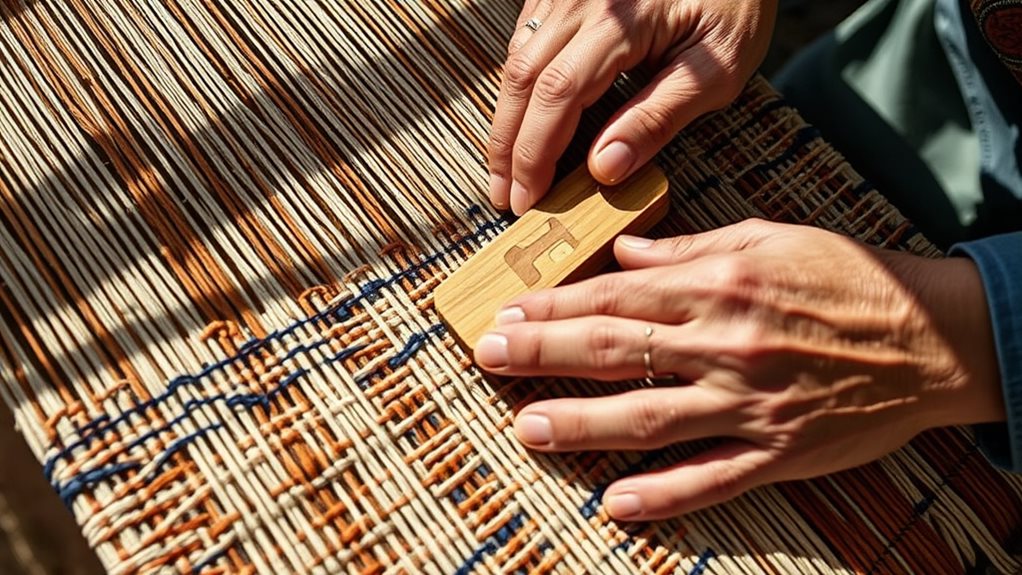
Category: Traditional Arts and Crafts
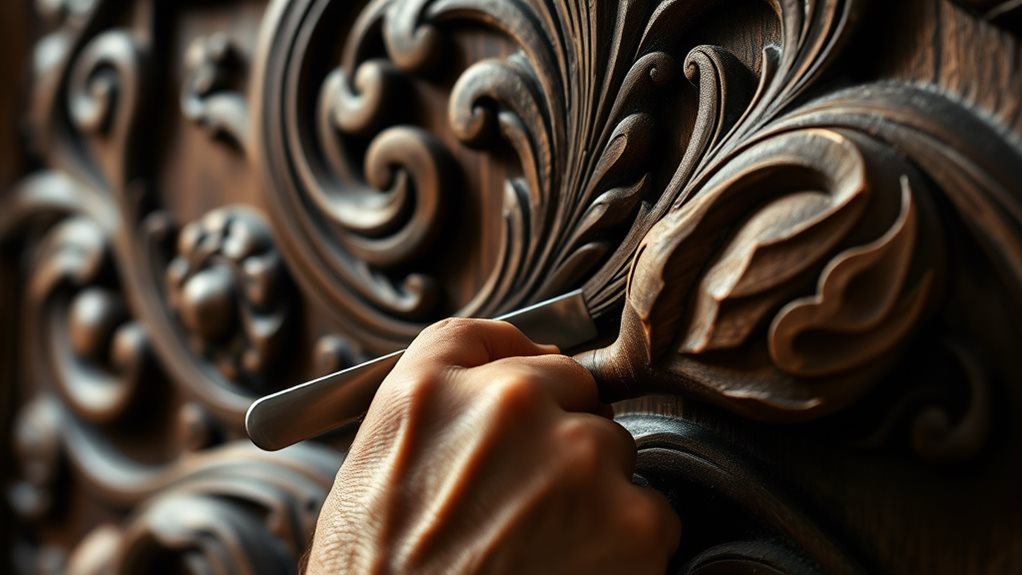
  • Betis Woodcarving: Preserving Pampanga’s Artistic Heritage

    Betis Woodcarving: Preserving Pampanga’s Artistic Heritage

    Betis, Pampanga's woodcarving tradition is an artistic heritage that you'll certainly appreciate. You can see its roots predate Spanish colonization. Cultural exchanges influenced artistry, blending Asian techniques with European styles. Talented families contributed to the craft's evolution. You have seen how it is not just about religious icons. You might be interested to know that export-quality furniture continues to flourish, supporting local economies. You will quickly understand that preservation remains vital amidst challenges. Want to know more about the artisans?

    Historical Tapestry

    Betis, Pampanga, boasts a woodcarving tradition enriched by centuries of cultural and historical developments.

    You'll find that this industry, significantly predating Spanish colonization, highlights the early blacksmithing, shipbuilding, and carpentry skills present in the region. It's a story of locals becoming recognized artisans in woodcraft and furniture-making, sustaining a generational industry.

    As you examine the area, it's clear how the locality became a center for cultural exchange, influencing the art and craftsmanship. The woodcarvers, known as *mandudukit* in Kapampangan, pass down their intricate skills through generations, ensuring the tradition's survival.

    Spanish colonization accelerated woodcarving, with locals adapting traditional techniques to craft religious icons and furniture using European designs. You can observe the merging of indigenous skills with foreign styles shaping a unique artistic identity.

    The persistence of this tradition through adversities underlines its importance to Betis' identity.

    Influences on the Craft

    From the historical tapestry of Betis, woodcarving distinguishes itself through layered influences shaping its unique character.

    You'll find its development owes much to cultural exchange. It isn't simply a local phenomenon; it's an amalgamation of varied artistic traditions.

    Initially, interactions with Chinese artisans introduced Asian Techniques, teaching woodcarving skills to the locals. The Spanish colonizers brought European Aesthetics, commissioning the creation of retablos and other religious artifacts. Local families, like the Adrillanos and Nuguids, contributed to the craft's heritage.

    Betis' prior expertise in blacksmithing and shipbuilding further shaped the craft. Once the Suez Canal opened, it enhanced global trade, introducing new furniture styles you see reflected in the designs.

    Indeed, you witness Betis furniture as a blend of Western and Oriental styles that attracted international clients.

    These influences, combined with local craftsmanship, show the rich heritage that defines Betis woodcarving.

    Artistic Achievements

    It's possible to appreciate woodcarving in Betis, Pampanga, for its contributions to Filipino art, primarily in sculpture and furniture-making.

    Continuously practiced since the 16th century, the craft shows significant *artistic evolution*, moving from strictly religious imagery to include secular furniture and diverse decorative items. You'll notice the blend of Oriental and Western aesthetics in their export-quality furniture. Apung Juan Flores jump-started the modern renaissance, while Wilfredo Layug excels in ecclesiastical art. Boyet Flores preserves traditional methods, and Dante Blanco represents the Philippines internationally. Luisito Cayanan diversifies the art, creating surreal pieces. Contact the Data Protection Officer should any artisan or visitor file a privacy-related complaint.

    The integration of Chinese and Spanish designs exemplifies *cultural exchange*, seen across religious icons and modern pieces.

    Mandukit Anluagi Sta Ursula (MASU) unifies woodcarvers, supporting education for young artisans. Competitions and exhibitions keep the art alive.

    You can see how this tradition strengthens Pampanga's cultural identity.

    Economic Significance

    You can observe the economic significance of woodcarving in Betis through its export-quality furniture, which appeals to international buyers with a fusion of local and European aesthetics. The artistry of the mandukit (woodcarver), who creates intricate designs, is particularly valued in this market.

    This recognition translates to export opportunities, amplified during the Philippines' increased engagement in international trade starting in the 1960s. The industry's revenue reached PHP 38.5 billion, supported by local materials and strategic marketing.

    You'll see that while most businesses are family-run, their custom-made designs capture diverse tastes.

    Despite challenges like the Mount Pinatubo eruption and COVID-19 impacting supply chains and workforce, Betis remains resilient.

    They adapt by leveraging digital platforms to stay competitive with evolving market trends.

    Streamlining operations and developing skills enhances the industry's ability to grow, showing it's important to preserve its contribution to the Philippines.

    Materials and Methods

    Let's examine the essential elements in Betis woodcarving, beginning with the raw materials, where hardwoods like narra and softwoods like baticuling form the primary base, supplemented by rattan, kamagong and various other local woods for furniture construction.

    Non-wood materials like clay and terra cotta also assist in the design, cast-making, and use of decorative elements such as gold leaf. Skilled Betis artisans are well known for creating exceptional pieces using gold leaf finishing.

    When creating intricate designs, you'll find artisans emphasizing careful wood selection. They match the wood's natural grain and texture to the piece they're creating.

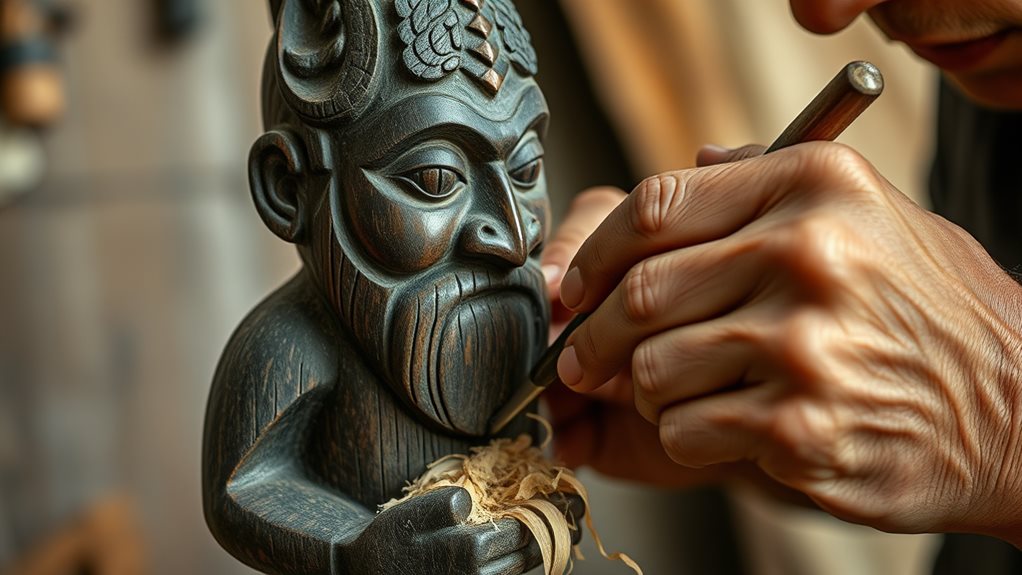
    Their carving techniques range from using mallets and chisels for inlays and engravings to saws and sandpaper for surface smoothing. Modern tools like power tools and electric sanders offer increased efficiency to woodcarving tasks.

    The process incorporates designing that starts with clay models, and finishing touches such as 'encarna' and gilding enhance the wood's appeal.

    The Rise of Betis

    Having considered the processes and materials, understanding the ascent of Betis as a prominent woodcarving center requires us to look at its historical, artistic, economic, and cultural dimensions. You'll notice its roots predate Spanish colonization, evolving with Augustinian influence into church furnishings and statues. Apung Juan's revival in the 20th century globally propelled their traditional techniques. The artisan community experienced economic fluctuations; globalization challenged their export-quality products. Yet, woodcarving continues providing employment. Its cultural influence reflects local, Spanish, and Chinese integration. The discovery of the first artesian well in Betis by Father Manuel Camanes offered the town a sustainable water source, symbolizing progress and community support. The table below demonstrates key areas:

    Historical Artistic Economic
    Pre-colonial roots Religious icons Employment source
    Spanish influence Juan Flores' revival Export products
    Mt. Pinatubo survival Wilfredo Layug Globalization impacts
    Church origins Boyet Flores International appeal
    Cultural integration Traditional techniques Artisan community

    The Artistry of Wood

    Delving into Betis woodcarving, you'll find the artistry lies in its historical roots, Kapampangan traditions, and the skills of famous practitioners like Juan Flores. The village of Sta. Ursula faces a decline in artisans, emphasizing the critical need to preserve this artistic heritage.

    You can tell that craftsmanship is extremely important. It requires mandukit skills to guarantee precision; there isn't much room for error.

    When you examine the woodcraft, you see that the artisans carefully select the wood. They choose types like narra, baticuling, and rattan based on hardness and structural integrity.

    The choice of material greatly impacts the final product. Various wood textures define the surface, giving depth to each carving.

    From religious icons to secular furniture, the choice of materials significantly influences the final piece.

    Various carving styles, ranging from traditional Kapampangan to European-influenced designs, showcase the adaptability of Betis artisans.

    Cultural Hub of Luzon

    As the first Spanish colonial province in Luzon, Pampanga is a cultural hub with ancient Malayan settlements influenced by the Rio Grande.

    You'll find a province steeped in history, with traditions echoing through generations. Considering Pampanga's strategic location, it's a major trading hub.

    You'll observe the resilience in Kapampangan culture through various cultural festivals, which mirror their rich heritage, and in its food–the province is the culinary capital. Pampanga also celebrates this heritage through the annual Dúkit Festival, which promotes community involvement.

    Pampanga takes pride in its distinct identity.

    You can see how deeply family ties resonate, affecting many customs.

    Agriculture remains a central element in its economic framework, even today.

    Observe the influence of woodcarving, especially in Betis, where artistic collaborations happen across generations.

    Consider these facets that define Pampanga's cultural depth:

    • Agricultural significance.
    • Prominent culinary tradition.
    • Rich artistic collaborations.
    • Vibrant cultural festivals.

    You've seen Pampanga's cultural importance and history.

    Present-Day Carvers

    You've observed the enduring influence of woodcarving in Betis. Contemporary woodcarvers are blending traditional methods with contemporary techniques. Though religious art is still important, you see many carvers focusing on secular and surreal pieces.

    Present-day, the art form faces challenges due to declining youth engagement. You've noticed modernization and globalization impacting the craft's survival; however, there are ongoing revitalization strategies to spark young people's interest. JB Woodcraft was founded in 1972 by Jose C Bituin and Myrna.

    Organizations like MASU support local artisans, helping preserve Betis's woodcarving tradition. Partnerships with educational institutions promote woodcarving skills. You see international collaborations enhancing the marketability of Betis's handcrafted furniture.

    Workshops, led by experienced carvers, are vital educational platforms for younger generations. Mentorship programs, such as Wilfredo Layug's, focus on inspiring new artists. Educational initiatives aim to foster creativity among young artisans, while innovation gets emphasized.

    You've noticed hands-on training remains key.

    Safeguarding the Legacy

    Safeguarding Betis' legacy necessitates a multi-faceted approach, addressing historical roots, preservation efforts, and challenges to ensure continuity.

    Rooted in the 16th century and refined by figures like Juan Flores, Betis achieved renown, particularly in the 60's and 70's. Their work even graced the interiors of Malacañang Palace.

    Current preservation hinges on initiatives, artisan education, and adapting to contemporary challenges.

    Consider these key elements:

    1. Preservation of historical techniques while adopting modern tools.
    2. Reinforcement through community initiatives like Dukit Festival.
    3. Offering artisan education via CHED and DHVSU.
    4. Supporting groups like MASU.

    You'll have to navigate factors weakening the tradition.

    You're dealing with an aging artisan population and competition from manufacturers abroad.

    It's clear, therefore, that concerted action, involving locals and authorities alike, is indispensable if Betis is to bequeath its woodcarving heritage to succeeding generations.

    You can keep the tradition alive.

  • The Symbolism of Animal Figures in Philippine Wood Carvings

    The Symbolism of Animal Figures in Philippine Wood Carvings

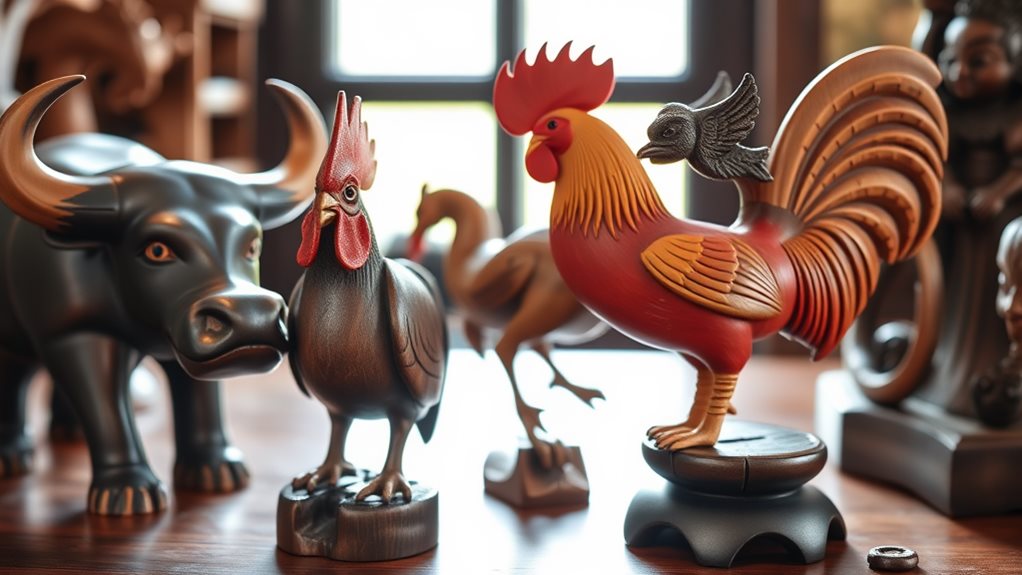
    Animal figures aren't mere decoration; you'll find they embody cultural identity and spiritual beliefs. These carvings connect communities to ancestral spirits and history. What meanings do these figures convey? You'll see specific carvings symbolize agricultural abundance, wisdom, and spiritual power. For example, pigs often represent prosperity and joy in village life sculptures. They also signify fertility and agricultural significance. You'll start to see rituals reinforce community values. There is so much more to uncover.

    Cultural Roots

    Ifugao woodcarvings are deeply entrenched in cultural roots, reflecting a profound connection with nature, ancestral spirits, and agricultural practices. You see it in how they depict mythical creatures, grounding their rich folklore.

    When you observe animal figures, you're witnessing their intimate links to ancestral spirits, revealing deep ancestral connections. These carvings aren't mere decorations; they embody a spiritual dimension.

    You'll note how figures, like the bulul, tie in with rice cultivation, symbolizing protection and wealth. The geometric patterns aren't random; they carry spiritual meaning, reflecting strong cultural significance. Snakes also feature frequently, symbolizing renewal and rebirth.

    In essence, you're exploring a history etched in wood, where each piece tells stories of heritage and spiritual beliefs. Consider how nature influences their forms, emphasizing symbolic value over hyper-realism.

    When you appreciate these carvings, you're touching generations because these figures are integral to their rituals, solidifying the bond between the people and their ancestors.

    Shared Traditions

    Philippine wood carving traditions weave together various pre-colonial practices, Spanish influences, and regional variations across the archipelago.

    You'll discover pre-colonial carvings served practical and spiritual needs, featuring ornamental patterns denoting tribal hierarchies. Remember "Tanod" figures? They acted as village totems, embodying vital community values. These designs, passed down through generations, reflect artistic influences we can still recognize. Native Filipinos also crafted essential items, reflecting their deep connection to the environment.

    During the Spanish era, carvings took on a religious tone with santos from Paete. Catholicism certainly introduced new themes, but wood carving retained decorative functions; the symbolic meanings adapted.

    Today, different regions boast unique styles. Consider the "okir" from the south or the intricate carvings from Paete. These variations, dictated by local wood, highlight Filipino craftsmanship.

    You can't deny how essential wood carving remains in local economies, strengthening community pride and preserving cultural heritage.

    Identity Embodied

    Philosophical embodiments illustrate the cultural significance of animal figures in wood carvings, reflecting beliefs about nature and ancestral spirits.

    You're witnessing more than art; you're seeing cultural identity etched in wood. These aren't just decorations; they're vessels of spiritual embodiment, connecting you to a rich history.

    Understand that through depictions of animals, the carvings reinforce community values. The carvings act as guardians and embody cultural narratives.

    Consider how:

    • Carabao carvings emphasize agricultural abundance.
    • Owls embody wisdom and foresee events.
    • Animal features in ancestral figures like *bulul* augment spiritual power.
    • Carvings guarantee community bonds and traditions.

    You'll appreciate how the abstraction in art emphasizes symbolism. This reinforces the spiritual role of animal figures, ensuring the audience understands the cultural identity.

    Material Choices

    The symbolism carved into animal figures gains materiality through the selection of wood. You're not just choosing any piece of timber; you're choosing to imbue your art with inherent qualities.

    Consider Narra: it's favored for its workability and rich color; you're ensuring durability. Given its prevalence in Paete's woodcarving industry, it's a reliable choice for many artisans. Or think of Batikuling, favored in Paete, it's lending local flavor.

    The wood properties matter profoundly. A durable hardwood, like Kamagong (though increasingly scarce and expensive), guarantees longevity. If you opt to use Molave, expect durability, but you increase costs because it's hard to find.

    The selection impacts your carving techniques: hardwoods demand skilled hands and sharp tools, whereas softwoods allow for finer detail, albeit with a sacrifice of long-term resilience.

    You're balancing material availability and the artistic ideals when choosing wood.

    Ritual Integration

    You witness a harmony between artistic expression and ritual necessity:

    • Ritual offerings, including rice wine, sustain the *bulul*.
    • Placement in granaries positions the figures as guardians. These figures, often carved from narra wood, are believed to bring health, happiness, and prosperity to the community.
    • The pairing of male and female enhances fertility.
    • The patina from sacrifices signifies active ritual engagement.

    Historical Evolution

    Philippine wood carvings evolved through waves of historical influence, merging Spanish and Portuguese colonial styles that introduced detailed gilding techniques with pre-colonial indigenous traditions. The early 20th century saw the decline of wood carving popularity elsewhere, a phenomenon also impacting the Philippines, but with resilient local adaptations.

    You see how local artisans integrated these colonial influences into traditional motifs, elevating the complexity of wooden figures.

    Consider pre-colonial carvings like the *bulul*, guardians of rice crops, where the selection of trees was steeped in ritual. Regions developed unique styles reflecting local myths. You can observe these distinctive carving techniques in areas like Hapao in Luzon.

    Then, modernization arrived. Though machine carving affected traditional craftsmanship, we've seen artisans renew interests in traditional techniques.

    You're observing a continuous interplay between colonial influences and indigenous heritage, adapting and thriving to this day.

    The Owl's Wisdom

    Owls stand as potent symbols of nocturnal wisdom within Filipino wood carvings. Carvings often display detailed features, especially the eyes, to emphasize their association with knowledge. This owl symbolism isn't just artistic; it reflects deeper cultural beliefs.

    You'll find owls frequently linked to vigilance and insight. Ever pondered why the owl holds such significance?

    • It's linked to spiritual guidance.
    • It represents the mysteries of the night.
    • It's connected to ancient mythological tales.
    • It's associated with indigenous legends.

    In Filipino folklore, some believe owls guard forests. The tale of Tiago, who sacrificed his life protecting the forest, reflects this belief. Think about how this ties into the artisan's choice of materials like molave or narra, mirroring resilience.

    Cultural exchange has influenced owl symbolism so their depiction adapts, merging traditional techniques with modern perceptions. The owl's image, deeply woven into the fabric of Filipino artistry, celebrates timeless wisdom.

    They aren't portrayed as evil messengers, but rather, benevolent night watchmen.

    Pig's Prosperity

    Swine, deeply embedded in Philippine culture, aren't just livestock but symbols of wealth in wood carvings. You'll see that the prosperity symbolism of pigs, while not always explicitly represented in standalone carvings, permeates various art forms. You witness their significance through their presence in sculptures depicting village life, emphasizing abundance and joy. The readership may find these carvings accessible via archive.org.

    These carvings underscore the agricultural significance of pigs. Pig figures, though rarer than other animal depictions, are integral to rituals that ensure good harvests. You consecrate objects and safeguard the well-being of your community through these ritual acts.

    In cultural practice, they signify fertility and prosperity, reflecting the importance of family wealth. By sacrificing pigs, you secure good fortune, linking them inextricably to ongoing feasts. You celebrate life together through this ritualistic consumption, and you believe in future abundance.

    Community Bonds

    Beyond their economic and cultural importance, wood carvings in the Philippines weave intricate community bonds, fostering unity, collaboration, and cultural preservation.

    Consider how these carvings impact the artisans themselves in Paete: they aren't just creating art; they're reinforcing community resilience. Given Paete's history for intricate sculptures, it's no wonder the carvings have such community value.

    Through artisan networks, individuals collaborate, producing pieces that reflect shared stories and traditions. You'll find that working together enhances skills and strengthens relationships.

    These artisan networks are sustained via community engagement, enhancing social bonds. Community, thus, becomes intertwined with the artistic process.

    • Cultural pride blossoms, creating a sense of belonging.
    • Skills are passed down, preserving ancestral craftsmanship.
    • Economic opportunities bolster families, securing their livelihood.
    • Artisans network, fostering collaborative projects.

    This collaboration extends beyond individual projects to festivals and exhibitions, showcasing local talent and inviting network-building among members.

    Enduring Heritage

    Philippine wood carvings are more than mere artifacts; they represent an enduring heritage that vividly illustrates the nation's evolving cultural identity through generations of inheritance and tradition.

    You see it in the Ifugao *bulul*, integral to rice rituals, reflecting deep spiritual connections. The Ifugao people, sustained by rice cultivation, carve these figures as a central part of their traditions. Won't you agree that these carvings aren't just art, they're history?

    Recognize that heritage preservation isn't just about saving objects. It's about maintaining cultural identity. Museums curate extensive collections, and digital archives extend accessibility for future generations.

    Do you see artisans, through generational craftsmanship, maintaining traditions, imbuing each figure with cultural meaning while adapting to modern contexts? Each carving links past and present, showcasing the region's artistry.

    The intricate process, involving rituals and careful material selection, ensures spiritual significance endures. This reinforces the preservation of skills and local folklore.

  • Traditional Woodworking Tools of Filipino Craftsmen

    Traditional Woodworking Tools of Filipino Craftsmen

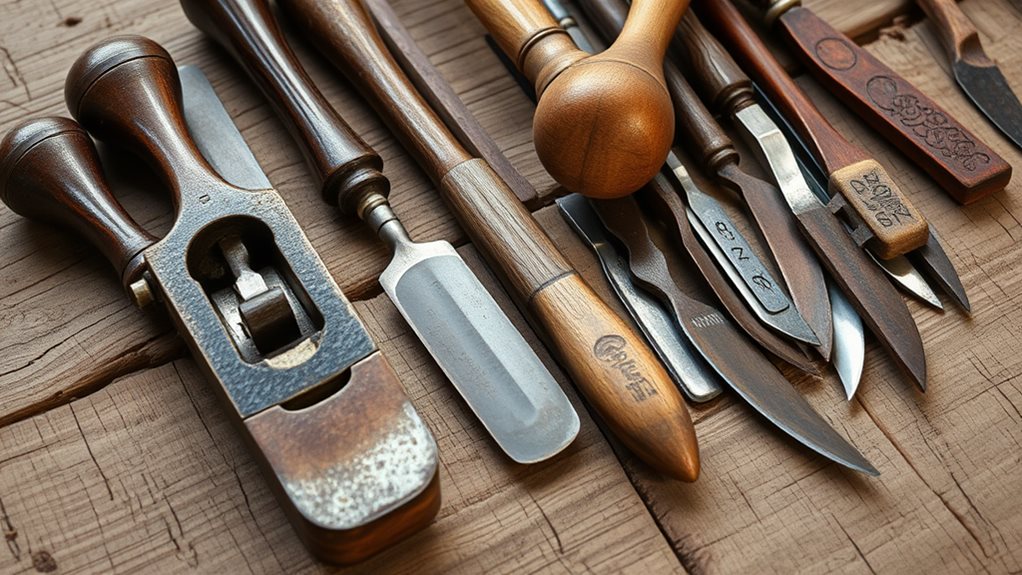
    You'll find chisels crucial for shaping wood in Filipino woodworking. Paete artisans use these with mallets for precise details. Hand planes smooth surfaces for beauty and function. Sharpening methods involve whetstones, vital for maintaining tools. Craftspeople carefully maintain tools to prevent rust and cracking. You adapt these techniques to modern craft; combining artistry with efficiency. Cultural heritage comes alive through woodworking. To understand this creative blending, explore further.

    The Enduring Legacy of Filipino Wood Carving

    Wood carving in the Philippines predates Spanish colonization, with native Filipinos having initially created boats and spears adorned with ornamental patterns for delineating tribal hierarchies.

    You'll find the art flourished during Spanish rule, adapting to include religious statues, a fusion of indigenous artistry and European influence.

    You're seeing generational craftsmanship; techniques passed down connect present to past. Diverse themes span religious figures to daily-use objects. The carvings hold deep cultural symbolism, reflecting traditions and skill. Romblon woodcarvings are living expressions of culture, with their intricacy and beauty reflecting historical significance.

    Regional styles, like Romblon's intricate narra and molave designs, are distinct. Carvers use narra, molave, and kamagong for their durability.

    You're noticing nature motifs like leaves are integrated, showing the country's environment. Wood carvings you see embody Filipino culture.

    Wood carving remains vital, boosting local economies. It's a tourist draw, showcasing hands-on artistry.

    You see it's preserved through education, maintaining heritage. Contemporary adaptations meld tradition with modern innovation, securing its future.

    Paete: A Cradle of Carving Excellence

    Nestled along Laguna de Bay, Paete, Laguna, beckons as a testament to Filipino artistry, a cradle where the legacy of wood carving thrives; its origins, rooted in 1580 through Spanish friars Juan de Plasencia and Diego de Oropesa, evolved into a cultural identity so profound.

    You'll find the name "Paete" originates from "paet," a Tagalog word for chisel, reflecting the town's deep connection to this craft. Designated the "Carving Capital of the Philippines" in 2005, you witness firsthand what makes Paete exceptional.

    As you explore, you'll observe how the Paete heritage thrives through generations of artisans. Wandering through carving workshops, you'll encounter skilled hands shaping local wood—batikuling, Narra, Molave, and Kamagong—into religious statues and intricate murals, reflecting Filipino life.

    These masterpieces aren't confined locally, gracing churches and museums worldwide, including even the Vatican! The industry substantially supports the local economy, offering employment and global recognition.

    The Chisel: An Artisan's Trusty Companion

    Fundamental to traditional woodworking, the chisel is an artisan's trusted companion for shaping wood and creating joints.

    You'll discover that the chisel heavily relies on physical force, often with a mallet. Filipino craftsmen might use hand-forged or imported chisels, favoring carbon steel for lasting performance.

    Influenced by designs like the Japanese Oiire nomi, Filipino chisels use hardened steel edges and softer iron backs. This design allows for a hard cutting edge supported by a softer material.

    You'll see handles made from hardwoods –like Japanese white oak–, but modern synthetic alternatives exist.

    Chisel materials for edges include carbon steels such as Hitachi Blue. Decorative engravings, an artisan's signature, often decorate handles.

    Understanding chisel techniques involves mastering strokes and pressures, developing an intimate feel for the workpiece.

    Whether using an Oiire nomi for general tasks, a Shinogi nomi for fine work, or specialized types like fishtail or mortise chisels, you're adapting an array of tools and techniques.

    Hand Planes and Smoothing Techniques

    An array of hand planes are crucial tools you'll find in woodworking, used to shape and smooth surfaces by muscle power or motorized means. They feature a cutting edge and a body that guides over the wood. The sole keeps a constant cutting angle. For surfaces beyond power tools, hand planes are key. Smoothing planes remove minimal wood for finishing.

    Understanding the parts is essential. The mouth is where shavings pass. The frog adjusts the iron's angle. A lever cap secures the iron. You'll use the depth adjustment knob to control the cut. The sole maintains a flat cut.

    Japanese planes are pulled, not pushed. Small Japanese planes excel on curved surfaces. Ebony bodies and steel blades ensure durability. The style stresses precision. Modern planes can be also made from ductile iron providing both durability and rust resistance.

    With smoothing techniques, you're removing little material for a fine finish. Maintaining a sharp blade and adjusting the frog is vital. Light pressure prevents gouging. You can refine surfaces further with polishing. Inspect the wood often, avoiding over-planing.

    Filipino craftsmen likely use various planes for projects. Their precision demands hand planes for quality. These create detailed surfaces, enhancing beauty and function.

    The Significance of Mallets

    Smoothing surfaces with hand planes is an art, and your next tool of mastery should be the mallet. These tools are integral to Filipino woodworking, aren't they?

    From joiner's mallets with large, rectangular heads for heavy chisel work to carving mallets with smaller, cylindrical heads ideal for carving with gouges, mallet types vary to meet every need.

    You'll find mallets enable delicate adjustment of blades on traditional planes. You should consider them essential for assembling and disassembling joinery without marring your meticulously shaped wood.

    Crafted from hardwoods like ash or beech, mallets underscore a rich woodworking tradition across cultures. Some woodworkers choose hornbeam for their mallets due to its durability.

    Mallet maintenance shouldn't be taken lightly; a simple wax coating can protect the handle. Inspecting for cracks ensures durability.

    You'll learn that how you care for your mallet reflects respect for the craft. They're more than tools; they preserve culture.

    Measuring and Marking Tools

    Accuracy is paramount, and the precision found in metal rulers, particularly the metric ones, is favored within construction. You'll commonly encounter 6 to 12-inch steel rules, meter sticks, and folding rulers, ideal for length measurements and straight lines.

    For inner and outer dimensions, vernier calipers are crucial. You can find inside, outside, divider, and digital calipers, but you've got to handle them consistently for reliable measurements, especially ensuring your measuring techniques are sound. Digital calipers offer quick readings, improving workflow. Calipers with adjustable arms offer versatility in measuring a range of dimensions.

    Levels, critical for ensuring surfaces are perfectly horizontal or vertical, are also crucial; longer levels can enhance leveling accuracy.

    For woodworking, marking gauges are essential, allowing you to scribe lines parallel to edges. They're indispensable in joinery, guaranteeing that your cuts and fittings are precise. Gauges adjust easily, enabling you to mark lines at different distances, so that you can enjoy enhanced marking accuracy.

    Beyond these, plumb bobs, chalk line markers, scriber gauges, center punches, and marking knives expand the arsenal for diverse marking needs.

    Wood Turning Tools and Techniques

    Wood turning introduces a unique set of tools and techniques, distinct from general woodworking and oriented toward creating cylindrical or curved forms.

    Working with these tools requires precision to achieve clean cuts and smooth surfaces. You'll find roughing gouges shape a square blank into a round form efficiently.

    Then, you use spindle gouges for general turning between centers, while bowl gouges, often recommended for beginners, offer more control. Carbide tools, known for their ease of use, can be a great starting point due to their consistent performance.

    Parting tools precisely remove waste material, and skew chisels are essential to produce beads and flat surfaces on spindle projects.

    Material selection is also very important. Softwoods are beginner-friendly, while hardwoods suit elaborate projects. Exotic woods offer you unique aesthetics.

    Consider roughing as the initial shaping, and turning refines the form using various tool techniques.

    Facing cleans the wood, while beading creates rounded details, and fluting adds decorative grooves.

    Traditional Sharpening Methods

    Several time-honored approaches have kept craftsmen sharp and productive, including whetstones, hones, and rubstones, each integral in maintaining the keen edge essential for woodworking, whether you're in the Philippines utilizing local stones or elsewhere adopting methods refined over centuries. Whetstones need proper soaking to enhance sharpening effectiveness.

    You'll find that Filipino craftsmen often use whetstones for their abrasiveness, followed by hones for a finer edge. Rubstones, being coarser, are suitable for initial shaping.

    When sharpening, you're adopting specific sharpening techniques. Hollow grinding creates that characteristic hollow bevel. Craftsmen might add double bevels to enhance sharpness. Selecting appropriate sharpening angles, crucial for different wood types, demands practice.

    You've probably seen influence from other cultures in their adoption of certain sharpening techniques.

    Stone maintenance is critical. You must keep your stones clean and properly lubricated with oil or water.

    Tool Maintenance and Preservation

    Maintaining a sharp edge is one aspect, but proper tool care extends the life and utility of your woodworking implements, safeguarding your investment and preserving cultural heritage.

    For optimal tool longevity, choose the right tool for the job. Utilizing screwdrivers in risk-free operations prevents damage. It's essential you use each tool for its intended purpose. Hand tools are essential, so using the correct one will avoid damage.

    Prevent rust by keeping tools dry and clean. If they do get wet, disinfect and dry them. Coat them with rust inhibitors, especially for long-term storage, boosting tool longevity.

    For handle maintenance, use paste wax to prevent oxidation on your tools. Apply appropriate oils regularly to wood to prevent cracks.

    • Regularly inspect your tools for damage.
    • Implement preventative maintenance techniques.
    • Store everything properly in a toolbox, protecting them from the elements.

    Don't expose your tools to direct sunlight or moisture. Perform repairs promptly. Disassemble when necessary to clean moving parts.

    These maintenance techniques assure tool longevity, while you're preserving Filipino craftsmanship.

    Adapting Traditional Tools for Modern Craft

    As artisans transition into today's woodworking landscape, you'll find adapting traditional tools crucial for blending age-old artistry with current demands.

    Consider how integrating power tools boosts efficiency while retaining hand tool charm. Hybrid woodworking becomes key – you're combining the best of both worlds. You're also using Computer-Aided Design (CAD) to modernize planning. As power tools become more accessible, woodworkers in the Philippines can improve efficiency in their tasks.

    The craftsmanship evolution demands embracing advanced wood processing — you're discovering new material durability for products.

    You'll also see workshops that teach you new skills for adapting older tools. You'll notice programs are available to innovate and train in tool innovation, skills necessary for competition on a global scale.

    Think about the aesthetic diversity that modern materials provide, allowing you to craft new designs. Also, you're making sure to adhere to safety standards.

    The artisans blend old and new, to reach global markets and demand for unique crafts.

  • The Sacred Art of Ifugao Bulul Carving

    The Sacred Art of Ifugao Bulul Carving

    You'll discover Ifugao Bulul carvings, sacred embodiments of ancestral spirits. They're central to Ifugao culture and rice cultivation, reflecting a resistance artistic expression. Crafted primarily from narra wood, they symbolize wealth and status. As guardians of rice crops, Bululs are integral to agricultural rituals, connecting the living and spiritual realms. Mumbaki leaders invoke ancestral spirits through them. Cultural resilience allows Bulul to thrive. There's more to uncover about their cultural role.

    Historical Background

    Dating back to the 15th century, bulul figures originated with the Ifugao people in northern Luzon, Philippines.

    You'll find these figures deeply intertwined with Ifugao culture, especially their rice cultivation practices. Given the isolation of Ifugao Province, you can understand how their rich cultural traditions, sculptural art forms, and agricultural know-how flourished.

    Consider now how Ifugao's early resistance to Spanish colonization protected their way of life. Rice became central to Ifugao culture, and you'll see this is symbolically represented in bulul art. Crafted from a single piece of wood, these stylized figures are usually depicted either standing with their hands resting on their knees or seated with their arms folded.

    The bulul stand as testaments to both artistic expression and cultural resilience. What's represented physically is an ancient cultural expression that you can't deny represents the spirit world for this people.

    Aren't cultural symbols so amazing?

    Spiritual Significance

    Bulul's origins provided a foundation that's interwoven intrinsically into the Ifugao's spiritual practices. You see them as symbolic representations of ancestral spirits and deities, serving as guardians of rice crops and fostering fertility. The people of Ifugao are an indigenous ethnic group located in Ifugao Province within the Cordillera Administrative Region.

    They're more than just carvings; you perceive them as vessels embodying ancestral spirits, emphasizing their spiritual guardianship and significance. Through the Bulul, you strengthen your ancestral connection.

    These sculptures play a vital role in agricultural rituals, involved in every stage of rice production. Granaries become sanctified spaces with Bululs ensuring bountiful harvests.

    During ceremonies such as the tunod, Bululs are touched by hands dipped in animal blood and you place male and female Bululs in specific positions to observe ancient rites.

    You treat Bululs with utmost reverence, avoiding any action that might incur ancestral wrath. Passed down as cultural heirlooms, they're indispensable in preserving Ifugao cultural traditions and are key to your cultural identity.

    Traditional Materials

    Consider the materials used, and you'll find that Ifugao artisans carefully select natural resources that reflect both practical considerations and cultural beliefs.

    Narra, molave, red sandalwood, and ipil are common woods; their resistance to pests makes them suitable choices. Selection hinges on natural form, durability, and regional preferences.

    You'll see that non-wood materials contribute too. Rice straw for headdresses symbolizes agricultural abundance. Rice paste, mixed with lime, creates a traditional white finish. Vegetable fibers adorn some figures, and agate sometimes serve as eyes. You might even see human hair; its presence adds realism. Often, rice deities, particularly bululs, are carved from this wood for harvest assurance.

    Over time, bululs develop a dark patina because they're regularly anointed with animal blood and grease.

    As traditional materials become scarce, you'll note the artisans' use of alternative materials. Maintaining cultural integrity's a challenge amidst modernization, isn't it? Emerging artisans are discovering innovative approaches to create these icons.

    The Crafting Process

    You'll find that the crafting process begins with wood selection, primarily chosen for its natural form and unique features. This process proceeds to the utilization of traditional tools by master carvers to shape the wood with precision. Narra wood, traditionally used, is linked to health and prosperity in Ifugao culture.

    You're observing the start of symbolic details now, such as adding headdresses or earlobes, which sometimes hold rice stalks. Regional variations influence the carvings.

    Cordillera craftsmanship stands out. You'll notice diverse poses; figures stand straight with arms down or seated, with arms resting.

    Look closely, because they utilize tools like bolos and improvised gouges for the initial carving. Then they polish the carvings using leaves from the aplah plant. For that dark, hard gloss, they pass the carvings over burning resin.

    Skilled hands are essential for intricate details. The entire process is dependent on effective crafting techniques. Sizes vary depending on intended use.

    Role in Ceremonies

    In Ifugao culture, spiritual leaders known as Mumbaki conduct key rituals that involve Bululs, and they're integral in bridging communication between the physical realm and the spiritual domain. You'll find that these spiritual leaders possess intricate knowledge of Ifugao cosmology and traditions. During these ceremonial practices, the Mumbaki orchestrate rituals that call upon ancestral spirits within the Bululs. *The carvings depict these figures, reflecting community beliefs and spiritual connections.*

    Baki rituals, central to planting and harvesting seasons, involve offering rice and animals to the Bululs. During these rituals, Mumbaki's chants are essential for speaking to ancestral spirits through the Bululs. You'll see these practices as integral for strengthening the relationship between the living world and the spiritual one, therefore ensuring harvests and prosperity.

    Symbol Meaning
    Bulul Ancestral Spirit
    Rice Abundance
    Baki Invocation
    Mumbaki Intermediary
    Rituals Connection

    In modern Ifugao, Bululs still hold relevance and significance in ceremonial practices.

    Guardians of the Granaries

    Holding profound purpose, Bulul statues stand as guardians of the granaries, embodying the crucial role of watching over the harvest and ensuring continued rice fertility. Carved from durable woods like narra (representing wealth) or ipil, materials, selected by elders, ensure the bulul guardians embody strength.

    Often created at the owner's request, male bululs include pestles while female bululs feature mortars as distinguishing sex-specific symbols. You'll often find them, simplified human figures, seated with arms crossed over their knees at granary entrances. Authentic pieces are highly sought after.

    Positioned in rice granaries, these figures safeguard the harvest, ensuring continued rice fertility, treating them respectfully. Wealthy folks, possessing numerous granaries, might also display bulul guardians in their homes.

    The alwen bulol's ritual empowers the bulul guardians. Over time, expect to see a darkening patina from rituals employing animal blood. These practices highlight the pivotal role bulul guardians assume in upholding harvest success.

    Symbolism and Beliefs

    Bululs stand as more than mere carvings; they're symbolic representations deeply interwoven with Ifugao beliefs. You'll see them as embodiments of ancestral spirits, connecting the physical world with the spiritual realm. They're key players in rituals, ensuring harvests are bountiful and fertility thrives. You're experiencing a practice where each figure passes down through generations, strengthening familial ties to heritage. Remember, consecrated bululs even receive offerings of pig's blood, wine, and rice cakes, boosting their spiritual significance. The practice is a form of cultural identity for the Ifugao.

    Exploring their forms, you'll notice the importance of male and female pairs, which represents harmony and good fortune. You see a stylized human form, focusing on spiritual insight rather than realistic detail. Narra wood, symbolizing wealth, is often their chosen medium. Cultural interpretations suggest loincloths and *tapis* denote gender and status.

    Material Significance
    Narra Wood Wealth, Well-being
    Ipil Wood Durability
    Loincloths Male Status
    Tapis Female Status

    Cultural Adaptation

    As modernization unfolds, you'll observe that Ifugao culture isn't static; it adapts, and you see it in how they manage ancestral customs alongside contemporary life.

    You find that the rituals surrounding Bulul evolve, integrating modern sensibilities while reinforcing their profound significance to Ifugao identity. You'll observe that the placement of Bulul can change to reflect the needs of the community with sitting Bulul sometimes being positioned to promote community healing in modern contexts. This cultural fusion creates fascinating juxtapositions.

    You'll notice Bulul carvings aren't purely ceremonial; they're gaining recognition as art, playing a vital role in preservation, serving as educational tools, and showcasing Ifugao lore to younger generations.

    Modern demand shapes the production and distribution of Bulul figures, presenting both opportunities and challenges.

    Now they've modern interpretations. Bulul functions as ambassadors of Ifugao heritage, shared through tourism, commerce, and interregional exchange.

    You see communities actively participating, ensuring they safeguard Bulul while addressing issues of authenticity in contemporary markets.

    Enduring Legacy

    Continuity is what you'll witness, with Bulul carvings persisting as a testament to Ifugao ingenuity and cultural values. They embody a deep understanding of rice cultivation and symbolize wealth, happiness, and well-being. The Bulul's role hasn't diminished; instead, it's woven into the fabric of Ifugao identity.

    You'll find these stylized figures still vital in Mumbaki and Baki ceremonies. They aren't just static relics; you see artistic evolution in their forms while their fundamental spiritual essence remains unchanged. These ceremonies connect people with ancestral spirits believed to reside in the statues.

    As guardians of the harvest, Bululs still connect the Ifugao people to ancestral spirits, reinforcing their integral role in fertility and prosperity rituals.

    What contributes to their enduring appeal? It's their cultural resilience. You see them evolve beyond purely ritualistic objects to become recognized in modern art circles, demonstrating how tradition can adapt and thrive.

    Preservation Efforts

    To ensure their survival, preservation efforts are essential for Ifugao Bulul carvings, which are facing complex pressures that hinder their longevity. Environmental factors, cultural shifts, economic pressures, climate change, and material degradation all threaten these cultural icons. The digital series, "Humans of the North", by NLEX Corp. aims to highlight the importance of preserving cultural heritage like Bulul carving.

    You'll find community initiatives play a vital role. Local communities actively protect their cultural heritage through traditional practices and cultural education, maintaining the original contexts of Bululs.

    These efforts aren't going it alone; they include hands-on workshops and collaborative projects between communities.

    Government support through the National Commission for Culture and the Arts (NCCA) provides funding and cultural promotion. You'll see regulatory measures to control the sale of artifacts.

    International partnerships improve preservation with advanced techniques. These partnerships enhance local artisan skills and raise awareness globally.

  • Regional Variations in Philippine Backstrap Loom Techniques

    Regional Variations in Philippine Backstrap Loom Techniques

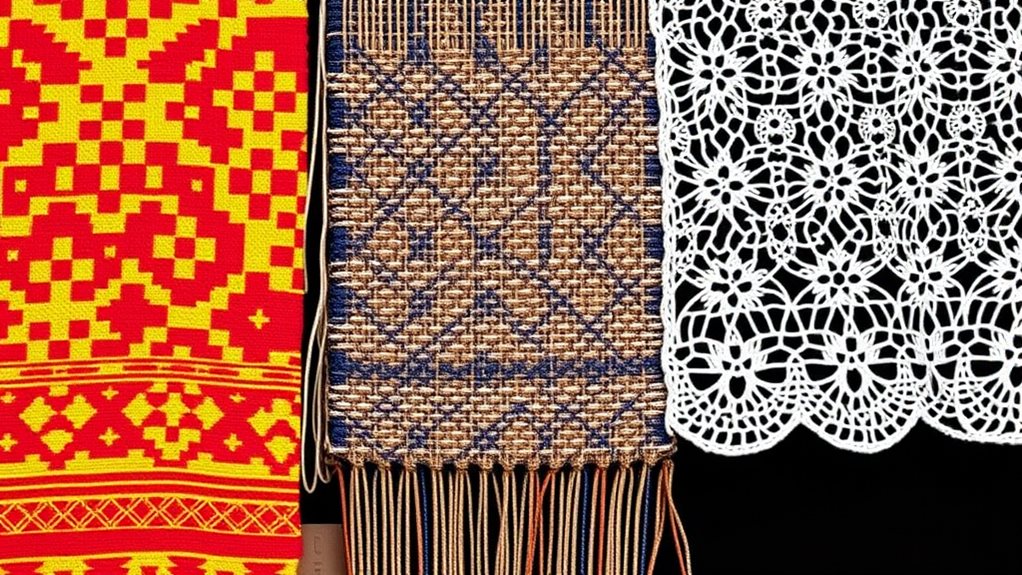
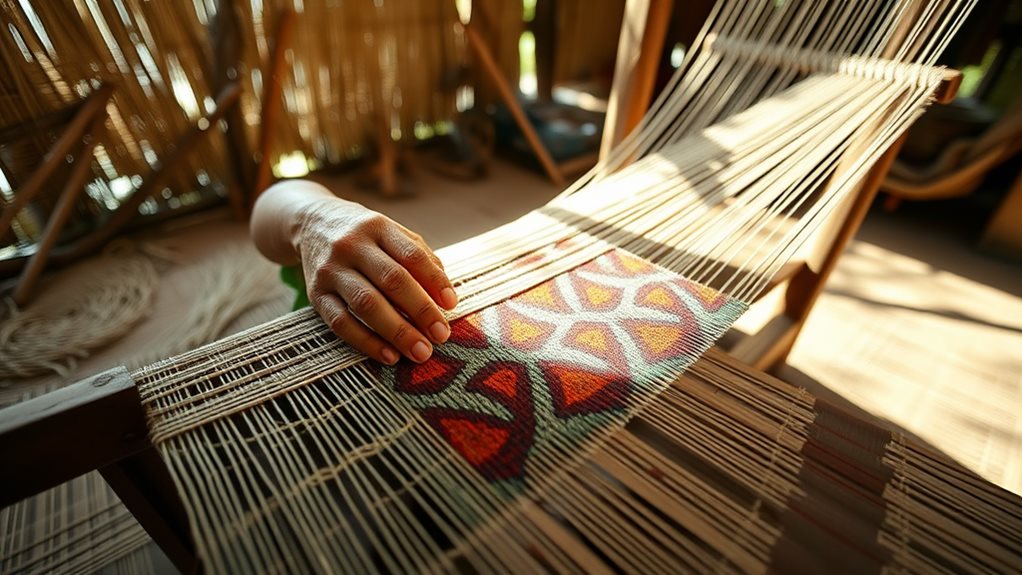
    You'll find remarkable variation in Philippine backstrap loom techniques. In Abel weaving in the Ilocos Region, artisans use a hardwood pedal loom. Kalinga weavers employ backstrap looms, imbuing textiles with cultural meanings, like red for bravery. Ifugao weavers create significant Inabol blankets. Abra highlights Pinilian and Binakol techniques. Though specific details are less documented, Visayas textiles integrate diverse influences. These traditions preserve heritage and support livelihoods, adapting to modern demands. Cultural nuances exist in each region. Appreciate the detailed artistry.

    Ilocos Region: Inabel Weaving

    As Inabel weaving is integral to the Ilocos Region, its very name, derived from the Ilocano word "abel" meaning "to weave," immediately signifies its cultural importance, reflecting the enduring spirit of the Ilocano people. This craft, pre-colonial in origin, initially produced blankets, shawls, and garments. Weaving traditions are meticulously passed down through generations, ensuring the craft's survival.

    You'll see how the weavers draw inspiration from nature. Distinctive Inabel patterns, often geometric, may include stars, fans, or even cat's paws. Land formations, flowers, and ocean waves also make their way into designs. You can recognize patterns like "binakol" which serves to ward off evil spirits.

    The handloom defines Inabel, specifically, the hardwood pedal loom. You'll find that weavers meticulously prepare their threads. Cotton must be harvested, dyed, and spun with care.

    Multi-heddle and suk-suk methods contribute to intricate Inabel Weaving techniques. These techniques contribute to designs, preserving both heritage and livelihood.

    Cordillera Region: Kankana-ey Weaving

    You'll find textiles present during significant Kankana-ey rituals, reinforcing their spiritual importance as they're passed down through generations. The colors symbolize wealth and abundance. These textiles serve not only as attire but also as vibrant expressions of Kankana-ey heritage. As part of the larger Igorot collective, the textiles underscore their shared cultural traits and practices.

    Garment Weave Type Cultural Use
    Tapis Wrap-around Women's skirt
    *Ules* Blanket Decoration
    *Wanes* G-string Men's attire
    *Wakas* Waistband Men's attire
    Textiles Various Ceremonial use

    Kalinga Province Textiles

    Kalinga province textiles can be traced back to the 18th century, influenced some by Indonesian textiles, and they're an integral part of Kalinga culture and identity.

    You'll find traditional Kalinga weaving centered in Mabilong, Lubuagan, where backstrap looms are the primary tools. Both men and women participate, fostering family involvement and community bonding, creating textiles that convey deep cultural meanings. The traditional motifs and colors, red for bravery and black for the earth, enhance the storytelling.

    Traditional Kalinga garments, such as the "ka-in" wraparound skirt for women and "be-e" for men, vary for rituals and special occasions. You will notice the significance of traditional garments in Kalinga culture.

    • "ginamat" design is a notable twilled pattern with silk embroidery.
    • Indigenous materials like abaca and maguey create authentic designs.
    • Beads and embroidery often decorate the clothing for beauty.
    • Symbols in these textiles often mirror environmental elements, linking past with present.

    Kalinga textiles reflect artistic expression, community identity, and cultural ways of life that continue to adapt and thrive.

    Ifugao Weaving Traditions

    While Kalinga textiles narrate tales of valor and earth through their weaves, let's turn our attention to the Ifugao province, where weaving isn't just an art form; it's the very lifeblood of their cultural identity, steeped in ritual and social significance.

    You'll find that Ifugao weavers primarily employ backstrap looms. You're not just observing a craft; you're witnessing an integral part of Ifugao rituals.

    Consider how textiles, like the Inabol blankets used during funerals, reflect social class. You might notice that patterns carry profound textile symbolism, often representing deified ancestors. The intricacy signifies social standing. Understand that the community weaves together, creating bonds that strengthen their traditions.

    Techniques such as binobodan, kinulhuddan, nilihha/pinilli, and balud showcase their artistry. KIWA works hard to continue the weaving tradition.

    You'll also see how Indigenous Peoples Education Center contextualizes Ifugao culture in education. You're seeing a culture actively preserving its heritage.

    Abra's Weaving Heritage

    Shifting our focus, Abra presents a vibrant weaving heritage deeply intertwined with the traditions of the Itneg tribe.

    You'll find that weaving techniques here are more than just crafts; they're expressions of cultural identity and indigenous knowledge passed down through generations since pre-Spanish times.

    Abra's textiles feature distinct weaving techniques like Pinilian, where intricate patterns reflect symbolic meanings. Artisans in Abra master these techniques, preserving ancient traditions and honoring Pinaing, the goddess of women weavers.

    You'll also see the Binakol technique, showcasing fine ceremonial fabrics. Here, weaving contributes to the local economy while preserving ancestral wisdom.

    The use of backstrap and pedal looms demonstrates adaptability, as scattered and continuous supplementary weft further enhances patterns.

    • Weaving connects you to ancestors and spiritual practices.
    • Natural dyes from plants, like the native indigo plant, enhance authenticity.
    • The intergenerational transfer of skills maintains weaving traditions.
    • Fabrics embody the tribe's deep connection to nature.

    As you look at the patterns, remember you're seeing a blend of Filipino and influences interwoven on each thread, symbolizing a rich cultural history and a unique artistic identity.

    Mountain Province Weaving Designs

    You'll discover that younger generations are enthusiastically embracing weaving to retain cultural heritage. Hands-on workshops and school programs integrate weaving into their curricula, guaranteeing these techniques endure. Community initiatives, supported by grants, promote weaving as a sustainable livelihood so that you, too, can appreciate this cultural significance. Understanding these local crafts represents the innate creativity of these communities.

    Mindanao's Backstrap Looms

    Consider these key points, as you observe the backstrap loom techniques:

    • Abaca and cotton are often used, with abaca prevalent in Mindanao, showing the adaptability of the indigenous weaving. Mastery of these techniques often requires years of dedication and practice.
    • Patterns carry cultural or spiritual meanings, with each region reflecting traditions.
    • Ikat tie-dye resist techniques are used by communities like the Mandaya and T'boli so that you'll see the meticulous processes.
    • Weaving serves as a vital income source, strengthening community bonds.

    Natural Fibers in Luzon Textiles

    Beyond Mindanao's intricate backstrap loom traditions, let's turn our attention to Luzon, where textiles are deeply interwoven with history and cultural expression, showcasing the diverse use of natural fibers.

    You'll discover that pre-colonial communities wove abaca and silk. You see, each region developed unique weaving techniques passed down through generations.

    Abaca, known as Manila hemp, provides durability. Did you know pineapple fiber (Piña), soft and lustrous, often gets combined with silk?

    Though not as common, banana fiber's making waves due to its status as a sustainable fiber. Cotton and silk? They've got historical roots in early textile production. The Spanish introduced linen.

    Plus, bamboo fiber's becoming popular for its sustainability and versatility. As you explore Luzon's textiles, you'll notice a commitment to using sustainable fibers and preserving traditional weaving techniques in this dynamic craft.

    Color Symbolism Across Regions

    Color symbolism offers insight into the cultural values and historical narratives embedded in the textiles of Luzon.

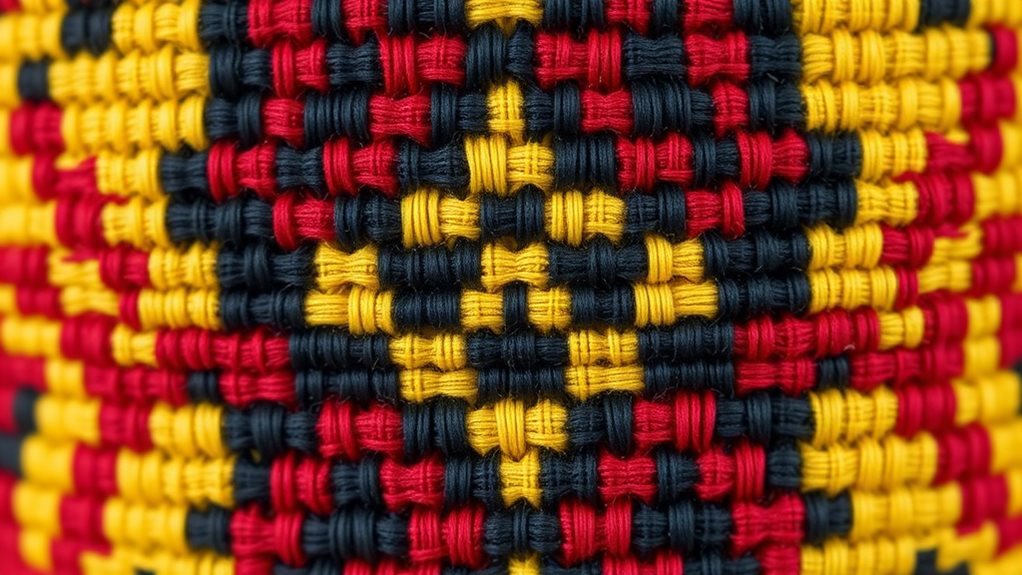
    You'll notice red in Kalinga weaves symbolizes bravery, while black embodies the earth. Yellow signifies wealth and fertility, and green echoes the lush mountainsides. Kalinga artisans also use white in their textiles to symbolize the flowers of coffee trees. Ifugao textiles display a wider color palette, maintaining harmony with nature through vibrant dyes.

    • Geometric patterns weave tales of cultural motifs and community identity.
    • You'll discover how natural dyes influence color meanings in different areas.
    • Witness the textile heritage through regional expressions passed down from generation to generation.
    • Marvel at the design evolution where the weaving techniques reflect cultural nuances within the region.

    In Mindanao, Yakan textiles explode with bold, contrasting colors, drawing inspiration from Islamic sacred geometry.

    Travel to Visayas, and you'll observe how diverse cultural influences have impacted the designs. Though specific color symbolism data is less documented, traditional patterns adapt to modern designs.

    It's fascinating how each region's color palette showcases community identity.

    Preserving Tradition in a Modern Market

    As we honor communities through hues and patterns across the Philippine archipelago, you'll also find a deep respect for the preservation of backstrap loom traditions amid an evolving global economy. Traditional techniques, often passed down through generations, are vital for maintaining cultural heritage. Market adaptation becomes essential, weaving together traditional artistry and contemporary consumer demands. These simple looms, comprised of sticks and yarn, allow for the production of breathtaking textiles, some exhibiting very intricate designs that elevate the tradition.

    You'll notice a rising interest in sustainable and ethically sourced products supports artisans and their communities. Artisan collaboration leads to innovative designs that appeal to broader markets. Online presence amplifies sales. However, you must consider challenges like balancing traditional methods with efficiency.

    Aspect Detail
    Tradition Integral to Cultural Heritage
    Economy Supports Livelihoods of Indigenous Communities
    Sustainability Ethically Made: Natural Fibers, Supporting Local Economies

    Ultimately, preserving backstrap loom weaving requires maintaining its slow, labor-intensive beauty while fostering economic viability. Preserving traditional techniques while embracing market adaptation and innovation ensures its continued presence.

  • Piña Fabric Making: From Plant to Textile

    Piña Fabric Making: From Plant to Textile

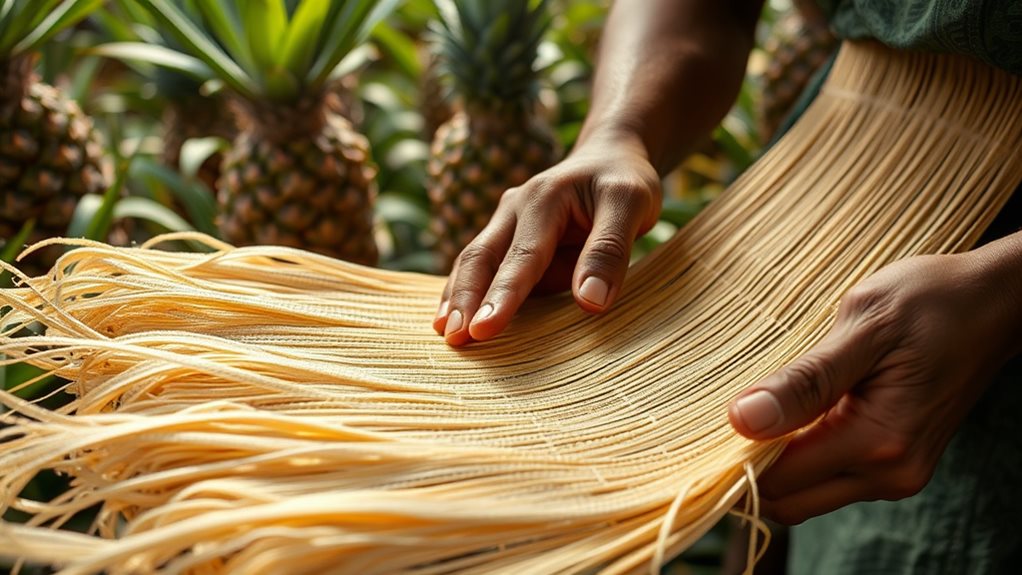
    You can transform discarded pineapple leaves into piña fabric. Fiber extraction from the 'Red Spanish' cultivar involves scraping leaf pulp. Weaving uses looms and delicate piña fibers. It is often blended with silk for durability. Calado patterns add aesthetic detail. Piña offers you environmental benefits since production requires no additional land or resources. This sustainable resource provides economic stability and reduces environmental damage. More details will be uncovered.

    The Origins of Piña Fabric

    Piña fabric originates from the pineapple plant, which is indigenous to South America but was introduced to the Philippines by Europeans during the Spanish colonial era.

    You'll find the 'Red Spanish' cultivar, noted for its spiny leaves, especially crucial; it's bred for its long leaves, perfect for fiber extraction. This innovation led to the creation of a coveted textile sought after by European aristocracy.

    Locals quickly adopted pineapple, displaying cultural exchange by integrating it into their pre-existing weaving skills. This textile innovation enabled them to create a whole new industry.

    You'll see the plant thriving in areas such as Kalibo, Aklan, and Puerto Princesa, facilitating piña production.

    Fibers are extracted manually. You're looking at plant leaves scraped painstakingly with tools like broken porcelain. Each scraped fiber's then knotted by hand to form long filaments.

    This labor-intensive prep underscores how delicate the weaving process really is.

    A Look at Piña's History

    Understanding the plant's origins and fiber extraction sets the stage to examine the textile's historical trajectory.

    Pineapples arrived in the Philippines via Spanish explorers, marking the start of piña fabric's story. You'll find that the late 18th and early 19th centuries represent piña's peak. The colonial legacy significantly shaped its development, as Spanish needlework techniques influenced piña production, enriching its artistic complexity. Piña textiles historically arrived in the U.S. as souvenirs after Manila opened to American ships.

    Piña quickly garnered international acclaim. You'll notice it became a prized luxury, desired by European aristocracy. Its exquisite craftsmanship signified elegance.

    Important parts of the history include:

    • Use in royal garments
    • Export to Europe.
    • Symbol of status
    • Adoption in Filipino garments
    • Exquisite embroidery

    Notably, piña appeared in garments worn by royalty like Queen Victoria. The cultural exchange fostered a rich textile tradition; nowadays, it signifies Filipino artistry and continues to captivate audiences.

    Sourcing the Fibers

    After pineapples are harvested, the leaves must be gathered to begin extracting the fibers, which reduces waste. Due to millions of pineapple leaves being discarded annually, you've got an abundant source of raw material. The primary sources are farms in the Philippines. Fiber extraction usually involves scraping the leaf pulp. Modern methods use semi-automatic machines, increasing efficiency.

    You'll find that the fibers are long and somewhat stiff, needing careful handing to help prevent breakage. Two types of fibers are actually produced, the coarser ones for items like dolls or icons, and the finer ones for piña cloth. You should be aware that piña fiber offers genuine environmental benefits. It doesn't need more land, water, or fertilizers. Using the leaves also reduces CO2 emissions.

    Aspect Details
    Abundance Millions of leaves discarded annually
    Main sources Pineapple farms in the Philippines
    Fiber qualities Long and stiff fibers needing careful handling
    Extraction Method Traditional scraping or efficient, modern machinery

    The Weaving Process

    Now we'll examine the step-by-step processes to create piña fabric. You'll start by using looms that feature foot-operated treadles and overhead warp beams. These looms are crucial for weaving the delicate piña fibers. The size of the sucod dictates the thickness and width of the cloth you're creating.

    The weaving process is slow; you'll find that the fibers often break because they're very fine. Often, you'll blend piña fibers with other materials such as silk or cotton to increase durability. Piña fabric is popular among local couturiers, so it's often used for haute couture fashion shows.

    Once you complete the weaving, you could add intricate embroidery, particularly calado patterns, to enhance the fabric's aesthetic. Here are a few quick facts:

    • Sucod size impacts cloth dimensions.
    • Fiber fragility slows production.
    • Blending enhances durability.
    • Embroidery adds detail.
    • Handwoven with floor looms.

    You must understand that mastering weaving techniques is crucial for piña fabric production. The loom operation requires skillful handling and precise movements to ensure a high-quality textile.

    You'll discover that this process is labor-intensive but yields a beautiful, culturally significant fabric.

    Benefits for the Environment

    Piña fabric production isn't just a labor of love and cultural preservation; it offers substantial environmental benefits. You're participating in responsible waste management by utilizing Piñatex, derived from waste pineapple leaves.

    You're addressing approximately 27 million tons of discarded leaves annually by transforming agricultural byproducts into usable resources; that's resource efficiency. The conversion process creates biomass that we can use for fertilizer or biogas, reducing landfill contributions. The use of pineapple leaves also creates additional income opportunities for pineapple farming communities.

    You're contributing to carbon footprint reduction. Piñatex, unlike leather, avoids harmful chemicals. The plant-based binding agents minimize harm; that makes it eco friendly material.

    You reduce reliance on petroleum-based products because it offers a sustainable alternative to synthetic materials. You protect marine life by reducing chemical runoff.

    Piña fabric promotes sustainable textiles and supports biodiversity, fostering balance around pineapple farming.

    Supporting Local Economies

    You bolster local economies through piña fabric production, from the employment of up to 30 individuals across farming and weaving to the preservation of generational skills.

    You're fostering economic resilience by supporting small and medium-sized enterprises (MSMEs) that create jobs and diversify products, from textiles to ropes. With community engagement, MSMEs source raw materials locally, supporting pineapple farmers. Annually, approximately 150 billion pieces of clothing end up in landfills, but using pina fiber as an alternative fabric prevents more clothes from contributing to this problem.

    • Piña fiber adds value to discarded pineapple leaves.
    • Sustainable fashion drives up demand for piña.
    • Local procurement strengthens the local market.
    • Blending piña with other fibers increases utility.
    • Quality production raises profit margins over conventional fabrics.

    You enhance local livelihoods, providing opportunities for new product development and innovation.

    Initiatives from organizations such as the DOST-PTRI encourage using locally sourced natural textiles, blending piña fibers, and using local designers.

    Local fashion sees significant growth, revitalizing the industry.

    Piña as a Cultural Symbol

    Beyond economic impacts, the cultural significance of piña is deeply ingrained in Filipino heritage. You'll find piña isn't just fabric; it's a powerful marker of cultural identity.

    Introduced during the Spanish colonial era, its production began around the 1570s, swiftly attaining luxury status, and becoming coveted in Europe. The SFO Museum exhibition highlights this textile treasure.

    This exotic textile reflects deep cultural exchange. Note how piña became integral to the *barong tagalog* and *baro't saya*, solidifying its place in traditional Filipino garments. The renowned *María Clara* ensemble vividly showcases piña's influence.

    You're seeing a fabric primarily used for formal and ceremonial attire, enriching your understanding of Filipino culture. Its delicate embroidery, intricate design, and luxurious appearance are testaments to refined artisanal heritage.

    Piña handloom weaving from Aklan earned UNESCO recognition in 2023, highlighting the value of its textile heritage.

    Sustaining Traditional Craftsmanship

    Key to preserving the rich legacy of piña fabric is sustaining its traditional craftsmanship.

    You've got to support the artisans who practice time-honored techniques. You must understand the process involves painstaking labor, from fiber extraction to weaving, all done by hand. Traditional tools, like bamboo blades and simple looms, remain essential. According to the Lacis Museum exhibition, the early artisans demonstrated a fine workmanship that we strive to emulate.

    Preservation also means guarding the intricate methods passed down through generations. These craftsmanship techniques are more than skill; it's cultural heritage.

    • Maintaining the use of pineapple leaves without harmful chemicals protects ecological health.
    • Supporting local communities helps secure piña production.
    • Passage of craftsmanship ensures that future generations continue the legacy of piña.
    • Safeguarding fiber extraction by scrapping the pulp of pineapple.
    • Protecting traditional techniques, like calado embroidery.

    Piña in Contemporary Fashion

    Piña has increasingly permeated contemporary fashion, illustrating its adaptation from cultural artifact to versatile textile. You'll find local brands like Filip + Inna integrating 100% piña silk into modern kamisa tops and Ma. Collecta using piña in everyday items. These usages demonstrate current piña trends emphasizing sustainability.

    You see piña's increased employment in haute couture, driven by its luxurious feel and environmental benefits. These piña trends are further supported by collaborative efforts, such as Raquel's Piña Cloth partnering with designers for hand-woven fabrics; Raquel Eliserio also won the Global Eco Artisan Awards in 2021.

    Piña collaborations often mix materials like cotton or abaca, boosting versatility. You also observe its use expanding beyond traditional clothing to sneakers and even vegan leather alternatives. Showcasing embroidery techniques like calado ensures traditional methods persist, adding aesthetic value.

    The Future of Piña Textile

    Looking ahead, the future of piña textile hinges on intersecting factors like sustainability, economic viability, cultural preservation, technological innovation, and market trends.

    As consumer demand increases for sustainable materials, piña's market potential expands, and its eco-friendly production, minimal resource use, and biodegradable nature all make it very appealing. Ananas Anam was founded to produce Piñatex, which has increased Piña's appeal in the textile industry.

    You'll see future innovations in mechanized fiber extraction and Piñatex customization driving scalability and wider adoption. This will also support creating jobs and increasing income for local communities that rely on piña for their livelihood.

    You should be aware of these benefits:

    • Waste reduction via pineapple leaf use
    • No extra needed land, water, resources
    • Less damage to the environment via avoiding harsh chemicals
    • Renewable resource with numerous harvests
    • Biodegradable and compostable

    Blending piña with other fibers enhances value.

    You'll witness its increasing incorporation into mainstream fashion, which will further solidify its place in the textile industry.

  • Preserving Ikat Weaving Traditions in the Philippines

    Preserving Ikat Weaving Traditions in the Philippines

    You can help preserve the Philippines' ikat weaving traditions. These traditions stretch back centuries in Mindanao and the Cordillera Mountains. Keep alive warp ikat textiles, some 400 years old, found in Romblon. Support artisans who use backstrap looms and natural dyes. Advocate for workshops using bamboo and pineapple fibers. Recognize the GAMABA awardees. You'll foster weaving's economic impact and cultural significance. Discover more invaluable insights below!

    Historical Roots of Ikat in the Philippines

    Ikat weaving, a centuries-old textile technique incorporating resist-dyeing yarns before weaving, has deep historical roots in the Philippines.

    You'll find evidence of this in places like Banton Island, Romblon, where the oldest known warp ikat textiles were discovered, showcasing their weaving heritage.

    You see how these textiles carry historical significance? You'll appreciate that ikat's not confined to one region; it's spread widely, especially in Mindanao and the Cordillera Mountains. Narda Capuyan witnessed the ikat technique in practice, which deepened her understanding of its cultural significance in the Cordillera region.

    In Mindanao, ikat's known explicitly for its vibrant fabrics, a celebrated art form expressing its cultural importance.

    And don't forget how traditional techniques evolved through cultural exchanges among groups like the Ifugao and Isinai.

    You'll notice artisan stories intertwined with the history of dyeing processes.

    The textile evolution is tied to both traditional and modern methods.

    Cultural Significance of Ikat Patterns

    Beyond its historical presence, the artistry of patterned textiles holds profound cultural weight for Filipino communities. Ikat patterns aren't just decorative; they're imbued with symbolic meanings, reflecting the cultural identity of those who create and wear them.

    You'll find textiles acting as storybooks, passing down narratives from generation to generation. These narratives often illuminate your community's values and history. The oldest existing textiles, dating back four hundred years, are found in Banton Island, Romblon.

    Understand the depth of meaning in patterns. Consider how a textile reveals more than meets the eye:

    • Ikat symbolizes the cycle of life and death.
    • Geometric shapes might represent the balance between masculine and feminine.
    • Motifs often show a deep reverence for nature.
    • Patterns strongly reinforce cultural identity.

    Each color, shape, and motif carries significance, contributing to the strong cultural identity associated with ikat weaving.

    You see communities bonding and safeguarding their heritage through these traditions.

    Weaving Techniques and Materials

    A symphony of skill and artistry, weaving techniques define ikat traditions in the Philippines, where vibrant patterns emerge from the careful manipulation of threads and dyes. You'll find that backstrap looms and resist-dyeing are essential components that demand great skill, physical effort, and an intimate understanding of materials.

    Ikat patterns come to life through resist dyeing techniques, where yarn is selectively tied to prevent dyes from penetrating certain areas. Reflecting the spirits of "woven dreams", the backstrap loom serves as a centerpiece, needing the weaver's dexterity and strength to manipulate.

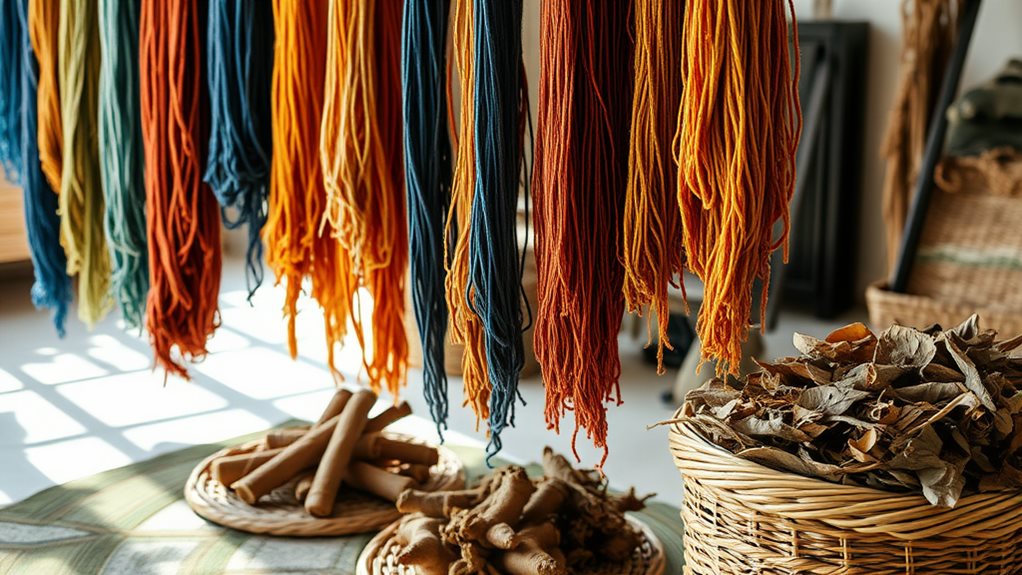
    Yarn preparation is meticulous; you select, fluff, spin, and skein the yarn. Natural dyes, sourced from plants, fruits, and barks, imbue the threads with vibrant colors. Abaca fiber is valued for its strength.

    Essential weaving tools, like the *pinsel* (beater) and *lambitin* (reel), facilitate the weaving process. Double ikat, involving meticulous resist dyeing of both warp and weft, elevates the complexity of the designs, showcasing the profound artistry ingrained in these traditions.

    Regional Styles and Diversity

    Across the Philippine archipelago, you'll find that regional styles and diversity flourish in ikat weaving, with each area showcasing unique approaches that reflect its distinct cultural heritage. Communities adapt ikat techniques to their local environments, spiritual beliefs, and artistic visions, resulting in a rich tapestry of designs, patterns, and colors that embody the diverse identities of the Philippine people.

    These regional nuances not only enhance the aesthetic appeal of ikat textiles but also serve as powerful symbols of cultural pride and collective history. The weaving techniques used include resist dyeing, ikat dyeing, and overdyeing to create a diverse range of patterns.

    Consider the vibrant diversity:

    1. Mindanao's geometric designs stand out using distinct resist-dyeing.
    2. Cordillera's nature-inspired motifs blend tradition.
    3. T'boli *t'nalak* fabrics showcase cultural identity with traditional patterns.
    4. Island-wide refinement reflects textile diversity.

    These distinctive regional techniques highlight the cultural exchanges across communities.

    Although younger generations' migration challenges traditional preservation, efforts persist—elders pass on skills, families collaborate, and platforms boost cultural resilience by showing weaving in contemporary designs.

    Economic Impact on Communities

    Ikat weaving traditions aren't just cultural treasures, they're also significant economic drivers in many Philippine communities.

    You'll see how the traditions provide income for weavers, fostering economic empowerment. Communities cultivate cultural identity through engagement with ikat. You're also enabling ongoing cultural sustainability by supporting community-led initiatives.

    The revival of traditional weaving creates jobs, especially in rural areas supporting sericulture and handloom weaving. The Kiyyangan Weavers Association fosters intergenerational collaboration, ensuring skills are passed down and traditions are preserved.

    As demand increases for textiles such as Ifugao textiles, you're bolstering revenue streams. The partnerships between weavers and local governments enable them to procure tools.

    You witness market expansion through direct orders, exports, and innovations, such as ikat shoes.

    We see the Philippines Textile Research Institute supporting sericulture projects, while you support weaver's potential through product promotion. Your support drives diversification using new plant-based yarns.

    Challenges Facing Ikat Weavers

    Consider these crucial factors:

    • Maintaining access to resources despite rising demand.
    • Balancing technological advancements with traditional methods.
    • Combating *cultural erosion* through *community support*.
    • Promoting weaving as a viable career to bridge the *generational disconnect*. The increased demand for natural dyes has put a strain on weavers to acquire these resources.

    To promote *sustainable practices*, adopt new yarn sources.

    To flourish, you've got to emphasize the cultural value of your work while seeking *community support*.

    The Role of Education in Preservation

    Education is foundational to preserving ikat weaving traditions, for it not only promotes cultural heritage and the significance of traditional techniques, but also empowers communities to sustain their practices. You'll find that educational initiatives ensure these skills aren't lost. Practical community workshops pass down techniques from experienced artisans. You also empower weavers economically by providing market-oriented skills. Aren't you preserving techniques? In East Flores, Indonesia, Ria emphasizes the cultural importance in weaving Ikat during death ceremonies, ensuring that the tradition resonates deeply within the community.

    Educational Efforts Outcomes
    Documenting methods Preservation for future generations
    Standardizing practices Maintaining consistency and quality
    Innovative adaptations Relevance to modern contexts
    Workshops for artisans Skill refinement and new methods
    Collaborative projects Facilitating knowledge sharing

    You encourage sustainable practices, like using natural dyes and incorporating technology. Diversification of products broadens market appeal. You're promoting awareness of laws, aren't you?

    Gamaba Award and Artisan Recognition

    • Recognition of excellence in ikat weaving.
    • Support for cultural preservation.
    • Promotion of cultural pride.
    • Community engagement enhancement.

    Salinta Monon, Yabing Masalon Dulo, and Barbara Ofong are a few who've received this esteemed recognition. The award helps preserve their crafts and pass down their skills. In Baguio City, on December 3, 2024, three GAMABA awardees from Mindanao were honored at the World Ikat Textiles Symposium further highlighting the weaving's cultural connections.

    Centers such as Schools of Living Tradition ensure cultural continuity. GAMABA promotes national pride and increases appreciation for cultural heritage.

    You're seeing artisans getting legal protections. These initiatives, though challenging, secure a vibrant future for traditional arts.

    Modern Innovations in Ikat Weaving

    Beyond artisan recognition and cultural preservation, the evolution of ikat weaving embraces modern innovations. You're seeing weavers incorporating natural fibers like bamboo and pineapple, crafting sustainable fabrics, plus, the creation of Bamboo Textile Fiber Innovation Hubs (BTFIHs). Modernization boosts productivity through technology while safeguarding tradition. You'll also find training programs empowering local artisans. HABI Philippine Textile Council promotes traditional textiles and modern lifestyles.

    You're enhancing market access, thanks to innovative designs. These range from digital Jacquard weaving to sculptural techniques. What's more, resist-dyeing innovations and the effective use of unconventional materials are on the rise. You can see ikat's global reach expanding through international events.

    Innovation Impact
    Natural Fibers Eco-friendly weaves, support sustainability
    Digital Looms Enhanced productivity, intricate patterns
    Training Programs Improved weaving skills, greater income for weavers

    Future Directions for Ikat Preservation

    One crucial step involves integrating community engagement, cultural significance, economic strategies, environmental sustainability, and education to ensure ikat preservation's comprehensive approach.

    You'll find that future collaborations are essential; weaving together local knowledge with academic insights, designer creativity, and marketing expertise. These can expand market reach while upholding traditions. The recent World Ikat Textile Symposium in Baguio highlighted the importance of such collaborations in a global context.

    To secure ikat weaving's future, you should consider:

    • Investing in intergenerational learning programs.
    • Supporting sustainable sourcing of abaca and natural dyes.
    • Promoting educational workshops.
    • Developing innovative designs that respect cultural aesthetics.

    Global outreach can boost appreciation and demand for ikat. You can achieve this through cultural exchanges at events such as the World Ikat Textile Symposium.

    These can foster learning and innovation. It's important to continue documenting weaving techniques to preserve this integral part of the Philippines' rich cultural heritage, ensuring traditions thrive for generations.

  • Symbolism Behind Yakan Weaving Patterns

    Symbolism Behind Yakan Weaving Patterns

    Yakan weaving patterns are rich with symbolism. You'll see how nature influences motifs like rice grains and plants. Social status is displayed, reflecting power and cultural identity. Floral patterns embody beauty, while diamonds signify agriculture and unity. Animal motifs showcase daily lives and hold specific meanings. Colors add visual impact and connect to spiritual moods. These intricate designs communicate cultural history. There's so much to learn about the meaning of the community's art.

    Nature's Influence on Yakan Motifs

    Yakan weaving motifs are deeply intertwined with nature, reflecting the Yakan people's profound respect for their environment. You'll see geometric designs mirroring natural elements, such as rice grains. It shows a deep commitment to environmental respect.

    You'll notice plant-inspired designs celebrating agriculture. Animal motifs, also natural elements, symbolize power and authority in their world. Weaving is integral to Yakan cultural life, and these motifs keep it going. Natural motifs are more than decoration; they're a link to the past, keeping cultural heritage alive.

    The impact of nature ensures designs resonate with geometric symbols. These shapes usually represent nature itself. You can often see the Yakan worldview where shapes of nature express harmony.

    Intricate patterns may represent strength. It's similar to bamboo, that symbolizes resilience. You see that the "kaba-kaba" motif looks like realistic butterfly wings.

    The Significance of Social Status in Designs

    Certain patriarchal motifs, like the snake, symbolize authority, often reserved for male members of royalty or wealthy clans.

    You're essentially observing a society's values and power dynamics woven into cloth. You can tell so much about Yakan culture.

    Here is the list item for this subject:

    • Weaving serves as a determinant of social status.
    • Designs reflect patriarchal power.
    • Fabrics reflect the culture's social identity.
    • The patterns maintain connection to the culture's ancestors.

    Floral Patterns and Their Meaning

    Beyond social status woven in designs, you will see that the Yakan's respect for the natural world blossoms through the representation of floral patterns. These motifs, often realistic, echo nature's beauty. You'll find them enriching formal wear, such as the inalaman, which is a decorated overskirt. You can appreciate that the bunga-sama designs exemplify intricate floral symbolism, showcasing the incredible artistry of Yakan weavers, reflecting nature's abundance. Handwoven textiles are integral to Yakan cultural expressions, revealing how deeply ingrained this art form is within the community.

    These aren't just beautiful details; they're essential to cultural heritage. Floral patterns contribute significantly to Yakan identity, connecting the community through shared artistic expression. The patterns aren't just designs; they're a spiritual and cultural journey for the weavers. Observe how weaving reinforces Yakan values.

    Pattern Type Symbolic Connection Cultural Significance
    Bunga Sama High status, nature's beauty Adorning blouses and pants
    Inalaman Design Flowers with diamonds Formal wear, respect for women
    Seputangan Nature, spirituality Headcloths, connections to the natural.
    General Floral Community harmony Reinforces Yakan values and beliefs

    Geometric Shapes: Diamonds and Harmony

    Reflecting nature, power, and status, you'll notice that diamonds are a common geometric motif in Yakan weaving, intricately woven on backstrap looms. You're seeing a reflection of rice grains, embodying agricultural significance. These aren't just decorations; they're integral to the "bunga-sama" motif, reflecting diamond symbolism. Diamonds, much like those found in Guatemalan weaving, symbolize arms.

    In Yakan textiles, you'll discover various cultural values. You'll observe how patterns aren't just aesthetic; they're deeply rooted in community identity and geometric unity.

    • The precision you notice highlights the artisan's skill.
    • Diamonds often appear in bolder designs.
    • Each element contributes to artistic richness.
    • Garments such as the "seputangan" are truly valued.

    These reflect intricate traditions. Geometric unity isn't an accident; it highlights balance, harmony, and the weaving together of spiritual and earthly elements.

    You're experiencing art, status, and cultural heritage expressed through the language of geometric shapes. You're experiencing the core of the Yakan spirit.

    Animal Symbolism in Yakan Weaving

    You'll find realistically represented animal motifs in Yakan textiles, mirroring both the weavers' natural environment and profound cultural symbolism. Through animal representation, you see reflections of daily life, agricultural practices, and deep respect for nature. The Yakan community integrates animals into their textiles, showing their interconnectedness with the world around them.

    You'll notice that specific creatures carry significant symbolic meanings. For instance, you might see snakes, which symbolize power, authority, or even serve as a vehicle for spirits. These snake animal representations are often woven into garments reserved for prestigious individuals. This status symbolism, combined with visually stunning designs, helps reinforce the community's identity and cultural heritage.

    Traditional weaving techniques ensure these animal motifs persist, influencing Yakan designs' distinct aesthetic appeal. Yakan weaves showcase intricate animal-inspired patterns in various garments. The Seputangan (head cover), Badju Lapi (blouse), and Sawal (trousers) frequently utilize animal designs to further represent village life.

    It's amazing how these patterns reflect the artistic expression of the Yakan weavers.

    Weaving as a Cultural Anchor

    As an integral part of Yakan culture, weaving practices, passed down through generations, anchor the community's cultural and historical significance.

    You'll find the vibrant colors and intricate designs aren't just aesthetically pleasing; they're reflections of traditional influences and deeply rooted spiritual beliefs. Think of those textiles, often blending Islamic symbols with geometric patterns, as visual narratives of village life. You're not just seeing art; you're witnessing a testament to their cultural identity. The Yakan tribe relies on demonstration and modeling in their structured pedagogy to ensure intricate weaving techniques are properly taught.

    Weaving serves more than you realize. You'll see it reinforces cultural values, ensuring the tribe's continued survival. Through weaving, strong ancestral connections are maintained.

    You're actively participating in keeping the threads of tradition alive when you engage with Yakan textiles.

    • Maintaining social cohesion.
    • Reinforcing cultural identity.
    • Connecting with ancestors.
    • Reflecting community values.

    It's about preserving customs for future generations; you're safeguarding the very essence of the Yakan people.

    Techniques of Yakan Weaving

    Yakan weaving employs distinct approaches, combining traditional tools with refined pattern-making skills.

    You'll notice they use the tennun loom, which is secured with the awit belt and tindakan brace. The deddug warp beam is essential for the warp techniques. With this loom, you can produce textiles reflecting your cultural identity. Some Yakan women believe that their weaving skills are ensured by cutting the umbilical cord with a special wooden bar.

    You pre-program intricate designs by counting threads using the megpeneh method and carefully spacing the threads using the sud dendam comb. The nuwah procedure requires diligence as you thread each strand through the comb.

    Tabid yarn bundles rows to create the desired pattern, while sellag threads add background color, wound on anak tulak sticks. Sulip threads thicken the pattern.

    Weaving processes are passed down through demonstration, ensuring pattern precision and cultural continuity, and weaving supports social development.

    The Language of Design and Pattern

    Design and pattern in Yakan weaving serve as a visual language deeply entrenched in cultural symbolism and community identity. The intricate designs aren't just aesthetic; they're a form of design communication, a story told through visual storytelling.

    You'll notice how shapes, colors, and motifs blend to convey meaning.

    • Geometric shapes symbolize different aspects of life.
    • Floral motifs often reflect nature's importance.
    • Animal symbols embody power or particular traits.
    • Color choices enhance visual impact and meaning.

    Motifs repeat, enhancing harmony, and reflecting unity, reminding you of the Yakan's strong community bonds. Weaving traditions embody sacred geometry, connecting the Yakan people to something greater.

    Consider the seputangan, a headscarf, as it communicates a person's identity. Bunga-sama designs may denote status.

    You're witnessing not just fabric, but a rich tapestry of culture woven into every thread, reflecting resilience, harmony, and cultural pride. They adapt, innovate, but preserve their unique voice.

    Spirituality Woven Into Textiles

    Beyond the language of design, Yakan textiles embody an intimate connection to spirituality. You'll find that this art form resonates with ancestral roots, serving as a bridge to the past. Weaving's symbolic representation of regeneration mirrors nature's cycles, showing a deep spiritual connection to the earth. Weaving isn't just a craft; it's a spiritual journey. The designs and colors within the textiles further represent the Yakan's unique cultural identity.

    Don't you see how tradition maintains Yakan's woven heritage? Yakan weavers seek guidance from ancestors, integrating prayers into their work. Understand that through expressive colors, you're seeing emotions and spiritual moods, naturally dyed to connect with the earth. Specific motifs, like snakes and geometric shapes, aren't just decorative—they're loaded with spiritual meaning. Here are a few things that inspire us:

    Inspiration Type Description
    Nature Motifs echo plants and animals, showing our spiritual bond.
    Geometry Shapes represent cosmic elements, connecting us to the universe.
    Color Colors express emotions and moods, reflecting our spiritual beliefs.
    Ancestry Seeking spiritual guidance from ancestors, with weaving representing woven heritage.

    Weaving's Community Impact

    Because weaving is more than a solitary pursuit, it profoundly influences Yakan communities, serving as a crucial economic engine and a powerful means of preserving cultural identity.

    You'll find the craft directly aids economic development, especially as Yakan textiles get showcased internationally. Weaving provides crucial income, an alternative livelihood that directly combats poverty: Yakan weaving fosters community resilience during crises through social cohesion. The Yakan people's migration from Basilan to Zamboanga City influenced the evolution of their weaving techniques.

    Here's how it looks:

    • Sales of Yakan woven products, especially in tourist villages, offer sustained economic support.
    • Traditional weaving methods, deeply interwoven with environmental influences, continue to thrive.
    • Shared skills, continuously passed down through family, maintains links with ancestral practices.
    • In Yakan culture, designs communicate social details, cementing cultural history and pride.

    You're witnessing a vibrant social fabric, rich in tradition, ensuring that the community thrives through art.

    Educational programs and increased tourism further bolsters cultural preservation.

  • Natural Dyeing Methods in Philippine Textile Production

    Natural Dyeing Methods in Philippine Textile Production

    You'll find Philippine textile production uses natural dyes from diverse plants like indigo and achuete. Artisans apply ikat and resist techniques to create unique patterns. Mordants, including alum and bio-mordants, fix dyes and alter colors. The PTRI identifies local dye sources and offers training. You'll boost the economy, reduce environmental impact, and conserve traditions as you implement these methods. You'll discover the economic and ecological benefits of Philippine natural dyes should you continue to explore.

    History of Natural Dyes

    Natural dyeing has millennia of history, evidenced in ancient civilizations. You'll find its roots in the use of resources, whether animal or plant-based.

    Think of Tyrian purple, painstakingly extracted from sea snails, and indigo derived from plants.

    In ancient societies, you'd see how certain dyes became tied to status. Tyrian purple wasn't just a color; it signified wealth and power because of its high cost and the complexity of its production. Cleopatra's barge notably featured this color. This is dye symbolism in action.

    Plant-based dyes such as indigo, saffron, and madders became crucial goods traded across continents in ancient civilizations.

    Before the advent of synthetic alternatives, you can imagine that dye determined your standing in society. The colors available told a story of resources and access before 1856, when everything changed.

    Key Plant Varieties

    Varied flora underlies traditional Philippine textiles. I'll introduce you to key plant varieties crucial to natural dye production.

    You'll find Indigo (Indigofera tinctoria) cultivated in tropical areas, especially in Abra, Occidental Mindoro, and Bukidnon. The Itneg people employ Malatayun, a native Indigo variant, to get dark blues and violets. User engagement metrics indicate the popularity of models employing similar extraction methods. Use Sappang wood, and you'll yield pinkish-red and violet hues. Achuete provides you with orange dyes. Tawa-Tawa plant gives vibrant yellows.

    You benefit from plant diversity across multiple regions. Abra, the "Natural Dye Capital," utilizes varied plant sources. Occidental Mindoro and Bukidnon grow Indigo commercially. You can engage in Indigo cultivation and propagation in Antique and local dye production in Rizal.

    These dye properties, combined with extraction methods, affect color characteristics. Through ongoing research, more efficient dyeing processes are realized by optimizing traditional methods.

    Traditional Dyeing Techniques

    Traditional dyeing techniques are integral to Philippine textile history, with evidence tracing back to the Banton cloths from the 14th to 15th century. You'll find ancient mastery displayed through black and red pigments. Pre-20th century, natural dyes dominated before synthetics arose, and reflect cultural symbolism deeply. The use of natural dyes from local plants, minerals, and insects is prevalent.

    Furthermore, artisans maintain ancestral techniques alongside modern methods.

    Ikat dyeing produces unique patterns using tie-dyeing warp or weft threads pre-weaving. Resist dyeing blocks dye with wax for intricate designs. Overdyeing layers colors to achieve depth. Warp-tie dye resist, an ancient Banton technique, combines weaving and dyeing.

    These techniques carry cultural weight. Ikat and resist dyeing shape tribal identity. The T'boli stand out via vibrant t'nalak cloths, an expression of ikat. Textiles, colored using traditional methods, signify status. Dyeing ceremonies and processes become pivotal for storytelling.

    These techniques are powerful expressions of identity:

    • Techniques protect cultural identity.
    • They enable cultural storytelling.
    • They emphasize cultural authenticity.

    Role of Mordants

    Mordants are substances that bind dyes to fabric, enhancing color longevity and saturation. You'll find they create stable complexes, ensuring the dye adheres effectively to fibers.

    Historically, metal salts, such as alum and iron, have been prevalent. Now, we're seeing a shift towards bio-mordants to reduce environmental impact.

    You'll notice mordant types including metallic mordants like copper and tin salts, and tannin-based options such as oak galls work. Remember, different mordants can alter the final color due to varying chemical interactions. Research at PTRI has identified over 100 natural dye sources locally.

    Looking at the Philippine context, indigenous plants like pomegranate can serve as bio-mordants. Pre-mordanting boosts color absorption, impacting color stability, while meta- and post-mordanting offer flexibility.

    The technique you employ depends on the fiber, be it cotton or silk, influencing the final color's variability.

    Regional Dyeing Centers

    You'll find regional dyeing centers critical for propagating natural dyeing techniques and promoting sustainable textile production across the Philippines.

    The DOST-PTRI's establishing Regional Handloom Weaving Innovation Centres. These centers expand to locations like Ilocos Norte, Pangasinan and Antique.

    The Natural Fibre and Bamboo Textile Innovation Hubs, alongside other initiatives, aim for inclusive regional development. These initiatives were announced during the National Textile Convention (TELACon) in Pasay City.

    These centers embody regional collaboration.

    • They promote local craftsmanship.
    • They focus on sustainability.
    • They also foster technological advancement.

    Driving digital empowerment promotes competitiveness.

    You'll see innovation hubs support yarn production and innovation.

    DOST's funding aims to fulfill goals like establishing a textile innovation center per region by 2028, and you'll engage in community engagement through education and training programs.

    The centres optimize traditional methods and use over 100 natural dye sources.

    This exemplifies the dedication to non-toxic, environmentally beneficial practices, reflecting cultural significance in Philippine textiles.

    The Abra Example

    Consider Abra, a Philippine province recognized for its strong natural dyeing traditions. You find that the Tingguian culture is central, with generations of indigenous knowledge driving the industry. You'll see how they've mastered dye extraction from plants, like indigo from *malatayum*. Sustainable practices ensure resource management. The province's slow development has, however, kept natural dyeing methods alive.

    Dye Source Color Produced
    Indigofera tinctoria Blue
    Mahogany Bark Brown
    *Caeselpinia sappan* Pinkish-Red/Violet
    Achuete Seeds Orange/Yellow

    You'll note processes involving chopping, grinding, and boiling plant materials. Mordants, such as lime or mud, play a vital role in intensifying hues. The community, including families like the Agaids, passes down techniques. You witness the preservation of their heritage, as Abra continues to represent authentic tourism, and it bolsters their economy, supporting local livelihoods. That's how you see it contributes to preservation, combining tradition with development in the industry, and continuing their practices.

    Environmental Advantages

    Moving from the preservation of culture to environmental considerations, natural dyeing presents distinct ecological benefits. You're replacing synthetic dyes with less toxic alternatives, actively contributing to sustainable practices.

    You'll find that sourcing dyes locally, like from coconut husks, reduces the carbon footprint by minimizing transportation emissions and promoting bioresource use. The Textile Institute emphasizes the use of natural dyes, bolstering the shift towards environmentally friendly alternatives.

    Furthermore, you aid in reducing environmental pollution because natural dyes are generally biodegradable, unlike synthetic counterparts. The reliance on plant-based resources supports biodiversity, avoids extensive land use, and conserves water because traditional dyeing consumes less water.

    Your involvement strengthens ecological benefits by:

    • Reducing chemical pollution from dye production.
    • Encouraging efficient biowaste utilization from agriculture.
    • Supporting long-term ecological sustainability.

    You're improving cleaner production using waste materials.

    Economic Impact

    Transitioning to economic considerations reveals natural dyeing's multifaceted influence. You can see job creation in MSMEs and communities, boosting local economies.

    Artisans also enjoy increased income; projects indicate a potential 30% increase. Improved market access for naturally dyed textiles expands economic opportunities. By using these dyes, industries can diversify products, capturing niche markets, and you'll find green financing opportunities become available for MSMEs.

    Republic Act 9242 promotes local textiles with indigenous fibers, potentially enhancing economic benefits. However, current procurement policies, which prioritize lowest bidders, can undermine sustainability efforts. You can still emphasize local materials, fostering domestic industries.

    Governments provide incentives for innovative textile technologies benefiting MSMEs.

    Considering market trends, the demand for unique, sustainable products opens economic avenues, giving you a competitive advantage, particularly in niche segments. High costs can create scaling challenges.

    Natural dyes enhance export opportunities, aligning with international sustainability standards. You'll encounter seasonal fluctuations affecting predictability.

    Therefore, examine artisan benefits because organizations fund R&D, support MSMEs, and launch projects promoting eco-textiles.

    PTRI's Research

    As the Philippine Textile Research Institute (PTRI) serves as a pivotal force in advancing local textile industries, its research significantly contributes to the development and application of natural dyeing methods.

    You'll find that PTRI, identifying over 100 local plant sources, spearheads this shift towards sustainability. They've simplified lengthy traditional processes and developed natural dye kits to promote natural dyeing at home. Weaving communities, such as those in Abra, benefit from this research by preserving their deep-rooted traditions.

    PTRI innovations include crude extracts and 30 NatDye powders, streamlining handling and application. They've optimized processes to reduce dyeing time significantly. These powders aid commercial production after community training.

    The institute's commitment manifests in several areas:

    1. Standardizing natural dye technologies via applied research.
    2. Offering technical training for communities involved in natural dye hubs.
    3. Aiming to employ push and pull market forces for continuous supply.

    With a PHP25 million investment, PTRI boosts natural dye production across regions.

    Through these actions, you'll observe PTRI strategically fostering eco-friendly textile practices.

    Preserving Tradition

    Complementing PTRI's advancements, tradition stands as a vital aspect of natural dyeing, embedding local practices within indigenous communities. You'll find communities like the Itneg and Blaan passing down cultural significance via time-honored techniques, especially in Abra. You see families, like the Agaids, upholding intergenerational learning when imparting dyeing skills to younger generations. Luis Agaid Sr. is recognized as the Father of Natural Dyes within the region.

    Through community engagement in workshops, you're ensuring traditional knowledge continues. You aid in the non-toxic benefits when using plant sources, reducing environmental impact. You're vital in enhancing the value of artisan textiles, driving economic growth and supporting local employment.

    Dye Source Color Produced Cultural Significance
    Indigo Leaves Blue Shades Traditional fermentation for vibrant colors.
    Achuete Seeds Orange Adds value to textiles with its unique hue.
    Narra Bark Brown Shades Employed to enhance textile aesthetic appeal.
    Ipil-ipil trees Violet to Maroon Natural dyeing supports local economies.
  • Inabel Weaving: Preserving Ilocano Heritage Through Textiles

    Inabel Weaving: Preserving Ilocano Heritage Through Textiles

    You'll find Inabel weaving preserves Ilocano heritage. It dates back to pre-colonial times. You see the Ilocano people's resourcefulness in each weave. Designs showcase nature and geometry. Weavers pass down techniques through generations. Economic competition and dwindling weavers threaten the craft. Revitalization efforts engage youth in weaving. Inabel empowers local communities and appears in modern designs. Continuing the Inabel story involves economic support and government recognition. There is much to learn regarding this legacy woven in time.

    A Legacy Woven in Time

    Inabel weaving, tracing its roots to pre-colonial times with "abel" meaning weave in Ilocano, isn't simply a craft but a tangible legacy shaped by the Ilocano people's resourcefulness.

    You're witnessing a vibrant tradition preservation, a living testament to cultural history found prominently in Ilocos Sur and Ilocos Norte.

    You'll appreciate how Inabel adapts while remaining rooted in its beginnings. Passed down generations, Inabel isn't just about everyday textiles; it's a chronicle rendered through patterns and textile techniques.

    These designs feature nature and geometry. Think "binakol," "inuritan," or "kusikos." They aren't merely decorative; they demand mathematical precision, using cotton yarn dyed via age-old and modern methods.

    You'll notice handlooms like the "tillar." These aren't simple tools; they represent the artistry and durability setting Inabel apart.

    It's a story woven in every thread.

    The Cultural Tapestry of Inabel

    The textile symbolism comes alive through nature-inspired motifs. You might spot flowers, plants, and seashells—each element echoing the culture's deep connection to its environment.

    Geometric patterns, such as "binakol," contain an intricate symbolism, carrying meanings of protection or prosperity. Regional themes also surface, spotlighting agricultural influences within Pinilian textiles. The skilled weavers of Ilocos meticulously control thread tension to create the textile. Tension control is vital to achieving the final design.

    Observing the use of Inabel, such as seeing it fashioned into traditional garments like baro't saya, underscores its role in Ilocano identity. When you see an Inabel, understand that you're witnessing a narrative woven through generations.

    Crafting Inabel: The Process

    Crafting Inabel involves a meticulous sequence of processes. First, you're engaged in yarn preparation. This could mean using local or imported cotton threads, often starched for added stiffness and gloss.

    Should you choose local cotton, you'll spin it using traditional methods—pounding and twisting with a spindle. Textiles symbolize beliefs and rituals, so choosing patterns rooted in Ilocano tradition is essential for maintaining cultural significance. Next, you'll brush the yarn to enhance its durability and gloss. You'll then wind the yarns onto bamboo spools, readying them for the loom.

    The next phase involves loom operation. You'll use a hardwood pedal loom called pagablan, comprising wooden frames, pedals, and heddles. The intertwining of warp (*gan-ay*) and weft (*pakan*) is key.

    You insert each warp yarn through the heddle's eye using a weaving hook. You tie the heddles behind the beater before you commence weaving. Remember, it's your footwork controlling the pedals that governs the thread tension.

    Decoding Inabel Patterns

    Decoding, the patterns reveal layers of profound cultural significance, each thread meticulously woven to tell a story.

    You'll find the symbolic meanings deeply rooted in Ilocano heritage, reflecting the people's resilience and artistry. Observe how nature inspires many designs, featuring flowers, plants, and geometric patterns. The intricate process of weaving represents the cultural heritage of the Ilocano people, evident in every design.

    Consider these emotive elements:

    1. The "binakol" pattern, believed to ward off malevolent spirits, offers you a sense of protection.
    2. Floral motifs, such as "sinan-sabong," display beauty.
    3. Patterns resembling seashells connect you to nature.

    Analyzing pattern variations, you'll notice common geometric designs like "inuritan" and "kusikos."

    Note how some patterns integrate stars, fans, and even animal or plant elements, offering a visual feast rooted in local biodiversity.

    While traditional symbolism prevails, modern color schemes and hybrid techniques evolve styles.

    Appreciate that each piece preserves historical narratives.

    Revitalizing a Heritage Craft

    You can see that Inabel's patterns carry stories and significance; now, sustaining this tradition necessitates multifaceted revitalization efforts.

    You aren't only facing a decline in weavers; you're also navigating the pressures of mass-produced textiles and socioeconomic shifts. The softness of Abel cloth makes it highly desirable, presenting an opportunity to highlight its unique qualities in the market.

    To counteract this, you're embedding weaving in educational curricula, and first ladies are spearheading training initiatives. These programs tackle the need for youth engagement directly, sparking interest in younger generations.

    Community weaving workshops teach the craft, further equipping new weavers.

    Economic stability is also vital. You're working to create market opportunities, provide economic incentives, and support local industries.

    Collaborations with designers are modernizing tradition, while documentation and mapping projects meticulously preserve techniques.

    Integrating inabel into modern fashion ensures its enduring appeal.

    The Enduring Appeal of Inabel

    But there's more to it. The process, done entirely by hand, showcases masterful skills. Artisans meticulously plan each design, reflecting their expertise and dedication. Ilocano weavers use age-old wooden looms, expertly maneuvering them to bring intricate patterns to life.

    Moreover, the patterns and motifs evoke:

    • A connection to nature, symbolizing the Ilocano people's deep relationship with the environment.
    • A sense of heritage, with designs passed down through generations, telling stories of ancestors.
    • An appreciation for artistry, honoring the creators who pour their hearts into each thread.

    Inabel's survival stems from Ilocanos' cultural pride, using it for attire and celebrations.

    You're witnessing a legacy continuing to resonate, maintaining its significance from pre-colonial times till today.

    Economic Empowerment Through Weaving

    As Inabel weaving endures, it concurrently serves as a vehicle for economic empowerment within Ilocano communities.

    You'll find it supports local income, bolstering families' financial stability. Aren't job creation and rural development important? Weaving employs artisans, thereby empowering their communities.

    You see how promotional efforts drive market growth, attracting customers and fueling economic sustainability. Exhibitions, collaborations, and digital platforms showcase Inabel, increasing its appeal.

    You enable market access when you connect weavers and buyers, lifting sales. Aren't there training programs to boost skills and ensure long-term industry viability?

    Challenges, however, exist. You revitalize interest through education and awareness, offering incentives to young weavers to combat mass production.

    You encourage sustainable practices to attract environmentally conscious consumers. As tourism benefits your locale, you must foster community involvement through workshops, to ensure community empowerment.

    Inabel in Contemporary Design

    Inabel has seamlessly integrated into contemporary design, evidenced by its increasing presence in modern fashion, evolving techniques, home décor, and collaborations with other art forms.

    Within fashion, you'll find traditional patterns adapted into binakol dresses and kusikos shawls, showcasing how modern aesthetics embrace cultural roots. Are you not moved when you see how traditional techniques evolve by:

    • Blending historic looms with modern materials?
    • Refining weaving to meet modern design sensibilities?
    • Embracing sustainable practices to produce organic contemporary textiles? This preservation ensures its vibrancy in cultural identity.

    Inabel shines in home décor, too. You can appreciate how it enhances modern homes.

    Consider the vibrant colors of throw pillows. You see how designers customize each piece. You ought to marvel at how Inabel partners with artists. Ultimately, it's a testament to its versatility. You appreciate how it preserves cultural identity in contemporary forms.

    Challenges and Opportunities

    Even with its seamless integration into contemporary design, Inabel weaving confronts significant challenges as handmade inabel faces economic competition from mass-produced textiles, resulting in reduced demand and economic disadvantage for traditional weavers.

    You see that dwindling numbers of active weavers and loss of skills exacerbate the situation, threatening the craft's future. Insufficient infrastructure further complicates production. Loom preparation, which involves warping reel, warp beam rod, heddling, and reed insertion, can be time consuming.

    However, you'll find that efforts to revitalize inabel present opportunities. Government recognition, like *Gawad Manlilikha ng Bayan*, inspires cultural pride.

    Education programs ensure the craft's continuation. Collaborations with designers open market opportunities, while cultural events raise awareness.

    The socioeconomic impact involves boosting local economies and preserving Ilocano identity. Addressing the generational shift hinges on cultural transmission.

    Can you help bridge the gap?

    Continuing the Inabel Story

    You'll find that continuing the Inabel story involves preserving traditions, embracing modern applications, and fostering cultural significance through dedicated efforts and economic support.

    It's a duty to champion heritage preservation and weaving traditions. You actively participate when you support the Ilocano weavers, acknowledging that Inabel isn't just cloth, but a narrative woven through generations.

    Weaving traditions get passed down, and modern design interventions will continue to introduce Inabel to a broader audience. These strategies will guarantee its endurance.

    Consider what it would mean:

    • To lose the tangible link to pre-colonial artistry.
    • To witness the disappearance of a craft embodying resilience.
    • To see the fading of motifs reflecting profound connections as it disappears.

    You see how economic support sustains the craft. You're helping ensure artisans can continue the intricate work.

    When you buy Inabel, you're investing in cultural preservation.