Category: Festivals and Celebrations
  • 10 Must-Attend Festivals in the Philippines That Will Change How You Celebrate

    10 Must-Attend Festivals in the Philippines That Will Change How You Celebrate

    The Philippines hosts over 100 festivals every year, showcasing its rich cultural heritage.

    Some of the most notable ones include the Sinulog Festival, Panagbenga Flower Festival, Pahiyas Harvest Festival, Ati-Atihan Festival, and MassKara Festival. These events offer a glimpse into the country's traditions and celebrations.

    The Sinulog Festival, for example, is a grand display of Filipino culture, while the Panagbenga Flower Festival showcases vibrant blooms.

    The Pahiyas Harvest Festival, on the other hand, highlights the country's gastronomic delights.

    Sinulog Festival Celebrations

    vibrant sinulog festival celebrations

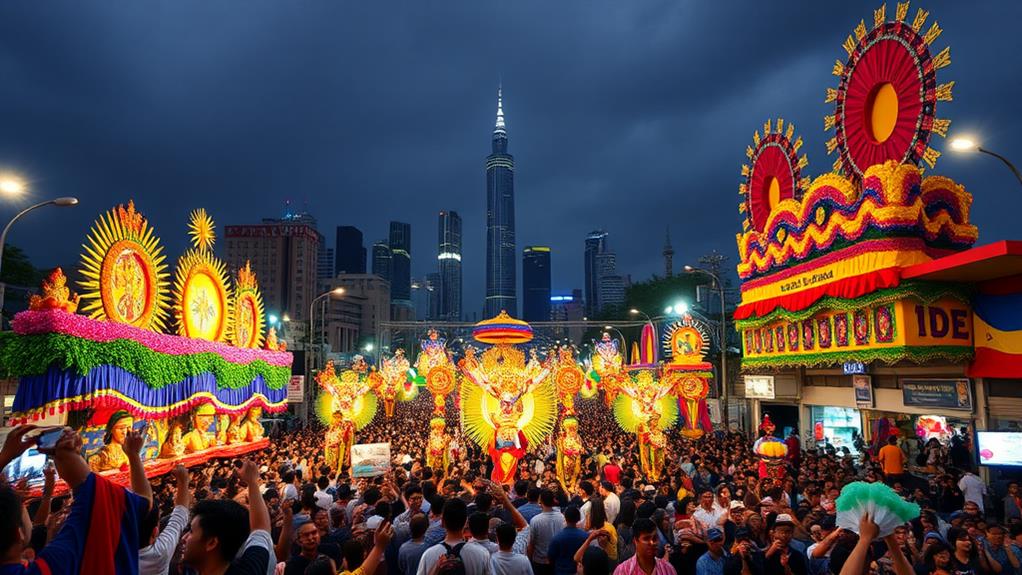
    The Sinulog Festival is an annual celebration held on the third Sunday of January in Cebu City, Philippines. This event attracts over 1 million visitors worldwide. The festival honors the Santo Niño (Child Jesus) and showcases the city's rich heritage and its transition to Christianity.

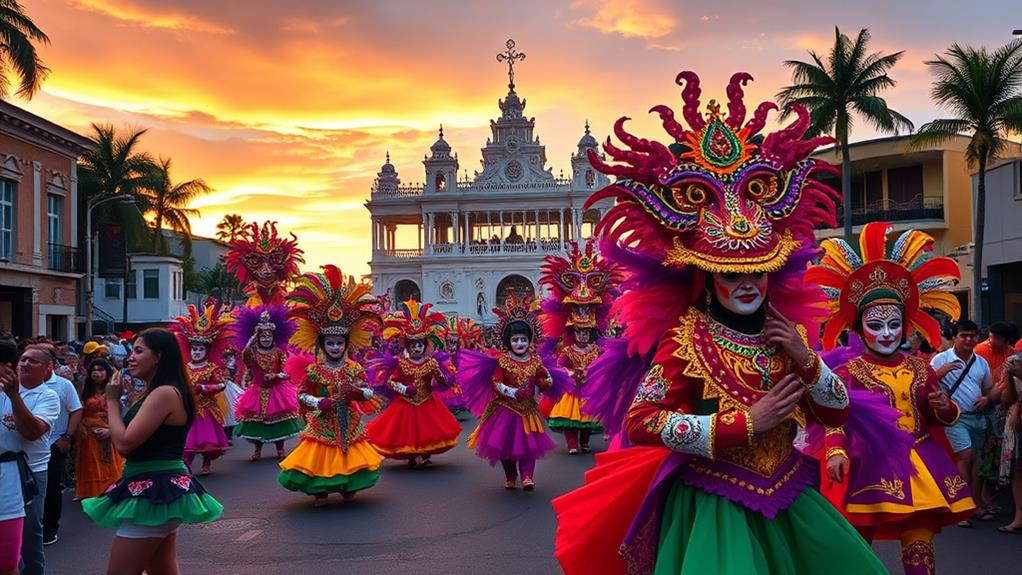
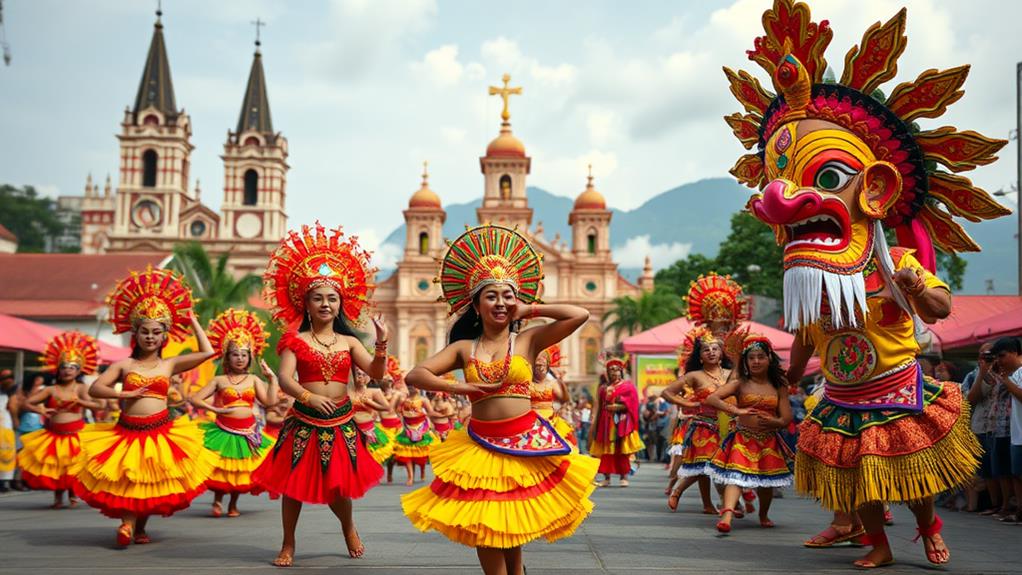
    The Grand Parade is the festival's main highlight. The parade features vibrant floats and street dancers performing the traditional Sinulog dance. This dance mimics the movement of water currents. The parade culminates at the Cebu City Sports Complex, where participants and spectators gather for a lively celebration filled with music and dance.

    Throughout the festival, visitors can experience cultural presentations, historical plays, and street parties that showcase Cebu's heritage.

    Some examples of these cultural events include performances by local school groups and historical reenactments of the arrival of Spanish conquistadors. With its rich cultural significance and infectious energy, the Sinulog Festival is an unforgettable experience that leaves a lasting impression on its visitors.

    Panagbenga Flower Festival

    The Panagbenga Flower Festival is a vibrant celebration held every February in Baguio City. This annual event is a testament to the city's resilience and recovery from the 1990 Luzon earthquake.

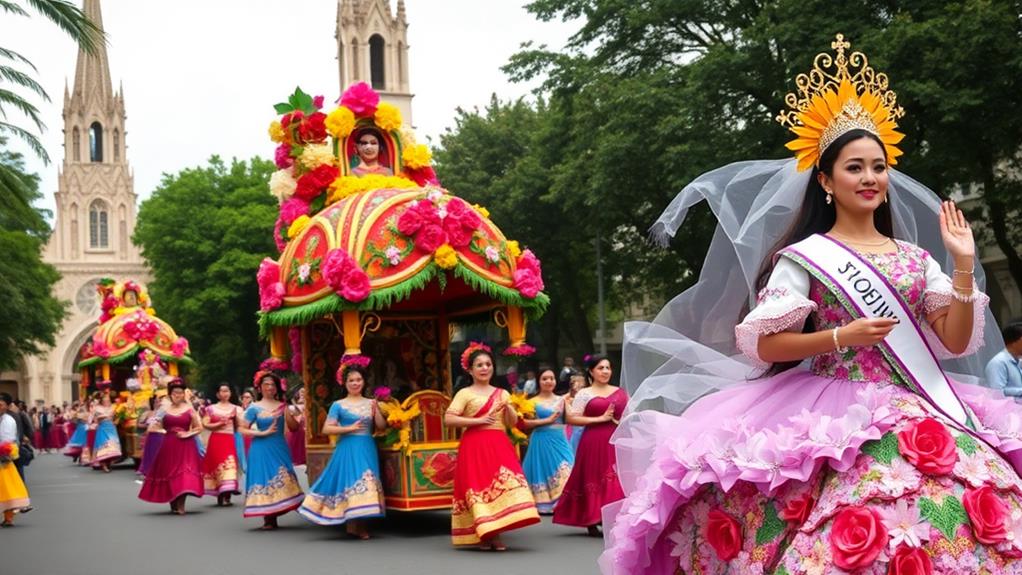
    The festival's name, Panagbenga, translates to "season of blooming" in the Kankanaey dialect, reflecting the city's rich cultural heritage. The grand float parade features elaborately decorated flower floats showcasing the city's artistic expression.

    Street dancing competitions also take place, highlighting the local dancers' skills and cultural traditions.

    The festival attracts thousands of tourists to Baguio City, promoting local artisans and businesses. Notable locations like Burnham Park and Session Road are transformed with colorful displays, contributing to the community's economic growth.

    The Panagbenga Flower Festival is a celebration of nature and art, showcasing the beauty of Baguio City and its people.

    This event is a must-attend celebration that will leave visitors in awe of the Philippines' natural beauty and artistic expression.

    Pahiyas Harvest Festival

    colorful rice granary festival

    The Pahiyas Harvest Festival takes place annually on May 15 in Lucban, Quezon, to honor San Isidro Labrador, the patron saint of farmers.

    The festival is a celebration of gratitude and abundance, showcasing the town's vibrant culture and rich heritage. The celebration begins with homes decorated with rice wafers, fruits, and handicrafts, creating a stunning display of the town's agricultural abundance.

    Locals participate in a parade wearing traditional costumes and decorated floats, adding to the festive atmosphere.

    The festival route changes annually to encourage diverse participation and promote local products. The festival features an array of local delicacies and street food, allowing visitors to savor the unique flavors of the region.

    The town transforms into a vibrant display of agricultural abundance, with an emphasis on showcasing the region's cultural heritage through music and dance.

    As part of the festival, local products are showcased alongside handicrafts and souvenirs, providing an opportunity for visitors to experience the region's unique traditions and customs.

    The warm hospitality of the locals is an integral part of the festival, making visitors feel welcome and included in the celebrations.

    The Pahiyas Harvest Festival is a must-attend event for anyone looking to experience the best of the Philippines' colorful festivals. With its stunning displays of agricultural abundance and rich cultural heritage, the festival offers a unique and unforgettable experience.

    Ati-Atihan Festival Traditions

    The Ati-Atihan Festival, celebrated every January in Kalibo, Aklan, is a tribute to the Santo Niño and a celebration of the indigenous Ati people and their early Malay settlers. Participants paint their faces with black soot as a sign of respect to the Ati people. This tradition is a unique aspect of the festival.

    The streets of Kalibo come alive with the rhythmic beat of drums and vibrant street dancing during the festival. Participants chant "Viva! Santo Niño!" and "Hala Bira!" while adorned in colorful costumes and traditional attire.

    The festival's grand parade showcases the rich heritage of Filipino culture with elaborate floats and cultural presentations.

    The Ati-Atihan Festival is more than just a celebration – it's an experience that will leave you with a deeper appreciation for the country's history and traditions.

    Joining in the vibrant street parties allows you to feel the energy and excitement of this world-renowned festival, recognized as the "Mother of Philippine Festivals."

    Dinagyang Festival Highlights

    vibrant cultural celebration showcased

    The Dinagyang Festival is a significant celebration in Iloilo City, Philippines, held on the 4th Sunday of January in honor of the Santo Niño. This annual event showcases the rich cultural heritage of the region through its grand parade and various cultural presentations. It attracts thousands of tourists who come to witness the vibrant streets of Iloilo City.

    Dinagyang incorporates a historical narrative of the barter trade between Malay settlers and the native Ati people, reflecting the area's history and traditions. This narrative is reenacted through a fluvial procession, featuring colorful boats that enhance the festive atmosphere.

    The festival's highlight is the Ati-Atihan dance contest, where participants display their elaborate choreography and creative costumes to compete for the top prize.

    The Dinagyang Festival is a unique blend of history, culture, and entertainment. It's an experience that leaves a lasting impression of Iloilo City's vibrant spirit.

    Kadayawan Festival Experience

    What is the Kadayawan Festival?

    The Kadayawan Festival is a celebration that brings together the rich cultural heritage of Mindanao's indigenous peoples. It's held in Davao City during the third week of August.

    What are the festival's highlights?

    One of the festival's main highlights is the Indak-Indak sa Kadalanan, a street dance parade that showcases traditional dances and elaborate costumes representing different tribes.

    Another highlight is the floral float parade, which displays intricate arrangements adorned with local flowers, fruits, and vegetables, highlighting the region's bountiful harvest.

    What does the Kadayawan Festival represent?

    The Kadayawan Festival is a symbol of unity and cooperation among the indigenous peoples of Mindanao. It also celebrates the unique traditions, cuisine, and artistry of Davao City.

    What can you expect during the festival?

    During the festival, you can expect to be part of a lively and festive atmosphere with thousands of local and international tourists in attendance.

    You'll have the opportunity to explore the festival grounds and discover the unique traditions and culture of Davao City, creating unforgettable memories.

    MassKara Festival Revelry

    vibrant masskara festival celebration

    The MassKara Festival is a grand celebration held every October in Bacolod, Philippines.

    The festival transforms the city into a vibrant spectacle of colors and rhythms. It features masked dancers wearing bright, smiling masks made from coconut husks and paper mache. The streets are filled with the sound of lively street parties, music concerts, and dance competitions.

    The grand parade is a highlight of the festival.

    Participants show off their colorful costumes and elaborate headdresses, adding to the festive atmosphere. The parade is an important part of the celebration, as it brings people together and fosters a sense of community.

    The MassKara Festival is a community-driven event.

    It promotes a sense of belonging and joy among the participants and spectators alike. The festival culminates in a street dance competition, where groups perform intricate routines to lively music. Their costumes showcase Bacolod's rich culture and heritage.

    The unique blend of revelry and community spirit makes the MassKara Festival unforgettable.

    The festival leaves a lasting impression on those who experience it, making it a must-visit event for anyone looking to immerse themselves in the rich culture of Bacolod.

    Higantes Festival Parade

    The Higantes Festival Parade takes place in Angono, Rizal, on November 23, in honor of its patron saint, San Clemente.

    The festival features vibrant parades with colorful costumes and giant papier-mâché figures. The streets come alive with the town's artistic talent and community spirit. This celebration showcases the town's passion for art, community, and cultural heritage.

    Key highlights of the festival include:

    • Giant figures, called "Higantes," that tower above the crowds, showcasing local artistry and creativity. These figures demonstrate the town's artistic talent and are a major part of the festival.
    • Vibrant costumes that add to the festival's kaleidoscope of colors and textures. Locals wear these costumes to participate in the parade and showcase their creativity.
    • Locals opening their homes to visitors, offering a unique glimpse into Angono's rich culture and hospitality. This tradition allows visitors to experience the town's culture firsthand.
    • The festival's evolution from a playful mockery against oppressive landlords to a significant cultural celebration. The festival has transformed over time to become a celebration of the town's heritage.
    • Thousands of visitors from around the world gathering to experience the Higantes Festival's magic. The festival attracts a large and diverse crowd.

    The Higantes Festival Parade is an unforgettable experience. It showcases the town's passion for art, community, and cultural heritage through its giant figures, colorful costumes, and infectious energy.

    What Makes These Festivals in the Philippines Must-Attend Events?

    The vibrant and colorful celebrations of Filipino festivals throughout the year make them must-attend events. From the lively Ati-Atihan Festival to the grand Sinulog Festival, each event showcases the rich cultural heritage of the Philippines. With traditional dances, parades, and delicious food, these festivals offer a unique and unforgettable experience.

    Moriones Festival Reenactments

    moriones festival reenactment celebrations

    The Moriones Festival: A Unique Cultural Experience

    The Moriones Festival, held in Marinduque during Holy Week, is a unique cultural experience that showcases the country's rich heritage through a reenactment of biblical stories related to the Passion of Christ.

    Key Elements of the Festival

    The festival features several key elements that make it a standout cultural experience. Colorful masks and costumes are worn by participants, known as "Moriones," who portray Roman soldiers. These masks and costumes are elaborate and embody the characters of the story.

    Reenactments and Processions

    The festival's highlight is the dramatic portrayal of Longinus, a blind centurion who was said to have pierced Jesus' side. This reenactment is part of a series of theatrical portrayals of biblical stories that take place throughout the festival.

    A grand procession showcases both theatrical and religious elements, making it a unique blend of artistry and devotion.

    Themes and Reflection

    The Moriones Festival is a celebration that encourages reflection on faith and devotion. Themes of penitence and devotion are woven throughout the festival, making it a deeply spiritual event.

    This celebration is a chance to experience the Philippines' unique expression of faith and culture.

    A Cultural Experience

    The Moriones Festival attracts thousands of locals and tourists who come to witness the reenactments and festivities.

    A unique blend of religion, history, and artistry makes this festival a standout cultural experience that showcases the country's rich heritage.

    Obando Fertility Rites Celebration

    The Obando Fertility Rites Celebration is an annual festival in the Philippines that takes place from May 17 to 19. This event honors three saints: San Pascual Baylon, Sta. Clara, and the Virgin Mary.

    The celebration features vibrant street dances that showcase the community's energy and creativity. These dances are characterized by participants wearing traditional attire and dancing to folk music.

    The event also includes colorful processions, where participants make offerings and seek blessings for fertility and family well-being.

    The main purpose of the Obando Fertility Rites Celebration is to seek blessings for fertility and family. Couples and families participate in this event to pray for a good harvest, healthy children, and overall well-being.

    The celebration is a unique blend of religious devotion and community involvement.

    The Obando Fertility Rites Celebration is a culturally significant event that highlights the community's deep-rooted beliefs and values surrounding fertility and family.

    This event attracts locals and tourists alike, showcasing the Philippines' rich cultural heritage and warm hospitality.

    Questions and Answers

    What Is the Importance of Celebrating Festivals in the Philippines?

    Celebrating festivals is crucial in the Philippines as it plays a significant role in preserving the country's vibrant cultural heritage. Festivals foster community bonding by bringing people together, regardless of their social status or background. For instance, the MassKara Festival in Bacolod City showcases the city's resilience and unity through street dancing and colorful costumes.

    Festivals also drive economic impact by attracting tourists and generating revenue for local businesses. The Sinulog Festival in Cebu City, for example, draws millions of visitors each year, boosting the local economy through hotel bookings, food sales, and souvenir purchases.

    Moreover, festivals showcase artistic expression through music, dance, and art. The Panagbenga Festival in Baguio City features elaborate flower arrangements and floats, highlighting the city's creativity and artistry.

    Lastly, festivals highlight historical significance, allowing Filipinos to honor their heritage and cultural traditions. The Fiesta de Santo Niño in Cebu City, for instance, commemorates the arrival of Spanish conquistadors in the Philippines and the introduction of Christianity.

    What Is the Top 1 Festival in the Philippines?

    The Sinulog Festival is the top festival in the Philippines. This festival is considered the largest and most culturally significant in the country, surpassing other notable festivals like the Ati-Atihan, Pahiyas, Panagbenga, Kadayawan, Obando Fertility Rites, and Malasimbo.

    What Is the Most Unique Festival in the Philippines?

    The most unique festival in the Philippines is Pahiyas. This annual celebration, held in Lucban, Quezon, is a vibrant display of Filipino culture and tradition. It features colorful parades, traditional dances, and local cuisines, showcasing the community's rich heritage. A distinctive aspect of Pahiyas is the decoration of houses with intricate designs made from rice wafers, fruits, and vegetables, highlighting the town's agricultural abundance.

    What Is the Biggest Religious Festival in the Philippines?

    The Sinulog Festival is the Philippines' biggest religious celebration. It is a significant event that highlights the country's vibrant faith and culture. Two other notable festivals, Ati-Atihan and Flores de Mayo, also showcase the Philippines' rich cultural heritage.

  • Incredible! Why This Philippine Festival Is a Must-See for Every Traveller

    Incredible! Why This Philippine Festival Is a Must-See for Every Traveller

    The Sinulog Festival in the Philippines is a unique blend of faith, culture, and revelry.

    It is held in Cebu City, where thousands of dancers in intricate costumes showcase the country's rich heritage.

    During the festival, lively street parties take place, featuring a fusion of traditional and modern cuisine. This fusion allows attendees to sample a variety of local dishes, such as lechon and sinugba.

    The traditional dances and stunning floats are key attractions of the festival. One notable dance is the Sinulog dance, which involves intricate footwork and rhythmic movements. The floats, on the other hand, are decorated with colorful flowers, lights, and other ornaments.

    The festival has captured the hearts of travelers worldwide due to its vibrant celebration of faith and culture. It is considered a must-see spectacle for every traveler visiting the Philippines.

    Vibrant Parades and Floats

    colorful celebrations and processions

    The Sinulog Festival parade is a grand showcase of Filipino culture and artistic talent.

    The Sinulog grand parade in Cebu features thousands of dancers dressed in intricate costumes, highlighting the Philippines' rich cultural heritage. The parade is a spectacle that showcases the country's traditions and stories through performances.

    Vibrant floats are one of the main highlights of the Sinulog Festival parade.

    These floats are designed with stunning artistry and creativity, featuring bright colors and creative designs that make for a visually stunning experience. The floats are a photographer's paradise, offering many opportunities to capture stunning images.

    The floats' designs often reflect the country's cultural heritage and traditions.

    The parade features dance troupes competing to present the best choreography.

    Dance troupes compete to showcase their traditional attire and choreography, highlighting the rich artistic talent within the local community. The parade's dynamic atmosphere is filled with color and energy, reflecting Filipino traditions and stories.

    The festival's lively floats and performances attract international attention, making the Sinulog Festival a significant event in Cebu that draws travelers from around the world.

    The Sinulog grand parade offers an unforgettable cultural experience.

    The festival provides a unique opportunity to experience Filipino culture and traditions firsthand. The parade's performances and floats leave a lasting impression, making it an event that travelers will remember long after their trip to the Philippines.

    Lively Street Parties and Food

    The Sinulog Festival transforms Cebu City into an immersive street party experience. Thousands of attendees gather to celebrate the festival, creating an infectious energy.

    The streets are lined with food stalls, offering a variety of local delicacies such as lechon and fish balls. These dishes allow visitors to indulge in authentic Filipino cuisine.

    The festival features music stages with a mix of traditional and contemporary tunes. This creates an exhilarating atmosphere that encourages attendees to dance and move.

    The lively environment showcases the warmth and hospitality of the Filipino people, making both locals and tourists feel welcome.

    As a food enthusiast, you'll experience a gastronomic adventure that reflects the rich flavors of Filipino culture. The festival's unique blend of music, food, and revelry makes it a must-experience for every traveler.

    The Sinulog Festival's dynamic scenes and culinary delights will leave you craving more of the local food and vibrant street party experience.

    Rich Cultural and Historical Significance

    cultural and historical importance

    The Sinulog Festival holds significant cultural and historical importance, showcasing the Philippines' deep Catholic heritage. This iconic event honors Santo Niño, symbolizing the country's strong Catholic roots. The festival's origins date back to the 16th century during Spanish colonization.

    The Philippines' Catholic heritage is strong, with 85% of the population identifying as Catholic. The Sinulog Festival is a prime example of this heritage, with its origins tracing back to the arrival of Spanish conquistador Miguel López de Legazpi in 1565.

    The festival's cultural significance can be seen in its unique blend of pre-Hispanic and colonial influences. The Sinulog dance, which mimics the flow of the river, represents the acceptance of Christianity. This blend of cultures is a testament to the country's rich history and its ability to adapt to different influences.

    The Sinulog Festival also fosters community involvement and cultural exchange. The festival brings together people from all walks of life, promoting unity and cultural understanding. The event is recognized by ASEAN, making it a significant cultural hub in the region.

    The festival's cultural importance is also evident in its local delicacies and street parties. The event features traditional Filipino food, such as lechon and sinugba, which are often served during celebrations. These local delicacies are an integral part of the festival, showcasing the country's rich culinary heritage.

    Stunning Religious Processions

    The Sinulog Festival features stunning religious processions that showcase the locals' deep-rooted faith and traditions. These processions are a serene contrast to the festival's vibrant festivities, allowing participants and spectators to reflect on the celebration's significance.

    The Fluvial Parade is a highlight of the festival, where the Santo Niño statue is carried along the waters, symbolizing the spiritual journey of faith. This procession is a unique expression of the locals' devotion to their faith.

    The Sinulog Festival's religious processions can be categorized into four main types:

    Religious Procession Description Significance
    Fluvial Parade The Santo Niño statue is carried along the waters Symbolizes the spiritual journey of faith
    Street Procession Participants wear traditional attire, carrying statues of saints Honors the Santo Niño, believed to be the protector of Cebu
    Pilgrimage Devotees walk to the Basilica del Santo Niño, praying and singing hymns Demonstrates the locals' deep-rooted Catholic traditions
    Holy Mass A special mass is held in honor of the Santo Niño Marks the culmination of the festival's religious activities

    The Sinulog Festival's religious processions are a testament to the enduring faith and traditions of the Filipino people.

    Unique Traditional Dances

    cultural heritage dance forms

    The Sinulog Festival in Cebu, Philippines, features unique traditional dances that are an integral part of the celebration. These dances showcase the rich cultural heritage and artistry of the Philippines through intricate, vibrant costumes and elaborate headdresses.

    The Sinulog Festival's traditional dances are truly unforgettable due to three key elements.

    The festival's dance troupes competing for the best choreography results in dynamic and creative displays of talent.

    Dance performances are accompanied by traditional Sinulog music, which enhances the festive atmosphere and immerses attendees in the cultural experience.

    The unique dance itself mimics the flow of water, symbolizing the acceptance of Christianity and honoring the Santo Niño.

    The Sinulog Festival's traditional dances create a lively environment that captivates both local and international audiences.

    This infectious energy makes the festival a highlight in the Philippines.

    Authentic Filipino Cuisine

    Sinulog Festival: A Celebration of Authentic Filipino Cuisine

    The Sinulog Festival in Cebu showcases the rich flavors of Filipino food culture through various local delicacies. The festival atmosphere enhances the gastronomic experience, allowing you to indulge in traditional meals while surrounded by lively street parties.

    Traditional Filipino Dishes

    Filipino cuisine is a fusion of pre-Hispanic and colonial influences. At the Sinulog Festival, you can sample traditional dishes that highlight this unique blend of flavors.

    • Lechon: A whole pig slow-cooked to perfection, typically served on special occasions. The price range for Lechon at the festival is PHP 50-100.
    • Adobo: A savory stew made with marinated meat or seafood, showcasing the Spanish influence on Filipino cuisine. The price range for Adobo at the festival is PHP 50-100.

    Other Local Delicacies

    In addition to traditional Filipino dishes, the festival also offers various local delicacies and snacks.

    Dish Description Price
    Fish Balls Crispy fried balls filled with fish paste PHP 20-50
    Sinulog Sweet Treats Assorted local desserts like turon and leche flan PHP 50-100
    Batchoy Thick noodle soup made with pork organs and crushed pork cracklings PHP 20-50

    Engaging with Local Vendors and Artisans

    The abundance of food options during Sinulog provides a chance to engage with local vendors and artisans, deepening your appreciation for Filipino culinary traditions and hospitality.

    What Makes the Philippine Festival Stand Out Among Filipino Festivities?

    The Philippine festival stands out among other Filipino festivities due to its vibrant and colorful celebrations. The rich cultural heritage and traditions showcased in these events offer unique and unforgettable filipino festival experiences. From traditional dances to mouth-watering cuisine, these festivals are a must-visit for anyone wanting to immerse themselves in Filipino culture.

    Immersive Community Experience

    engaging collaborative social interaction

    The Sinulog Festival in Cebu offers a unique immersive community experience. This experience brings you closer to the heart of Cebu's vibrant culture, making you feel like part of a larger family celebrating the Santo Niño.

    The festival's community spirit is evident in the streets, where locals and visitors come together to celebrate. Locals and visitors bond over their shared excitement for the festival, creating lasting connections and memories. The Filipino people's welcoming nature makes visitors feel at home, and the immersive experience provides a deeper understanding of Cebu's culture.

    You can experience the best of Cebu's community spirit in various ways. Learning from local artisans is one way to engage with the community. Interactive workshops allow you to learn about traditional crafts and techniques. For example, you can learn how to make traditional Filipino clothing or accessories.

    The community also showcases its rich cultural heritage through interactive displays and exhibits. These exhibits provide a glimpse into Cebu's history and traditions. You can learn about the significance of the Santo Niño and the importance of the Sinulog Festival in Cebu's culture.

    Street parties are another way to experience the community spirit. Music, dance, and food bring everyone together, creating a lively atmosphere that's hard to resist. These parties are an excellent opportunity to bond with locals and other visitors.

    Festival Activities and Events

    The Sinulog Festival offers a diverse range of activities and events that showcase Cebu's rich cultural heritage.

    These activities include historical art exhibits, beauty pageants, and singing contests, providing entertainment throughout the month-long celebrations.

    For example, the street performances feature dance troupes in traditional attire, showcasing their best choreography. This event adds to the festival's lively atmosphere and is a must-see for both locals and visitors.

    The grand parade is the culmination of the festival, featuring thousands of dancers in intricate costumes and vibrant floats.

    This visually stunning spectacle showcases the unity and cultural richness of the Sinulog Festival. The parade is a testament to Cebu's cultural heritage, highlighting the significance of the festival.

    By participating in the festival activities and events, attendees gain a deeper appreciation for the cultural heritage of Cebu and the Sinulog Festival.

    Additional events, such as fireworks displays and photo contests, enhance the festive spirit and provide excitement for attendees.

    Questions and Answers

    Why Is the Festival Important to the People in the Philippines?

    The festival's importance to Filipinos lies in its cultural significance. This cultural significance is rooted in the fact that many festivals in the Philippines are centered around Catholic traditions and celebrations, highlighting the country's deep Catholic heritage. For instance, the Sinulog Festival in Cebu and the Ati-Atihan Festival in Kalibo are just a few examples of festivals that foster community bonding by bringing people together to celebrate their faith and showcase their resilience. These festivals also serve as a way to celebrate historical traditions, allowing Filipinos to honor their past and embody the hopes and aspirations of the community.

    What Makes Philippine Festival Unique?

    Unique aspects of Philippine festivals are rooted in their vibrant cultural expressions and community celebrations.

    Philippine festivals are distinct due to their blend of cultural traditions and expressions. These celebrations unite people across generations, showcasing the country's rich heritage. For instance, the Ati-Atihan Festival in Kalibo, Aklan, is a prime example of a vibrant cultural expression, where participants wear colorful costumes and adorn themselves with black body paint to honor the arrival of Malay datus in the island of Panay.

    These festivals also feature colorful parades and festivities that bring the community together. The MassKara Festival in Bacolod City, for example, highlights the city's resilience and gratitude with its bright and elaborate costumes, music, and street dancing. This festival promotes unity and showcases the city's heritage through its various events and activities.

    What Is the Most Famous Festival in the Philippines?

    The Sinulog Festival is the most famous festival in the Philippines. It takes place in Cebu City and attracts thousands of people with its vibrant dancers and cultural displays. This festival showcases the country's rich heritage and is considered one of the grandest festivals in the Philippines, rivaling other notable celebrations like the Ati Atihan Festival and Pahiyas Festival.

    What Can You Say About the Festivals in the Philippines?

    Festivals in the Philippines showcase the country's rich cultural heritage. Each community celebration features traditional music, dance, and costumes, weaved together to create an intricate tapestry of identity, history, and joy. For example, the Sinulog Festival in Cebu celebrates the country's Christian heritage with vibrant parades and street dancing, while the MassKara Festival in Bacolod showcases colorful masks and costumes. These festivals are an integral part of the country's identity, highlighting the unique traditions and customs of each community.

  • From Samal to Sinulog: Inside the Philippines’ Most Unique Festivals

    From Samal to Sinulog: Inside the Philippines’ Most Unique Festivals

    The Philippines is home to a diverse range of unique festivals, with over 42,000 celebrations taking place annually. These festivals showcase the country's rich history, cultural heritage, and community spirit.

    Some of the most notable festivals in the Philippines include those honoring Santo Niño, a representation of the Child Jesus, which is an integral part of the country's Catholic heritage. The Sinulog festival, for example, is a grand celebration of Santo Niño, featuring colorful street dancing and processions.

    In addition to festivals honoring Catholic traditions, the Philippines also celebrates various agricultural practices and seasonal events. The blooming season, for instance, is marked by festivals that showcase the country's vibrant flora and fauna.

    Harvest festivals, on the other hand, give thanks for the country's bountiful agricultural produce.

    These festivals not only highlight the Philippines' diverse traditions but also demonstrate the country's infectious community spirit. Each festival offers a unique experience that reveals a new side of the nation.

    Festivals Across the Philippines

    vibrant philippine festival celebrations

    The Philippines is home to a vast array of vibrant cultural festivals, with over 42,000 celebrations taking place annually. These festivals showcase the country's rich cultural heritage, reflecting local traditions, cultural practices, and religious customs.

    The Sinulog festival is a prime example, transforming Cebu's streets into a lively street dancing competition featuring colorful costumes and performances. This annual festival highlights the local culture and traditions of Cebu, with its unique blend of Spanish and indigenous influences.

    Beyond Sinulog, other festivals celebrate regional culture, such as the Panagbenga Flower Festival in Baguio, which showcases regional flora through grand floats and street performances. This festival not only promotes community engagement but also supports local businesses and economic growth.

    The Philippines is also home to festivals that celebrate indigenous cultures, such as the Kaamulan Festival in Bukidnon, which honors the culture of seven indigenous tribes with thanksgiving rituals, traditional dances, and communal events.

    These festivals foster community spirit, promote cultural heritage, and create a unique experience for attendees.

    Regional Festival Highlights

    The Philippines' rich cultural tapestry can be experienced by immersing oneself in its vibrant regional festivals. Each celebration offers a unique glimpse into the country's diverse cultural heritage.

    Regional festivals in the Philippines showcase the country's diverse cultural heritage through various activities and displays. For instance, the Kadayawan Festival in Davao City features street dancing, floral floats, and local produce showcases.

    In contrast, the Ati-Atihan Festival in Kalibo, Aklan, is known for its tribal costumes, body painting, and lively street dancing.

    Other notable regional festivals include the Panagbenga Festival in Baguio City, which highlights grand flower floats, street dancing, and floral heritage, and the Pahiyas Festival in Lucban, Quezon, featuring vibrant displays made from rice and agricultural products.

    The Philippines' love for vibrant displays, local produce, and communal eating is a common thread among these festivals. This is evident in the way each festival celebrates the unique character of its host city or town, while collectively contributing to the country's rich cultural heritage.

    Celebration of Filipino Culture

    filipino cultural celebration event

    Filipino culture is rich in traditions and customs, passed down through generations. The country's vibrant festivals showcase this unique cultural identity, allowing visitors to experience its diverse celebrations firsthand.

    For instance, the Sinulog festival in Cebu City blends Catholic and indigenous practices, featuring vibrant street dancing, colorful costumes, and energetic music.

    Festivals in the Philippines promote cultural diversity and local customs. Each celebration highlights unique traditions and customs.

    The Panagbenga Flower Festival in Baguio, for example, promotes local craftsmanship and pride through beautiful floral floats and traditional performances. Street parties during these celebrations bring communities together, fostering a sense of camaraderie.

    Participating in Filipino festivals offers a unique way to experience the country's rich cultural heritage. By immersing oneself in these celebrations, visitors can gain a deeper understanding of the country's traditions and local customs.

    This firsthand experience is invaluable in appreciating the Philippines' vibrant cultural identity.

    Historical Significance of Festivals

    Philippine festivals are a cultural melting pot that reveals the country's rich history and cultural heritage. The festivals in the Philippines showcase a blend of traditions that highlights the nation's cultural and religious heritage.

    For instance, the Sinulog Festival in Cebu City honors the Santo Niño, which symbolizes the historical acceptance of Christianity by the Cebuano people. This celebration has evolved into a significant cultural event since its inception in the 1980s.

    The Ati-Atihan in Kalibo, Aklan, is another example of vibrant religious observances rooted in historical events. This festival originated from the peaceful settlement between Malay settlers and the Ati people.

    The Feast of the Black Nazarene in Quiapo, Manila, dates back to 1787, with the statue believed to possess miraculous powers. Even modern festivals like the Panagbenga in Baguio City have historical significance, created as a response to the 1990 earthquake to boost tourism and revitalize the local economy through cultural expression.

    These festivals demonstrate the historical significance of these celebrations, which continue to play a vital role in shaping the country's identity. They not only showcase the nation's cultural heritage but also serve as a reminder of its rich history and traditions.

    Economic Impact of Local Festivals

    local festivals boost economy

    Local festivals in the Philippines significantly contribute to the country's economy. Festivals attract millions of visitors, generating substantial revenue through tourism. For instance, the Sinulog Festival in Cebu City produces an estimated ₱1 billion in economic impact annually. This surge in tourism creates job opportunities, particularly in the hospitality and food sectors.

    The economic activity generated by festivals can increase sales for local businesses by up to 50%. During festival months, some regions experience a notable surge in revenue.

    Government support for major festivals, including funding and infrastructure improvements, enhances accessibility and the overall visitor experience. This support further drives economic growth.

    Festivals promote local products and crafts, creating a sustainable market for artisans. By supporting local festivals, you contribute to the growth of local businesses and the community as a whole.

    The economic impact of local festivals is a key reason why they continue to thrive in the Philippines.

    What Makes the Festivals in the Philippines Unique and Worth Visiting?

    The Philippine festival mustsee are known for their vibrant colors, lively music, and rich cultural traditions. From the Ati-Atihan to the Sinulog Festival, each celebration showcases the unique heritage of the Philippines. Visitors can witness street dancing, elaborate costumes, and delicious local cuisine, making these festivals truly one-of-a-kind experiences.

    Preserving Cultural Heritage Through Festivals

    The Philippines' rich cultural heritage is preserved through its vibrant local festivals.

    The country's unique traditions are woven into the fabric of these events, creating a captivating experience for visitors. For instance, the Ati-Atihan Festival showcases the blend of indigenous practices and Christian traditions through lively street dancing and tribal costumes. This fusion of cultures not only highlights the country's diversity but also reinforces community ties and fosters pride in local heritage.

    Major festivals play a crucial role in preserving cultural heritage.

    Festivals like Sinulog and Kaamulan feature historical reenactments, traditional music, and local crafts, emphasizing the importance of preserving cultural heritage. These events provide a platform for local artisans to showcase their skills, ensuring the continuation of traditional arts and crafts within the community.

    For example, the Sinulog Festival in Cebu features a grand parade with elaborate costumes and floats, showcasing the city's rich history and culture.

    Festivals also promote sustainable practices and preserve traditional agricultural methods.

    Pahiyas and Panagbenga festivals are examples of events that highlight local agricultural products and promote sustainable practices. These festivals not only preserve traditional agricultural methods but also showcase the country's culinary heritage.

    For instance, the Pahiyas Festival in Lucban, Quezon, features colorful rice cakes and other local delicacies, promoting the town's agricultural products and culinary traditions.

    By attending these festivals, visitors can gain a deeper appreciation for the Philippines' rich cultural heritage and contribute to its preservation.

    Unique Festivals to Experience Year-Round

    year round unique festivals

    The Philippines Celebrates Vibrant Festivals Year-Round

    The Philippines hosts various unique festivals throughout the year, showcasing its diverse cultural heritage. The Panagbenga Festival in February and the Kadayawan Festival in August are two notable examples.

    The Panagbenga Festival features grand flower floats and street dancing, attracting millions of visitors to Baguio City.

    The Kadayawan Festival, held in Davao City, honors the rich indigenous culture and bountiful harvests with vibrant street performances and showcases of local produce.

    Other notable festivals include the Pahiyas Festival, the Ati-Atihan Festival, and the Moriones Festival.

    The Pahiyas Festival in Lucban, Quezon, showcases colorful decorations made from rice and agricultural products, reflecting the town's agricultural heritage and creativity.

    The Ati-Atihan Festival in Kalibo, Aklan, honors Santo Niño with lively street dancing, tribal costumes, and drumbeats.

    The Moriones Festival in Marinduque features participants in biblical Roman soldier costumes, reenacting the passion of Christ through street processions and performances.

    These festivals offer a glimpse into the Philippines' history, customs, and values, making them a must-visit for any traveler.

    Questions and Answers

    What Is the Most Unique Festival in the Philippines?

    The Philippines' most unique festival is a subject of debate, but some notable contenders include the Pahiyas Festival, Ati-Atihan Festival, and Panagbenga Festival.

    The Pahiyas Festival features the Bamboo Dance, where performers skillfully avoid getting caught between clashing bamboo poles, while the Ati-Atihan Festival showcases tribal beats, featuring indigenous groups performing in traditional attire and costumes.

    The Panagbenga Festival, on the other hand, is a celebration of the city of Baguio's flower industry, with a parade of colorful floats adorned with flowers.

    What Makes Sinulog Unique Than Other Festivals?

    What sets Sinulog apart from other festivals is its unique blend of cultural significance and traditional dances.

    This distinctiveness is showcased through vibrant street parades, where participants wear colorful costumes that reflect the city's rich heritage. The lively musical performances that accompany these parades are another key aspect of the festival, adding to its energy and excitement.

    A key aspect of Sinulog's uniqueness is its deep religious devotion. The festival is centered around the celebration of the Sto. Niño, a statue of the child Jesus that was given to the ruler of Cebu by Spanish conquistador Ferdinand Magellan in 1521. This historical significance is still honored today through the festival's traditional dances and rituals, which are performed in honor of the Sto. Niño.

    What Is the Top 10 Festival in the Philippines?

    The Philippines' top festivals reflect its rich cultural heritage.

    Some of the top festivals in the Philippines include Pahiyas, known for its vibrant decorations and food offerings, Ati-Atihan, which commemorates the arrival of Malay datus in the island of Panay, and Panagbenga, a flower festival that showcases the city's beautiful flowers and traditions.

    Other notable festivals are Kadayawan, which celebrates the harvest season, Obando Fertility, a festival that promotes fertility and good health, Flores de Mayo, a month-long celebration of flowers and the Virgin Mary, MassKara, a festival of smiles and colorful masks, and Malasimbo, a music and arts festival.

    The top 10 festivals in the Philippines are rounded out with Zamboanga Hermosa, a festival that celebrates the city's rich culture and history, and Sinulog, a vibrant festival that honors the Santo Niño.

    What Is Sinulog Festival in the Philippines?

    The Sinulog Festival is a significant celebration in the Philippines, specifically in Cebu, honoring the Santo Niño, a Roman Catholic title for the child Jesus. This festival showcases the city's rich history and unique cultural heritage through various forms of expression.

    Stunning costumes and traditional dances are highlights of the festival. Participants wear vibrant and intricately designed outfits, often adorned with feathers, sequins, and other decorative elements. The traditional dances, such as the Sinulog dance, are performed to the beat of lively drums and other musical instruments, showcasing the city's dynamic energy.

    The festival also features mouthwatering food, which is an essential part of the celebration. Traditional Cebuano dishes, such as lechon and sinugba, are often served during the festival, giving attendees a taste of the city's rich culinary heritage.

  • Filipino Festivities You Won’t Believe Exist – And Why You Should Experience Them

    Filipino Festivities You Won’t Believe Exist – And Why You Should Experience Them

    The Philippines is home to numerous unique festivities that showcase its rich cultural heritage. The Obando Fertility Rites, Baliw-Baliw Festival, and Taong Putik Festival are examples of these lesser-known celebrations. These festivals highlight the blend of indigenous and Spanish influences that define Filipino culture.

    One notable aspect of these festivities is their distinct blend of traditional and cultural practices. For instance, the Obando Fertility Rites involve dancing and song rituals to honor the town's patron saints.

    In contrast, the Baliw-Baliw Festival features cross-dressing and comedic performances. Meanwhile, the Taong Putik Festival involves participants covering themselves in mud to symbolize their devotion to Saint John the Baptist.

    These festivals not only promote community bonding but also emphasize the importance of preserving cultural roots. By participating in or witnessing these events, one can gain a deeper understanding of the Filipino spirit and culture.

    Preserving traditions and cultural roots is crucial in maintaining a strong sense of community and identity.

    Unique Filipino Celebrations

    vibrant filipino cultural festivals

    Unique Filipino celebrations showcase the country's rich cultural heritage, blending spirituality, tradition, and community participation.

    Filipino celebrations often draw inspiration from patron saints. The Obando Fertility Rites in Obando, observed from May 17-19, are a prime example, where locals perform dance and song rituals to pray for fertility and health.

    Another celebration that highlights community participation and cultural expression is the Baliw-Baliw Festival in Olango, which honors San Vicente Ferrer with unique rituals that include cross-dressing men and animal fights.

    The Philippines has many other unique celebrations that reflect the local culture. The Taong Putik Festival in Aliaga features participants dressed in mud and leaves, while the San Pedro Cutud Lenten Rites involve devotees being crucified as penance during Holy Week.

    Other notable celebrations include the Turogpo Festival in Leyte, which showcases traditional carabao fights, emphasizing the importance of teamwork and camaraderie in the community.

    Festivals and Cultural Significance

    The Philippines' numerous festivals significantly shape the country's identity and heritage.

    Festivals often center around patron saints, reflecting the strong influence of Catholicism in Filipino culture. This is evident in events like the Sinulog and Ati-Atihan festivals, which attract millions of visitors each year.

    These festivals showcase the country's rich cultural heritage in several ways:

    1. Festivals preserve traditions by engaging locals and tourists in traditional practices rooted in historical narratives and community spirit. The Taong Putik Festival is an example, where locals and tourists participate in traditional practices together.
    2. Cultural festivals serve as a platform for fostering community bonds. Activities such as street dancing competitions and culinary contests promote unity and cooperation among community members.
    3. Festivals stimulate local economies through tourism, engage farmers in agricultural showcases, and promote sustainable practices. The Banana Festival is an example, where festivals contribute to the local economy and promote sustainable agricultural practices.

    Exploring Local Traditions

    cultural heritage discovery journey

    The Philippines boasts a rich cultural heritage, with numerous local traditions that highlight the Filipino people's creativity and resilience. Local festivals and customs play a significant role in showcasing this heritage.

    Beyond grand festivals, the country has unique customs and practices worth exploring. For example, the Banana Festival in Baco highlights sustainable farming practices, while the Turogpo Festival in Leyte emphasizes teamwork and camaraderie through traditional carabao fights. These festivals demonstrate the importance of community and environmental awareness in Filipino culture.

    Other local traditions offer insight into the country's deep cultural and religious practices. The San Pedro Cutud Lenten Rites are a prime example, showcasing the Filipino people's devotion during Holy Week. Meanwhile, the Obando Fertility Rites feature dance and song rituals that highlight the region's deep-rooted customs.

    These traditions underscore the significance of faith and tradition in the Filipino way of life. Exploring these local customs provides a deeper understanding of the Filipino people's values and way of life.

    Each tradition offers a glimpse into the country's complex cultural landscape, making them a fascinating aspect of the Filipino experience. By examining these customs, one can gain a broader understanding of the Philippines' rich cultural heritage.

    Vibrant Arts and Entertainment

    The Philippines' diverse arts and entertainment scene is reflected in numerous festivals throughout the year.

    These festivals showcase music, dance, and interactive art installations, promoting cultural appreciation and entertainment.

    Some notable festivals include the Wanderland Music and Arts Festival, the Malasimbo Lights and Dance Festival, and the International Reggae Festival.

    The Wanderland Music and Arts Festival features a fusion of indie music and interactive art installations.

    The Malasimbo Lights and Dance Festival showcases funk, hip-hop, and electronic music while promoting eco-tourism.

    The International Reggae Festival celebrates both local and international reggae artists while fostering cultural appreciation and community engagement.

    Beyond music festivals, the Philippines also hosts beauty pageants and traditional games that highlight the country's rich cultural heritage.

    The Turogpo Festival, for instance, features traditional games and sports, while the Baliw-Baliw Festival showcases unique rituals that represent local culture.

    These events offer a glimpse into the Philippines' vibrant arts and entertainment scene.

    Filipino Food and Cuisine

    delicious filipino culinary traditions

    Filipino cuisine is a unique blend of Malay, Chinese, Spanish, and American flavors. This cultural diversity is reflected in the country's various dishes, such as adobo, kare-kare, and sinigang.

    Rice is a staple in every meal, often accompanied by traditional side dishes like bagoong (fermented shrimp paste) or pickled vegetables.

    Festivals showcase the best of local cuisine. Street food like lechon (roast pig), lumpia (spring rolls), and halo-halo (a mixed dessert) are highlights of culinary tourism.

    The concept of "kamayan," or eating with hands, is a cherished tradition in Filipino culture, emphasizing communal dining experiences and the importance of sharing food among family and friends.

    Each region in the Philippines boasts its own signature dishes and flavors. This diversity makes each festival a culinary journey to look forward to.

    Regional Festivals to Visit

    The Philippines' vibrant festival season showcases the country's diverse culture and rich heritage through various regional celebrations.

    Each region boasts its own unique traditions and customs. These unique customs make every festival a one-of-a-kind experience.

    Regional festivals offer opportunities to experience the country's diverse culture.

    You can revel in the festive atmosphere, indulge in local delicacies, and participate in the merriment.

    Regional festivals to visit include:

    1. Parada ng Lechon in Batangas is a celebration of culinary tourism and local traditions. It takes place on June 24 during the San Juan feast day, featuring a vibrant parade of elaborately decorated roasted pigs.
    2. The Banana Festival in Baco promotes sustainable practices and engages local farmers. Celebrated on March 18-19, this festival showcases various banana types through cook-fests, street dancing, and culinary exhibits.
    3. Malasimbo Lights and Dance Festival in Puerto Galera attracts participants from over 30 countries. This electronic music festival, which takes place from March 24-26, promotes eco-tourism and environmental conservation.

    History Behind the Celebrations

    origins of celebration traditions

    The Philippines' cultural heritage is rooted in its festival scene, which reflects its complex evolution.

    The country's vibrant festivals have origins that date back to pre-colonial traditions, significantly influenced by Spanish colonization. This blending of cultures resulted in unique celebrations that integrate indigenous and Catholic practices.

    Many festivals, such as the Sinulog and Ati-Atihan, commemorate historical events or the introduction of Christianity to the Philippines. These events showcase the fusion of local customs and Catholicism. For example, the Sinulog Festival in Cebu City celebrates the arrival of Christianity in the Philippines, while the Ati-Atihan Festival in Kalibo, Aklan, honors the arrival of Malay datus in the island of Panay.

    The Turogpo Festival, on the other hand, celebrates local matchmaking traditions and highlights the agricultural practices that have been part of Filipino life for centuries. This festival in Caraga, Davao Oriental, demonstrates the importance of agriculture in the country's culture.

    Other events, like the San Pedro Cutud Lenten Rites, demonstrate deep-rooted spiritual beliefs that date back to the Spanish colonial era. Participants engage in dramatic reenactments of penance, showcasing the country's strong Catholic faith.

    What are some unique Filipino festivals that I can fully immerse myself in?

    Experience the vibrant culture and rich traditions of the Philippines by immersing in Philippine festivals. Join the Ati-Atihan Festival in Aklan for colorful parades and street dancing. Witness the Panagbenga Festival in Baguio with its stunning flower floats. Or celebrate the Sinulog Festival in Cebu with its lively processions and religious rituals. immerse in philippine festivals and create unforgettable memories.

    Why You Should Attend

    Filipino festivals offer an unparalleled opportunity to immerse yourself in the country's rich cultural heritage, vibrant traditions, and warm hospitality. These celebrations showcase the country's history and values.

    Experience a unique cultural heritage by attending festivals like the Wanderland Music and Arts Festival, which features a fusion of music and arts, or the San Pedro Cutud Lenten Rites, known for its dramatic Lenten rites.

    Attending Filipino festivals also allows you to engage with local communities. For example, the Turogpo Festival features traditional games that you can participate in, while the Baliw-Baliw Festival showcases unique rituals and community participation.

    One of the highlights of Filipino festivals is the opportunity to indulge in local cuisine. You can savor local delicacies and drinks while enjoying the festivities, which are often centered around food.

    Filipino Festivals Around World

    celebrating filipino culture globally

    Filipino Festivals Celebrated Globally

    Filipino communities around the world celebrate vibrant festivals that showcase the Philippines' rich cultural heritage. These events weave traditional Filipino customs into the fabric of international festivals.

    Examples of Filipino Festivals Around the World

    Festival Name Location Description
    Sinulog Festival Cebu, Philippines; Toronto, Canada; New York, USA Honors the arrival of Christianity in the Philippines, specifically the devotion to the Virgin Mary.
    International Reggae Festival Manila, Philippines A fusion of Filipino and reggae music, promoting cultural diversity and artistic expression.
    Parada ng Lechon various locations Showcases the country's culinary traditions through a roasted pig parade.

    | Obando Fertility Rites | Obando, Philippines; San Francisco, USA | Reinforces family bonds and cultural practices by connecting Filipinos worldwide to their ancestral customs.

    The Significance of Filipino Festivals

    These festivals promote cultural diversity and create a sense of unity among Filipinos worldwide. By attending these events, one can gain a deeper understanding of the Philippines' rich cultural heritage and the people's love for celebration and tradition.

    Questions and Answers

    What Is the Most Unique Festival in the Philippines?

    The Philippines has numerous unique festivals, each showcasing its diverse cultural heritage. Two of the most notable ones are the Taong Putik Festival and the San Pedro Cutud Lenten Rites.

    The Taong Putik Festival, celebrated in the town of Aliaga, Nueva Ecija, features participants covering themselves in mud and wearing vines and leaves. This festival honors Saint John the Baptist and is a unique display of devotion and faith.

    The San Pedro Cutud Lenten Rites, on the other hand, is a reenactment of the crucifixion of Jesus Christ, with actual nailing of participants to a cross. This dramatic and intense display of faith is held in the town of San Pedro Cutud, Pampanga, during the Lenten season.

    Why Is It Important to Learn About the Philippine Festivals?

    Learning about Philippine festivals is essential for gaining cultural appreciation. Philippine festivals showcase the country's rich heritage and unique traditions. By understanding these festivals, you can appreciate the community spirit that brings people together and shapes Filipino identity.

    For example, the Sinulog Festival in Cebu celebrates the country's Christian heritage, while the MassKara Festival in Bacolod showcases the city's vibrant culture through colorful costumes and masks. These diverse influences, including Spanish, American, and indigenous traditions, have shaped the Filipino identity and are reflected in various festivals throughout the country.

    Why Shouldn't You Visit the Philippines?

    You shouldn't visit the Philippines if you have misconceptions about its culture. Some people assume all areas of the country are unsafe due to high crime rates in certain cities like Manila. However, this is not entirely true. The Philippines has many safe and tourist-friendly destinations, such as Boracay and Cebu, known for their beautiful beaches and vibrant culture.

    Another misconception is that the Philippines is underdeveloped. Although the country does face some economic challenges, it has made significant progress in recent years. The Philippines has a growing economy, with modern cities like Bonifacio Global City in Metro Manila, featuring sleek skyscrapers, shopping malls, and world-class restaurants.

    Visiting the Philippines with these misconceptions can lead to unrealistic expectations and a biased experience of the country's rich culture. By understanding the reality of the Philippines, you can have a more enjoyable and authentic experience during your visit.

    What Is Something Unique About Filipino Culture?

    Filipino culture is a unique blend of various influences. This cultural diversity is a result of the country's history, with the Malay, Spanish, American, and Chinese influences shaping its identity. For example, the country's traditional clothing, such as the Barong Tagalog and the Terno, reflects a mix of Spanish and Malay designs. Similarly, Filipino cuisine, such as Adobo and Lechon, shows a blend of Spanish and Chinese flavors. This rich cultural diversity is also reflected in the country's vibrant traditions, customs, and warm hospitality.

  • The Economic Impact of Festivals: How Regional Celebrations Boost Local Economies

    The Economic Impact of Festivals: How Regional Celebrations Boost Local Economies

    Local festivals can have a significant impact on regional economies. Research has shown that these events can generate millions of dollars in revenue from visitor spending. This economic boost can be attributed to the influx of tourists and their spending on local hospitality services, such as hotels, restaurants, and shops.

    The economic impact of a festival is influenced by several key factors. Average spending per visitor is one such factor, as it directly affects the total revenue generated. For example, a festival that attracts 10,000 visitors with an average spending of $100 per person can generate $1 million in revenue.

    The total number of visitors is another crucial factor, as it determines the overall demand for local services and products. A festival that attracts a large number of visitors is likely to have a greater economic impact than one with fewer attendees.

    Community engagement is also a vital factor in determining the economic impact of a festival. When local residents are involved in the planning and organization of the event, they are more likely to support it by attending and encouraging others to do so. This can lead to increased visitor numbers and spending, resulting in a greater economic impact.

    To maximize the economic potential of a festival, organizers can implement various strategies. Dynamic pricing is one such strategy, where ticket prices are adjusted based on demand. For example, prices can be lower during off-peak periods and higher during peak periods.

    Sustainable tourism practices are also essential, as they can help reduce the environmental impact of the festival and promote local businesses.

    Understanding Economic Impact

    analyzing financial consequences thoroughly

    Festivals have a significant economic impact on local communities. To understand this impact, various analysis methods and metrics are used.

    Visitor surveys, hotel occupancy rates, and tax revenue analysis are some of the techniques used to assess spending patterns and tourism trends. These methods help gauge the effects of festivals on the local economy.

    Accurately estimating the total economic benefits generated by festivals requires analyzing visitor spending patterns. Average spending per visitor and the total number of visitors are key factors to consider. Data collection methods like ticketing information, point-of-sale data from vendors, and transportation data help determine spending from out-of-town visitors.

    Input-output modeling techniques, such as the IMPLAN model, are commonly used to analyze the economic impact of festivals. These techniques consider not just direct effects from visitor spending but also indirect and induced impacts on the local economy.

    For example, a festival may create jobs for local residents, who then spend their earnings on goods and services, further stimulating the economy. By using these methods, a deeper understanding of how festivals contribute to the local economy can be gained.

    Measuring Festival Benefits

    Measuring a festival's economic benefits requires a multi-faceted approach. This approach involves combining visitor surveys, data collection on spending patterns, and modeling techniques.

    Visitor surveys are crucial for determining per person spending. A reliable survey should aim for at least 400 respondents, depending on the event size. When designing the survey, include questions about demographics, travel habits, and expenditure to gain a comprehensive understanding of visitor behavior. For instance, a survey for a music festival might ask: 'What is your age?', 'How many people are you traveling with?', and 'What is your estimated daily expenditure?'.

    Data collection methods provide valuable insights into visitor demographics and spending behavior. Ticketing information, gate counts, and transportation data can be used to collect this information. For example, analyzing ticket sales can reveal the number of attendees and their geographic distribution. Gate counts can help determine the number of people entering the festival at different times.

    Input-output models assess indirect and induced effects. Models like the IMPLAN model extend the analysis beyond direct effect measurements. Direct effects refer to the immediate spending by visitors, while indirect effects are the increased economic activity in industries that supply goods and services to the festival.

    Induced effects are the increased economic activity resulting from the spending of festival employees and suppliers. For example, a festival might directly employ staff and vendors (direct effect), who then spend their earnings at local businesses (induced effect).

    Maximizing Economic Potential

    harnessing financial growth opportunities

    Maximizing Economic Potential of Festivals

    Understanding the Economic Benefits

    Festivals can have a lasting impact on a community by maximizing their economic benefits. To achieve this, event organizers can focus on three main strategies: partnering with local businesses, optimizing revenue generation, and promoting local attractions.

    Partnering with Local Businesses

    Partnering with local businesses can boost local economic activity. For example, creating package deals for attendees can increase visitor spending and enhance the overall economic impact on the community.

    A package deal can include festival tickets, accommodation, and dining options at local restaurants. This encourages longer visitor stays, resulting in higher spending across accommodation, dining, and local attractions.

    Optimizing Revenue Generation

    Innovative pricing strategies can optimize revenue generation. Dynamic pricing and customizable ticketing options ensure higher economic returns from festival attendance.

    Dynamic pricing involves adjusting ticket prices based on demand, while customizable ticketing options allow attendees to choose specific events or activities. These strategies can increase revenue and create a more personalized experience for attendees.

    Promoting Local Attractions

    Promoting local attractions in conjunction with festivals can create a comprehensive tourism experience. This drives additional economic activity both during and after the event.

    For example, event organizers can offer guided tours of local landmarks or provide information about nearby attractions. This encourages attendees to explore the local area, resulting in increased spending and a more positive economic impact.

    Integrating Sustainable Practices

    Integrating sustainable practices can enhance the festival experience and contribute to long-term positive economic impacts.

    Reducing waste and supporting local suppliers are two key strategies. Event organizers can reduce waste by using recyclable materials, composting food waste, and encouraging attendees to bring reusable containers.

    Supporting local suppliers can also reduce the festival's carbon footprint and create jobs in the local community.

    Factors Influencing Impact

    Size and duration of festivals significantly influence their economic impact. Larger festivals that span multiple days tend to attract more attendees, resulting in higher visitor spending. For example, a three-day music festival will likely have a greater economic impact than a single-day event. This increased duration allows attendees to spend more on accommodations, food, and local attractions.

    Accessibility factors also play a crucial role in the economic impact of festivals. Urban festivals benefit from existing infrastructure, such as public transportation, hotels, and restaurants. In contrast, rural festivals may require temporary investments in infrastructure to support increased visitor influx. For instance, a rural festival may need to arrange for shuttle services or set up temporary accommodations to cater to attendees.

    Cultural significance and tourist appeal can greatly affect economic outcomes. Festivals that celebrate unique cultural heritage or offer exclusive experiences tend to draw more tourists, leading to greater spending and repeat visitation. For example, a festival featuring traditional music and dance performances may attract tourists interested in cultural experiences.

    Community engagement and support are essential for maximizing economic impact. Festivals that foster local participation and pride often see stronger economic outcomes through increased local spending and loyalty from attendees. Festivals can encourage community engagement by offering local vendors opportunities to sell their products or by incorporating local talent into the event lineup.

    Accessibility factors, such as transportation options and proximity to major markets, affect attendance rates and economic impact. Festivals that are easily accessible by car or public transportation tend to attract more attendees, resulting in higher visitor spending. For example, a festival located near a major highway or public transportation hub will likely have a greater economic impact than one that's difficult to access.

    Benefits Beyond Direct Spending

    indirect advantages of expenditure

    Festivals generate economic benefits that extend beyond direct visitor spending. These benefits include increased community pride and social ties.

    For example, festivals often bring residents together, encouraging them to participate in cultural activities. This strengthened community identity leads to long-term economic benefits for local businesses, as residents become more invested in supporting their community.

    Festivals also foster local engagement. Residents who feel connected to their community are more likely to shop at local stores and support local initiatives.

    This increased support can lead to long-term economic growth for local businesses.

    Economic Impact Analysis

    Conducting an economic impact analysis of a festival requires a systematic approach.

    To quantify spending patterns and assess tourism trends, you need to gather data through various methods.

    To analyze visitor spending habits, you can gather data through visitor surveys, ticketing information, and hotel occupancy rates.

    Collecting around 400 completed surveys will provide reliable data.

    For indirect and induced effects, input-output modeling can be used.

    The IMPLAN model is a suitable example, as it provides a comprehensive understanding of how the festival affects different industries and sectors within the local economy.

    Tax revenue generated during the festival period is a key indicator of economic vitality.

    Analyzing this revenue will help determine the overall impact of the festival on the local economy.

    Strategies for Success

    effective success strategies explained

    Effective Strategies for Maximizing Festival Revenue

    Establishing partnerships with local businesses is crucial for maximizing a festival's financial benefits. This can be achieved by creating package deals that combine festival tickets with accommodations, dining, or local attractions. For instance, offering a 10% discount on accommodations for festival attendees who book through a partner hotel can increase visitor spending and enhance the overall economic impact.

    Implementing dynamic pricing strategies for tickets is another effective approach. By using advanced ticketing tools, festival organizers can offer customizable pricing options, such as tiered pricing for tickets based on demand, which can attract a broader audience and enhance the festival experience.

    Encouraging extended stays is also vital for increasing spending within the community. This can be done by promoting local attractions and curated experiences. For example, offering a guided tour of local landmarks can lead to increased spending within the community beyond the festival dates.

    Community reinvestment programs are also essential for promoting sustainable growth. By allocating a portion of festival revenues back to local initiatives, festival organizers can strengthen community ties and promote sustainable growth. For instance, allocating 10% of festival revenues to support local arts programs can have a lasting impact on the local economy.

    Sustainable Tourism Practices

    Sustainable practices can significantly reduce the environmental footprint of large-scale events. Implementing waste reduction strategies, such as composting and recycling programs, can decrease the environmental impact of large gatherings.

    For example, a festival can reduce its waste by 75% by implementing a composting program and recycling aluminum, plastic, and glass.

    To further minimize environmental impact, encouraging the use of public transportation and providing shuttle services can help reduce traffic congestion and lower carbon emissions during festival events. This approach can cut down carbon emissions by 50% compared to individual transportation methods.

    Supporting local suppliers and vendors also promotes sustainability by stimulating the local economy and reducing transportation-related emissions. This approach benefits local businesses and the community as a whole.

    For instance, a festival can allocate 80% of its budget to local vendors, supporting the local economy and reducing emissions.

    Educational initiatives can also be incorporated into festival events to raise awareness about local culture and environmental conservation.

    How Do Regional Festivals Like Sinulog Contribute to the Local Economy?

    Regional festivals like Sinulog contribute to the local economy by attracting tourists and stimulating business activities. Vendors, hotels, restaurants, and transportation services benefit from the increased demand during the festival. By implementing enhance sinulog festival experience techniques, organizers can further enhance the economic impact of the event.

    Long-Term Economic Effects

    sustained financial impact analysis

    Festivals can significantly contribute to long-term economic growth. A prime example is the Edinburgh Festival Fringe, which generates approximately £200 million annually for Scotland's economy through sustained tourist interest and spending.

    This increased demand attracts long-term investments, leading to higher property values in surrounding areas.

    Successful festivals can enhance local branding, making destinations recognizable for their cultural significance. This leads to a 10-15% increase in off-season tourism.

    Repeat visits from loyal attendees foster ongoing economic engagement, providing consistent revenue streams for local businesses and increasing the community's overall economic resilience.

    Major festivals drive long-term economic growth by supporting local businesses and solidifying their role as a key economic driver in the region.

    Boosting Local Economies

    Festivals significantly boost local economies through visitor spending on goods and services.

    Festivals attract a large number of visitors from outside the local area, resulting in increased spending on accommodation, food, and retail. This increased visitor spending has a direct and positive impact on local businesses, helping to stimulate economic growth and development.

    Key ways that festivals boost local economies include:

    • Attracting outside visitors: Festivals bring visitors from outside the local area, resulting in increased spending on local goods and services. For example, a music festival in a small town can attract thousands of visitors who spend money on local accommodations, food, and souvenirs.
    • Supporting local businesses: Festivals support local businesses by increasing foot traffic and sales. Local restaurants, bars, and shops benefit from the influx of visitors, resulting in increased revenue and job creation.
    • Generating revenue for local hospitality sectors: Festivals generate revenue for local hospitality sectors, including hotels, restaurants, and tourist attractions. This revenue can be substantial, with some events contributing millions to the local economy each year.
    • Long-term economic impact: The positive economic impact of festivals can be felt long after the event is over. This impact includes job creation, infrastructure development, and increased investment in local businesses.

    Questions and Answers

    How Do Festivals Contribute to the Local Economy?

    Festivals significantly contribute to the local economy. This is primarily achieved through various key factors.

    Festivals facilitate cultural exchange, allowing visitors to experience the local culture, traditions, and customs. For instance, the Tomatina festival in Spain attracts thousands of tourists, who engage in a giant tomato fight, while learning about Spanish culture.

    Another significant factor is tourism growth. Festivals create an opportunity for tourists to visit the local area, resulting in increased hotel bookings, restaurant visits, and shopping. For example, the Mardi Gras festival in New Orleans generates millions of dollars in revenue from tourism each year.

    Community engagement also plays a crucial role in the local economy. Festivals often involve local businesses, artists, and community members, creating a sense of unity and cooperation. This is evident in the Austin City Limits Music Festival, which showcases local artists and supports small businesses in the area.

    The combination of these factors ultimately leads to job creation and stimulated spending, benefiting local businesses and revenue generation. As a result, festivals have a positive impact on the local economy.

    What Is the Impact of Events on Local Economies?

    Events significantly contribute to local economies through various channels. One of the primary methods is event tourism, where visitors travel to a location specifically for an event. For example, music festivals like Coachella or Lollapalooza attract thousands of attendees, generating substantial revenue for local businesses.

    Events also foster community engagement by creating opportunities for residents to interact and connect. This can be seen in charity runs or fundraising events, which not only raise money for a cause but also encourage community members to participate and socialize.

    Additionally, events often create temporary jobs, which can have a lasting impact on local employment rates. For instance, large sporting events like the Olympics or the Super Bowl require a significant workforce to manage logistics, security, and hospitality. These temporary jobs can lead to sustained economic growth and development as the local economy adapts to the increased demand.

    How Music Festivals Affect Local Communities Economically?

    Music festivals contribute significantly to local economic growth. They attract thousands of visitors, which fosters cultural exchange and encourages community engagement. For example, the Coachella Valley Music and Arts Festival in Indio, California, generates over $100 million in revenue each year, benefiting the local community through job creation and increased business sales.

    Job opportunities are created for local residents. Music festivals require a large workforce to manage the event, including vendors, security personnel, and maintenance staff. These temporary jobs provide income for local residents, stimulating the local economy. Additionally, the increased demand for accommodations and food services during the festival period leads to more employment opportunities in the hospitality industry.

    Local businesses benefit from increased revenue. Music festivals attract a large number of visitors, resulting in increased sales for local businesses, such as hotels, restaurants, and shops. For instance, the Bonnaroo Music and Arts Festival in Manchester, Tennessee, generates over $10 million in revenue for local businesses each year.

    What Benefits Does Events Contribute to Local Economies?

    Events significantly contribute to local economies in various ways. Hosting events such as festivals can lead to substantial revenue growth for the local economy. For instance, the South by Southwest (SXSW) festival in Austin, Texas, generates over $350 million in annual revenue. This growth is largely driven by tourism, as visitors come to participate in or attend events, investing in local accommodations, food, and activities.

    Events also stimulate business growth and create jobs within the local community. Festival organizers often partner with local businesses to provide services such as food, transportation, and merchandise. This partnership not only supports existing businesses but also encourages entrepreneurship and innovation. Furthermore, events can lead to community engagement, fostering a sense of unity and cooperation among local residents.

  • Celebration Hotspots: Ranking Philippine Cities by Festival Frequency and Attendance

    Celebration Hotspots: Ranking Philippine Cities by Festival Frequency and Attendance

    The Philippines is home to numerous vibrant celebration hotspots, with cities hosting various festivals throughout the year.

    Cebu City has the highest festival frequency and attendance, with its iconic Sinulog Festival drawing 1 to 2 million visitors each January.

    Iloilo City's Dinagyang Festival and Bacolod City's MassKara Festival are also popular, showcasing unique traditions and customs with thousands of attendees each year.

    These events offer a glimpse into the country's rich cultural heritage, with each one providing a standout experience.

    Other notable celebration hotspots in the Philippines include Davao City's Kadayawan Festival and San Fernando City's Giant Lantern Festival.

    These festivals attract thousands of visitors and provide a platform for locals to showcase their traditions and customs.

    Top Festival Cities in Philippines

    philippines best festival cities

    The Philippines is home to numerous vibrant cities known for their unique festivals, attracting millions of visitors each year.

    Cebu City is a top destination for festival-goers. The city is renowned for the Sinulog Festival, celebrated annually on the third Sunday of January and recognized as the first famous festival in the Philippines. This event draws a massive crowd of 1 to 2 million visitors.

    Another hotspot for festivals is Iloilo City, which hosts the Dinagyang Festival every fourth Sunday of January. The festival features street dancing and cultural showcases in honor of the feast of the Infant Jesus, drawing large crowds.

    Bacolod City is famous for the MassKara Festival, held every fourth Sunday of October. The festival features colorful masks and street dancing with thousands of participants and spectators each year.

    Some cities celebrate their festivals to honor their agricultural bounty and indigenous culture. For instance, Davao City celebrates the Kadayawan Festival in August to honor these aspects.

    In contrast, San Fernando City in Pampanga is known for the Giant Lantern Festival, held in December. This competition showcases giant lanterns and attracts many attendees who celebrate the holiday spirit.

    These cities offer unique experiences that showcase the Philippines' rich cultural heritage, making them must-visit destinations for festival enthusiasts.

    Factors Affecting Festival Attendance

    Festival Attendance Factors

    Several factors contribute to the success of festivals in the Philippines. These factors shape the overall experience for millions of attendees and can be broadly categorized into economic, cultural, and seasonal factors.

    Economic Factors

    Economic factors significantly impact festival attendance.

    Well-developed local tourism infrastructure and promotional efforts can boost attendance. For instance, the Sinulog Festival in Cebu attracts 1 to 2 million attendees each year due to the city's well-developed tourism infrastructure. This infrastructure allows for easy access to accommodations, transportation, and amenities, making it an attractive destination for tourists.

    Cultural Significance

    Cultural significance is another crucial factor in determining festival attendance.

    Festivals that showcase local heritage and traditions often draw significant crowds. The Dinagyang Festival in Iloilo is a prime example of this, as it showcases the city's rich local heritage and attracts a large number of attendees.

    Seasonal Timing

    Seasonal timing also plays a key role in festival attendance.

    Festivals held during peak tourist seasons or holidays often see higher participation. The MassKara Festival in October, which coincides with the local harvest season, is an example of how seasonal timing can impact attendance. The festival's timing allows attendees to experience the local culture and traditions during a peak tourist season.

    Festivals Boosting Local Economy

    festivals enhance economic growth

    Festivals in the Philippines significantly contribute to local economies. They transform cities into vibrant hubs of activity that attract millions of visitors each year. For instance, the Sinulog Festival boosts local businesses' sales, generating substantial revenue for vendors and artisans.

    Festivals also create job opportunities and enhance community livelihoods. The Dinagyang Festival in Iloilo City is a prime example, where local businesses experience a surge in sales of food, crafts, and accommodations. This growth benefits the local agricultural sector and promotes food tourism, crucial for regional economic sustainability.

    Local festivals serve as platforms for showcasing regional products. The MassKara Festival in Bacolod City and the Kadayawan Festival in Davao City draw thousands of participants and spectators, contributing millions to the local economy.

    These festivals promote the sale of indigenous products, resulting in increased income for farmers and artisans involved.

    By attending these festivals, visitors directly benefit the local economy. They support tourism and experience the rich cultural heritage of the Philippines. This contributes to regional economic sustainability, making festivals a vital part of the country's economic growth.

    How do Festivals in Philippine Cities Contribute to Local Economies?

    The economic impact of festivals in Philippine cities is substantial. These celebrations draw in tourists, stimulate local businesses, and boost the sale of local products. The influx of visitors leads to higher demand for accommodations, food, transportation, and souvenirs, providing a significant economic boost to the host communities.

    Cultural Significance of Philippine Festivals

    The Philippines' vibrant festivals offer a glimpse into the country's rich cultural heritage. Over 42,000 major and minor festivals take place annually, allowing visitors to experience the nation's diverse local traditions.

    Festivals in the Philippines celebrate the country's cultural heritage by showcasing regional products and agricultural bounty. The Dinagyang Festival and the Kadayawan Festival promote local pride and cultural identity by highlighting regional products. For instance, the Dinagyang Festival in Iloilo City showcases the region's famous coffee, while the Kadayawan Festival in Davao City features its fruits and flowers.

    Festivals also feature vibrant parades and tribal dances. The Ati-Atihan Festival honors the Child Jesus in a colorful and lively way. This festival in Kalibo, Aklan, includes parades and street dancing, as well as costumes and tribal dances that reflect the region's cultural heritage.

    Festivals bring communities together, celebrating their shared history and traditions through music, dance, and food. The Sinulog Festival in Cebu City attracts millions of visitors each year, making it a significant economic driver for the country.

    Ranking the Festival Hotspots

    festival hotspots ranking list

    The Philippines hosts thousands of festivals each year, with some cities standing out as top festival hotspots. These cities include Cebu City, Iloilo City, Bacolod City, Davao City, and San Fernando City.

    Cebu City is one of the most popular festival destinations, with its Sinulog Festival attracting 1 to 2 million visitors every January. This festival showcases the city's vibrant culture and rich heritage.

    Iloilo City follows closely, boasting a rich cultural heritage and thousands of attendees at its Dinagyang Festival, also celebrated in January. This festival highlights the city's unique traditions and customs.

    Bacolod City hosts the MassKara Festival in October, a spectacle known for its colorful masks and street dancing. This festival is a must-visit for anyone looking to experience the city's vibrant culture.

    Davao City's Kadayawan Festival in August showcases the region's agricultural bounty and indigenous culture, drawing thousands of participants and spectators. This festival is a great way to experience the city's unique cultural heritage.

    San Fernando City rounds out the top festival hotspots with its Giant Lantern Festival in December, featuring a competition of elaborate lanterns and parades that draw significant local and international attendance. This festival is a must-visit for anyone looking to experience the city's vibrant culture and traditions.

    These cities are a must-visit for anyone looking to experience the Philippines' unique cultural celebrations.

    Questions and Answers

    Which Is the Most Attended Festival Celebration in the Philippines?

    The Sinulog Festival in Cebu City is the most attended festival in the Philippines. This festival attracts 1-2 million visitors annually, showcasing the country's rich cultural heritage. The Sinulog Festival successfully blends cultural significance with local traditions, economic impact, and artistic expression, making it a unique and captivating event.

    What Is the Top 1 Festival in the Philippines?

    The Sinulog Festival is the top festival in the Philippines. It is a vibrant celebration honoring Santo Niño, a highly revered Catholic icon in the country. This grand festival outshines other notable festivities like Ati Atihan, Pahiyas, and Panagbenga with its unique cultural activities and grand street dancing.

    What Is the Festival Capital of the Philippines?

    Cebu City is the Festival Capital of the Philippines. This title is due to the city's numerous vibrant events that take place throughout the year. One notable example is the Sinulog Festival, which showcases local culture, food, and stunning festival costumes, and encourages community involvement.

    What Is the Largest Festival in the Philippines?

    The Sinulog Festival in Cebu City is the largest festival in the Philippines. The festival showcases the city's rich cultural heritage and historical significance through its vibrant traditions and massive community involvement. This event showcases colorful festival preparations and a display of the city's artistry and creativity, drawing in large crowds from across the country.

  • Why You Should Visit the Philippines During the Flores De Mayo Festival

    Why You Should Visit the Philippines During the Flores De Mayo Festival

    The Flores De Mayo Festival is a month-long celebration of Filipino culture and tradition.

    When visiting the Philippines during this time, you will experience the community's deep-rooted Catholic faith through various festivities. The festival features daily prayers and beautiful floral offerings.

    One notable aspect of the festival is the Santacruzan procession, which showcases biblical figures, historical personas, and traditional attire.

    The Santacruzan procession is the festival's main highlight.

    This procession features participants dressed as different biblical figures, such as Reyna Elena and Constantino, as well as historical personas like the Santos and the Aetas.

    The participants wear stunning traditional attire, giving visitors a glimpse into the country's rich heritage. By attending the procession, you will gain a deeper understanding of Filipino values and traditions.

    The Flores De Mayo Festival offers a unique cultural experience in the Philippines.

    As you explore the festivities, you will discover the intricacies of this historical celebration, which make it an unforgettable experience.

    The festival allows visitors to immerse themselves in the local culture and traditions, providing a unique and enriching experience in the Philippines.

    Understanding Flores De Mayo

    cultural significance of flores

    Flores De Mayo is a traditional month-long Philippine celebration in honor of the Blessed Virgin Mary.

    It takes place every May and originated in the mid-1800s, gaining popularity after the proclamation of the dogma of the Immaculate Conception in 1854. This celebration showcases the deep-rooted Catholic faith of Filipinos through daily prayers and floral offerings to the Blessed Virgin Mary.

    The festival's highlight is the Santacruzan, a grand procession that takes place on the last Sunday of May. This re-enactment of St. Helena's search for the True Cross features participants dressed in traditional attire representing various Marian titles and biblical figures. For example, some participants dress up as Reyna Elena (Queen Helena), while others represent different angels and saints.

    Community gatherings are an essential part of Flores De Mayo. Each day, children participate in church activities, showcasing their devotion through flower offerings and prayers.

    These gatherings strengthen community bonds and encourage local participation in cultural games, feasts, and rituals that celebrate Filipino heritage and faith.

    Cultural Significance Explained

    The Flores De Mayo festival is a month-long celebration that holds significant cultural and spiritual value in the Philippines.

    It's a tribute to the Blessed Mother and showcases the country's rich history, agricultural heritage, and community spirit.

    The festival serves as a platform for showcasing Filipino heritage, merging religious devotion with cultural expression. This is evident in the grand procession known as Santacruzan, held on the last Sunday of May.

    Young women dressed as Marian titles, each representing different aspects of faith, highlight the festival's rich traditions. For example, a participant dressed as 'Reyna de las Flores' (Queen of Flowers) represents the beauty and fragrance of faith.

    By participating in or observing Flores De Mayo, one can gain a deeper understanding of the Filipino community's values and traditions.

    The festival is a genuine expression of the country's vibrant culture, emphasizing the importance of community spirit and devotion.

    Community Involvement Matters

    engagement enhances community wellbeing

    Community Involvement Matters in Flores De Mayo

    Flores De Mayo's enduring presence in the Philippines is largely due to the community's collective efforts to preserve and celebrate this festival. A core group of parishioners drives this month-long celebration by working together to ensure cultural preservation and active participation. Their efforts are evident in the planning, liturgy, and music that highlight the community's commitment to returning to the original traditions of Flores de Mayo.

    The celebration emphasizes collaboration by encouraging parishioners to take ownership of church activities. This approach reflects a synodal way of participating and leading within the community.

    The festival includes daily activities like potluck dinners and prayer gatherings that strengthen community bonds through shared experiences. By participating in these activities, individuals can experience the community's sense of belonging and unity.

    How does the festival promote faith and cultural heritage?

    The festival serves as an opportunity for catechesis and faith proclamation. It highlights the universal nature of the Catholic Church and its cultural links to Filipino traditions.

    This blend of faith and culture creates an authentic experience that's unique to the Flores De Mayo celebration.

    Vibrant Processions and Rituals

    The Flores de Mayo festival is a month-long celebration that takes place every May in the Philippines. It is a time of vibrant processions, rituals, and community bonding.

    The processions are a key element of the festival, and they feature various elements that showcase the country's rich history and culture. The processions include participants dressed as biblical figures, such as saints and angels, as well as historical personas, such as Spanish conquistadors and Filipino heroes. These characters add to the cultural experience and provide a glimpse into the country's past.

    In addition to the characters, the processions also feature flowers and candles, which symbolize devotion to the Blessed Mother. Participants carry these items as they walk through the streets, creating a colorful and festive atmosphere.

    The Santacruzan procession is the grand finale of the Flores de Mayo festival. It features young women representing various titles of the Virgin Mary in traditional attire. The procession also includes elaborate decorations and floats, creating a visually stunning event.

    The Flores de Mayo festival is not just a celebration of the country's history and culture, but also a time for community bonding through shared rituals and communal meals. The processions and other events bring people together, fostering a sense of community and devotion to the Blessed Mother.

    Key Procession Elements:

    Element Description
    Biblical Figures Participants dress up as saints, angels, and other biblical characters.
    Historical Personas Participants represent historical figures, such as Spanish conquistadors and Filipino heroes.
    Flowers and Candles Participants carry flowers and candles to symbolize devotion to the Blessed Mother.
    Elaborate Decorations The Santacruzan procession features elaborate decorations and floats.

    | Community Bonding | The celebrations foster community bonding through shared rituals and communal meals.

    Unique Photography Opportunities

    diverse visual capture experiences

    The Flores de Mayo festival provides 16 days of vibrant processions, rituals, and cultural exhibits, offering numerous photography opportunities.

    Participants dressed in traditional attire and intricate costumes, set against scenic backdrops of beautiful flowers and landscapes, allow for stunning portraits to be captured.

    The daily rituals and offerings of flowers create opportunities to capture candid moments of devotion and community engagement, highlighting the spiritual significance of the festival.

    The vibrant details of the ritual pageant, including intricate costumes and colorful decorations, offer a wealth of documentation opportunities.

    The concluding Santacruzan procession showcases various Marian representations, allowing for the capture of rich symbolism and artistry associated with each character.

    Engaging with the local community during potluck dinners and cultural exhibits provides opportunities to capture the joyful atmosphere and communal spirit of the festival.

    Santacruzan's Rich History

    The Santacruzan is a highlight of the Philippines' Flores de Mayo celebration. This tradition commemorates the search for the True Cross by Saint Helena and has been a significant part of the country's culture since the mid-1800s.

    The Santacruzan features a grand procession with young women dressed in traditional attire, each representing a Marian title or biblical character.

    The participants represent various Marian titles, such as Reyna Fe (Queen of Faith) and Reyna Caridad (Queen of Charity). Each participant carries symbols that reflect their respective virtues. For example, Reyna Fe carries a cross to symbolize faith, while Reyna Caridad carries a red heart to represent charity.

    The event typically occurs on the last Sunday of May and culminates in a mass and community feast. This emphasizes the importance of unity and celebration among participants.

    The highlight of the procession is often Reyna Elena, representing Queen Helena, who symbolizes the discovery of the Holy Cross.

    The Santacruzan has evolved into a community event that not only honors religious devotion but also serves as a cultural pageant. It engages both local residents and visitors in the vibrant Filipino traditions, showcasing the country's rich history and heritage.

    Experiencing Filipino Traditions

    embracing filipino cultural heritage

    Experiencing Filipino traditions is a unique way to immerse yourself in the country's vibrant culture.

    Flores de Mayo, a month-long celebration in May, is a significant Filipino tradition. During this time, towns are filled with festivities and rituals that reflect the community's deep-rooted faith. As flowers bloom, towns transform into a kaleidoscope of colors and sounds, showcasing the country's rich cultural heritage.

    Traditional games and activities are an integral part of Flores de Mayo, promoting community bonding and participation among all age groups. For example, "Sagala" is a traditional game played during Flores de Mayo, where participants compete to see who can wear the most ornate and creative costume. These activities foster a sense of connectedness and nostalgia among participants.

    Local delicacies are also an essential part of Flores de Mayo celebrations. Traditional Filipino dishes such as "Lumpia" (spring rolls) and "Lechon" (roasted pig) are often served during potluck dinners.

    These celebrations promote a sense of community and cultural heritage. By participating in Flores de Mayo, you'll gain a deeper understanding of the country's history and values, creating memories that will last a lifetime.

    What Makes the Flores De Mayo Festival a Must-Visit Event in the Philippines?

    The Flores De Mayo festival is one of the top festivals in the philippines, drawing visitors with its vibrant celebrations and unique traditions. This month-long event showcases colorful parades, beautiful floral displays, and religious processions, making it a must-visit for anyone wanting to experience the cultural richness of the Philippines.

    Celebrating Faith and Culture

    The Philippines' Flores de Mayo festivities are a month-long celebration of faith and culture that honors the Blessed Virgin Mary. This celebration features daily prayers and floral offerings to express gratitude and devotion. Local families sponsor children to participate in the festivities, fostering spiritual growth and community bonding through traditional games and potluck dinners.

    The Santacruzan procession is the highlight of the celebration, held on the last Sunday of May. This procession showcases participants dressed as biblical and historical figures, representing various Marian titles and virtues. For example, Reyna Fe (Queen of Faith) and Reyna Caridad (Queen of Charity) are symbolic representations that highlight different aspects of Catholic faith.

    This display of cultural heritage reflects the rich history of the Philippines, intertwining religious devotion with local traditions that have persisted for over a century.

    By attending Flores de Mayo, visitors can gain a deeper understanding of the country's cultural heritage and the importance of faith in Filipino culture.

    Festive Atmosphere and Events

    celebratory vibes and activities

    The Philippines' Vibrant Flores de Mayo Festival

    The Flores de Mayo festival is a month-long celebration in the Philippines that showcases the country's rich culture and deep faith. This festive event is a true reflection of the country's vibrant spirit.

    Main Events

    The festival features several key events that highlight the country's traditions and values. Santacruzan, a grand procession held on the last Sunday of May, is the main highlight, featuring young women dressed in traditional attire representing various Marian titles and biblical figures.

    Daily Events and Rituals

    Throughout the month, several daily events and rituals take place, including:

    • Daily prayers, led by the community, are held daily to bring people together and strengthen their faith.
    • Luglugan, a nightly devotion, involves praying and singing hymns to honor the Virgin Mary.
    • Martíña recitation is a traditional ritual where prayers are recited in honor of the Virgin Mary.
    • Floral offerings are made to the Virgin Mary as a symbol of devotion.
    • Cultural performances showcase Filipino art, music, and dance, highlighting the country's rich cultural heritage.

    The Festive Atmosphere

    The Flores de Mayo festival is an experience that will leave you with a deeper appreciation for Filipino culture.

    The infectious festive atmosphere permeates every corner of the Philippines during this time, making it an event you won't soon forget.

    Questions and Answers

    Why Is It Important to Celebrate Flores De Mayo?

    Flores de Mayo is celebrated to honor its cultural significance and strengthen community bonding. This Filipino tradition showcases deepened religious devotion by embracing local customs and acknowledging its historical roots in Filipino identity. By participating in Flores de Mayo, individuals demonstrate their commitment to preserving cultural heritage and fostering a sense of community. Embracing local traditions is essential to the celebration, as it allows participants to connect with their heritage and pass it down to future generations.

    What Is the Flower Festival of May in the Philippines?

    The Flower Festival of May in the Philippines, also known as the Flores de Mayo, is a significant celebration of Philippine traditions.

    The festival showcases rich cultural significance by honoring the country's Catholic heritage and the month of May, which is dedicated to the Virgin Mary. This celebration is characterized by stunning floral displays, where participants create vibrant decorations and offerings using flowers.

    Community involvement is a vital aspect of the Flower Festival of May, as people from different regions come together to participate in the festivities. This includes processions, feasts, and singing, which bring people closer to their heritage and to one another.

    The festival's deep historical roots date back to the Spanish colonization of the Philippines, where it was introduced as a way to honor the Virgin Mary. Over time, the celebration has evolved to incorporate local traditions and customs, making it a unique and meaningful event in the country's cultural calendar.

    What Countries Celebrate Flores De Mayo?

    Countries with significant Filipino populations, such as the United States, Canada, and various Middle East nations, celebrate Flores de Mayo.

    These countries host Flores de Mayo celebrations due to their substantial Filipino communities.

    What Is the Main Highlight or the Reason What Makes Santacruzan Festival Unique?

    The Santacruzan Festival's main highlight is its unique combination of history, culture, and community participation. The festival's rich history dates back to the Spanish colonial period in the Philippines. It is a month-long celebration that culminates in a vibrant floral procession, showcasing the community's deep devotion to their faith and heritage. This convergence of history, culture, and community participation makes the Santacruzan Festival a truly unique and captivating experience.

  • Why You Should Experience a Filipino Fiesta at Least Once

    Why You Should Experience a Filipino Fiesta at Least Once

    Filipino fiestas are a celebration of vibrant culture and community. The infectious energy of these events is palpable, with a mix of vibrant colors, eclectic sounds, and mouth-watering aromas that showcase the country's rich heritage.

    Traditional dance performances are a key part of Filipino fiestas. Expect to see lively processions and communal feasting on popular dishes like lechon, a whole roasted pig, and adobo, a savory stew made with meat or seafood.

    These events also feature unique cultural traditions and games that foster community bonding and participation.

    The Philippines has over a hundred festivals to choose from. One of the most iconic is the Sinulog Festival, which celebrates the country's rich history and culture.

    No matter which festival you choose to attend, you'll experience the warm spirit of Filipino hospitality that will leave you wanting more.

    Discovering Filipino Fiesta Traditions

    exploring filipino festival customs

    Filipino fiestas are vibrant celebrations that showcase the country's rich cultural heritage. These events are an integral part of the Filipino culture and are characterized by a kaleidoscope of colors, sounds, and aromas. The streets are adorned with banderitas, which are small flags that create a lively atmosphere.

    The main event of a Filipino fiesta is a grand procession. This procession features the patron saint's image, which is paraded through the streets accompanied by music and dance. For example, the Sinulog Festival in Cebu features a grand procession of the Santo Niño, a statue of the Child Jesus. This event is a significant part of the festival and showcases the country's deep Catholic roots.

    Filipino fiestas also feature traditional food and games. The air is filled with the scent of traditional dishes, such as lechon and adobo, which are popular Filipino foods.

    These events also feature various games and activities, such as the "palo sebo" game, which is a traditional Filipino game that involves climbing a greased pole. These games bring the community together and foster a sense of camaraderie.

    Participating in a Filipino fiesta is a unique and unforgettable experience. It provides an opportunity to immerse oneself in the country's vibrant culture and traditions. By participating in these events, one can gain a deeper understanding of the Filipino culture and create lifelong memories.

    Cultural Significance of Filipino Fiestas

    Filipino fiestas are a vital part of the country's cultural heritage. These celebrations are deeply intertwined with the country's history and traditions, specifically the feast days of patron saints. For example, the Sinulog Festival in Cebu honors Santo Niño, while the MassKara Festival in Bacolod honors San Sebastián. Each fiesta showcases the community's connection to their heritage through vibrant decorations and festivities.

    Community bonding is a key aspect of Filipino fiestas. These celebrations serve as a platform for communal bonding, where Filipinos extend open invitations to neighbors and guests to partake in shared meals. This highlights the Filipino value of hospitality and emphasizes the importance of community.

    For instance, during the Flores de Mayo festival, families gather to share meals and participate in processions featuring the patron saint's image.

    Religious rituals are an integral part of Filipino fiestas. The celebrations feature various religious rituals, such as mass and processions, which reinforce community devotion and faith.

    These rituals, like the Eucharistic processions during the Manila Cathedral's Fiesta, strengthen the community's connection to their patron saints and faith.

    Attending a Filipino fiesta offers a unique cultural experience. By participating in a fiesta, one can gain a deeper understanding of the country's customs and traditions. The vibrant atmosphere and spiritual significance of these celebrations make them an essential part of Filipino culture and identity.

    Vibrant Celebrations and Activities

    lively festivities and events

    A Filipino fiesta is a celebration filled with vibrant colors, infectious laughter, and lively music. The air is electric with excitement, and the smell of delicious food wafting through the air adds to the festive atmosphere.

    Traditional Dance Performances are a crucial part of Filipino fiestas. These performances showcase the rich cultural heritage of the Philippines, with dancers performing traditional dances like the Tinikling and the Carinosa.

    These dances are notable for their colorful costumes and lively movements, which contribute to the festive atmosphere.

    Lively processions are another feature of Filipino fiestas. Local school bands and traditional dancers participate in these processions, which provide a great way to experience the energy and excitement of the fiesta.

    Games and contests are also a key part of Filipino fiestas. These activities are fun for all ages and include traditional Filipino games and modern competitions.

    Examples of these games include traditional Filipino games and modern competitions that keep participants on their toes.

    Exploring Filipino Fiesta Cuisine

    Filipino Fiesta Cuisine Offers a Rich Culinary Experience

    Filipino fiestas are known for their vibrant celebrations, activities, and rich culinary heritage. Food plays a central role in these celebrations, showcasing the country's diverse cultural influences. A variety of dishes, such as lechon, adobo, and pancit, offer a flavor explosion that highlights the country's culinary diversity.

    Filipino Hospitality is Reflected in Communal Sharing of Food

    During fiestas, the open house concept encourages communal sharing of food. This setup allows guests to experience the warm hospitality of the Filipino people, as they share meals with neighbors and friends.

    Regional specialties, such as Visayas' sweet lechon and Luzon's flavorful kare-kare, add to the excitement of the culinary journey.

    Food Preparation is a Family Affair

    Food preparation is often a family affair, reflecting the country's rich cultural traditions and the importance of family and community.

    This collaborative approach to cooking provides a glimpse into the country's values and highlights the significance of family bonding during fiestas.

    Must-Experience Fiestas in Philippines

    vibrant philippine festival highlights

    The Philippines is known for its vibrant fiestas, which showcase its rich cultural heritage. Every year, numerous fiestas take place across the country, drawing millions of attendees.

    The Sinulog Festival is one of the most popular fiestas in the Philippines. It's held on the 3rd Sunday of January in Cebu and honors Santo Niño. This festival features vibrant street parties with over a million attendees, making it an event to experience.

    Another must-visit festival is the Ati-Atihan Festival in Kalibo. Celebrated in January, this 18-day festival showcases the country's tribal heritage. Participants paint their faces with black soot and wear colorful costumes, adding to the lively spirit of the festival.

    The MassKara Festival in Bacolod is also a notable event. Occurring on the 4th Sunday of October, this festival is famous for its smiling masks and street dancing. Thousands of locals and tourists attend the energetic parades, making it a popular destination.

    Other notable fiestas in the Philippines include the Panagbenga Flower Festival in Baguio and the Pahiyas Festival in Quezon.

    Panagbenga takes place every February, while Pahiyas Festival is celebrated on May 15th. These events feature colorful decorations made from rice and local produce, providing a glimpse into the country's diverse culture and traditions.

    Travel and Fiesta Etiquette Tips

    Attending a Filipino Fiesta: Etiquette Tips

    When attending a Filipino fiesta, bring a small gift or food item to share, reflecting the spirit of generosity and community bonding. This gift can be a dessert, a fruit, or a snack that complements the festive atmosphere.

    Dressing comfortably and in vibrant colors also helps to match the festive atmosphere.

    Greeting and Interacting with Locals

    When you arrive, greet locals with a warm smile and a "Mabuhay!" or "Kumusta?" (how are you?), as Filipinos are known for their hospitality and friendliness towards guests.

    This greeting sets the tone for a respectful and enjoyable interaction with the locals.

    Participating in Traditional Food Offerings

    Be prepared to partake in traditional food offerings, as the open house concept means that guests are encouraged to join in and enjoy the meals provided by hosts.

    This may include trying local delicacies such as adobo, lechon, or sinigang.

    Respecting Religious Aspects

    Respect the religious aspects of the fiesta, such as attending the mass and procession, as these elements are important to the community and reflect the cultural devotion intertwined with the celebrations.

    By doing so, you show respect for the locals' traditions and values.

    Experiencing the Authentic Spirit

    By being mindful of these customs, you'll be able to spend time with locals and truly experience the authentic spirit of the fiestas.

    This includes participating in lively activities, enjoying traditional food, and immersing yourself in the vibrant atmosphere of the fiesta.

    What Traditional Filipino Ceremonies Should I Experience at a Filipino Fiesta?

    When attending a Filipino fiesta, you should experience traditional filipino ceremonies frequency. Witness the vibrant and colorful Sinulog festival, join the Pahiyas festival to see beautifully adorned houses, and partake in the lively Ati-Atihan festival to immerse yourself in the rich cultural heritage of the Philippines.

    Fiesta's Impact on Community Spirit

    celebrating unity through fiesta

    Fiestas Foster Community Spirit

    Filipino fiestas play a significant role in bringing people together, creating a sense of community spirit. These celebrations encourage participation from both locals and visitors, uniting them through shared traditions and festivities.

    Participation in Fiesta Activities Promotes Hospitality

    Participating in fiesta activities, such as food offerings, promotes hospitality and generosity among community members. For example, the open invitation to partake in food offerings reinforces social bonds and creates a sense of belonging.

    Sharing food together strengthens community ties.

    Decorations and Celebrations Enhance Communal Pride

    Colorful decorations, like banderitas, signal ongoing celebrations and create an inviting atmosphere that draws people together.

    These decorations enhance communal pride and reinforce community spirit.

    Additionally, the religious aspects of the fiestas, including mass and processions, emphasize collective faith and devotion, strengthening spiritual connections among participants.

    Festive Activities Foster Camaraderie

    Engaging in festive activities, such as games, contests, and street dancing, fosters camaraderie and creates lasting memories that enhance community ties.

    Participating in these activities gives individuals a true taste of the community spirit that defines these vibrant celebrations.

    Unique Fiesta Experiences to Treasure

    The Philippines' vibrant fiestas offer a kaleidoscope of colors, sounds, and flavors that create lifelong memories.

    Unforgettable Fiesta Experiences

    The Philippines' fiestas showcase the country's rich cultural heritage through unique experiences.

    1. Filipinos celebrate with energetic street performances through vibrant street dancing. These performances highlight their creativity and passion for dance.

    The Sinulog Festival in Cebu, for example, features street dancers dressed in colorful costumes, dancing to rhythmic beats.

    2. Savoring traditional dishes like lechon, adobo, and pancit is a key part of the Philippines' food festivals. These traditional dishes highlight the Philippines' diverse culinary delights.

    The MassKara Festival in Bacolod, for instance, features a variety of food stalls offering a range of Filipino delicacies.

    3. Participating in lively games and contests fosters a sense of togetherness and creates unforgettable memories.

    Examples of these games include the obstacle course in the Panagbenga Festival in Baguio and the water games in the Pintados Festival in Tacloban.

    4. Grand parades and processions blend spirituality and community bonding, making each fiesta unique.

    The Ati-Atihan Festival in Kalibo, for example, features a grand procession of floats, marching bands, and street dancers.

    Experiencing these unique fiesta experiences deepens one's understanding of the Filipino culture and the importance of community in their celebrations.

    Questions and Answers

    Why Is Fiesta Important in the Philippines?

    Fiestas are vital to the Philippines' cultural identity. They play a significant role in fostering community bonding, as vibrant celebrations bring people together and showcase the country's rich heritage. For instance, the MassKara Festival in Bacolod City and the Sinulog Festival in Cebu City are two prominent fiestas that attract millions of visitors each year, strengthening social ties among locals and tourists alike.

    Why Is It Important to Learn About the Philippine Festivals?

    Learning about Philippine festivals is essential for understanding the country's rich cultural heritage and deep-rooted values. These festivals play a significant role in fostering community bonding by bringing people together through shared traditions and activities. For instance, the Sinulog Festival in Cebu showcases the country's vibrant culture through colorful street performances and traditional dances. Similarly, the MassKara Festival in Bacolod promotes unity and gratitude through street parties and colorful costumes. By learning about these festivals, one can appreciate the country's values and heritage in a vibrant and immersive way.

    What Can You Say About Fiesta in the Philippines?

    The Philippines is known for its vibrant fiesta traditions, rich in cultural significance. These traditions showcase the country's warm hospitality and strong sense of community spirit.

    Fiestas in the Philippines usually feature colorful parades. These parades often include street performances, floats decorated with flowers and colorful fabrics, and marching bands. Mouth-watering local cuisine is also a key component of these celebrations. Traditional Filipino dishes like lechon (roasted pig), adobo (meat stew), and sinigang (sour soup) are often served during fiestas.

    Lively music and dance performances are also a major part of these celebrations. The Tinikling, a traditional Filipino dance that involves tapping bamboo poles, is often performed during fiestas.

    What Is the Famous Fiesta in the Philippines?

    The Sinulog Festival and the Ati-Atihan Celebration are two of the most famous fiestas in the Philippines.

    These festivals showcase vibrant Filipino culture through colorful parades and street dancing. The Sinulog Festival, held in Cebu, is a grand celebration honoring the Sto. Niño (Child Jesus), featuring elaborate floats and costumes. On the other hand, the Ati-Atihan Celebration in Kalibo, Aklan, is a reenactment of the arrival of Malay datus in the island of Panay, marked by indigenous Ati performers in traditional attire. Both events display the country's rich cultural heritage, drawing tourists and locals alike.

  • How Often Should You Celebrate Traditional Filipino Ceremonies?

    How Often Should You Celebrate Traditional Filipino Ceremonies?

    Traditional Filipino ceremonies are an integral part of Filipino identity.

    These ceremonies, which mark significant life events, serve as a foundation for unity, love, and community bonding. Examples of such events include birthdays, weddings, and town fiestas.

    In the Philippines, communities often come together to honor these milestones and special occasions.

    Filipino communities celebrate traditional ceremonies 20-30 times annually.

    These celebrations provide an opportunity to foster deeper connections to heritage and cultural practices.

    By embracing these ceremonies, individuals can discover the beauty of Filipino cultural practices that make life's moments truly special.

    Importance of Filipino Celebrations

    cultural significance of festivities

    Filipino celebrations play a significant role in fostering a sense of identity and belonging within families. These celebrations honor every achievement and milestone, no matter how small. They create lasting memories and strengthen familial and social connections, emphasizing the importance of togetherness.

    Regular family gatherings during celebrations are a staple in Filipino culture, reinforcing family bonds and cultural heritage. For example, birthdays, graduations, and holidays are often celebrated with family gatherings. These events motivate individuals to strive for further success and enhance overall well-being.

    Food sharing is a cultural norm during celebrations, representing hospitality and community ties among friends and neighbors. In Filipino culture, food is often served during gatherings, such as lechon (roasted pig) during fiestas and special occasions.

    Filipino families don't limit celebratory events to grand occasions like weddings. Instead, they're an integral part of their family traditions, providing joy during uncertain times and serving as a reminder of the positivity and connection that's prioritized in their cultural heritage.

    Engagement and Wedding Traditions

    Filipino Engagement Traditions Emphasize Family and Unity

    Filipino engagement traditions primarily focus on strengthening family ties and unity. One key tradition is the Pamamanhikan, where the groom's family visits the bride's home to formally ask for her hand in marriage. This custom establishes respect between the two families and sets the foundation for a strong relationship.

    Family Plays a Vital Role in Filipino Weddings

    Family members are essential participants in Filipino weddings. Before the ceremony, couples seek parental blessings from both families to reinforce family bonds and show gratitude. These blessings are crucial in Filipino culture, as they signify the union of two families.

    Sponsors and Symbolic Ceremonies Enhance the Celebration

    Sponsors, often family members, play a significant role in the wedding ceremony. Their presence enhances the couple's support system and represents community involvement in their marriage journey.

    Additionally, symbolic veil ceremonies, such as the "Veil Sponsors" who cover the bride and groom with a veil, underscore the cultural significance of marriage in Filipino traditions.

    Celebrating Unity and Harmony

    Traditional Filipino Wedding Ceremonies

    cultural filipino marriage customs

    Traditional Filipino wedding ceremonies are a celebration of the couple's love and commitment, rich in cultural heritage and symbolism. These ceremonies often combine pre-colonial practices with contemporary customs.

    The wedding process begins with the pamamanhikan, where the groom's family visits the bride's home to signify respect and the start of their marriage journey. This tradition is a key part of the wedding preparations and serves as a formal introduction between the two families.

    During the ceremony, three key rituals take place: the veil, cord, and coin ceremonies. The veil ceremony symbolizes the union of the couple, while the cord ceremony represents the couple's bond and commitment to one another. The coin ceremony represents the couple's future prosperity.

    Traditional attire is also an important part of the ceremony, with the bride wearing a Filipiniana gown featuring butterfly sleeves and the groom wearing an embroidered barong. This attire reflects the cultural significance and adherence to Filipino wedding traditions.

    The presence of sponsors, or ninongs and ninangs, plays a significant role in the ceremony, as they provide support and guidance to the couple.

    These sponsors are typically close family friends or relatives who've been chosen for their wisdom and experience.

    Celebrating Life Milestones and Successes

    Celebrating Life Milestones and Successes in Filipino Culture

    Filipinos place great importance on celebrating life milestones and successes, no matter how small. Every achievement is a reason to celebrate. In Filipino culture, gatherings are common to mark significant life events such as birthdays, graduations, and job promotions. These celebrations also acknowledge minor triumphs within the family, which fosters a culture of positivity and encouragement.

    Traditional Filipino Celebrations

    Traditional Filipino celebrations typically feature culinary delights, with food serving as a reward and a symbol of hospitality. Friends and family gather around the table, sharing stories and laughter while enjoying traditional dishes.

    For instance, during birthdays, Filipinos often serve lechon (roasted pig) or adobo (a popular Filipino stew). Food plays a central role in Filipino celebrations, strengthening bonds of love and creating lasting memories through shared experiences.

    The Importance of Celebrating Successes

    Regularly celebrating successes motivates individuals to strive for further achievements and reinforces the importance of community and connection in Filipino culture.

    Celebrating life milestones is essential to the traditional Filipino way of life. By acknowledging and honoring achievements, Filipinos nurture their relationships with loved ones and emphasize the value of community and support.

    Strengthening Family Bonds Through Traditions

    enhancing family connections traditions

    Strengthening family bonds through traditions is a cornerstone of Filipino culture. Filipino families use traditions as a foundation for fostering unity and love among relatives.

    Traditional ceremonies play a significant role in strengthening family bonds. In Filipino culture, these ceremonies serve as a foundation for fostering unity and love among relatives. A wedding, for example, is a celebration that brings loved ones together, marking the beginning of a new family.

    Filipino traditions foster a sense of identity and belonging. Regular celebrations of traditional ceremonies, such as family reunions and fiestas, create a sense of identity and belonging among family members. For instance, a family reunion during the holiday season brings together relatives who live far apart, allowing them to reconnect and strengthen their bond.

    Celebrations create lasting memories. Simple gatherings, like family dinners or small celebrations for achievements, strengthen connections by creating lasting memories and encouraging open communication among relatives. For example, a family dinner to celebrate a child's graduation creates a lasting memory and allows relatives to share in the child's accomplishment.

    Filipino culinary traditions emphasize hospitality and community spirit. Sharing Filipino dishes during celebrations serves as a vital element, emphasizing the importance of hospitality and community spirit in Filipino culture. Traditional dishes like adobo and lechon are often served during celebrations, bringing family members together to enjoy a meal.

    Traditional activities pass down customs and values. Engaging in traditional activities and games during celebrations helps pass down customs and values, ensuring that younger generations remain connected to their family's heritage and traditions.

    For example, playing traditional Filipino games like "Piko" or "Lumpia" during a family reunion teaches younger generations about their cultural heritage.

    Filipino Cultural and Spiritual Practices

    Filipino cultural and spiritual practices are deeply intertwined. This connection is evident in various aspects of life, especially during significant events and celebrations.

    Traditionally, Filipino families celebrate ceremonies that center around life events, such as baptisms, weddings, and funerals. These events typically occur once per significant life event, but the frequency of celebrations can vary depending on cultural importance and familial traditions. For example, a baptism is a one-time event that usually occurs shortly after birth, while a wedding is a singular celebration of a couple's union.

    In addition to life events, many Filipino families observe annual rituals. Honoring the deceased on All Souls' Day is a significant cultural practice. This day is dedicated to remembering and celebrating the lives of loved ones who've passed away, highlighting the importance of family and respect for ancestors.

    Community festivities, such as town fiestas or religious celebrations, are also common in Filipino culture. These events often occur multiple times throughout the year, fostering communal bonds and cultural identity. Town fiestas, for instance, bring together community members to celebrate local traditions and heritage.

    The blending of cultural and spiritual practices is evident in traditional Filipino ceremonies. A wedding reception may follow a church ceremony, demonstrating the significance of both cultural heritage and spiritual beliefs on a special day. This integration of practices highlights the importance of faith and tradition in Filipino culture.

    How Does the Rise of Evangelical Christianity Impact Traditional Filipino Ceremonies?

    The growth of evangelical christianity significantly impacts traditional Filipino ceremonies. As more people convert to this denomination, there may be a decrease in the participation and influence of traditional rituals and customs in Filipino communities. The shift in religious beliefs can alter the cultural landscape and practices.

    Personalizing Celebrations With Family Traditions

    customizing family celebration traditions

    Incorporating family traditions into celebrations is an effective way to add a personal touch to cultural events. By doing so, you honor your heritage and create a sense of continuity between generations. To make the experience even more meaningful, consider incorporating the following elements into your celebrations.

    1. Family recipes play a crucial role in making celebrations special. Incorporating unique culinary recipes passed down through generations allows you to share a piece of your family's history with guests. For example, in Filipino culture, dishes like adobo and lechon are often served during special occasions.

    By serving these dishes, you can connect with your heritage and create a sense of nostalgia among family members.

    2. Storytelling and games are essential in fostering a deeper sense of identity among family members. Engage in activities that reflect your shared history, such as sharing stories about your ancestors or playing traditional games like "Tinikling" or "Lupang Hinirang".

    These activities help create a sense of belonging among family members.

    3. Traditional songs and dances are an integral part of Filipino cultural events. Including custom elements like traditional songs and dances allows you to honor your heritage while creating new memories.

    For example, you can hire a live band to play traditional Filipino music or teach family members a traditional dance like the "Pandanggo sa Ilaw".

    4. Personalized vows or speeches are a great way to make the occasion more meaningful and personal. Highlight the couple's or individual's journey and values, and explain how these values have been shaped by your family's history and traditions.

    Preserving Filipino Heritage Through Festivals

    Preserving Filipino Heritage Through Festivals

    Festivals play a crucial role in preserving a nation's cultural heritage. In the Philippines, these celebrations are an integral part of a Filipino's sense of identity and connection to their heritage.

    Filipino culture's strong Roman Catholic faith influence is evident in its festivals, many of which are centered around patron saints. The celebration of patron saints is a way for Filipinos to express their devotion and gratitude to their faith.

    Some notable festivals in the Philippines include:

    Festival Description
    Sinulog A festival in honor of the Santo Niño, featuring street dancing and vibrant costumes
    Masskara Festival A celebration of resilience and community spirit, known for its colorful masks and street dancing

    | Ati-Atihan | A festival commemorating the arrival of Malay datus in the island of Panay, featuring street dancing and warrior costumes

    These festivals not only showcase Filipino culture but also provide a sense of community and belonging among its people.

    Questions and Answers

    What Is the Sequence of a Filipino Wedding Ceremony?

    A Filipino wedding ceremony sequence is a series of traditional events that make up the celebration. The sequence begins with pamamanhikan, which is a meeting between the groom's family and the bride's family to formally ask for her hand in marriage.

    The ceremony then proceeds to a Catholic Mass, which includes three significant rituals: the candle ceremony, the veil ceremony, and the cord ceremony. The candle ceremony symbolizes the union of two families through the lighting of candles. The veil ceremony represents the unity and protection of the couple, where a veil is placed over the bride's head and the groom's shoulder. The cord ceremony signifies the eternal bond between the couple, where a cord is wrapped around their joined hands.

    The ceremony concludes with a salu-salo reception, a traditional Filipino celebration featuring food, music, and dance. Guests typically wear traditional attire, such as the barong tagalog for men and the terno for women. The reception also features traditional Filipino music and dances, such as the tinikling and the pandanggo sa ilaw.

    How Long Is a Traditional Filipino Wedding?

    A traditional Filipino wedding typically lasts for three days and includes various customs and cultural attire. This extended celebration incorporates pre-wedding rituals, ultimately leading to a grand reception that showcases the family's heritage and cultural significance.

    What Is the Engagement Tradition in the Philippines?

    The Pamamanhikan is a significant engagement tradition in the Philippines. This custom involves the groom's family visiting the bride's home to seek her parents' blessings and discuss wedding plans. This visit highlights the cultural significance of family involvement in pre-wedding rituals. By coming together, both families can build a stronger bond and create a smoother transition into the marriage.

    Who Pays for a Filipino Wedding?

    In a traditional Filipino wedding, the groom's family typically covers the major expenses. This includes costs such as venue rental, food, and entertainment. The bride's family, on the other hand, usually handles the expenses related to attire and accessories, including the wedding dress, veil, and jewelry. This division of expenses reflects the cultural expectations and family contributions in a Filipino wedding.

  • Discover How Often Filipino Festivals Brighten Up the Year

    Discover How Often Filipino Festivals Brighten Up the Year

    The Philippines celebrates over 42,000 festivals throughout the year, showcasing its vibrant spirit and rich cultural heritage.

    January's Ati-Atihan and Sinulog Festivals mark the beginning of the festive season. The Ati-Atihan Festival in Kalibo, Aklan, commemorates the arrival of Malay datus in the island of Panay, while the Sinulog Festival in Cebu City honors the Sto. Niño.

    February's Panagbenga Flower Festival is another prominent celebration, featuring stunning flower floats and street dancing in Baguio City.

    Other notable festivals include the Moriones Festival in March, which reenacts the Passion of Christ in Marinduque, and the MassKara Festival in October, a colorful celebration in Bacolod City.

    These festivals offer unique experiences, allowing visitors to discover and appreciate Filipino traditions.

    Major Festivals by Month

    monthly celebration highlights summary

    Filipino Festivals by Month Showcase the Country's Rich Cultural Heritage

    January is a significant month for Filipino festivals, with the Ati-Atihan Festival and Sinulog Festival honoring Santo Niño through vibrant street dancing and colorful parades.

    The Moriones Festival in Marinduque is a notable event in March, reenacting biblical scenes with Roman soldiers. This festival provides a glimpse into the country's history and traditions.

    In February, the Panagbenga Flower Festival in Baguio City is a highlight, featuring elaborate flower floats and street dancing. This festival showcases the country's love for nature and beauty.

    May is notable for the Pahiyas Festival in Lucban, where homes are decorated with local produce. This festival highlights the country's gratitude for its bountiful harvest.

    October brings the MassKara Festival in Bacolod City, symbolizing resilience with colorful masks and street performances. This festival showcases the country's ability to thrive in difficult times.

    These festivals offer a unique experience, with street dancing, parades, and colorful costumes that provide a deeper understanding of the Philippines' rich cultural heritage.

    Cultural and Religious Observances

    The Philippines is a country rich in cultural and religious observances that reflect the daily lives and values of its people. Filipino culture places a strong emphasis on family, bravery, and remembrance.

    One significant example of this is the Feast of the Black Nazarene, a grand procession that honors a life-sized statue of Jesus believed to have miraculous healing powers. Millions of devotees participate in this procession, showcasing the importance of faith in Filipino culture.

    Another notable observance is the Holy Week, which features various rituals and processions that reflect the passion of Christ.

    The Flores de Mayo, a month-long festival dedicated to the Virgin Mary, is another example of the country's rich cultural heritage. This festival involves daily floral offerings and culminates in the Santacruzan procession.

    Additionally, Araw ng Kagitingan, All Saints' Day, and All Souls' Day are also significant observances that highlight the importance of family, bravery, and remembrance in Filipino culture. These observances often involve grand processions or solemn visits to cemeteries, demonstrating the diversity and richness of Filipino culture.

    Festivals Promoting Local Cuisine

    culinary celebrations of community

    Festivals in the Philippines showcase local cuisine as a vital part of the country's culture. These events go beyond grand processions and observances, highlighting the unique flavors and ingredients of each region.

    The Kuyamis Festival, for instance, celebrates the country's sweet coconut products. Through food stalls and street food experiences, the festival promotes local agricultural practices and highlights the importance of coconuts in Filipino cuisine.

    Other festivals, like the Pasalamat Festival, feature regional delicacies during trade exhibits. This festival promotes the rich food culture of the area, allowing visitors to sample local dishes and learn about their origins.

    Some festivals focus on specific ingredients, such as the Seafoods Festival in Taguilon, Dapitan City, which highlights the local crab species, Kagang. This festival emphasizes traditional cooking methods to preserve culinary heritage and promote sustainable seafood practices.

    Community participation and cultural performances play a significant role in these festivals, encouraging food exploration and reinforcing the connection between food and cultural identity.

    For example, the Sunggod Ta KaManga festival offers traditional food offerings in rituals, highlighting agricultural practices and promoting local cuisine.

    Festival Highlights and Celebrations

    The Philippines is known for its vibrant festivals, which showcase the country's rich cultural heritage.

    These festivals are a spectacle to behold, with each event featuring a kaleidoscope of colors, sounds, and movements. The Sinulog Festival in Cebu City and the Ati-Atihan Festival in Kalibo, Aklan, are two examples of Filipino festivals that bring people together with their lively street dancing and vibrant costumes.

    These festivals typically feature grand parades, street dancing, and colorful costumes.

    Festivals in the Philippines often celebrate the country's agricultural heritage.

    The Pahiyas Festival is a celebration of the harvest season, where houses are adorned with colorful rice wafers and local agricultural produce.

    Meanwhile, the Kadayawan Festival in Davao City is a week-long celebration that honors the indigenous culture and the bountiful harvest. It features street dancing, floral floats, and various cultural showcases, offering a glimpse into the country's local culture and traditions.

    These festivals offer a memorable experience for both locals and visitors.

    They are a testament to the Filipinos' love for celebration and community.

    What are the most popular Filipino festivals and how often do they occur throughout the year?

    The ranking philippine cities festivals frequency varies, but some of the most popular Filipino festivals occur annually. Among them are the Ati-Atihan Festival in January, Panagbenga Festival in February, and Sinulog Festival in January. These vibrant celebrations showcase the rich and diverse culture of the Philippines.

    Cultural Significance of Festivals

    celebrating traditions through festivities

    Filipino Festivals: A Reflection of Rich Cultural Heritage

    The Philippines is home to approximately 42,000 vibrant festivals that showcase the country's diverse cultural heritage. Attending these festivals is like experiencing a kaleidoscope of Filipino traditions and customs.

    Key Aspects of Filipino Festivals

    * Spiritual Devotion is a Core Aspect: Flores de Mayo and Holy Week observances are prime examples of how faith plays a significant role in Filipino culture.

    Faith is an essential part of Filipino heritage, as seen in these festivals that honor the country's spiritual practices.

    * Cultural Exchange and Preservation: Festivals like Ati-Atihan and Sinulog promote local heritage through music, dance, and crafts.

    These festivals preserve indigenous cultures and foster pride and belonging among participants, ensuring the continuation of local traditions.

    * Community Celebration is a Unifying Force: Festivals often blend indigenous and Christian traditions, showcasing vibrant street dancing and processions.

    These events strengthen communal bonds and reinforce cultural identity, as seen in events honoring Santo Niño.

    The Impact of Festivals on Filipino Culture and Tourism

    Filipino festivals not only promote local heritage but also boost tourism, allowing for the promotion of Filipino heritage and arts on a global scale.

    Visitor Experience and Travel Tips

    Filipino festivals offer a vibrant and immersive experience that allows participants to engage in local celebrations. Festivals like the Sinulog and Ati-Atihan showcase rich cultural expressions through lively street dancing and colorful parades.

    At these festivals, traditional Filipino cuisine is available at food stalls, offering a culinary adventure with regional flavors and local ingredients. Lechon and halo-halo are popular dishes that can be sampled during festivals.

    Additionally, interactive workshops and activities provide opportunities to learn about indigenous crafts and practices, enhancing cultural understanding and appreciation.

    To make the most of your festival experience:

    1. Time your visit around major festivals, such as the Panagbenga Flower Festival in February or the Pahiyas Festival in May.
    2. Book your accommodations in advance, as festivals attract large crowds and popular destinations can become busier than usual.
    3. Research local activities, including interactive workshops, street dancing, and local food stalls, to get the most out of your festival experience.

    Questions and Answers

    What Is the Top 1 Festival in the Philippines?

    The top festival in the Philippines is the Sinulog Festival. It surpasses other prominent festivals in terms of popularity and cultural significance. This celebration is well-known for its vibrant street performances, elaborate costumes, and grand floats.

    Why Is It Important as a Filipino to Know and Celebrate Different Philippine Festivals?

    As a Filipino, it's essential to know and celebrate different Philippine festivals because they help strengthen your cultural identity. These festivals bring people together, fostering community bonding and social cohesion through various traditions, historical significance, and regional diversity.

    Festivals showcase the country's festive spirit, artistic expression, culinary heritage, and family values. For instance, the Sinulog Festival in Cebu highlights the country's artistic expression through vibrant costumes, music, and street dancing. The MassKara Festival in Bacolod, on the other hand, showcases the country's festive spirit through colorful masks and lively parades.

    Additionally, festivals help preserve the country's historical significance and regional diversity. The Bonok-Bonok Festival in Surigao del Sur, for example, commemorates the city's founding and showcases the region's indigenous culture. The Pista sa Nayon in Laguna, meanwhile, celebrates the region's agricultural heritage through traditional games, food, and music.

    How Do Festivals in the Philippines Enrich Our Culture and Tradition?

    Festivals play a vital role in enriching the cultural heritage of the Philippines.

    Participating in festivals brings community bonding, as people from different backgrounds come together to celebrate. For instance, the MassKara Festival in Bacolod City showcases the city's history and culture through vibrant masks and costumes.

    Festivals also preserve traditional practices, such as the Sinulog Festival in Cebu, which honors the country's patron saint, Santo Niño, through traditional dances and costumes. Artistic expression is another aspect of festivals, as seen in the Panagbenga Festival in Baguio, which features elaborate floats and street performances.

    Culinary diversity is also a key feature of Philippine festivals. The Pista sa Nayon in Makati showcases traditional Filipino cuisine, such as adobo and lechon, which are an integral part of the country's cultural heritage.

    Festivals also highlight the historical significance of certain events and places. The Araw ng Kagitingan in Bataan, for example, commemorates the heroism of Filipino and American forces during World War II.

    Regional identity is also celebrated through festivals, such as the Kadayawan Festival in Davao, which showcases the region's rich cultural heritage and natural resources.

    What Is One of the Most Significant Festivals in the Philippines and Is Held on the 9th of January as Well as on Good Friday?

    The Feast of the Black Nazarene is the significant festival in the Philippines held on January 9 and Good Friday. This festival showcases the country's rich cultural heritage through spiritual practices, community bonding, and local traditions. The Feast of the Black Nazarene highlights the Philippines' strong Catholic faith, with millions of devotees participating in the procession of the Black Nazarene, a life-sized image of Jesus Christ. This festival demonstrates the country's vibrant cultural scene, where locals come together to showcase their traditions and faith.