Author: Amiel Pineda

  • Best Filipino Architects Contemporary Buildings

    Best Filipino Architects Contemporary Buildings

    The Philippines' architectural identity is shaped by pioneering minds who blend traditional heritage with modern sustainable designs. Notable Filipino architects like Leandro V. Locsin, Francisco "Bobby" Mañosa, and Pablo Antonio have made significant contributions to the country's architectural identity. Their designs showcase a fusion of cultural elements and modern technologies, as seen in the Cultural Center of the Philippines and Philippine International Convention Center. These iconic buildings demonstrate the innovative approaches and cutting-edge techniques that are shaping the country's architectural future, leaving a lasting legacy.

    Notable Filipino Architects

    prominent filipino architectural figures

    Behind the Philippines' iconic buildings are talented architects who've made significant contributions to the nation's architectural landscape.

    Leandro V. Locsin is renowned for his modernist influences, particularly brutalism, which is evident in his designs for the Cultural Center of the Philippines and the Philippine International Convention Center.

    Francisco "Bobby" Mañosa championed heritage preservation through his promotion of Philippine Neo-vernacular Architecture, incorporating indigenous materials in his designs.

    Pablo Antonio introduced Art Deco to the Philippines, emphasizing functionality and natural light in his structures.

    Juan Nakpil and Ildefonso P. Santos Jr. made notable contributions to heritage conservation and landscape architecture, respectively.

    These architects haven't only left their mark on the Philippines' architectural heritage but have also inspired future generations of architects.

    Iconic Contemporary Buildings

    The Philippines' contemporary buildings are shaping its urban landscape.

    Beyond the legacies of notable Filipino architects, the country's modern structures are redefining city skylines.

    Bonifacio Global City in Taguig is a prime example, featuring skyscrapers designed by renowned architects.

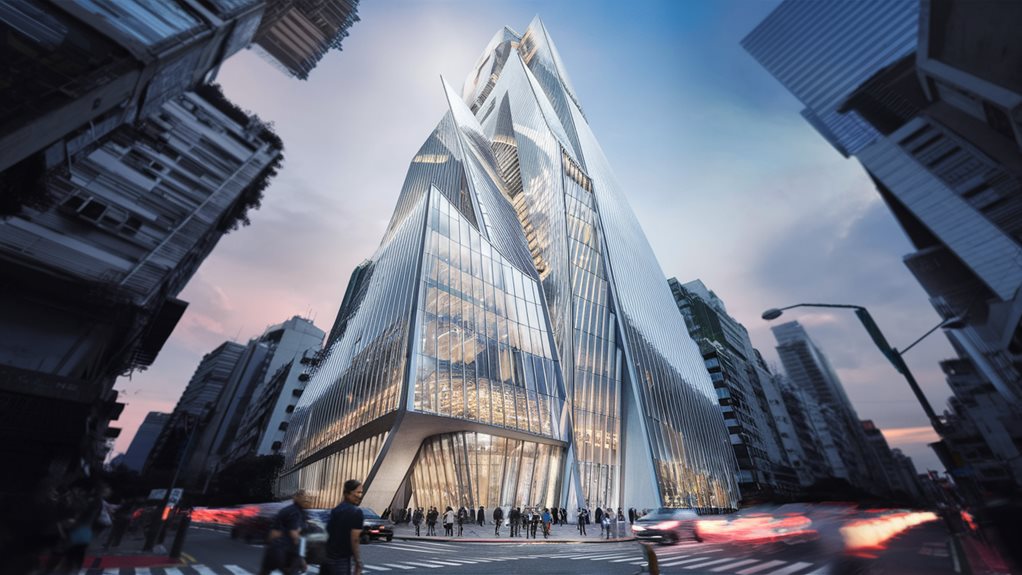
    Another iconic building is Torre de Manila, designed by OMA, which stands out in the heart of Manila.

    The Zuellig Building showcases environmentally conscious design, being the first Platinum LEED-certified building in the Philippines. This achievement demonstrates the country's commitment to sustainable architecture.

    Cultural and performance venues also reflect the country's rich cultural heritage through their unique designs.

    The Cultural Center of the Philippines, National Theater, and The Mind Museum are examples of this fusion of modernity and cultural identity.

    These iconic contemporary buildings not only reflect the country's growth and development but also showcase the innovative spirit of Filipino architects.

    As you explore these structures, you'll appreciate the country's architectural evolution.

    Sustainable Design Practices

    eco friendly design strategies

    Four key aspects of sustainable design practices are revolutionizing the way Filipino architects approach building construction.

    Renewable resources are utilized to minimize environmental impact. Filipino architects maximize the use of solar energy, wind energy, and rainwater harvesting. They incorporate green roofs and living walls, utilizing indigenous materials like bamboo and nipa palm, which are renewable and eco-friendly.

    Energy efficiency is achieved through designs that optimize building orientation, reducing the need for artificial lighting and air conditioning. Energy-efficient appliances and LED lighting are used to minimize energy consumption. Moreover, materials with natural insulation properties, such as bamboo, are utilized.

    Waste reduction and recycling are crucial in sustainable design. Filipino architects implement strategies to reduce waste generation and maximize recycling opportunities during construction.

    Biophilic design and green spaces promote a connection between buildings and nature. By incorporating natural elements, such as plants and natural light, into building design, Filipino architects create healthier and more productive environments.

    Innovative Public Spaces

    Filipino architects are incorporating innovative public spaces into their designs to redefine urban areas.

    These spaces focus on community engagement and multifunctional design. For example, the Ferdinand E. Marcos Memorial Stadium serves as a public park, providing open spaces for the community.

    Similarly, Taal Park's design facilitates social interactions among young people, positively impacting their well-being.

    Community involvement is crucial in creating social architecture that engages people and builds hyperlocal communities. Rolluda Architects involved the Filipino Community of Seattle in programming and workshops to ensure the design of the Filipino Community Village met community needs.

    Innovative public spaces prioritize multifunctional use. Paco Park, revived from a Spanish cemetery and Japanese ammunitions store, now offers memorial sites, fortification walls, and spaces for urban recreation.

    These designs host events, provide accessible seating, and incorporate green spaces, ultimately enhancing community well-being and urban quality of life.

    Technological Advancements

    innovations driving modern progress

    Filipino architects are harnessing technological advancements to transform the built environment.

    The design, construction, and operation of buildings are undergoing a significant shift. Building Information Modeling (BIM) enhances design accuracy and collaboration among architects, engineers, and designers. This technology allows for precise digital representations of buildings, enabling professionals to work together more effectively.

    Smart Building Technologies optimize energy use, comfort, and integrate smart systems for energy management, security, and occupant comfort. For instance, these technologies can automatically adjust lighting and temperature to reduce energy consumption and improve occupant experience.

    Virtual and Augmented Reality revolutionize design presentation, leading to better client engagement and visualization of projects. By using VR and AR, architects can create immersive experiences that help clients better understand and interact with design concepts.

    Digital fabrication enables greater creativity and customization in architecture. Advanced simulation software allows architects to test and refine their designs, resulting in more innovative and complex structures.

    Parametric design enables the creation of complex forms and structures that weren't previously possible. This technology uses algorithms to generate designs based on specific parameters, such as environmental conditions and material properties.

    These technological advancements have opened up new possibilities for innovative and sustainable designs, allowing Filipino architects to push the boundaries of what's possible in contemporary buildings.

    Urban Transformation Trends

    Urban transformation trends are reshaping the built environment in the Philippines, driven by technological advancements and the need for sustainable development.

    Efficient use of urban space is a key aspect of modern Filipino architecture, with architects incorporating green architectural principles and sustainable materials to reduce urban density.

    Landscape integration is a prominent trend, where buildings are designed to blend seamlessly into their surroundings. For instance, the Mandaluyong Podium West Tower and the Two E-Com Center boast LEED Gold Mark certification and Green Mark Gold Awards, respectively, for their eco-friendly designs.

    Urban spaces are being redefined with the creation of green spaces and public areas. The work of Ildefonso P. Santos is a notable example, showcasing the importance of green areas in urban planning.

    Cost-effective design is another trend, where architects design spatially efficient buildings to address spatial congestion. This approach optimizes the use of space while reducing construction costs.

    Environmental responsiveness is a key consideration in contemporary urban design. Landmarks like the Trump Tower Manila and Gramercy Residences feature modern, environmentally responsive designs that transform urban landscapes.

    These trends are redefining the urban landscape, creating more sustainable, efficient, and environmentally conscious spaces that cater to the Filipino climate and lifestyle.

    Filipino Architecture Legacy

    cultural heritage in structures

    The Philippines' architectural heritage is a rich tapestry of influences, reflecting the country's complex history and cultural diversity.

    The country's architectural evolution is a result of various cultural influences. The Spanish introduced Baroque and Renaissance styles, evident in churches like San Agustin and Manila Cathedral. These structures feature intricate designs, tall bell towers, and lavish interiors.

    The American colonial legacy brought Neoclassical architecture, influencing government buildings, public facilities, and urban planning. Examples of this include the Legislative Building and Manila Central Post Office.

    Traditional Filipino architecture incorporates indigenous design elements, such as the Bahay Kubo and Bahay na Bato. These structures were designed for practical purposes like flood protection and cooling, using local materials like bamboo and nipa palm.

    The contemporary Filipino architecture blends traditional elements with modern technologies and sustainable practices. As you explore the country's architectural legacy, you'll see how these influences have shaped the modern Filipino architecture.

    Questions and Answers

    What Inspired Filipino Architects to Adopt Modernist Styles in the 20TH Century?

    Filipino architects adopted modernist styles in the 20th century due to their exposure to Western architectural education. Leandro Locsin and Francisco Mañosa, two prominent Filipino architects, are examples of this trend. They incorporated modernist principles into their designs, blending them with local cultural elements to create a unique Filipino style.

    Locsin, who studied at the University of Santo Tomas and later at Harvard University, was influenced by modernist architects like Walter Gropius and Eero Saarinen. He applied these modernist principles to his designs, such as the Philippine International Convention Center, which features a fusion of modern and traditional Filipino elements.

    Similarly, Mañosa, who studied at the University of Michigan, was inspired by modernist architects like Frank Lloyd Wright. He incorporated modernist concepts into his designs, such as the National Museum of the Philippines, which showcases a blend of modern and traditional Filipino architectural styles.

    How Does Filipino Architecture Blend Cultural Heritage With Modern Design?

    Filipino architecture combines cultural heritage with modern design by incorporating traditional elements into contemporary structures. This blend is evident in the use of cultural symbolism, such as traditional motifs like the okir, a intricate geometric pattern inspired by Islamic art, and materials like bamboo and wood, which are abundant in the Philippines. For example, the National Museum of Fine Arts in Manila features a modern design with okir-inspired patterns on its façade, showcasing the country's rich cultural heritage. This unique architectural identity honors the past while embracing innovation, setting Filipino architecture apart from others.

    What Role Do Local Materials Play in Contemporary Filipino Building Designs?

    Local materials are essential in contemporary Filipino building designs as they help preserve cultural identity while promoting sustainable sourcing and local craftsmanship. For instance, coconut lumber is often used as a sustainable alternative to traditional wood, reducing the country's reliance on imported materials. Additionally, rattan and cogon grass are incorporated into modern structures, not only for their aesthetic value but also for their durability and eco-friendly properties. By incorporating these local materials, architects and builders are able to promote sustainable sourcing and support local craftsmanship, ultimately contributing to a more environmentally conscious and culturally rich built environment.

    Are There Government Initiatives to Promote Sustainable Architecture in the Philippines?

    The Philippine government has implemented policies to promote sustainable architecture. The Building Code and Green Building Code are two examples of such policies, which aim to reduce the environmental impact of buildings by promoting energy efficiency and sustainability. These codes incentivize architects to design environmentally friendly buildings by offering green certifications like LEED (Leadership in Energy and Environmental Design). This certification is a recognized standard for measuring the sustainability of a building, and it encourages architects to incorporate eco-friendly features into their designs.

    How Does Filipino Architecture Respond to Natural Disaster Resilience and Recovery?

    Filipino architecture prioritizes disaster preparedness by incorporating traditional elements, such as elevated foundations and steeply pitched roofs, which allow homes to withstand strong winds and flooding. Modern materials, like reinforced concrete and steel, are also used to construct buildings that can resist earthquakes and typhoons. Sustainable design principles, including the use of natural ventilation and insulation, reduce the need for artificial lighting and heating, making buildings more energy-efficient and resilient.

    Filipino architecture also fosters community engagement through adaptive reuse of historic buildings, which preserves cultural heritage while promoting disaster resilience. For example, the Bahay na Bato, a traditional Filipino house made of stone and wood, has been adapted to include modern materials and design principles, making it more resilient to natural disasters. Heritage preservation also plays a crucial role in disaster recovery, as it helps to maintain community identity and cultural continuity.

    Ultimately, Filipino architecture's focus on disaster preparedness, community engagement, and heritage preservation enhances resilience and recovery in the face of natural disasters.

  • Influences of Spanish Architecture on Filipino Homes

    Influences of Spanish Architecture on Filipino Homes

    Spanish Architecture's Lasting Impact on Filipino Homes

    The Spanish occupation of the Philippines left a lasting impact on the country's architectural identity. Adobe, brick, and stone were introduced, replacing traditional bamboo and thatch, and enabling the construction of permanent structures that could withstand natural disasters.

    Two distinct architectural styles emerged: Bahay na Bato and Filipino Baroque. These styles blended Spanish, Filipino, and Chinese influences, showcasing local craftsmanship and cultural flair. Notable features of these styles include ventanas (large windows), balconies, and courtyards.

    To adapt to the tropical climate, Filipino homes incorporated inclined roofs to allow rainwater to run off and open spaces to promote ventilation and natural light. These design elements ensured durability and comfort.

    Examples of these architectural gems can be found in landmarks such as San Agustin Church and ancestral houses in Vigan. These structures hold secrets to the Philippines' rich cultural heritage, waiting to be discovered.

    Spanish Influence on Building Materials

    spanish architectural material heritage

    The Spanish introduced new building materials to the Philippines, revolutionizing the way homes were constructed. This shift led to the widespread use of adobe and brick, replacing organic materials like wood and bamboo.

    These new materials provided better resistance to natural calamities, resulting in more permanent and stable structures. The Spanish taught local Filipinos to quarry, dress stone, and prepare mortar, making it easier to source materials for construction.

    Stone became a primary building material, offering stability and protection against earthquakes and fires. The combination of stone and brick helped to insulate buildings against heat and provided better ventilation, adapting to the tropical climate of the Philippines.

    This cultural fusion of Spanish techniques and local materials created a unique and resilient architectural style. Traditional Filipino materials like bamboo were still used in upper levels of buildings to maintain flexibility and ventilation, ensuring structures could withstand stormy seasons and earthquakes.

    Architectural Designs and Styles

    Two distinct architectural styles emerged in the Philippines as a result of Spanish influence: the Bahay na Bato and the Filipino Baroque.

    These styles showcase a cultural fusion of Spanish, Filipino, and Chinese influences, resulting in a unique blend of materials and design.

    The Bahay na Bato is characterized by its stone or brick lower walls and overhanging wooden upper story, which adapted to the tropical climate with high-pitched roofs and capiz shell windows.

    On the other hand, the Filipino Baroque style, as seen in churches like Paoay Church, featured an earthquake-proof design.

    These architectural designs and styles have historical significance, reflecting the colonial past and cultural identity of the Filipino people.

    The integration of these styles with the environment, such as building near rivers and streams, further highlights the adaptation of Spanish architecture to the local context.

    Notable Architectural Features

    distinctive design elements highlighted

    Notable Architectural Features

    Spanish-influenced Filipino homes showcase a distinct blend of styles, including Bahay na Bato and Filipino Baroque.

    These styles are characterized by unique architectural features that serve both aesthetic and practical purposes.

    Ventanas, or intricate wooden carvings and balconies, provide shade and ventilation while adding elegance to the exterior. They're a common feature in many Spanish-influenced Filipino homes.

    Balustrades, or ornamental railings, add sophistication and refinement to the upper story of Bahay na Bato homes. These railings are often decorated with intricate carvings, further enhancing the home's aesthetic appeal.

    Ventanilla, or small windows, promote natural ventilation and are a common feature in Bahay na Bato homes. These windows help regulate the tropical climate, keeping the interior cool and comfortable.

    Zaguan, or entrance or reception areas, set the tone for the rest of the house and facilitate hospitable trade. This feature is often designed to create a welcoming atmosphere, making guests feel at ease.

    These architectural features, among others, define the distinct style of Spanish-influenced Filipino homes.

    Adaptations to Local Climate

    Spanish-influenced Filipino homes adapted to the country's tropical climate by incorporating local materials and design elements. These homes feature inclined roofs to manage rainfall, especially in regions prone to heavy rain and typhoons. For instance, the roofs are designed to allow rainwater to flow downwards, reducing the risk of water accumulation and damage.

    Ventilation and natural light were prioritized through the use of courtyards and open spaces. This design element allows for air to circulate and reduces the need for artificial lighting during the day. Additionally, elevated houses on posts protect against floods and improve ventilation by allowing air to circulate underneath the house.

    Tiled roofs were used to withstand tropical weather conditions. These roofs are made from materials such as clay or concrete, which are durable and can withstand heavy rainfall and strong winds.

    Overhanging wooden upper stories provide shade and reduce heat, making the living space more comfortable.

    Local materials were utilized to build these homes. For example, adobe, bamboo, brick, timber, and capiz-shell were used for various parts of the house, including walls, roofs, and windows.

    The bahay na bato, a hybrid of stone and wood, showcases a thoughtful approach to climate adaptation. The stone used for the ground floor provides strength and durability, while the wood used for the upper floor allows for ventilation and flexibility.

    Influential Buildings and Locations

    iconic architectural landmarks worldwide

    The Philippines' cultural heritage is reflected in its influential buildings and locations, which showcase the blending of Spanish and indigenous architectural styles.

    San Agustin Church and Fort Santiago in Manila are iconic examples of Spanish colonial architecture. San Agustin Church is a UNESCO World Heritage Site, while Fort Santiago represents Spanish military and administrative presence.

    The adaptability and resilience of Spanish-Filipino architecture are demonstrated by Cagsawa Ruins in Albay and Ancestral Houses in Vigan, which have withstood natural disasters and climate challenges.

    Intramuros, the walled city of Manila, and Vigan, Ilocos Sur, a preserved colonial town, are notable locations that highlight the blending of Spanish and indigenous architectural styles.

    Taal, Batangas, known for its well-preserved bahay na bato houses, reflects the cultural and historical heritage of southern Luzon.

    These influential buildings and locations serve as testaments to the country's rich cultural heritage, offering a glimpse into its complex history and architectural evolution.

    Legacy and Modern Influence

    The Spanish colonization of the Philippines had a profound impact on Filipino culture, particularly in architecture. Over 300 years of Spanish rule blended indigenous, Chinese, and Spanish styles, resulting in unique residential forms like the bahay na bato, a traditional Filipino house made of stone and wood.

    This cultural fusion is evident in modern Filipino architecture, where traditional elements like ornate detailing and arched windows are combined with contemporary materials and design principles.

    Historical narratives of urban planning, material adaptation, and stylistic evolution are woven into modern Filipino architecture. For example, urban areas like Intramuros in Manila reflect this mixed cultural influence, showcasing the country's rich history.

    The preservation of historic structures, such as the San Agustin Church and Fort Santiago, serves as a reminder of the Philippines' cultural heritage, highlighting the country's historical interactions with Western cultures.

    Filipino architecture is shaped by intricate cultural intersections and historical narratives. As you explore Filipino architecture, you'll discover the cultural legacy of Spanish colonization and its lasting impact on the nation's identity.

    Building With Adobe and Stone

    adobe and stone construction

    The Spanish colonizers' resourceful use of local materials led to the widespread adoption of adobe and stone in Filipino architecture, resulting in structures that not only withstood the tropical climate but also reflected the cultural fusion of the time.

    Adobe and stone were chosen for their durability and insulating properties. Adobe regulated internal temperatures, making it ideal for the tropical climate. Stone, used for foundations and lower walls, provided better stability and protection against natural disasters.

    Key features of adobe and stone buildings include:

    Adobe and stone allowed for more permanent and robust structures compared to traditional pre-colonial materials. Stone foundations and walls helped in earthquake resistance, enhancing the structural integrity of the buildings.

    Buildings made with adobe and stone often featured intricate wooden carvings and balconies known as ventanas, which served both decorative and practical purposes. The combination of stone and wood resulted in structures with solid stone or brick lower floors and overhanging wooden upper stories, a characteristic of bahay na bato.

    The Emergence of Arquitectura Mestiza

    As Filipino architecture evolved, Arquitectura Mestiza emerged as a unique blend of indigenous and Spanish elements. This cultural fusion resulted in a distinct architectural style that combined Austronesian, Spanish, and Chinese influences.

    The structural evolution was evident in specific design features. For instance, the use of stone or brick walls for the ground floor and hardwood for the upper floor, supported by house posts (haligues) and connected with wooden pegs and dovetailed joints, demonstrated a focus on safety, well-being, and natural ventilation.

    The design prioritized functionality and comfort. Features like elevated wooden quarters, wide windows, and generous indoor space reflected the Filipino characteristics of being family-oriented, hospitable, and community-focused.

    Native design paradigms were adapted to tropical and geologic conditions. The incorporation of these elements, such as grand staircases indicating wealth, and an elaborate system of fenestration to optimize and alter openings, showcased a remarkable cultural fusion and structural evolution in Filipino homes.

    Earthquake Baroque Church Style

    seismic baroque architectural design

    The Philippines' unique seismic environment led to the development of the Earthquake Baroque Church Style, a distinct architectural style that blended Spanish Baroque ornamentation with earthquake resilience.

    Structural Reinforcement was a key feature of this style, where walls were constructed with thick, sturdy stones to withstand earthquakes, often reinforced with buttresses for added stability. This allowed the structures to better resist seismic activity.

    Distinctive Bell Towers were another characteristic of Earthquake Baroque churches. These octagonal towers were taller than the church itself, serving as landmarks and symbols of the church's cultural significance.

    The Innovative Designs of these churches focused on survivability, incorporating advanced construction techniques, curved lines, and ornate decorations typical of Baroque style. This fusion of styles resulted in remarkable structures that were both aesthetically pleasing and resilient.

    Notable Examples of Earthquake Baroque style can be seen in San Agustin Church in Manila and other churches in Intramuros, which are now recognized as UNESCO World Heritage Sites.

    These structures showcase the unique blend of form and function that defines the Earthquake Baroque Church Style.

    Bahay Na Bato and Beyond

    The Bahay Na Bato is a unique architectural style that blended European and Asian influences in the Philippines during the Spanish colonial rule. This style is characterized by a ground floor made of stone or brick and an upper floor made of wood. The interior layout is designed to accommodate both functional and cultural needs, with storage rooms, cellars, shops, or other business-related functions on the ground level and living areas on the second floor, similar to the traditional bahay kubo.

    The Bahay Na Bato incorporates cultural symbolism, reflecting the changing tastes and lifestyle of Filipinos during the Spanish colonial period. It integrates European architectural styles, such as Victorian and Renaissance Revival motifs, adding to its cultural significance. The design emphasizes open ventilation and elevated apartments, adapting to the tropical climate.

    The Bahay Na Bato has played a significant role in shaping Filipino culture and identity. Its unique blend of European and Asian influences has contributed to the country's distinct cultural heritage.

    Courtyards and Open Spaces

    outdoor community gathering areas

    Courtyards were a central feature of many Spanish-era Filipino homes, serving as a gathering place for residents and providing natural light, ventilation, and a peaceful atmosphere.

    Key features of courtyards include:

    Courtyards were typically located at the center of the building, with rooms arranged in a rectangular fashion around them to ensure natural light and air circulation. This design allowed for better air circulation, reducing the impact of tropical heat and the need for elaborate cooling systems.

    Courtyards were also adapted to the local climate, with plantings chosen for their cooling effects and fountains that helped cool the environment. For example, plants with broad leaves were often used to provide shade, while fountains created a cooling effect through evaporation.

    In addition to their functional benefits, courtyards held cultural significance, serving as communal spaces that reflected the blend of Spanish and indigenous architectural traditions. They were often decorated with local and Spanish motifs, such as intricate tile work and ornate carvings.

    Ornate Details and Accents

    Spanish-influenced Filipino homes showcase harmony between European flair and indigenous charm. This blend is evident in the ornate details and accents of these homes.

    Adobe and masonry provide durability and insulation in the tropical climate. These materials are used in the construction of the homes, ensuring they can withstand the local weather conditions.

    Ornate balconies add elegance to the facade. These balconies, known as ventanas, are intricately carved from hardwood and serve both decorative and practical purposes. They allow for natural light and ventilation, making the homes more comfortable to live in.

    Intricate carvings adorn the wooden posts supporting the upper story of Bahay na Bato, showcasing the skillful craftsmanship of Filipino artisans. These carvings are a testament to the artisans' expertise and attention to detail.

    Traditional Filipino motifs and symbols are incorporated into the design, adding a unique cultural flair to the Spanish-inspired buildings. This blend of cultures is what makes Spanish-influenced Filipino homes truly stand out.

    The attention to detail in these ornate details and accents creates a sense of grandeur, making these homes truly exceptional.

    Tropicalizing Spanish Architecture

    tropical spanish architectural fusion

    Filipino homes blend European styles with tropical adaptations. This unique fusion is evident in their use of sustainable practices and cultural symbolism.

    To tropicalize Spanish architecture, Filipino builders employed various strategies:

    Durable materials were used to withstand the climate. They used adobe, bamboo, stone, and brick to create structures that could resist the tropical environment.

    Climate-sensitive features were designed to reduce heat and improve airflow. These features included elevated structures, ventilation features, open spaces, high ceilings, and shaded areas.

    Local motifs and cultural practices were integrated into home design. This included mixed-use ground floors, community-oriented design, and domestic work areas, which created functional and culturally relevant homes.

    Traditional construction techniques were adopted for structural stability. Local expertise was used to ensure that homes could withstand natural disasters.

    Questions and Answers

    How Did Spanish Colonization Impact Indigenous Filipino Architecture?

    Spanish colonization significantly impacted indigenous Filipino architecture. This impact is evident in the fusion of traditional building techniques with Spanish influences, resulting in a unique cultural blend. Adobe, stone, and wood were used as primary building materials, often combined with indigenous motifs to create a distinctive style. The tropical climate played a significant role in shaping Filipino homes, with the use of these materials and motifs allowing for effective adaptation to the environment.

    Were Filipino Artisans Trained in Spanish Architectural Techniques?

    Filipino artisans were trained in Spanish architectural techniques. Through hands-on participation in building grand churches and cathedrals, they acquired skills in European masonry and construction methods. For example, they learned to adapt these techniques to suit local materials, such as volcanic stones and hardwoods, and the tropical climate.

    Did Spanish Architecture in the Philippines Evolve Over Time?

    Spanish architecture in the Philippines did evolve over time. This evolution was characterized by a cultural fusion of indigenous and European styles, resulting in a unique blend of local materials and foreign techniques. For instance, the use of bahay na bato, a type of stone house, combined native materials like coral and stone with Spanish architectural techniques. Additionally, the earthquake baroque style, which emerged in the 17th century, featured ornate decorations and a focus on durability, reflecting the Filipino adaptation of Spanish architectural designs to the country's seismic environment.

    Are Spanish-Inspired Filipino Homes Energy-Efficient?

    Spanish-inspired Filipino homes often incorporate sustainable design elements, making them energy-efficient and environmentally friendly. One notable feature is the use of natural ventilation systems, which reduce the need for artificial lighting and cooling. This design element allows for natural airflow and daylight, minimizing the reliance on energy-consuming appliances and leading to a more sustainable living space.

    Can Modern Filipino Homes Incorporate Spanish Colonial Elements?

    Yes, modern Filipino homes can incorporate Spanish colonial elements by blending traditional and contemporary designs. This fusion style allows homeowners to pay homage to the country's rich cultural heritage while still enjoying modern comforts. For instance, architects can incorporate intricate wooden carvings, a hallmark of Spanish colonial architecture, into modern furniture pieces or decorative accents. Another approach is to integrate vintage tiles, reminiscent of traditional Filipino homes, into modern bathroom or kitchen designs. By thoughtfully incorporating these historical elements, homeowners can create a unique and culturally significant living space that honors the past while embracing the present.

  • Pre-Colonial Philippine House Construction Techniques

    Pre-Colonial Philippine House Construction Techniques

    Pre-colonial Philippine houses were built using locally sourced materials like bamboo, nipa palm, and timber. These materials allowed for the construction of houses that were well-suited to the tropical climate, with techniques that provided natural ventilation and insulation. For example, the use of bamboo and nipa palm enabled the creation of walls that allowed for airflow, keeping the interior cool, while the timber frames provided structural support.

    The construction of these houses involved labor-intensive communal approaches, where members of the community worked together to build the structures. This approach not only fostered a sense of community but also allowed for the sharing of skills and knowledge. The houses were built on elevated foundations, which protected them from flooding and moisture damage. This design feature also allowed for easy reconstruction and repair after natural disasters, as the elevated foundation made it simpler to replace or repair damaged components.

    The structural designs of pre-colonial Philippine houses were innovative and maximized space and adaptation. For instance, the use of sloping roofs allowed rainwater to run off easily, reducing the risk of water damage. The houses were also designed to be culturally significant and architecturally unique, reflecting the cultural influences and climate adaptations of the communities that built them.

    Materials and Resource Utilization

    efficient resource management strategies

    Material Selection in Pre-Colonial Philippine House Construction

    In pre-colonial Philippines, the selection of materials for house construction was largely driven by their abundance, accessibility, and adaptability to the local environment. This approach ensured that materials were affordable and easily accessible.

    Native materials like bamboo, nipa palm, and timber were preferred due to their abundance and ability to thrive in the tropical climate. Bamboo's lightweight properties made it an ideal material, while nipa palm provided excellent insulation and protection from the elements.

    Resource Sustainability and Community Involvement

    Resource sustainability was a key consideration in material selection, as local materials allowed for easy reconstruction and repair after natural disasters.

    The use of local materials also facilitated community involvement, as construction often required communal effort.

    The simplicity and accessibility of the materials enabled communities to come together and build homes that suited their needs.

    Construction Methods and Techniques

    Traditional Philippine houses were built using a labor-intensive, communal approach that showcased the ingenuity of pre-colonial Filipino builders. This process involved individual parts carefully fitted, inserted, coiled, and tied together, similar to basket weaving.

    The high labor intensity allowed for easy reconstruction and repair, and houses could even be dismantled and rebuilt in a new location.

    Minimal tools were used, often just sharpened rocks and basic handmade tools, which added to the labor intensity. However, this approach made the construction process more accessible to communities.

    The elevated foundation, using posts secured by rocks or stone slabs, provided multiple benefits. It protected the house from vermin and floods, enabled ventilation, and created additional space underneath the house.

    This design was commonly used in lowland areas and coastal regions, highlighting the resourcefulness of pre-colonial Filipino builders.

    Structural Design and Form

    designing structural integrity forms

    Traditional Philippine houses demonstrated resourcefulness in their structural design and form, reflecting the ingenuity of pre-colonial Filipino builders.

    These houses were often raised on stilts, which allowed for easy transportation and protection from floods and pests. The stilts and posts supporting the entire structure distributed the load efficiently, making the houses stable and secure.

    Traditional houses like the bahay kubo were predominantly rectangular in shape, with a single large space used for multiple functions. This open layout was characteristic of pre-colonial Philippine houses, where spaces were arranged in a series of layers that flow into each other with mutable partitions and boundaries.

    The only enclosed room was typically the celda, used for intimate functions and securing valuables. This design approach created a sense of fluidity and flexibility, allowing the inhabitants to adapt the space according to their needs.

    Climate and Environmental Adaptations

    The tropical climate of the Philippines necessitates innovative climate adaptations in traditional house construction.

    In pre-colonial times, Filipino builders developed unique designs to address these challenges. Steeply sloped roofs allowed for easy rainwater shedding and harvesting, showcasing the resourcefulness of these builders.

    The use of natural materials like nipa palm or cogon grass for roofing enabled natural ventilation and insulation.

    Deep overhangs protected windows from harsh sunlight and rain, while vented soffits helped dissipate hot air.

    Large windows, taking up a significant portion of the wall surface area, allowed for maximum daylight and cross-ventilation. This design enabled hot indoor air to rise upwards to the top of the roof, away from living areas, keeping the living space cool and comfortable.

    Cultural and Spatial Influences

    cultural and spatial dynamics

    Cultural and Spatial Influences Shaped Pre-Colonial Philippine Houses

    Filipino builders incorporated cultural and spatial influences into their designs, which significantly impacted the construction of pre-colonial Philippine houses.

    Ethnolinguistic variations played a crucial role, as different architectural designs emerged among various ethnolinguistic groups. For example, the Tagbanuas of Palawan and the Maranao people built distinct houses, such as the Torogan houses.

    Regional variations in house construction and materials reflected the diverse cultural heritage of the pre-colonial Philippines.

    Community planning was a key influence, as houses were built close to each other for community and defensive needs. Settlements were constructed beside rivers and streams for water access and agricultural purposes, ensuring collective security and social cohesion.

    Spatial influences, such as layout and orientation, were critical, with houses built on posts raised above the ground to avoid damp earth and floods. Living areas were elevated with open space beneath for storage and other uses.

    Questions and Answers

    What Was the Average Lifespan of a Traditional Pre-Colonial Philippine House?

    The average lifespan of a traditional pre-colonial Philippine house varied significantly.

    This variation depended on regional practices and circumstances. For instance, houses built in areas prone to typhoons or floods had a shorter lifespan, often ranging from a few years to a decade. In contrast, houses constructed in more stable regions, using durable materials like hardwood and sturdy thatched roofs, could last for several decades.

    Were Pre-Colonial Houses Designed to Be Portable or Movable?

    Traditional dwellings were designed to be portable structures. These early houses were built using indigenous materials like bamboo and rattan, which made them easy to disassemble, relocate, and reconstruct. This design allowed early communities to adapt to their nomadic lifestyle, moving their homes as needed.

    How Did Pre-Colonial Filipinos Deal With Pests and Insects in Their Homes?

    Pre-colonial Filipinos employed natural repellents and pest control strategies in their homes. They used durable materials, such as bamboo and wood, which were less susceptible to pest damage. They also elevated their structures on stilts, reducing the likelihood of pests entering their homes. In addition, they designed layouts that reduced moisture and hiding places, making their living space less conducive to pests. For example, they built their homes with sloping roofs to prevent water accumulation and used open spaces to improve ventilation. These strategies created an environment that discouraged pests from inhabiting their homes.

    Were There Any Specific Rituals or Ceremonies for House Construction or Moving In?

    Rituals and ceremonies are an integral part of house construction and moving in. In many cultures, these rituals are believed to bring spiritual protection and significance to the new space, ensuring the well-being and prosperity of its occupants. For instance, in Hinduism, the Griha Pravesh ceremony is performed when moving into a new home, which involves invoking the gods to bless the home and its inhabitants. Similarly, in Japan, the Jotoshiki ritual is performed to purify and consecrate the new home, driving out evil spirits and bringing in good fortune.

    Did Pre-Colonial Houses Have Any Form of Sanitation or Toilet Systems?

    Pre-colonial homes did not have modern toilet systems. Instead, they relied on makeshift waste disposal methods. For example, some homes had gaps in the floor where waste would be collected. In other cases, outdoor areas were designated for waste disposal. These methods were often part of community-based sanitation practices that prioritized natural waste disposal and hygiene. These practices varied across cultures, but they shared a common goal of maintaining cleanliness and preventing the spread of diseases.

  • Filipino Architectural Styles Nipa Hut Variations

    Filipino Architectural Styles Nipa Hut Variations

    The traditional Nipa Hut has undergone significant transformations, resulting in various modern adaptations. These contemporary versions combine sustainable materials like bamboo, rattan, and nipa palm with modern elements, such as G.I. sheets and concrete cinder blocks, to enhance durability and energy efficiency. For instance, modern Nipa Huts in coastal areas often feature elevated foundations to protect against flooding and storm surges, while those in urban areas may incorporate green roofs to reduce urban heat island effects. The unique aesthetic of these modern Nipa Huts still blends seamlessly with the environment, showcasing a refined balance between traditional charm and modern functionality.

    Traditional Nipa Hut Characteristics

    traditional nipa hut features

    Traditional Nipa Hut Characteristics Begin with Sustainable Materials

    Traditional Nipa Hut characteristics start with the choice of construction materials, which are carefully selected from local resources to ensure sustainability and harmony with the environment.

    Wood, bamboo, and cogon grass are the primary materials used, all of which are readily available and renewable.

    Walls and Roofs are Constructed with Natural Materials

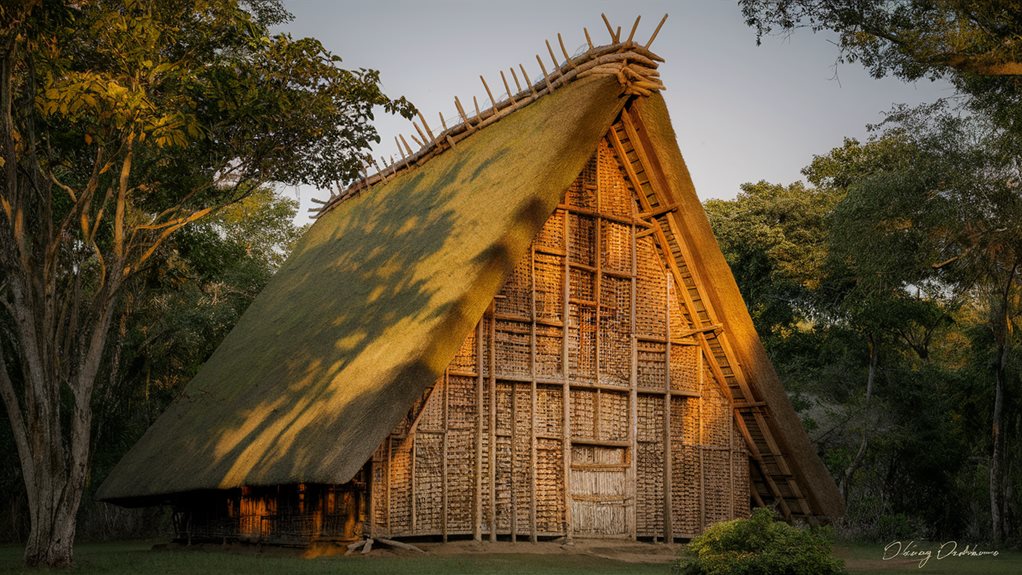
    The walls are constructed with bamboo rods or mats, while the roofs are typically made of thatched materials like nipa, anahaw leaves, or other locally available plants.

    Floors are Durable and Sturdy

    The floors are often composed of finely split resilient bamboo, providing a sturdy and durable base.

    Sustainable Construction Contributes to Unique Aesthetics

    The nipa hut's sustainable construction isn't only eco-friendly but also contributes to its rustic charm, blending seamlessly into the surrounding landscape.

    The use of natural materials creates this unique aesthetic.

    Design is Driven by Function and Harmony with the Environment

    The nipa hut's design is a perfect example of form following function, where the choice of materials is driven by the need for sustainability and harmony with the environment.

    Bahay Na Bato Features

    The Bahay Na Bato's Unique Blend of Cultural Heritage and Practical Design

    The Bahay Na Bato, a traditional Filipino architectural style, combines the functionality of the nipa hut with the grandeur of Spanish and Chinese influences.

    This blend of cultural heritage and practical design is reflected in its structural components, aesthetics, and adaptability to the tropical climate.

    Structural Components

    The Bahay Na Bato's foundation is made of stone and brick, replacing the stilts of the traditional bahay kubo and providing a solid base for the elevated upper story.

    The ground floor is utilized for storage, cellars, and even rented out to shops, while the upper story features balustrades, ventanillas, and capiz shell sliding windows.

    Aesthetics

    The Bahay Na Bato's aesthetics are characterized by its rectangular layout and central courtyard.

    Ornate decorative elements, such as handcrafted calado, add to its unique appeal. The incorporation of materials like coral stone, adobe, and brick also contributes to its distinctiveness.

    Adaptability to the Tropical Climate

    The Bahay Na Bato's design and materials reflect its adaptability to the tropical climate.

    Natural ventilation, cooling techniques, and sun shade solutions are incorporated into the design to address the climate's challenges.

    Modern Nipa Hut Adaptations

    contemporary nipa hut innovations

    Modern Nipa Hut Adaptations Combine Tradition and Sustainability

    Modern adaptations of the traditional nipa hut have emerged, blending traditional Filipino architectural elements with sustainable materials and modern innovations.

    These adaptations prioritize eco-friendliness, using natural materials like bamboo, rattan, and nipa palm.

    In terms of roofing, G.I. sheets are used as the main material, paired with a layer of nipa for insulation. This combination provides a durable and sustainable alternative to traditional materials.

    Concrete cinder blocks have replaced traditional hardwood for stilts, adding strength and durability to the structure.

    To improve ventilation, screen panels are employed to allow wind to freely enter and exit, similar to traditional latticework. This feature helps maintain a comfortable temperature inside the hut.

    Bamboo rods or mats are used for walls, providing additional insulation and temperature control.

    These modern nipa huts also incorporate renewable energy technologies, such as solar panels, to reduce their carbon footprint. By blending traditional and modern design elements, these adaptations reflect Filipino heritage while catering to modern lifestyle needs.

    Architectural Elements and Design

    Modern nipa hut adaptations have successfully combined sustainable materials with traditional architectural elements, resulting in a unique Filipino design.

    The tall, steeply pitched bubong roof allows for efficient air flow and passive cooling through roof ventilation, as warm air rises and escapes, providing natural cooling. This design also enables the roof to withstand heavy rain and ash fall from natural disasters.

    The use of sustainable materials is prevalent in modern nipa huts. Nipa, anahaw, and cogon grass are commonly used in the roof, walls, and floors, which are typically made of lightweight materials such as bamboo, wood, or amakan.

    The walls are designed to promote airflow and passive cooling, allowing for natural ventilation. Additionally, the floors are often elevated on hardwood stilts, protecting the living space from floods and pests.

    These architectural elements work together to create a comfortable and sustainable living space. By incorporating traditional design elements and sustainable materials, modern nipa hut adaptations have successfully refined the traditional Filipino design.

    Historical Significance and Roots

    cultural heritage and legacy

    The Historical Roots of the Nipa Hut

    The nipa hut's design has its roots in pre-colonial times in the Philippines. The terms "nipa hut" and "bahay kubo" originated from the Proto-Malayo-Polynesian words *balay* (public building or community home) and *kubu* (field hut). The nipa hut's design was adapted to the tropical climate of the Philippines, emphasizing sustainability and natural materials.

    Colonial Influences on Nipa Hut Design

    The nipa hut's design was influenced by colonial powers.

    During the Classical period, nipa huts were built using sustainable materials like straws, thatch, and bamboo to adapt to the local climate.

    Under Spanish rule, nipa huts were constructed with a more urban plan, incorporating Spanish architecture and design elements. Communities were built around rivers and streams with public places like churches.

    Cultural Significance of the Nipa Hut

    The nipa hut's design reflects the cultural values of the Filipino people.

    It represents communal living, resourcefulness, and environmental consciousness.

    The nipa hut's design emphasizes the importance of community and living in harmony with nature.

    Construction and Maintenance Needs

    The nipa hut's construction and maintenance needs are shaped by the Philippines' tropical climate and the resourcefulness of its people.

    The use of sustainable materials like bamboo, wood, and thatching materials ensures the structure's durability and ease of repair. For instance, bamboo is resistant to tropical conditions and can be easily replaced when needed.

    The elevated design on stilts and raised floor level provides natural ventilation and cooling, reducing the need for artificial cooling systems.

    The lightweight structure is suited for the tropics and can be easily repaired after natural disasters. The materials chosen, such as straws, thatch, and bamboo, are resistant to tropical conditions. However, regular replacement of thatched roofs is necessary due to exposure to the environment.

    Community involvement in relocation and repair exemplifies the Filipino virtue of bayanihan, demonstrating the importance of collective effort in maintaining these structures.

    Simple construction and use of local materials facilitate straightforward repair techniques and reconstruction. This approach to construction and maintenance highlights the resourcefulness and adaptability of the Filipino people.

    Nipa Hut Cultural Significance

    traditional filipino architectural heritage

    The Nipa Hut: A Symbol of Filipino Culture and Identity

    The nipa hut, with its thatched roof and bamboo walls, is a testament to the Philippines' rich cultural heritage, representing the country's history, traditions, and values.

    Link to the Pre-Colonial Era

    The nipa hut serves as a link to the pre-colonial era, showcasing the resilience of Filipino culture through various colonial periods.

    It has survived centuries of foreign influence, maintaining its traditional design and construction.

    Influence on Filipino Architecture

    The nipa hut has influenced the development of other Filipino architectural styles, such as the bahay na bato.

    Its design elements, like the use of natural materials and ventilation, have been adapted in later architectural styles.

    Simple and Sustainable Lifestyle

    The nipa hut represents a simple and sustainable lifestyle, reflecting the country's history and traditions.

    It is made from locally sourced materials, such as bamboo and thatch, and is designed to withstand natural disasters.

    Communal Spaces and Community Values

    The nipa hut embodies cultural symbolism, communal spaces, and community values, highlighting the importance of family and social bonds.

    It often features a central area for social gatherings and communal activities, fostering a sense of community.

    A Way of Life

    The nipa hut's cultural significance extends beyond its physical structure, encompassing a way of life that values communal unity, shared spaces, and social gatherings.

    It represents a traditional lifestyle that's closely tied to nature and the Filipino way of living.

    Evolution of Filipino Architecture

    Filipino architecture has undergone significant transformations over the centuries. The blending of indigenous and colonial influences has shaped the country's architectural landscape.

    Indigenous materials were initially used to build traditional homes. Bamboo, nipa palm, and wooden stilts were used to construct the bahay kubo, which provided protection from floods and wild animals.

    The introduction of European building methods led to the development of bahay na bato. During the Spanish colonial era, stone or brick foundations were incorporated with hardwood upper floors, resulting in a unique architectural style.

    Modern architectural styles were introduced during the American colonial era. Art Deco and Art Nouveau styles emphasized functionality and aesthetic innovation, influencing the design of buildings.

    Post-war architecture focused on modernism. Contemporary designs now combine traditional elements with sustainability and modern technology,

    emphasizing natural ventilation and protection from the tropical climate.

    Preservation of Traditional Designs

    heritage craftsmanship and techniques

    Traditional Filipino architecture relies on conscious efforts to retain and adapt indigenous materials and construction methods.

    This reliance is evident in the use of local and sustainable materials, such as bamboo, wood, and nipa grass, which reduce environmental impact and promote cultural heritage.

    Community involvement is crucial in preserving traditional designs.

    • Community members work together to maintain and repair traditional homes, ensuring the continuation of shared knowledge and skills passed down through generations.
    • Collective effort is necessary in preserving traditional designs and construction methods, as seen in the tradition of communal unity and cooperation.
    • Community members adapt traditional designs to modern contexts, incorporating contemporary elements while retaining traditional principles.

    Filipino Identity in Architecture

    Filipino architecture reflects the nation's identity, values, and history.

    The Philippines' cultural landscape is deeply rooted in its architectural heritage, showcasing a blend of indigenous, Spanish, Chinese, Islamic, and Malay influences. Each style contributes to the nation's architectural symbolism, telling a story of its history and cultural evolution.

    Traditional homes, such as the bahay kubo, feature thatched roofs and raised living floors, reflecting the cultural and spiritual beliefs of the Filipino people. The use of natural materials and intricate carvings in these homes and churches serve as testaments to the country's complex heritage.

    The grandeur of Spanish-era churches, for example, highlights the nation's ability to adapt and blend its cultural heritage in the face of colonization.

    In contrast, the simple yet elegant design of traditional mosques in Mindanao reflects the Islamic influence on Filipino architecture.

    Filipino architecture isn't just about aesthetics; it's a representation of the nation's identity, values, and history. The structures serve as a reflection of the country's ability to preserve its cultural heritage in the face of war and modernization.

    Nipa Hut Variations and Styles

    diverse nipa hut designs

    Traditional Filipino dwellings adapt to diverse regions and climates by incorporating regional materials and design variations while maintaining their cultural essence.

    The choice of nipa hut materials is influenced by local conditions and availability.

    In some regions, concrete cinder blocks are used as modern alternatives to traditional hardwood stilts. This adaptation responds to the need for durability and sustainability in areas prone to natural disasters.

    Some nipa hut variants include a "silong" or raised area for cooking and washing dishes, reflecting the practical needs of rural life. This design feature allows for efficient use of space and organization of daily activities.

    Others incorporate Spanish influences, such as curved clay tiles, demonstrating the dynamic exchange of cultural ideas. This blend of cultural influences showcases the resourcefulness and resilience of Filipino rural communities.

    These adaptations not only respond to environmental challenges but also reveal the country's rich cultural heritage and the nipa hut's enduring significance as a symbol of traditional Filipino living.

    How Does Paseo De Magallanes Reflect Filipino Architectural Styles Like the Nipa Hut?

    Exploring paseo magallanes reveals a rich tapestry of Filipino architectural styles, notably the nipa hut. This public space incorporates elements reminiscent of traditional huts, featuring natural materials and open-air designs. The harmonious blend of modern structures with cultural influences makes Paseo Magallanes a vibrant representation of the Philippines’ architectural heritage.

    Adapting to Tropical Environments

    Tropical Environments Demand Adaptation

    In tropical environments, natural ventilation and cooling are crucial. To achieve this, Filipino architectural styles incorporate perforated transoms, large window openings, and strategic window placement. These features allow for maximum airflow and reduce heat accumulation. Elevated living spaces further improve airflow, reducing the need for artificial cooling systems.

    Sustainable Materials for Resilience

    Local and sustainable materials like bamboo, nipa palm, and rattan are used in construction. These materials not only reduce environmental impact but also provide resilience in natural disasters.

    Climate-Responsive Design Elements

    Buildings are designed with high volumetric spaces and shading devices to shield and control airflow inside. Green roofs and walls provide shade, control temperature, and enhance air quality. To avoid direct sunlight, buildings are oriented with doors often facing east to avoid western sun exposure.

    Rainwater Harvesting and Flood Protection

    Rainwater harvesting systems mitigate the effects of storms and heavy rainfall. This, combined with elevated living spaces, provides flood protection and promotes environmental sustainability.

    Harmony with the Environment

    These tropical adaptation strategies incorporate climate-responsive materials, ensuring harmony with the surroundings, culture, and way of life. By combining these design elements, spaces are created that promote natural ventilation, flood protection, and environmental sustainability.

    Questions and Answers

    Can Modern Nipa Huts Be Designed for Urban Environments?

    Modern nipa huts can be effectively designed for urban environments. To achieve this, designers must prioritize urban adaptability by considering the limited space and unique challenges of urban areas. For instance, modern nipa huts can be designed with compact footprints and multi-level layouts to maximize space efficiency.

    Sustainable materials are essential in modern nipa hut design. Traditional nipa hut materials like bamboo, thatch, and wood can be combined with eco-friendly alternatives like recycled materials, low-carbon concrete, and solar panels. This approach reduces the environmental impact of the structure while maintaining its cultural authenticity.

    A balance between traditional elements and modern functionalities is crucial. Designers can incorporate traditional nipa hut features like natural ventilation, large windows, and open spaces while integrating modern amenities like energy-efficient appliances, rainwater harvesting systems, and green roofs. This blend of old and new creates a harmonious and functional living space that honors cultural heritage while meeting urban needs.

    How Do Nipa Huts Withstand Strong Typhoons and Storms?

    Nipa huts' storm resilience is rooted in their clever design. This design prioritizes structural integrity through the use of flexible bamboo, which allows the hut to bend and flex in strong winds, reducing the risk of collapse. Additionally, permeable nipa shingles help to reduce wind pressure by allowing air to pass through, further stabilizing the structure. Secure tie-downs also play a crucial role in keeping the hut anchored to the ground, preventing it from being lifted or shifted by powerful gusts.

    Are Nipa Huts Only Suitable for Tropical Climates?

    Nipa huts are not exclusive to tropical climates. Their design principles, such as natural ventilation and elevated structures, can be adapted to various environments. This adaptability ensures nipa hut sustainability and aesthetics in diverse settings. For instance, natural ventilation can be achieved through strategically placed windows and doors, allowing for airflow and reducing the need for air conditioning. Elevated structures can also be modified to accommodate different terrains, such as building on stilts or pilings to protect against flooding or soil instability.

    Can I Build a Nipa Hut Without Using Traditional Materials?

    Yes, you can build a nipa hut without traditional materials. To do so, explore alternative materials that offer eco-friendly alternatives and enhance durability and resistance to elements. For instance, treated bamboo can be used as a sustainable alternative to traditional wood, providing strength and resistance to pests and decay. Modern roofing materials, such as corrugated metal or recycled plastic, can replace traditional nipa leaves, providing better protection from the elements. Additionally, sustainable foundation options, like concrete or recycled plastic, can replace traditional stones or wood, offering a stronger and more durable base for the hut.

    Are There Any Nipa Hut Designs Specifically for People With Disabilities?

    Many modern nipa hut designs prioritize accessible features for people with disabilities. These designs incorporate inclusive elements, such as ramps to replace stairs, allowing wheelchair accessibility. Wide openings and extra space inside the hut enable easy movement and navigation for people with mobility impairments. Additionally, modular components allow for easy adaptation and customization to suit individual needs. These features ensure that people with disabilities can safely and comfortably inhabit nipa huts.

  • Contemporary Filipino Interior Design Furniture

    Contemporary Filipino Interior Design Furniture

    Filipino interior design combines traditional and modern elements. This unique blend is characterized by the use of indigenous materials like bamboo, rattan, and capiz shells, which are expertly combined with tropical modernism and minimalist principles. For example, bamboo is often used to create sustainable and durable furniture, while rattan is used to add a touch of natural elegance to a room.

    Vibrant colors and textiles are inspired by the Philippine landscape. The country's lush tropical forests, beaches, and mountains inspire the use of bright colors and bold patterns in textiles, such as batik and abaca fabric. These textiles are often used to create statement pieces, like vibrant throw pillows or colorful rugs.

    Handcrafted decorative pieces reflect cultural heritage. Filipino designers often incorporate traditional crafts, such as woodcarvings, weaving, and pottery, into their designs. For instance, wooden sculptures inspired by Filipino mythology are used as decorative accents, while handwoven baskets are used as storage containers.

    Eco-friendly design practices prioritize natural materials and energy efficiency. Filipino designers are committed to sustainability, using natural materials whenever possible and incorporating energy-efficient features, such as solar panels and rainwater harvesting systems, into their designs. This approach not only reduces environmental impact but also creates a healthier living space.

    Incorporating Indigenous Materials

    utilizing indigenous resources strategically

    Incorporating indigenous materials is a key element in contemporary Filipino interior design. This style often features bamboo, which is used for furniture such as bed frames, sofa sets, and tables due to its versatility and durability. Bamboo adds a unique aesthetic to any room and is a popular choice for furniture.

    Rattan is another popular material in Filipino interior design. Its flexibility and durability make it ideal for creating comfortable and naturally aesthetic furniture pieces. Rattan is often used for chairs, tables, and other decorative items.

    Abaca, a sustainable material, is commonly used for furniture that evokes an exotic island feel. Its durability and eco-friendliness make it a popular choice for interior designers.

    Decorative elements often feature Capiz shells, which are used to create unique lampshades, chandeliers, and wall art. The shells add a distinctive and ethereal glow to any room.

    Sustainable building materials are also used, such as coconut shell laminates like Cocoboard. These materials provide an eco-friendly alternative to traditional building materials and help reduce waste.

    Tropical Modernism Design Principles

    Tropical Modernism prioritizes climatic responsiveness by incorporating natural elements to reduce reliance on artificial cooling. This is achieved through cross-ventilation strategies, such as large windows and strategically placed openings, which maximize airflow and natural light.

    Natural shading techniques, like extended overhangs and pergolas, also help maintain indoor comfort.

    To integrate space with nature, blur the boundaries between indoor and outdoor areas by incorporating open spaces, verandas, and courtyards.

    Landscaping elements like lush gardens and water features enhance natural ventilation and openness.

    Strategic placement of openings and large windows optimizes the use of natural light and ventilation.

    Adaptive Reuse in Interior Design

    transforming spaces preserving history

    Adaptive Reuse in Interior Design: Preserving Heritage and Functionality

    Adaptive reuse is an interior design approach that revitalizes historical structures by preserving their essence while incorporating modern functionality.

    In the Philippines, this approach is crucial for maintaining cultural identity through historical preservation.

    The process involves thorough documentation and assessment to recognize the structure's contributions to the community, thereby maintaining the cultural and historical identity of the space. This ensures that heritage houses and historic structures are repurposed rather than demolished, allowing continued use and relevance.

    Integrating Traditional and Modern Elements

    In adaptive reuse, traditional and modern elements are combined to create a unique design.

    Old materials are repurposed into new design elements, blending traditional craftsmanship with modern aesthetics and functionalities. For instance, wooden beams from an old house might be reused as decorative ceiling features or wall accents. This fusion ensures the structure remains relevant and functional in the present day.

    Promoting Community Engagement and Cultural Heritage

    Adaptive reuse strengthens the connection to the past and enhances community spirit by transforming old buildings into community-centric spaces.

    This approach promotes community engagement and reflects community values and cultural heritage. By doing so, it preserves the cultural identity of the community and fosters a sense of belonging.

    Minimalist Filipino Design Elements

    Minimalist Filipino design elements emphasize functional aesthetics and simplicity. This style is characterized by clean lines, minimal ornamentation, and the use of natural materials.

    Rattan, bamboo, and wood are commonly used, often paired with synthetic materials to ensure durability and modern functionality.

    The color palette is predominantly neutral, featuring shades of white, beige, and warm browns that evoke the earthy tones of the Philippine landscape. This palette, combined with ample lighting, creates a sense of spatial harmony and airiness.

    Furniture is designed with clean lines and minimal ornamentation, often made from woven materials.

    Large windows and open floor plans maximize natural light and ventilation, resulting in a clean, airy, and modern space that exudes simplicity and elegance.

    Vibrant Colors and Textiles

    lively fabrics and hues

    Incorporating vibrant colors and textiles is a key element in Filipino interior design. This approach adds personality to a space while paying tribute to the country's rich cultural heritage.

    Earthy and vibrant color schemes inspired by the Philippine landscape, featuring shades of brown, green, and blue, can be used to infuse a space with warmth and vitality. Rust and burnt orange accents can add a pop of color and energy.

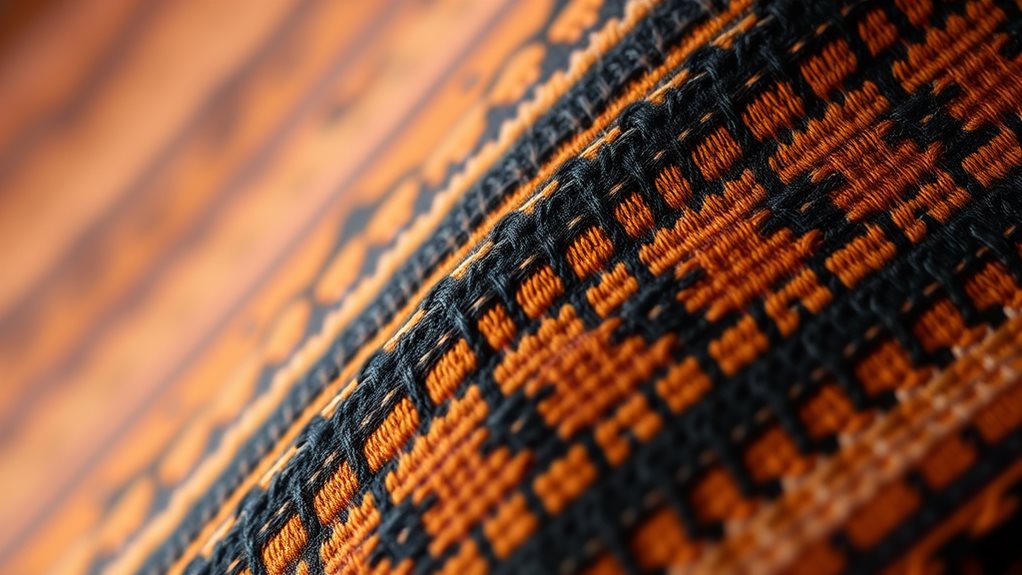
    Traditional motifs can be blended with modern elements to create a unique design. Textile layering is essential, and indigenous materials like rattan, buri, and abaca can be used in hand-woven textiles.

    Traditional carpet patterns and textiles can add visual interest and texture to modern spaces. Handcrafted accents, including woven baskets and intricately carved wooden furniture, can add character to a room.

    Color psychology plays a crucial role in choosing colors to evoke a desired mood and atmosphere. When selecting colors, consider the emotions and feelings you want to evoke in your space.

    Sustainable Design Solutions

    Sustainable design solutions are essential in contemporary Filipino interior design because they reduce environmental impact while paying homage to the country's rich cultural heritage.

    Using natural materials sourced sustainably, such as rattan, bamboo, and distinct Filipino wood species, adds warmth and texture to a space. These materials can be combined with high-quality synthetic options to achieve durability and versatility while reducing waste.

    Biophilic design is a key aspect of sustainable design solutions, as it brings the outdoors in, creating a seamless transition between nature and interior spaces. This design approach also promotes a connection to the natural environment, which is essential for a healthy and sustainable lifestyle.

    Handcrafted and artisanal accents can add a touch of local culture to a space, making it unique and authentic. By incorporating these elements, individuals can contribute to a more environmentally conscious community and support local artisans.

    Embracing sustainable design solutions has numerous benefits, including reducing waste, promoting durability, and supporting local culture.

    Filipino Cultural Heritage Inspiration

    filipino heritage cultural inspiration

    Cultural heritage significantly influences contemporary Filipino interior design. Traditional patterns and motifs are incorporated into modern furniture and textiles, adding a touch of cultural storytelling to any space.

    For instance, indigenous weaving techniques are used to create unique furniture pieces and decor, blending historical and contemporary elements.

    Cultural icons and symbols are thoughtfully integrated into modern designs. Capiz shells and handwoven baskets are used to add an air of authenticity to spaces.

    Historical design elements, such as stamped patterns on walls and ceilings, are reimagined in contemporary spaces.

    The *Bahay Kubo*, a traditional Filipino hut, inspires modern lounging areas designed for comfort and natural ventilation.

    Natural Materials in Furniture

    Natural materials bring warmth and authenticity to Filipino interior design. Rattan, a hallmark of Filipino design, is a popular choice for furniture pieces like chairs, sofas, and coffee tables because it adds texture and warmth to living spaces.

    Its versatility also makes it suitable for both indoor and outdoor use.

    Bamboo is a sustainable and strong material. It's prized for its eco-friendliness and strength, making it ideal for various furniture pieces and decorative elements.

    Bamboo adds a natural and earthy feel to the living space, and when combined with other materials, it creates a blend of traditional and modern aesthetics.

    Wood, particularly hardwood, is a staple in Filipino furniture design. It adds warmth and authenticity to any room.

    The incorporation of natural materials like capiz shells, natural stones, and pebbles creates a harmonious connection with the environment and the country's natural beauty.

    Handcrafted Decorative Pieces

    artisan made decorative items

    Handcrafted decorative pieces are essential in Filipino interior design, as they infuse spaces with cultural significance and artisanal flair. Traditional motifs and patterns are often incorporated into modern interior design, adorning furniture, textiles, and décor.

    For instance, handwoven baskets and intricately carved wooden furniture add character and authenticity to a space. Artisans use indigenous materials like rattan, bamboo, and Capiz to create these accents, blending traditional craftsmanship with modern design sensibilities.

    Filipino ethnic and tribal art influences handcrafted décor, reflecting colonial and Asian influences. Wooden statuettes, Jesu Hands, and candelabras painted with alibata letters are examples of decorative symbolism.

    These decorative pieces can also incorporate historical elements, such as items from vintage thrift shops. By using traditional materials and designs in modern settings, cultural heritage is celebrated, contributing to a unique and culturally rich interior design style.

    Incorporating handcrafted decorative pieces infuses a space with artisanal craftsmanship and cultural significance.

    Urban Tropical Interior Spaces

    By embracing Tropical Modernism, you can transform your urban space into a serene oasis that combines indoor comfort with outdoor freshness.

    Natural Ventilation is key to achieving this look. Large windows and open floor plans allow natural light and ventilation to flow freely, connecting your indoor space to the outdoors.

    For example, sliding glass doors can replace traditional walls, creating a seamless transition between indoors and outdoors.

    Earthy Accents are essential in evoking a tropical landscape. Incorporate natural materials like rattan, bamboo, and stone to bring the outdoors in.

    Adding lush greenery, such as potted plants or a living wall, can also enhance the tropical feel.

    Airy Spaces are critical in creating a tranquil escape. Emphasize open and inviting areas that blur the lines between indoors and outdoors.

    For instance, a spacious living room with minimal partitions can create a sense of freedom and relaxation.

    Organic Colors can create a calming atmosphere reminiscent of the tropical outdoors. Use earthy tones like beige, brown, and green, and incorporate natural fibers like jute and sisal to create a soothing ambiance.

    Eco-Friendly Design Practices

    sustainable design for environment

    Eco-friendly design practices prioritize sustainable sourcing and energy efficiency to reduce environmental impact.

    Filipino interior designers opt for natural and indigenous materials like rattan, bamboo, capiz, and hardwood. These materials add texture, warmth, and authenticity to a space while reducing the carbon footprint. For instance, using bamboo instead of steel can reduce carbon emissions by up to 70%.

    Energy efficiency is a key consideration in eco-friendly design. Designers incorporate open and airy spaces, natural ventilation, and light colors to maximize natural light and reduce the need for artificial lighting. This approach not only reduces energy consumption but also creates a brighter and more welcoming atmosphere.

    Eco-friendly design practices also involve the use of sustainable products. Designers incorporate eco-friendly products like synthetic materials with natural appeal, recycled furniture, and multi-functional pieces to minimize waste and reduce energy consumption.

    For example, using recycled glass as a decorative element can reduce waste and add a unique touch to a space.

    By adopting eco-friendly design practices, you can create a space that isn't only beautiful but also sustainable and responsible.

    Questions and Answers

    What Is the Average Cost of Incorporating Indigenous Materials Into a Design?

    The cost of incorporating indigenous materials into a design can vary greatly, depending on factors such as sourcing and labor intensity.

    Incorporating indigenous materials can be cost-effective if sourced locally, reducing transportation costs. For example, using reclaimed wood from local forests can be more affordable than importing materials from other regions. However, labor intensity and research requirements may drive up costs. Conducting thorough research to identify suitable materials and ensuring compliance with regulations can be time-consuming and expensive.

    Long-term benefits of sustainable practices can offset initial expenses.

    While incorporating indigenous materials may require significant upfront investment, sustainable practices can lead to cost savings in the long run. For instance, using natural, locally sourced materials can reduce the need for maintenance and replacement, resulting in lower costs over time.

    How Do I Balance Modernity With Cultural Heritage in My Interior Design?

    Balancing Modernity with Cultural Heritage

    Incorporating Cultural Symbolism

    To balance modernity with cultural heritage, start by incorporating cultural symbolism into your design inspiration. This means drawing from your cultural background and selecting elements that hold significance. For instance, if you're designing a space for an Indian family, you might incorporate the lotus flower, a symbol of spiritual growth and enlightenment, into your design.

    Blending Traditional Elements with Modern Aesthetics

    Next, blend traditional elements with modern aesthetics. This can be achieved by pairing classic cultural pieces, such as vintage textiles or antique furniture, with modern materials and designs. For example, you could pair a traditional African kente cloth with a sleek, minimalist couch.

    Thoughtfully Selecting Materials

    Finally, thoughtfully select materials that honor the past while serving the present. This might involve using sustainable materials, repurposing vintage items, or incorporating natural elements that reflect your cultural heritage. For instance, you could use reclaimed wood from an old Japanese temple to create a modern dining table.

    Can I Mix and Match Different Filipino Design Styles in One Space?

    Yes, you can mix and match different Filipino design styles in one space. Combining cultural motifs with modern elements can create design harmony and ensure space functionality. For instance, incorporating traditional Filipino textiles, such as T'nalak or Inabel, into modern furniture pieces or decor can add a touch of cultural heritage to the space. This fusion of old and new elements can result in a unique and visually appealing design that honors Filipino culture while still meeting modern needs.

    Are There Any Specific Certifications for Sustainable Design in the Philippines?

    Yes, there are certifications for sustainable design in the Philippines. These certifications, such as BERDE, LEED, and EDGE, promote sustainable architecture and the use of eco-friendly materials, ensuring a reduced environmental footprint. For instance, BERDE (Building for Ecologically Responsive Design Excellence) is a Philippine-based certification program that evaluates buildings based on their environmental performance. LEED (Leadership in Energy and Environmental Design) is a global certification program that recognizes buildings that have achieved a high level of sustainability. EDGE (Excellence in Design for Greater Efficiencies) is another certification program that focuses on resource efficiency in buildings.

    How Often Should I Replace or Update My Interior Design to Stay Trendy?

    To stay trendy, update your interior design every 5-10 years. This timeframe allows you to keep up with changing design trends while considering the average lifespan of furniture, which can range from 5 to 15 years depending on quality and usage. Make seasonal tweaks to keep your space fresh, such as swapping throw pillows, rugs, or wall art, which can be done more frequently without breaking the bank. Balance budget constraints and lifestyle changes by prioritizing updates based on your needs and financial situation. For example, if you have a growing family, you may need to update your furniture more frequently to accommodate changing needs.

  • Indigenous Filipino Architecture Sustainable Design

    Indigenous Filipino Architecture Sustainable Design

    Indigenous Filipino Architecture Embraces Sustainability

    Traditional Filipino architecture, as seen in the humble bahay kubo and bahay na bato, embodies the country's rich cultural heritage and resourcefulness. These structures showcase the use of locally-sourced materials such as bamboo, wood, and nipa palm, which not only reflect the country's history but also maximize environmental harmony.

    Climate-Responsive Designs and Disaster-Resilient Techniques

    Indigenous Filipino architecture incorporates climate-responsive designs, where structures are built to adapt to the country's tropical climate. For example, the bahay kubo's large windows and raised floors allow for natural ventilation and protection from flooding. Additionally, disaster-resilient techniques are employed, such as the use of flexible materials like bamboo, which can withstand strong winds and earthquakes.

    Community-Centric Approaches

    Traditional Filipino architecture emphasizes community-centric approaches, where structures are designed to serve the needs of the community. For instance, the bahay na bato's courtyard serves as a communal space for social gatherings and community activities.

    Reimagining Traditional Designs for a Sustainable Future

    Innovative architects are reimagining traditional designs to create sustainable structures for the future. For example, modern bahay kubo designs incorporate renewable energy sources, such as solar panels, to reduce carbon footprint. These new designs not only preserve the country's cultural heritage but also contribute to a more sustainable built environment.

    Traditional Materials and Construction

    heritage building techniques employed

    Traditional Filipino Homes Embody Cultural Heritage and Resourcefulness

    When building traditional Filipino homes, locally-sourced materials are used to reflect the country's rich cultural heritage and the resourcefulness of its indigenous people. Bamboo, for instance, is a popular choice for structural elements and walls due to its abundance and local availability. This showcases the ingenuity of the indigenous people in maximizing the potential of available resources.

    Locally-Sourced Materials Promote Sustainability and Cultural Diversity

    In addition to bamboo, other locally-sourced materials like wood, nipa palm, cogon grass, and rattan are used in traditional Filipino construction.

    Nipa palm roofing, a distinctive feature of traditional Filipino homes, provides natural insulation and protection from the elements. The use of these materials promotes environmental sustainability and celebrates the country's cultural diversity.

    Climate-Responsive Design

    Traditional Filipino homes are designed to respond to the local climate, incorporating elements that provide thermal comfort while reducing the need for artificial cooling and heating systems.

    Natural Ventilation Strategies are used to enhance air movement. For example, strategically placed windows and open layouts allow air to circulate, while gaps on the floor made of split bamboo pieces provide additional ventilation.

    The Orientation for Air Flow of structures is crucial. Buildings are oriented North/South to direct air flow, and windows are placed on north and south facades to capture prevailing wind directions.

    Passive Cooling Techniques are employed to protect homes from harsh sunlight and rain. Deep overhangs, vented soffits, and wooden louvers or translucent capiz shell panes are used to shield large windows.

    Regional Adaptations are made to design variations depending on regional climate conditions. For instance, structures are designed to withstand typhoons and earthquakes, using local materials suited to the tropical climate.

    Energy Efficiency and Sustainability

    sustainable energy efficiency practices

    Traditional Filipino homes have inherently embodied energy efficiency and sustainability. This is achieved through the use of indigenous materials, which reduce environmental impact and are cost-effective. For example, locally sourced materials like bamboo, nipa palm, and rattan require minimal maintenance and are resilient in natural disasters.

    Passive design strategies also contribute to energy conservation. Elevated designs and strategically oriented buildings maximize natural ventilation, reducing the need for artificial cooling methods.

    In bahay na bato, expansive windows ensure optimal light and air circulation, keeping interiors cool. Furthermore, buildings are oriented to harness the cooling power of prevailing winds, enhancing energy efficiency.

    Cultural and Historical Significance

    Traditional Filipino homes reflect the country's cultural and historical heritage.

    The architecture of these homes tells a story of diverse ethnic influences and historical evolution.

    The use of locally sourced materials like bamboo and nipa palm highlights the importance of community and environmental harmony.

    The bahay kubo, with its steep roof and open sides, is a symbol of Filipino culture and heritage. This traditional house type has been passed down through generations, showcasing the country's rich cultural heritage.

    The bahay na bato combines Filipino, Spanish, and Chinese style elements, reflecting the country's historical evolution. This unique blend of styles demonstrates the cultural exchange and adaptation that occurred during the Spanish colonial period.

    Stilt houses, common among coastal communities like the Badjao, adapt to specific geographical and environmental needs. Built on stilts to protect against flooding and storms, these houses showcase the resourcefulness and resilience of Filipino coastal communities.

    The Ifugao rice terraces, a UNESCO World Heritage Site, demonstrate engineering and architectural harmony with the landscape. These ancient terraces, built over 2,000 years ago, showcase the ingenuity and skill of the Ifugao people in creating a sustainable and thriving agricultural system.

    Disaster Resilience

    building stronger communities together

    Traditional Filipino architecture has a built-in understanding of disaster resilience. This is evident in the design of indigenous structures, which prioritize function over form to protect against frequent natural disasters. For instance, seismic-resistant features, flexible frames, and locally sourced materials like bamboo and wood are commonly used.

    These materials are resilient and adaptable to extreme weather conditions, making them ideal for disaster-prone areas.

    Simple and symmetric column layouts are a hallmark of indigenous structures. Elevated structures and retractable shelters are also typical, designed to combat extreme weather conditions.

    Community preparedness is a key aspect of indigenous knowledge, with local leadership guiding disaster response activities, community mobilization, and cultural empowerment. This collective approach enables communities to identify issues and solve them, fostering a positive mindset.

    Indigenous Filipino architecture isn't only aesthetically pleasing but also inherently resilient. By embracing traditional techniques and community-centric approaches, communities can better withstand the country's frequent natural disasters.

    Modern Adaptations and Innovations

    Modern Filipino Architecture Evolves

    As indigenous Filipino architecture's resilience is recognized, modern adaptations and innovations emerge to enhance its functionality and sustainability. Traditional materials, such as bamboo and nipa palm, are combined with modern construction techniques to create unique, eco-friendly structures that honor the country's cultural heritage.

    Preserving Cultural Heritage

    Adaptive reuse of traditional structures allows for the preservation of cultural heritage while incorporating modern functionality and sustainability. This approach enables the retention of historical buildings while updating them with modern amenities.

    Modern Designs Inspired by Indigenous Cultures

    Contemporary designs feature intricate wooden latticework and decorative motifs inspired by indigenous cultures, adding a touch of cultural identity to modern spaces. For example, the use of traditional Filipino motifs, such as the "okir" and "taka," is incorporated into modern building designs.

    Sustainable Design Elements

    The integration of passive cooling techniques and natural lighting in modern designs reduces the need for artificial lighting and heating, promoting environmental sustainability. This approach minimizes the environmental impact of buildings while reducing energy costs.

    Balancing Innovation and Cost-Effectiveness

    By balancing innovation with cost-effectiveness, architects can create buildings that aren't only sustainable but also affordable and accessible to a wider audience. This balance ensures that sustainable buildings are available to everyone, not just a select few.

    Sustainable Design Elements

    eco friendly design features

    Sustainable Design Elements in Filipino Architecture

    Modern Filipino architectural designs prioritize sustainable elements, seamlessly integrating eco-friendly features into their structures. Indigenous materials are sourced locally, reducing environmental impact through sustainable sourcing and minimal processing. This approach not only promotes eco-friendliness but also reflects the cultural heritage and regional aesthetic of the Philippines.

    Filipino architecture is also climate-responsive, with design elements that maximize natural ventilation and cooling. Elevated structures and strategic orientation allow for cross-ventilation, reducing the need for air conditioning.

    Steep roof slopes shed rain and capture rainwater for non-potable uses, while thick walls provide thermal comfort.

    These sustainable design elements promote community engagement and social cohesion. By preserving cultural heritage, promoting local labor, and incorporating regional aesthetics, Filipino architecture fosters a sense of community and connection to the land.

    Embracing eco-friendly practices and natural resource conservation, indigenous Filipino architecture showcases a holistic approach to sustainable design.

    Future Directions in Architecture

    Sustainable Design in Indigenous Filipino Architecture

    Indigenous Filipino architecture showcases a holistic approach to sustainable design by embracing eco-friendly practices and natural resource conservation.

    This approach prioritizes the use of local and recycled materials, minimizing waste and reducing the carbon footprint of buildings.

    Future Directions in Architecture

    As architecture evolves, there will be a shift towards community-centric and technologically integrated designs.

    This shift will be characterized by:

    * Community connectivity through shared public spaces, which will foster social interaction and a sense of belonging.

    For example, public parks and plazas will be designed to host community events and activities, encouraging social cohesion.

    * Technological integration, where AI, IoT, and VR/AR will be used to create smart buildings that are efficient, sustainable, and comfortable.

    For instance, AI-powered systems will optimize energy consumption and waste management, while VR/AR will enhance the design and construction process.

    * Adaptive and flexible designs, which will allow buildings to transform and adapt to changing user needs and environmental conditions.

    This will be achieved through modular construction and the use of versatile materials, enabling buildings to be easily modified or repurposed.

    * Smart city development, where engineers and architects will work together to create efficient, sustainable, and livable urban spaces.

    This will involve designing transportation systems that reduce traffic congestion, implementing green spaces to mitigate pollution, and developing innovative resource management solutions.

    Questions and Answers

    How Can Indigenous Filipino Architecture Be Adapted for Modern Urban Planning?

    Incorporating Cultural Identity into Architectural Innovation

    Indigenous Filipino architecture can be adapted for modern urban planning by blending traditional design elements with sustainable materials and construction methods. This approach allows for the creation of unique, eco-friendly spaces that preserve cultural heritage and enhance community cohesion. For instance, the use of bahay kubo-inspired designs, which feature steeply pitched roofs and elevated foundations, can be combined with modern sustainable materials like bamboo and recycled wood to create energy-efficient buildings.

    Blending Traditional Design Elements with Sustainable Materials

    Traditional Filipino architecture often incorporates natural ventilation, large windows, and open spaces to maximize airflow and reduce the need for artificial lighting. By incorporating these design elements into modern buildings, architects can reduce the carbon footprint of urban structures. For example, the Torogan, a traditional Filipino royal house, features large windows and open spaces that allow for natural ventilation, reducing the need for air conditioning. By incorporating these design elements into modern buildings, architects can create energy-efficient spaces that reduce the urban heat island effect.

    Preserving Heritage and Enhancing Community Cohesion

    Indigenous Filipino architecture can also be adapted to promote community cohesion by incorporating public spaces that foster social interaction. For instance, the plaza, a central gathering space, can be incorporated into modern urban planning to create vibrant public spaces that promote social interaction and community engagement. By blending traditional design elements with sustainable materials and construction methods, architects can create unique, eco-friendly spaces that preserve cultural heritage and enhance community cohesion.

    What Role Does Community Engagement Play in Sustainable Design Implementation?

    Community Engagement is Crucial for Sustainable Design Implementation

    Why is community engagement important? Community engagement plays a vital role in sustainable design implementation. It ensures that local needs and values are integrated into the design process.

    How does community engagement facilitate sustainable design? Through participatory design, community members are involved in the design process, allowing them to take ownership of their built environment. This leads to more effective and sustainable design solutions that cater to the community's specific needs.

    What are the benefits of community engagement in sustainable design? By empowering community members, they become more invested in the project's success, leading to a greater sense of responsibility and accountability. This, in turn, promotes long-term sustainability and environmental stewardship.

    What does community engagement look like in practice? For example, in urban planning, community engagement might involve hosting public workshops to gather feedback on proposed development projects. This ensures that the final design reflects the community's vision and priorities, resulting in a more sustainable and resilient built environment.

    Can Traditional Filipino Designs Be Replicated in Other Tropical Regions?

    Traditional Filipino designs can be successfully replicated in other tropical regions by embracing cultural significance while prioritizing environmental adaptation. This adaptation is crucial, as it ensures a harmonious fit with the new surroundings.

    To achieve this, local materials must be used to build structures that blend with the environment. For instance, in tropical regions with abundant bamboo, using bamboo for roofing and walls can reduce the carbon footprint of the building. Climate-responsive features are also essential, such as large windows for natural ventilation, overhanging roofs for shade, and water harvesting systems to conserve rainwater.

    Are There Government Incentives for Sustainable Architecture in the Philippines?

    The Philippine government offers various incentives for sustainable architecture. These incentives include government policies and financial incentives like tax breaks, subsidies, and certifications that support eco-friendly building practices. For instance, the Philippine Green Building Code provides a framework for sustainable building design, construction, and operation. Additionally, the Department of Energy offers incentives such as tax breaks and subsidies for buildings that meet certain energy efficiency standards. Furthermore, certifications like the Philippine Green Building Initiative's BERDE (Building for Ecologically Responsive Design Excellence) certification provide recognition and benefits for buildings that adhere to sustainable design principles.

    How Does Sustainable Architecture Impact the Local Building Industry's Economy?

    Sustainable architecture has a significant positive impact on the local building industry's economy. This is achieved through the promotion of green materials, which creates a demand for sustainable suppliers and manufacturers, thereby stimulating local economic growth. Job creation is another key benefit, as sustainable architecture projects require specialized labor and expertise, such as energy auditors, green roof installers, and solar panel technicians. Additionally, sustainable buildings reduce operational costs through energy efficiency, resulting in long-term financial savings. This, in turn, increases property values, making them more attractive to investors and occupants. By reducing reliance on non-renewable energy sources, sustainable architecture also fosters economic resilience, protecting the local economy from price fluctuations and supply chain disruptions.

  • Traditional Filipino Bahay Kubo Building Materials

    Traditional Filipino Bahay Kubo Building Materials

    Traditional Filipino Bahay Kubo building materials are locally sourced and offer tropical adaptability and resilience to natural disasters.

    When building a traditional Filipino Bahay Kubo, wood is used for posts, walls, and floors due to its durability and strength. Bamboo serves as the primary material for walls, floors, and roof supports because of its lightweight and weather-resistant properties. Bamboo mats, such as Amakan and sawali, are used for wall construction, allowing for easy relocation and repair. These mats are made from woven bamboo strips, providing a sturdy yet flexible structure.

    Nipa leaves are used for thatched roofs, providing natural ventilation and cooling. The leaves are arranged in an overlapping pattern, allowing air to circulate and cool the interior of the Bahay Kubo. This traditional roofing material is also resistant to strong winds and heavy rainfall, making it an ideal choice for tropical regions.

    These traditional materials play a significant role in sustainable Filipino architecture, offering a unique blend of form and function that has been refined over centuries.

    Traditional Building Materials

    heritage construction material choices

    Traditional Building Materials for Bahay Kubo

    When building a traditional Bahay Kubo, specific materials are used to ensure structural support, durability, and sustainability.

    Wood is commonly used for posts, walls, and floors, often sourced locally to adapt to the tropical climate.

    Bamboo is a primary material for walls, floors, and roof support, offering lightweight and useful properties in tropical weather conditions.

    Bamboo mats, such as amakan, sawali, and kalakat, are used for walls, while bamboo poles facilitate lifting and relocating the house.

    Nipa and other palm leaves are used for thatched roofs, providing natural ventilation and cooling.

    To ensure sustainability, nipa leaves are smoked for waterproofing, and Anahaw leaves serve as an alternative.

    Thatched roofs have steep eaves to channel rainwater efficiently, maintaining a cool interior.

    Wall Fabrication Techniques

    Traditional Bahay Kubo walls are fabricated using lightweight materials such as wood, bamboo rods, or bamboo mats, chosen for their natural cooling properties and durability. Bamboo mats, known as "amakan", "sawali", or "kalakat" in Cebuano, provide natural insulation and are commonly used for wall fabrication.

    These materials allow for better air circulation and ventilation, making them suitable for the tropical rainforest climate.

    Community involvement is key in building walls, reflecting the Filipino spirit of 'bayanihan'. Walls are typically constructed as part of a modular process, attached to wooden stilt-posts that provide stability and protection from floods and pests.

    Walls are assembled using tree strings and natural materials such as dried coconut leaves or cogon grass. This method allows for easy reconstruction and repair.

    The use of open walls and large windows enhances cross-ventilation and natural lighting, creating a sustainable and well-suited Bahay Kubo for the tropical climate.

    Roofing and Thatching Methods

    roofing techniques and materials

    The roofing and thatching methods of a traditional Bahay Kubo define its structural framework and aesthetic appeal.

    Traditional thatching techniques involve layering nipa or cogon grass to ensure proper insulation and waterproofing. For example, nipa palm leaves are commonly used for thatched roofs, providing excellent insulation and an iconic appearance.

    These natural materials provide excellent insulation and an iconic appearance.

    The roof's structure often incorporates bamboo, particularly for the frame and support, and is designed with a steep slope to easily shed rain and capture/store rainwater.

    The steep slope of the roof allows for efficient water runoff and collection. A well-structured frame support made from wood and bamboo provides the necessary structure for thatching.

    The eaves design features deep overhangs that protect windows from harsh sunlight and rain, with vented soffits to dissipate hot air.

    This design facilitates efficient air flow, keeping the interior cool and well-ventilated. Traditional roofing materials, such as nipa palm leaves and cogon grass, are still widely used today.

    Modern alternatives like synthetic thatch and pre-painted roof shingles offer durable and maintenance-free options.

    Flooring and Stilt Design

    Flooring in Traditional Bahay Kubo

    The flooring in a traditional Bahay Kubo is made from bamboo banded together by tree strings, making it lightweight and suitable for tropical weather.

    This design provides a natural and breathable surface, ideal for the open plan design that serves multi-purpose areas. The flooring's natural and breathable surface can be combined with modern materials for added durability.

    Stilt Design in Bahay Kubo

    The stilt design in a Bahay Kubo offers numerous benefits, including protection against flooded grounds and animals, as well as providing a space for storage or livestock enclosure.

    The elevated design, typically raised two meters from the ground, allows for easy community relocation due to its lightweight and portable nature.

    Additionally, the stilt design facilitates enhanced cross-ventilation and airflow, as well as protection from natural disasters like flooding.

    The space underneath the house can be used for various purposes, such as storing goods and sheltering small livestock.

    Windows and Ventilation Systems

    airflow through window openings

    Maximizing Natural Light and Ventilation in Bahay Kubo Design

    In traditional Bahay Kubo designs, large window openings covering over 50% of the wall surface area allow for maximum natural lighting and ventilation. To achieve this, you can choose from various window types, such as awning, jalousie, sliding, or casement windows, depending on your modern design preferences.

    Effective Ventilation Strategies

    Incorporating effective ventilation strategies is crucial in Bahay Kubo design. Cross ventilation can be achieved by strategically placing windows, allowing air to circulate throughout the room.

    For example, Capiz panels that slide into recesses in the walls provide maximum ventilation, while wood jalousies can be adjusted to block harsh sunlight or open for ventilation.

    Additional features such as transom windows, ventanillas, and high ceilings also enhance airflow. By combining these traditional ventilation strategies with modern window types, you can create an airy and well-lit Bahay Kubo that reduces the need for air conditioning.

    Questions and Answers

    Are Traditional Filipino Houses Suitable for Modern City Living?

    Traditional Filipino houses are surprisingly suitable for modern city living. These houses offer cultural relevance by preserving heritage while adapting to urban environments through innovative, eco-friendly design. For instance, the use of natural ventilation and large windows reduces the need for air conditioning, making them energy-efficient. Additionally, the traditional Filipino house's layout, which typically features a central courtyard, promotes natural lighting and airflow. This design also allows for flexibility in space allocation, making it ideal for modern urban dwellers with varying lifestyles.

    Can Bahay Kubo Designs Be Adapted for Colder Climates?

    Yes, Bahay Kubo designs can be adapted for colder climates. To achieve this, it is essential to incorporate insulation into the design. This can be done by using alternative materials such as fiberglass or foam that provide better thermal insulation compared to traditional materials. Additionally, double-layered walls can be implemented to reduce heat loss and enhance warmth retention. Another crucial adaptation is the use of sealed windows to prevent cold air from entering and warm air from escaping. By incorporating these adaptations, Bahay Kubo designs can be effectively modified to suit colder climates.

    How Long Does It Take to Build a Traditional Bahay Kubo?

    The construction timeline for a traditional Bahay Kubo can range from several weeks to months. This duration depends on three key factors: the complexity of the design, the building techniques used, and the size of the workforce. For instance, a simple design with a small workforce might take around 2-3 months to complete, while a more intricate design with a larger workforce could take up to 6 months.

    Are Traditional Filipino Houses Resistant to Earthquakes?

    Many traditional Filipino houses, like the Bahay Kubo, are resistant to earthquakes. This is due to their structural flexibility, which is achieved through the use of locally sourced, lightweight materials and modular construction methods. For instance, the Bahay Kubo's bamboo frames and thatched roofs are designed to absorb seismic shocks, reducing the risk of collapse. Additionally, the modular construction of these houses allows them to shift and settle during an earthquake, further reducing the likelihood of damage.

    Can Modern Materials Be Used in Traditional Bahay Kubo Designs?

    Yes, modern materials can be used in traditional Bahay Kubo designs. To achieve this, it's essential to carefully select materials that complement the cultural essence and structural integrity of the traditional design. For instance, using sustainable materials like bamboo, reclaimed wood, and low-carbon cement can help maintain the traditional aesthetic while reducing the environmental impact. Additionally, incorporating modern materials like steel, glass, and solar panels can enhance the structure's functionality and energy efficiency. By striking a balance between traditional and modern materials, architects can create a harmonious blend of old and new.

  • Modern Filipino Architecture Minimalist Homes

    Modern Filipino Architecture Minimalist Homes

    Modern Filipino architecture has evolved to incorporate traditional elements with modern functionality, resulting in sustainable living spaces that blend cultural heritage with eco-friendly design.

    Indigenous materials like wood, capiz, and bamboo are used to enhance cultural relevance and promote sustainability. These materials are locally sourced, reducing the carbon footprint of construction.

    Traditional features such as elevated "silong" provide natural ventilation and flood protection. Open layouts also promote natural ventilation, reducing the need for artificial cooling systems.

    By incorporating these principles, modern Filipino homes regulate indoor temperatures effectively and reduce environmental impact. These innovative designs reflect Filipino values while providing a sustainable living environment.

    Traditional Elements in Modern Homes

    modern homes embrace tradition

    Incorporating traditional elements into modern homes promotes cultural relevance and sustainability in contemporary Filipino architecture. Indigenous materials like wood, capiz, and bamboo are commonly used in modern designs, while eco-friendly materials such as nipa palm and rattan are also incorporated.

    Traditional weaving techniques can be integrated into modern furniture and decor. For instance, the solihiya rattan weaving technique allows airflow, prevents mold and mildew, and is ideal for hot and humid tropical climates.

    Additionally, traditional patterns can be modernized as accent pieces in tropical design.

    Traditional architectural features can be incorporated to promote natural ventilation and flood protection. Elevated "silong" and "tukod" features, for example, can be combined with modern cement finishes to add warmth to a home while maintaining its functionality and aesthetic appeal.

    This blending of traditional and modern elements ensures a home remains true to its Filipino heritage.

    Modern Filipino Architecture Principles

    Modern Filipino Architecture Principles

    Modern Filipino architecture combines traditional elements with innovative designs to create sustainable and culturally relevant structures. The core principles of modern Filipino architecture prioritize simplicity, functionality, and environmental adaptability.

    Emphasis on Simplicity and Functionality

    Modern Filipino architecture emphasizes simplicity and functionality through the use of clean lines and minimal ornamentation. This approach eliminates unnecessary embellishments, allowing the structure's purpose to take center stage.

    For instance, a modern Filipino home might feature a minimalist façade with large windows, allowing natural light to illuminate the interior.

    Incorporating Negative Spaces and Open Corridors

    The use of negative spaces and open corridors creates a sense of spatial generosity, making the structure feel more expansive. This design element is particularly effective in tropical climates, where open areas can help regulate temperature and airflow.

    A modern Filipino home might incorporate an open-plan living area, seamlessly connecting the indoor and outdoor spaces.

    Adapting to the Tropical Climate

    Modern Filipino architecture takes into account the country's tropical climate by incorporating high ceilings and expansive windows. These design elements allow for natural ventilation and reduce the need for artificial lighting.

    For example, a modern Filipino home might feature large windows that allow natural light to illuminate the interior, reducing the need for electric lighting during the day.

    Balancing Aesthetics and Sustainability

    The use of local and sustainable materials is crucial in modern Filipino architecture, as it promotes environmental sustainability while maintaining cultural identity.

    By incorporating sustainable materials, architects can reduce the structure's environmental impact while preserving traditional building techniques. A modern Filipino home might feature reclaimed wood, bamboo, or other locally sourced materials that minimize environmental degradation.

    Promoting Community Engagement and Cultural Relevance

    By incorporating traditional building techniques and vernacular architecture, modern Filipino architecture helps preserve heritage and promote community engagement.

    This approach ensures that cultural identity is maintained while embracing innovation and sustainability. A modern Filipino home might incorporate traditional design elements, such as capiz shell windows or intricately carved wooden doors, to create a sense of cultural continuity.

    Climate Responsive Design Features

    sustainable architectural design elements

    Climate responsive design features are essential in modern Filipino architecture to adapt to the tropical climate. These features enable buildings to withstand the country's hot and humid weather conditions.

    Natural ventilation is a key strategy that reduces the need for air conditioning. Inspired by traditional Bahay Kubo design elements, natural ventilation harnesses natural air circulation through open layouts and strategically placed windows.

    Cross-ventilation is another effective technique that cools the structure naturally through large windows and roof openings.

    Passive cooling techniques regulate indoor temperatures. Solar mapping and thermal mass in concrete are two methods that achieve this.

    The Venturi Effect in façade design combines positive and negative air pressure to circulate and cool air across levels.

    Reflective window coatings allow maximum natural light while reducing heat gain.

    By incorporating these climate responsive design features, you can create a modern Filipino minimalist home that's sustainable, resilient, and comfortable.

    These features minimize heat, reduce energy consumption, and create a comfortable living space.

    Cultural Heritage Preservation Techniques

    Filipino Architecture: A Blend of Tradition and Modernity

    Modern Filipino architecture is deeply rooted in its history and traditions, with design elements and techniques drawing from the country's rich cultural tapestry.

    To incorporate traditional elements into your minimalist home, focus on the following techniques:

    Incorporating Natural Materials

    Incorporating solihiya (rattan weaving technique) in furniture adds warmth and connection to nature. This traditional technique also promotes sustainability and eco-friendliness.

    Reflecting Filipino Values

    Integrating wooden elements, such as narra dining tables, reflects Filipino values of hospitality and strong family ties. Wooden furniture also adds a touch of warmth and coziness to modern homes.

    Maintaining Cultural Heritage

    Utilizing capiz shell windows and bamboo furniture maintains cultural heritage in modern homes. These natural materials also provide a unique aesthetic appeal and functionality.

    Designing for Communal Living

    Designing homes with a focus on communal living and shared spaces reflects the importance of community in Filipino culture. This design approach promotes social interaction and a sense of belonging among family members and neighbors.

    Sustainable Materials and Practices

    eco friendly production methods

    Incorporating sustainable materials and practices is crucial in modern Filipino architecture to balance tradition and environmental responsibility.

    When building a minimalist home, adopting sustainable sourcing methods is key. Using local and renewable materials like bamboo, nipa palm, and cogon grass minimizes carbon footprint associated with transportation and production, while supporting local economies. These materials are readily available and reduce the environmental impact of construction.

    Eco-conscious construction involves using indigenous wood varieties and abaca (Manila hemp) for their eco-friendly properties. For example, abaca is a highly durable and sustainable material that can be used for roofing and walling.

    Additionally, innovative and upcycled materials like eco-friendly bricks made from upcycled plastic bottles, treated bamboo, and recycled plastic roofing sheets reduce waste and provide sturdy, fire-resistant, and waterproof options. These materials not only reduce waste but also provide a sustainable alternative to traditional construction materials.

    Traditional construction methods that require minimal processed materials and energy can be employed, alongside local and community-based craftsmanship. This approach not only preserves cultural heritage but also promotes environmental sustainability.

    Functional Living Spaces Design

    Designing Functional Living Spaces

    When designing living spaces, adopt a functional layout that integrates indoor and outdoor areas to create a harmonious and efficient use of space. This approach allows you to optimize space and create a sense of airiness.

    To achieve this, incorporate large windows and sliding glass doors to maximize natural light and ventilation, and use open floor plans to eliminate clutter and enhance the feeling of spaciousness.

    Key Design Elements

    Multifunctional furniture is essential in functional living spaces. For example, beds with built-in storage or tables with foldable legs optimize space usage.

    Space-saving layouts, such as open-plan concepts, eliminate most walls and doors, creating a spacious environment.

    Natural ventilation and lighting are achieved through large windows and sliding doors, reducing dependency on air conditioning.

    A minimalist aesthetic, characterized by clean lines and minimal decoration, creates a sense of simplicity and functionality.

    Balancing Tradition and Modernity

    cultural heritage meets innovation

    Traditional Inspirations in Modern Filipino Architecture

    Filipino architecture's Bahay na Bato and Bahay Kubo serve as timeless inspirations for contemporary designs. These traditional styles guide the creation of living spaces that balance traditional elements with modern functionality.

    For instance, capiz windows, ventanillas, and grand staircases from Bahay na Bato can be seamlessly integrated into modern homes, while adapting the Bahay Kubo's pyramid-shaped roof and open layouts for contemporary residential structures.

    Balancing Tradition and Modernity

    As Filipino architecture evolves, it reflects the journey of the family and adapts to urban living conditions.

    Modern homes incorporate advanced technologies to improve sustainability and functionality, such as energy-efficient appliances and solar panels. These homes also retain open layouts and natural ventilation to reduce the need for air conditioning.

    By harmonizing traditional design with present-day needs and values, living spaces can be created that not only honor the country's cultural heritage but also promote sustainable living and eco-friendliness.

    This balance is crucial in modern Filipino architecture, ensuring that homes remain connected to their cultural roots while embracing the demands of modern life.

    Indigenous Materials in Architecture

    Indigenous materials are a vital part of traditional Filipino architecture, and their benefits are still relevant today. For centuries, these materials have been used in traditional Filipino homes, providing sustainable and effective solutions for modern architecture.

    Bamboo is a highly resilient material, suitable for various applications. It can be used for structural framing, decorative elements, and even furniture making.

    Its durability and strength make it an ideal choice for building sustainable structures.

    Nipa palm is an excellent roofing material, providing excellent insulation and weather resistance.

    Its natural properties make it an effective barrier against the elements, keeping the interior of the building cool and dry.

    Cogon grass is a popular choice for thatched roofing, blending seamlessly with local landscapes.

    Its natural texture and color allow it to merge with the surroundings, creating a visually appealing exterior.

    Abaca fibers are a versatile material, used in fabric and furniture making.

    They add a touch of authenticity to any design, providing a unique and culturally relevant element to modern Filipino architecture.

    Local Inspiration in Design

    community driven creative aesthetics

    Efficient design solutions are deeply rooted in local inspiration. In modern Filipino architecture, this is evident in the incorporation of traditional elements that pay homage to the country's rich cultural heritage.

    The Bahay Kubo influence is a significant inspiration. Elevated structures, breezy walls made of woven bamboo, and thatched roofs with natural materials like nipa palm are all nods to this traditional Filipino dwelling.

    Local craftsmanship is showcased through the use of indigenous materials and motifs. For instance, the strategic placement of windows for natural air circulation and the use of capiz shell windows for natural light while maintaining privacy demonstrate the ingenuity of local designers.

    Native plants and soft grass are incorporated to blend with the landscape. This creates a harmonious connection with nature, as seen in many modern Filipino homes.

    Stone and wood compositions inspired by Bahay na Bato and Art Deco mansions add elegance to modern Filipino architecture. By embracing local inspiration, designers create homes that not only reflect the country's culture but also adapt to its climate and lifestyle.

    Minimalist Filipino Home Interiors

    Modern Filipino homes blend traditional elements with minimalist sensibilities. This fusion is reflected in interior design, where minimalist decor and space optimization take center stage.

    Traditional Filipino culture is incorporated through *T'nalak* fabrics and handwoven baskets, adding a touch of heritage to the space.

    Light colors and furnishings create a sense of spaciousness, while full-length glass windows and sliding doors connect indoor and outdoor spaces.

    Earthy tones, such as shades of brown and green, evoke a sense of harmony with the environment.

    Rattan and bamboo accents bring warmth and coziness to the minimalist space.

    Filipino designers achieve this balance by employing techniques like:

    • Using natural materials to create a sense of authenticity
    • Open floor plans to enhance the feeling of spaciousness
    • Thoughtful lighting design to highlight traditional elements

    By blending traditional motifs with contemporary aesthetics, modern Filipino homes create culturally rich spaces that are both beautiful and functional.

    The result is a unique and captivating interior design that's quintessentially Filipino, yet unmistakably modern.

    Tropical Climate Design Strategies

    sustainable tropical architecture practices

    Designing Homes in the Philippines Requires Strategic Planning

    Designing homes in the Philippines presents a unique challenge: creating a comfortable and sustainable living space in a tropical climate. To mitigate the heat and humidity, incorporating natural airflow and passive shading strategies is essential.

    Natural Airflow Strategies

    To encourage airflow and naturally cool the home, windows and doors should be strategically placed opposite each other. This allows hot air to escape and cool air to enter.

    Open floor plans and high ceilings also enhance air circulation, allowing hot air to dissipate and promoting a cooler indoor environment.

    Passive Shading Techniques

    Passive shading techniques can reduce direct sunlight exposure, which helps to reduce heat accumulation in indoor spaces.

    Overhangs, pergolas, and shade-providing plants can all be used to mitigate the sun's impact.

    Recessed ceilings and cove lighting can also help reduce heat accumulation.

    Additional Design Strategies

    Light and monochromatic color schemes can brighten up spaces and reflect heat.

    Eco-Friendly Filipino Home Design

    Creating a Sustainable Living Space in the Philippines

    By applying design strategies for tropical climates, you can create a comfortable and sustainable living space in the Philippines. Eco-friendly Filipino home design incorporates indigenous and sustainable materials, such as bamboo and narra wood accents, reducing the carbon footprint and supporting local economies.

    Blending Indoors and Outdoors

    To create a seamless transition between indoors and outdoors, incorporate the following elements into your design:

    • Native landscaping and lush greenery that blend the home with its surroundings
    • Pocket gardens and views of tropical plants integrated into living spaces
    • Private pocket garden views from bathrooms and home offices to enhance the connection with nature
    • Vibrant native plants like kichuchi and pandon used in gardening

    Sustainable Innovations

    These eco-friendly innovations, combined with sustainable landscaping, create a unique and functional living space.

    The use of natural materials, open layouts, and natural ventilation and lighting reduce the need for artificial lighting and cooling, promoting a more sustainable lifestyle.

    Questions and Answers

    What's the Average Construction Time for Minimalist Filipino Homes?

    Minimalist Filipino homes typically take 2-6 months to construct. This timeframe varies depending on the building methods and materials used. Factors such as obtaining necessary permits, labor efficiency, and weather conditions also impact the construction process.

    Can Modern Filipino Homes Be Built on a Small Budget?

    Building a modern Filipino home on a small budget is possible. By making smart choices, you can construct a quality home without breaking the bank.

    Opt for budget-friendly materials. Instead of expensive imported materials, choose local and sustainable options like bamboo, which is both eco-friendly and cost-effective. Use cost-effective design elements, such as a simple and rectangular floor plan, to reduce construction expenses. Maximize natural light by installing large windows and skylights, reducing the need for artificial lighting and saving on electricity costs.

    Are Minimalist Filipino Homes Suitable for Large Families?

    Yes, minimalist Filipino homes can be suitable for large families. When designing a home for a large family, it's essential to consider how to optimize space and accommodate the needs of multiple family members. Flexible layouts are key, as they allow for easy reconfiguration of rooms and spaces to suit the family's changing needs. For example, a living room can double as a play area for kids or a home office. Smart storage solutions, such as built-in shelves and cabinets, help keep clutter at bay and make the most of available space. Adaptable spaces, like multipurpose rooms or convertible furniture, also enable families to make the most of their home's square footage. By incorporating these design elements, minimalist Filipino homes can effectively support the needs of large families.

    How Do Architects Balance Ventilation and Security in Modern Filipino Homes?

    Architects balance ventilation and security in modern Filipino homes by incorporating strategic design elements.

    To achieve this balance, architects use natural lighting and open spaces strategically. For instance, large windows and sliding glass doors allow natural light to enter the home, reducing the need for artificial lighting and promoting ventilation.

    Secure materials and mechanisms are used to maintain safety while allowing airflow.

    One example is the use of grill designs, which provide a secure barrier while allowing air to circulate. Another example is the incorporation of natural barriers, such as plants or screens, to filter the air and provide an additional layer of security.

    Can Foreign Architects Design Authentic Modern Filipino Homes?

    Yes, foreign architects can design authentic modern Filipino homes by embracing cultural influences and prioritizing design authenticity. To achieve this, it is crucial to understand local traditions, such as the use of natural ventilation, large windows, and open spaces to combat the tropical climate. Collaboration with Filipino experts is also essential to ensure that the design is sensitive to local customs and preferences. Additionally, familiarizing oneself with regional materials and techniques, such as the use of bamboo, wood, and capiz shells, is vital to create a genuine Filipino home. By following these principles, foreign architects can successfully design modern Filipino homes that are both culturally authentic and aesthetically pleasing.

  • Filipino Colonial House Design Plans

    Filipino Colonial House Design Plans

    Creating a Sustainable Filipino Colonial-Style Home

    To design a unique and culturally significant Filipino colonial-style home, incorporate traditional construction materials such as bamboo, nipa palm, and coconut lumber with sustainable design principles.

    Incorporate Traditional Filipino Architectural Elements

    Inspire your floor plan with the Bahay Kubo or Bahay na Bato, featuring a central courtyard that promotes natural ventilation and lighting. Large windows and overhanging roofs also enhance airflow and reduce direct sunlight.

    Optimize Daylight and Airflow

    Use large window openings, capiz panels, and wooden louvers to maximize daylight and airflow. These elements work together to reduce the need for artificial lighting and cooling systems.

    Combine Traditional Elements with Modern Innovations

    By combining these traditional elements with modern innovations, you can create a stunning and sustainable colonial-style home that honors Filipino cultural heritage while embracing eco-friendly design principles.

    Traditional Construction Materials

    classic building material choices

    Traditional Filipino Houses Emphasize Natural and Locally Sourced Materials

    When building a traditional Filipino house, natural and locally sourced materials are preferred. These materials not only create a unique aesthetic but also provide functional benefits.

    Bamboo, nipa palm, coconut lumber, and coconut leaves are commonly used, often combined with indigenous wood varieties, abaca, and nipa palm to create a sustainable and eco-friendly structure.

    Colonial Adaptations Introduce New Materials and Techniques

    In contrast, Bahay na Bato houses showcase colonial adaptations, blending indigenous, Spanish, and Chinese architectural elements.

    Masonry construction techniques, introduced by the Spanish, feature stone, brick, and synthetic concrete, providing strength against earthquakes and durability. The incorporation of Western materials, such as galvanized iron, is also evident in modern Filipino homes.

    Preserving Cultural Heritage through Local Materials and Colonial Adaptations

    Despite the introduction of new materials and techniques, traditional techniques and materials continue to be used, preserving the country's rich cultural heritage.

    The combination of local materials and colonial adaptations has resulted in unique Filipino colonial house design plans that are both functional and aesthetically pleasing.

    Floor Plan and Spatial Arrangement

    Traditional Filipino colonial house design prioritizes a well-planned floor plan and spatial arrangement to create functional and aesthetically pleasing spaces.

    The Bahay Kubo arrangement features a simple rectangular or square form, with a single, large living space that serves as the living room, dining room, and bedroom. This design allows for a raised dwelling area, keeping inhabitants above damp earth and floods.

    The only enclosed room is the *celda*, reserved for intimate functions and securing valuables. The ground floor *silong* is used for domestic animals, tools, and implements.

    In contrast, the Bahay na Bato layout features a rectangular shape with living spaces surrounding a central courtyard. On the second floor, you'll find a *caida* (receiving area), *sala* (main living space), and *comedor* (dining room).

    The *zaguan* serves as a passageway or entrance hall. The *volada* provides an extended ledge for air and light circulation, and the open terrace or *azotea* offers a leisure area.

    Walls and Openings Design

    architectural space planning strategy

    Walls in Traditional Filipino Colonial House Design

    In traditional Filipino colonial house design, walls are constructed using various materials, including wood, bamboo, and palm fronds for a rustic look, and stone and brick for a more durable and earthquake-resistant structure.

    The latter is commonly seen in *bahay na bato* designs, where the upper exterior walls are non-load bearing and lightly constructed.

    Openings in Traditional Filipino Colonial House Design

    When it comes to window design, large openings that take up more than 50 percent of the wall surface area are incorporated to maximize daylight and cross-ventilation.

    Capiz panels and wooden louvers are great options for achieving this. These panels can slide into recesses in the walls for maximum ventilation, while the louvers can be adjusted to block harsh sun.

    Additionally, transom windows and ventanillas (small shuttered windows) allow air to enter even when main windows are closed, ensuring a well-ventilated space.

    Roof and Eaves Structure

    The roof and eaves structure is a crucial element in Filipino colonial house design, serving both functional and aesthetic purposes.

    Traditionally, roofs are made of materials that provide excellent waterproofing, such as palm leaves, nipa, cogon, or Spanish-style curved clay tiles. The high-pitched design allows water to flow down quickly, especially during the monsoon season, while also allowing warm air to rise, creating a natural cooling effect through roof ventilation.

    The eaves structure extends beyond the walls, creating an overhang for exterior spaces. This design provides a covered space for social interactions and serves as a transitional area between exteriors and interiors.

    The eaves also direct rainwater away from windows and walls, protecting against water damage. Additionally, it regulates direct sunlight, cooling interiors and reducing the need for cooling systems.

    The overhanging eaves work in conjunction with large windows to allow cool air in and enhance natural ventilation.

    Historical Influences on Design

    design shaped by history

    Filipino colonial house design plans have been shaped by a rich tapestry of historical influences.

    Pre-colonial and indigenous influences, such as the bahay kubo, have made a lasting impact on design. This traditional Filipino house style is characterized by simplicity, emphasis on ventilation, and structural mobility, which have become hallmarks of Filipino colonial adaptations.

    Spanish colonial influences have also left an indelible mark on design. The bahay na bato, with its stone walls and wooden upper levels, has become a symbol of architectural symbolism in the Philippines. The incorporation of European and local motifs has created a unique visual identity that reflects the country's complex history.

    American colonial influences have introduced neoclassic styles and an emphasis on sanitary values, such as indoor toilets and modern plumbing systems. These influences have blended with indigenous and Spanish styles to create a unique architectural heritage.

    Modern Adaptations and Innovations

    Blending Historical Influences with Contemporary Innovations

    Your modern Filipino colonial house design can seamlessly blend historical influences with contemporary innovations, creating a unique architectural identity that resonates with the country's complex history.

    Incorporating eco-friendly innovations such as integrating solar panels, LED lighting, and rainwater harvesting systems into your design can achieve this blend. Additionally, using sustainable materials like bamboo, recycled steel, and environmentally friendly composites can minimize your carbon footprint.

    Functional Modern Bahay Na Bato Designs

    In terms of functionality, sleek lines and minimalist aesthetics can be incorporated into modern bahay na bato designs.

    Floor-to-ceiling windows and Dutch roofs can provide ventilation and heat management.

    Adapting traditional capiz shell windows with modern materials can improve functionality.

    Hyper-extended canopies and roof eaves can be used for cooling and ventilation, while clerestory louvre slats can provide natural ventilation and heat expulsion.

    Principles of Sustainable Design

    eco friendly design principles

    Incorporating Sustainable Design Elements

    To create a modern Filipino colonial house design that resonates with the country's complex history, incorporating eco-friendly innovations and using sustainable materials is essential.

    Using local and sustainable materials such as timber, bamboo, and capiz shell windows provides natural light and ventilation. This approach enables easy reconstruction and repair after natural disasters.

    Designing for Energy Efficiency and Passive Cooling

    A raised living floor design protects against flooding and provides ventilation and shade. High-pitched roofs and deep overhangs shield windows from harsh sunlight and rain, reducing the need for artificial lighting and cooling.

    Large windows and openings facilitate maximum daylight and cross-ventilation, while vented soffits dissipate hot air and moderate temperature.

    Benefits of Sustainable Design

    By incorporating these design elements, a Filipino colonial house can be created that isn't only aesthetically pleasing but also environmentally friendly and resilient to natural disasters.

    This sustainable design approach will minimize the house's carbon footprint and reduce energy consumption.

    Cultural Heritage and Preservation

    The Philippines' cultural heritage is deeply rooted in its traditional architecture, which reflects the country's complex history and diverse influences.

    The country's traditional houses, such as the bahay na bato and bahay kubo, showcase a unique blend of indigenous, Spanish, and American influences. These iconic homes have played a significant role in shaping the country's cultural identity, with many ancestral homes preserved as part of the national heritage.

    Preserving cultural heritage is crucial to understanding the nation's architectural evolution and its significance in the present day.

    Modern adaptations of traditional designs, such as the Carissa House, have successfully integrated traditional elements with contemporary materials and techniques.

    Questions and Answers

    Can Filipino Houses Withstand Strong Earthquakes?

    Filipino houses may not be able to withstand strong earthquakes due to their structural integrity.

    Traditional Filipino houses, like the bahay kubo, often have a simple structure made of light materials such as bamboo and nipa leaves. While these materials are suitable for everyday use, they may not be strong enough to resist intense seismic activity. Their lack of robust structural integrity makes them vulnerable to collapse during strong earthquakes.

    How Long Does a Traditional Bahay Kubo Typically Last?

    A traditional Bahay Kubo can last around 3-4 years. This relatively short lifespan is due to the use of traditional materials like bamboo and nipa leaves, which are prone to decay and damage. However, the cultural significance of a Bahay Kubo lies in its easy repair and rebuilding, making regular maintenance a crucial factor in extending its lifespan.

    What Is the Average Cost to Build a Bahay Na Bato?

    The average construction cost of a Bahay Na Bato ranges from Php 2 million to Php 8 million. This cost is influenced by several factors, including the type and quality of construction materials used. For instance, the use of high-quality stone or brick for the exterior walls can significantly increase the overall cost. Architectural styles also play a role, as more complex designs or those that incorporate traditional Filipino elements may require more labor and materials, driving up the cost. Additionally, location-specific factors, such as the cost of labor and materials in a particular region, can also impact the final cost of the project.

    Can Any Type of Wood Be Used for Construction?

    Not all types of wood are suitable for construction. When selecting wood for building, it's crucial to choose durable options that can withstand various environmental factors. Hardwoods, such as oak and maple, are ideal due to their natural resistance to moisture and termites. In addition, consider using reclaimed wood, which is salvaged from old buildings or trees, as it reduces waste and preserves the original wood's character. Locally sourced species can also be a sustainable choice, as they require less transportation and support the local economy.

    How Do Filipino Houses Handle Heavy Rainfall?

    Roof Design and Rainwater Drainage Are Crucial in Filipino Houses

    When it comes to handling heavy rainfall, Filipino houses prioritize roof design and rainwater drainage. High-pitched roofs are a common feature, as they quickly shed rainwater and reduce the risk of water accumulation. Modern adaptations, such as tiled or galvanized iron roofs, further enhance water resistance and drainage systems. These designs ensure that rainwater flows freely and quickly, minimizing the risk of water damage and flooding.

  • Learning Traditional Filipino Weaving Online

    Learning Traditional Filipino Weaving Online

    Traditional Filipino Weaving Techniques Can Be Learned Online

    Numerous online resources offer tutorials on traditional Filipino weaving techniques, including pinilian and Yakan weaving. These resources cover techniques such as material preparation, using abaca or pandan, and vital tools like backstrap looms.

    Online platforms and YouTube channels provide detailed tutorials and virtual classes, offering structured learning and guidance from experienced instructors. These resources cover intricate processes like ikat, which involves understanding warp and weft manipulation.

    Mastering traditional Filipino weaving techniques requires practice and patience. Online resources emphasize the importance of understanding warp and weft manipulation and finishing techniques, such as securing the edges of a woven fabric.

    By learning traditional Filipino weaving techniques, individuals can create unique and authentic products that can be sold online, promoting economic empowerment. This craft offers a wealth of opportunities for those interested in exploring its nuances.

    Online Weaving Resources

    digital weaving tutorials available

    Traditional Filipino Weaving Techniques are Accessible Online

    The internet provides access to numerous online resources dedicated to traditional Filipino weaving techniques. These resources offer detailed accounts of distinct weaving communities and their unique approaches. For example, you can explore the Ilocano *pinilian* and *binakul* techniques using cotton or *kapas*, and contrast them with the intricate Yakan designs from Basilan, which employ abaca and pineapple fibers.

    Variety of Traditional Materials and Fibers****

    Detailed information on traditional materials and fibers is readily available online. The extraction of piña fibers from pineapple leaves in the Visayas, the widespread use of abaca in Bicol and Mindanao, and the prevalence of cotton in Ilocos and Cordillera regions are well-documented.

    You can also find information on the various tools employed in traditional Filipino weaving.

    Regional Distribution of Weaving Tools and Techniques

    The functions of the *pinsel*, *lambitin*, and *tubod* are essential to the weaving process. Back-strap and pedal looms have contrasting uses, with regional distribution varying across the country. For instance, back-strap looms are commonly used in some regions, while pedal looms are more prevalent in others.

    Cultural Significance of Filipino Weaving Traditions

    Exploring online resources allows you to delve into the cultural significance woven into each textile. The generational transmission of Yakan weaving, its deep-rooted connection to their heritage, and the spiritual aspects inherent in Ifugao practices are well-documented.

    You can analyze the storytelling embedded within *dagmay* designs and the symbolic meanings woven into natural dyes.

    Virtual Weaving Classes

    Virtual Weaving Classes Offer Hands-on Learning Experiences****

    Numerous virtual weaving classes provide hands-on learning experiences, going beyond readily available online resources showcasing traditional Filipino weaving techniques. For instance, the Philippine Textile Research Institute (PTRI) and the University of the Philippines Diliman (UPD) host workshops focusing on indigenous textiles such as *binakol*.

    These classes cover basic handloom weaving techniques, including pattern analysis and demonstrations, as well as training on virtual loom technology like the Thread Controller 2 (TC2). Participants engage in community involvement projects, collaborating with local weavers to revive and preserve traditional textiles.

    Course Content and Structure

    The course content includes an overview of indigenous weaving and its cultural significance****.

    Detailed pattern analysis of plain weaves and traditional patterns, such as *binakol*, are also covered. Hands-on demonstrations of basic techniques are provided, and participants engage in project-based learning, creating weaving samples using digital looms.

    Preservation and Propagation of Traditional Techniques

    The primary outcome of these virtual weaving classes is the preservation and propagation of traditional Filipino weaving techniques.

    Participants gain hands-on experience and skills in traditional and digital weaving methods, contributing to community engagement and the revival of traditional textiles. The workshops emphasize the cultural and historical significance of Filipino textiles and are part of broader research projects documenting and analyzing these traditions.

    Finding Online Instructors

    recruiting virtual course educators

    Finding online instructors who specialize in traditional Filipino weaving requires research and consideration of several factors.

    One effective way to find online instructors is to leverage online platforms and communities, such as Kalingafornia Laga, which offers intensive lessons and weekly sessions, including demonstrations and weaving practices. These platforms often provide free participation opportunities, allowing you to gauge the instructor's teaching style and expertise.

    For instance, Kalingafornia Laga's apprenticeships, such as the one between Jenny Bawer Young and Holly Calica, can provide valuable online instructor recommendations.

    When choosing an instructor, consider the following key factors:

    1. Instructors with proven experience in traditional Filipino weaving techniques are ideal. Look for those with documented apprenticeships or established teaching histories.
    2. Active involvement in cultural preservation efforts and community engagement within the Filipino weaving tradition ensures authenticity and cultural sensitivity.
    3. A curriculum that aligns with your learning goals is essential. Determine whether the instructor's curriculum focuses on mastering a specific technique, understanding the cultural context, or both.
    4. A strong online presence is crucial. Evaluate the instructor's student reviews, testimonials, and the clarity of their online teaching materials and communication.

    Researching and selecting the right online instructor is essential for a successful learning journey. Look for programs connected to cultural preservation organizations, such as UCLA's Ifugao Heritage Galleries, or artist-led initiatives showcasing traditional weaving.

    To ensure a high-quality learning experience, verify the instructor's credentials and teaching experience before enrolling in any online course. Additionally, consider online instructor recommendations from others experienced in Filipino weaving.

    Best Online Courses

    Traditional Filipino Weaving Courses are Limited Online****

    Finding online courses specifically dedicated to traditional Filipino weaving techniques is challenging. Currently, there are no readily available options that focus exclusively on these techniques and their cultural significance. General textile courses may cover weaving, but they usually lack the specificity needed to master Filipino styles.

    Alternative Avenues for Learning

    Courses on Domestika, such as those on tapestry weaving or braiding, offer related techniques that can be adapted to Filipino weaving. These courses provide instruction on essential skills, including:

    • Basic weaving techniques: Domestika courses teach fundamental weaving skills that can be applied to Filipino styles.
    • Braiding and knotting: These techniques are used in various Filipino weaving traditions and can be learned through alternative courses.

    While these courses build a foundation, they don't directly teach traditional Filipino techniques or their cultural significance.

    Supplementing Learning

    To supplement learning, consider:

    • Online guides and kits: Self-study materials can provide additional instruction and practice exercises.
    • Online communities: Joining online forums or groups dedicated to Filipino weaving can connect you with experienced practitioners and provide valuable insights.

    Mastering Traditional Filipino Weaving

    To fully master traditional Filipino weaving, a combination of resources and self-directed learning is necessary. This may involve:

    • Combining online courses: Using alternative courses to build foundational skills and supplementing with self-study materials.
    • Future online course creation: The development of dedicated online courses focused on traditional Filipino weaving techniques and their cultural significance.

    Video Tutorials on YouTube

    youtube video learning resources

    YouTube offers extensive video tutorials on traditional Filipino weaving, serving as a valuable resource for aspiring weavers. These tutorials cover various techniques, including abaca, pandan, and mat weaving. Each tutorial explores the weaving history and cultural significance embedded within the craft.

    Materials preparation is a crucial step in Filipino weaving. Tutorials detail the meticulous preparation of materials, such as sourcing abaca fibers or selecting pandan leaves. This process involves sourcing high-quality materials, cleaning, and processing them for weaving.

    The weaving process is meticulously detailed in these tutorials, showcasing the use of traditional handlooms and techniques passed down through generations. Step-by-step instructions emphasize precision and accuracy, allowing viewers to learn various weaving techniques.

    Tutorials also discuss the cultural significance and history of each weaving tradition. Viewers can learn about the importance of preserving these crafts, their cultural significance, and economic impact. By watching these tutorials, viewers acquire practical skills and gain a deeper appreciation for the rich cultural heritage behind Filipino weaving.

    Key topics covered in these tutorials include:

    1. Materials preparation: Sourcing, cleaning, and processing materials for weaving.
    2. Step-by-step instructions: Detailed guides for various weaving techniques.
    3. Cultural significance: Discussions on the history and importance of each weaving tradition.
    4. Finished products: Examples of completed projects and their applications in Filipino culture.

    Blogs and Weaving Articles

    Numerous blogs and articles offer thorough explorations of traditional Filipino weaving, providing detailed information on techniques, communities, and cultural significance.

    The techniques include ikat, piña weaving, and abaca cloth production, with extensive guides detailing their intricacies. These resources often trace the weaving history, explaining the evolution of tools like the back-strap and pedal looms, from the simple *tubod* to the more complex *lambitin*.

    Regional variations are a key aspect of Filipino weaving, with distinct styles found among the Ilocanos, Bicolanos, and the diverse communities of Mindanao and the Visayas. Blogs and articles often highlight the cultural significance of weaving, explaining the symbolic meanings embedded in designs and the spiritual context in many indigenous communities.

    Natural dyes and motifs reflect local traditions and beliefs, passing down knowledge intertwined with stories and ancestral practices.

    The historical context of weaving in the Philippines is also explored, with many articles referencing archeological evidence that supports the long and rich history of the craft.

    The connection between weaving and community identity is profound, with efforts underway to preserve this valuable cultural heritage for future generations. Detailed descriptions of tools like the *pinsel* further enrich understanding of the craft.

    Online Communities & Forums

    digital social interaction spaces

    Online platforms provide a space for dynamic interactions and knowledge exchange about traditional Filipino weaving**. These communities facilitate resource collaboration, allowing individuals to access tutorials**, patterns, and valuable artisan connections. By participating in online forums, individuals contribute to the preservation of this craft, ensuring its continued existence.

    Online resources for traditional Filipino weaving are readily available. Dedicated online spaces for knowledge sharing can be found on platforms such as Reddit and Facebook groups. These groups offer a space for individuals to share knowledge and resources, participate in technique discussions, and learn from others.

    Visual inspiration and connections with a global network of weavers can be found on Instagram and Pinterest. These platforms provide a space for weavers to showcase their work, share techniques, and connect with others who share similar interests.

    Twitter facilitates discussions on the cultural importance of traditional Filipino weaving. This platform allows individuals to engage in conversations about the significance of this craft and its impact on culture and society.

    Online workshops and classes provide structured learning opportunities, led by experienced instructors and master weavers. These workshops offer a space for individuals to learn specific techniques, ask questions, and receive feedback from experienced weavers.

    By participating in these online communities, individuals can access a wealth of information and connect with others who share their passion for traditional Filipino weaving.

    This collaborative effort enriches individual weaving practices and strengthens the global community dedicated to this ancient art.

    Digital Pattern Libraries

    Digital Pattern Libraries Preserve Traditional Filipino Weaving****

    Traditional Filipino weaving patterns are being preserved and promoted through the creation of digital pattern libraries. One such example is the CordiTex project, which is digitizing Cordillera weaving patterns for cultural sustainability. Dr. Michelle Stephens' work on translating woven samples from CordiTex and Museo Kordilyera archives demonstrates the significance of this effort.

    Digitization Process

    Digitizing traditional weaving patterns involves more than just scanning. It requires developing a detailed digital rationale and methodology to preserve the intricate designs. This includes creating a Learning Tool Kit with digital tools for teaching and learning weave drafting, such as a weave drafting app, QR code links to online videos, and a small sample loom for apprentice weavers.

    Digital Tools for Weaving

    Computer-controlled looms, such as digital jacquard weaving, allow for the precise reproduction of digitized patterns. Finite state machines can also be used to generate unique patterns. Additionally, the TC2 Digital Loom provides another avenue for translating and producing fabrics based on traditional designs.

    Cultural Sustainability

    Digital pattern libraries contribute to cultural sustainability by empowering weavers to participate in the translation process and ensuring authenticity. The Learning Tool Kit addresses the diminishing knowledge among younger generations by offering a modern, accessible learning method that supports the continuation of oral craft traditions.

    Online access encourages wider participation, and the digital libraries' global reach fosters cultural exchange and preservation.

    Sourcing Materials Online

    online material procurement process

    Sourcing Materials Online for Traditional Filipino Weaving****

    The rise of e-commerce platforms has transformed the way weavers source raw materials for traditional Filipino weaving, enabling them to connect with diverse suppliers across the country and beyond.

    Locating High-Quality Materials****

    To create authentic textiles, high-quality fibers and dyes are essential. Online marketplaces offer a wide selection of these materials, supporting sustainable sourcing and local artisans.

    1. Local Cotton****

    Locally sourced cotton is ideal for creating Inabel**, a textile known for its intricate patterns and natural dyes. Online marketplaces offer a range of colors, from classic indigo to vibrant yellows**, reflecting the rich heritage of Ilocano weaving.

    Classic indigo and vibrant yellows are popular color options.

    2. Abaca Fibers****

    Durable abaca fibers are readily available online, a staple in Bicol and Mindanao weaving traditions. These fibers are known for their strength and versatility, enabling weavers to create strong and long-lasting textiles like T'nalak.

    Information on preparation and use is easily accessible online.

    3. Pineapple Fibers (Piña)

    High-quality pineapple fibers are available online for creating luxurious piña textiles and jusi. These fine fibers require careful processing, and online resources provide information on the extensive process.

    Online tutorials and guides are available for processing pineapple fibers.

    4. Natural Dyes and Materials

    Natural dyes are essential for maintaining traditional methods, and online retailers offer a selection of sustainable and ethically sourced options.

    These dyes allow weavers to imbue their textiles with symbolic meanings inherent in traditional Filipino weaving.

    Balancing convenience with preservation of traditional methods is crucial.

    Setting Up Your Workspace

    Setting Up a Productive Workspace****

    A well-organized workspace is essential for efficient weaving. Prioritize loom placement by positioning it at a stable and comfortable height for ideal workspace ergonomics****. Ensure the loom is on a level surface to prevent it from tipping over.

    Adequate lighting is vital for clear visibility of threads and patterns. Use a combination of natural and artificial lighting sources to achieve optimal visibility. Natural light from a window can be supplemented with a desk lamp or overhead lighting.

    A clean, flat work surface is fundamental for yarn preparation. Designate a specific area for yarn preparation and keep it free from clutter. This area should be large enough to accommodate the yarn, threads, and any other materials needed for the weaving project.

    Efficient storage is crucial for keeping tools and materials within easy reach. Implement a storage system that includes labeled containers and spools or reels. This will prevent tangles and guarantee smooth thread management.

    Yarn Organization

    Careful yarn organization is critical for a smooth weaving process. Implement a color-coding system for different yarns and fibers. For example, use red labels for cotton yarns and blue labels for wool yarns.

    Maintaining a Dry Environment****

    A dry environment is essential for preventing fiber damage. Maintain a humidity level between 40-60% in the workspace to prevent moisture buildup. This can be achieved by using a dehumidifier or ensuring good ventilation in the workspace.

    Workspace Ergonomics

    Workspace ergonomics is critical for maintaining good posture and minimizing strain during prolonged weaving sessions. Position the loom and chair at a comfortable height to prevent straining the back or neck.

    Take regular breaks to stretch and move around the workspace.

    Essential Tools & Equipment

    necessary gear and supplies

    Traditional Filipino weaving relies on specialized tools and equipment to create intricate textiles. A well-assembled weaving toolkit is essential for efficient and effective weaving.

    A loom is the primary tool in traditional Filipino weaving**. There are two main types of looms: backstrap and pedal looms. The choice between these two types depends on the preferred weaving style and regional tradition. The loom's components, including the warp beam, heddles, shuttle, reed, and beater, work together to manipulate the warp and weft threads**.

    Additional tools are necessary for successful weaving. These include the *pinsel* (beater) for compacting weft threads, the *lambitin* (reel) for managing warp threads, and the *tubod* (warping frame) for preparing warp threads. A spindle is necessary for spinning fibers into threads, and a weaving hook guides the warp yarn correctly.

    Regular equipment maintenance preserves tools and ensures a smooth weaving process. This involves consistent cleaning and occasional repairs. Investing in high-quality materials minimizes future maintenance issues.

    Four primary equipment considerations are crucial for traditional Filipino weaving:

    1. The type of loom used determines the weaving style and regional tradition. A backstrap or pedal loom is chosen based on these factors.
    2. A warping frame (*Tubod*) prepares organized warp threads. This frame is essential for efficient weaving.
    3. A beater (*Pinsel*) compacts weft yarns, affecting fabric density and strength. This tool plays a crucial role in the final textile's quality.
    4. A shuttle carries and inserts weft threads across the warp. This tool is necessary for creating the fabric's pattern and design.

    Proper care and maintenance extend the life of weaving equipment. Even small components contribute greatly to the overall weaving process, impacting the final textile's quality.

    Mastering Basic Techniques

    Mastering traditional Filipino weaving techniques requires a deep understanding of the relationship between tools, materials, and regional styles. Each technique holds immense cultural significance, reflecting generations of artistry and knowledge passed down through time.

    To begin, learn the basics of warp and weft manipulation, and practice creating simple plain weaves. The plain weave is the foundation of more complex patterns.

    The Ikat weaving technique is another essential skill to master. This technique involves resist-dyeing to create vibrant designs, as practiced by Mindanao's T'boli for generations.

    Ikat weaving is then built upon with Pinilian weaving, which is characterized by precise warp thread selection for intricate brocades, a hallmark of Ilocano artistry.

    Understanding the tapestry weave, an ancient Yakan tradition, enhances appreciation for its ornamented textiles. This traditional weaving style features intricate designs and patterns, reflecting the unique cultural heritage of the Yakan people.

    Further develop skills with back-strap loom weaving, a versatile technique used by many groups to produce fabrics like the dagmay. This technique allows weavers to create a variety of fabrics using different fibers and patterns.

    Mastering brocade weaving, a Cordillera specialty, requires precision in using supplementary weft threads to create detailed motifs. The key to brocade weaving is the precise use of supplementary weft threads to create intricate designs.

    Experiment with various fibers, including abaca for strength, piña for luxuriousness, and cotton for durability.

    Explore regional specializations, such as the Ilocos' Inabel, the Visayas' piña textiles, and the diverse traditions of Mindanao. Each region has its unique weaving style, reflecting the cultural heritage and traditions of its people.

    Common Weaving Mistakes

    avoid weaving errors effectively

    Traditional Filipino weaving is prone to common mistakes, even among experienced weavers. These errors typically arise from inconsistent warp tension, resulting in warp streaks or fabric defects due to excessive tightness. Weft irregularities and poor loom settings also contribute to these problems.

    Common mistakes in weaving often stem from minor oversights. Key issues include:

    1. Inconsistent warp tension, which affects the overall fabric structure, leading to distortions and an unprofessional finish. Maintaining consistent tension throughout the weaving process is crucial.
    2. Weft irregularities, such as inconsistent density, broken picks, or color variations, which can be avoided by using high-quality yarn and ensuring smooth shuttle movement.
    3. Inadequate preparation, including insufficient pattern planning, can create problems that are difficult to rectify mid-project. Thorough planning before commencing weaving is essential.
    4. Poor finishing techniques, such as incorrect finishing methods, can undo the hours spent on weaving. Mastering these techniques is crucial for producing high-quality woven pieces.

    To minimize fabric defects and produce high-quality woven pieces, careful attention to detail**** is fundamental throughout the entire process, from preparation to finishing.

    This includes addressing yarn quality, loom settings, and careful dye selection.

    Showcasing Your Creations

    Showcasing Your Creations Effectively

    Producing high-quality woven pieces requires attention to detail and effective methods of showcasing your work. To showcase your creations to a wider audience, leverage online platforms like Instagram and Facebook. Use relevant hashtags to boost visibility and create a website or blog with high-resolution photographs. These photographs should showcase intricate patterns and textures using natural lighting and 360-degree views.

    Digital storytelling is essential in showcasing your creations. Craft compelling narratives**** highlighting the cultural significance of each piece. Include details on weaving techniques, materials, and historical context. Share the stories behind each creation, explaining the symbolic meanings of patterns and colors. For example, describe the significance of the "t'nalak" fabric, a traditional Filipino textile, and its intricate patterns.

    Engage your online community actively by hosting live sessions demonstrating techniques and answering questions. Share behind-the-scenes glimpses of your process and collaborate with other artisans to cross-promote your work. This will help build a supportive network and foster connections with your audience.

    Weaving Business Opportunities

    connecting market potential strategically

    Weaving traditional Filipino textiles can be a profitable business, fostering economic empowerment and cultural preservation. To establish a sustainable enterprise, understanding market demands and utilizing innovative sales strategies**** are crucial.

    Key business opportunities in traditional Filipino weaving include:

    1. Reaching a global customer base through e-commerce platforms. Online platforms allow weavers to bypass geographical limitations and showcase unique pieces to a wider audience, increasing sales potential considerably. For example, a weaver can create an online store on platforms like Etsy or Shopify to reach customers worldwide.
    2. Forming strategic partnerships with local businesses. Collaborating with cafes or boutiques can expand a brand's visibility and access new customer segments. This cross-promotion strategy enhances both brand awareness and sales. For instance, a weaver can partner with a local cafe to display their products and offer workshops.
    3. Engaging the local community in traditional weaving techniques. Involving the community in the business fosters cultural preservation while creating employment opportunities. Weavers can teach traditional techniques through workshops or classes, promoting cultural heritage and generating income.
    4. Offering diversified product lines. Creating a variety of products cater to varied preferences, attracting a wider customer base and boosting profit margins. For example, a weaver can create contemporary designs using traditional techniques, such as modern clothing or home decor items.

    Questions and Answers

    Can I Learn Advanced Techniques Online?

    You can learn advanced techniques online. Various online tutorials provide access to advanced techniques, including detailed instructions and patterns for different weaving styles. These resources cover complex methods, such as tapestry weaving or backstrap weaving, and offer step-by-step guides to help you master these techniques.

    Are Online Courses Culturally Sensitive?

    Online courses are now being designed with cultural sensitivity in mind. Many courses prioritize cultural sensitivity by avoiding appropriation and promoting community engagement. This approach ensures that the representation of artisans and their work is authentic. For example, courses on traditional crafts often involve collaborations with local artisans, allowing students to learn about the cultural context and significance of the craft. By doing so, courses promote respect for the artisans and their work, as well as a deeper understanding of the cultural significance behind the craft.

    How Much Does Online Learning Cost?

    Pricing for online courses varies widely. While some platforms offer affordable options, others may have unspecified costs. For example, the Weaving PH Textiles Kit is a budget-friendly choice, priced at ₱2,650.00, which includes online guides to support learning.

    What Fiber Is Best for Beginners?

    Cotton and abaca are the best fibers for beginners. These fibers are ideal for those new to weaving due to their ease of use and manageable properties.

    Cotton is a popular choice for beginners because it is soft and easy to work with. This fiber type is also relatively inexpensive and widely available, making it a great option for those just starting out with weaving.

    Abaca is another strong contender for beginners. It is readily available and easy to work with, making it an excellent choice for those looking to practice their weaving skills without too much difficulty.

    Which Online Platform Is Best?

    Your ideal online platform depends on your preferences and goals. Structured learning is best achieved on PASACAT, which offers a systematic approach to weaving. For market access, Woven is the preferred platform, as it connects weavers with potential buyers and provides opportunities for sales. If cultural immersion is your priority, consider Kalingafornia Laga, which allows you to engage with and learn from other weavers who share similar cultural backgrounds.