Author: Amiel Pineda

  • Piña Fabric Making: From Plant to Textile

    Piña Fabric Making: From Plant to Textile

    You can transform discarded pineapple leaves into piña fabric. Fiber extraction from the 'Red Spanish' cultivar involves scraping leaf pulp. Weaving uses looms and delicate piña fibers. It is often blended with silk for durability. Calado patterns add aesthetic detail. Piña offers you environmental benefits since production requires no additional land or resources. This sustainable resource provides economic stability and reduces environmental damage. More details will be uncovered.

    The Origins of Piña Fabric

    Piña fabric originates from the pineapple plant, which is indigenous to South America but was introduced to the Philippines by Europeans during the Spanish colonial era.

    You'll find the 'Red Spanish' cultivar, noted for its spiny leaves, especially crucial; it's bred for its long leaves, perfect for fiber extraction. This innovation led to the creation of a coveted textile sought after by European aristocracy.

    Locals quickly adopted pineapple, displaying cultural exchange by integrating it into their pre-existing weaving skills. This textile innovation enabled them to create a whole new industry.

    You'll see the plant thriving in areas such as Kalibo, Aklan, and Puerto Princesa, facilitating piña production.

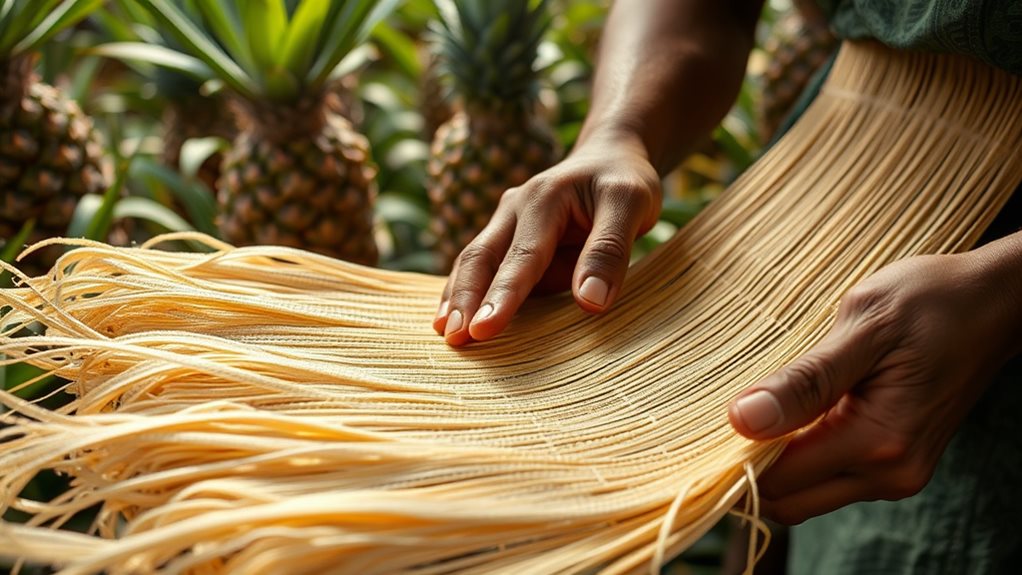
    Fibers are extracted manually. You're looking at plant leaves scraped painstakingly with tools like broken porcelain. Each scraped fiber's then knotted by hand to form long filaments.

    This labor-intensive prep underscores how delicate the weaving process really is.

    A Look at Piña's History

    Understanding the plant's origins and fiber extraction sets the stage to examine the textile's historical trajectory.

    Pineapples arrived in the Philippines via Spanish explorers, marking the start of piña fabric's story. You'll find that the late 18th and early 19th centuries represent piña's peak. The colonial legacy significantly shaped its development, as Spanish needlework techniques influenced piña production, enriching its artistic complexity. Piña textiles historically arrived in the U.S. as souvenirs after Manila opened to American ships.

    Piña quickly garnered international acclaim. You'll notice it became a prized luxury, desired by European aristocracy. Its exquisite craftsmanship signified elegance.

    Important parts of the history include:

    • Use in royal garments
    • Export to Europe.
    • Symbol of status
    • Adoption in Filipino garments
    • Exquisite embroidery

    Notably, piña appeared in garments worn by royalty like Queen Victoria. The cultural exchange fostered a rich textile tradition; nowadays, it signifies Filipino artistry and continues to captivate audiences.

    Sourcing the Fibers

    After pineapples are harvested, the leaves must be gathered to begin extracting the fibers, which reduces waste. Due to millions of pineapple leaves being discarded annually, you've got an abundant source of raw material. The primary sources are farms in the Philippines. Fiber extraction usually involves scraping the leaf pulp. Modern methods use semi-automatic machines, increasing efficiency.

    You'll find that the fibers are long and somewhat stiff, needing careful handing to help prevent breakage. Two types of fibers are actually produced, the coarser ones for items like dolls or icons, and the finer ones for piña cloth. You should be aware that piña fiber offers genuine environmental benefits. It doesn't need more land, water, or fertilizers. Using the leaves also reduces CO2 emissions.

    Aspect Details
    Abundance Millions of leaves discarded annually
    Main sources Pineapple farms in the Philippines
    Fiber qualities Long and stiff fibers needing careful handling
    Extraction Method Traditional scraping or efficient, modern machinery

    The Weaving Process

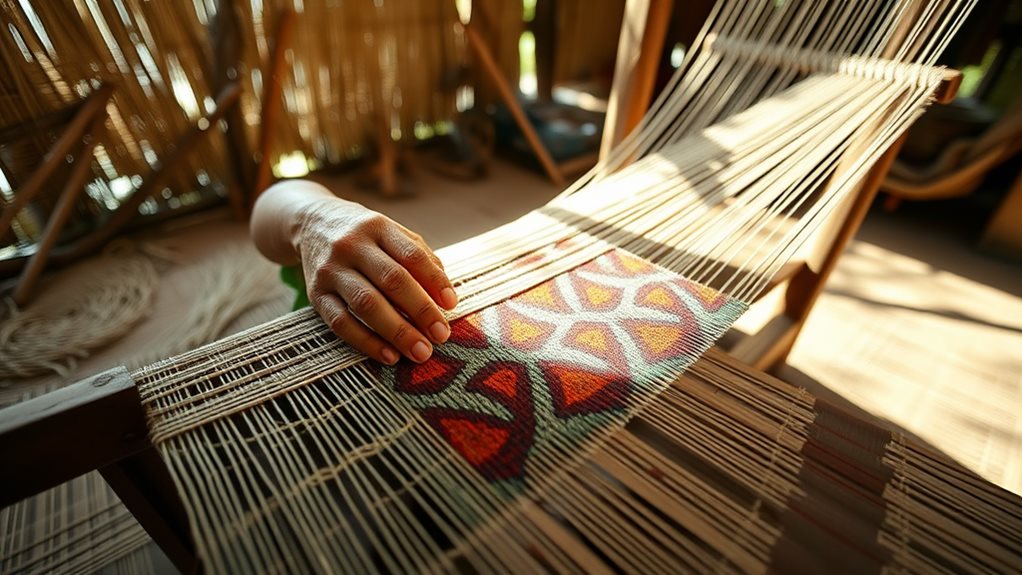
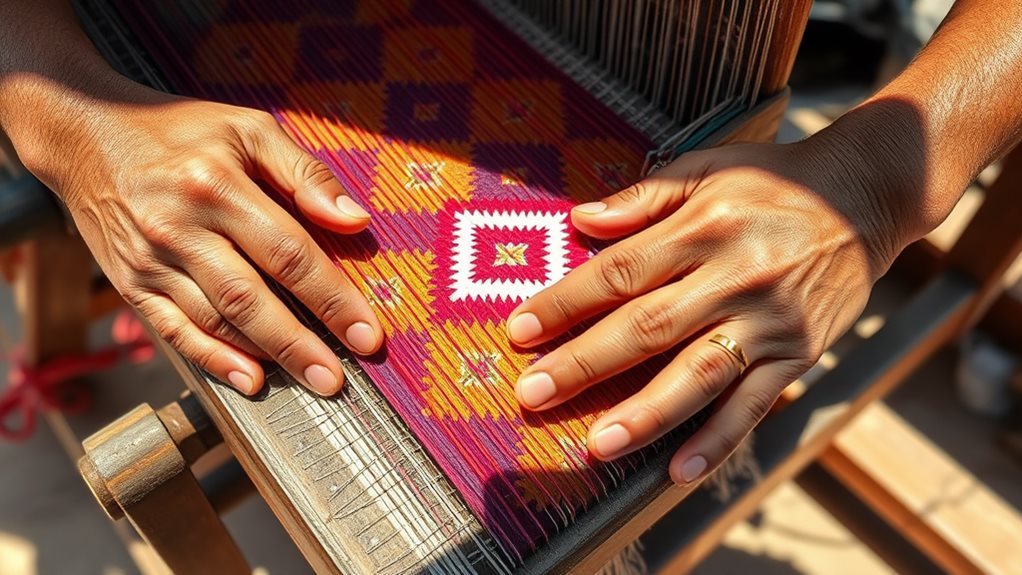
    Now we'll examine the step-by-step processes to create piña fabric. You'll start by using looms that feature foot-operated treadles and overhead warp beams. These looms are crucial for weaving the delicate piña fibers. The size of the sucod dictates the thickness and width of the cloth you're creating.

    The weaving process is slow; you'll find that the fibers often break because they're very fine. Often, you'll blend piña fibers with other materials such as silk or cotton to increase durability. Piña fabric is popular among local couturiers, so it's often used for haute couture fashion shows.

    Once you complete the weaving, you could add intricate embroidery, particularly calado patterns, to enhance the fabric's aesthetic. Here are a few quick facts:

    • Sucod size impacts cloth dimensions.
    • Fiber fragility slows production.
    • Blending enhances durability.
    • Embroidery adds detail.
    • Handwoven with floor looms.

    You must understand that mastering weaving techniques is crucial for piña fabric production. The loom operation requires skillful handling and precise movements to ensure a high-quality textile.

    You'll discover that this process is labor-intensive but yields a beautiful, culturally significant fabric.

    Benefits for the Environment

    Piña fabric production isn't just a labor of love and cultural preservation; it offers substantial environmental benefits. You're participating in responsible waste management by utilizing Piñatex, derived from waste pineapple leaves.

    You're addressing approximately 27 million tons of discarded leaves annually by transforming agricultural byproducts into usable resources; that's resource efficiency. The conversion process creates biomass that we can use for fertilizer or biogas, reducing landfill contributions. The use of pineapple leaves also creates additional income opportunities for pineapple farming communities.

    You're contributing to carbon footprint reduction. Piñatex, unlike leather, avoids harmful chemicals. The plant-based binding agents minimize harm; that makes it eco friendly material.

    You reduce reliance on petroleum-based products because it offers a sustainable alternative to synthetic materials. You protect marine life by reducing chemical runoff.

    Piña fabric promotes sustainable textiles and supports biodiversity, fostering balance around pineapple farming.

    Supporting Local Economies

    You bolster local economies through piña fabric production, from the employment of up to 30 individuals across farming and weaving to the preservation of generational skills.

    You're fostering economic resilience by supporting small and medium-sized enterprises (MSMEs) that create jobs and diversify products, from textiles to ropes. With community engagement, MSMEs source raw materials locally, supporting pineapple farmers. Annually, approximately 150 billion pieces of clothing end up in landfills, but using pina fiber as an alternative fabric prevents more clothes from contributing to this problem.

    • Piña fiber adds value to discarded pineapple leaves.
    • Sustainable fashion drives up demand for piña.
    • Local procurement strengthens the local market.
    • Blending piña with other fibers increases utility.
    • Quality production raises profit margins over conventional fabrics.

    You enhance local livelihoods, providing opportunities for new product development and innovation.

    Initiatives from organizations such as the DOST-PTRI encourage using locally sourced natural textiles, blending piña fibers, and using local designers.

    Local fashion sees significant growth, revitalizing the industry.

    Piña as a Cultural Symbol

    Beyond economic impacts, the cultural significance of piña is deeply ingrained in Filipino heritage. You'll find piña isn't just fabric; it's a powerful marker of cultural identity.

    Introduced during the Spanish colonial era, its production began around the 1570s, swiftly attaining luxury status, and becoming coveted in Europe. The SFO Museum exhibition highlights this textile treasure.

    This exotic textile reflects deep cultural exchange. Note how piña became integral to the *barong tagalog* and *baro't saya*, solidifying its place in traditional Filipino garments. The renowned *María Clara* ensemble vividly showcases piña's influence.

    You're seeing a fabric primarily used for formal and ceremonial attire, enriching your understanding of Filipino culture. Its delicate embroidery, intricate design, and luxurious appearance are testaments to refined artisanal heritage.

    Piña handloom weaving from Aklan earned UNESCO recognition in 2023, highlighting the value of its textile heritage.

    Sustaining Traditional Craftsmanship

    Key to preserving the rich legacy of piña fabric is sustaining its traditional craftsmanship.

    You've got to support the artisans who practice time-honored techniques. You must understand the process involves painstaking labor, from fiber extraction to weaving, all done by hand. Traditional tools, like bamboo blades and simple looms, remain essential. According to the Lacis Museum exhibition, the early artisans demonstrated a fine workmanship that we strive to emulate.

    Preservation also means guarding the intricate methods passed down through generations. These craftsmanship techniques are more than skill; it's cultural heritage.

    • Maintaining the use of pineapple leaves without harmful chemicals protects ecological health.
    • Supporting local communities helps secure piña production.
    • Passage of craftsmanship ensures that future generations continue the legacy of piña.
    • Safeguarding fiber extraction by scrapping the pulp of pineapple.
    • Protecting traditional techniques, like calado embroidery.

    Piña in Contemporary Fashion

    Piña has increasingly permeated contemporary fashion, illustrating its adaptation from cultural artifact to versatile textile. You'll find local brands like Filip + Inna integrating 100% piña silk into modern kamisa tops and Ma. Collecta using piña in everyday items. These usages demonstrate current piña trends emphasizing sustainability.

    You see piña's increased employment in haute couture, driven by its luxurious feel and environmental benefits. These piña trends are further supported by collaborative efforts, such as Raquel's Piña Cloth partnering with designers for hand-woven fabrics; Raquel Eliserio also won the Global Eco Artisan Awards in 2021.

    Piña collaborations often mix materials like cotton or abaca, boosting versatility. You also observe its use expanding beyond traditional clothing to sneakers and even vegan leather alternatives. Showcasing embroidery techniques like calado ensures traditional methods persist, adding aesthetic value.

    The Future of Piña Textile

    Looking ahead, the future of piña textile hinges on intersecting factors like sustainability, economic viability, cultural preservation, technological innovation, and market trends.

    As consumer demand increases for sustainable materials, piña's market potential expands, and its eco-friendly production, minimal resource use, and biodegradable nature all make it very appealing. Ananas Anam was founded to produce Piñatex, which has increased Piña's appeal in the textile industry.

    You'll see future innovations in mechanized fiber extraction and Piñatex customization driving scalability and wider adoption. This will also support creating jobs and increasing income for local communities that rely on piña for their livelihood.

    You should be aware of these benefits:

    • Waste reduction via pineapple leaf use
    • No extra needed land, water, resources
    • Less damage to the environment via avoiding harsh chemicals
    • Renewable resource with numerous harvests
    • Biodegradable and compostable

    Blending piña with other fibers enhances value.

    You'll witness its increasing incorporation into mainstream fashion, which will further solidify its place in the textile industry.

  • Preserving Ikat Weaving Traditions in the Philippines

    Preserving Ikat Weaving Traditions in the Philippines

    You can help preserve the Philippines' ikat weaving traditions. These traditions stretch back centuries in Mindanao and the Cordillera Mountains. Keep alive warp ikat textiles, some 400 years old, found in Romblon. Support artisans who use backstrap looms and natural dyes. Advocate for workshops using bamboo and pineapple fibers. Recognize the GAMABA awardees. You'll foster weaving's economic impact and cultural significance. Discover more invaluable insights below!

    Historical Roots of Ikat in the Philippines

    Ikat weaving, a centuries-old textile technique incorporating resist-dyeing yarns before weaving, has deep historical roots in the Philippines.

    You'll find evidence of this in places like Banton Island, Romblon, where the oldest known warp ikat textiles were discovered, showcasing their weaving heritage.

    You see how these textiles carry historical significance? You'll appreciate that ikat's not confined to one region; it's spread widely, especially in Mindanao and the Cordillera Mountains. Narda Capuyan witnessed the ikat technique in practice, which deepened her understanding of its cultural significance in the Cordillera region.

    In Mindanao, ikat's known explicitly for its vibrant fabrics, a celebrated art form expressing its cultural importance.

    And don't forget how traditional techniques evolved through cultural exchanges among groups like the Ifugao and Isinai.

    You'll notice artisan stories intertwined with the history of dyeing processes.

    The textile evolution is tied to both traditional and modern methods.

    Cultural Significance of Ikat Patterns

    Beyond its historical presence, the artistry of patterned textiles holds profound cultural weight for Filipino communities. Ikat patterns aren't just decorative; they're imbued with symbolic meanings, reflecting the cultural identity of those who create and wear them.

    You'll find textiles acting as storybooks, passing down narratives from generation to generation. These narratives often illuminate your community's values and history. The oldest existing textiles, dating back four hundred years, are found in Banton Island, Romblon.

    Understand the depth of meaning in patterns. Consider how a textile reveals more than meets the eye:

    • Ikat symbolizes the cycle of life and death.
    • Geometric shapes might represent the balance between masculine and feminine.
    • Motifs often show a deep reverence for nature.
    • Patterns strongly reinforce cultural identity.

    Each color, shape, and motif carries significance, contributing to the strong cultural identity associated with ikat weaving.

    You see communities bonding and safeguarding their heritage through these traditions.

    Weaving Techniques and Materials

    A symphony of skill and artistry, weaving techniques define ikat traditions in the Philippines, where vibrant patterns emerge from the careful manipulation of threads and dyes. You'll find that backstrap looms and resist-dyeing are essential components that demand great skill, physical effort, and an intimate understanding of materials.

    Ikat patterns come to life through resist dyeing techniques, where yarn is selectively tied to prevent dyes from penetrating certain areas. Reflecting the spirits of "woven dreams", the backstrap loom serves as a centerpiece, needing the weaver's dexterity and strength to manipulate.

    Yarn preparation is meticulous; you select, fluff, spin, and skein the yarn. Natural dyes, sourced from plants, fruits, and barks, imbue the threads with vibrant colors. Abaca fiber is valued for its strength.

    Essential weaving tools, like the *pinsel* (beater) and *lambitin* (reel), facilitate the weaving process. Double ikat, involving meticulous resist dyeing of both warp and weft, elevates the complexity of the designs, showcasing the profound artistry ingrained in these traditions.

    Regional Styles and Diversity

    Across the Philippine archipelago, you'll find that regional styles and diversity flourish in ikat weaving, with each area showcasing unique approaches that reflect its distinct cultural heritage. Communities adapt ikat techniques to their local environments, spiritual beliefs, and artistic visions, resulting in a rich tapestry of designs, patterns, and colors that embody the diverse identities of the Philippine people.

    These regional nuances not only enhance the aesthetic appeal of ikat textiles but also serve as powerful symbols of cultural pride and collective history. The weaving techniques used include resist dyeing, ikat dyeing, and overdyeing to create a diverse range of patterns.

    Consider the vibrant diversity:

    1. Mindanao's geometric designs stand out using distinct resist-dyeing.
    2. Cordillera's nature-inspired motifs blend tradition.
    3. T'boli *t'nalak* fabrics showcase cultural identity with traditional patterns.
    4. Island-wide refinement reflects textile diversity.

    These distinctive regional techniques highlight the cultural exchanges across communities.

    Although younger generations' migration challenges traditional preservation, efforts persist—elders pass on skills, families collaborate, and platforms boost cultural resilience by showing weaving in contemporary designs.

    Economic Impact on Communities

    Ikat weaving traditions aren't just cultural treasures, they're also significant economic drivers in many Philippine communities.

    You'll see how the traditions provide income for weavers, fostering economic empowerment. Communities cultivate cultural identity through engagement with ikat. You're also enabling ongoing cultural sustainability by supporting community-led initiatives.

    The revival of traditional weaving creates jobs, especially in rural areas supporting sericulture and handloom weaving. The Kiyyangan Weavers Association fosters intergenerational collaboration, ensuring skills are passed down and traditions are preserved.

    As demand increases for textiles such as Ifugao textiles, you're bolstering revenue streams. The partnerships between weavers and local governments enable them to procure tools.

    You witness market expansion through direct orders, exports, and innovations, such as ikat shoes.

    We see the Philippines Textile Research Institute supporting sericulture projects, while you support weaver's potential through product promotion. Your support drives diversification using new plant-based yarns.

    Challenges Facing Ikat Weavers

    Consider these crucial factors:

    • Maintaining access to resources despite rising demand.
    • Balancing technological advancements with traditional methods.
    • Combating *cultural erosion* through *community support*.
    • Promoting weaving as a viable career to bridge the *generational disconnect*. The increased demand for natural dyes has put a strain on weavers to acquire these resources.

    To promote *sustainable practices*, adopt new yarn sources.

    To flourish, you've got to emphasize the cultural value of your work while seeking *community support*.

    The Role of Education in Preservation

    Education is foundational to preserving ikat weaving traditions, for it not only promotes cultural heritage and the significance of traditional techniques, but also empowers communities to sustain their practices. You'll find that educational initiatives ensure these skills aren't lost. Practical community workshops pass down techniques from experienced artisans. You also empower weavers economically by providing market-oriented skills. Aren't you preserving techniques? In East Flores, Indonesia, Ria emphasizes the cultural importance in weaving Ikat during death ceremonies, ensuring that the tradition resonates deeply within the community.

    Educational Efforts Outcomes
    Documenting methods Preservation for future generations
    Standardizing practices Maintaining consistency and quality
    Innovative adaptations Relevance to modern contexts
    Workshops for artisans Skill refinement and new methods
    Collaborative projects Facilitating knowledge sharing

    You encourage sustainable practices, like using natural dyes and incorporating technology. Diversification of products broadens market appeal. You're promoting awareness of laws, aren't you?

    Gamaba Award and Artisan Recognition

    • Recognition of excellence in ikat weaving.
    • Support for cultural preservation.
    • Promotion of cultural pride.
    • Community engagement enhancement.

    Salinta Monon, Yabing Masalon Dulo, and Barbara Ofong are a few who've received this esteemed recognition. The award helps preserve their crafts and pass down their skills. In Baguio City, on December 3, 2024, three GAMABA awardees from Mindanao were honored at the World Ikat Textiles Symposium further highlighting the weaving's cultural connections.

    Centers such as Schools of Living Tradition ensure cultural continuity. GAMABA promotes national pride and increases appreciation for cultural heritage.

    You're seeing artisans getting legal protections. These initiatives, though challenging, secure a vibrant future for traditional arts.

    Modern Innovations in Ikat Weaving

    Beyond artisan recognition and cultural preservation, the evolution of ikat weaving embraces modern innovations. You're seeing weavers incorporating natural fibers like bamboo and pineapple, crafting sustainable fabrics, plus, the creation of Bamboo Textile Fiber Innovation Hubs (BTFIHs). Modernization boosts productivity through technology while safeguarding tradition. You'll also find training programs empowering local artisans. HABI Philippine Textile Council promotes traditional textiles and modern lifestyles.

    You're enhancing market access, thanks to innovative designs. These range from digital Jacquard weaving to sculptural techniques. What's more, resist-dyeing innovations and the effective use of unconventional materials are on the rise. You can see ikat's global reach expanding through international events.

    Innovation Impact
    Natural Fibers Eco-friendly weaves, support sustainability
    Digital Looms Enhanced productivity, intricate patterns
    Training Programs Improved weaving skills, greater income for weavers

    Future Directions for Ikat Preservation

    One crucial step involves integrating community engagement, cultural significance, economic strategies, environmental sustainability, and education to ensure ikat preservation's comprehensive approach.

    You'll find that future collaborations are essential; weaving together local knowledge with academic insights, designer creativity, and marketing expertise. These can expand market reach while upholding traditions. The recent World Ikat Textile Symposium in Baguio highlighted the importance of such collaborations in a global context.

    To secure ikat weaving's future, you should consider:

    • Investing in intergenerational learning programs.
    • Supporting sustainable sourcing of abaca and natural dyes.
    • Promoting educational workshops.
    • Developing innovative designs that respect cultural aesthetics.

    Global outreach can boost appreciation and demand for ikat. You can achieve this through cultural exchanges at events such as the World Ikat Textile Symposium.

    These can foster learning and innovation. It's important to continue documenting weaving techniques to preserve this integral part of the Philippines' rich cultural heritage, ensuring traditions thrive for generations.

  • Symbolism Behind Yakan Weaving Patterns

    Symbolism Behind Yakan Weaving Patterns

    Yakan weaving patterns are rich with symbolism. You'll see how nature influences motifs like rice grains and plants. Social status is displayed, reflecting power and cultural identity. Floral patterns embody beauty, while diamonds signify agriculture and unity. Animal motifs showcase daily lives and hold specific meanings. Colors add visual impact and connect to spiritual moods. These intricate designs communicate cultural history. There's so much to learn about the meaning of the community's art.

    Nature's Influence on Yakan Motifs

    Yakan weaving motifs are deeply intertwined with nature, reflecting the Yakan people's profound respect for their environment. You'll see geometric designs mirroring natural elements, such as rice grains. It shows a deep commitment to environmental respect.

    You'll notice plant-inspired designs celebrating agriculture. Animal motifs, also natural elements, symbolize power and authority in their world. Weaving is integral to Yakan cultural life, and these motifs keep it going. Natural motifs are more than decoration; they're a link to the past, keeping cultural heritage alive.

    The impact of nature ensures designs resonate with geometric symbols. These shapes usually represent nature itself. You can often see the Yakan worldview where shapes of nature express harmony.

    Intricate patterns may represent strength. It's similar to bamboo, that symbolizes resilience. You see that the "kaba-kaba" motif looks like realistic butterfly wings.

    The Significance of Social Status in Designs

    Certain patriarchal motifs, like the snake, symbolize authority, often reserved for male members of royalty or wealthy clans.

    You're essentially observing a society's values and power dynamics woven into cloth. You can tell so much about Yakan culture.

    Here is the list item for this subject:

    • Weaving serves as a determinant of social status.
    • Designs reflect patriarchal power.
    • Fabrics reflect the culture's social identity.
    • The patterns maintain connection to the culture's ancestors.

    Floral Patterns and Their Meaning

    Beyond social status woven in designs, you will see that the Yakan's respect for the natural world blossoms through the representation of floral patterns. These motifs, often realistic, echo nature's beauty. You'll find them enriching formal wear, such as the inalaman, which is a decorated overskirt. You can appreciate that the bunga-sama designs exemplify intricate floral symbolism, showcasing the incredible artistry of Yakan weavers, reflecting nature's abundance. Handwoven textiles are integral to Yakan cultural expressions, revealing how deeply ingrained this art form is within the community.

    These aren't just beautiful details; they're essential to cultural heritage. Floral patterns contribute significantly to Yakan identity, connecting the community through shared artistic expression. The patterns aren't just designs; they're a spiritual and cultural journey for the weavers. Observe how weaving reinforces Yakan values.

    Pattern Type Symbolic Connection Cultural Significance
    Bunga Sama High status, nature's beauty Adorning blouses and pants
    Inalaman Design Flowers with diamonds Formal wear, respect for women
    Seputangan Nature, spirituality Headcloths, connections to the natural.
    General Floral Community harmony Reinforces Yakan values and beliefs

    Geometric Shapes: Diamonds and Harmony

    Reflecting nature, power, and status, you'll notice that diamonds are a common geometric motif in Yakan weaving, intricately woven on backstrap looms. You're seeing a reflection of rice grains, embodying agricultural significance. These aren't just decorations; they're integral to the "bunga-sama" motif, reflecting diamond symbolism. Diamonds, much like those found in Guatemalan weaving, symbolize arms.

    In Yakan textiles, you'll discover various cultural values. You'll observe how patterns aren't just aesthetic; they're deeply rooted in community identity and geometric unity.

    • The precision you notice highlights the artisan's skill.
    • Diamonds often appear in bolder designs.
    • Each element contributes to artistic richness.
    • Garments such as the "seputangan" are truly valued.

    These reflect intricate traditions. Geometric unity isn't an accident; it highlights balance, harmony, and the weaving together of spiritual and earthly elements.

    You're experiencing art, status, and cultural heritage expressed through the language of geometric shapes. You're experiencing the core of the Yakan spirit.

    Animal Symbolism in Yakan Weaving

    You'll find realistically represented animal motifs in Yakan textiles, mirroring both the weavers' natural environment and profound cultural symbolism. Through animal representation, you see reflections of daily life, agricultural practices, and deep respect for nature. The Yakan community integrates animals into their textiles, showing their interconnectedness with the world around them.

    You'll notice that specific creatures carry significant symbolic meanings. For instance, you might see snakes, which symbolize power, authority, or even serve as a vehicle for spirits. These snake animal representations are often woven into garments reserved for prestigious individuals. This status symbolism, combined with visually stunning designs, helps reinforce the community's identity and cultural heritage.

    Traditional weaving techniques ensure these animal motifs persist, influencing Yakan designs' distinct aesthetic appeal. Yakan weaves showcase intricate animal-inspired patterns in various garments. The Seputangan (head cover), Badju Lapi (blouse), and Sawal (trousers) frequently utilize animal designs to further represent village life.

    It's amazing how these patterns reflect the artistic expression of the Yakan weavers.

    Weaving as a Cultural Anchor

    As an integral part of Yakan culture, weaving practices, passed down through generations, anchor the community's cultural and historical significance.

    You'll find the vibrant colors and intricate designs aren't just aesthetically pleasing; they're reflections of traditional influences and deeply rooted spiritual beliefs. Think of those textiles, often blending Islamic symbols with geometric patterns, as visual narratives of village life. You're not just seeing art; you're witnessing a testament to their cultural identity. The Yakan tribe relies on demonstration and modeling in their structured pedagogy to ensure intricate weaving techniques are properly taught.

    Weaving serves more than you realize. You'll see it reinforces cultural values, ensuring the tribe's continued survival. Through weaving, strong ancestral connections are maintained.

    You're actively participating in keeping the threads of tradition alive when you engage with Yakan textiles.

    • Maintaining social cohesion.
    • Reinforcing cultural identity.
    • Connecting with ancestors.
    • Reflecting community values.

    It's about preserving customs for future generations; you're safeguarding the very essence of the Yakan people.

    Techniques of Yakan Weaving

    Yakan weaving employs distinct approaches, combining traditional tools with refined pattern-making skills.

    You'll notice they use the tennun loom, which is secured with the awit belt and tindakan brace. The deddug warp beam is essential for the warp techniques. With this loom, you can produce textiles reflecting your cultural identity. Some Yakan women believe that their weaving skills are ensured by cutting the umbilical cord with a special wooden bar.

    You pre-program intricate designs by counting threads using the megpeneh method and carefully spacing the threads using the sud dendam comb. The nuwah procedure requires diligence as you thread each strand through the comb.

    Tabid yarn bundles rows to create the desired pattern, while sellag threads add background color, wound on anak tulak sticks. Sulip threads thicken the pattern.

    Weaving processes are passed down through demonstration, ensuring pattern precision and cultural continuity, and weaving supports social development.

    The Language of Design and Pattern

    Design and pattern in Yakan weaving serve as a visual language deeply entrenched in cultural symbolism and community identity. The intricate designs aren't just aesthetic; they're a form of design communication, a story told through visual storytelling.

    You'll notice how shapes, colors, and motifs blend to convey meaning.

    • Geometric shapes symbolize different aspects of life.
    • Floral motifs often reflect nature's importance.
    • Animal symbols embody power or particular traits.
    • Color choices enhance visual impact and meaning.

    Motifs repeat, enhancing harmony, and reflecting unity, reminding you of the Yakan's strong community bonds. Weaving traditions embody sacred geometry, connecting the Yakan people to something greater.

    Consider the seputangan, a headscarf, as it communicates a person's identity. Bunga-sama designs may denote status.

    You're witnessing not just fabric, but a rich tapestry of culture woven into every thread, reflecting resilience, harmony, and cultural pride. They adapt, innovate, but preserve their unique voice.

    Spirituality Woven Into Textiles

    Beyond the language of design, Yakan textiles embody an intimate connection to spirituality. You'll find that this art form resonates with ancestral roots, serving as a bridge to the past. Weaving's symbolic representation of regeneration mirrors nature's cycles, showing a deep spiritual connection to the earth. Weaving isn't just a craft; it's a spiritual journey. The designs and colors within the textiles further represent the Yakan's unique cultural identity.

    Don't you see how tradition maintains Yakan's woven heritage? Yakan weavers seek guidance from ancestors, integrating prayers into their work. Understand that through expressive colors, you're seeing emotions and spiritual moods, naturally dyed to connect with the earth. Specific motifs, like snakes and geometric shapes, aren't just decorative—they're loaded with spiritual meaning. Here are a few things that inspire us:

    Inspiration Type Description
    Nature Motifs echo plants and animals, showing our spiritual bond.
    Geometry Shapes represent cosmic elements, connecting us to the universe.
    Color Colors express emotions and moods, reflecting our spiritual beliefs.
    Ancestry Seeking spiritual guidance from ancestors, with weaving representing woven heritage.

    Weaving's Community Impact

    Because weaving is more than a solitary pursuit, it profoundly influences Yakan communities, serving as a crucial economic engine and a powerful means of preserving cultural identity.

    You'll find the craft directly aids economic development, especially as Yakan textiles get showcased internationally. Weaving provides crucial income, an alternative livelihood that directly combats poverty: Yakan weaving fosters community resilience during crises through social cohesion. The Yakan people's migration from Basilan to Zamboanga City influenced the evolution of their weaving techniques.

    Here's how it looks:

    • Sales of Yakan woven products, especially in tourist villages, offer sustained economic support.
    • Traditional weaving methods, deeply interwoven with environmental influences, continue to thrive.
    • Shared skills, continuously passed down through family, maintains links with ancestral practices.
    • In Yakan culture, designs communicate social details, cementing cultural history and pride.

    You're witnessing a vibrant social fabric, rich in tradition, ensuring that the community thrives through art.

    Educational programs and increased tourism further bolsters cultural preservation.

  • Natural Dyeing Methods in Philippine Textile Production

    Natural Dyeing Methods in Philippine Textile Production

    You'll find Philippine textile production uses natural dyes from diverse plants like indigo and achuete. Artisans apply ikat and resist techniques to create unique patterns. Mordants, including alum and bio-mordants, fix dyes and alter colors. The PTRI identifies local dye sources and offers training. You'll boost the economy, reduce environmental impact, and conserve traditions as you implement these methods. You'll discover the economic and ecological benefits of Philippine natural dyes should you continue to explore.

    History of Natural Dyes

    Natural dyeing has millennia of history, evidenced in ancient civilizations. You'll find its roots in the use of resources, whether animal or plant-based.

    Think of Tyrian purple, painstakingly extracted from sea snails, and indigo derived from plants.

    In ancient societies, you'd see how certain dyes became tied to status. Tyrian purple wasn't just a color; it signified wealth and power because of its high cost and the complexity of its production. Cleopatra's barge notably featured this color. This is dye symbolism in action.

    Plant-based dyes such as indigo, saffron, and madders became crucial goods traded across continents in ancient civilizations.

    Before the advent of synthetic alternatives, you can imagine that dye determined your standing in society. The colors available told a story of resources and access before 1856, when everything changed.

    Key Plant Varieties

    Varied flora underlies traditional Philippine textiles. I'll introduce you to key plant varieties crucial to natural dye production.

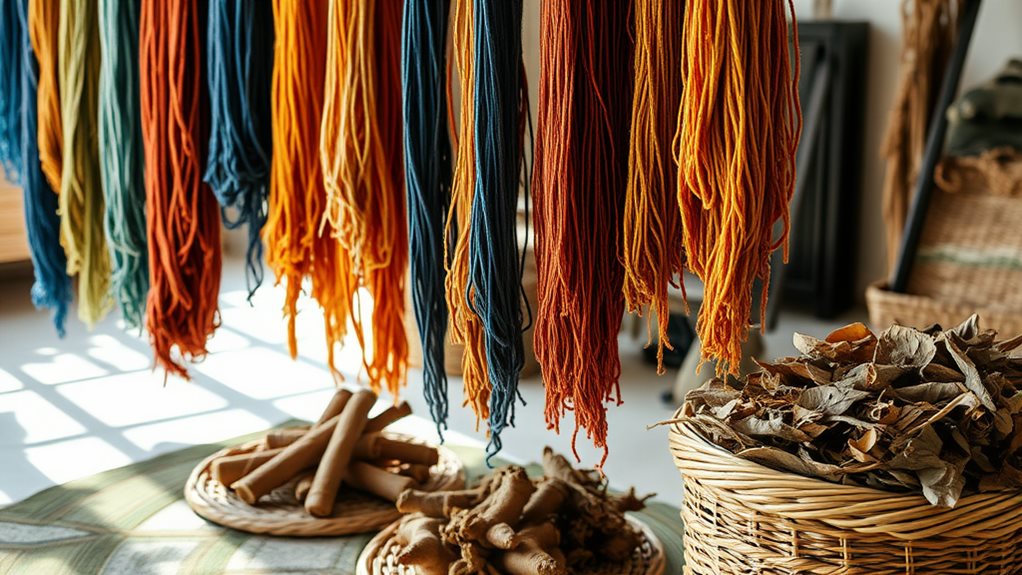
    You'll find Indigo (Indigofera tinctoria) cultivated in tropical areas, especially in Abra, Occidental Mindoro, and Bukidnon. The Itneg people employ Malatayun, a native Indigo variant, to get dark blues and violets. User engagement metrics indicate the popularity of models employing similar extraction methods. Use Sappang wood, and you'll yield pinkish-red and violet hues. Achuete provides you with orange dyes. Tawa-Tawa plant gives vibrant yellows.

    You benefit from plant diversity across multiple regions. Abra, the "Natural Dye Capital," utilizes varied plant sources. Occidental Mindoro and Bukidnon grow Indigo commercially. You can engage in Indigo cultivation and propagation in Antique and local dye production in Rizal.

    These dye properties, combined with extraction methods, affect color characteristics. Through ongoing research, more efficient dyeing processes are realized by optimizing traditional methods.

    Traditional Dyeing Techniques

    Traditional dyeing techniques are integral to Philippine textile history, with evidence tracing back to the Banton cloths from the 14th to 15th century. You'll find ancient mastery displayed through black and red pigments. Pre-20th century, natural dyes dominated before synthetics arose, and reflect cultural symbolism deeply. The use of natural dyes from local plants, minerals, and insects is prevalent.

    Furthermore, artisans maintain ancestral techniques alongside modern methods.

    Ikat dyeing produces unique patterns using tie-dyeing warp or weft threads pre-weaving. Resist dyeing blocks dye with wax for intricate designs. Overdyeing layers colors to achieve depth. Warp-tie dye resist, an ancient Banton technique, combines weaving and dyeing.

    These techniques carry cultural weight. Ikat and resist dyeing shape tribal identity. The T'boli stand out via vibrant t'nalak cloths, an expression of ikat. Textiles, colored using traditional methods, signify status. Dyeing ceremonies and processes become pivotal for storytelling.

    These techniques are powerful expressions of identity:

    • Techniques protect cultural identity.
    • They enable cultural storytelling.
    • They emphasize cultural authenticity.

    Role of Mordants

    Mordants are substances that bind dyes to fabric, enhancing color longevity and saturation. You'll find they create stable complexes, ensuring the dye adheres effectively to fibers.

    Historically, metal salts, such as alum and iron, have been prevalent. Now, we're seeing a shift towards bio-mordants to reduce environmental impact.

    You'll notice mordant types including metallic mordants like copper and tin salts, and tannin-based options such as oak galls work. Remember, different mordants can alter the final color due to varying chemical interactions. Research at PTRI has identified over 100 natural dye sources locally.

    Looking at the Philippine context, indigenous plants like pomegranate can serve as bio-mordants. Pre-mordanting boosts color absorption, impacting color stability, while meta- and post-mordanting offer flexibility.

    The technique you employ depends on the fiber, be it cotton or silk, influencing the final color's variability.

    Regional Dyeing Centers

    You'll find regional dyeing centers critical for propagating natural dyeing techniques and promoting sustainable textile production across the Philippines.

    The DOST-PTRI's establishing Regional Handloom Weaving Innovation Centres. These centers expand to locations like Ilocos Norte, Pangasinan and Antique.

    The Natural Fibre and Bamboo Textile Innovation Hubs, alongside other initiatives, aim for inclusive regional development. These initiatives were announced during the National Textile Convention (TELACon) in Pasay City.

    These centers embody regional collaboration.

    • They promote local craftsmanship.
    • They focus on sustainability.
    • They also foster technological advancement.

    Driving digital empowerment promotes competitiveness.

    You'll see innovation hubs support yarn production and innovation.

    DOST's funding aims to fulfill goals like establishing a textile innovation center per region by 2028, and you'll engage in community engagement through education and training programs.

    The centres optimize traditional methods and use over 100 natural dye sources.

    This exemplifies the dedication to non-toxic, environmentally beneficial practices, reflecting cultural significance in Philippine textiles.

    The Abra Example

    Consider Abra, a Philippine province recognized for its strong natural dyeing traditions. You find that the Tingguian culture is central, with generations of indigenous knowledge driving the industry. You'll see how they've mastered dye extraction from plants, like indigo from *malatayum*. Sustainable practices ensure resource management. The province's slow development has, however, kept natural dyeing methods alive.

    Dye Source Color Produced
    Indigofera tinctoria Blue
    Mahogany Bark Brown
    *Caeselpinia sappan* Pinkish-Red/Violet
    Achuete Seeds Orange/Yellow

    You'll note processes involving chopping, grinding, and boiling plant materials. Mordants, such as lime or mud, play a vital role in intensifying hues. The community, including families like the Agaids, passes down techniques. You witness the preservation of their heritage, as Abra continues to represent authentic tourism, and it bolsters their economy, supporting local livelihoods. That's how you see it contributes to preservation, combining tradition with development in the industry, and continuing their practices.

    Environmental Advantages

    Moving from the preservation of culture to environmental considerations, natural dyeing presents distinct ecological benefits. You're replacing synthetic dyes with less toxic alternatives, actively contributing to sustainable practices.

    You'll find that sourcing dyes locally, like from coconut husks, reduces the carbon footprint by minimizing transportation emissions and promoting bioresource use. The Textile Institute emphasizes the use of natural dyes, bolstering the shift towards environmentally friendly alternatives.

    Furthermore, you aid in reducing environmental pollution because natural dyes are generally biodegradable, unlike synthetic counterparts. The reliance on plant-based resources supports biodiversity, avoids extensive land use, and conserves water because traditional dyeing consumes less water.

    Your involvement strengthens ecological benefits by:

    • Reducing chemical pollution from dye production.
    • Encouraging efficient biowaste utilization from agriculture.
    • Supporting long-term ecological sustainability.

    You're improving cleaner production using waste materials.

    Economic Impact

    Transitioning to economic considerations reveals natural dyeing's multifaceted influence. You can see job creation in MSMEs and communities, boosting local economies.

    Artisans also enjoy increased income; projects indicate a potential 30% increase. Improved market access for naturally dyed textiles expands economic opportunities. By using these dyes, industries can diversify products, capturing niche markets, and you'll find green financing opportunities become available for MSMEs.

    Republic Act 9242 promotes local textiles with indigenous fibers, potentially enhancing economic benefits. However, current procurement policies, which prioritize lowest bidders, can undermine sustainability efforts. You can still emphasize local materials, fostering domestic industries.

    Governments provide incentives for innovative textile technologies benefiting MSMEs.

    Considering market trends, the demand for unique, sustainable products opens economic avenues, giving you a competitive advantage, particularly in niche segments. High costs can create scaling challenges.

    Natural dyes enhance export opportunities, aligning with international sustainability standards. You'll encounter seasonal fluctuations affecting predictability.

    Therefore, examine artisan benefits because organizations fund R&D, support MSMEs, and launch projects promoting eco-textiles.

    PTRI's Research

    As the Philippine Textile Research Institute (PTRI) serves as a pivotal force in advancing local textile industries, its research significantly contributes to the development and application of natural dyeing methods.

    You'll find that PTRI, identifying over 100 local plant sources, spearheads this shift towards sustainability. They've simplified lengthy traditional processes and developed natural dye kits to promote natural dyeing at home. Weaving communities, such as those in Abra, benefit from this research by preserving their deep-rooted traditions.

    PTRI innovations include crude extracts and 30 NatDye powders, streamlining handling and application. They've optimized processes to reduce dyeing time significantly. These powders aid commercial production after community training.

    The institute's commitment manifests in several areas:

    1. Standardizing natural dye technologies via applied research.
    2. Offering technical training for communities involved in natural dye hubs.
    3. Aiming to employ push and pull market forces for continuous supply.

    With a PHP25 million investment, PTRI boosts natural dye production across regions.

    Through these actions, you'll observe PTRI strategically fostering eco-friendly textile practices.

    Preserving Tradition

    Complementing PTRI's advancements, tradition stands as a vital aspect of natural dyeing, embedding local practices within indigenous communities. You'll find communities like the Itneg and Blaan passing down cultural significance via time-honored techniques, especially in Abra. You see families, like the Agaids, upholding intergenerational learning when imparting dyeing skills to younger generations. Luis Agaid Sr. is recognized as the Father of Natural Dyes within the region.

    Through community engagement in workshops, you're ensuring traditional knowledge continues. You aid in the non-toxic benefits when using plant sources, reducing environmental impact. You're vital in enhancing the value of artisan textiles, driving economic growth and supporting local employment.

    Dye Source Color Produced Cultural Significance
    Indigo Leaves Blue Shades Traditional fermentation for vibrant colors.
    Achuete Seeds Orange Adds value to textiles with its unique hue.
    Narra Bark Brown Shades Employed to enhance textile aesthetic appeal.
    Ipil-ipil trees Violet to Maroon Natural dyeing supports local economies.
  • Inabel Weaving: Preserving Ilocano Heritage Through Textiles

    Inabel Weaving: Preserving Ilocano Heritage Through Textiles

    You'll find Inabel weaving preserves Ilocano heritage. It dates back to pre-colonial times. You see the Ilocano people's resourcefulness in each weave. Designs showcase nature and geometry. Weavers pass down techniques through generations. Economic competition and dwindling weavers threaten the craft. Revitalization efforts engage youth in weaving. Inabel empowers local communities and appears in modern designs. Continuing the Inabel story involves economic support and government recognition. There is much to learn regarding this legacy woven in time.

    A Legacy Woven in Time

    Inabel weaving, tracing its roots to pre-colonial times with "abel" meaning weave in Ilocano, isn't simply a craft but a tangible legacy shaped by the Ilocano people's resourcefulness.

    You're witnessing a vibrant tradition preservation, a living testament to cultural history found prominently in Ilocos Sur and Ilocos Norte.

    You'll appreciate how Inabel adapts while remaining rooted in its beginnings. Passed down generations, Inabel isn't just about everyday textiles; it's a chronicle rendered through patterns and textile techniques.

    These designs feature nature and geometry. Think "binakol," "inuritan," or "kusikos." They aren't merely decorative; they demand mathematical precision, using cotton yarn dyed via age-old and modern methods.

    You'll notice handlooms like the "tillar." These aren't simple tools; they represent the artistry and durability setting Inabel apart.

    It's a story woven in every thread.

    The Cultural Tapestry of Inabel

    The textile symbolism comes alive through nature-inspired motifs. You might spot flowers, plants, and seashells—each element echoing the culture's deep connection to its environment.

    Geometric patterns, such as "binakol," contain an intricate symbolism, carrying meanings of protection or prosperity. Regional themes also surface, spotlighting agricultural influences within Pinilian textiles. The skilled weavers of Ilocos meticulously control thread tension to create the textile. Tension control is vital to achieving the final design.

    Observing the use of Inabel, such as seeing it fashioned into traditional garments like baro't saya, underscores its role in Ilocano identity. When you see an Inabel, understand that you're witnessing a narrative woven through generations.

    Crafting Inabel: The Process

    Crafting Inabel involves a meticulous sequence of processes. First, you're engaged in yarn preparation. This could mean using local or imported cotton threads, often starched for added stiffness and gloss.

    Should you choose local cotton, you'll spin it using traditional methods—pounding and twisting with a spindle. Textiles symbolize beliefs and rituals, so choosing patterns rooted in Ilocano tradition is essential for maintaining cultural significance. Next, you'll brush the yarn to enhance its durability and gloss. You'll then wind the yarns onto bamboo spools, readying them for the loom.

    The next phase involves loom operation. You'll use a hardwood pedal loom called pagablan, comprising wooden frames, pedals, and heddles. The intertwining of warp (*gan-ay*) and weft (*pakan*) is key.

    You insert each warp yarn through the heddle's eye using a weaving hook. You tie the heddles behind the beater before you commence weaving. Remember, it's your footwork controlling the pedals that governs the thread tension.

    Decoding Inabel Patterns

    Decoding, the patterns reveal layers of profound cultural significance, each thread meticulously woven to tell a story.

    You'll find the symbolic meanings deeply rooted in Ilocano heritage, reflecting the people's resilience and artistry. Observe how nature inspires many designs, featuring flowers, plants, and geometric patterns. The intricate process of weaving represents the cultural heritage of the Ilocano people, evident in every design.

    Consider these emotive elements:

    1. The "binakol" pattern, believed to ward off malevolent spirits, offers you a sense of protection.
    2. Floral motifs, such as "sinan-sabong," display beauty.
    3. Patterns resembling seashells connect you to nature.

    Analyzing pattern variations, you'll notice common geometric designs like "inuritan" and "kusikos."

    Note how some patterns integrate stars, fans, and even animal or plant elements, offering a visual feast rooted in local biodiversity.

    While traditional symbolism prevails, modern color schemes and hybrid techniques evolve styles.

    Appreciate that each piece preserves historical narratives.

    Revitalizing a Heritage Craft

    You can see that Inabel's patterns carry stories and significance; now, sustaining this tradition necessitates multifaceted revitalization efforts.

    You aren't only facing a decline in weavers; you're also navigating the pressures of mass-produced textiles and socioeconomic shifts. The softness of Abel cloth makes it highly desirable, presenting an opportunity to highlight its unique qualities in the market.

    To counteract this, you're embedding weaving in educational curricula, and first ladies are spearheading training initiatives. These programs tackle the need for youth engagement directly, sparking interest in younger generations.

    Community weaving workshops teach the craft, further equipping new weavers.

    Economic stability is also vital. You're working to create market opportunities, provide economic incentives, and support local industries.

    Collaborations with designers are modernizing tradition, while documentation and mapping projects meticulously preserve techniques.

    Integrating inabel into modern fashion ensures its enduring appeal.

    The Enduring Appeal of Inabel

    But there's more to it. The process, done entirely by hand, showcases masterful skills. Artisans meticulously plan each design, reflecting their expertise and dedication. Ilocano weavers use age-old wooden looms, expertly maneuvering them to bring intricate patterns to life.

    Moreover, the patterns and motifs evoke:

    • A connection to nature, symbolizing the Ilocano people's deep relationship with the environment.
    • A sense of heritage, with designs passed down through generations, telling stories of ancestors.
    • An appreciation for artistry, honoring the creators who pour their hearts into each thread.

    Inabel's survival stems from Ilocanos' cultural pride, using it for attire and celebrations.

    You're witnessing a legacy continuing to resonate, maintaining its significance from pre-colonial times till today.

    Economic Empowerment Through Weaving

    As Inabel weaving endures, it concurrently serves as a vehicle for economic empowerment within Ilocano communities.

    You'll find it supports local income, bolstering families' financial stability. Aren't job creation and rural development important? Weaving employs artisans, thereby empowering their communities.

    You see how promotional efforts drive market growth, attracting customers and fueling economic sustainability. Exhibitions, collaborations, and digital platforms showcase Inabel, increasing its appeal.

    You enable market access when you connect weavers and buyers, lifting sales. Aren't there training programs to boost skills and ensure long-term industry viability?

    Challenges, however, exist. You revitalize interest through education and awareness, offering incentives to young weavers to combat mass production.

    You encourage sustainable practices to attract environmentally conscious consumers. As tourism benefits your locale, you must foster community involvement through workshops, to ensure community empowerment.

    Inabel in Contemporary Design

    Inabel has seamlessly integrated into contemporary design, evidenced by its increasing presence in modern fashion, evolving techniques, home décor, and collaborations with other art forms.

    Within fashion, you'll find traditional patterns adapted into binakol dresses and kusikos shawls, showcasing how modern aesthetics embrace cultural roots. Are you not moved when you see how traditional techniques evolve by:

    • Blending historic looms with modern materials?
    • Refining weaving to meet modern design sensibilities?
    • Embracing sustainable practices to produce organic contemporary textiles? This preservation ensures its vibrancy in cultural identity.

    Inabel shines in home décor, too. You can appreciate how it enhances modern homes.

    Consider the vibrant colors of throw pillows. You see how designers customize each piece. You ought to marvel at how Inabel partners with artists. Ultimately, it's a testament to its versatility. You appreciate how it preserves cultural identity in contemporary forms.

    Challenges and Opportunities

    Even with its seamless integration into contemporary design, Inabel weaving confronts significant challenges as handmade inabel faces economic competition from mass-produced textiles, resulting in reduced demand and economic disadvantage for traditional weavers.

    You see that dwindling numbers of active weavers and loss of skills exacerbate the situation, threatening the craft's future. Insufficient infrastructure further complicates production. Loom preparation, which involves warping reel, warp beam rod, heddling, and reed insertion, can be time consuming.

    However, you'll find that efforts to revitalize inabel present opportunities. Government recognition, like *Gawad Manlilikha ng Bayan*, inspires cultural pride.

    Education programs ensure the craft's continuation. Collaborations with designers open market opportunities, while cultural events raise awareness.

    The socioeconomic impact involves boosting local economies and preserving Ilocano identity. Addressing the generational shift hinges on cultural transmission.

    Can you help bridge the gap?

    Continuing the Inabel Story

    You'll find that continuing the Inabel story involves preserving traditions, embracing modern applications, and fostering cultural significance through dedicated efforts and economic support.

    It's a duty to champion heritage preservation and weaving traditions. You actively participate when you support the Ilocano weavers, acknowledging that Inabel isn't just cloth, but a narrative woven through generations.

    Weaving traditions get passed down, and modern design interventions will continue to introduce Inabel to a broader audience. These strategies will guarantee its endurance.

    Consider what it would mean:

    • To lose the tangible link to pre-colonial artistry.
    • To witness the disappearance of a craft embodying resilience.
    • To see the fading of motifs reflecting profound connections as it disappears.

    You see how economic support sustains the craft. You're helping ensure artisans can continue the intricate work.

    When you buy Inabel, you're investing in cultural preservation.

  • Hablon Textiles: Reviving Iloilo’s Ancient Weaving Tradition

    Hablon Textiles: Reviving Iloilo’s Ancient Weaving Tradition

    You'll discover hablon textiles, a treasure from Iloilo, Philippines, boasting a heritage predating Spanish colonization. Artisans weave history into each piece. It's crafted using abaca, piña, and cotton. You'll see how hablon embodies Iloilo's cultural identity, reflecting ancestral pride and skill. Discover how the sugar industry caused decline, alongside current revival efforts, including government support and global collaborations. Contemporary designers are now integrating it into modern fashion. Sustainable practices are ensuring hablon aligns with eco-friendly trends and the market. There is even more to uncover!

    A Glimpse Into Hablon's Past

    Weaving its way through centuries, hablon has deep roots in Iloilo's history, which you'll find existed even before the Spanish arrived. Its story is woven with natural fibers like cotton, abaca, pineapple, and maguey, illustrating the ingenuity of early weavers.

    Imagine hablon's early days; its primary purpose was to create textiles for clothing and home use. You'll see "habol," the Hiligaynon origin that means "to weave," which reflects the essence of this craft. These textiles were also traditionally used to create mosquito nets for the home.

    As you delve into the 19th century, Iloilo became the "textile capital" of the Philippines, with hablon playing a crucial role. See the industry flourishing, driven by the extensive use of *weaving tools* and the adoption of *historical techniques*.

    You'll find hablon being exported, significantly boosting the local economy. Unfortunately, the later rise of both the sugar industry and also cheaper, machine-produced textiles then ushered in decline.

    Weaving faced serious challenges around the 1980s due to a shortage of weavers and changing economic dynamics.

    The Art of Hablon Weaving

    It's fascinating to observe how the art of hablon weaving involves intricate processes and tools to produce textiles with diverse patterns and designs.

    You'll see how natural fibers, like abaca, piña, and cotton, shape hablon's texture, though polyester yarns are sometimes used. The choice of materials can influence its quality and comfort, which highlights the importance of quality material. The quality and comfort of the hablon significantly hinges on material choice.

    Let's examine the process: warping involves setting threads, then beaming places them on the loom.

    See fabric emerge as the weft yarn passes through the warp. Traditional equipment, including the tiral and lansadera, supports these weaving techniques, using loom parts and bamboo pedals.

    Before weaving, designers plan textile patterns and color arrangements meticulously. You can differentiate between simple stripe designs and complex, hand-manipulated patterns, allowing for a wide array of culturally influenced motifs.

    Cultural Significance of Hablon

    Beyond its function as mere cloth, hablon embodies a profound cultural significance intricately woven into the heritage of Iloilo. It isn't just about making fabric; it represents Iloilo's cultural identity and weaving heritage.

    Hablon stands as a testament to the region's rich history, particularly felt in towns like Miagao. You'll see its impact in every thread, reminding you of:

    • The pride woven into each garment.
    • The joy it brings during cultural celebrations.
    • The memories of skilled ancestors honoring tradition.
    • The community's vibrant sense of belonging.

    The use of hablon in traditional clothing illustrates your community's deep respect for ancestral skills, doesn't it? This aligns with its origins dating back to the pre-Spanish period, highlighting its long-standing presence in Philippine culture.

    Once everyday wear, hablon now lives mostly in cultural events, a constant reminder of Iloilo's textile capital past. You can view hablon reflecting local pride, much like cherished food or language that connects you to Iloilo.

    Economic Impact Through the Years

    Iloilo's hablon industry reflects significant economic shifts over time. Back in the 1850s, you'd see textiles commanding over 50% of provincial exports, a testament to its economic power.

    However, the rise of sugar in Western Visayas shifted priorities, causing weaving's influence to fade. It's essential to see that even with the advent of machine-woven textiles, hablon has continued to support artisan livelihoods in Iloilo, offering job opportunities and income in local communities. The DOST-PTRI established RYPIC to promote local textile production, aiming to revitalize this sector by utilizing natural textile fibers.

    Think about the *economic resilience* shown by weavers! Now, hablon isn't just surviving; demand persists, spurred by corporate buyers and fashion designers, yet the industry has had to evolve, with many using synthetic fibers due to shortages.

    The establishment of Regional Yarn Production and Innovation Centers (RYPIC) can amplify *economic resilience*, while community involvement, coupled with partnerships, boosts sustainability.

    The Road to Revival

    Hablon's economic story doesn't end with shifts in exports and fiber scarcity; the groundwork for a renaissance began in the early 2000s through governmental backing and collaborations with local artisans.

    You'll see the Department of Tourism joining forces with communities, launching educational initiatives and events. One pivotal point is the Hablon Festival, emerging in 2014, a testament to cultural heritage and handloom patterns. The festival was paused during the COVID-19 pandemic, but resumed in 2022, showing its resilience.

    Innovation isn't being left behind; the Iloilo Science and Technology University established a Regional Yarn Production and Innovation Center in 2019, which is a real game changer.

    But It's more than just textiles; it's about:

    1. Seeing families weaving together again, preserving traditions one thread at a time.
    2. Knowing you're investing in a community's future with every purchase.
    3. Feeling pride in supporting sustainable practices.
    4. Witnessing cultural heritage thriving.

    Since 1991, the Indag-an Primary Multi-Purpose Cooperative has actively helped the hablon industry.

    We can't forget the effort for gender inclusivity and community workshops guided by master weavers.

    You're not just witnessing a comeback, you're witnessing a cultural renaissance.

    Hablon in Modern Fashion

    Designers are increasingly sourcing Iloilo hablon for use in modern fashion, as it holds deep cultural significance, symbolizes local traditions, and demonstrates aesthetic excellence.

    You'll find hablon gracing high-quality shawls, *patadyong*, and even formal wear. Contemporary trends blend hablon patterns with silhouettes to broaden market appeal. Hablon's fine texture lets producers command higher prices due to its craftsmanship. With custom orders starting at Php 500, hablon offers accessible luxury for designers.

    You see, textile innovation marries traditional weaving with modern techniques, creating competitive products. Iloilo's weavers are returning to natural fibers—abaca and piña—to enhance quality for sustainable fashion.

    Though polyester offers durability, compromising traditional appeal, handwoven hablon maintains its high-value status due to unique artistry, driving both local and international demand as cultural pride surges.

    Hablon production's economic influence on Miagao underscores its relevance.

    Hablon Around the Globe

    From luxury clothing to corporate uniforms, hablon's versatility underpins its burgeoning presence in the global marketplace. Iloilo's strategic port propelled hablon into international view back in the 1800s.

    Today, you'll find designers sourcing hablon for high-end creations. Hablon exhibitions showcase tradition, sparking interest worldwide. You see its use in shawls, barongs, and formal wear. The textile industry recognizes hablon as a handcrafted treasure. Many schools, recognizing its cultural and historical value, are now incorporating hablon into their uniforms and events.

    But hablon faces challenges. Consider the impact if:

    • Hablon weaving disappears, leaving only machine-made cloths.
    • Iloilo's women weavers lose their economic independence.
    • The Hiligaynon culture fades, taking hablon's history with it.
    • Future generations forget Iloilo's weaving legacy.

    Global collaborations with international designers will bolster hablon's appeal. Export markets increasingly seek unique textiles. The preservation of this art is in your hands now.

    Preserving Tradition, Embracing Innovation

    Weaving tradition with innovation, you'll find the enduring legacy of Iloilo's hablon rests on balancing the preservation of age-old techniques with the integration of contemporary designs.

    You must understand that Hablon weaving is rooted in Iloilo's pre-colonial past. These towns, like Miagao and Dueñas, carry the weight of textile history, which is now threatened. The rise of machine-made textiles led to a decline, threatening local weaving industries.

    Revitalization requires cultural adaptation. Look at how the Hablon Festival reignites community engagement, showcasing these heritage textiles.

    You're also seeing the rise of groups like Indag-an Multipurpose Cooperative, empowering weavers. However, preservation isn't enough; Innovative techniques are crucial moving forward.

    Material innovation has changed how hablon is made. The integration of materials like rayon with traditional piña makes softer, competitive products appealing to today's markets.

    The Future of Hablon

    Looking ahead, the future of Iloilo's hablon hinges on a multifaceted approach, balancing tradition with progress, as well as environmental impact and financial opportunity.

    Future trends show hablon moving beyond traditional uses, integrating into modern fashion and products. But, can traditional methods meet increasing demand without sacrificing authenticity? The Philippine Fiber Industry Development Authority initiated a Cotton Development Program.

    You'll see how modernization, like the Regional Yarn Production and Innovation Center, aids local yarn production, addressing supply chain gaps.

    Consider the emotional appeal:

    • The hands that pour their heritage into every thread.
    • The stories woven in the intricate designs.
    • The earth tones echoing Iloilo's land.
    • The feeling of wearing a piece of living history.

    Exploring sustainable practices is vital.

    Hablon's resurgence aligns with global demand for eco-friendly fashion. Can you visualize hablon, made with natural fibers, fulfilling European market standards, offering a greener alternative to synthetic textiles?

    You're a potential key player in the evolution through global trends and preserving this heritage by embracing it.

    Supporting Hablon's Legacy

    To truly support hablon's legacy, you must consider the historical roots entwined with modern opportunities, recognizing the vital threads connecting Iloilo's past as the Philippines' textile capital to its present resurgence.

    Especially how the rise of machine-woven fabrics and sugar plantations caused declines overcome through government initiatives, workshops, and now, international recognition. The fabric is often used to create formal attire, including gowns and Barong Tagalog, reflecting its adaptability.

    You're safeguarding a cultural treasure when you champion community initiatives. These projects empower weavers economically, fostering pride in their craft.

    You aid in skill transmission by promoting workshops and training. Consider how Hablon's revival generates income, preserving generational knowledge.

    Artisan collaborations are crucial. Purchasing hablon products directly supports weavers, ensuring fair wages.

    You're endorsing sustainable practices by advocating for local raw material production. Every action preserves hablon's cultural importance for Iloilo and the Philippines, ensuring it echoes through generations, as you safeguard history through conscious choices.

  • T’nalak Weaving: Sacred Patterns of the T’boli

    T’nalak Weaving: Sacred Patterns of the T’boli

    You'll discover T'nalak, the T'boli people's sacred cloth. Women of royal lineage traditionally weave it. You see their woven dreams inspired by Fu Dalu. Black represents soil, red signifies blood, and white embodies purity. The designs tell stories passed through generations. T'nalak holds social, economic, and spiritual significance. Weaving empowers women, preserving T'boli heritage. Various initiatives are vital amid replicas and economic challenges. Continue forward and more will be enlightened.

    The Origin of T'nalak

    T'nalak weaving is an ancient craft of the T'boli people that's traditionally been executed by women of royal lineage around Lake Sebu in South Cotabato, Philippines.

    You'll find it deeply embedded in T'boli culture and folklore, a reflection of their profound connection to nature and spiritual beliefs. Tnalak serves not only as an art form but as a medium of exchange within their barter economy.

    You begin to understand its significance when you consider how it figures prominently in vital events like births, marriages, and rituals. Cherished as a form of cultural expression, it preserves tribal traditions that have been passed down through generations.

    In essence, it's an intrinsic element of T'boli identity.

    You'll hear that T'nalak designs, according to T'nalak myths, originate from dreams. These dreams are seen as guided by Fu Dalu, the T'boli goddess of abaca, ensuring the patterns' authenticity.

    T'nalak legends highlight its importance as both a cultural and spiritual artifact, shaping the motifs you see, and the symbolism found within.

    The Sacredness of the Fabric

    A tapestry of deep spiritual importance, you'll find the fabric woven with the sacredness of T'boli cosmology, linking the natural and supernatural realms.

    You see, the designs aren't just patterns; they're gifts from divine sources. Fu Dalu, the goddess of abacá, inspires weavers through dreams, and they view the t'nalak as a tangible expression of their spiritual connection. These dream experiences makes the designs unique to each weaver.

    You observe patterns rooted in sacred geometry. They embody beliefs, myths, and the very religion binding the T'boli community.

    The colors speak volumes, too. Black represents the fertile soil, red, their ancestral blood, and white, purity. You understand, each t'nalak symbolizes T'boli identity, used in significant life events.

    Through respectful harvesting of abacá fibers, you learn that the T'boli demonstrates a deep respect for their land.

    T'nalak Production

    You'll find that meticulously creating t'nalak involves several complex steps, from preparing abacá fibers to post-weaving treatments, each reflecting the T'boli's deep understanding of their environment and resources.

    You source abacá from the plant's middle trunk. You strip the outer layer and shred the core into fine strands. To make *tembong*, abacá strands are linked end-to-end. Then you dry the threads.

    T'nalak's vibrant colors come from natural *dye techniques*. For black, *knalum* leaves are used. *Loko* roots provide red; annatto seeds, orange, and turmeric, yellow. You'll boil the threads with the dye for days. Lime protects the black dye during red dye preparation. Other colors come from various plants in the environment.

    Weaving happens on a *legogong*, a backstrap loom. A weaver might spend a month on a single cloth.

    Post-weaving, heated cowrie shells burnish the fabric—nut oil follows, adding luster. Hardwood clubs smooth out the T'nalak, giving it that shiny, refined touch.

    Decoding T'nalak Designs

    Having explored the intricate steps of t'nalak production, it's important to consider the depth of meaning woven into each textile.

    You'll find that understanding t'nalak entails unlocking a visual language, where design interpretation unveils the stories of the T'boli people. T'nalak designs, inspired by dreams and the natural environment of Lake Sebu, blend geometrical patterns with nature. You'll see animal symbols aren't merely decorative; they're vessels of cultural meaning. High-quality T'nalak has even been used as currency for livestock and gongs.

    The primary tri-colored palette includes black, red, and white. Shouldn't we consider this color scheme important? Black symbolizes stability, red highlights relief elements, and white represents purity.

    You'll learn that these patterns, inspired by Fu Dalo, aren't just patterns; they're visual storytelling. Diamond-shaped motifs frequently appear. Weavers are skillful. The patterns are unique; they reflect the weaver's visions.

    Motif symbolism is passed down through generations, preserving T'boli heritage.

    Cultural Significance

    As a central piece of T'boli culture, t'nalak holds multilayered significance manifest in social, economic, spiritual, and artistic domains; you'll find it celebrates life events, conveys status, and promotes community bonding through a maternal legacy that intertwines artistic expression with cultural identity.

    Weaving from abaca fibers isn't just a craft; it's a powerful form of cultural symbolism. T'nalak visually represents status, especially for warriors. The tri-color scheme strengthens community identity. It's more than just cloth; it's art, literature, and heritage woven together. T'nalak has even been recognized internationally for its cultural impact, further solidifying its importance.

    As skills pass from mothers to daughters, you're witnessing the continuity of traditions. The ikat dyeing technique creates intricate patterns that reflect the stories and experiences of the T'boli people.

    You're observing a profound cultural depth that defines them, reinforcing its place in their social fabric.

    Role in T'boli Life

    Beyond its cultural symbolism, T'nalak assumes multiple vital roles within T'boli life, deeply interwoven with their traditions and daily existence. You'll find it present at every stage, from birth to death.

    You will see T'nalak guiding ritual practices, connecting you to the spirit world. It's used during births for protection and in funerals to ensure safe passage. During weddings, it represents commitment. Through its motifs, T'nalak enhances communal gatherings. The creation itself fosters unity, men and women working together. T'nalak reinforces your values and cultural memory, inspired by Fu Dalu. The fabric is also prominently featured on the Philippine banknotes, showcasing its cultural importance on a national level.

    Role Significance
    Birth Symbolizes protection and blessing
    Marriage Represents commitment between families
    Funerals Guides the deceased's path to the afterlife
    Celebrations Honor traditions, deities, and ancestors

    Economic Impact

    T'nalak weaving significantly impacts the T'boli economy and offers both opportunities and challenges.

    You'll see that it's a stable income source, allowing T'boli women to contribute financially to their families. Local initiatives boost tourism and commerce, increasing the demand for authentic t'nalak. This weaving is integral to rural development, supporting local communities and preserving traditions. She established the Manlilikha ng Bayan Center to teach the craft to younger generations, fostering economic independence and cultural continuity. You also help preserve their cultural heritage when you purchase it.

    However, mass production threatens authentic craftsmanship. Fake t'nalak undercuts prices, making competition tough. You should know that quality control is crucial. Authentic t'nalak struggles to penetrate markets dominated by replicas, but you can help by recognizing the intrinsic value of T'boli weavings.

    There're market opportunities. T'nalak appears in high-end fashion and the growth in eco-tourism around Lake Sebu increases demand.

    Considering global market trends reflect a desire for economic sustainability. You can see that by supporting fair trade, t'nalak remains a source of income and cultural preservation.

    Women's Empowerment Through Weaving

    Focusing on T'nalak weaving reveals the layers of women's empowerment interwoven into the T'boli culture.

    You'll see how women aren't just weavers; they're leaders, artists, and keepers of ancient traditions. This art reinforces maternal lineage, as the skill passes from mother to daughter, solidifying this cultural continuity.

    Weaving empowerment shines through skill development; as women master complex techniques, they gain respect within their communities. Each design is believed to be inhabited by Fu Dalu, which emphasizes this concept and the spiritual aspect.

    You see women's leadership through preserving T'boli heritage, with T'nalak showcased in cultural festivals.

    Consider that:

    • Women gain community respect and strengthen their social positions through skillful weaving.
    • Weaving is more than a craft; weaving is a source of cultural leadership and inter-generational learning.
    • You notice women at the heart of cultural preservation, central to maintaining traditions.

    You see that T'nalak isn't just fabric; it's about women's evolving roles and women's empowerment within the T'boli community.

    Preservation Efforts

    You can observe that sustaining women's empowerment within the T'boli community requires preservation of T'nalak weaving. Organizations like HABI Initiative actively support local weavers. They're dedicated to cultural advocacy and education.

    The Lang Dulay Weaving Center also stands as a beacon, passing on Lang Dulay's legacy.

    You'll note the emphasis on community involvement. It's crucial in preserving T'nalak. Family members are involved in weaving and abaca harvesting. You see local artisans meticulously maintaining traditional processes. This reflects the community's role in ecological and cultural preservation. The designs of the Tnalak are based on dreams, often leading to the term "dream-weavers" to describe the Tboli women.

    Efforts extend globally, increasing international recognition of T'nalak's cultural significance. Collaborative projects thrive. They're typically in partnership with organizations like ANTHILL Fabrics, offering equitable wages.

    Community programs educate people about T'nalak and the need to preserve it. These programs ensure T'boli cultural identity safeguards their traditions.

    Challenges and the Future

    Despite ongoing preservation efforts, challenges persist that could influence the future of T'nalak weaving. You'll observe a complex interplay of factors impacting its sustainability.

    • Economic viability feels threatened by the labor-intensive process alongside globalization threats that allow machine-made replicas produced easily.
    • Authenticity challenges arise from commercial replication, undermining the value of hand-woven T'nalak. With cultural dilution and skill transfer becoming more difficult, that endangers the tradition. The intricate ikat dyeing technique, a hallmark of T'nalak, demands specialized knowledge passed down through generations, yet its continuation is uncertain.
    • Environmental sustainability faces difficulties, as T'boli culture's connection with nature must be maintained against external influences.

    Balancing technological innovations with cultural preservation is crucial.

    Community involvement is essential to resist cultural dilution. The emphasis on bartering practices and tourism creates opportunities, but you must protect your community against authenticity challenges.

    The future rests on how you navigate these challenges by promoting education, awareness, and supporting sustainable economic opportunities for weavers.

  • Discover the Heart of Gaming Excellence at Gamezone

    Discover the Heart of Gaming Excellence at Gamezone

    Are you ready to embark on an exhilarating journey through the world of online gaming? Look no further than Gamezone, the Philippines’ premier destination for gamers of all levels. Whether you’re a casual player looking for a quick game of Tongits or a seasoned pro aiming to dominate in Pusoy, Gamezone offers an unparalleled experience that will keep you coming back for more. Let’s dive into what makes Gamezone the ultimate gaming paradise and why it should be your go-to platform for endless entertainment.

    A Gaming Oasis at Your Fingertips

    Imagine a place where you can access over 1,000 games, ranging from beloved Filipino classics to cutting-edge slots and casino games. That’s exactly what Gamezone brings to the table. With its user-friendly interface and smooth gameplay, you’ll find yourself immersed in the action within seconds of logging in.

    The Gamezone library is a treasure trove of gaming delights. Fan-favorite Filipino card games like Tongits Plus, Pusoy Plus, and Lucky 9 Plus take center stage, offering exciting twists on traditional classics. But that’s just the beginning. Slot enthusiasts can spin the reels on popular games like Super Gems 2 and Candy Rush, while bingo lovers can enjoy digital versions of their favorite pastimes. For those seeking the thrill of a casino, games like Monopoly and Dreamcatcher await. And if you’re in the mood for something different, why not try your luck with fishing games like Happy Fishing or Mega Fishing?

    Why Gamezone Stands Out from the Crowd

    1. Unmatched Game Variety: With over 1,000 games in its arsenal, Gamezone ensures that boredom is never an option. There’s always a new game to discover or an old favorite to revisit.
    2. Filipino Favorites Reimagined: Gamezone pays homage to Filipino gaming culture by offering modernized versions of traditional card games. Experience the strategy of Tongits, the skill of Pusoy, and the quick thrills of Lucky 9 in a sleek, digital format.
    3. Community Spirit: Gaming is more fun when shared, and Gamezone understands this perfectly. Connect with fellow gamers, share strategies, and make new friends in a vibrant community that spans the entire Philippines.
    4. Regular Updates and Fresh Content: The team behind Gamezone is constantly working to keep things exciting. New games, features, and events are regularly added to ensure that every visit to the platform feels fresh and engaging.
    5. Trusted and Secure Platform: As a proud licensee of PAGCOR (Philippine Amusement and Gaming Corporation), Gamezone adheres to strict regulations that guarantee a safe and fair gaming environment for all players.

    Leveling Up Your Game

    Gamezone isn’t just about playing; it’s about growing as a gamer. Whether you’re a newcomer or a veteran, there’s always room for improvement. Here are some tips to enhance your gameplay:

    1. Master the Basics: Take time to thoroughly understand the rules of each game. Gamezone offers tutorials and guides to help you get started.
    2. Practice Risk Management: In games like Tongits and Pusoy, knowing when to take calculated risks can make all the difference. Be bold, but not reckless.
    3. Study Your Opponents: Pay attention to how others play. Adapting your strategy to counter different playing styles can give you a significant advantage.
    4. Perfect Your Timing: Whether it’s making a move in a card game or spinning the reels on a slot, timing can be crucial. Practice and develop your instincts.
    5. Keep Your Cool: High-stakes moments can be stressful. Stay calm, think clearly, and avoid making impulsive decisions that could cost you the game.

    More Than Just a Gaming Platform

    Gamezone is more than just a collection of games; it’s a thriving ecosystem designed to provide a complete gaming experience. Regular tournaments and events offer players the chance to test their skills against others and win exciting prizes. Imagine the thrill of competing for the title of Tongits Champion or hitting the jackpot in a slot tournament!

    The platform also fosters a sense of community among its users. Share your victories, seek advice on tough game situations, or simply chat with fellow gaming enthusiasts. This social aspect adds an extra layer of enjoyment to the Gamezone experience, making it feel like more than just a gaming site.

    For those who love a good deal, Gamezone frequently offers promotions and bonuses. These can range from welcome packages for new players to loyalty rewards for regular users. Keep an eye out for these offers to maximize your gaming experience and potentially boost your winnings.

    How Does Music Influence the Gaming Experience at Gamezone?

    In Gamezone, the immersive experience is heightened by engaging soundtracks that set the mood for intense gameplay. Players often find that music’s influence on martial arts enhances their focus and rhythm, directly impacting their performance and enjoyment. A well-curated soundtrack transforms each gaming session into an epic adventure.

    The Technology Behind the Magic

    Behind the scenes, Gamezone employs cutting-edge technology to ensure a smooth and enjoyable experience for all users. The platform is optimized for both desktop and mobile play, allowing you to enjoy your favorite games wherever you are. Fast loading times, crisp graphics, and responsive controls are all part of the Gamezone standard.

    Security is also a top priority. Advanced encryption methods protect your personal and financial information, while fair play algorithms ensure that every game is truly random and unbiased. This commitment to technological excellence is what sets Gamezone apart from other online gaming platforms.

    Join the Gamezone Revolution

    As the online gaming landscape in the Philippines continues to evolve, Gamezone stands at the forefront, leading the charge towards a more exciting, diverse, and user-friendly gaming experience. Whether you’re looking to unwind after a long day with a quick game of Lucky 9, challenge your strategic thinking with an intense match of Pusoy, or try your luck at hitting the jackpot on a slot machine, Gamezone has got you covered.

    The platform’s commitment to quality, variety, and community makes it more than just a gaming site – it’s a destination. A place where Filipino gaming culture is celebrated, where friendships are forged, and where every player, regardless of skill level, is treated like a VIP.

    So, are you ready to take your gaming experience to the next level? Join the thousands of satisfied players who have made Gamezone their go-to gaming platform. Sign up today and discover why Gamezone is the ultimate playground for Filipino gaming excellence. Your next big win, your next thrilling game, or your next gaming friendship could be just a click away.


  • Switch from Tongits Offline to Online Tongits and Level Up Your Game

    Switch from Tongits Offline to Online Tongits and Level Up Your Game

    In the bustling digital age, where convenience and excitement intertwine, a quiet revolution is taking place in the world of Filipino card games. Tongits, the beloved pastime that has graced countless gatherings and family reunions, is shedding its tongits offline and emerging as a thrilling online phenomenon. Are you ready to be part of this exhilarating transformation?

    The Tongits Offline to Online

    Enter GameZone, the Philippines’ premier card game developer, here to revolutionize your Tongits offline experience. Their state-of-the-art online platform is not just bringing Tongits into the digital realm; it’s elevating it to heights you never thought possible.

    The GameZone Advantage: More Than Just Online Play

    1. 24/7 Accessibility: Your Next Game is Always Ready
      The days of waiting for friends to gather or struggling to find opponents are long gone. With GameZone’s online Tongits platform, the game is available 24/7. Whether you’re a night owl craving a 3 AM match or an early riser looking for a quick game before work, your next thrilling Tongits experience is just a click away.
    2. Cash In on Your Skills: Play for Real Prizes
      Imagine turning your passion for Tongits offline into more than just bragging rights. GameZone offers exhilarating tournaments where you can compete for real cash prizes. Test your mastery of Tongits and potentially earn more than just satisfaction. The thrill of the game meets the excitement of winning—a combination that’s hard to resist!
    3. Fair Play for All: Skill-Based Matchmaking
      Remember those frustrating games where you were clearly outmatched or found yourself playing against novices? GameZone’s advanced matchmaking system guarantees that you consistently face worthy opponents. Whether you’re a seasoned pro or just starting out, you’ll find matches that challenge and excite you, keeping every game fresh and competitive.
    4. Variety is the Spice of Life: Multiple Game Modes
      Tired of the same old Tongits Offline routine? GameZone provides an array of thrilling variations to keep you engaged. From the lightning-fast pace of Tongits Quick to the wild unpredictability of Tongits Joker, there’s always a new twist to explore. These diverse game modes ensure that your Tongits experience remains fresh and engaging, no matter how many games you play.
    5. Safety First: Secure and Fair Gameplay
      In the world of online gaming, security is paramount. GameZone takes this seriously, operating under a PAGCOR license that guarantees fair play and secure transactions. You can play with confidence, confident in the protection of your personal information and funds. This allows you to focus on what really matters – honing your skills and enjoying the game!

    Mastering the Online Arena: Tips for Success

    Feeling a bit intimidated by the switch to online play? Don’t worry! We’ve compiled expert tips to help you dominate the digital Tongits world:

    1. Start Small, Dream Big
      If you’re new to online Tongits, begin with low-stakes games. This allows you to get comfortable with the platform and the rhythm of online play without the pressure of high stakes. As your confidence grows, so can your ambitions!
    2. Learn the Digital Ropes
      While the core of Tongits offline remains the same, online play has its own nuances. Familiarize yourself with the user interface, learn how to manage your virtual hand efficiently, and understand any platform-specific rules or features.
    3. Time is of the Essence
      Many online Tongits games include turn timers to keep the game moving. Practice making decisions quickly but thoughtfully. Use your opponent’s turn to plan your next move, so you’re ready when the spotlight’s on you.
    4. Bonus Bonanza
      Keep an eye out for promotions, bonuses, and special events offered by GameZone. These can provide extra value and opportunities to boost your winnings or try new game modes risk-free.

    How Can Playing Online Tongits at Gamezone Enhance My Gaming Experience?

    Playing online Tongits at Gamezone offers an immersive experience where strategy meets social interaction. With real-time gameplay, players can sharpen their skills against opponents worldwide, boosting enjoyment and competition. To truly elevate your gaming journey, explore gaming excellence at gamezone today and discover the thrill of this popular card game.

    Strategies for Card Management in Online Tongits

    1. Organize Your Virtual Hand
      Just like in Tongits offline play, keeping your cards organized is crucial. Most online platforms allow you to arrange your cards. Group similar cards together to quickly identify potential melds and make decisions faster.
    2. Early Meld Formation
      Aim to form melds (sets or runs) as early as possible. This reduces the points in your hand if the game ends unexpectedly. Prioritize melding lower-value cards to minimize potential losses.
    3. Opponent Observation
      Pay close attention to the cards your opponents discard and pick up. This information can guide your strategy and help you avoid discarding cards that might benefit them.
    4. High-Value Card Management
      Be strategic with high-value cards. While they can be useful for melding, they’re also risky to hold onto if the game ends abruptly. Consider discarding them early if they don’t fit into your overall strategy.
    5. Leverage the Timer
      Use the turn timer to your advantage. While waiting for your turn, analyze the game state and plan your next move. This preparation allows for quicker, more confident decisions when it’s your turn.

    The Future of Tongits is Here

    GameZone isn’t just bringing Tongits online – it’s revolutionizing the game. With enhanced features, exciting tournaments, and the thrill of real cash prizes, this is Tongits like you’ve never experienced before. The platform combines the timeless appeal of this classic Filipino game with cutting-edge technology to create an unparalleled gaming experience.

    Imagine the satisfaction of outmaneuvering opponents from across the Philippines, the excitement of climbing leaderboards, and the potential to turn your Tongits offline skills into tangible rewards. You can access all these experiences at any time of day or night.

    So, are you ready to leave the world of Tongits offline behind and embrace the future of card gaming? The digital felt is rolled out, the virtual cards are shuffled, and countless opponents are waiting for your challenge. Join the GameZone revolution today and discover why thousands of players are making the switch to online Tongits.

    Don’t let this opportunity slip through your fingers. Your next big win, your next thrilling match, your next step towards Tongits mastery – it’s all just a download away. Embrace the change, join the community, and let your Tongits journey reach new heights with GameZone.

    Play tongits now and let the games begin. Who knows? You might just be the next online Tongits sensation waiting to be discovered. The future of Tongits is here and it’s in your hands!

  • Modern Interpretations of Bahay Na Bato Design

    Modern Interpretations of Bahay Na Bato Design

    Modern Bahay Na Bato designs blend historical roots with modern twists to create functional, eco-friendly structures that preserve cultural heritage. This fusion is achieved by incorporating sustainable materials, such as bamboo and capiz shells, which minimize ecological impact. Architectural features like hyper-extended canopies and Dutch roofs optimize natural lighting and ventilation.

    Regional adaptations, such as Ilocos and Cagayan styles, inspire unique expressions of Bahay Na Bato design. To cater to contemporary lifestyles, designers balance tradition with innovation. By combining modern aesthetics with traditional elements, captivating structures are created that embody nostalgia and modernity.

    Historical Roots of Bahay Na Bato

    heritage of stone houses

    The Bahay Na Bato's historical roots are deeply entrenched in the Philippines' complex history. As the country emerged from its colonial past, this iconic house style stood as a testament to the nation's rich cultural heritage.

    The opening of Manila to international trade in 1834 and the Suez Canal in 1869 significantly influenced the evolution of the Bahay Na Bato. These events led to economic growth and increased wealth among the native aristocracy, allowing them to adopt a more aristocratic lifestyle.

    This newfound prosperity was reflected in their grand and durable homes.

    The Bahay Na Bato's design fusion of Austronesian, Spanish, Chinese, and American architectural styles is a direct result of colonial influences. The native chieftain's house, Spanish residents' houses, and conventos all contributed to the Bahay Na Bato's unique character.

    For example, the use of stone and brick materials was introduced by the Spanish, while the ornate carvings and wooden decorations were influenced by Chinese and American styles.

    The Bahay Na Bato symbolized affluence, social status, and the aspirations of the upper class. It showcased the country's complex cultural exchange during the Spanish colonial period, reflecting the elite's desire to emulate European architecture and lifestyle.

    Architectural Features Evolved

    Modern Materials and Design Elements

    Modern materials have revolutionized the Bahay Na Bato's architectural features, allowing it to evolve into a sleek, sustainable, and functional abode. Synthetic concrete and reinforced materials provide durability, while Wood Plastic Composite (WPC) for exterior cladding contrasts beautifully with concrete.

    The integration of hyper-extended canopies and roof eaves provides effective cooling and lighting.

    Natural Cooling and Ventilation

    Araal stones for wall cladding maintain natural cooling. Stucco finishes replicate marble and stone textures, adding a touch of sophistication.

    Clerestory louvre slats are strategically used to expel hot air and enhance cross-ventilation, while concrete screens provide sun shading, wind diffusion, and privacy.

    Structural Adaptations

    High-pitched roofs and Dutch roofs vent heat and provide shelter, while floor-to-ceiling windows and openings ensure ample natural ventilation and light.

    These thoughtful design elements come together to create a modern Bahay Na Bato that not only honors its heritage but also responds to the needs of contemporary living.

    Modern Twists on Traditional Designs

    contemporary interpretations of classics

    Modern Twists on Traditional Bahay Na Bato Designs

    Innovative Materials and Finishes

    Modern Bahay Na Bato designs incorporate eclectic materials that blend traditional elements with contemporary twists.

    Wood Plastic Composite (WPC) exterior lining creates a striking contrast with concrete, adding modernity to the classic design.

    Additionally, the use of synthetic concrete, stucco finishes, and machuca tiles further enhances the modern twist on traditional Bahay Na Bato designs.

    Reimagined Traditional Elements

    These modern designs don't just stop at materials; they also feature innovative designs that reimagine traditional elements.

    Concrete screens, tall screen blocks, and strategically sized openings provide sun shading, wind diffusion, and natural ventilation and lighting.

    The result is a harmonious blend of old and new, where traditional Bahay Na Bato charm meets modern functionality and style.

    Creative Possibilities

    As you explore these modern interpretations, you'll discover a world of creative possibilities that redefine the classic Filipino architectural style.

    With the fusion of traditional and modern elements, the possibilities for innovative design are endless.

    Embracing Sustainable Design Elements

    Modern Bahay Na Bato designs prioritize creative freedom, which extends to incorporating sustainable design elements that reduce environmental impact and promote eco-friendly practices.

    Local and renewable materials are essential in sustainable design. For instance, using bamboo, wood, and capiz shells minimizes ecological impact and ensures durability. These materials are locally sourced, reducing transportation emissions and supporting local economies.

    A climate-responsive design is crucial in the Philippines' tropical climate. This involves elevated ground floors to prevent flooding, natural ventilation to reduce the need for air conditioning, and extended roof eaves to provide shade and insulation.

    Resource efficiency and economic sustainability can be achieved through the judicious use of locally sourced materials. This approach reduces the need for frequent repairs or replacements, saving resources and minimizing waste.

    Social and cultural sustainability is preserved by incorporating traditional materials and designs. This connection to the past fosters a sense of community and identity, promoting social and cultural cohesion.

    Regional Adaptations and Styles

    localized cultural expressions showcase

    Regional Adaptations Shape Bahay Na Bato Designs

    The Philippines' diverse regions have distinctly influenced the Bahay Na Bato design, resulting in a rich array of styles and adaptations.

    In the north, the Ilocos and Cagayan styles stand out, characterized by the use of specific local materials and techniques. For example, the Ilocos style often features ornate stone carvings and intricate woodwork.

    Island Regions Develop Unique Styles

    In the Batanes Islands, the Ivatan-style dominates, featuring thick limestone blocks used in unique ways, such as the sinadumparan and rakuh designs. These designs showcase the resourcefulness of the Ivatan people in adapting to their island environment.

    Southern Regions Emphasize Local Materials

    In the southern regions, like Palawan and Samar, local materials and designs take center stage. The use of native materials, such as bamboo and thatched roofs, reflects the regions' emphasis on practicality and sustainability.

    Urban and Rural Designs Differ

    Urban designs often incorporate more decorative elements, such as intricate wood carvings and ornate facades, whereas rural designs focus on practicality and local materials. This difference highlights the varying priorities of urban and rural communities.

    Mainland Style Prevails

    The mainland style, with its traditional storage areas below and living quarters above, is widely seen across the Philippines. This design reflects the practical needs of the Filipino people, providing a functional living space while also showcasing their cultural heritage.

    Regional Adaptations Reflect Cultural Mixing and History

    As you explore these regional adaptations and styles, you'll appreciate the intricate nuances that make each design unique, reflecting the cultural mixing and historical context that has shaped the Bahay Na Bato design.

    Contemporary Applications and Uses

    As Bahay Na Bato design continues to evolve, contemporary applications and uses have transformed this traditional style to cater to modern needs.

    Modern Bahay Na Bato designs blend traditional and contemporary features. This fusion is evident in:

    1. Open layouts and modern room interpretations: Contemporary designs incorporate open plan layouts, upper-floor living spaces, and modern takes on traditional rooms like the *caida*, *sala*, and *comedor*, creating a seamless flow between spaces.
    2. Repurposing historic structures: Historic Bahay Na Bato buildings are being converted into modern homes, restaurants, and boutique hotels, preserving their cultural significance while meeting contemporary needs.
    3. Eco-friendly design: Designers incorporate eco-friendly materials, natural ventilation techniques, and energy-efficient systems to reduce the environmental impact of these modern structures.
    4. Cultural fusion: Architects combine traditional Moorish and Spanish influences with modern design elements, creating a unique fusion of styles that honors the past while embracing the present.

    These contemporary applications and uses not only preserve the cultural heritage of Bahay Na Bato design but also cater to the modern lifestyle, making this traditional style relevant and appealing to new generations.

    Rethinking Materials and Techniques

    innovative approaches to craftsmanship

    Modern Bahay Na Bato designs blend traditional and contemporary features by rethinking materials and techniques.

    Innovative materials are used to create a unique contrast between traditional and modern elements. For example, Wood Plastic Composite (WPC) is used in the exterior to contrast with concrete elements, while synthetic concrete replaces traditional stone and brick materials.

    Additionally, concrete screens, stucco finishes, and Machuca tiles are incorporated to provide functional and aesthetic benefits.

    Construction techniques have evolved to address tropical climate and earthquake-prone environments. Raised ground floor designs, concrete blocks, and air pocket creation are used to provide natural ventilation, heat reduction, and privacy.

    Moreover, careful sizing and alignment of concrete blocks and openings are crucial for optimal ventilation and sun shading. Another technique used is mixed masonry, which combines wood and stone construction methods, to adapt to the tropical climate.

    The Role of Natural Ventilation

    Natural ventilation is a crucial element in modern Bahay Na Bato designs, as it utilizes wind and sunlight to create a comfortable living space.

    Effective natural ventilation is achieved by integrating natural cooling and airflow dynamics.

    Window design and multiple layers are key features. Large capiz shell windows and manually operable wooden louvers control the amount of light and air entering the house. This allows for precise regulation of the indoor climate.

    Transom windows and vents enhance air circulation. These features ensure that air continues to circulate and ventilate the space, even when main windows are closed. This maintains a consistent and comfortable indoor climate.

    Ventanillas and voladas facilitate air circulation around the house. Small shuttered windows and perimeter passages allow air to circulate around the house, cooling it down. This natural cooling mechanism reduces the need for artificial cooling systems.

    High ceilings and open layouts facilitate better air circulation. These design elements enable air to circulate more efficiently, keeping the interior cooler.

    Incorporating Local Cultural Heritage

    embracing community traditions together

    Incorporating local cultural heritage into modern Bahay Na Bato designs ensures a strong sense of identity and continuity with the past. This can be achieved by preserving traditional materials and techniques, such as the use of stone and brick, wood, and stucco finishes that replicate marble and stone textures.

    For instance, using volcanic tuff, a common building material in the Philippines, can add a touch of cultural authenticity to the design.

    The blend of native and colonial styles reflects the country's rich cultural history. Integrating cultural motifs and decorations, such as Victorian and Renaissance Revival elements, adds a layer of cultural symbolism to the design.

    These elements can be incorporated through architectural features like columns, pilasters, and other Greco-Roman designs.

    Heritage preservation is key in modern Bahay Na Bato designs. By adapting these elements to local environmental conditions, designers can create a design that not only honors the past but also caters to contemporary needs.

    This approach can create a sense of community and belonging by preserving the cultural identity of the region.

    Balancing Tradition and Innovation

    Balancing Tradition and Innovation in Modern Bahay Na Bato Design

    Achieving a balance between tradition and innovation is crucial in modern Bahay Na Bato design. This balance is attained through a cultural fusion of old and new, where architectural dialogue between past and present takes center stage.

    Integrate traditional materials with modern techniques. For instance, use natural materials like Araal stones for wall cladding and incorporate wooden slats as brise soleil and wind/debris barriers. This approach enables the preservation of traditional materials while incorporating modern functionality.

    Preserve historical elements in modern design. Retain features like portico, porte cochere, volada, and load-bearing walls, and incorporate stained-glass windows, ventanillas, and grand staircases. This strategy ensures that the cultural heritage of Bahay Na Bato is maintained while adapting to modern needs.

    Enhance functionality and sustainability. Design for natural ventilation, use eco-friendly materials, and integrate modern sustainable practices like net-zero housing principles. This approach ensures that the structure isn't only aesthetically pleasing but also environmentally friendly.

    Blend traditional and modern aesthetics. Fuse modern form with traditional Bahay na Bato elements, combining Spanish-Filipino domestic architecture with modern materials like concrete and glass. This blend of styles creates a unique and captivating structure.

    Evolving Bahay Na Bato Aesthetics

    modernizing traditional filipino architecture

    Modern Bahay Na Bato designs blend traditional elements with contemporary twists. These designs shift towards sleek lines, minimalist aesthetics, and strategic color palettes to create a sense of harmony.

    For example, the use of gray stone and vertical line motifs adds sophistication, while transparent dividers allow for seamless flow between spaces.

    Furniture selection is crucial in modern Bahay Na Bato designs. Modern pieces often feature clean lines, minimal ornamentation, and an emphasis on functionality.

    This is seen in the use of stucco finishes that replicate marble and stone textures, adding a level of luxury.

    The integration of traditional Filipino architecture with modern elements is a key feature of modern Bahay Na Bato designs. The use of hyper-extended canopies and roof eaves provides a modern take on traditional Filipino architecture.

    This results in a unique aesthetic that balances heritage elements with contemporary flair, making it both nostalgic and forward-thinking.

    Designing for Tropical Climates

    Designing a Modern Bahay Na Bato for Tropical Climates

    To create a comfortable and sustainable living space in a tropical climate, it's essential to prioritize ventilation, natural light, and climate resilience. This can be achieved by incorporating design elements that work in harmony with the tropical environment.

    Combatting Tropical Humidity

    To effectively combat tropical humidity, consider the following strategies:

    Natural Ventilation is crucial to keep the interior cool and well-ventilated. This can be achieved by implementing cross ventilation, which allows air to enter and exit the building through strategically placed windows and doors.

    Clerestory Louvre Slats create a "chimney effect" that expels hot air and maintains interior comfort. These slats are installed above eye level and allow hot air to escape, reducing the need for air conditioning.

    Open Layouts are effective in reducing the need for air conditioning. By designing open floor plans, air can circulate freely, keeping the interior cool and comfortable.

    Strategic Window Placement is important to maximize natural ventilation and minimize direct sun exposure. Windows should be placed on opposite sides of the building to allow cross ventilation and on the north side to reduce direct sun exposure.

    How Do Nipa Hut Variations Compare to Modern Interpretations of Bahay Na Bato Design?

    Exploring nipa hut architectural variations philippines reveals a rich tapestry of traditional craftsmanship. These huts blend practicality with local materials, while modern interpretations of bahay na bato infuse contemporary aesthetics and functionality. Comparing the two highlights how cultural heritage persists in innovation, maintaining historical significance in today’s architectural landscape.

    Preserving Cultural Identity

    maintaining heritage and traditions

    Preserving Cultural Identity in Bahay Na Bato Design

    When designing a Bahay Na Bato, it's essential to incorporate traditional materials to maintain cultural symbolism. Coral stone, adobe, and bricks are traditional materials that should be used to preserve cultural identity.

    Additionally, wooden elements, bamboo, and nipa palm not only add to the structure's sustainability but also pay homage to the country's rich cultural heritage.

    To retain the architectural principles that define the Bahay Na Bato style, elevated quarters, maximized ventilation, and large living spaces should be incorporated into the design. This facilitates interaction with the community and maintains the cultural significance of the structure.

    Motifs from prevalent styles, such as Victorian and Renaissance Revival, can be incorporated to add an extra layer of cultural identity expression.

    Classical traditions, like columns and pilasters, should also be included to further emphasize the cultural significance of the design.

    Questions and Answers

    Can Bahay Na Bato Designs Be Adapted for Urban Settings?

    Bahay na bato designs can be adapted for urban settings by making the most of design flexibility to optimize limited urban space. For instance, incorporating multi-functional spaces, such as a living area that doubles as a dining space, can help maximize the use of available space. Additionally, sustainable materials like reclaimed wood, bamboo, and low-carbon concrete can be used to minimize the environmental impact of urban construction. Natural ventilation strategies, such as large windows and clerestory windows, can also be employed to reduce the need for artificial lighting and cooling. Furthermore, resilience to natural calamities can be ensured by using disaster-resistant materials, designing structures with seismic activity in mind, and incorporating flood-resistant construction methods.

    How Do Modern Materials Affect the Structural Integrity of Bahay Na Bato?

    Modern materials significantly impact the structural integrity of bahay na bato designs by incorporating reinforced materials. These reinforced materials enhance structural sustainability, allowing for increased durability and resistance to natural calamities. For instance, the use of reinforced concrete and steel framing can help bahay na bato structures withstand strong winds and earthquakes. Additionally, modern materials reduce maintenance needs, as they are more resistant to decay and damage from pests and natural elements.

    Are Bahay Na Bato Designs Suitable for Earthquake-Prone Areas?

    Traditional Bahay Na Bato designs are suitable for earthquake-prone areas due to their inherent earthquake resilience. This is because they incorporate clever structural adaptations that allow for flexibility and reduce stress on the foundation during seismic activity. For instance, the use of wooden posts and beams enables the structure to absorb seismic shocks, while the stone or brick walls provide additional stability. The flexible nature of these designs helps to distribute earthquake forces, reducing the risk of collapse.

    Can Traditional Bahay Na Bato Features Be Incorporated Into High-Rise Buildings?

    Traditional Bahay Na Bato features can be incorporated into high-rise buildings. This can be achieved by applying adaptive reuse strategies, which allow cultural significance to be maintained while ensuring structural integrity and modern functionality. For instance, vertical gardens can be integrated into high-rise buildings, enabling the preservation of traditional Filipino architecture elements while catering to modern urban living needs.

    Do Modern Bahay Na Bato Designs Compromise on Cultural Authenticity?

    Modern bahay na bato designs preserve cultural authenticity while embracing innovation. These designs achieve a delicate balance between preserving traditional elements and adapting to modern lifestyles and technological advancements. For instance, architects incorporate traditional materials like adobe, wood, and capiz shells to maintain the cultural essence of the classic bahay na bato. At the same time, they integrate modern amenities like energy-efficient systems and sustainable materials to cater to contemporary needs. By doing so, modern bahay na bato designs successfully blend cultural heritage with modern functionality.