Author: Amiel Pineda

  • Filipino Healing Traditions and Practices

    Filipino Healing Traditions and Practices

    Filipino healing traditions and practices are rooted in centuries of cultural heritage, emphasizing holistic well-being through various techniques.

    Hilot and Ablon integrate bodywork and energy healing to promote overall wellness. These ancient rituals combine physical manipulation with spiritual connection, restoring balance to the body and mind.

    Filipino herbalism is rich in tradition, with over 1,500 medicinal plants used by traditional healers called albularyos. These plants are used to create remedies for various ailments, showcasing the depth of knowledge in traditional Filipino medicine.

    Tuob, a ritualistic practice, offers detoxification and relaxation through steam bathing. This ancient technique promotes physical and mental well-being, providing a holistic approach to health.

    Ventosa, or cupping therapy, combines physical relief with spiritual connection. This traditional practice creates suction on the skin, stimulating blood flow and promoting healing.

    In Filipino healing traditions, community plays a vital role, providing a supportive network for health and healing. This collective approach fosters a sense of belonging, ensuring that individuals receive the care and support they need.

    History of Healing Traditions

    ancient practices of healing

    The history of Filipino healing traditions dates back to the 16th century, blending pre-colonial customs with Spanish colonization. These traditional healing practices were led by babaylans, or shamans, who served as cultural, religious, and medical leaders. They believed in connecting with nature spirits to facilitate healing.

    Traditional Filipino medicine is a holistic system, encompassing specialties like midwifery, herbology, and energy medicine.

    Despite the rise of Western medicine in the 17th century, Filipino healing remains strong, especially in rural areas where folk medicine thrives.

    The Philippines is home to a vast array of medicinal plants, with around 10,000 to 14,000 plant species, and approximately 1,500 identified for their medicinal potential.

    The country's biodiversity is essential to traditional healing practices, allowing communities to harness the power of medicinal plants and preserve the wisdom of generations.

    By embracing these traditions, we gain insight into the interconnectedness of health, culture, and nature.

    Hilot and Ablon Techniques

    Filipino Healing Traditions: Hilot and Ablon

    Filipino healing traditions have evolved to include various techniques that prioritize holistic well-being. Hilot, also known as Ablon, is a traditional Filipino healing technique that combines elements of osteopathy and acupressure. This practice involves specific body manipulations designed to promote alignment and relieve congestion throughout the body.

    Hilot incorporates specialized techniques, such as pekkel, which focuses on rubbing, and Ablon seated therapy, which targets the upper body. These techniques not only provide physical relief but also embody a holistic approach that intertwines physical, emotional, and spiritual well-being.

    Apostol's Ablon Chirothesia, a specific form of Ablon, is particularly effective in treating back issues, sports injuries, and nerve disorders.

    When you seek the guidance of a folk healer well-versed in these traditional folk practices, you're not only addressing your physical ailments but also embracing a time-honored method that connects you to the rich tapestry of Filipino culture. This healing journey offers a unique blend of care and tradition, rooted in centuries of communal wisdom.

    Herbalism and Plant Medicine

    natural healing through plants

    Filipino Herbalism: A Rich Tradition

    Filipino herbalism and plant medicine reflect a deep connection between the Filipino people and their natural environment. The Philippines is home to around 10,000 to 14,000 plant species, with approximately 1,500 possessing medicinal potential.

    Traditional healers, known as albularyos, combine herbalism with spiritual practices to address various health issues. They use prayers and mysticism to create a holistic approach to traditional healing.

    For example, albularyo practitioner Lyn Pacificar blends pre-colonial methods with modern insights to create herbal products that preserve the rich cultural heritage of Filipino healing.

    The Philippine Department of Health recognizes 10 key medicinal plants, which are widely used in herbal applications. These plants are an integral part of the country's herbalism tradition.

    The wisdom surrounding medicinal plants is a living tradition, passed down through generations.

    Documentation reveals that 218 species are utilized in Indigenous healing practices, showcasing the depth of herbalism in the Philippines.

    Understanding these traditions enriches one's appreciation for the profound connection between nature and health in Filipino culture.

    Tuob Ritual Practices

    Tuob Ritual Practices

    What is Tuob?

    Tuob is a traditional steaming ritual rooted in Filipino culture, offering a unique approach to health and wellness. In this ritual, participants sit over a heated jar or pot, wrapped snugly in a blanket, creating a cocoon that fosters detoxification and relaxation.

    How does Tuob work?

    Healers enhance the experience by applying essential oils derived from various plant species, filling the air with soothing aromas while chanting healing mantras. This combination elevates the ritual, linking physical health with spiritual well-being.

    What are the benefits of Tuob?

    Tuob alleviates symptoms of asthma, allergies, and arthritis, promoting skin cleansing and muscle relaxation. It emphasizes that true healing transcends the physical; it's also about nurturing one's spirit.

    What role does community play in Tuob?

    This practice highlights the significance of community and familial bonds in health-seeking behaviors, where loved ones often gather to support one another during the ritual.

    How do Indigenous Filipino Healing Traditions and Practices incorporate Rituals and Ceremonies?

    Indigenous Filipino healing traditions and practices incorporate a variety of rituals and ceremonies, rooted in their rich cultural heritage. These indigenous filipino religious rituals often involve the chanting of prayers, the use of traditional herbal remedies, and the invocation of ancestral spirits in order to restore health and balance to the individual.

    Cupping Therapy and Spiritual Healing

    cupping therapy spiritual benefits

    Cupping therapy combines physical relief with spiritual healing. This ancient practice, known as Ventosa in the Philippines, involves applying heated cups to the skin to create a vacuum. This vacuum alleviates muscle pain and enhances blood circulation.

    During a cupping therapy session, Filipino healers often recite whispered prayers (bulong) or orasyon to draw upon spiritual energy and invite divine intervention into the healing process. They may also ask about the origins of the discomfort, believing that physical ailments are connected to spiritual well-being.

    Filipino healers may integrate plants and herbs into the cupping therapy, complementing it with natural remedies. This holistic approach demonstrates the relevance of cupping therapy in contemporary health practices, highlighting the importance of both spiritual and physical healing.

    By embracing this tradition, you're not only seeking relief but also participating in a time-honored practice that nurtures both body and spirit.

    Community Engagement in Healing

    Traditional Healers in Filipino Communities

    In Filipino communities, traditional healers, known as mananambal, provide vital healthcare services, often free of charge, to those who can't access Western medicine. This selfless act fosters strong community engagement, as neighbors visit healers' homes, building trust and interpersonal connections.

    Spiritual Essence of Filipino Folk Medicine

    Each healing session incorporates daily prayers and rituals, reflecting the profound spiritual essence of Filipino folk medicine.

    This belief in sharing healing gifts as blessings rather than commodities enhances community bonds, reinforcing the idea that health is a collective responsibility.

    Preserving Cultural Continuity

    Educational initiatives encourage younger generations to engage in traditional practices, ensuring cultural continuity.

    Youth learn from seasoned healers, committing to preserve this invaluable knowledge amidst modernization and tourism challenges.

    Documenting and Promoting Indigenous Health Practices

    By documenting and promoting Indigenous health practices, communities sustain their cultural pride and champion environmental stewardship.

    Healing transcends individual needs, weaving a tapestry of connection, care, and shared heritage.

    Questions and Answers

    What Are the Traditional Healing Methods in the Philippines?

    Traditional healing methods in the Philippines involve a combination of natural remedies, spiritual practices, and community rituals. These methods often incorporate herbal remedies, which utilize the medicinal properties of plants to treat various ailments. For example, the leaves of the lagundi plant are used to treat fever and cough, while the bark of the bittermelon plant is used to treat diabetes.

    Massage techniques are also used to restore balance and promote healing. One such technique is hilot, a traditional Filipino massage that involves gentle strokes and pressure points to relieve pain and tension.

    Community rituals play a vital role in traditional healing, fostering connections among individuals and promoting a sense of community. These rituals often involve shamanistic beliefs, where healers, known as albularyos, channel spiritual energy to address physical and emotional ailments.

    These traditional healing methods take a holistic approach to well-being, addressing the physical, emotional, and spiritual needs of individuals. By combining natural remedies, spiritual practices, and community rituals, these methods promote overall health and wellness within the community.

    What Is the Filipino Flower for Healing?

    The Sampaguita is the Filipino Flower for Healing.

    This fragrant blossom carries rich cultural significance and botanical symbolism in the Philippines.

    It is used in herbal remedies, such as teas, to soothe stress and promote emotional well-being.

    The calming properties of sampaguita connect users to feelings of love and purity, making it a cherished flower for healing.

    Incorporating sampaguita into one's life can enhance their wellness journey.

    What Is Spiritual Healer in Filipino?

    What is a Spiritual Healer in Filipino Culture?

    A spiritual healer in Filipino culture is a practitioner who channels spiritual energy to restore balance and promote well-being through healing rituals.

    These rituals combine ancestral wisdom with folk medicine, addressing both physical and emotional ailments.

    Healing Practices

    Spiritual healers use various techniques to facilitate healing, including herbal remedies, whispered prayers, and sacred chants.

    By harnessing the power of nature and its gifts, they restore balance and promote overall wellness.

    Understanding of Nature and Spirituality

    Filipino spiritual healers possess a deep understanding of nature and the spiritual realm.

    This understanding allows them to connect with the spiritual realm, guiding individuals on a path to holistic healing and wellness.

    What Are Some Traditional Healing Practices?

    Traditional healing practices often incorporate herbal remedies to restore balance and promote wellness. These remedies can be found in various forms, such as teas, tinctures, and salves, and are used to treat a range of ailments.

    For example, ginger has been used to alleviate digestive issues, while turmeric has been used to reduce inflammation.

    Energy healing techniques, such as acupuncture and Reiki, are used to align the body's energies and foster overall wellness. These practices involve the manipulation of energy fields to restore balance and promote healing.

    Acupuncture, for instance, involves the insertion of fine needles into specific points on the body to stimulate healing.

    Community rituals play a significant role in enhancing the healing experience. These rituals often involve group ceremonies, meditation, or prayer, and help connect individuals seeking similar relief.

    For example, some indigenous cultures hold group ceremonies to promote healing and spiritual growth.

    Folk medicine, rich in cultural significance, offers unique approaches to health, blending nature and spirituality. These practices often involve the use of traditional remedies and rituals passed down through generations.

    For instance, some African cultures use traditional herbal remedies in conjunction with spiritual rituals to promote healing.

  • The Role of Ancestral Spirits in Filipino Culture

    The Role of Ancestral Spirits in Filipino Culture

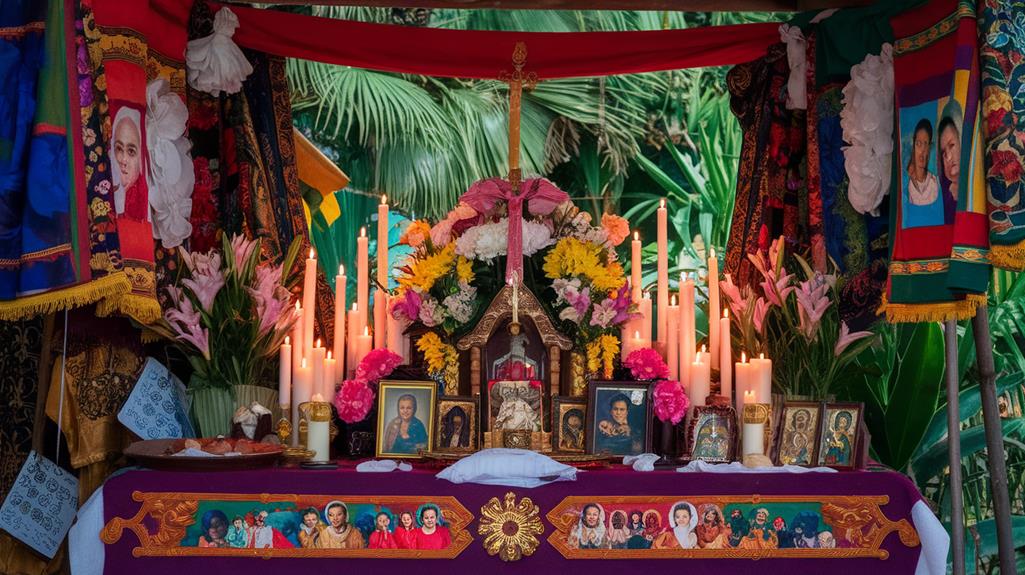
    Ancestral spirits, or anito, are central to Filipino culture, guiding daily life and family connections. They influence moral behavior and promote communal harmony through rituals and offerings. For instance, families gather for pag-anito rituals to honor their ancestors, fostering a sense of community and respect for tradition.

    In times of distress, people turn to ancestral spirits for protection and guidance. This reliance on ancestral spirits reinforces emotional resilience within communities. For example, during natural disasters or personal crises, Filipinos may offer prayers and sacrifices to their ancestors, seeking comfort and strength.

    The relationship between ancestral spirits and the natural world is deeply intertwined. Ancestral spirits are believed to be connected to the land, forests, and natural elements, emphasizing the importance of cultural heritage and environmental stewardship.

    Understanding the nuances of ancestral spirits across different ethnic groups can deepen one's appreciation for their significance. Each ethnic group has its unique perspective on ancestral spirits, reflecting their distinct history, customs, and traditions.

    Ancestral Spirits Defined

    defining ancestral spirits concepts

    Ancestral spirits, or anito, are a vital part of Filipino culture, believing that the deceased continue to influence the living. In indigenous Philippine folk religions, these spirits are revered as essential forces guiding and protecting families and communities.

    Ancestral spirits are rooted in animistic beliefs, where every element of nature is thought to possess a spirit. This highlights the interconnectedness of the spirit world and the material realm.

    Ancestors are believed to directly impact the well-being of the living. Rituals, often conducted during times of illness or distress, provide a means to honor these spirits and seek their guidance.

    For example, offerings of food and communal feasts not only strengthen community bonds but also maintain connections with the spiritual realm.

    Ancestral spirits serve as guardians upholding cultural values and fostering communal harmony. They play a significant role in shaping interpersonal relationships and practices of forgiveness, illustrating their enduring influence in contemporary Filipino society.

    Cultural Significance of Ancestral Spirits

    Ancestral Spirits in Filipino Culture

    In Filipino culture, ancestral spirits, known as anito, play a vital role in shaping daily life and social dynamics. These spirits act as guardians of families and communities, fostering a shared identity among the living. They influence behaviors such as forgiveness and communal healing through rituals and practices that reflect respect and a desire for guidance.

    The Presence of Ancestral Wisdom Shapes Moral Conduct

    The presence of ancestral wisdom shapes moral conduct and interpersonal relationships. Elders frequently mediate forgiveness rituals, reinforcing familial bonds and promoting harmony. This veneration not only upholds family honor but also links past generations to present practices, creating a strong sense of cultural identity.

    Cultivating Emotional Resilience

    As individuals participate in these traditions, they cultivate emotional resilience within their community, allowing for collective growth and understanding. This veneration serves as a reminder of the interconnectedness between the living and the departed, enriching everyday experiences and reinforcing the values that bind individuals to their heritage.

    Rituals and Offerings to Ancestors

    honoring ancestors through rituals

    Rituals and Offerings to Ancestors

    In Filipino culture, rituals and offerings to ancestors create a profound connection between the living and the spirit world. These practices, known as pag-anito, invoke ancestral spirits for guidance and protection.

    Offerings Symbolize Respect and Sustenance

    Offerings typically include rice, meat, and fish, symbolizing sustenance and respect for the spirits. These offerings are a way to show appreciation and gratitude to the ancestors.

    Golden Ornaments as Ransoms

    During illness, golden ornaments often act as ransoms, showcasing the belief in appeasing ancestor spirits. This practice highlights the significance of seeking ancestral protection and healing.

    Shamans Facilitate Communication

    Shamans, predominantly women, serve as vital mediums, facilitating communication by allowing spirits to possess their bodies. This enables the living to receive guidance and wisdom from their ancestors.

    Spirit Boats Reinforce Connection

    Spirit boats (taltalabong) take offerings adrift, reinforcing the connection between physical and spiritual realms. This ritual emphasizes the bond between the living and the ancestors, transcending the physical world.

    Veneration of Natural Elements

    The veneration of natural elements, such as trees and rocks, illustrates deep ties to ancestry and the belief that nature is alive with spirits. This practice acknowledges the interconnectedness of all living things.

    Honoring Ancestors

    Through these rituals and offerings, you actively participate in a continuous dialogue with your ancestors, reinforcing cultural identity and community cohesion while honoring the guiding spirits that shape your life.

    Ancestral Spirits in Filipino Mythology

    Ancestral Spirits in Filipino Mythology

    The Significance of Anito

    In Filipino mythology, ancestral spirits, known as "anito," hold a significant place.

    These spirits embody the essence of deceased ancestors, acting as guardians over family and community. They influence daily life and moral conduct, guiding decisions and interactions with others.

    Rituals and Offerings

    Rituals honoring these ancestral spirits, such as "pag-anito," involve offerings and communal feasts aimed at seeking protection and blessings from the spirit world. This practice emphasizes the belief that the anito aren't just relics of the past; they actively participate in the lives of the living.

    Reincarnation and Symbolism

    The concept of reincarnation in Filipino mythology suggests that the souls of ancestors might return to inhabit new lives, reflecting their conduct in the spirit realm.

    Symbolically, ancestral spirits are represented through taotao figures, which serve as poignant reminders of the enduring connection between the living and the spirit world.

    Embracing a Holistic Understanding

    By recognizing the role of anito, you embrace a holistic understanding of life that intertwines the past, present, and future within Filipino culture.

    This understanding highlights the importance of honoring and respecting one's ancestors in daily life.

    Ethnic Variations in Spirit Beliefs

    cultural differences in spirituality

    Ethnic Variations in Spirit Beliefs

    Filipino ethnic groups have distinct beliefs about ancestral spirits, shaping their cultural practices and worldview.

    Interpretations of Soul Existence

    Each indigenous Filipino ethnic group has its unique understanding of the spirits of the dead. For example, the Ifugao believe in two souls tied to one's eyes and breath, associating illness with soul loss.

    In contrast, the Ibaloi believe that their deceased ancestors' souls rest on Mount Pulag, a sacred sanctuary.

    Burial and Memorial Practices

    These ethnic groups also have unique burial and memorial practices. For instance, the Kalinga have specific hours when souls roam, guiding the living on when to interact with them.

    Rituals for Communicating with Spirits

    Filipino ethnic groups have rituals for communicating with spirits. The Tagalog believe that a soul's journey during sleep can lead to nightmares, while the kaluluwa transitions to the afterlife post-death.

    The Ibanag's belief in the mekararuanan phenomenon illustrates a fascinating body-soul dynamic, where survival is possible despite soul loss.

    Specific Times for Spirit Interaction

    Additionally, these ethnic groups have specific times designated for spirit interaction. The Kalinga, for example, have designated hours when souls roam, guiding the living on when to interact with them.

    Understandings of Dreams and Nightmares

    Filipino ethnic groups also have varied understandings of dreams and nightmares. The Tagalog believe that a soul's journey during sleep can lead to nightmares.

    These ethnic variations reflect the profound and intricate relationships Filipino ethnic groups maintain with their ancestral spirits, enriching their cultural identity.

    Connection to Nature and Environment

    Filipino indigenous cultures maintain a profound connection to the environment because they believe ancestral spirits animate and govern natural elements.

    This connection is rooted in the veneration of nature spirits, or diwata, which are believed to inhabit specific natural features like towering mountains or serene waterfalls.

    To show respect, people engage in rituals that involve placing food and symbolic items in nature, demonstrating the interconnectedness of the physical and spiritual realms.

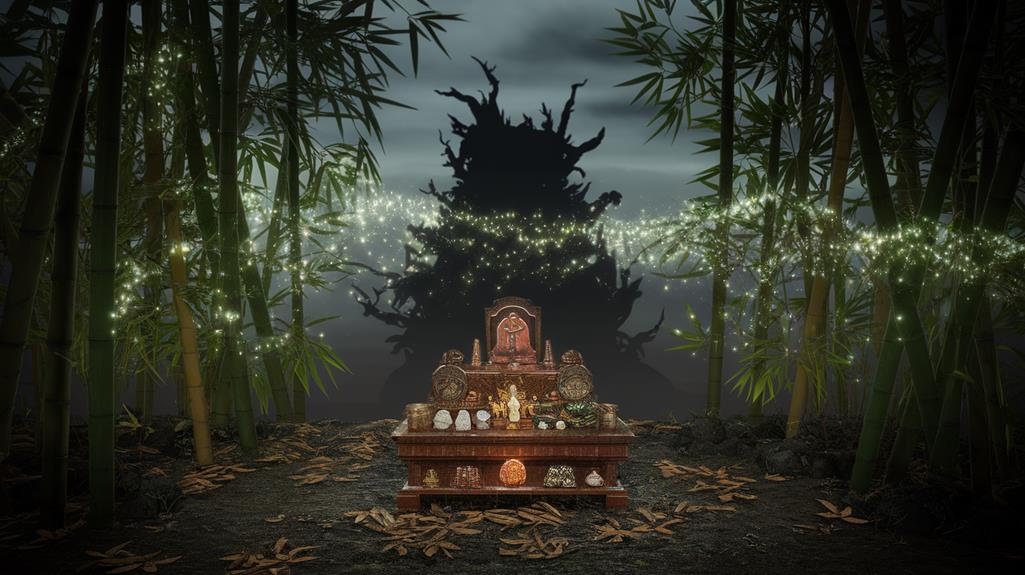
    Rituals and offerings honor ancestral spirits and reinforce environmental harmony. For example, sacred spaces like bamboo and rattan shrines serve as altars for worship, highlighting the importance of preserving the environment as a conduit for ancestral connection.

    The health of one's surroundings directly impacts the well-being of ancestral spirits and the community.

    By engaging in these practices, people acknowledge the significance of maintaining a sustainable relationship with the environment.

    Every tree, river, and breeze plays a role in the delicate balance of life, and this understanding fosters a deep respect for nature.

    Challenges to Ancestral Wisdom

    erosion of traditional knowledge

    Challenges to Ancestral Wisdom

    As modern influences spread through Filipino society, ancestral wisdom faces challenges in holding its ground against globalization and urbanization.

    Many younger Filipinos prioritize contemporary values, causing a disconnect from cultural heritage and traditional rituals.

    One significant challenge is the marginalization of indigenous beliefs by Western ideologies, which erodes the practice of honoring ancestral spirits.

    Technology and social media introduce new forms of expression that can dilute or misrepresent traditional practices.

    Several factors contribute to the erosion of ancestral wisdom:

    Prioritizing modern lifestyles over traditional teachings leads to a decline in the transmission of ancestral knowledge.

    The erosion of rituals that connect individuals to their ancestors further weakens cultural ties.

    Misrepresentation of indigenous beliefs through popular culture distorts the true essence of ancestral wisdom.

    Limited accessibility of resources for learning about ancestral wisdom hinders efforts to preserve cultural heritage.

    Urban migration also impacts community ties and cultural continuity, leading to a loss of ancestral wisdom.

    Recognizing these challenges is crucial for fostering a renewed appreciation for the invaluable teachings of the past.

    How do Ancestral Spirits Influence the Practices of Traditional Filipino Healers and Spiritual Guides?

    Ancestral spirits play a significant role in shaping the practices of traditional filipino healers and spiritual guides. These healers believe that their abilities are passed down from their ancestors, and they rely on the guidance and wisdom of these ancestral spirits to carry out their healing rituals and ceremonies. The strong connection to their ancestors is at the core of traditional Filipino healers’ practices.

    Contemporary Expressions of Ancestral Heritage

    Filipinos deeply respect their cultural roots, incorporating ancestral heritage into daily life. Many Filipinos perform rituals and make offerings to honor their ancestors, demonstrating a strong commitment to maintaining these traditions.

    Social media platforms have become modern avenues for sharing ancestral stories and narratives, allowing younger generations to connect with their cultural heritage.

    Traditional healing practices remain prevalent, where ancestral spirits are invoked to address personal and communal challenges. For example, the concept of "Bayanihan" emphasizes communal support and collective responsibility, drawing heavily from ancestral guidance.

    This concept continues to shape modern social interactions and community engagement, demonstrating the enduring relevance of ancestral wisdom.

    Cultural representations in film and literature explore themes of ancestral spirits, illustrating their significance in contemporary narratives. For instance, stories often feature ancestors guiding characters or influencing their decisions, highlighting the importance of cultural heritage in understanding one's identity.

    The Role of Ancestral Spirits Today

    modern influence of ancestors

    Ancestral spirits play a vital role in modern Filipino culture, influencing how families connect with each other and honor their heritage through various rituals.

    Communal rituals promote social cohesion and collective healing. For instance, these rituals bring families and communities together, fostering a sense of unity and collective well-being.

    Ancestral spirits are invoked during significant life events. In Filipino culture, ancestors are often honored during weddings, funerals, and other important life milestones.

    Engaging with ancestral traditions can enhance emotional resilience and reduce anxiety. By connecting with their heritage, individuals can develop a stronger sense of identity and emotional stability.

    Social media helps share ancestral stories and practices, fostering a sense of community. Online platforms provide a space for people to share their ancestral traditions, promoting a greater understanding and appreciation of Filipino culture.

    Forgiveness and harmony are emphasized, strengthening family bonds. Ancestral spirits are often associated with promoting forgiveness, understanding, and harmony within families, leading to stronger, more resilient relationships.

    Ancestral spirits serve as a source of strength and continuity. By honoring their ancestors, individuals can tap into a sense of wisdom, comfort, and guidance, helping them navigate life's challenges.

    Questions and Answers

    What Are the Ancestral Spirits of the Philippines?

    Ancestral spirits in Filipino mythology are believed to embody the souls of deceased ancestors, guiding the living. These spirits, known as "anito," are revered and communicated with through spirit mediums, who facilitate connection and offer guidance during cultural rituals.

    In these rituals, food offerings and communal gatherings are common practices, demonstrating respect and a desire for connection. By honoring these ancestral spirits, Filipinos preserve cultural identity and strengthen community bonds, fostering a sense of shared responsibility.

    What Is the Role of the Ancestral Spirits?

    Ancestral spirits provide guidance and protection in daily life. They connect individuals to their cultural heritage, fostering a sense of identity and community. For example, in many African cultures, ancestral spirits are believed to offer wisdom and protection to their descendants.

    Honoring ancestral spirits reinforces family ties and communal harmony. When individuals honor their ancestors, they ensure that values are passed down through generations. This is evident in many Asian cultures, where ancestors are revered through rituals and offerings to maintain family unity and respect.

    Ancestral spirits influence moral conduct and offer emotional support. Their presence guides individuals to make morally upright decisions and provides comfort in times of need.

    In many Indigenous cultures, ancestral spirits are believed to offer guidance and protection, helping individuals cope with challenges and develop resilience within their communities.

    What Do Filipinos Believe About the Spirits?

    Filipinos hold a deep spiritual connection with ancestral spirits, believing they're protectors and guides. This belief is rooted in their cultural significance, emphasizing respect and remembrance.

    For instance, Filipinos acknowledge that ancestral spirits influence daily life, offering comfort during hardships and fostering communal ties.

    To nurture a sense of belonging, they perform rituals and make offerings, such as food and drink, to honor their ancestors.

    These traditions celebrate their heritage and shared identity, reinforcing their cultural practices.

    What Is Ancestor Worship in the Philippines?

    Ancestor worship in the Philippines is a ritual practice that honors and invokes the spirits of one's forebears.

    This practice involves participating in communal ceremonies where food and symbolic items representing life cycles are offered to strengthen family connections and cultural heritage.

    These ceremonies reflect a deep respect for generational wisdom, as individuals seek guidance and blessings for both the living and the deceased.

  • Meditation and Mindfulness Practices in the Philippines

    Meditation and Mindfulness Practices in the Philippines

    Meditation and Mindfulness Practices in the Philippines

    In the Philippines, meditation and mindfulness practices are a vibrant mix of personal growth and community connections. Wellness retreats offer unique experiences, such as Couples Tantra and Mind-Body Harmony, which combine yoga, meditation, and forest bathing. For instance, these retreats provide a chance to explore yoga and meditation in a serene environment, while forest bathing allows individuals to reconnect with nature.

    Traditional healing practices, like Hilot, enhance these modern practices. Hilot is a traditional Filipino healing method that uses touch and herbal remedies to promote relaxation and well-being.

    Organizations like the Philippine Insight Meditation Community provide resources for Vipassana meditation, helping individuals cultivate emotional resilience. This community offers guidance and support for those looking to develop their meditation practice and improve their emotional well-being.

    By engaging in these practices, individuals not only nurture their well-being but also connect with the rich Filipino culture. These practices allow individuals to develop a deeper understanding of themselves and their connection to the world around them, while also appreciating the cultural heritage of the Philippines.

    Wellness Tourism in the Philippines

    healing journeys in paradise

    Wellness Tourism in the Philippines: A Blend of Tradition and Holistic Health

    In recent years, the Philippines has emerged as a prime destination for wellness tourism, offering unique experiences that combine traditional Filipino practices with holistic health approaches.

    Wellness retreats cater to different needs, such as the 4-day Couples Tantra Retreat in El Nido or the 6-day Mind-Body Harmony Qigong Retreat in Bohol. These retreats focus on relaxation and mindfulness practices to enhance overall well-being.

    Activities Promote Connection with Self and Nature

    The wellness offerings include activities like yoga, meditation, and forest bathing, designed to promote a deeper connection with oneself and nature.

    Accredited WellHotels in the Philippines ensure expert care and quality services throughout your stay, creating an immersive wellness experience.

    Eco-Friendly Initiatives Benefit the Planet

    Many retreats incorporate eco-friendly initiatives, such as tree planting donations, making your journey toward wellness also beneficial for the planet.

    Traditional Healing Practices

    Traditional Healing Practices in the Philippines

    Traditional healing practices in the Philippines offer a holistic approach to wellness.

    Hilot, a traditional Filipino healing practice, emphasizes the therapeutic benefits of touch. Practitioners, known as manghihilot, skillfully utilize massage, herbal remedies, and energy healing to restore balance and harmony within the body, mind, and spirit.

    Indigenous Healing Rituals

    In addition to hilot, the Philippines has various indigenous healing rituals that enhance the wellness experience:

    Sound Healing: This practice engages with sound frequencies to promote relaxation and healing.

    Herbal Medicine: Local plants are utilized for their medicinal properties to support health.

    Energy Flow Techniques: These techniques involve understanding and facilitating the flow of energy (lambat) through specific pathways (sen).

    Growing Appreciation for Traditional Healing

    As wellness tourism grows in the Philippines, there's an increasing appreciation for these traditional healing practices.

    This enriches one's journey with authentic wellness experiences that complement mindfulness meditation and other holistic approaches.

    Mindfulness and Meditation

    practicing awareness and tranquility

    Mindfulness and Meditation in the Philippines

    Introducing Mindfulness and Meditation

    Mindfulness and meditation are valuable tools for enhancing mental and emotional well-being in the Philippines. These practices, rooted in ancient Buddhist traditions, emphasize present moment awareness and non-judgmental observation.

    Vipassana Meditation

    The Philippine Insight Meditation Community provides resources, workshops, and retreats that introduce Vipassana meditation, where clear awareness of current experiences is key. This practice helps individuals develop a deeper understanding of themselves and their emotions.

    Mindfulness in Education and Therapy

    Mindfulness training has been incorporated into educational and therapeutic settings in the Philippines, showing positive impacts on overall wellness.

    Accessible courses cater to various skill levels, equipping individuals with practical tools for stress reduction and emotional resilience.

    Culturally Contextualized Mindfulness Interventions

    A local adaptation of mindfulness-based cognitive therapy (MBCT), called Kamalayan, was tested in the Philippines.

    However, it revealed no significant changes in depression or anxiety, highlighting the importance of culturally contextualized mindfulness interventions. This emphasizes the need for mindfulness practices to be tailored to the local culture and context.

    Unique Wellness Retreats

    Wellness retreats in the Philippines offer a unique opportunity to rejuvenate your mind, body, and spirit. These retreats focus on mindfulness and personal growth, providing you with tailored experiences that promote relaxation and well-being.

    Diverse retreat options cater to different needs and preferences. For instance, the 4 Day All-Inc Couples Tantra, Yoga & Intimacy Retreat in El Nido emphasizes intimacy and connection, allowing couples to deepen their relationship.

    Alternatively, the 6 Day Mind-Body Harmony with Qigong in Bohol engages participants in traditional practices that enhance both physical and mental well-being. The 5 Day Self Love Yoga Retreat in Siargao focuses on personal growth, promoting self-acceptance through yoga and mindfulness.

    Eco-friendly initiatives are an integral part of these retreats. A portion of the proceeds is donated to tree planting efforts, ensuring that the commitment to sustainability not only enhances your experience but also nurtures the environment.

    These unique wellness retreats provide a nurturing space to unwind, connect, and grow. Whether you choose surfing, yoga, or Qigong, you can recharge and cultivate a deeper sense of self while surrounded by breathtaking scenery.

    Pricing and Policies

    pricing and policy guidelines

    Pricing and policies for retreats in the Philippines vary significantly, making it crucial to choose one that fits your budget and needs.

    Retreat prices range from $599 to $2,890. For instance, the 6 Day Mind-Body Harmony with Qigong retreat is available for $599, while the 7 Day Surf, Yoga & Wellness Retreat costs $2,890.

    Cancellation policies also differ. The 4 Day Couples Tantra, Yoga & Intimacy Retreat offers a 60-day free cancellation policy, whereas the 6 Day Mind-Body Harmony with Qigong retreat only allows a 1-day cancellation.

    Other options include the 5 Day Self Love Yoga Retreat with a 72-hour cancellation policy, and the 5 Day Ceremony To Connect To Your Primal Powers with a 30-day cancellation policy.

    Eco-Friendly Practices

    Mindfulness Retreats in the Philippines Emphasize Eco-Friendly Practices

    During your mindfulness retreat in the Philippines, you'll experience a strong commitment to eco-friendly practices that enhance both your experience and the environment.

    These retreats prioritize sustainability, allowing you to deepen your connection with nature while promoting ecological awareness.

    Supporting Environmental Restoration

    Many retreats donate a percentage of their proceeds to tree planting initiatives, which directly contribute to environmental restoration.

    Participants are encouraged to engage in sustainable practices during their stay, fostering a sense of responsibility for the planet.

    Eco-Friendly Practices

    Retreats incorporate various practices to promote sustainability:

    Forest Bathing (Shinrin-yoku): This mindfulness practice immerses you in the natural environment, promoting relaxation and appreciation for the beauty around you.

    Sustainable Travel Choices: Retreats encourage you to consider your ecological footprint, making mindful travel decisions that benefit the environment.

    Awareness Campaigns: Many retreats raise awareness of environmental issues through workshops, helping you understand the impact of your actions.

    Participant Experiences

    engaging user feedback insights

    Participants in mindfulness retreats in the Philippines experience transformative growth. These retreats foster a strong sense of community and personal growth, leading to high satisfaction rates. For example, the Couples Retreat and Self Love Yoga Retreat have achieved perfect scores.

    The integration of mindful eating practices and traditional Filipino wellness elements enhances mental clarity and self-awareness. The supportive atmosphere created by organizers encourages emotional resilience and personal development. This is achieved by combining mindful eating with traditional Filipino wellness practices, leading to a deeper and more meaningful journey.

    Participants commonly experience the following benefits:

    Community Support: A family-like atmosphere that nurtures connections, allowing participants to form lasting bonds with like-minded individuals.

    Personal Growth: Tailored experiences that promote self-discovery, enabling participants to gain a deeper understanding of themselves and their goals.

    Mindful Eating: Opportunities to engage in healthy, intentional meals, teaching participants the importance of mindful eating practices for overall well-being.

    Cultural Insights: Enrichment through local traditions and practices, providing participants with a unique perspective on Filipino culture and its contribution to wellness.

    How Do Meditation and Mindfulness Practices Align with Feng Shui Principles in Filipino Culture?

    In Filipino culture, the influence of feng shui is often reflected in the way meditation and mindfulness practices are incorporated into daily life. Both meditation and feng shui emphasize the importance of creating harmony and balance in one’s surroundings and inner self, making them complementary practices in achieving overall well-being.

    Vipassana Meditation Insights

    Vipassana Meditation: Cultivating Mindfulness and Understanding

    Vipassana meditation, rooted in Buddhist teachings, emphasizes cultivating clear awareness of present moment experiences. This ancient practice guides individuals toward understanding suffering and its cessation through the Noble Eightfold Path, promoting ethical living and mental discipline.

    Benefits of Vipassana Meditation

    Engaging in Vipassana meditation can have profound effects on mental and emotional well-being.

    It enhances emotional resilience through mindful awareness, allowing individuals to better navigate life's challenges.

    It also increases understanding of thought patterns and behaviors, enabling individuals to make positive changes.

    Additionally, Vipassana provides tools to manage stress effectively, promoting overall mental clarity.

    Supporting Your Vipassana Journey

    In the Philippines, the Philippine Insight Meditation Community offers workshops and retreats to support individuals in their Vipassana journey.

    These resources help deepen your practice, leading to a more fulfilling and balanced life.

    Future of Mindfulness in the Philippines

    mindfulness trends in philippines

    The future of mindfulness in the Philippines is promising. In recent years, there's been a surge in mindfulness-based interventions, such as the Kamalayan program, designed to meet local mental health needs. These culturally adapted strategies not only enhance health and well-being but also create a supportive community around mindfulness.

    The Philippine Insight Meditation Community has played a key role in promoting mindfulness practices. They've fostered an environment where individuals can explore mindfulness safely through practices such as Vipassana.

    Research has consistently shown that mindfulness practices, including Mindfulness-Based Cognitive Therapy (MBCT), are effective in improving mental health.

    Access to mindfulness practices has become increasingly convenient. With the rise of online and in-person mindfulness courses and workshops, engaging in these practices has never been easier.

    Future initiatives will focus on community engagement and cultural sensitivity, ensuring that mindfulness remains authentic while addressing modern psychological challenges.

    Embracing mindfulness can have a transformative impact on individuals and the community. By empowering individuals and strengthening the collective mental health of the Filipino community, mindfulness can foster resilience and deeper connections with oneself and others.

    Questions and Answers

    Is Meditation a Common Practice in the Philippines?

    Meditation is gaining popularity in the Philippines as a means to reduce stress and improve mental well-being.

    In the Philippines, meditation is being practiced by individuals seeking relaxation and mental clarity. Mindfulness techniques, such as focusing on breath or body sensations, are commonly used to calm the mind and reduce anxiety.

    As people explore different relaxation methods, they often find approaches that resonate with them. For instance, some individuals practice meditation through yoga or tai chi, which combine physical movements with mindfulness techniques.

    What Are the Traditional Health Care Practices in the Philippines?

    Traditional health care practices in the Philippines prioritize ancestral wellness through diverse healing methods.

    One such technique is Hilot, which combines massage and herbal remedies to restore balance in the body. This practice is rooted in the country's rich cultural heritage.

    Herbal remedies derived from indigenous plants are also commonly used to treat ailments, reflecting the deep connection Filipinos have with nature. For example, Lagundi leaves are used to treat coughs and colds, while Tsaang Gubat is used to treat fever and diarrhea.

    Rituals and sound healing are also used to enhance well-being, providing a holistic approach that nurtures both the body and spirit. This approach acknowledges the interconnectedness of physical and mental health.

    What Are Some Cultural Practices in the Philippines?

    The Philippines has a rich cultural heritage shaped by indigenous beliefs and traditions.

    Filipino cultural practices often revolve around spiritual festivals, where you can witness vibrant dances, colorful costumes, and heartfelt prayers. These festivals honor ancestors and nature, fostering community bonds and celebrating local heritage.

    For instance, the Pintados Festival in Tacloban City, Leyte, features participants covered in colorful body paint, reenacting ancient tattooed warriors. Similarly, the MassKara Festival in Bacolod City, Negros Occidental, showcases smiling masks and lively street dances, symbolizing hope and resilience.

    Immersing yourself in these cultural experiences helps you appreciate the Philippines' diverse culture and its people's deep connections with their history and spirituality.

    What Are the Religious Practices in the Philippines?

    The Philippines is a culturally diverse country with a rich tapestry of religious practices.

    The majority of the population, approximately 86%, practices Roman Catholicism, which was introduced by Spanish colonizers in the 16th century. Many Filipinos actively participate in spiritual rituals, such as attending Sunday Mass, praying the rosary, and observing holy days like All Saints' Day and Christmas.

    In addition to Catholicism, indigenous beliefs also play a significant role in the country's religious landscape. These beliefs honor ancestors and nature, and are often practiced by indigenous communities. For example, the Ifugao people of Cordillera region believe in a supreme god named Bathala, who's the creator of the universe.

    Community gatherings and festivals are an integral part of religious practices in the Philippines. During these events, devotion comes alive through parades, dances, and music.

    The Sinulog Festival in Cebu, for instance, is a vibrant celebration that honors the Santo Niño, or the Child Jesus. Similarly, the MassKara Festival in Bacolod is a colorful event that showcases the city's rich cultural heritage.

  • Superstitions and Beliefs in Filipino Folklore

    Superstitions and Beliefs in Filipino Folklore

    Filipino folklore is a rich blend of ancient animism and colonial history. This mix of influences is reflected in the country's diverse superstitions and beliefs. For instance, many Filipinos believe that sweeping the floor at night can sweep away good fortune, while an itchy palm is thought to be a sign of incoming money.

    Folklore creatures, such as the kapre and the tikbalang, add a touch of mystery to daily life. The kapre is a friendly creature, often depicted as a small, bearded man who loves to play tricks on humans. On the other hand, the tikbalang is a mischievous creature known for playing tricks on travelers.

    Rituals associated with meals and healing are deeply rooted in cultural values. For example, the phrase "Oro, plata, mata" is often recited during meals to ensure good fortune and respect for the community.

    These traditions not only shape individual lives but also create a unique cultural identity that is worth exploring further.

    Overview of Filipino Superstitions

    filipino beliefs and traditions

    Filipino superstitions are deeply rooted in daily life, influencing actions and decisions. These superstitions are a blend of indigenous animism and colonial history, passed down through generations. They often blur the line between the religious and the superstitious, with many believing that certain actions can attract good luck or ward off bad luck.

    Avoiding nighttime sweeping or singing is a common practice to prevent disturbing spirits and misfortune. This belief is based on the idea that spirits are most active at night, and any loud noises or disturbances can attract negative energy.

    Meals are rich in ritual and superstition. For instance, chanting "Oro, plata, mata" while climbing stairs is believed to influence one's fortune. Additionally, turning plates when guests leave ensures their safe return. These practices demonstrate the significance of superstition in everyday activities.

    Child care is also influenced by superstitions. The concept of usog or bati warns that compliments can inadvertently harm infants, highlighting the community's protective instincts. This belief emphasizes the importance of being mindful of one's words and actions around young children.

    Rituals and offerings are dedicated to spirits during significant life events. For example, the practice of pagpag serves to prevent spirits from following you home. This reflects the deep-rooted concerns about the unseen world in Filipino folklore.

    These superstitions offer a glimpse into the collective psyche, illustrating how culture shapes perceptions of luck and protection.

    Common Folklore Creatures

    Filipino folklore is rich in supernatural beings that reflect local beliefs and stories. These creatures often serve as cautionary tales or representations of cultural values.

    Kapre is a tall, dark tree-dweller who smokes cigars and can be either friendly or mischievous.

    Tikbalang is a horse-like entity with human features that leads travelers astray in the woods.

    Tiyanak appears as an unborn baby to lure victims, only to reveal its true form later.

    Nuno sa punso are small, dwarf-like beings that inhabit mounds or anthills. It's customary to say "tabi tabi po" to seek their permission when passing by.

    Aswang is a fearsome shape-shifter that preys on pregnant women and children, taking on various frightening forms.

    These folklore creatures embody the mysteries of nature and the complexities of human experience, highlighting the thin line between reality and the supernatural.

    Rituals and Healing Practices

    healing through ritual practices

    Rituals and Healing Practices in Filipino Culture

    In the Filipino culture, rituals and healing practices play a significant role in bridging the physical and spiritual realms. Albularyos, or folk healers, lead these practices, using herbs, rituals, and prayers to address ailments. In rural areas, communities heavily rely on these methods, reflecting their deep-rooted beliefs in the supernatural.

    Healing Rituals

    Healing rituals involve specific practices to connect with good spirits and amplify healing powers. For instance, candle-lighting and specific prayers are used to enhance the connection with good spirits. These rituals not only address physical ailments but also seek to balance spiritual energies.

    Dark Aspects of Filipino Healing

    The Filipino healing realm also has darker aspects. Pagkukulam, or the casting of spells, reveals the belief in black magic's influence over people's lives. This often involves using voodoo dolls to manifest curses.

    On the other hand, gayuma, or love potions, demonstrates how love and magic intertwine, showcasing the complexity of emotional desires within rituals.

    Reflection of Filipino Worldview

    These practices reflect the unique worldview of the Filipino people, highlighting their intricate relationship with the seen and unseen. By exploring these rich traditions, it becomes clear how they address not only physical ailments but also spiritual imbalances.

    How Do Filipino Folklore Superstitions and Beliefs Impact the Future of Religion in the Philippines?

    Filipino folklore superstitions and beliefs continue to play a significant role in shaping the future of religion in the Philippines. These deeply-rooted cultural customs and traditions directly influence the way religion is practiced and interpreted in the country, impacting the future of religion philippines.

    Superstitions in Daily Life

    Superstitions shape daily interactions in Filipino culture, influencing decisions and actions.

    In Filipino culture, superstitions play a significant role in guiding daily interactions. Sweeping at night is believed to bring bad luck, as it's thought to drive away fortune instead of cleaning. This belief is deeply ingrained, and many Filipinos avoid sweeping at night to prevent misfortune.

    Physical sensations can also be omens of good or bad luck. For instance, an itchy right palm is believed to signal incoming money, while an itchy left palm forebodes financial loss.

    The first customer of the day is considered crucial for business success. To ensure favorable outcomes, discounts are often offered to the first customer, known as "buenamano", to attract good luck.

    Certain practices are believed to ward off mischievous beings. For example, leaving clothes out overnight may attract "duende", mischievous beings that could tamper with belongings. To prevent this, many Filipinos avoid leaving clothes out overnight.

    Turning plates upside down when someone leaves the table is believed to ensure their safe return. This practice is a common superstition in Filipino culture, reflecting a deep-rooted connection to the unseen forces at play in daily life.

    In Filipino culture, superstitions serve as a reminder of the respect for the unseen influences that shape existence. These beliefs are often consulted with an albularyo, a local healer, to navigate the complexities of luck and misfortune.

    Cultural Significance of Beliefs

    cultural importance of beliefs

    Beliefs in Filipino folklore significantly influence daily life and cultural values. For example, when a pregnant woman walks in nature, saying "tabi tabi po" is a respectful acknowledgment of the spirits that might inhabit the area. This practice showcases a deep-rooted respect for both the seen and unseen, highlighting the belief that evil spirits could disrupt harmony.

    Filipinos believe superstitions are essential for maintaining safety and well-being. These beliefs are widely practiced during critical life events, such as birth, marriage, and death, fostering community bonds as families gather to observe rituals.

    For instance, when an immediate family member passes away, rituals that respect the spirit and the living are performed, demonstrating the interconnectedness of life and death in Filipino culture.

    Traditional beliefs integrate with modern practices, ensuring cultural identity remains strong. The role of the albularyo (folk healer) exemplifies this integration.

    These superstitions emphasize the importance of community, respect for tradition, and the synthesis of indigenous and Christian beliefs, enriching the Filipino cultural tapestry and ensuring continuity through shared values.

    Questions and Answers

    What Are Some Superstitious Beliefs in the Philippines?

    Superstitious beliefs play a significant role in shaping daily life in the Philippines. These beliefs stem from folk traditions with deep historical origins and vary across regions.

    In some areas, people avoid sweeping at night because they believe it can bring misfortune. Another example is the ritual of saying "pwera usog" to counter negative energy when complimenting babies, which is a common practice in Filipino culture.

    These beliefs continue to influence social interactions and personal choices, often blending traditional and modern interpretations.

    What Are the 10 Superstitious Beliefs?

    Superstitious Beliefs: 10 Intriguing Concepts

    1. Luck Charms

    Luck charms, such as four-leaf clovers or horseshoes, are believed to bring protection or fortune.

    For example, carrying a rabbit's foot is thought to attract good luck.

    2. Ghost Sightings

    Ghost sightings are often associated with supernatural beings or spirits.

    The Amityville Horror, a famous haunted house, is a well-known example of a ghost sighting.

    3. Friday the 13th

    Friday the 13th is considered an unlucky day, with many people avoiding important decisions or events on this day.

    4. Wishing Wells

    Wishing wells, like those found in European towns, are believed to grant wishes to those who throw coins into them.

    5. Animal Omens

    Animal omens, such as black cats or owls, are thought to convey messages or warnings from the universe.

    For instance, seeing a dove is often seen as a symbol of peace.

    6. Wedding Rituals

    Wedding rituals, like exchanging vows or wearing white, are steeped in tradition and reflect cultural values.

    7. Dream Interpretations

    Dream interpretations, such as Freudian analysis, offer insight into one's subconscious mind.

    8. Healing Practices

    Healing practices, such as acupuncture or meditation, emphasize holistic well-being and natural remedies.

    9. Broken Mirrors

    Breaking a mirror is believed to bring seven years of bad luck, according to an old superstition.

    10. Knocking on Wood

    Knocking on wood is a common superstition believed to ward off bad luck or evil spirits.

    Each of these superstitious beliefs weaves a rich tapestry of human experience and connection.

    What Are Examples of Beliefs in the Philippines?

    Ancestral spirits are revered in the Philippines, often influencing festive rituals and ancestral veneration practices.

    For example, the Igorot people in the northern Philippines celebrate the Pangkabayo festival, where they honor their ancestors through traditional dances and offerings.

    Nature worship is also prevalent, with herbal remedies used for healing.

    In many Filipino communities, medicinal plants like lagundi and sambong are used to treat various ailments, showcasing the connection to nature.

    Sacred places hold significant meaning in the Philippines.

    The Taytay Falls, for instance, is considered a sacred site by the indigenous Mangyan people, who believe it holds spiritual power.

    Folk tales and dream interpretations enrich daily life.

    In many Filipino families, stories of mythical creatures like the aswang and diwata are passed down through generations, teaching moral lessons and values.

    Similarly, dreams are often interpreted to guide decision-making and provide insight into the future.

    What Are the Old Beliefs of the Philippines?

    The Philippines' old beliefs revolve around nature spirits and mythical creatures.

    In ancient rituals, Filipinos honored these supernatural beings to ensure a harmonious relationship with the environment. For instance, the Tagalog people believed in Diwata, a forest spirit who protected the forest and its inhabitants.

    Similarly, the Tinikling, a mythical bird, was believed to possess healing powers.

    Folk healing practices are deeply rooted in traditional customs.

    These practices emphasize the connection between the community and their ancestors. In many Filipino communities, albularyos (traditional healers) use a combination of herbal remedies, rituals, and prayers to cure illnesses.

    They believe that the ancestors' spirits guide them in the healing process.

    Ancestral worship plays a significant role in harvest festivals and community gatherings.

    During these celebrations, people express gratitude to their ancestors for bountiful crops. For example, the Pintados Festival in Leyte honors the ancestors with vibrant costumes, music, and dance.

    The festival highlights the importance of respecting and honoring one's heritage.

    These beliefs reflect a deep respect for the environment and the interconnectedness of life.

    They shape the Filipino cultural identity by emphasizing the need to live in harmony with nature and the community.

  • The Power of Prayer in Filipino Culture

    The Power of Prayer in Filipino Culture

    Prayer is a cornerstone of Filipino culture, fostering unity and resilience in the face of adversity.

    Daily prayer rituals bring comfort and solace to individuals and families during times of illness, emotional strife, and calamities.

    Communal prayer gatherings, particularly during traditional events like Simbang Gabi, showcase the collective spirit of the Filipino people, where gratitude and spirituality intertwine.

    Elders play a vital role in guiding the younger generation, ensuring the preservation of these cherished practices.

    Each prayer moment resonates with a profound sense of belonging, reflecting the heart of Filipino identity.

    Significance of Prayer

    importance of prayer practice

    Prayer is a vital component of Filipino culture, deeply ingrained in daily life. It's a frequent practice that underscores its significance, binding families together during both joyful and sorrowful occasions. For instance, during Simbang Gabi, a series of early morning masses leading up to Christmas, families gather to express gratitude and deepen their spiritual connection, demonstrating the power of prayer in uniting communities.

    In times of emotional distress or illness, prayer serves as a source of strength and comfort. Filipinos often turn to clergy for support, seeking solace through shared prayers. This collective act provides guidance and comfort, as seen in the way prayer plays a vital role during national calamities, offering a means for communities to cope together and seek divine intervention.

    Prayer is also an integral part of cultural events, illustrating its significance in daily life. The importance of prayer reflects a profound belief in its power, shaping not just individual lives but also the collective identity of the Filipino people.

    It is a reminder that, in every moment, whether joyous or sorrowful, prayer remains a powerful force in navigating life's complexities.

    Cultural Expressions of Faith

    Filipino culture is deeply rooted in expressions of faith, which play a significant role in daily life and special occasions.

    In the Philippines, spiritual practices are an integral part of daily routines. For instance, Simbang Gabi, a series of early morning masses, celebrates Christmas and strengthens faith.

    Similarly, weddings and funerals are significant life events that involve prayerful ceremonies, uniting families and honoring the deceased.

    Collective prayer events, such as the National Day of Prayer, bring people together, reinforcing shared values and moral frameworks. These events foster unity in times of crisis and demonstrate the importance of faith in Filipino culture.

    Family gatherings are also an essential aspect of Filipino culture, where collective prayer at home strengthens bonds and promotes support.

    These gatherings reinforce the deep connections among families and communities, providing comfort and hope.

    In Filipino culture, expressions of faith aren't just individual devotions but also a collective display of resilience.

    Prayer isn't just a ritual; it is a source of hope and comfort that reinforces the strong bonds within families and communities.

    Prayer in Daily Life

    integrating prayer daily routine

    Prayer as a Comforting Ritual

    In many daily lives, prayer serves as a comforting ritual that creates a sense of peace and connection.

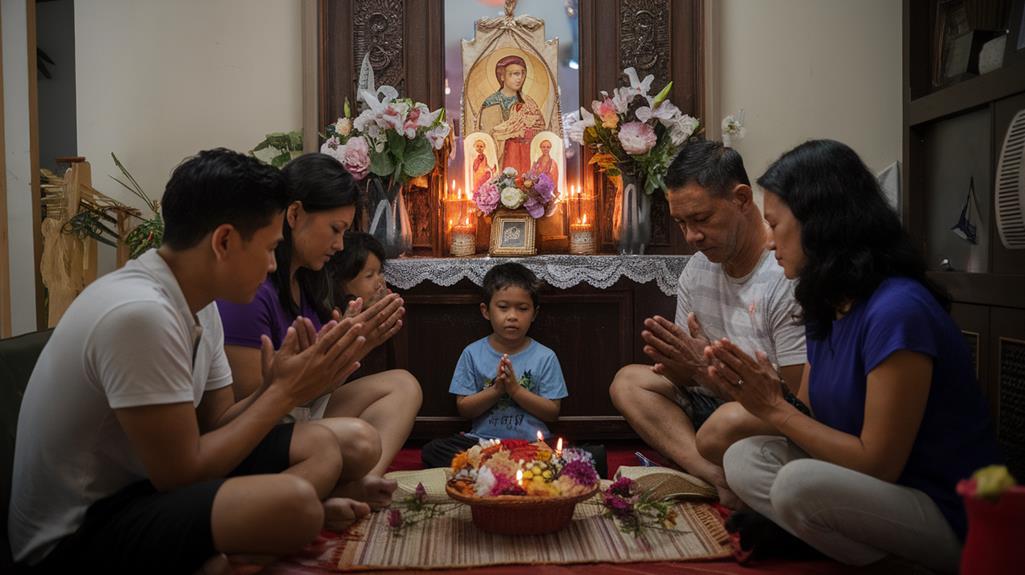
    Families gather each morning or evening, hands clasped, to share hopes and concerns in heartfelt prayer, strengthening bonds between family and friends and fostering a shared sense of purpose and devotion.

    Prayer in Significant Moments

    During significant moments, prayer becomes a celebration of faith that enriches the community's cultural fabric.

    In the tradition of Simbang Gabi, streets bustle with early risers heading to dawn masses, their spirits lifted by the collective energy of prayer. This collective prayer is more than just a religious obligation; it brings people together and reinforces community bonds.

    Prayer as a Coping Mechanism

    In challenging times, such as health crises, prayer becomes a powerful coping mechanism. Families turn to their faith to alleviate fears, seeking divine guidance and comfort.

    The presence of religious icons in homes acts as a constant reminder of this commitment to daily prayer, reinforcing values that prioritize love, hope, and resilience. Through these shared moments, prayer creates a tapestry of connection that envelops both family and friends in unwavering support.

    Community Gatherings and Prayer

    Community gatherings centered around prayer strengthen family bonds and foster a sense of unity. In Filipino culture, collective prayer brings people together, creating a shared space where values and beliefs are reinforced. For instance, during Simbang Gabi, a traditional Christmas celebration, families and friends gather to pray and sing together, their faces illuminated by candlelight, as they strengthen their ties to one another.

    In times of crisis, community prayer gatherings take on a profound significance. When natural disasters or national calamities occur, entire communities come together to seek divine intercession, fostering empathy and compassion. This collective act of prayer extends beyond immediate families, uniting neighbors and friends in a shared moment of hope and support.

    Cultural celebrations also incorporate prayer, nurturing spiritual growth and community ties. During fiestas and barangay gatherings, prayer is an integral part of the celebration, reminding participants that they're connected through a shared heartbeat of faith.

    Each moment spent in prayer reinforces the sense of community and solidarity that defines the Filipino spirit.

    Spiritual Resilience During Challenges

    strength in adversity s embrace

    Prayer serves as a vital source of strength for individuals facing challenges, particularly Filipina Americans battling breast cancer. This sacred ritual offers emotional and spiritual support, helping to alleviate physical pain and soothe deep-seated fears. When individuals pray, they often close their eyes, whisper heartfelt words, and seek strength from a higher power, believing that each prayer brings them closer to recovery.

    Prayer transforms illness into a test of faith, cultivating profound resilience within individuals. Families and communities come together, engaging in communal prayers that foster a sense of belonging and hope. This collective act of devotion reinforces the belief that miracles can happen through faith.

    The cultural emphasis on prayer as a means of healing instills a powerful resilience in those facing daunting health challenges.

    In the midst of uncertainty, prayer becomes a beacon of light, reminding individuals that support and comfort are always within reach.

    Intergenerational Prayer Practices

    Intergenerational Prayer Practices Strengthen Family Bonds

    In many Filipino families, intergenerational prayer practices serve as a source of strength and unity.

    The presence of elders enriches the experience, as they lead the group in praying the Rosary, passing down a legacy of faith that binds generations. Younger members listen intently, absorbing lessons about spirituality and community.

    Collective Prayers Mark Significant Life Events

    During significant life events like baptisms and weddings, collective prayers remind families of shared beliefs and milestones.

    These moments celebrate individual journeys and reinforce familial ties, creating a mosaic of shared memories. Regular participation in Mass and communal prayers further strengthens this spiritual foundation, reminding everyone of the importance of unity in faith.

    Elders Guide Younger Generations

    Through these practices, elders guide younger family members, ensuring that traditions remain alive.

    This guidance fosters a sense of belonging and continuity that defines Filipino culture.

    Intergenerational connections flourish, as younger generations learn from their elders and carry on the traditions.

    The Role of Gratitude in Prayer

    gratitude enhances prayer effectiveness

    Gratitude is a fundamental aspect of Filipino prayer, reflecting a deep-seated value of acknowledging God's gifts. This practice of gratitude permeates daily life, fostering a rich tapestry of appreciation.

    In many Filipino prayers, thanksgiving is a central theme, reinforcing positive relationships and fostering a sense of belonging. For instance, during Mass or community gatherings, gratitude serves as a spiritual glue, connecting participants.

    Here are some examples of gratitude in prayer and their impact on life:

    Aspect of Gratitude Example in Prayer Impact on Life
    Family "Thank you for my loved ones." Strengthens family bonds
    Health "Grateful for good health." Promotes well-being
    Community "Appreciate the support of friends." Enhances social ties

    Even during challenging times, thanking God becomes an essential coping mechanism. It helps maintain hope and resilience, allowing individuals to navigate life's difficulties with a sense of peace. For Filipino Americans, gratitude in prayer enhances spiritual well-being, providing fulfillment amidst personal trials.

    Prayer as a Healing Practice

    Prayer as a Healing Practice in Filipino Culture

    In the Filipino culture, prayer is a profound healing practice, particularly for those facing health challenges. It serves as a refuge, providing emotional relief and inner peace amidst the turmoil of illness. For instance, individuals diagnosed with breast cancer often find solace in quiet moments of prayer, which helps ease physical pain and anxiety.

    Prayer as a Test of Faith

    Many Filipinos view their health struggles as tests of faith, embracing their journeys with a spirit of acceptance. This perspective transforms challenges into divine opportunities for growth.

    In healing circles, participants express deep connections through regular prayer, cultivating hope and reliance on divine intervention for recovery.

    The Power of Community Prayer

    Community gatherings amplify the healing power of prayer, reinforcing collective strength and a sense of belonging.

    In these sacred spaces, faith and camaraderie intertwine, where each whispered prayer brings comfort not just to the individual, but to the entire community, reminding everyone that they're never alone in their battles.

    How are Meditation and Mindfulness Practices Related to the Power of Prayer in Filipino Culture?

    In Filipino culture, meditation and mindfulness practices are closely related to the power of prayer. These practices help individuals achieve a sense of inner peace and spiritual connection, similar to the effects of prayer. By incorporating meditation and mindfulness into their daily routines, Filipinos can enhance their spiritual well-being.

    Influence of Catholicism on Prayer

    catholicism s impact on prayer

    Catholicism significantly influences prayer in Filipino culture. With 85% of the population identifying as Roman Catholic, prayer becomes an integral part of daily activities. For instance, prayer is often present during dinner gatherings and community events, reinforcing family ties and shared beliefs.

    Collective prayer strengthens community bonds. During significant celebrations like Simbang Gabi, collective prayer unites individuals, illustrating the importance of spiritual values. This fosters a sense of belonging, reminding everyone that they're part of something larger.

    Intercessory prayer cultivates compassion and support. When individuals pray for others, it creates a network of care and understanding. For example, families often invoke the names of loved ones in their prayers, especially during tough times.

    Religious icons serve as reminders of faith. In homes, these symbols embody the devotion to prayer, making it a daily practice that enriches life.

    Catholicism shapes individual devotion and weaves prayer into the essence of Filipino culture.

    Modern Adaptations of Prayer Practices

    Modern Adaptations of Prayer Practices in Filipino Culture

    Prayer practices in Filipino culture have evolved significantly, reflecting the dynamic nature of contemporary life.

    Modern adaptations have seamlessly integrated technology, allowing families and communities to stay connected across distances.

    Online Prayer Groups and Apps

    Online prayer groups have made collective spiritual practices possible, especially for Filipina Americans facing challenges like breast cancer.

    Many Filipinos now use apps and websites for daily prayers and reflections, making spiritual engagement accessible anytime, anywhere.

    Blending Traditional and Modern Elements

    Cultural events, such as Filipino Heritage Day, beautifully blend traditional prayer rituals with modern elements, celebrating faith in a communal atmosphere.

    Family prayer gatherings have evolved to include virtual participation, ensuring that everyone, regardless of location, can join in.

    The Essence of Prayer Remains Strong

    These adaptations illustrate how Filipino prayer practices aren't just about rituals;

    they're about fostering connections and support, no matter the physical distance.

    As the mediums through which prayer is expressed transform in our fast-paced world,

    the essence of prayer remains strong.

    Questions and Answers

    What Is the Filipino Value of Praying?

    Prayer is an integral part of Filipino culture, fostering a sense of community and unity.

    In the Philippines, prayer is a common practice that brings individuals and families together, especially during significant events such as birthdays, weddings, and holidays.

    This collective act of prayer strengthens social bonds and reinforces a sense of belonging.

    Prayer isn't just a means of seeking guidance, but also an expression of hope and resilience.

    When faced with challenges, Filipinos turn to prayer as a source of comfort and solace.

    This reliance on faith is deeply ingrained in everyday life, providing a sense of reassurance and coping mechanism in times of need.

    What Is the Significance of the Power of Prayer?

    The power of prayer provides comfort and strength in times of need. When faced with challenges, prayer offers solace, transforming fear into hope. This connection with something greater than oneself provides a sense of spiritual resilience.

    Prayer serves as a lifeline during turbulent times. Each whispered word becomes a source of comfort, grounding individuals in their faith. This connection also builds a supportive network, reinforcing bonds with others who share the same faith.

    Prayer amplifies the collective spirit of healing. When people come together in prayer, they create a collective energy that promotes healing and well-being.

    This collective energy provides a sense of community and support, helping individuals navigate life's challenges.

    What Do Philippines Pray To?

    Filipinos pray to God, the Virgin Mary, and saints for guidance, healing, and protection. They often seek divine intervention during life's challenges, demonstrating their faith through cultural practices like the Rosary and novenas.

    These devotional acts showcase their deep devotion, which is evident in their collective prayers during significant events.

    These communal prayers bring healing and solidarity in times of need, reflecting the community's belief in the strength of prayer.

    What Is the True Power of Prayer?

    The true power of prayer lies in its ability to create a profound faith connection between an individual and a higher power.

    When an individual prays, they open their heart to seek comfort, guidance, or healing. This emotional experience fosters resilience by helping them cope with difficulties.

    For instance, prayer can provide solace during times of grief or uncertainty. It instills hope by allowing individuals to express their fears and hopes, which can lead to a sense of peace and reassurance.

    Moreover, prayer cultivates a sense of belonging, connecting individuals with a community or a higher power, which can be particularly comforting during life's challenges.

  • The Role of Religion in Filipino Identity Formation

    The Role of Religion in Filipino Identity Formation

    Religion is a fundamental aspect of Filipino identity, deeply intertwined with cultural traditions and historical narratives.

    The dominant Catholic faith, practiced by approximately 80% of Filipinos, blends with indigenous beliefs during festive celebrations. For instance, in rituals, prayers to saints coexist with offerings to ancestral spirits, reflecting this fusion of faiths.

    The Catholic Church significantly influences moral values and social activism, showcasing its powerful presence in Filipino life.

    The ongoing evolution of religious practices hints at broader societal changes, revealing a rich tapestry of identity waiting to be uncovered.

    Historical Development of Religion

    evolution of religious beliefs

    The Philippines' Rich Spiritual Heritage

    The historical development of religion in the Philippines is a unique blend of indigenous beliefs, colonial influences, and contemporary movements. Before Spanish colonialism, indigenous practices thrived, with Bathala as the supreme deity and shamans serving as mediators between the spiritual and earthly realms. This rich spiritual landscape was characterized by vibrant practices, such as rituals and ceremonies, that were an integral part of daily life.

    Spanish Colonization and the Introduction of Catholicism

    In 1565, Spanish colonizers introduced Catholicism, which led to mass conversions and a fundamental shift in the religious map of the archipelago. The Catholic Church played a significant role in shaping the country's religious landscape, with missionaries integrating indigenous beliefs into Catholic practices.

    This blending of practices resulted in a unique fusion of traditions, evident in community celebrations where the Santo Niño shared a feast with ancestral spirits.

    The American Era and the Emergence of Protestantism

    During the American era, Protestantism was introduced, and nationalized churches like the Aglipayans emerged. Despite these developments, the Catholic Church maintained its dominant role in the country.

    However, in recent years, various sects and fundamentalist groups have challenged the Catholic Church's dominance, indicating a dynamic shift in religious engagement that continues to shape Filipino identity.

    Catholicism's Influence on Identity

    Catholicism's influence on Filipino identity is deeply rooted and pervasive. This is evident in everyday life, from the vibrant colors of local fiestas to the solemnity of Holy Week observances. The Catholic Church stands tall in towns and cities, often serving as the heart of Filipino society. Approximately 80% of the population identifies as Catholic, which intertwines religious practices with cultural traditions, creating a rich tapestry of identity.

    Major celebrations blend indigenous customs with Catholic rituals, showcasing how faith shapes community life. For example, Christmas and local fiestas combine traditional practices with Catholic traditions, such as Simbang Gabi (Night Mass) and processions.

    The Catholic Church plays a pivotal role in education, operating numerous schools that impart not only academic knowledge but also moral and ethical values crucial for shaping the youth's identities.

    The Church has historically been a catalyst for social change, engaging in activism during pivotal moments, such as the People Power Revolution. This involvement strengthens community bonds and reinforces national identity.

    Through education, social activism, and cultural traditions, Catholicism continues to mold the Filipino identity, making it an inseparable part of the cultural landscape.

    Indigenous Beliefs and Practices

    cultural heritage and spirituality

    Indigenous Beliefs and Practices in the Philippines

    The Philippines has a rich spiritual landscape that predates colonial influences, with pre-Hispanic Filipinos practicing a complex system of indigenous beliefs. At the center of this system was Bathala, the supreme deity. These beliefs emphasized the importance of spiritual harmony, guiding daily life.

    Rituals were a crucial part of this spiritual framework, often involving offerings and sacrifices aimed at appeasing both benevolent and malevolent spirits. Shamans and priests played key roles, acting as intermediaries between the community and the spiritual realm, and were celebrated for their supernatural abilities.

    Ancestor veneration was another essential aspect of Filipino spirituality, with wooden and metal images representing ancestral spirits. This practice highlighted the significance of lineage in Filipino spirituality.

    Key Elements of Indigenous Beliefs and Practices:

    • The pantheon of gods and their roles: Bathala was the supreme deity, surrounded by a pantheon of gods and goddesses with distinct roles and responsibilities.
    • Types of rituals performed: Rituals included offerings and sacrifices to appease spirits, as well as ceremonies to mark important life events, such as birth, coming of age, and death.
    • The significance of shamans in the community: Shamans were revered for their supernatural abilities and played a crucial role in maintaining spiritual harmony.
    • The practice of ancestor veneration: Ancestor veneration emphasized the importance of honoring one's ancestors and respecting their role in shaping the community's spiritual identity.

    These elements showcase how indigenous beliefs continue to influence Filipino identity, weaving a rich narrative of spiritual harmony and cultural heritage.

    Contemporary Religious Landscape

    The Philippines' Contemporary Religious Landscape

    The contemporary religious landscape in the Philippines is a rich tapestry of faith shaped by centuries of indigenous beliefs and cultural influences. Around 80% of Filipinos identify as Catholic, which has a significant impact on cultural norms and social engagements.

    However, the Catholic Church's dominance is being challenged by emerging small sects and fundamentalist groups, which are reshaping community dynamics. A low priest-to-people ratio has led to decreased community engagement from the Church, pushing grassroots movements to the forefront.

    These movements often combine faith with social action, focusing on human rights issues, and frequently find themselves at odds with government authorities.

    The Catholic Church influences political discourse, advocating for marginalized voices and social justice. Additionally, the presence of native clergy is becoming more pronounced, as they address the rising influence of new sects and local community concerns.

    The historical blend of folk Christianity with indigenous animism has resulted in a unique syncretism that characterizes Filipino spirituality today.

    This evolving religious identity remains deeply tied to the nation's cultural fabric, reflecting a rich interplay of elements.

    Cultural Syncretism and Identity

    blending cultures and identities

    Filipinos often blend indigenous beliefs with foreign influences, creating a rich cultural syncretism that shapes their spiritual practices. This unique blend of faiths is evident in various forms, including vibrant festivals and everyday rituals.

    Festivals in the Philippines celebrate both Roman Catholic saints and ancestral spirits. For example, the Sinulog Festival in Cebu honors the Santo Niño, a Catholic saint, alongside indigenous deities. These festivals showcase the intermingling of different faiths.

    Rituals in the Philippines also reflect this cultural syncretism. Many Filipinos offer food and drinks to ancestral spirits, alongside prayers to Jesus and other Catholic saints. This blending of animism and Christianity is a common practice.

    Some churches in the Philippines, like the Aglipayans, have become nationalized, emphasizing nationalist identity alongside Catholic teachings. This unique blend of faith and nationality resonates with many Filipinos.

    Literature and art in the Philippines also reflect the fusion of Spanish colonial heritage and Filipino identity. For instance, the works of national hero José Rizal often explored the tension between colonial and indigenous cultures. This cultural syncretism is a hallmark of Filipino identity.

    Over 80% of Filipinos identify as Catholic, yet many engage in folk practices that highlight the complexity of their religious identity. This cultural syncretism enriches the collective Filipino identity, illustrating a continuous negotiation between colonial history and indigenous roots.

    It embodies the unique essence of Filipino spirituality, bridging the past with the present.

    Political Activism and Religion

    The Catholic Church plays a significant role in shaping political landscapes and community movements in the Philippines. This goes beyond spiritual guidance, as the Church has historically inspired nationalist sentiments, especially during the fight against Spanish colonial rule. For example, figures like GOMBURZA symbolized the quest for justice and independence.

    During the Marcos regime, the Church emerged as a beacon of hope. Cardinal Jaime Sin urged citizens to demand civil liberties and social justice. This led to the Church's influential role in the People Power Revolution of 1986, where it guided millions in a peaceful protest against dictatorship.

    This spontaneous mobilization not only reshaped governance but also reinforced the Church's role in advocating for democracy.

    Today, the Church continues to engage with pressing social issues. It advocates for poverty alleviation and human rights, asserting its presence in contemporary political discourse.

    As Filipino identity evolves, the Church navigates challenges from emerging sects and social movements, maintaining its status as a significant player in the socio-political landscape. The Church's presence is deeply intertwined with political activism, shaping the Filipino experience.

    How Do Indigenous Religions Contribute to Filipino Identity Formation?

    The indigenous religions in the Philippines play a crucial role in shaping the Filipino identity. These belief systems, deeply rooted in the country’s history and culture, influence various aspects of Filipino life, including language, traditions, and values. Through their practices, the indigenous religions philippines contribute to the unique identity of the Filipino people.

    Role of Faith in Community

    faith s impact on community

    Faith is a fundamental aspect of Filipino community life, influencing various aspects of cultural celebrations and social support systems. The strong Catholic presence, with around 80% of the population identifying as Catholic, drives many communal activities.

    Faith-based events foster a sense of community belonging, as seen in events like the Feast of the Black Nazarene, which draws millions of people together in shared devotion. This event not only reflects deep-rooted beliefs but also strengthens community bonds.

    Religious institutions serve as crucial support networks, particularly in underprivileged areas. They provide:

    Educational opportunities through Catholic schools, ensuring access to quality education for all.

    Social services that address community needs, such as healthcare and food assistance.

    Platforms for social justice initiatives, empowering communities to advocate for their rights.

    Spaces for grassroots movements to emerge, allowing community members to drive positive change.

    Faith strengthens community ties and inspires collective action, making it a unifying force and a catalyst for social change. It reflects the hopes and aspirations of the Filipino people, shaping their identity and culture.

    Challenges and Future Outlook

    Challenges Facing the Catholic Church in the Philippines

    The Catholic Church, which represents around 80% of the Filipino population, faces significant challenges that threaten its influence and community connections.

    Emerging sects are attracting young people who seek spiritual fulfillment beyond traditional practices. This shift complicates the Church's role in a predominantly Christian nation, as the low priest-to-people ratio further diminishes personal engagement.

    Religious Tensions in Mindanao

    In Mindanao, historical grievances fuel religious tensions and separatist movements, affecting how communities perceive faith's role in identity.

    Young people navigate a complex landscape of modern influences while grappling with traditional values. For instance, studies show that faith can serve as a coping mechanism amid rising mental health concerns, emphasizing its importance in youth culture.

    The Church's Role in Social Justice

    The Church is increasingly active in social justice advocacy, tackling issues like poverty and human rights, which resonate with the younger generation's desire for meaningful change.

    As the 500-year celebration of Christianity approaches, there's a growing emphasis on ecumenism and interreligious dialogue. This need for deeper understanding challenges the Church to evolve, engaging with young people in ways that honor both tradition and contemporary relevance, ensuring its place in Filipino identity formation for years to come.

    Questions and Answers

    What Is the Role of Religion in the Formation of Identity?

    Religion plays a significant role in shaping one's identity. This is because spiritual beliefs are often intertwined with community values, fostering a sense of belonging and connection to others.

    For instance, religious rituals and practices not only connect individuals to a higher power but also to their community. Participating in festivals and gatherings strengthens social bonds, promoting unity and a shared sense of purpose.

    Observing how religious beliefs manifest in daily life reveals a rich cultural tapestry. In this tapestry, faith influences personal choices, such as dietary restrictions or charitable giving, and enhances the collective spirit of the community.

    For example, in many religious communities, acts of kindness and volunteering are encouraged, promoting a sense of social responsibility and compassion.

    What Factors Influenced the Formation of Filipino Identity?

    The Formation of Filipino Identity

    Filipino identity was shaped by a blend of colonial history and indigenous beliefs. The country's colonial past, which spanned over three centuries, introduced Christianity, the Latin alphabet, and Western customs. These foreign influences merged with the existing indigenous beliefs and practices of the native population.

    Migration patterns also played a significant role in forming Filipino identity. The country's strategic location made it a melting pot of different cultures. Chinese traders, Arab merchants, and Spanish colonizers, among others, brought their distinct customs and traditions, which eventually merged with the local culture.

    Language evolution enriched communication and connection among Filipinos. The development of the national language, Filipino, also known as Tagalog, facilitated interaction among people from different regions. This language is a blend of various dialects and languages, including Spanish, Chinese, and Arabic.

    Social structures, influenced by historical events, shaped community dynamics. The barangay system, a pre-colonial social structure, emphasized community and cooperation. The arrival of foreign colonizers introduced a new system of governance, which further shaped social relationships.

    Economic factors drove interactions among different groups. The galleon trade between Mexico and the Philippines, which lasted for over two centuries, brought economic prosperity and cultural exchange. This trade also introduced new products, such as corn and tomatoes, which became staples in the Filipino diet.

    Each of these elements interwove, creating a unique tapestry that defines Filipino identity today, reflecting resilience, adaptability, and a rich cultural heritage rooted in both tradition and change.

    What Is the Religious Influence in the Philippines?

    The Philippines is a predominantly Catholic country, with approximately 86% of the population identifying as Catholic. This dominant faith has a significant influence on daily life, shaping traditions and community rituals.

    For example, the celebration of Catholic holidays like Christmas and Holy Week is a major part of Filipino culture.

    In addition to Catholicism, other faiths also have a presence in the country. Indigenous beliefs and Protestant denominations are also practiced, particularly in rural areas.

    In these regions, parish priests often serve as community leaders, playing a vital role in the social and cultural fabric of the community.

    The religious landscape in the Philippines isn't static, with new sects emerging in response to changing values. This dynamic interplay of beliefs has a profound impact on social norms and collective identity, contributing to the country's rich cultural heritage.

    What Role Does Religion Play in Cultural Identity?

    Religion plays a significant role in shaping cultural identity. It influences daily life and celebrations, creating a sense of community and belonging. For example, attending religious services, such as Mass, brings people together and reinforces communal bonds.

    Vibrant festivals and spiritual traditions also play a crucial role in cultural identity, often blending indigenous beliefs with Catholicism. These unique cultural practices showcase a rich tapestry of history and symbolism, making religion a cornerstone of collective identity and everyday experiences.

  • The Impact of Globalization on Filipino Religious Beliefs

    The Impact of Globalization on Filipino Religious Beliefs

    Globalization is reshaping Filipino religious beliefs. Today, nearly 80% of Filipinos combine traditional faith practices with modern spiritual movements, resulting in a unique blend of Catholicism, Islam, and emerging beliefs.

    The internet plays a significant role in facilitating connections among diverse faith communities, contributing to this fusion.

    Younger generations are seeking personal meaning. This has led to the rise of movements like El Shaddai, which emphasizes individual empowerment.

    For instance, El Shaddai's focus on personal relationships with God and community service resonates with many young Filipinos.

    Interfaith dialogue and grassroots cooperation are fostering tolerance. As a result, there is a growing acceptance of diverse religious beliefs and practices.

    This shift is redefining what it means to be religious in the Philippines, with implications that will continue to evolve in the future.

    Historical Development of Religion

    evolution of religious beliefs

    Indigenous Beliefs

    Before foreign influences, indigenous Filipinos practiced a rich tapestry of beliefs centered around a pantheon of gods and spirits, with Bathala as the supreme deity. This indigenous culture thrived for centuries, shaping daily lives with traditional values.

    Introduction of Islam

    The historical development of religion in the Philippines took a significant turn with the introduction of Islam around 1350.

    Islam established advanced political structures, especially in Mindanao and Sulu.

    Spanish Colonization and Catholicism

    The Spanish colonization beginning in 1565 marked a pivotal shift, as Catholicism became the dominant faith.

    Catholicism often intermingled with local animistic beliefs, creating unique practices that resonate with Filipino identity.

    American Period and Protestantism

    The American period later introduced Protestantism and a wave of educational reforms, leading to the rise of nationalized churches like the Aglipayans.

    Evolving Religious Landscape

    As globalization unfolds, the Philippines witnesses an evolving religious landscape.

    New sects and fundamentalist groups challenge the Catholic Church's supremacy, reflecting a dynamic interplay between historical beliefs and modern influences.

    This ongoing transformation underscores the resilience of indigenous cultures in the face of external pressures.

    Modern Influences on Faith

    Globalization's Impact on Filipino Faith

    Globalization is reshaping the world, and its effects on Filipino faith are becoming increasingly apparent. The modern landscape is characterized by a dynamic interplay between traditional Catholicism and emerging religious movements that challenge its dominance.

    The internet and social media have facilitated greater interaction among diverse faith communities, allowing new ideas to flourish. This connectivity has led to a unique blend of indigenous beliefs and foreign influences, exemplifying syncretism as a response to globalization's pressures on cultural identity.

    Economic Changes and Spiritual Expressions

    Economic transformations driven by globalization have transformed spiritual expressions.

    Movements like El Shaddai attract individuals seeking alternative guidance amidst rapid socio-economic changes. In this context, spirituality becomes a refuge, reflecting the desire for community and support in a changing world.

    The Rise of Individualistic Spirituality

    Individualistic spirituality is on the rise, particularly among younger generations. They seek personal meaning and relevance in their faith, navigating the complexities of the modern world.

    This shift toward individualized beliefs highlights the ongoing evolution of Filipino religious identity, blending tradition with contemporary influences while negotiating the challenges posed by globalization.

    The Rise of New Spiritual Movements

    emergence of alternative spiritualities

    The Rise of New Spiritual Movements in the Philippines

    The Philippines has witnessed a significant shift in its religious landscape, driven by the emergence of new spiritual movements that blend traditional practices with modern influences.

    El Shaddai, a movement that emerged in the 1980s, is a prime example, combining Roman Catholic practices with charismatic expressions and indigenous beliefs. Its emphasis on prosperity gospel and community support has captivated millions, demonstrating how globalization can foster local spiritual adaptations.

    New spiritual movements appeal to many due to their promise of personal empowerment and spiritual fulfillment. In contrast to mainstream Catholicism, these movements offer alternative religious expressions that provide deeper connections and relevance in faith.

    For instance, many Filipinos find solace in the charismatic expressions and community support offered by El Shaddai, which diverges from traditional Catholicism.

    While the Aglipayans, once a dominant force, have seen their numbers decline, new spiritual movements continue to thrive.

    They leverage technology and global networks to expand their reach, redefining religious beliefs in the Philippines and highlighting the interplay between globalization and local spiritual practices. This ongoing evolution has created a unique tapestry of belief in a rapidly changing world.

    How Has Globalization Impacted Religious Practices and Beliefs in the Philippines?

    Globalization has significantly influenced religious practices and beliefs in the Philippines. With the influx of new ideas and cultures, traditional religious practices have evolved. The religion and healthcare philippines article highlights the intersection of globalization, modern healthcare, and traditional religious beliefs, which has created a complex and nuanced landscape in the country.

    Globalization and Religious Tolerance

    Globalization has created an environment in the Philippines where different faith communities can engage in dialogue and understanding.

    Interfaith Dialogue is crucial in promoting religious tolerance. For instance, the Tony Blair Faith Foundation's Face to Faith program equips Filipino youth with the skills to engage with different faiths respectfully. This program has brought together students from various religious backgrounds to discuss their beliefs and values, fostering a deeper understanding among them.

    Grassroots Movements are also essential in promoting religious cooperation. Local efforts, such as the Philippine Council of Evangelical Churches, encourage religious cooperation and combat extremism. These movements promote peaceful coexistence by engaging religious leaders and communities in dialogue and joint activities.

    Digital Platforms have made it possible for people to access diverse religious information, fostering a more informed and tolerant society. Online resources, such as the website of the National Commission on Muslim Filipinos, provide information on different religious beliefs and practices, promoting understanding and respect among Filipinos.

    Education plays a vital role in promoting religious tolerance in the Philippines. Government-supported programs are integrating faith-based initiatives that enhance tolerance and understanding in multicultural settings.

    For example, the Department of Education's Values Education program includes modules on religious diversity and tolerance, aiming to cultivate a culture of respect among religious groups.

    Future Directions in Filipino Faith

    evolving filipino spiritual practices

    Future Directions in Filipino Faith

    Globalization Shapes Filipino Spirituality

    The future of Filipino faith is being reshaped by the interplay between traditional communities and new religions.

    This interplay is driven by the influence of globalization on religious dynamics, leading to the emergence of new movements that address contemporary issues while preserving cultural identity.

    Interfaith Dialogue Fosters Understanding

    Interfaith dialogue is becoming increasingly important in promoting peaceful coexistence among diverse groups.

    Initiatives like the Tony Blair Faith Foundation's Face to Faith program equip future leaders with effective communication and collaboration skills.

    Such educational efforts are vital for fostering understanding among different faith groups.

    Grassroots Movements Promote Inclusion

    Grassroots movements and local clergy are countering the rise of fundamentalist ideologies by emphasizing the social role of faith in conflict resolution and community cohesion.

    Government support for faith-based programs recognizes religion's potential to unite rather than divide.

    This trend highlights the importance of embracing diversity and fostering an inclusive society in an increasingly globalized world.

    Questions and Answers

    How Does Globalization Affect Religious Beliefs?

    Globalization promotes cultural exchange and religious pluralism, influencing religious beliefs. This exchange allows communities to adapt spiritually to modernization effects and transnational influences.

    For instance, the growth of Buddhism in the West is a result of cultural exchange, where Westerners are drawn to its philosophical and meditative aspects.

    As a result, individuals explore diverse faiths, shaping their understanding of spirituality. This exploration leads to the discovery of new forms of worship or alternative practices.

    For example, the increasing popularity of yoga in the West is a result of cultural exchange, where people incorporate its physical and spiritual aspects into their daily lives.

    This process of spiritual adaptation is a continuous response to global changes and local needs. As globalization continues to shape the world, individuals will continue to adapt their religious beliefs to accommodate new cultural and spiritual influences.

    What Are the Effects of Globalization on Our Philippine Culture?

    Globalization's Impact on Philippine Culture

    Globalization has significantly affected Philippine culture, resulting in a blend of traditional practices and modern influences. This cultural fusion is evident in the Philippines' music, where traditional folk songs are combined with modern genres like rock and pop. For instance, the traditional Filipino instrument, the kulintang, is often used in contemporary music festivals.

    However, this cultural exchange can lead to an identity crisis, as Filipinos struggle to balance traditional values with modern norms. The increased popularity of Western-style fast food, for example, has led to a decline in the consumption of traditional Filipino dishes like adobo and sinigang.

    Religious syncretism is another effect of globalization on Philippine culture. This is seen in the coexistence of Catholicism, Islam, and indigenous beliefs, which can sometimes challenge the country's cultural roots. For example, the Filipino celebration of the Ati-Atihan festival, which honors the Santo Niño, has incorporated indigenous and Catholic traditions.

    Ultimately, the impact of globalization on Philippine culture requires a delicate balance between preserving traditional practices and embracing modern influences. By doing so, Filipinos can maintain their unique cultural identity while still being open to new ideas and experiences.

    What Are the Religious Beliefs of the Filipinos?

    Filipinos primarily practice Catholicism, which is deeply rooted in their culture. This is because the Philippines was a Spanish colony for over three centuries, during which time Catholicism was introduced and became widespread. As a result, around 86% of the population identifies as Catholic.

    Indigenous practices and folk beliefs are also present in Filipino religious beliefs. For example, many Filipinos believe in superstitions such as avoiding certain actions or objects that are believed to bring bad luck. Additionally, some Filipinos practice animism, which is the belief that non-human entities, such as animals or natural elements, possess spiritual powers.

    Family values and moral teachings play a crucial role in shaping Filipino faith. In Filipino culture, family is highly valued, and religious beliefs often emphasize the importance of family and community. Moral teachings, such as respecting elders and prioritizing family obligations, are also deeply ingrained in Filipino religious practices.

    Religious festivals and celebrations are an integral part of Filipino culture. These festivals, such as the Sinulog Festival in Cebu and the MassKara Festival in Bacolod, showcase community bonds and cultural identity. They often feature colorful parades, traditional dances, and feasting, and are an important way for Filipinos to express their faith and cultural heritage.

    What Role Does Technology Play in the Globalization of Religion?

    Technology has transformed the globalization of religion by providing digital platforms for outreach and community-building. Through social media, people from diverse religious backgrounds interact, promoting religious pluralism.

    For instance, Facebook groups and online forums enable individuals to discuss and debate religious topics, fostering a deeper understanding of different beliefs.

    Faith-based apps have facilitated cultural exchange, allowing users to explore various religious practices and teachings. Examples include apps like Quran Pro, which provides Islamic teachings and prayer guides, and apps like Headspace, which offers meditation and mindfulness exercises inspired by Buddhism.

    These digital tools empower individuals to engage with different faiths, shaping their spiritual journey and promoting a more inclusive understanding of religion in a rapidly changing world.

  • Religion and Social Justice in the Philippines

    Religion and Social Justice in the Philippines

    Religion plays a vital role in promoting social justice in the Philippines. The country's predominantly Catholic population, along with other faiths, actively engages in initiatives to combat systemic inequalities. Interfaith dialogue and harmony are embraced as means to foster understanding and cooperation among different religious communities. Through collaborative efforts, religious groups in the Philippines advocate for the rights of marginalized sectors, promote peace, and address issues such as poverty and discrimination. This collective commitment to social justice reflects the strong influence of religion in shaping the country’s moral and ethical values.

    For instance, interfaith dialogues like the Bishops-Ulama Conference bring together diverse religious groups to advocate for peace and inclusivity. This collaboration is crucial in addressing social injustices.

    Despite these efforts, challenges persist. The Muslim community, in particular, faces discrimination and underrepresentation.

    To address these issues, recent legislative measures, such as the proposed Magna Carta for religious freedom, aim to protect rights. These efforts demonstrate the collective commitment of faith groups to not only address immediate needs but also strive to dismantle barriers to equality.

    Overview of Religious Demographics

    religious demographics analysis overview

    Religious Demographics in the Philippines

    The Philippines is a culturally diverse nation with a rich tapestry of belief systems, shaping its social dynamics and culture. 79.5% of the population, or around 91 million people, identify as Roman Catholic, making it the largest religious group in the country.

    Christian Denominations and Islam

    Approximately 9% of the population, or around 10.3 million people, adhere to various Christian denominations. The Muslim population constitutes around 6% of the population, or approximately 6.8 million people, with estimates suggesting it could be as high as 10-11%.

    Most Muslims reside in Mindanao, where Sunni Islam predominates, alongside a small Shia minority and indigenous groups practicing Islam.

    Other Religious Groups

    The Iglesia ni Cristo, the largest non-Catholic religious group, has around 2.8 million members, accounting for approximately 2.6% of the population.

    Additionally, around 8.2% of the population reports affiliations with other religions, indicating a diversification of beliefs beyond traditional Catholicism and Christianity.

    Impact on Social Justice

    This diversity of religious demographics impacts social justice initiatives within the country, as various groups advocate for their rights and representation.

    Understanding these dynamics is crucial for addressing the challenges faced by religious minorities and fostering a more inclusive society.

    Legal Protections for Religious Freedom

    Legal Protections for Religious Freedom in the Philippines

    The Constitution of the Philippines guarantees the free exercise of religion and prohibits the establishment of a state religion, ensuring the separation of church and state. This principle allows organized religious groups to operate without governmental interference.

    To enjoy tax-exempt status, these groups must register with the Securities and Exchange Commission and the Bureau of Internal Revenue, with reviews every three years to ensure compliance.

    Concerns Over Recent Legislation

    Recent legislation, such as the Antiterrorism Act of 2020, has raised concerns about its implications for religious freedoms. Although the Supreme Court upheld the Act, its constitutionality is being challenged through 37 petitions, reflecting public anxiety over potential overreach affecting religious practices.

    Protection of Religious Gatherings

    Public officials are legally barred from interrupting worship services or offending religious feelings, emphasizing the government's commitment to protect religious gatherings.

    For instance, the government ensures that religious groups can conduct their activities without fear of interference or persecution.

    Strengthening Legal Protections

    The proposed Magna Carta of Religious Freedom Act aims to enhance legal protections for religious freedom. Having passed in the House in 2023, this legislation demonstrates the government's ongoing effort to uphold and strengthen legal protections for religious freedom in the Philippines.

    The government is committed to protecting religious freedom and ensuring that religious groups can operate without interference.

    Social Justice Initiatives by Faith Communities

    faith communities social justice efforts

    Faith communities in the Philippines, particularly the Catholic Church, have taken a proactive stance in addressing social justice issues. The National Council of Churches in the Philippines (NCCP) collaborates with various organizations to push for legislative reforms and support community service efforts.

    To tackle social justice issues, faith communities have initiated several key projects. Youth-led organizations are harnessing social media to raise awareness about social justice issues, with 85% of Filipino teens eager to make a difference. This effort is crucial in engaging the younger generation in advocating for social change.

    Another initiative is interfaith dialogue, such as the Bishops-Ulama Conference, which focuses on fostering peace and understanding among diverse religious groups to tackle systemic injustices. This dialogue aims to promote unity and collective action in addressing social justice issues.

    Catholic universities are engaging students in activism and community service, shaping future leaders committed to social advocacy. This effort is essential in developing a new generation of leaders who are dedicated to creating positive change.

    These initiatives reflect a collective commitment to creating meaningful change. By fostering collaboration and dialogue, faith communities not only address immediate needs but also work toward dismantling the roots of inequality, empowering individuals, and promoting a more just society.

    Challenges in Religious Discrimination

    Religious discrimination is a significant challenge in the Philippines, particularly affecting the Muslim community. Systemic biases are evident in various ways, especially within government offices. For example, a Muslim woman was recently asked to remove her hijab for a National ID photo, highlighting the deep-rooted prejudice faced by Muslim Filipinos.

    Derogatory comments on social media contribute to a hostile climate. Reports of online harassment make it difficult for individuals to express their beliefs freely. This creates an environment where Muslim Filipinos are reluctant to openly practice their religion.

    The Muslim community is severely underrepresented in senior government and military positions. There's only one Muslim cabinet member, raising concerns about the government's ability to address the unique needs of Muslim Filipinos.

    Although the National Commission for Muslim Filipinos (NCMF) works to protect Muslim rights, enforcing these rights remains challenging due to pervasive societal discrimination and prejudice.

    Discrimination extends into education and employment. Muslim individuals frequently encounter barriers that limit their access to opportunities. For instance, some Muslim students are discouraged from wearing their hijabs in schools, while Muslim job applicants face biases during the hiring process.

    This ongoing struggle emphasizes the urgent need for awareness and action to combat religious discrimination and promote social justice in the Philippines.

    How Does Religion Influence Social Justice in the Philippines?

    Religion plays a significant role in shaping the social justice landscape in the Philippines. The impact of religion on filipino values has created a strong foundation for promoting equality, compassion, and community support. Through religious teachings and traditions, Filipinos are often motivated to advocate for fairness and empathy towards marginalized groups in society.

    Interfaith Collaboration for Social Change

    unity for social progress

    Addressing Social Injustice in the Philippines Requires Interfaith Collaboration

    To tackle the pervasive issues of discrimination and social injustice in the Philippines, a unified approach that transcends individual faiths is necessary.

    Interfaith collaboration is essential for fostering social change, particularly in areas like the Bangsamoro Autonomous Region, where Christian-Muslim collaboration is vital for peace and development.

    Key Initiatives for Interfaith Collaboration

    The Bishops-Ulama Conference promotes interfaith dialogue among religious leaders to tackle social issues.

    Community empowerment projects, led by organizations like the National Council of Churches in the Philippines and the National Commission for Muslim Filipinos, focus on poverty alleviation and education.

    Youth-led initiatives engage young Filipinos in discussions on social justice, utilizing social media to advocate for change.

    Benefits of Interfaith Collaboration

    Interfaith collaboration enhances religious tolerance and creates a collective voice for marginalized communities.

    By working together, different faith groups can address pressing societal issues, such as human rights and civil liberties.

    Engaging in interfaith dialogue strengthens community ties and encourages a sense of shared responsibility.

    Fostering collaboration across faiths is crucial for achieving lasting social change in the Philippines.

    Government Engagement and Policies

    Government Engagement Shapes Social Justice and Religious Freedoms

    In the Philippines, government policies and engagement significantly influence the landscape of social justice and religious freedoms. The Constitution guarantees the free exercise of religion, ensuring a secular state that respects diverse beliefs.

    Concerns Over the Antiterrorism Act

    However, the Antiterrorism Act of 2020 has sparked concerns among religious communities about its potential misuse against advocates for social justice and human rights.

    This highlights the need for vigilant oversight and dialogue to prevent any misuse.

    Efforts to Address Anti-Muslim Discrimination

    The National Commission for Muslim Filipinos (NCMF) actively addresses anti-Muslim discrimination, advocating for rights such as the right to wear hijabs in identification photos.

    Additionally, the Department of Education's ALIVE program supports over 173,641 Muslim students, integrating religious education into the curriculum and allowing madrassahs to access financial assistance.

    Interfaith Dialogue Initiatives

    Interfaith dialogue initiatives, often backed by the U.S. embassy, foster cooperation among various religious groups, aiming to tackle social justice issues and promote peace, particularly in conflict-affected areas like Mindanao.

    This multifaceted approach emphasizes the importance of effective government engagement in achieving social justice and protecting religious freedoms in the Philippines.

    Questions and Answers

    How Does Religion Affect the Philippine Society or Culture?

    Religion plays a significant role in shaping Philippine society and culture. It influences cultural identity by infusing moral values into daily life, making it a vital part of the country's social fabric. For instance, the Catholic Church's teachings on family and marriage have contributed to the strong family bonds and close-knit communities in the Philippines.

    Community engagement in the Philippines is often rooted in religious gatherings. These gatherings foster social norms that guide behavior, such as the importance of respect for elders and authority figures. The Philippines' religious diversity, which includes Catholicism, Islam, Protestantism, and indigenous beliefs, enriches the cultural landscape.

    Spiritual leadership plays a crucial role in addressing societal issues. Religious leaders often speak out on important social concerns, such as poverty, corruption, and human rights. For example, the Catholic Bishops' Conference of the Philippines has been vocal about issues like extrajudicial killings and the need for social justice.

    Ritual significance in ceremonies enhances connections among Filipinos. Religious ceremonies, such as the Simbang Gabi (Night Mass) during the Christmas season, bring people together and strengthen community bonds.

    Religious education deepens understanding of these interwoven aspects of life. It provides a moral framework for Filipinos to make informed decisions and navigate the complexities of modern life.

    How Is Religion Connected to Social Justice?

    Religion is connected to social justice through faith activism, where individuals use their beliefs to address societal issues. For instance, many religious teachings emphasize the importance of helping the poor and vulnerable, leading to community engagement and poverty alleviation efforts.

    Ethical leadership emerges from spiritual guidance, prompting action on human rights and empowerment initiatives.

    Additionally, interfaith dialogue fosters collaboration among diverse groups, enhancing understanding and support for social equity. This dialogue enables people from different religious backgrounds to work together towards a common goal of promoting social justice.

    Collaborative efforts create a framework for addressing injustices and promoting a more equitable society.

    What Is the Social Justice System in the Philippines?

    The social justice system in the Philippines aims to promote fairness and equality through a legal framework.

    This framework focuses on poverty alleviation by addressing the root causes of poverty, such as lack of access to education, healthcare, and job opportunities. It also prioritizes human rights, ensuring that every individual is treated with dignity and respect, regardless of their social status, gender, or ethnicity.

    Grassroots movements play a crucial role in pushing for policy reforms. These movements advocate for access to justice, making sure that everyone, especially the marginalized, has a voice in the legal system. They also work to tackle institutional bias, identifying and addressing discrimination within institutions and systems.

    Economic disparity remains a significant challenge. Despite efforts to address poverty, the wealth gap between the rich and the poor persists.

    Community engagement is essential for progress, as it allows citizens to participate in decision-making processes and hold institutions accountable.

    Initiatives exist to support marginalized groups, such as programs for indigenous peoples, persons with disabilities, and women.

    However, ongoing efforts are needed to ensure that all citizens benefit from social justice measures. This requires continued advocacy, community engagement, and policy reforms to address the root causes of inequality.

    What Are the Problems Encountered by Religion Now in the Philippines?

    Religious intolerance is a significant issue in the Philippines, often leading to sectarian violence and conflict. For instance, the ongoing conflict between Muslim separatist groups and the Philippine government has resulted in the displacement of thousands of people and numerous deaths.

    Corruption within religious institutions undermines faith-based activism and poverty alleviation efforts. Many Filipinos have lost trust in religious leaders due to corruption scandals, such as the misuse of church funds and the involvement of clergy in illegal activities.

    The moral authority of religious institutions is challenged by the need for genuine interfaith dialogue. The lack of communication and cooperation between different religious groups has led to misunderstandings and tensions, hindering efforts to address social issues.

    The church's influence on youth engagement is waning, impacting community outreach and social programs. Many young Filipinos are becoming disenchanted with organized religion, leading to a decline in church attendance and participation in religious activities.

    Collaboration across faiths is crucial for fostering harmony and addressing social issues. By working together, religious groups can pool their resources and expertise to tackle pressing problems, such as poverty, education, and healthcare.

  • The Role of Religion in Filipino Community Development

    The Role of Religion in Filipino Community Development

    Religion plays a crucial role in shaping community development in the Philippines. The Catholic Church, along with various Christian and Indigenous groups, mobilizes resources to combat poverty and support social justice. For instance, faith-based organizations like the Philippine Catholic Church's National Secretariat for Social Action (NASSA) and the Episcopal Church in the Philippines (ECP) provide education and healthcare services to marginalized communities.

    Faith-based organizations drive grassroots movements aimed at enhancing education and promoting environmental stewardship. The Tanglaw Edukasyon, a program initiated by the ECP, provides educational assistance to underprivileged children.

    Similarly, the Haribon Foundation, a Christian organization, works to protect and conserve the country's forests and natural resources.

    The blending of religious values with local traditions fosters collaboration among diverse belief systems. In the Philippines, Catholic and Indigenous communities work together to promote sustainable agriculture and environmental conservation.

    This collaborative spirit strengthens community ties and addresses pressing local challenges, such as climate change and food insecurity.

    Historical Context of Religion

    religion s historical significance explored

    Religion has significantly shaped Filipino communities throughout history. The introduction of Catholicism during Spanish colonization created a dominant framework that influenced Filipino culture, traditions, and community structures.

    For instance, the Catholic Church established a network of schools and universities, promoting education and community engagement.

    Islamic beliefs coexisted with pre-Hispanic traditions in certain regions. In regions like Mindanao and Sulu, indigenous religions thrived alongside Islamic beliefs before the introduction of Catholicism. This coexistence highlights the country's rich cultural diversity.

    The rise of Protestantism during American colonization introduced new religious dynamics. Protestantism led to the formation of Indigenous Christian churches, which often catered to marginalized groups. These churches provided a spiritual connection that empowered and supported community development.

    Religious festivals play a crucial role in community bonding. Catholic traditions have given rise to festivals that serve as social gatherings, strengthening community bonds and local identity.

    For example, the Sinulog Festival in Cebu celebrates the country's Catholic heritage while promoting cultural unity.

    The interplay of faith and community development defines Filipino society. Through various religious traditions and cultural adaptations, Filipinos have demonstrated resilience and unity in diversity.

    This unique blend of faith and community has contributed to the country's rich cultural identity.

    Current Religious Landscape

    The Religious Landscape of the Philippines

    The Philippines is a predominantly Christian nation, with around 92.5% of the population identifying as Christian, mostly Roman Catholic.

    Christianity in the Philippines

    Approximately 82.9% of Filipinos are Roman Catholic, which has a significant impact on community development and social justice.

    There are over 100 active Christian denominations, including Iglesia ni Cristo, which contribute to the nation's diverse religious fabric.

    The Catholic Church's Role in Community Development

    The Catholic Church plays a crucial role in community development initiatives, mobilizing resources and people for various causes.

    Its influence extends beyond spiritual guidance, addressing pressing social issues and promoting social justice.

    For example, the Catholic Church leads many grassroots movements for social justice.

    The Muslim Population in the Philippines

    The Sunni Muslim population constitutes about 5% of the population, primarily in Mindanao.

    This minority group enriches discussions on community cohesion and cooperation, contributing to the nation's diverse religious tapestry.

    The Impact of Religious Beliefs

    Religious beliefs shape not only individual identities but also collective efforts toward community progress.

    As a result, understanding the religious landscape of the Philippines is essential for navigating community development initiatives and promoting social justice.

    Cultural Syncretism in Beliefs

    blending traditions and beliefs

    Cultural Syncretism in the Philippines

    Religious Beliefs and Local Traditions Intertwined

    In the Philippines, cultural syncretism is evident in the blend of religious beliefs and local traditions, shaping community identity. This phenomenon showcases cultural adaptation and synthesis, where indigenous religious practices merge with Catholicism.

    Indigenous Spirits and Catholic Saints

    Ancestral spirits, once central to pre-Hispanic worship, continue to be honored alongside Catholic saints, demonstrating the cultural interplay that influences community rituals.

    The Catholic Church has allowed local customs to flourish within religious contexts, such as unique devotions to the Virgin Mary during regional celebrations.

    Emergence of Indigenous Christian Churches

    The Iglesia Filipina Independiente, an Indigenous Christian Church, exemplifies how marginalized groups adapt Christian teachings to resonate with their cultural narratives.

    This evolving landscape illustrates growing acceptance of diverse belief systems, with new sects and spiritual movements arising that incorporate elements of Buddhism and indigenous animism.

    Understanding Filipino Identity

    Recognizing this syncretism deepens our understanding of how faith shapes Filipino identity and fosters a collaborative spirit within communities.

    It highlights the importance of cultural adaptation and synthesis in shaping community identity.

    Religion's Role in Community Development

    Faith plays a vital role in shaping community development in the Philippines. This is evident in the significant influence of religious institutions, particularly the Catholic Church, on social policies.

    They guide initiatives to combat poverty and enhance education, emphasizing human rights and social justice to create a framework for sustainable community growth.

    Faith-based organizations mobilize resources to tackle pressing issues. For instance, the Catholic Bishops Conference of the Philippines advocates for environmental protection, addressing a critical concern in the country.

    Interfaith dialogue promotes collaboration among diverse religious groups. This exchange of ideas leads to grassroots movements arising from faith-inspired initiatives, which address local challenges and promote community development.

    Educational Initiatives and Engagement

    learning programs and participation

    Educational initiatives in the Philippines bridge faith and community engagement. These initiatives foster a sense of responsibility among students, encouraging them to participate in community development. Catholic schools and universities like Ateneo de Manila and De La Salle emphasize values education and moral education, guiding students toward active community involvement.

    These institutions prioritize social activism alongside academic excellence, nurturing students to improve their communities.

    Protestant denominations, rooted in American colonial education, promote social responsibility. They establish schools that collaborate with secular organizations, creating programs that address local needs and empower marginalized groups.

    Faith-based organizations work with community leaders to implement projects enhancing access to education and resources. For example, they develop initiatives that provide educational materials and infrastructure to underprivileged communities.

    Engagement in diverse educational initiatives enriches students' understanding of various religious traditions. Initiatives like the Asia Society Museum's Comparative Hell exhibition provide students with a deeper understanding of different faiths.

    Religious institutions in the Philippines shape not just educated individuals but responsible citizens committed to community development. Through a collaborative approach, faith becomes a catalyst for positive change.

    Social Justice and Advocacy

    Community development efforts in the Philippines are deeply intertwined with social justice and advocacy, where religious institutions take on a pivotal role in addressing societal issues.

    The Catholic Church, along with various religious organizations, actively champions social justice. This is often focused on poverty, human rights, and environmental protection through community programs.

    For instance, the Catholic Bishops Conference of the Philippines (CBCP) organizes protests against unjust government policies.

    Other organizations, such as the National Council of Churches in the Philippines (NCCP), mobilize communities to combat inequality and human rights violations. Additionally, grassroots movements advocate for land rights, particularly for Indigenous peoples and marginalized groups.

    Faith-based organizations frequently partner with secular entities, enhancing their impact on development projects.

    How does the influence of religion in Filipino identity formation impact community development?

    The role of religion in filipino identity is significant in shaping community development. Religion plays a crucial part in Filipino culture, influencing values, traditions, and social interactions. It fosters a strong sense of unity and solidarity within the community, leading to collective action and cooperation in various development initiatives.

    Collaboration Between Sectors

    intersectoral partnership development

    Collaboration between religious institutions and secular organizations is essential for effective community development in the Philippines. The Catholic Church, in particular, plays a crucial role in shaping development initiatives, especially in rural areas. By leading projects and engaging with secular entities, the Church mobilizes resources, enhances community engagement, and bridges gaps between different sectors.

    The Catholic Church addresses pressing issues like poverty, health, and education through various social action initiatives. These initiatives directly impact millions of Filipinos. For instance, the Church's programs provide access to education and healthcare services, improving the overall well-being of communities.

    Interfaith dialogues are vital strategies in promoting peace and development in conflict-affected regions. In Mindanao, interfaith dialogues have encouraged cooperation among diverse groups, fostering a sense of unity and shared purpose. These dialogues have led to the establishment of community-based peacebuilding initiatives, promoting social cohesion and reducing conflict.

    Grassroots movements have empowered local communities to advocate for social justice and human rights. By fostering collaboration between religious and secular organizations, these movements enhance community mobilization and influence local governance.

    This synergy strengthens development initiatives and promotes a more inclusive approach to addressing complex challenges.

    Future Trends in Religion and Development

    Religious institutions and secular organizations are collaborating to drive community development in the Philippines. This partnership is leading to inclusive and participatory approaches that cater to local development needs.

    Grassroots movements among faith-based organizations are enhancing community engagement. For instance, there's increased collaboration between Muslim Filipinos and Christian denominations, formal partnerships between the government and faith-based organizations, and growth of Indigenous churches promoting social justice narratives.

    Additionally, interfaith collaboration is being used for peacebuilding in Mindanao.

    Religious leaders will play pivotal roles in sustainable development initiatives. The Philippine government is recognizing the contributions of faith-based organizations, which suggests that policy formulation will increasingly include faith-based perspectives.

    Non-Catholic Christian denominations and Indigenous groups will influence community development narratives, leading to more diverse strategies. Ongoing dialogues addressing religious tensions will further necessitate interfaith collaboration, fostering an environment where collective efforts lead to sustainable solutions.

    Embracing these trends can empower communities and bolster resilience, ultimately enriching the social fabric and enhancing the quality of life for all Filipinos.

    Questions and Answers

    Why Is Religion Important to Filipinos?

    Religion plays a vital role in shaping Filipino identity and cultural values. It influences the way Filipinos think, feel, and interact with one another. For instance, the predominantly Catholic population in the Philippines is deeply rooted in values such as respect for authority, strong family ties, and a sense of community.

    Religion provides moral guidance and support. It helps Filipinos navigate life's challenges, make informed decisions, and develop a sense of right and wrong. For example, the Catholic Church's teachings on forgiveness, compassion, and kindness encourage Filipinos to treat others with respect and empathy.

    Religion fosters community bonds and social cohesion. Shared beliefs and values bring people together, creating a sense of belonging and unity among diverse groups. In the Philippines, religious festivals and celebrations, such as the Sinulog and Barrio Fiestas, promote social interaction, cooperation, and mutual support.

    Religion inspires charity and a sense of responsibility. Faith-based organizations and initiatives, such as Caritas Philippines and the Philippine Red Cross, encourage Filipinos to support those in need, providing aid and assistance to vulnerable communities.

    Religion cultivates spiritual growth and a deeper connection to oneself and others. Engaging in religious practices, such as prayer, meditation, and reflection, helps Filipinos develop a stronger sense of self-awareness, compassion, and empathy, ultimately enriching their community.

    What Is the Role of Religion in Community Development?

    Religion plays a vital role in community development by fostering faith-based initiatives that enhance community cohesion. It provides a moral framework that encourages volunteer mobilization, helping to address issues like social justice. For instance, many religious organizations have programs that provide food, shelter, and education to marginalized groups.

    Religious organizations effectively influence resource allocation, ensuring that marginalized groups receive support. They often have a strong understanding of the local community's needs and can allocate resources accordingly.

    For example, a church might use its resources to establish a food bank or a mosque might create a program to provide scholarships to underprivileged students.

    Engaging with diverse faiths allows for collaboration, creating a stronger community fabric that addresses both immediate needs and long-term goals. This collaboration can lead to more effective solutions to community problems.

    For instance, an interfaith coalition might come together to organize a community clean-up event or a disaster relief effort.

    How Does Religion Contribute to the Development of Society?

    Religion plays a significant role in societal development by fostering faith-based initiatives that enhance social cohesion and cultural identity.

    These initiatives promote unity and a sense of belonging, which is essential for building strong, harmonious communities.

    Moral guidance from religious teachings inspires volunteerism, leading to a positive impact on communities. For instance, many religious organizations operate soup kitchens, shelters, and other programs that provide essential services to those in need.

    These efforts promote economic empowerment by offering skills training and support to marginalized groups, such as women and minorities.

    Faith organizations strengthen community resilience, uniting members to address challenges collaboratively.

    In times of crisis, religious groups provide emotional support and material aid, helping communities recover and rebuild.

    What Role Does Religion Play in Development of a Country?

    Religion plays a vital role in a country's development by promoting social unity and moral guidance.

    Religious institutions foster a sense of community, encouraging individuals to work together towards a common goal. Faith-based initiatives drive volunteerism efforts, which strengthen local networks and promote collective action. For example, many religious organizations operate soup kitchens, shelters, and disaster relief programs that bring people together and provide essential services.

    Religious leaders also play a crucial role in preserving cultural heritage by guiding individuals towards the appreciation and protection of their cultural identity. This, in turn, enhances community identity and promotes social cohesion. For instance, religious organizations may establish museums, cultural centers, or historical landmarks that celebrate a community's history and traditions.

    By collaborating with secular groups, religious institutions address pressing social issues, such as poverty, education, and healthcare. This collaboration contributes to a more unified, compassionate society that supports sustainable development and social justice.

    For example, faith-based organizations may partner with non-profit organizations to provide education and job training programs, improving economic opportunities for marginalized communities.

  • Religious Tourism in the Philippines: Exploring Sacred Sites

    Religious Tourism in the Philippines: Exploring Sacred Sites

    Religious tourism in the Philippines is a journey through sacred sites steeped in culture and spirituality.

    The country is home to numerous historic sites, such as the stunning Paoay Church, a UNESCO World Heritage Site, and Magellan's Cross, a symbol of the country's Christian heritage.

    One of the most significant religious events in the Philippines is the Traslaciμcn of the Black Nazarene, which attracts millions of devotees every year.

    Nature plays a vital role in enhancing spiritual journeys in the Philippines, particularly at Mount Banahaw, a sacred mountain considered the "Holy Mountain of the Philippines."

    Engaging with local communities is also essential to a meaningful spiritual experience, as it allows for authentic cultural interactions and a deeper understanding of the country's rich heritage.

    Discovering the significance of these sacred sites provides a deeper understanding of the country's history and culture.

    By exploring these treasures, visitors can gain a more profound appreciation for the Philippines' rich spiritual heritage.

    Overview of Religious Tourism

    exploring sacred travel experiences

    Religious Tourism in the Philippines

    The Philippines, a predominantly Catholic nation, attracts both local and international visitors who come to explore its sacred sites and unique religious practices.

    The country is home to over 128 churches in Metro Manila alone, many of which are designated as cultural treasures. These churches showcase a stunning blend of modern and historical architecture, reflecting the country's rich cultural heritage.

    Notable Pilgrimage Sites

    The Basilica del Santo Niño in Cebu and Paoay Church are two of the country's most significant pilgrimage sites.

    These sites draw millions of pilgrims each year due to their historical significance and breathtaking beauty. The Traslación of the Black Nazarene in Quiapo is another notable event, one of the largest religious gatherings in the world, which highlights the profound devotion of the Filipino people.

    Supporting Local Communities

    Engaging in religious tourism in the Philippines not only provides a spiritual journey but also supports local communities.

    Increased visitor spending helps sustain these sacred sites while fostering cultural preservation. Whether seeking a deeper connection to one's faith or simply wanting to experience the vibrant religious culture, the Philippines offers a captivating experience that resonates deeply with every traveler.

    Notable Sacred Sites

    The Philippines is home to numerous sacred sites that captivate visitors with their rich history and spiritual significance.

    Mount Banahaw is a popular pilgrimage site, revered for its miraculous healing powers and lush biodiversity. This mountain is a sacred space where visitors seek spiritual enlightenment and physical healing.

    Cagsawa Ruins, located near Mayon Volcano, serves as a poignant historical site, reminding us of nature's destructive power. The ruins stand as a testament to the devastating eruption of Mayon Volcano in 1814, which buried the town of Cagsawa under volcanic debris.

    Magellan's Cross, situated in Cebu City, is a significant holy site symbolizing the arrival of Christianity in the Philippines. This cross marks the spot where Spanish conquistador Ferdinand Magellan first planted the cross in 1521, introducing Christianity to the Filipino people.

    Christ of the Divine Mercy, a towering 50-foot statue in Cagayan de Oro, invites visitors to explore its interior and appreciate its message of faith and devotion. This iconic statue serves as a beacon of hope and spirituality, drawing pilgrims from across the country.

    Paoay Church, a UNESCO World Heritage site, is celebrated for its stunning Baroque architecture, designed to withstand earthquakes. This historic church, built in the 17th century, showcases the country's rich cultural heritage and its ability to adapt to natural disasters.

    These sacred sites not only serve as pilgrimage destinations but also offer a glimpse into the Philippines' rich cultural tapestry. They provide a unique opportunity for visitors to explore the country's spiritual traditions and cultural heritage, making for an unforgettable experience.

    Unique Spiritual Experiences

    transformative personal journeys unveiled

    The Philippines offers a rich tapestry of unique spiritual experiences. One such experience can be found in the Callao Cave Chapel, where the stunning rock formations create a serene sanctuary, inviting meditation and self-reflection.

    Mount Banahaw provides a perfect setting for spiritual retreats, surrounded by lush biodiversity and breathtaking views. This environment is ideal for those seeking healing and renewal.

    The National Shrine and Parish of St. Padre Pio in Santo Tomas, Batangas, is a notable religious site, attracting many with its healing liturgies. These liturgies cater to those searching for physical and spiritual restoration.

    Banal na Bundok offers a pilgrimage tourism experience, where walking along the Stations of the Cross allows individuals to physically embody their faith journey.

    Importance of Nature

    Nature's Profound Significance in Spiritual Experiences

    Nature plays a vital role in spiritual experiences due to its calming effect, which fosters introspection and connection. The Philippines' serene landscapes create an ideal setting for spiritual journeys, encouraging individuals to explore and connect with their inner selves.

    The Interplay between Nature and Spirituality

    The tranquil environment of sacred sites like Mount Banahaw facilitates deep meditation, while the lush greenery of Puerto Princesa Subterranean River National Park promotes spiritual growth.

    Banal na Bundok's Stations of the Cross, a scenic pilgrimage route, combines physical activity with reflection, amplifying emotional and spiritual connections. These natural settings enhance spiritual experiences, emphasizing the importance of preserving ecological beauty.

    The Importance of Environmental Conservation

    Surrounded by nature, individuals can find peace and clarity, which is often elusive in urban life.

    The intertwining of spiritual significance and ecological beauty offers a unique experience, highlighting the connection between spiritual journeys and environmental health.

    Environmental conservation efforts ensure these sacred spaces thrive for future generations, making it essential to preserve these natural treasures.

    Embracing Nature's Beauty and Tranquility

    By engaging with these pilgrimage sites, individuals can appreciate the spiritual depth and importance of preserving natural beauty.

    Nature's beauty and tranquility enrich spiritual paths, providing a unique and profound experience in the Philippines.

    Pilgrimage Sites

    sacred travel destinations worldwide

    The Philippines is home to over 300 pilgrimage sites, each offering a unique opportunity for spiritual reflection and connection. These sites draw thousands of pilgrims seeking solace and inspiration.

    Pilgrimage sites in the Philippines showcase a range of notable features, including towering statues, historic churches, and natural wonders.

    Banal na Bundok, for instance, boasts a 263-step staircase leading to a 55-foot statue of Christ, making it a major pilgrimage destination.

    Mount Banahaw is known for its healing powers, attracting visitors seeking spiritual retreats and biodiversity.

    The National Shrine of St. Padre Pio is renowned for its healing liturgies, providing solace and prayer for visitors.

    Magellan's Cross in Cebu symbolizes the arrival of Christianity, making it a historical landmark that attracts many pilgrims.

    The Traslacion of the Black Nazarene is a major annual event, drawing millions of devotees and reflecting the deep-rooted faith of Filipinos.

    Visiting these pilgrimage sites allows individuals to engage with the rich spiritual heritage of the Philippines.

    Community Engagement

    The Philippines' local communities play a crucial role in enhancing the experience of religious tourism. By engaging with these communities, you're not just visiting a site; you're stepping into a living tapestry of culture and tradition.

    Authentic Experiences are provided by local communities through immersive experiences that showcase their unique cultural heritage. For example, in the town of Vigan, you can participate in traditional pottery-making and weaving, allowing you to connect with the local culture.

    Support for Artisans is a significant benefit of community engagement. Economic benefits from religious tourism uplift local artisans, preserving craftsmanship that has been passed down through generations. This is evident in the town of Paete, where woodcarving and papier-mâché artistry have been preserved due to the support of tourists.

    Spiritual Narratives are woven into community-led tours, allowing you to connect deeply with the significance of sacred sites. In the town of Piat, the locals share stories of the miraculous apparitions of the Virgin Mary, providing a deeper understanding of the site's spiritual importance.

    Maintenance of Sacred Spaces is made possible by local residents, who ensure that pilgrimage routes and sacred sites are accessible and welcoming for visitors. This is evident in the town of Antipolo, where the locals maintain the cleanliness and organization of the pilgrimage route to the Antipolo Cathedral.

    Responsible Practices are fostered through collaboration between tourism stakeholders and local communities, protecting cultural and natural resources. This is evident in the town of Sagada, where eco-tourism initiatives have been implemented to preserve the natural environment while promoting responsible tourism practices.

    Community engagement not only enriches your understanding of these sacred sites but also helps sustain the local culture, making your experience truly unforgettable.

    Economic Impact of Tourism

    tourism s economic contribution analysis

    Religious tourism significantly drives the economy in the Philippines. Each year, millions of tourists visit sacred sites, boosting local businesses and services. For example, the Traslacion of the Black Nazarene in Quiapo, Manila, is one of the largest religious gatherings globally, generating substantial economic activity.

    Cultural festivals attract international tourists, further invigorating local economies. The Sinulog Festival at the Basilica del Santo Niño is a perfect example, celebrating cultural heritage and drawing in tourists.

    In 2019, around 8.26 million tourists visited the Philippines, with a notable portion engaging in religious tourism, showcasing its vital role in the nation's tourism sector.

    Local communities benefit immensely from tourism. Visitors spend on accommodations, food, and cultural experiences, fostering sustainable economic growth.

    This influx creates jobs and supports local artisans and vendors, extending the economic impact beyond immediate spending. By participating in these religious journeys, tourists contribute to a thriving economy, enriching both their experience and the lives of those in these vibrant communities.

    Questions and Answers

    What Is the Most Spiritual Place in the Philippines?

    Mount Apo is one of the most spiritual places in the Philippines. This mountain offers breathtaking views and a deep connection with nature as you trek its trails.

    The experience allows for introspection and self-reflection, making it an ideal destination for spiritual seekers.

    The Banaue Rice Terraces reflect a spiritual harmony with the land. Carved by ancestors, these terraces demonstrate a deep understanding of the land and its rhythms.

    This ancient agricultural feat showcases the ingenuity and respect of the people for their environment.

    The Pahiyas Festival celebrates the community's gratitude. During this vibrant festival, traditions and colors come alive, offering a unique glimpse into the Philippines' rich spiritual heritage.

    This celebration highlights the importance of community and gratitude in Filipino spirituality.

    What Are the Religious and Spiritual Practices in Philippines?

    The Philippines is a culturally diverse country with a rich tapestry of religious and spiritual practices.

    One of the most notable practices is the celebration of festivals like Sinulog, which honors the Santo Niño (Child Jesus) through vibrant dance and music performances. This festival showcases the country's strong Catholic heritage, which was introduced by Spanish colonizers in the 16th century.

    Indigenous beliefs also play a significant role in Philippine spirituality.

    Many indigenous communities believe in the sacredness of nature and its connection to their daily lives. For example, the Ifugao people of Northern Luzon believe in the spirits of their ancestors, which are thought to reside in the mountains and forests.

    This belief system is deeply rooted in their agricultural practices and daily rituals.

    Mindfulness practices, such as meditation and prayer, are also an integral part of Philippine spirituality.

    These practices are often conducted in serene environments, such as churches, temples, or natural surroundings. For instance, the Bahay Kalipay prayer house in Manila offers a peaceful atmosphere for reflection and meditation.

    Engaging in these mindfulness practices allows individuals to connect with their inner selves and the community, fostering a deeper sense of spirituality.

    Is There a Pilgrimage in the Philippines?

    Yes, the Philippines has numerous pilgrimage routes that lead to sacred festivals celebrating faith and tradition.

    These festivals showcase vibrant cultural practices, such as the annual Traslación of the Black Nazarene, which draws millions of devotees.

    You'll encounter holy relics at various sites, deepening your spiritual experience.

    For example, Magellan's Cross in Cebu and Cagsawa Ruins in Albay are significant destinations that offer unique reflections on faith and resilience.

    Throughout your journey, you'll find a profound connection to spirituality, which is deeply rooted in the country's history and culture.

    What Type of Tourism Is Religious Tourism?

    Religious tourism is a type of travel that focuses on cultural significance and spiritual experiences. It involves visiting sacred sites, participating in pilgrimage routes, and engaging in sacred festivals that resonate with one's beliefs.

    For instance, visiting the Vatican City during Easter or taking a pilgrimage to Mecca during Hajj are examples of religious tourism.

    This type of tourism allows individuals to deepen their connection to local culture and traditions and explore the profound impact of faith on communities worldwide.

    It's a chance for self-discovery and reflection, rather than just sightseeing.