Category: Music and Dance

  • Tarektek: The Lively Bamboo Percussion Music of Kalinga

    Tarektek: The Lively Bamboo Percussion Music of Kalinga

    Tarektek: A Vibrant Bamboo Percussion Tradition

    Rooted in Community and Identity

    Tarektek, a centuries-old bamboo percussion music tradition from the rugged mountains of Kalinga, is deeply rooted in the community's history and identity. It serves as a means of communication and connection with the divine.

    Craftsmanship and Instrumentation

    The creation of bamboo instruments requires craftsmanship, with careful selection and preparation of bamboo sticks to produce distinct sounds. The instruments are made from bamboo sticks of varying lengths and thicknesses, producing a range of tones.

    Rhythmic Complexity

    Tarektek music is characterized by complex rhythmic patterns, which are played in dynamic contrasts of volume and intensity. The rhythmic patterns are often layered, with multiple instruments playing different rhythms simultaneously.

    Cultural Significance and Global Impact

    Tarektek has a rich cultural significance, with notable musicians contributing to its development and global recognition. Its global impact is evident in its influence on other percussion traditions and its popularity in international music festivals.

    Origins of Tarektek Music

    Tarektek music originated in the rugged mountains of Kalinga, where the indigenous people's connection with nature and rich cultural heritage gave birth to this lively bamboo percussion tradition.

    This music is deeply rooted in the community's history and identity. The people's intimate relationship with the land, their ancestors, and the spirits that inhabit the forest is reflected in Tarektek music.

    It's more than just entertainment; it's a means of communication, a way to express emotions, and a way to connect with the divine. The rhythms and melodies are infused with the community's collective memory, passed down through generations of oral tradition.

    The pulsating beats and resonant tones tell the complex narrative of the Kalinga people, a story deeply rooted in their cultural heritage and connection to the natural world.

    Bamboo Instrumentation and Craft

    The distinctive sound of Tarektek music is largely attributed to the ingenuity of Kalinga craftsmen, who carefully craft bamboo into percussion instruments. These craftsmen have mastered the art of selecting, harvesting, and shaping bamboo to produce instruments that resonate with the region's unique cultural essence.

    Bamboo harvesting is an essential step in the process, requiring a deep understanding of the plant's properties and growth patterns. Skilled craftsmen identify the ideal species, age, and quality of bamboo to ensure the instruments produce the desired tones and resonance.

    The craftsmanship evolution is evident in the intricate designs and precision shaping of the instruments. From the slender, hollow tubes of the Kulibit to the larger, more resonant drums, each instrument is carefully crafted to produce a distinct sound.

    The attention to detail and dedication to preserving traditional techniques reflect the Kalinga people's passion for their cultural heritage.

    Rhythms and Melodic Patterns

    Rhythmic Patterns in Tarektek Music

    Tarektek music is characterized by its complex rhythmic patterns, which are created by the interlocking of different rhythmic voices.

    Interlocking Rhythms

    Each musician plays a unique rhythmic pattern that fits together with the others to create a cohesive whole. For example, one musician might play a rhythmic pattern on a bamboo percussion instrument, while another musician plays a complementary pattern on a different instrument.

    Polyrhythmic Layering

    Multiple rhythms are layered on top of each other, creating a rich and complex sound. This layering of rhythms adds depth and texture to the music, making it engaging and dynamic.

    Dynamic Contrasts

    The music features sudden changes in volume and intensity, adding to the overall energy and emotion of the performance. These dynamic contrasts create a sense of tension and release, drawing the listener into the music.

    The combination of interlocking rhythms, polyrhythmic layering, and dynamic contrasts creates a unique and captivating sound that showcases the musicians' mastery of their instruments and their ability to work together to create a cohesive sound.

    Cultural Significance in Kalinga

    Tarektek's Cultural Significance in Kalinga

    Tarektek's Roots in Tribal Identity:

    Tarektek, a lively bamboo percussion music, is deeply rooted in the tribal identity of the Kalinga people.

    Rituals and Ceremonies:

    Tarektek plays a crucial role in rituals and ceremonies, adding depth and meaning to these important cultural events. For instance, during the Kalinga's traditional weddings, Tarektek music is played to signal the start of the celebration, setting the tone for the festivities.

    Community Bonding:

    Tarektek serves as a powerful community bonding tool, bringing the Kalinga people together through shared rhythms and melodies. During community gatherings, Tarektek music is often played, encouraging everyone to participate and dance together, fostering a sense of unity and togetherness.

    Tribal Identity Expression

    In the heart of Kalinga, Tarektek bamboo percussion music serves as a powerful expression of tribal identity, evoking a deep sense of community and shared heritage among the region's indigenous people.

    Tarektek music plays a significant role in the community by:

    Rekindling cultural revival through its rich cultural heritage, reigniting a sense of ethnic pride and connection to the land. For instance, the music's traditional rhythms and instruments remind the people of their ancestral roots.

    Fostering community bonding by bringing people together through its infectious rhythms, strengthening social bonds and reinforcing a sense of belonging. During community gatherings, Tarektek music encourages collective participation and social interaction.

    Preserving traditional values by passing down traditional stories, customs, and values to future generations, ensuring the tribe's cultural legacy endures. The music serves as a vessel for sharing historical events, myths, and legends, keeping the tribe's history alive.

    Through Tarektek, the essence of Kalinga's tribal identity is revealed – a vibrant tapestry woven from threads of community, tradition, and ethnic pride.

    Rituals and Ceremonies

    Rituals and Ceremonies

    In the Kalinga tribe, Tarektek's rhythmic beats play a central role in sacred rituals and ceremonies, amplifying the emotional intensity and spiritual connection of these events.

    The Kalinga people seek spiritual guidance through their rituals, which are led by esteemed elders who've mastered the ancient traditions. During these ceremonies, participants wear elaborate attire adorned with intricate patterns and symbols that hold deep cultural significance.

    The ritual protocol is meticulously followed, ensuring that every step, gesture, and note played on the Tarektek is in harmony with the tribe's ancestral traditions.

    Sacred offerings are made to the ancestors, who are believed to be present in spirit, guiding and protecting the community. As you immerse yourself in these sacred events, you'll feel the Tarektek's pulsing rhythms connecting you to the heartbeat of the Kalinga people, their ancestors, and the land they call home.

    Community Bonding Tool

    The Tarektek's rhythmic beats play a vital role in fostering a sense of unity and cooperation among the Kalinga community.

    The vibrant thread of Tarektek music weaves the community together, promoting social cohesion and neighborhood harmony.

    The Tarektek achieves community bonding in several ways:

    Community events bring people together through music and dance, as the Tarektek is often played during community gatherings, festivals, and celebrations.

    Neighborhood performances build connections among residents, promoting a sense of community and belonging, as impromptu Tarektek performances take place in neighborhood streets and courtyards.

    Intergenerational connections are formed as the Tarektek's rhythmic beats bridge the gap between generations, with children, parents, and grandparents coming together to learn and perform the traditional music and dance.

    Traditional Performance Settings

    Traditional Performance Settings in Tarektek

    In Tarektek, ritual ceremonial events are a vital part of Kalinga's cultural heritage. These events typically take place in community gathering spaces, where the energy of the crowd fuels the dynamic rhythms of bamboo percussion performances.

    The communal setting amplifies the emotional intensity of the performances, fostering a sense of community and social bonding.

    By examining these traditional settings, it becomes clear that Tarektek is deeply intertwined with Kalinga's social and cultural practices.

    The performances often accompany important life events, such as weddings and harvest celebrations, highlighting the significance of Tarektek in Kalinga's cultural fabric.

    Ritual Ceremonial Events

    In Kalinga's traditional ritual ceremonial events, Tarektek, a bamboo percussion music, plays a vital role in communal celebrations. This cultural significance is evident in its ability to bring people together in a shared experience of joy, unity, and cultural exchange.

    Tarektek enhances the festival atmosphere in three ways:

    Rhythmic Pulse: The pulsating beats of Tarektek create an infectious energy, drawing participants and spectators alike into a collective celebration. This collective energy is evident in the way people move to the rhythm, creating a sense of togetherness.

    Cultural Fusion: As performers and audience members from diverse backgrounds come together, Tarektek facilitates a rich cultural exchange, fostering a sense of community and shared heritage. This exchange is apparent in the way people from different cultures come together to celebrate and appreciate each other's traditions.

    Sensory Experience: The dynamic sounds and movements of Tarektek performances evoke a multisensory experience, with the rhythmic vibrations of the bamboo instruments resonating through the air, creating an unforgettable festival atmosphere. The vibrant rhythms and beats of Tarektek create an immersive experience that engages the senses.

    In these ritual ceremonial events, Tarektek is more than just music – it's a cultural glue that binds the community together, creating a sense of belonging and collective identity.

    Community Gathering Spaces

    Community Gathering Spaces

    In Kalinga's traditional celebrations, village plazas serve as vibrant community gathering spaces where Tarektek performances take place. These communal areas, often located at the heart of the village, transform into lively hubs of cultural expression.

    Traditional Celebrations in Village Plazas

    The open layout of the plazas allows for unobstructed views of the performances, fostering a sense of communal participation. The villagers, young and old, gather around the performers, clapping and singing along to the infectious rhythms.

    Fostering Communal Participation

    In these village hubs, the community comes together to celebrate milestones, honor ancestors, and strengthen social bonds. The air is electric with energy, as the Tarektek music weaves a web of connection among the community members.

    Strengthening Social Bonds

    As you immerse yourself in these dynamic gatherings, you'll experience the true essence of Kalinga's rich cultural heritage.

    Modern Influences and Evolution

    The traditional sound of Tarektek has undergone a significant transformation with the introduction of modern instruments and digital recording technology. This fusion of old and new has given birth to a unique sound that blends traditional rhythms with modern elements.

    Digital Fusion has enabled Kalinga musicians to experiment with new sounds, seamlessly integrating electronic elements into traditional Tarektek performances. For instance, traditional drums are now accompanied by electronic beats, creating an engaging blend of analog and digital sounds.

    Kalinga musicians are taking their traditional music to Urban Centers, introducing Tarektek to new audiences and paving the way for a new generation of fans. This move has helped popularize Tarektek, making it more accessible to a broader audience.

    The modernization of Tarektek has sparked a Cultural Revitalization, inspiring younger generations to learn and appreciate their ancestral traditions. This renewed interest in Kalinga cultural heritage has led to a surge in young musicians learning traditional instruments and singing techniques.

    This evolution isn't only a reflection of the adaptability of Kalinga musicians but also a demonstration of their ability to balance tradition with innovation. The result is a rich tapestry of sounds that blend the old with the new.

    Notable Tarektek Musicians Today

    Tarektek Music's Modern Innovators

    Among the current crop of talented Tarektek musicians, Kawayan Torres is a notable innovator who seamlessly weaves traditional rhythms with modern electronic elements to create a unique sound that resonates with audiences of all ages. Torres' music showcases the blending of the raw energy of Tribal Legends with contemporary styles.

    Fusion of Traditional and Modern Elements

    Bong Dangalan, a Kalinga native, has gained international recognition for his mesmerizing performances that fuse traditional Tarektek beats with modern jazz and rock elements. This fusion has earned him a spot as one of the most sought-after percussionists in the country.

    Other Notable Musicians

    Rico Puno is known for his soulful vocals and mastery of traditional Kalinga instruments. Monique Cabigting, a rising star, is taking the Tarektek scene by storm with her energetic performances and innovative compositions.

    These modern-day Tribal Legends aren't only preserving the cultural heritage of Kalinga but also propelling it forward, ensuring the continued relevance and popularity of Tarektek music for generations to come.

    Educational and Cultural Exchange

    Experience the rich cultural heritage of Kalinga through educational and cultural exchange programs that bring Tarektek music enthusiasts together with local musicians and artisans, fostering a deeper understanding of the region's vibrant traditions. These exchange programs offer a unique opportunity to transcend language barriers and immerse yourself in the local culture, allowing for a more nuanced understanding of the region's history and customs.

    Through these programs, you'll have the chance to:

    Participate in workshops led by local Tarektek masters, where you'll learn the intricacies of bamboo percussion and the cultural significance of this traditional music. These workshops provide hands-on experience with traditional instruments and insight into the local music scene.

    Engage in cultural immersion, staying with local families and participating in daily activities that showcase the region's rich cultural heritage. This immersive experience allows you to absorb the local way of life, from traditional cooking to cultural celebrations.

    Become a global ambassador, sharing your newfound knowledge and appreciation for Kalinga's vibrant traditions with others, promoting intercultural understanding and cultural diplomacy.

    As an ambassador, you'll have the opportunity to share your experiences and inspire others to explore the rich cultural heritage of Kalinga.

    Preserving Traditional Techniques

    Preserving traditional techniques is crucial to maintaining the authenticity of Tarektek's bamboo percussion music. To achieve this, one must master ancient crafts, such as bamboo instrument-making, by learning from skilled artisans who've spent years refining their skills.

    For instance, artisanal expertise is required to create intricate bamboo instruments with unique tones and resonance. By preserving these traditional techniques, the intricate details that make Tarektek's rhythmic beats so distinctive and captivating can be appreciated.

    Mastering Ancient Crafts

    Mastering ancient crafts requires a deep understanding of traditional techniques, where every detail counts in preserving the cultural heritage of Kalinga.

    To master these crafts, artisans must dedicate themselves to meticulous attention to detail and unwavering dedication.

    Kalinga's craft heritage is rich and diverse, with several examples showcasing the artisan's expertise:

    Intricate woodcarvings demonstrate the artisan's mastery of traditional techniques, etching intricate designs onto wooden instruments.

    Intricate weaving patterns woven into traditional clothing tell the story of Kalinga's rich cultural heritage, showcasing vibrant colors and complex patterns.

    Delicate bamboo craftsmanship demonstrates the artisan's commitment to preserving traditional techniques, crafting bamboo instruments with precision and care.

    Learning From Elders

    Kalinga's Cultural Preservation

    In Kalinga, elderly artisans play a vital role in preserving traditional techniques by sharing their knowledge and skills with the next generation.

    This intergenerational knowledge transfer ensures the continuation of refined techniques that have been perfected over centuries.

    Respectful Mentorship

    Elderly artisans take on a mentorship role, sharing their wisdom and expertise with the younger generation.

    Through this guidance, they impart not only technical skills but also the cultural context and significance of the art form.

    For instance, in the world of Tarektek, mastering the instrument isn't just about technical proficiency but also about understanding the cultural heritage behind it.

    Intergenerational Wisdom

    The elders share their knowledge, passed down from their ancestors, which allows the younger generation to gain a deeper appreciation for the craft.

    This transmission of knowledge fosters a sense of community and continuity, ensuring that the cultural legacy thrives for generations to come.

    How Does Tarektek Compare to Bulangsi in terms of Traditional Filipino Music?

    When comparing Tarektek to Bulangsi in terms of traditional Filipino music, one notable difference is the use of the soulful reed flute music. Tarektek is known for its haunting melodies played on the reed flute, while Bulangsi incorporates a wider range of traditional instruments. Both offer unique musical experiences.

    Global Impact and Recognition

    Global Impact and Recognition

    Tarektek, the lively bamboo percussion music of Kalinga, has made a profound impact globally, with its widespread adoption by international artists and ensembles. This traditional Filipino music has transcended borders, earning global accolades and sparking international collaborations.

    Tarektek's global reach is evident in its involvement in cultural exchange programs between the Philippines and other countries, promoting cross-cultural understanding and artistic collaboration. For instance, the music has been featured in exchange programs with countries like Japan and the United States.

    Tarektek has also been performed at renowned international music festivals, such as the Rainforest World Music Festival in Malaysia and the Edinburgh International Festival in Scotland. These performances have introduced the unique rhythms and melodies of Tarektek to diverse audiences, inspiring creative fusions and innovative performances.

    Furthermore, Kalinga musicians have collaborated with world-renowned artists, blending traditional Tarektek with modern styles, generating a new wave of global fusion music. Examples include collaborations with Grammy-winning artists and orchestras, showcasing the versatility of Tarektek.

    As Tarektek continues to captivate audiences worldwide, its global impact and recognition are undeniable, solidifying its place as a vibrant and dynamic cultural treasure.

    Frequently Asked Questions

    Can Tarektek Music Be Played With Instruments Other Than Bamboo?

    Yes, tarektek music can be played with instruments other than bamboo. While traditional tarektek music is deeply rooted in its cultural heritage, which emphasizes the use of bamboo instruments, modern adaptations have successfully incorporated alternative materials. The essence of tarektek music lies in its cultural roots, making bamboo an integral part of its identity. However, this does not limit the music to only bamboo instruments. With creativity and innovation, tarektek music can evolve while maintaining its core spirit.

    Are There Any Female Tarektek Musicians in Kalinga?

    Yes, there are female tarektek musicians in Kalinga. These female musicians, known as Female Trailblazers or Kalinga Queens, break traditional norms by showcasing their rhythmic prowess and cultural pride through bamboo percussion mastery.

    Can I Learn Tarektek Music Without Visiting Kalinga?

    Yes, it is possible to learn tarektek music online through tutorials. However, it requires a sensitive approach, understanding the nuances of Kalinga's traditions, and respecting the community's ownership of this art form. This involves acknowledging the cultural significance of tarektek music and its importance to the Kalinga people. To learn effectively online, it's essential to find tutorials or instructors who are knowledgeable about Kalinga's traditions and can provide accurate guidance.

    Is Tarektek Music Only Played During Cultural Festivals?

    Tarektek music is not limited to cultural festivals. It is an integral part of community celebrations, strengthening cultural identity and resonating through daily life in Kalinga.

    Are There Any Tarektek Music Schools Outside of the Philippines?

    Outside of the Philippines, there are few Tarektek music schools. However, cultural exchange programs and global outreach initiatives are slowly introducing this unique sound to international audiences.

    Conclusion

    Tarektek: The Heartbeat of Kalinga's Cultural Heritage

    Tarektek, a lively bamboo percussion music, is deeply rooted in the cultural identity of Kalinga.

    This traditional music has been an integral part of Kalinga's social fabric for generations. From its origins to its modern-day practitioners, tarektek has played a significant role in shaping the community's traditions and cultural resilience.

    The Craft of Bamboo Instrumentation

    The intricate craft of bamboo instrumentation is a hallmark of tarektek.

    Skilled craftsmen carefully select and shape bamboo sticks of varying lengths to produce distinct sounds. The rhythmic patterns of tarektek are complex, requiring a deep understanding of timing and coordination among the musicians.

    A Symbol of Community and Tradition

    Tarektek is more than just music; it's a symbol of community, tradition, and cultural resilience.

    During celebrations and gatherings, tarektek brings people together, fostering a sense of unity and shared identity. As a cultural symbol, tarektek continues to thrive, passing down from one generation to the next.

  • Sugpaw: The Rhythmic Rice Harvesting Dance of the Ifugao

    Sugpaw: The Rhythmic Rice Harvesting Dance of the Ifugao

    Sugpaw: A Celebration of Rice Harvesting and Cultural Heritage

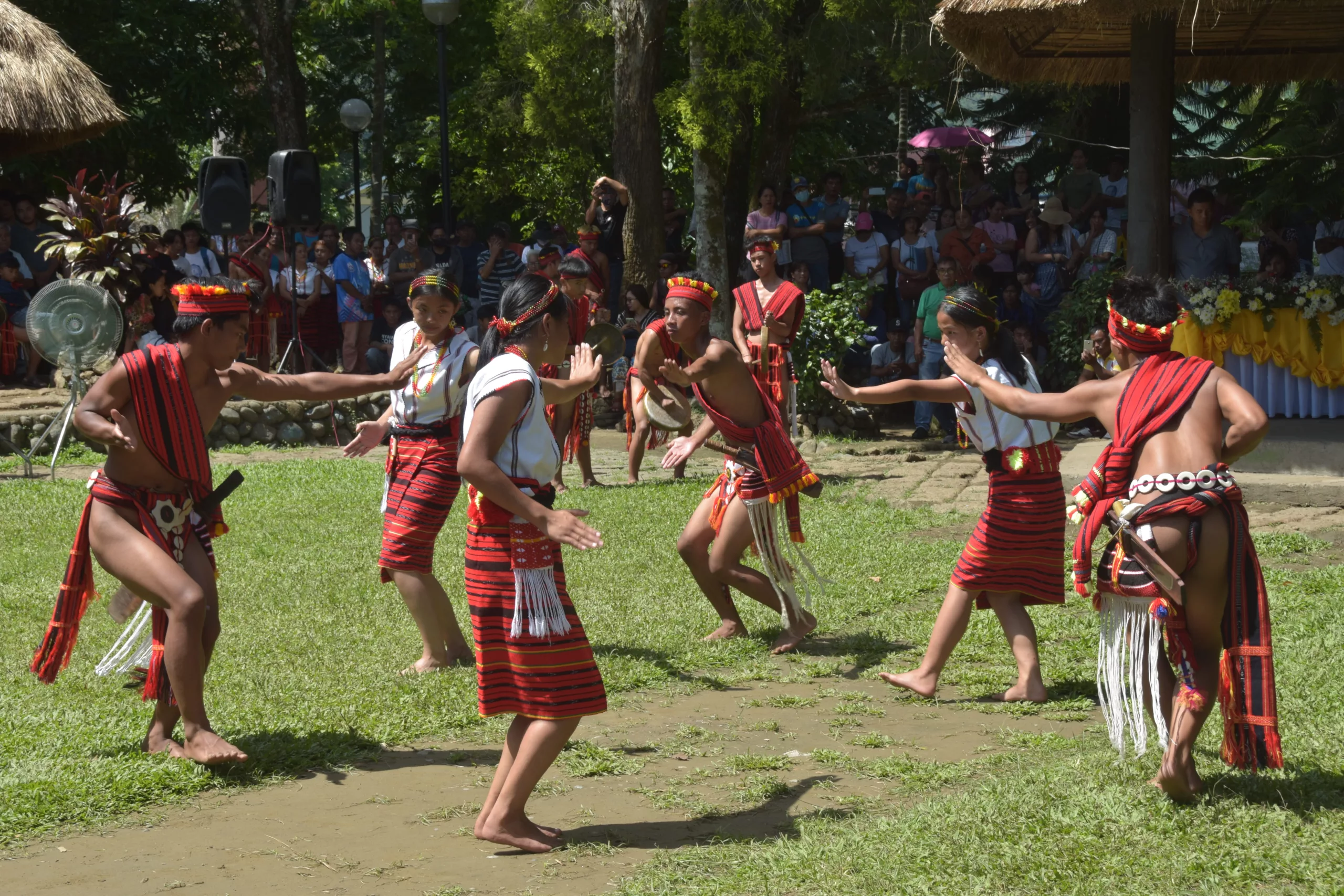
    Sugpaw is a traditional rice harvesting dance of the Ifugao people that highlights their rich cultural identity. This rhythmic dance is a way of life, showcasing the community's connection with nature and their heritage.

    During the Sugpaw dance, gangsa drums beat in rhythm with the stomping of feet on the earthy floor, creating a lively atmosphere. The dancers, adorned in traditional tools and vibrant hand-woven garments, move in harmony, reflecting their cultural pride. Woven abaca loincloths are a distinct feature of their traditional attire, emphasizing their cultural roots.

    This joyous celebration is not just about the rice harvest; it's a celebration of community, tradition, and cultural heritage.

    As you experience Sugpaw, you'll be surrounded by the sounds of laughter, chatter, and the sweet scent of harvested rice, inviting you to join in the festivities.

    Origins of Sugpaw Tradition

    The Origins of Sugpaw Tradition

    The Sugpaw tradition originated in the misty mountains of Ifugao, where the Ifugao people migrated centuries ago, bringing with them their ancient traditions and customs.

    According to tribal legends, Sugpaw was a rhythmic dance that celebrated the harvest season. This dance was performed to guarantee a bountiful harvest, and its rhythmic beats echoed through the valleys, calling upon the gods to bless the crops.

    The Story Behind Sugpaw

    As the Ifugao people adapted to their new surroundings, they cultivated the land and developed a deep connection with nature.

    Sugpaw became an integral part of their lives, a celebration of their hard work and a proof of their resilience. The dance was a way to express their gratitude for the harvest and to ensure a continuous supply of food for the community.

    Sugpaw Today

    Today, Sugpaw remains an integral part of Ifugao's cultural heritage, a vibrant tradition that continues to thrive in the misty mountains.

    The tradition has been woven into the fabric of the Ifugao people's daily lives, and its significance continues to be felt in their daily practices and celebrations.

    The Rhythmic Beat of Gangsa

    The Rhythmic Beat of Gangsa

    In the heart of the Ifugao's rice harvest celebration, the pulsating rhythm of Sugpaw comes alive through the rhythmic beat of the gangsa drums, echoing through the valleys and transporting you to a vibrant cultural experience.

    The gangsa, a traditional Ifugao drum, has undergone a remarkable evolution from a simple instrument to a symbol of cultural heritage, reflecting the Ifugao people's passion for musical expression deeply ingrained in their daily lives.

    Three significant aspects of the gangsa's significance are:

    Rhythmic Storytelling: The gangsa's rhythmic patterns tell stories of the community's history, myths, and legends. For instance, the rhythmic patterns can recount the story of the mythical creature, 'Bunol,' which symbolizes fertility and abundance.

    Community Bonding: The gangsa brings people together, fostering a sense of unity and cooperation. During the harvest celebration, the gangsa's rhythmic beat unites the community as they work together to bring in the harvest.

    Cultural Preservation: The gangsa helps preserve the Ifugao's rich cultural heritage, passing it down to future generations. By teaching the younger generation the traditional rhythmic patterns, the Ifugao people ensure the continuation of their cultural legacy.

    Harvesting Rice With Flair

    Harvesting rice is a synchronized process. As you enter the rice fields, you're surrounded by the vibrant green landscape and the rhythmic chatter of the Ifugao farmers.

    Every movement is intentional and precise, as if the farmers are performing a well-rehearsed dance. This level of coordination is crucial, as it enables the farmers to work efficiently and effectively.

    Unity and teamwork are essential, as the farmers rely on each other to complete the harvesting process. Pride is also a key factor, as the farmers take pride in their work and strive to do it to the best of their abilities.

    Rhythmic Movements Matter

    Rhythmic Movements Matter

    In the traditional harvesting practice of Sugpaw, the rhythmic movements of farmers create a sense of harmony with nature and community.

    Synchronized movements promote efficiency and harmony. As farmers move through the rice fields, their body language speaks volumes. Every step, every gesture, and every swing of the arm is a testament to the ancient tradition of Sugpaw.

    Musicality plays a crucial role in Sugpaw. The rhythmic movements of farmers create a symphony of harvesting harmony.

    Your arms sway in perfect harmony with the rustling of the rice stalks.

    Your feet stomp out a rhythm on the earthy floor, a primal beat that echoes through the valley.

    Your body twists and turns, a fluid motion that weaves together the threads of tradition and community.

    In Sugpaw, the focus isn't just on harvesting rice but on performing a dance that has been passed down through generations.

    The synchronized movements create a sense of community and togetherness, making the harvesting process a celebration of tradition and harmony with nature.

    Traditional Tools Used

    Traditional Tools Used in Sugpaw Rice Harvesting

    In Sugpaw, traditional tools are an essential part of the rice harvesting process.

    The kalang, a curved blade attached to a long pole, is used to cut the rice stalks. The wooden handle of the kalang is typically made from durable wood, ensuring a comfortable grip for the farmer.

    The kayabang, a sturdy basket woven from bamboo and rattan, is used to collect the freshly cut rice stalks.

    These traditional tools have been used for generations, with farmhand stories passing down tales of ancestral wisdom. The tools are crafted with precision and care, showcasing the ingenuity of the Ifugao farmers' ancestors.

    With each swing of the kalang, the farmer feels connected to the land, the people, and the centuries-old traditions.

    The rhythmic sounds of the kalang ('kling-kling') and the kayabang ('swish-swish') harmonize with the farmer's movements, creating a sense of unity between the farmer, the tools, and the land.

    As the farmer harvests the rice, they become one with the land, the tools, and the ancient rhythms of Sugpaw.

    Harvesting in Unison

    Harvesting in Unison

    Step into the Rhythmic Dance of Sugpaw

    In the rice fields of Ifugao, the air is filled with laughter and chatter as people work together in perfect synchrony, each step and swing choreographed to perfection. The Sugpaw dance showcases the power of community, where every individual plays a crucial role in the harvesting process.

    The Rhythm of the Harvest

    The Beat of the Kalang Drums Guides the Harvesters' Movements

    The rhythmic beat of the kalang drums echoes through the fields, guiding the harvesters' movements. This century-old tradition embodies the spirit of cooperative labor, demonstrating the importance of working together towards a common goal.

    Celebrating the Harvest

    Feasts, Music, and Dance Fill the Air

    The harvest festivals that follow are a time of great celebration, with feasts, music, and dance filling the air. The Ifugao people gather around the harvest, sharing stories and laughter as they work, highlighting the significance of community in the harvesting process.

    Ifugao's Agricultural Heritage

    Ifugao's Agricultural Heritage

    In Ifugao, rice has been the cornerstone of the community for centuries. The region's lush, emerald-green terraces are a testament to the people's profound connection to the land. This deep connection isn't just about producing food; it's about preserving tradition, community, and culture.

    Agricultural Tourism

    Agricultural tourism is gaining popularity in Ifugao, as visitors flock to experience the region's rich agricultural heritage. Participate in a traditional rice-planting ceremony or help harvest crops alongside the locals, giving you a hands-on understanding of the region's farming practices.

    Culinary Scene

    Delve deeper into Ifugao's culinary scene, and you'll discover that the connection to the land is more than just about food production. With every bite of fragrant, fluffy rice, you'll taste the history and pride that goes into cultivating this staple crop.

    Synchronized Steps of Joy

    The sugpaw: A centuries-old harvesting dance in Ifugao

    In the emerald-green terraces of Ifugao, the rhythmic thud of wooden rice paddles signals the start of the sugpaw, a centuries-old harvesting dance. As you join the dance, you're surrounded by a whirlwind of color, sound, and movement.

    Emotional Expression through Synchronized Steps

    The dancers move in perfect synchrony, their feet stomping out a rhythmic pattern on the earth. This display of coordination and teamwork showcases the power of collective effort.

    Infectious Energy through Rhythmic Chanting and Laughter

    The rhythmic chanting and laughter of the dancers create an infectious energy. As you dance alongside the Ifugao people, you feel a sense of belonging, connected to the land, the community, and the rich cultural heritage of the sugpaw.

    Celebrating Community Bonding

    The sugpaw is more than just a dance – it's a celebration of community bonding, demonstrating the power of collective effort.

    The Cultural Significance

    The Sugpaw Harvest Dance: A Window into Ifugao Culture

    The sugpaw harvest dance is a vibrant expression of the Ifugao people's rich cultural heritage. This ancient tradition embodies the community's deep connection to the land and their ancestors. As participants synchronize their footsteps and chant in unison, they radiate Community Pride, reinforcing their strong sense of identity.

    The sugpaw dance is a testament to the Ifugao's commitment to preserving their Intangible Heritage. With each rhythmic step, the dancers weave a narrative that spans generations, honoring the land, their forebears, and the cycles of nature. This living, breathing tradition has been passed down through oral tradition and communal practice, affirming the power of cultural heritage to unite and inspire.

    The dance is an embodied expression of the Ifugao's collective history, values, and beliefs. It serves as a window into their cultural significance, showcasing their strong connection to the land and their ancestors.

    Traditional Attire and Adornments

    Traditional Attire and Adornments

    The Ifugao people's traditional attire and adornments are an integral part of their cultural expression, showcasing their exceptional weaving skills and rich cultural heritage.

    Men's Attire

    The men wear traditional loincloths made from woven abaca fibers, adorned with intricate patterns and symbols that hold deep cultural significance. These designs aren't just aesthetically pleasing but also carry important cultural meanings.

    Women's Attire

    The women wear vibrant, hand-woven blouses and skirts, often passed down as heirloom accessories that showcase the family's wealth and status. These traditional garments aren't only beautiful but also hold significant cultural value.

    Traditional Tattoos

    The dancers' bodies are also adorned with traditional tattoos, each design telling a story of strength, courage, and beauty. The tattoo significance varies depending on the design and placement, making each one unique and meaningful.

    The Ifugao people's traditional attire and adornments are a testament to their rich cultural heritage, and understanding their significance is essential to appreciating their cultural expression.

    The Role of Women in Sugpaw

    Women are the backbone of the harvest in Sugpaw. They expertly use traditional harvesting tools, showcasing their skills in perfect harmony with the rhythmic beats.

    Their techniques are rooted in time-honored traditions, passed down through generations.

    Women drive the harvest forward with their expertise and dedication, ensuring a bountiful crop.

    Traditional Roles

    Traditional Roles in Sugpaw

    In the traditional Ifugao practice of Sugpaw, women play a central role in the harvesting process. They're skilled at selecting the ripest rice stalks, ensuring a bountiful harvest. This is evident in their practiced ease while navigating the rice fields, their traditional clothing a vibrant splash of color against the lush green backdrop.

    Gender Expectations in Sugpaw

    In Sugpaw, traditional gender expectations are deeply rooted in family dynamics. Women are responsible for the bulk of the harvesting responsibilities, while men assist with the heavier tasks like plowing and planting. This division of labor isn't only practical but also a reflection of the strong sense of community that defines the Ifugao people.

    Women's Key Responsibilities

    • Selecting the ripest rice stalks to ensure a bountiful harvest.
    • Working in tandem with men, their synchronized movements a reflection of their years of practice and collaboration.
    • Preserving the harvested rice, ensuring the tribe's sustenance throughout the year as the harvest season draws to a close.

    Women's Harvesting Techniques

    Cooperative Labor is essential in Sugpaw, where women work together to harvest rice. Each woman has a specific role, and they work in perfect synchrony to get the job done efficiently.

    In the rice fields, the women use Farmstead Strategies to harvest the ripest grains. They employ time-honored techniques, moving their hands in harmony as they work.

    To harvest the rice, the women expertly use sickles to cut the stalks. They move quickly, gathering the grains into bundles. As they work, they call out to each other, their voices rising and falling in a gentle rhythm.

    Preserving the Ifugao Identity

    The Ifugao people are preserving their cultural identity through Sugpaw, a rhythmic rice harvesting dance that resonates deeply with their collective memory and resolve.

    Sugpaw is more than just a traditional practice; it's a reflection of the Ifugao people's unyielding commitment to their cultural heritage. This dance is a symbol of their ethnic pride, and it's an integral part of their cultural revival.

    The Ifugao people are reclaiming their roots by proudly embracing their traditions and showcasing their unique identity to the world.

    In the world of Sugpaw, you'll discover:

    Traditional attire is worn with pride during Sugpaw performances, adorned with vibrant colors and symbolic patterns.

    Ancient harvesting techniques, passed down through generations, have been refined and perfected over time.

    Sugpaw embodies a sense of community and camaraderie, as the Ifugao people come together to celebrate their cultural heritage.

    What is the significance of rhythmic rice harvesting dances in different Filipino cultures?

    The rhythmic rice pounding dance holds great significance in various Filipino cultures. It is a sacred tradition that celebrates the bountiful rice harvest and honors the spirits of nature. This energetic dance not only symbolizes the hard work of farming but also brings communities together in joyful celebration.

    Sugpaw's Enduring Legacy

    Sugpaw's Enduring Legacy

    For two generations, Ifugao dancers have perfected the intricate steps of Sugpaw, ensuring the dance's rhythmic beats continue to resonate across the mountains of Ifugao. The echoes of their footsteps confirm the dance's enduring legacy.

    Cultural Revival

    Sugpaw's Cultural Revival is evident in its integral role in community celebrations and gatherings. Dancers adorned in traditional attire sway to the rhythm, blending tradition and innovation. This fusion is a testament to the dance's ability to evolve while preserving its cultural significance.

    Community Empowerment

    Sugpaw has become a symbol of Community Empowerment, a declaration of pride in the Ifugao's cultural identity. The dance has preserved the Ifugao's rich history and inspired a new generation to take ownership of their cultural heritage. The community is united in their passion for Sugpaw, working together to ensure its rhythmic beats continue to resonate for generations to come.

    Frequently Asked Questions

    Is Sugpaw Only Performed During Rice Harvesting Season?

    Sugpaw is not only performed during rice harvesting seasons, but it's a cultural celebration that takes place throughout the year. Its agricultural rhythms are woven into various celebrations, making it a significant part of the cultural tapestry.

    Can Outsiders Participate in the Sugpaw Dance?

    Outsiders can participate in the Sugpaw dance, but with respect. When visiting the Ifugao's ancestral lands, you're allowed to join in the vibrant Sugpaw dance, but only if you do so respectfully. This means being mindful of the tribe's heritage and cultural traditions. Participation should prioritize cultural immersion and understanding, not exploiting the experience for entertainment purposes.

    Are the Gangsa Gongs Used in Other Ifugao Celebrations?

    Yes, gangsa gongs are used in other Ifugao celebrations. In Ifugao culture, gangsa gongs play a significant role in various festivities beyond just the traditional Hudhud chant. These gongs are used to create a lively atmosphere in celebrations such as weddings, harvest festivals, and rituals to ensure a bountiful harvest. For instance, during the Ifugao's traditional rice harvest festival, gangsa gongs are played to express gratitude for the abundant harvest and to honor the gods that blessed their land.

    How Long Does It Take to Learn Sugpaw Dance Steps?

    It takes months to years to fully grasp the Sugpaw dance steps. As you start mastering the Sugpaw dance, anticipate dedicating countless practice hours to perfecting the intricate steps. Immersing yourself in Ifugao culture will help you internalize the rhythms, which is crucial to mastering the dance.

    Are Sugpaw Performances Open to Tourists?

    Sugpaw performances are open to tourists. As you plan your trip, be mindful of cultural sensitivity and the tourism impact on local communities, ensuring your engagement is respectful and benefits the locals.

    Conclusion

    Sugpaw: A Traditional Dance of the Ifugao

    The Sugpaw is a traditional dance of the Ifugao people, performed during the rice harvesting season.

    Rhythmic Beat of the Gangsa

    The dance is characterized by the rhythmic beat of the gangsa, a type of gong, which echoes through the valleys, signaling the start of the harvest.

    Synchronized Movements

    The Sugpaw dance involves synchronized movements, where dancers mimic the actions of harvesting rice, such as planting, weeding, and harvesting.

    Vibrant Attire and Adornments

    Dancers wear vibrant attire and adornments, which add to the festive atmosphere of the celebration.

    Timeless Legacy

    The Sugpaw dance is an important part of Ifugao's rich cultural heritage, preserving the tradition and customs of the Ifugao people.

  • Bulangsi: The Soulful Reed Flute Music of the Yakan

    Bulangsi: The Soulful Reed Flute Music of the Yakan

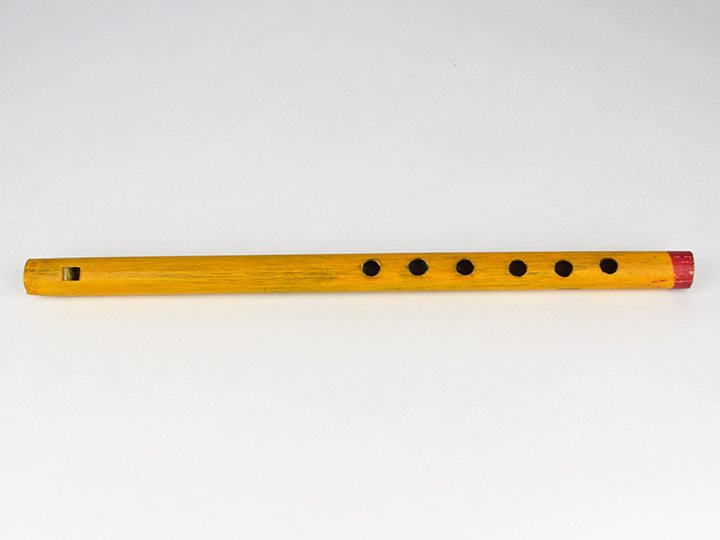
    Bulangsi is a traditional reed flute music originating from the Yakan people, who reside in the Sulu Archipelago. Centuries-old legends have shaped the cultural heritage of the Yakan people, and Bulangsi is an integral part of it.

    This traditional music is rooted in nature and spiritual beliefs, which is reflected in the precision and perfection of the flute's craftsmanship. The emotional stories conveyed through Bulangsi include tales of love, hardship, and triumph.

    In Yakan culture, Bulangsi is an essential part of daily life and rituals, symbolizing cultural identity and fostering empathy within the community.

    As you delve deeper into this ancient tradition, you'll discover that Bulangsi is more than just music – it's a reflection of the Yakan people's history and spirit.

    Origins of the Bulangsi Tradition

    The origins of the Bulangsi tradition can be traced back to the tribal legends of the Yakan people, who inhabited the Sulu Archipelago in the Philippines.

    Their unique musical identity was shaped by cultural exchange with neighboring tribes and ancient influences from Southeast Asia. The Yakan people developed a distinct musical style, weaving stories and myths into the fabric of their music through oral traditions passed down by their ancestors.

    The reed flute, reminiscent of ancient bamboo flutes in Southeast Asia, is an integral part of their cultural heritage.

    The Bulangsi tradition is deeply rooted in the Yakan people's connection with nature and their spiritual beliefs.

    Crafting the Reed Flute Instrument

    Selecting the Right Reeds:

    To create a reed flute, you need to choose reeds with the right qualities.

    Flexibility is crucial, as it allows the reed to vibrate and produce sound.

    Durability is also important, as it ensures the reed can withstand repeated use.

    Finally, tone quality is vital, as it affects the overall sound of the flute.

    Shaping the Flute Body:

    Once you have the right reeds, you need to shape the flute body.

    The traditional Bulangsi form requires specific techniques passed down through generations.

    The distinctive shape is achieved by carefully cutting and hollowing the reed, which affects the sound produced.

    Tuning the Instrument:

    After shaping the flute, you need to tune it.

    Tuning involves adjusting the pitch and timbre to produce the desired sound.

    Painstaking adjustments are necessary to evoke the haunting beauty of traditional Bulangsi music.

    Selecting the Right Reeds

    Selecting the Right Reeds for Your Bulangsi Flute

    To produce a rich, soulful sound, it's essential to choose the right reeds for your Bulangsi flute. The quality of the reed directly affects the instrument's tone and playability.

    The Yakan people have mastered the art of reed farming, cultivating specific species that produce the desired sound quality.

    Reed Characteristics

    When selecting reeds, consider the following factors:

    Node spacing affects pitch and resonance.

    Reed length influences tone and playability.

    Diameter impacts air resistance and sound quality.

    Reed wall thickness affects tone clarity and resonance.

    Reed color indicates maturity and quality.

    Choosing the Right Reeds

    Look for reeds with evenly spaced nodes, a smooth surface, and a natural shine.

    Avoid reeds with cracks, splits, or signs of decay.

    Shaping the Flute Body

    Shaping the Flute Body: A Precise Process

    To create a Bulangsi flute, shaping the flute body is a crucial step that demands patience, attention to detail, and a deep understanding of the instrument's unique sonic characteristics.

    Ergonomic principles must be considered to ensure the flute is comfortable to hold and play. The flute's contours should fit snugly in the player's hand, allowing for effortless finger placement and subtle adjustments in pitch and tone.

    Carving techniques are vital in achieving the desired shape and sound quality. To create the characteristic Bulangsi tones, carefully hollow out the reed to create a precise bore. The flute's internal chamber must be calibrated to amplify and project the sound, while the exterior shape should be smooth and even, allowing for comfortable finger placement.

    Every detail, from the slightest curve to the subtlest texture, will impact the instrument's overall sound and playability.

    Tuning the Instrument

    Tuning the Instrument

    With the flute body carefully shaped, the next step is to bring your Bulangsi flute to life by tuning the instrument, a process that requires precision and patience to achieve the perfect pitch and tone.

    Creating the Embouchure Hole

    To produce the desired sound, you need to create the embouchure hole, a small hole at the top of the flute. Make sure it's centered and symmetrical. This hole is essential for producing the correct sound.

    Adjusting the Fingering Holes

    Next, adjust the fingering holes, positioning them correctly to produce the correct notes. Pay attention to finger placement for clear tones. Experiment with different fingerings to achieve the perfect pitch.

    Embouchure Techniques

    To produce the correct sound, form an 'O' shape with your lips and adjust your embouchure for optimal resonance. Relax your facial muscles for a smooth sound.

    Fine-Tuning the Flute

    Remember that patience and practice are key. With time and dedication, your Bulangsi flute will come alive, filling the air with the soulful sounds of the Yakan people.

    Unique Sound and Timbre Characteristics

    Unique Sound and Timbre Characteristics

    The Bulangsi's distinct sonic identity is shaped by its construction and playing technique. The instrument's unique sound and timbre characteristics are attributed to the specific materials used in its construction and the distinctive embouchure and breath control required to produce its haunting, airy tones.

    Vocal Resonance and Breath Control

    The vocal resonance of the flute, amplified by the player's embouchure, creates a rich, breathy quality that resonates deeply with listeners. This is achieved through the player's precise control over their breath, allowing for subtle variations in tone and dynamics.

    Timbre Textures and Emotional Intensity

    The timbre textures of the Bulangsi range from soft, whispery whispers to piercing, wailing cries, evoking a sense of emotional intensity and authenticity. These varying textures add depth and nuance to the music, making the instrument particularly expressive.

    Distinctive Timbre and Earthy Authenticity

    The Bulangsi's distinctive timbre is marked by a subtle 'buzz' or 'growl', imbuing the music with a sense of earthy, organic authenticity. This unique characteristic is a result of the instrument's construction and the player's technique, making the Bulangsi's sound truly distinct.

    Role in Yakan Ceremonies and Rites

    In Yakan ceremonies, the Bulangsi plays a vital role in connecting the spiritual and physical realms. This traditional instrument serves as a sonic bridge, evoking a sense of communal connection and ancestral presence.

    During rituals, the Bulangsi's evocative tones weave together tradition and innovation, creating a rich cultural tapestry. Its ceremonial significance lies in facilitating ritual dynamics, fostering reverence and respect for ancestors and the natural world.

    The skilled Bulangsi player's improvisations create an atmosphere of contemplation and introspection. This allows participants to tap into the collective unconscious and access their ancestors' wisdom.

    By mediating the sacred and mundane, the Bulangsi bridges the gap between the human world and the spiritual domain.

    Bulangsi in Yakan Daily Life

    In Yakan daily life, the bulangsi reed flute plays a significant role in various rituals and ceremonies. This instrument is an integral part of their morning prayers, setting a serene tone for the day ahead.

    During storytelling, the bulangsi's haunting tones bring stories to life, adding emotional depth to the narrative.

    Moreover, the bulangsi is used to punctuate rituals and ceremonies, further emphasizing its importance in Yakan culture.

    Morning Prayers

    Morning Prayers in Yakan Village

    In the Yakan village, morning prayers are an essential part of daily life.

    The sweet sounds of the bulangsi, a traditional instrument, fill the air as the villagers gather for their morning devotions.

    As you join the villagers, you're enveloped in the soft, lilting rhythms of the bulangsi, which create a tranquil atmosphere.

    The villagers, both young and old, come together to offer their morning prayers.

    The air is filled with the sweet scent of incense, and the soft murmur of prayers as the Yakans invoke the blessings of their ancestors and the divine.

    The bulangsi takes center stage, its melodies intertwining with the prayers, creating a sacred moment.

    This moment is a devotional practice that connects the Yakans to their spiritual heritage, transcending the mundane and speaking directly to the soul.

    Musical Storytelling

    The bulangsi, a traditional reed flute, plays a vital role in Yakan daily life, telling stories of love, hardship, and triumph through its soulful melodies. These melodies accompany Yakans as they go about their daily routines, sharing stories that resonate deep within.

    The bulangsi's melodies aren't just pleasant background noise; they convey the emotional resonance of the Yakan people's experiences.

    With every note, the flute tells a story. You can sense the longing in the melancholic tunes, the joy in the lively rhythms, and the resilience in the soothing melodies.

    The bulangsi's musical storytelling is an integral part of Yakan daily life, a constant reminder of their cultural identity and the stories that bind them together.

    As you listen, you're immersed in the daily struggles and triumphs of the Yakan community, their history, and their traditions.

    Rituals and Ceremonies

    Rituals and Ceremonies

    In Yakan rituals and ceremonies, the bulangsi's evocative melodies play a vital role in weaving together the community's spiritual and cultural fabric. The bulangsi's presence is omnipresent in these sacred events, underscoring the significance of each occasion with its haunting tones.

    Yakan Weddings

    The bulangsi's lilting melodies accompany the bride and groom as they exchange vows, imbuing the ceremony with a sense of solemnity and joy.

    Ceremonial Attire

    The bulangsi's earthy, soulful sounds perfectly complement the intricately woven fabrics and vibrant colors of traditional Yakan clothing, creating a sense of cultural continuity.

    Ritual Dances

    The bulangsi's hypnotic rhythms guide the Yakan dancers' steps, conjuring an atmosphere of communal celebration and spiritual connection as they move in rhythmic unison.

    In Yakan daily life, the bulangsi is an integral part of the fabric that binds the community together, evoking a deep sense of belonging and shared heritage with its melodies.

    Masters of the Traditional Craft

    The bulangsi masters' exceptional skills are rooted in rigorous apprenticeships. These esteemed musicians of old have passed down their techniques through generations of apprenticeships, renowned for their mastery of intricate fingerwork and breath control.

    Apprentices learn from esteemed mentors, securing the preservation of the traditional craft as mentors impart their expertise to the next generation.

    These cultural ambassadors have become the custodians of Yakan cultural heritage. They aren't only skilled performers but also guardians of their community's history and traditions.

    By mastering the intricacies of the reed flute, they connect the past to the present, keeping the soulful melodies alive for generations to come.

    Evolution of Bulangsi Music Styles

    The evolution of bulangsi music styles has been shaped by the interplay of traditional and modern elements, resulting in a unique cultural heritage of the Yakans.

    Influence Patterns:

    The introduction of Western instruments and musical styles has led to the incorporation of new melodic patterns and harmonies, enriching the traditional bulangsi sound. For instance, the use of guitars and keyboards has expanded the melodic range of bulangsi, allowing for more complex harmonies and rhythms.

    Musical Fusions:

    Yakan musicians have experimented with fusion genres, blending traditional bulangsi with modern styles like jazz and rock. This fusion has resulted in the creation of new and unique sounds, such as the combination of traditional Yakan instruments with modern electronic elements.

    Stylistic Shifts:

    Bulangsi music has undergone significant stylistic shifts as a result of historical developments and cultural exchange. For example, the influence of Islamic and Christian traditions has led to the incorporation of new musical elements, reflecting the Yakans' adaptability and artistic expression.

    Through these developments, the essence of bulangsi remains intact, while its boundaries have expanded to accommodate new influences. This evolution hasn't only preserved the cultural heritage of the Yakans but has also paved the way for innovative artistic expressions.

    Cultural Significance and Symbolism

    Bulangsi: A Window into Cultural Significance and Symbolism

    Bulangsi, a traditional reed flute music, holds deep cultural significance and symbolism.

    It is deeply rooted in spiritual connections to nature, echoing the harmony between humans and the environment. This connection is reflected in the music's calming and soothing qualities, which evoke a sense of balance and unity with nature.

    Bulangsi is a powerful symbol of cultural identity, resonating with the history and traditions of the community.

    It serves as a bridge between generations, preserving cultural heritage and passing it down to future generations.

    Bulangsi is a messenger of emotions, conveying the full spectrum of human feelings with remarkable expressiveness.

    Through its melodies, it conveys joy, sadness, and every emotion in between, creating a sense of empathy and understanding among listeners.

    Spiritual Connection to Nature

    The mystical domain of Bulangsi's soulful melodies echoes the whispers of the forest, evoking a profound sense of harmony between humans and nature. As you immerse yourself in the hauntingly beautiful sounds of the reed flute, you can't help but feel a deep connection to the natural world.

    This spiritual connection to nature is at the heart of Bulangsi's cultural significance. The Yakan people believe that their music is a way of communicating with the natural world, and that the melodies have the power to bring balance and harmony to the environment.

    Earthly Harmony is achieved through Bulangsi's gentle, lilting rhythms, which evoke a sense of harmony between humans and nature, reminding us of our place within the natural world. For example, the soothing sounds of the reed flute can calm the mind and promote a sense of unity with nature.

    The pauses between notes, known as Sacred Silence, are just as important as the notes themselves, creating a sense of reverence that allows the listener to connect with the natural world on a deeper level. This silence encourages the listener to reflect on their relationship with nature.

    Nature's Rhythms are the inspiration behind Bulangsi's rhythms, which are inspired by the natural world, from the gentle rustling of leaves to the gentle lapping of waves against the shore. For instance, the rhythmic patterns of Bulangsi mimic the rhythmic patterns found in nature, such as the flow of a river or the beat of a bird's wings.

    Through Bulangsi, the Yakan people are able to tap into the sacred rhythms of nature, creating a profound sense of connection and harmony with the world around them.

    Symbol of Cultural Identity

    The Bulangsi Reed Flute: A Symbol of Yakan Cultural Identity

    The Bulangsi reed flute is an enduring symbol of Yakan cultural identity, reflecting the community's rich heritage and traditions.

    Its intricate carvings and deliberate rhythms serve as a reflection of the community's history and customs. This instrument isn't just a musical device, but a powerful symbol of cultural revival, confirming the Yakan people's national pride and ethnic expression.

    The Flute's Traditional Values

    The Bulangsi's traditional values are woven into the fabric of community bonding, where it's often played during gatherings and celebrations, fostering a sense of togetherness and shared heritage.

    During these events, the flute's melodies bring people together, strengthening social bonds and reinforcing cultural traditions.

    Cultural Significance

    The Bulangsi's significance extends beyond its melodies, representing a cultural identity that's deeply rooted in the Yakan people's history and traditions.

    The flute serves as a tangible connection to the community's past, preserving their rich cultural heritage. As you experience the soulful sounds of the Bulangsi, you'll come to appreciate the profound cultural significance it holds.

    Messenger of Emotions

    The Bulangsi reed flute is a sacred instrument in Yakan culture, serving as a messenger of emotions that conveys the depth of human feeling through its soulful melodies and intricate rhythms.

    The Bulangsi's emotional resonance is rooted in its ability to:

    Evoke nostalgia: The flute's haunting melodies transport listeners to a bygone era, evoking memories of love, loss, and longing. For instance, a Yakan musician might play a melancholic tune that reminds listeners of a past love, evoking feelings of nostalgia.

    Convey emotional depth: The instrument's expressive range captures the intricacies of human emotion, from the highest highs to the lowest lows. A skilled musician can play a joyful tune that conveys the excitement of a wedding celebration, and then transition to a somber melody that captures the sorrow of a funeral.

    Foster communal bonding: The Bulangsi's soulful sounds bring people together, creating a shared emotional experience that transcends linguistic and cultural barriers. During a traditional Yakan festival, the flute's melodies can unite people of different ages and backgrounds, creating a sense of community and togetherness.

    Through the Bulangsi, the Yakan people have developed a profound understanding of emotional intelligence, using music as a powerful tool for emotional expression and cultural connection.

    Bulangsi in Modern Yakan Society

    In modern Yakan society, Bulangsi continues to thrive, blending traditional essence with modern elements to create a unique cultural identity. This fusion is evident in the way Bulangsi has adapted to urban influence, incorporating new instruments and genres while retaining its traditional soul.

    Urban Influence and Adaptation

    Bulangsi has incorporated modern instruments, such as electronic elements, to create a fresh sound that appeals to younger generations. This fusion is evident in the collaboration between Yakan musicians and international artists, resulting in the creation of new genres that blend traditional Bulangsi with modern styles.

    Modern Platforms and Preservation

    Bulangsi has also transitioned to digital platforms, allowing for the preservation of traditional music in modern formats. This shift has enabled the Yakan people to share their cultural heritage with a broader audience, increasing global recognition of their rich cultural identity.

    Impact on Yakan Society

    The adaptation of Bulangsi has had a significant impact on Yakan society, fostering a sense of community and cultural identity. Urban-based Yakan communities have embraced Bulangsi, leading to a cultural reconnection and community building among the youth. Workshops and classes have been established to teach Bulangsi to urban youth, ensuring the preservation of traditional music and cultural heritage.

    Cultural Significance

    Through these modern adaptations, Bulangsi continues to play a vital role in Yakan society, promoting cultural identity and community bonding. As Bulangsi evolves, it remains an essential part of Yakan cultural heritage, connecting the community to its rich traditional roots.

    How Does the Reed Flute Music of the Yakan Compare to the Rhythmic Rice Harvesting Dance of the Ifugao?

    The reed flute music of the Yakan is deeply rooted in their cultural traditions, known for its soulful melodies and intricate rhythms. In contrast, the Ifugao’s sugpaw: rhythmic rice harvesting dance is a lively and energetic display of community cooperation and celebration. The two art forms offer distinctive glimpses into the unique traditions of each culture.

    Preserving the Art of Bulangsi Playing

    Preserving the Art of Bulangsi Playing

    With a dwindling number of master Bulangsi players, it's essential to learn from them and help preserve the art of Bulangsi playing for future generations. You can play a crucial role in safeguarding this cultural heritage by engaging with the community and supporting initiatives that promote its preservation.

    Digital Archives

    Support the creation of digital archives that document and showcase the traditional playing styles, techniques, and repertoire of master Bulangsi players.

    This will guarantee that the art form is preserved for future generations and made accessible to a wider audience.

    Community Outreach and Cultural Exchange

    Participate in community outreach programs that promote cultural exchange between the Yakan community and other cultural groups.

    This exchange can foster cross-cultural understanding, appreciation, and mutual respect, ultimately contributing to the preservation of Bulangsi playing.

    Youth Engagement and Mentorship Programs

    Engage with youth in the Yakan community and support mentorship programs that pair young learners with experienced Bulangsi players.

    This will secure the transmission of knowledge and skills from one generation to the next, securing the future of Bulangsi playing.

    Frequently Asked Questions

    Can Bulangsi Music Be Played With Other Instruments?

    Bulangsi music can be played with other instruments. This fusion of traditional and modern sounds enriches the cultural heritage of the soulful reed flute. For instance, combining the Bulangsi flute with Western instruments like the guitar or violin creates a unique sound that appeals to a broader audience. This blending of styles promotes cultural exchange and diversifies the traditional melodies of the Bulangsi flute with diverse harmonies and rhythms.

    Are Bulangsi Flutes Only Played by Yakan Men?

    Traditionally, Bulangsi flutes are played by Yakan men. This cultural practice reflects the traditional gender roles within Yakan society, where men are expected to take on musical roles. By playing the Bulangsi flute, Yakan men preserve their cultural heritage through this unique art form.

    Can Anyone Learn to Play the Bulangsi Flute?

    Mastering the bulangsi flute requires a thoughtful approach. To truly learn this traditional instrument, one must recognize its significance in Yakan heritage and traditions. Respect for the instrument's cultural importance is crucial. In terms of technique, mastering the bulangsi flute involves learning traditional skills like tonguing and breath control. These skills can be developed with practice and dedication.

    Is Bulangsi Music Only Played During Ceremonies?

    Bulangsi music is not limited to ceremonial contexts. While it holds deep ceremonial significance, its melodic beauty resonates in daily life, weaving a sonic tapestry that echoes the Yakan's history and traditions.

    Are Bulangsi Flutes Used for Communication in the Jungle?

    Bulangsi flutes are used for communication in the jungle. In the Yakan communities, these flutes convey crucial information through Jungle Signals and Forest Whispers that echo through the trees. This unique method allows the communities to connect and share vital information.

    Conclusion

    Bulangsi: A Symbol of Yakan Identity and Heritage

    The soulful reed flute music of the Yakan, known as bulangsi, is deeply rooted in their culture. This traditional music is a reflection of the island's lush landscapes and the people's resilience.

    The gentle whispers of the bulangsi evoke a sense of community and belonging, weaving a rich tapestry of tradition and heritage. With every note, the bulangsi shares stories of the past, preserving the history and customs of the Yakan people.

    By listening to the bulangsi, one can gain a deeper understanding of the Yakan's strong cultural identity.

  • Siring: The Enchanting Fingernail Dance of the Sama People

    Siring: The Enchanting Fingernail Dance of the Sama People

    Siring: A Window into the Sama People's Rich Cultural Heritage

    Siring, an Ancient Art Form

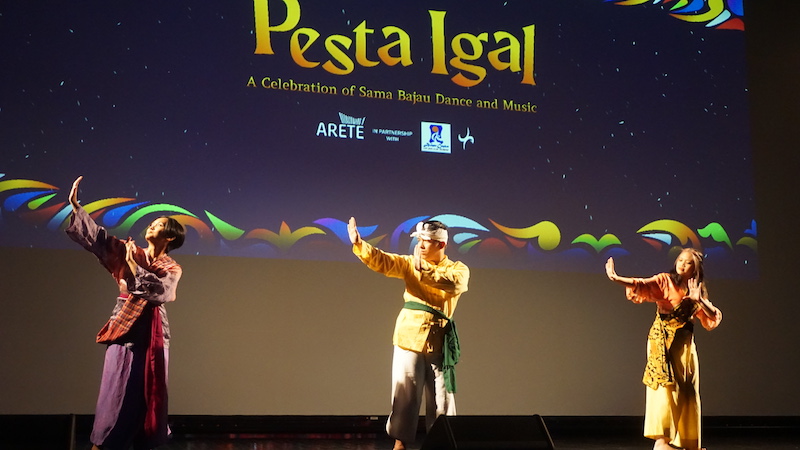
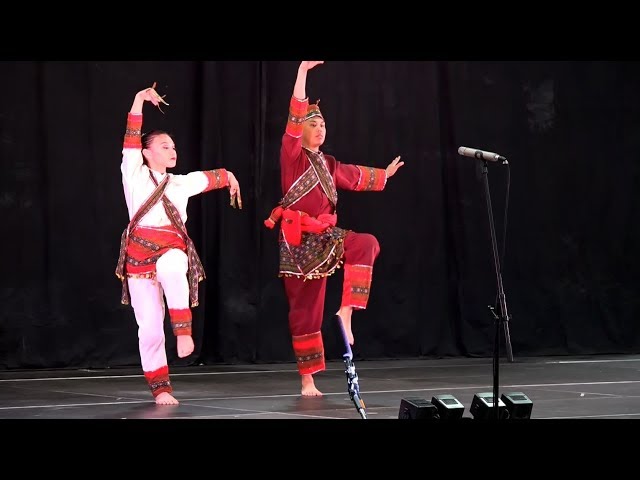
    The Sama people's ancient art form, Siring, is an intricate fingernail dance that conveys subtle messages through hand movements and fingernail etiquette. This dance is deeply rooted in their culture, reflecting their values and traditions.

    Through Siring, the Sama people express themselves in a unique way. The dance involves a series of intricate hand movements, with each gesture conveying a specific message. For example, the way the fingers are positioned can indicate respect, while the shape of the fingernails can signify social status.

    Spiritual Connections and Nature Reverence

    Siring is deeply connected to the Sama people's spiritual beliefs and their reverence for nature. The dance is often performed during ceremonial rituals, where it is used to honor the natural world and the spirits that inhabit it. For instance, the dance may be performed during harvest festivals to express gratitude for the land's bounty.

    As you delve deeper into the world of Siring, you'll discover the rich heritage of the Sama people. With each intricate movement and gesture, you'll gain a deeper understanding of their culture, values, and traditions.

    Origins of the Sama People

    The Origins of the Sama People

    The Sama people's ancestors migrated from the southeastern coastal regions of Asia, specifically from what's now modern-day Malaysia and the Philippines, around 2,000 years ago. This migration marked the beginning of their unique cultural identity.

    As they settled in their new homeland, they established ancient settlements, often near coastal areas, where they developed early agriculture practices.

    Settlements and Agriculture

    The Sama people established ancient settlements near coastal areas, which allowed them to develop early agriculture practices. These practices enabled them to cultivate crops and provide for their communities.

    Tribal Wars and Social Hierarchy

    However, their peaceful existence was often disrupted by tribal wars with neighboring tribes, which ultimately shaped their social hierarchy. The constant conflicts led to the formation of a hierarchical society, where warriors and leaders held higher positions.

    Language Evolution

    Geographical isolation led to language evolution, as their dialects diverged from their Asian roots. Over time, the Sama people developed distinct languages that differed from their ancestors' languages.

    Ancient Trade

    The Sama people also engaged in ancient trade, exchanging goods and ideas with neighboring tribes. They traded goods such as food, tools, and textiles, which helped to strengthen their relationships with other tribes.

    Cultural Heritage

    As you explore further into their history, you'll discover a rich tapestry of traditions and customs that have been woven together to create the vibrant culture of the Sama people. Their cultural heritage is a testament to their resilience and adaptability.

    The Ancient Art of Siring

    The Ancient Art of Siring in Sama Culture

    The ancient art of siring is a captivating performance that showcases intricate hand movements, rhythmic chanting, and poetic storytelling. This enchanting dance is deeply rooted in Sama identity, reflecting their values, traditions, and history.

    Fingernail Etiquette: A Language of Its Own

    In siring, every gesture, curl of the finger, and tap of the nail conveys a subtle message. The Sama people believe that the fingers hold the power to convey emotions, tell stories, and even heal. For instance, a gentle tap of the index finger can signify respect, while a curl of the pinky finger can represent playfulness.

    Weaving a Tapestry of Emotions

    With each delicate movement, the siring artist weaves a tapestry of emotions, evoking a sense of community and connection among the onlookers. This captivating art form allows the Sama people to express themselves, share their stories, and connect with their audience on a deeper level.

    Embracing Siring: Understanding Sama Culture

    By embracing this ancient art, you'll gain a deeper understanding of the Sama people's rich heritage and their profound connection to their cultural identity.

    Siring is an integral part of Sama daily life, reflecting their values, traditions, and history.

    Fingernail Extensions and Adornments

    Fingernail Extensions and Adornments: A Canvas of Self-Expression

    You can transform your fingers into a vibrant canvas that showcases your creativity and flair by adorning them with intricately carved nail extensions. Nail extensions aren't just a fashion statement; they're a form of self-expression and cultural identity.

    A Rich History of Adornments

    The history of nail adornments dates back centuries, with various cultures using nail artistry to signify status, beauty, and cultural identity. For example, in ancient China, long fingernails symbolized wealth and social status.

    Blending Tradition with Modernity

    Today, extension trends blend traditional techniques with modern materials, allowing for unparalleled creativity. Beauty standards continue to evolve, embracing diverse aesthetics and celebrating individuality.

    Cultural Fusion: The Sama People's Fingernail Dance

    The Sama people's fingernail dance is a mesmerizing example of cultural fusion, where personal expression meets communal tradition. This dance showcases the importance of nail artistry in cultural heritage.

    Honoring the Rich History of Nail Artistry

    As you adorn your nails, you're not only enhancing your beauty but also honoring the rich history of nail artistry. With each carefully crafted extension, you're telling a story of self-expression, creativity, and cultural pride.

    Hand Gestures and Symbolism

    Hand Gestures and Symbolism in the Sama Culture

    The Power of Hand Gestures

    Your hands can convey subtle messages through deliberate hand gestures and nuanced finger placement, speaking volumes about your personality, intentions, and cultural roots.

    In the Sama culture, hand gestures are an integral part of daily interactions. Every flick, curl, and extension conveys a specific message, allowing individuals to express emotions, intentions, and even spiritual connections.

    Decoding Finger Gestures

    A gentle curl of the index finger can signify respect, while an extended pinky may denote playful humor. These finger codes are woven into daily interactions, enabling individuals to communicate effectively.

    Unraveling Symbolism in Hand Gestures

    A delicate dance of fingers can evoke a sense of community, while a bold, sweeping motion can signify confidence. By embracing this nuanced language, you'll reveal a world of subtle yet powerful communication, allowing you to connect with others on a profound level.

    Mastering the Art of Hand Language

    The Sama people have mastered the art of hand language, where every gesture conveys a specific message. By immersing yourself in this intricate world of hand gestures, you'll uncover a complex web of symbolism, enabling you to communicate effectively and connect with others on a deeper level.

    Mythological Stories and Legends

    The Sama people's mythological stories and legends are integral to their daily lives. These stories revolve around ancient heroes with extraordinary powers and magical creatures that once roamed the land.

    The whispers of these tales transport listeners to a world where reality and fantasy blend. One example is the enchanting fingernail dance, which serves as a gateway to the Sama people's collective soul.

    Ancient Sama Legends

    Unveiling the Ancient Sama Legends

    In the earliest days of Sama history, mythical tales of shape-shifting ancestors and celestial beings wove a rich tapestry of legend, passed down through generations by firelit whispers and cryptic cave paintings.

    The Rich Heritage of Ancient Wisdom

    As you explore the forgotten chronicles of the Sama people, you'll discover a rich heritage of ancient wisdom. Three legends stand out: The Star Maiden, The Shape-Shifters, and The Dreamweaver.

    LegendDescriptionSymbolism
    The Star MaidenCelestial being who brought light to the worldHope, Guidance
    The Shape-ShiftersAncestors who could transform into animalsAdaptability, Resilience
    The DreamweaverAncient prophet who foretold the futureWisdom, Intuition

    Unraveling the Secrets of the Sama People

    In these ancient prophecies, you'll find hidden texts that reveal the secrets of the Sama people's connection to the land and their ancestors. Sacred scrolls, passed down through generations, hold the key to understanding the intricate balance between the physical and spiritual worlds. As you unravel the mysteries of the Sama people's forgotten relics, you'll uncover the essence of their enchanting fingernail dance, woven from the threads of their rich mythological heritage.

    Whispers of the Past

    Uncovering the Forgotten Chronicles of the Sama People

    The Sama people's rich cultural heritage is woven from the threads of mythological tales, passed down through generations of elderly storytellers. These ancient voices whisper secrets of the past, transporting us to an era where reality and fantasy blurred.

    Mythological Tales

    The Star-Crossed Lovers reveal the epic tale of forbidden love between a mortal and a celestial being, whose love was powerful enough to move the heavens.

    The Great Flood of Sama recounts a legendary deluge that reshaped the land, forcing the people to adapt and thrive in a new world.

    The Whispering Woods is a mystical forest where the trees themselves share the secrets of the ancient ones, guiding those who seek knowledge.

    The Sama People's Connection to Nature and Ancestors

    The Sama people's deep connection to nature and their ancestors is evident in their everyday lives. Their legends continue to inspire and guide generations, demonstrating the significance of their cultural heritage.

    Spiritual Significance of Siring

    Siring: A Bridge to the Past

    The Sama people's traditional practice of siring, a form of rhythmic finger tapping, holds profound spiritual significance. This ancient tradition creates a connection with ancestors, bridging the past and present. By embracing siring, you'll experience a deep sense of unity with the Sama people's rich cultural heritage.

    Ancestral Connection

    The sacred rhythms and movements of siring form a direct link to ancestors, allowing the Sama people to honor their heritage. This connection is rooted in the belief that the rhythms and movements can awaken the spirits of the ancestors, facilitating communication and guidance.

    Unity with Cultural Heritage

    Sacred Rhythms and Movements

    The sacred dance of the Sama people, known as siring, is a spiritual practice that combines intricate movements with a deep connection to the universe.

    The core elements of siring include:

    Mystic Cadence, a hypnotic tempo that synchronizes the dancers' movements with the natural rhythms of the forest.

    Ritualistic Flow, a choreographed sequence of gestures that honors the ancient traditions of the Sama people, linking the dancers to their ancestors and the land. This connection is essential, as it allows the dancers to tap into the wisdom and knowledge of their forebears.

    Ethereal Resonance, a subtle vibration that resonates through every cell of the dancers' bodies, attuning them to the celestial harmonies of the cosmos. This resonance is what enables the dancers to transcend the mundane and connect with the divine.

    Through siring, the dancers' fingers become instruments of the divine, orchestrating a symphony of movement that speaks directly to the soul.

    Connecting With Ancestors

    Connecting with Ancestors through Siring

    In the traditional practice of siring, the intricate fingernail dance serves as a bridge between the physical and spiritual worlds.

    By performing this dance, individuals honor their ancestral heritage and cultural legacy.

    The Significance of Ancestor Reverence

    In this sacred practice, reverence for ancestors is palpable.

    Dancing isn't just a personal expression, but a way to acknowledge the sacrifices and struggles of those who came before.

    Each deliberate movement recognizes the contributions of ancestors to one's existence.

    The Rhythmic Heartbeat of Heritage

    The rhythmic tapping of fingernails creates a pulsing heartbeat, infusing the dance with the energy of one's heritage.

    This connection reminds individuals of the importance of preserving cultural traditions and honoring ancestral memories.

    Traditional Sama Dance Costume

    Traditional Sama Dance Costume: A Masterpiece of Cultural Heritage

    The traditional Sama dance costume is a vibrant and intricately designed outfit that showcases the rich cultural heritage of the Sama people.

    Intricate Design Elements

    The costume features silk embroidery, where delicate threads of silk are woven together to create intricate patterns that shimmer in the light. Beaded fringes, made from tiny beads carefully strung together, add movement and visual appeal to the costume. Intricate patterns, including geometric shapes and symbolic motifs, are woven into the fabric to tell the story of the Sama people's history and cultural heritage.

    Cultural Significance

    When worn, the traditional Sama dance costume evokes a sense of pride and connection to the rich cultural heritage of the Sama people. The intricate details and vibrant hues bring the wearer closer to the cultural traditions of the Sama people, showcasing their history and cultural identity.

    Siring in Modern Times

    Siring in Modern Times

    In the 21st century, the traditional Sama people's fingernail dance, known as siring, has undergone significant transformations.

    Digital platforms have become integral to the dance's evolution. Social media, for instance, allows siring practitioners to share their skills and connect with a broader audience, increasing the dance's global visibility.

    Cultural exchange programs have also played a crucial role in siring's modernization, as they facilitate the sharing of techniques and ideas between dancers from diverse cultural backgrounds.

    Digital Age Adaptation

    The Sama people are adapting their traditional fingernail dance, Siring, to the digital world. Virtual classes and social media tutorials are allowing them to preserve and promote their cultural heritage in a new era.

    By harnessing the power of digital technology, the Sama people can share their art with a global audience, transcending the boundaries of time and space.

    Online forums enable Sama dancers to share tips and techniques on perfecting the intricate nail movements. Virtual workshops led by experienced instructors guide learners through the nuances of Siring. Social media influencers showcase their Siring skills, inspiring a new generation of dancers.

    The digital adaptation of Siring reflects the Sama people's resilience and creativity, ensuring the enchanting fingernail dance continues to thrive in the modern era.

    Cultural Fusion Trends

    Cultural Fusion in Siring: A Dynamic Art Form

    Siring is evolving into a dynamic art form by blending traditional techniques with contemporary styles. This cultural fusion is a result of the ancient Sama People's traditions merging with modern cultural exchange.

    This blend of old and new has created a fresh, innovative style that captivates audiences worldwide.

    In the fashion world, globalization has significantly influenced Siring's evolution. Modern designers are incorporating traditional Sama People's motifs into their designs, creating vibrant, eclectic outfits.

    These outfits seamlessly merge traditional patterns with modern fabrics and styles, resulting in a stunning visual feast.

    The world of Siring is a rich tapestry of cultural exchange, where ancient traditions meet modern innovation.

    This vibrant fusion of styles has created a unique and mesmerizing art form that enchants and inspires.

    Preserving Sama Cultural Heritage

    The Sama people are taking deliberate steps to preserve their cultural heritage, ensuring its survival for future generations.

    Their commitment to cultural preservation is evident in their community engagement, where cultural festivals and workshops foster a sense of belonging and encourage the younger generation to take pride in their roots.

    To guarantee the longevity of their cultural heritage, the Sama people are taking the following measures:

    Documenting folklore is crucial, as it involves recording oral histories and written records, thereby preserving the stories of their ancestors. This ensures that the history and traditions of the Sama people aren't lost over time.

    Preserving their language is vital, and the Sama people are achieving this through language classes and cultural immersion programs. These initiatives keep their native tongue alive, allowing the community to communicate and connect with their heritage.

    Developing cultural policies is essential, as it involves creating guidelines that support the protection and promotion of their unique heritage. This ensures that the cultural heritage of the Sama people is protected and preserved for generations to come.

    Are the Fingernail Dance of the Sama People and the Scarf Dance of the Yakan People Similar in Any Way?

    The Fingernail Dance of the Sama People and the Scarf Dance of the Yakan People are both traditional dances that showcase the unique cultural heritage of the Philippines. While they have different movements and music, both dances exude grace and elegance, capturing the delicate beauty of their respective cultures.

    The Enchanting Allure of Siring

    The Captivating Appeal of Siring

    As you delve into the rich cultural heritage of the Sama people, the captivating appeal of Siring, a traditional dance, unfolds, drawing you into a world of vibrant colors, rhythmic beats, and intricate hand movements.

    Fascination Factors of Siring

    Siring's unique blend of music, movement, and mythology creates an undeniable allure. As you watch the dancers' fingers dance, you're transported to a world where time and space dissolve.

    Key Elements of Siring's Appeal

    ElementDescriptionEffect
    Fingernail decorationsIntricately designed and colorful, reflecting the beauty of Sama cultural traditions.Visually captivating
    Rhythmic beatsFast-paced and energetic, energizing the atmosphere.Energizes the atmosphere
    Mythological storytellingRich in cultural significance, evoking an emotional connection.Evokes emotional connection
    Intricate hand movementsPrecise and graceful, mesmerizing to watch.Mesmerizing to watch
    Cultural significanceDeeply rooted in Sama heritage, fostering a sense of community.Fosters a sense of community

    Exploring Siring's Cultural Heritage

    As you delve deeper into the world of Siring, you'll discover a rich tapestry of cultural heritage, woven from the threads of tradition, creativity, and community.

    Frequently Asked Questions

    Can Anyone Learn Siring, or Is It Exclusive to Sama People?

    Anyone can learn Siring, but cultural sensitivity is essential. While Siring is an integral part of Sama culture, it is not exclusive to the Sama people. Outsiders can learn Siring, but it's crucial to approach this cultural practice with respect and understanding. Appreciation, not appropriation, is key. To avoid cultural insensitivity, it's essential to learn from authorized Sama instructors, acknowledge the cultural roots of Siring, and avoid exploiting or commercializing this cultural gem.

    How Long Does It Take to Master the Art of Siring?

    Mastering siring requires a significant time investment.

    To become proficient in siring, you'll need to dedicate years to consistent practice and personal dedication. Daily commitment is essential, as it yields gradual progress towards mastery.

    Are Siring Performances Only Held During Special Occasions?

    Siring performances are not exclusively held during special occasions. While they often coincide with culturally significant events, such as weddings, harvest festivals, and lunar celebrations, they can also be performed at other times. These occasions serve as opportunities for the community to come together, and the enchanting dance is woven into the fabric of community bonding.

    Can Siring Be Practiced With Bare Fingernails or Only With Extensions?

    You can practice siring with or without nail extensions. Both options are viable, and it ultimately depends on your personal preference. If you choose to practice with bare fingernails, focus on developing your nail care routine to maintain healthy and strong nails. This will improve your overall dexterity and control. On the other hand, if you opt for nail extensions, ensure they are securely attached and not too long, as this can hinder your movements. In either case, concentrate on building fingertip dexterity to achieve precise movements and master the intricate dance of siring.

    Are There Any Health Risks Associated With Siring Fingernail Extensions?

    Fingernail extensions can pose health risks if not properly cared for. When getting fingernail extensions, it's essential to be aware of the potential health risks associated with them. Nail infections can occur if the extension is not applied or removed properly, allowing bacteria to enter the nail bed and cause infection. Additionally, fingertip damage can happen if the extension is too tight or heavy, causing pressure on the fingertip and potentially leading to pain, swelling, or even nerve damage. To minimize these risks, it's crucial to choose a qualified nail technician and follow proper after-care instructions to ensure the health and safety of your natural nails and fingertips.

    Conclusion

    Siring, the Fingernail Dance of the Sama People, is a traditional performance that showcases rhythmic tapping of fingernails to create a mesmerizing spectacle. This ancient art form has been passed down through generations, and its mystique continues to captivate audiences.

    The rhythmic tapping of fingernails is the core of the Sama people's fingernail dance. The delicate gestures of the dancers, accompanied by the rhythmic sound of their fingernails, create an enchanting atmosphere.

    This dance form blurs the boundaries of time and culture, transporting the audience to a world of myth and legend.

  • Takiling: The Graceful Scarf Dance of the Tausug

    Takiling: The Graceful Scarf Dance of the Tausug

    Takiling: The Elegant Scarf Dance of the Tausug

    Takiling is a centuries-old scarf dance that showcases the rich cultural heritage of the Tausug people. This traditional dance is characterized by intricate attire and adornments that hold deep significance. The scarf, an integral part of the dance, becomes an extension of the dancer's body as they twirl and turn, mesmerizing audiences with its fluid movement.

    The dance is a testament to the Tausug people's resilience and pride. With each performance, the dancers pay tribute to their cultural heritage. As you explore Takiling, you'll discover a rich tapestry of Tausug culture, woven from the threads of tradition, history, and community.

    The intricate attire and adornments are an essential part of the dance. They hold deep significance, reflecting the Tausug people's cultural identity. The more you explore Takiling, the more you'll uncover the significance of each element, from the colors to the patterns, and how they contribute to the dance's overall beauty and elegance.

    Origins of the Takiling Dance

    The Takiling dance is a cherished tradition of the Tausug people, an ethnic group native to the Sulu Archipelago in the southern Philippines. This traditional dance is believed to have originated in the 14th century, when Islamic influence began to shape the region's art, music, and dance.

    The dance's historical importance lies in its ability to preserve the Tausug people's cultural identity. Despite centuries of colonialism and foreign influence, the Takiling dance remains a vital part of Tausug culture. This traditional dance is more than just a beautiful display of colorful scarves and rhythmic movements; it's a tribute to the Tausug people's resilience and their determination to hold on to their cultural heritage.

    Understanding the historical significance and cultural roots of the Takiling dance is essential to appreciating the depth and beauty of this traditional art form. By exploring the origins of the Takiling dance, you'll uncover a rich tapestry of cultural roots and historical significance.

    The dance has played a crucial role in preserving the Tausug people's cultural identity, and its cultural heritage continues to thrive to this day.

    Traditional Attire and Adornments

    Traditional Attire and Adornments in Tausug Dance

    In the Tausug dance, traditional attire plays a vital role in showcasing the rich cultural heritage of the Tausug people. The vibrant colors and intricate details of the clothing immediately catch the eye. The flowing fabrics shimmer and shine under the light, adorned with delicate embroidery and ornate patterns that tell stories of their own.

    These embellishments and adornments aren't just aesthetically pleasing; they also hold significant cultural and symbolic meaning. For instance, the intricate patterns on the clothing may represent the Tausug people's connection to their ancestors and their cultural traditions.

    Traditional Garb Details

    Traditional Tausug Attire: A Reflection of Rich Cultural Heritage

    The traditional Tausug attire is a vibrant display of the community's rich cultural heritage, showcasing their expertise in silk weaving and embroidery.

    The fabric itself is a testament to the Tausug's weaving skills, with threads of gold and silver intricately woven to create a shimmering effect. The embroidery techniques used are equally impressive, featuring intricate patterns and designs that seem to dance across the fabric.

    A closer examination of the attire reveals intricate details that set Tausug clothing apart. The embroidery isn't just decorative; it tells stories of the community's history and mythology. For example, you'll find depictions of mythical creatures, ancestors, and important events woven into the fabric.

    The vibrant colors used are also symbolic, with red representing courage, blue representing wisdom, and yellow representing prosperity.

    The attention to detail in every aspect of the traditional Tausug attire is a reflection of the community's pride in their cultural heritage. Every stitch, every thread, and every color choice is a tribute to their history, values, and traditions.

    Adornments and Embellishments

    Tausug Attire: A Reflection of Culture and Identity

    Delicate silver filigree adorns the Tausug attire, adding an extra layer of elegance to the already resplendent fabric. These intricate patterns and ornaments reflect the cultural symbolism and personal expression of the wearer.

    Adornments and Their Significance

    The adornments on Tausug clothing are not just aesthetically pleasing, but also convey the wearer's social status, occupation, or even marital status. Here are some examples:

    AdornmentSignificanceDescription
    Silver FiligreeSymbol of prosperityDelicate, intricate patterns that add elegance to the attire
    Colorful BeadsRepresentation of social statusVibrant, colorful beads that indicate the wearer's status in society
    Golden BroochesEmbodiment of marital statusOrnate brooches that signify the wearer's marital status

    The Significance of Embellishments

    The embellishments on Tausug clothing are a reflection of the Tausug people's attention to detail and their love for beauty. With each piece of attire, you'll discover a new aspect of Tausug culture, woven into the fabric of their traditional clothing.

    The Art of Scarf Manipulation

    Mastering the Art of Scarf Manipulation

    Scarf manipulation is an art form that requires precise movements to create mesmerizing effects. A gentle flick of the wrist can create a wave of color, as the fabric flows smoothly around the body.

    To achieve this, practice elegant twirls, where the scarf wraps around your body like a fluid embrace.

    Master turns, where the fabric swirls around you like a whirlwind, adding dynamism to your movements.

    With each movement, you'll weave a tale of grace and beauty, as the scarf becomes an extension of your fluid motion.

    Mastering the Fabric Flow

    Mastering the Fabric Flow

    To master the art of fabric flow, you must first understand the intricate dance of Silk Dynamics.

    The scarf becomes an extension of your body, responding to every subtle gesture. This delicate balance of tension and release is achieved through gentle tugs, subtle twitches, and sweeping arcs.

    Fabric Choreography is the deliberate arrangement of movements that orchestrate the scarf's flow.

    To achieve this synergy, practice gentle tugs, subtle twitches, and sweeping arcs to awaken the scarf's potential.

    As you refine your technique, the fabric will begin to take on a life of its own, responding to your every cue with fluid grace.

    Takiling, the graceful scarf dance of the Tausug, is a demonstration of the mesmerizing power of fabric flow.

    With each movement, you'll weave a narrative of beauty and elegance.

    Elegant Twirls and Turns

    Elegant Twirls and Turns

    You orchestrate a mesmerizing display of elegance as you twirl the scarf around your body, the fabric swooping and swirling in perfect harmony with your every movement. This harmony creates a dynamic partnership between your body and the scarf, showcasing your mastery of scarf manipulation.

    Creating a Visual Spectacle

    • Your scarf becomes a kaleidoscope of colors and textures, mesmerizing and delighting the audience.
    • Your whirling motions create a vortex of energy, drawing the audience in with an irresistible force.

    Weaving a Spell of Enchantment

    With every twirl, you weave a spell of enchantment, transporting your audience to a domain of magic and awe. Your scarf becomes a living, breathing entity, pulsing with life and energy as you dance.

    Rhythm and Movement Techniques

    Understanding Rhythm and Movement in the Takiling Dance

    The takiling dance is a traditional dance of the Tausug people, characterized by rhythmic movements guided by the beat of the kulintang, a traditional gong instrument.

    To perform the dance, maintain a dynamic posture with relaxed shoulders and an engaged core, allowing your body to flow effortlessly across the dance floor.

    The Power of Rhythm in Movement

    As you dance, your body becomes an instrument, weaving a tapestry of sound and motion. The rhythmic beat of the kulintang sets the pace, and you respond with fluid, graceful movements. Your hips sway, your arms undulate, and your feet seem to glide across the floor.

    Losing Yourself in the Rhythm

    As you lose yourself in the rhythm, you become one with the music, the dance, and the Tausug culture. The kinetic flow of energy builds within you, and you feel a sense of unity with the dance and the culture it represents.

    Significance in Tausug Culture

    In Tausug culture, the takiling dance holds significant importance.

    Community Bonding is strengthened through the takiling dance, as it brings the Tausug people together, fostering a sense of togetherness and mutual respect. This is evident during festivals and celebrations, where the dance is performed collectively, encouraging unity and social harmony.

    The takiling dance is a reflection of Cultural Identity, showcasing the unique traditions and customs that set the Tausug apart. For instance, the dance's distinctive rhythms and movements are deeply rooted in Tausug history and folklore, making it an integral part of their cultural heritage.

    Skilled dancers earn respect and admiration from their community, symbolizing Social Status. In Tausug society, dancers who excel in the takiling dance are highly regarded, as their proficiency is seen as a reflection of their dedication to preserving cultural traditions.

    The takiling dance upholds Traditional Values, preserving the rich cultural heritage of the Tausug people for generations to come. By continuing to perform the dance, the Tausug people ensure the preservation of their history, customs, and values.

    Through the takiling dance, the vibrant spirit of the Tausug people is showcased, providing a deeper understanding of their rich cultural heritage.

    The Kulintang's Melodic Influence

    The Kulintang's melodic patterns have a profound impact on the Takiling dance, influencing its rhythmic structure and overall aesthetic.

    The Kulintang's rhythmic pulse is characterized by the combination of gongs and drums, creating a unique melodic pattern.

    These melodic patterns are responsible for shaping the Takiling dance, as they provide the rhythmic foundation for the dance's choreography.

    For instance, the Kulintang's rhythmic pulse is often fast-paced, which in turn influences the quick footwork and energetic movements of the Takiling dance.

    Additionally, the melodic patterns of the Kulintang also influence the dance's dynamic movements, such as the rapid arm and hand movements.

    Kulintang's Rhythmic Pulse

    The kulintang's rhythmic pulse is a vital element in the Takiling dance, resonating through the air with its melodic patterns. This rhythmic pulse is created by a set of eight gongs suspended horizontally from a rack, each producing a unique tone that blends in harmony with the others.

    The distinct instrumental timbre of the kulintang is characterized by a rich, polyrhythmic complexity that's both mesmerizing and hypnotic.

    The vibrations of the gongs reverberate through the body, synchronizing with the listener's heartbeat. The melodic patterns evoke a sense of longing, as if the kulintang is calling out to the dancers to move in harmony.

    The air is electric with anticipation, as the rhythmic pulse of the kulintang fills the atmosphere.

    The kulintang's rhythmic pulse takes center stage, transporting the listener to a world where time stands still. In this world, the boundaries between music, dance, and culture blur, creating a vibrant tapestry of sound and movement.

    Melodic Patterns Emerge

    The kulintang's melodic patterns emerge as a gentle breeze on a summer day, carrying the sweet scent of rhythmic complexity. This is evident in the intricate dance of metal on metal, a symphony of gongs that weaves a tapestry of sound.

    The kulintang's melodic influence seeps into your pores, infusing your very being with the essence of Tausug culture.

    As you sway to the rhythm, your scarf becomes an extension of your body. This fluid expression of the music that courses through your veins allows you to tell a story through the gentle flutter of your scarf, weaving a narrative of love, life, and community.

    The kulintang's melodic patterns guide your movements and inspire your melodic expression. With every step, every twirl, and every flick of your wrist, you embody the essence of Takiling – a beautiful fusion of music, movement, and scarf storytelling.

    Harmony in Motion

    The Kulintang's Melodic Patterns Inspire Movement

    The vibrant harmonies of the kulintang awaken a symphony of movement within you, guiding your every step, twirl, and flick of the wrist.

    Your scarf flows like a river of silk, weaving a tapestry of color and motion as you sway to the rhythm.

    Cultural Fusion in Motion

    The kulintang's melodic influence blends traditional Tausug rhythms with modern flair, infusing your dance with a sense of cultural fusion.

    Your dance is a harmonious union of music and motion, where every step, every gesture, reflects the power of harmony in motion.

    Dynamic Balance in Movement

    As you move, you maintain a dynamic balance between restraint and abandon, responding to the kulintang's call like a leaf on a breezy day.

    Your body becomes an instrument, weaving a sonic tapestry of movement and sound.

    The Joy of Harmony in Motion

    Your feet barely touch the ground as you twirl, your scarf fluttering like a butterfly's wings.

    The kulintang's metallic tones echo through your very being, awakening a deep sense of joy and abandon.

    In this moment, you're one with the music, lost in the beauty of harmony in motion.

    Distinguishing Features of Takiling

    What sets Takiling apart from other traditional dances?

    Takiling is more than just a beautiful performance; it's a window into the Tausug people's rich history and cultural heritage. Its deep cultural significance is one of its distinguishing features. Originating in the Sulu Archipelago, Takiling was performed during special occasions like weddings and festivals. Over time, it evolved, incorporating Islamic and Malay influences that reflect the region's complex historical context.

    How does Takiling contribute to Tausug cultural identity?

    Today, Takiling continues to play a crucial role in fostering a sense of community and social bonding. It promotes cultural identity by bringing people together and celebrating their heritage. As you explore further into the world of Takiling, you'll discover the intricate patterns, subtle nuances, and captivating rhythms that make this traditional dance so enchanting.

    Regional Variations and Styles

    Regional Variations and Styles of Takiling

    Takiling, a traditional dance, showcases diverse regional variations and styles across the Sulu Archipelago. Each region has its unique flair, shaped by geographic isolation and cultural exchange.

    Northern Islands: Subtle and Restrained

    In the northern islands, Takiling is characterized by a more subtle and restrained style, influenced by centuries of trade with neighboring countries.

    Southern Islands: Vibrant and Colorful

    In the southern islands, the dance is more vibrant, with bold movements and colorful costumes, reflecting the region's rich cultural heritage.

    Siasi Island: Intricate Hand Movements

    On the island of Siasi, Takiling is characterized by intricate hand movements and delicate footwork, a reflection of the island's historical ties with the Malay Peninsula.

    Tawi-Tawi Island: Dynamic Energy

    In the island of Tawi-Tawi, the dance is marked by dynamic energy and playful humor, reflecting the island's reputation as a hub of cultural exchange and trade.

    These regional variations and styles not only showcase the diversity of Takiling but also highlight the resilience and creativity of the Tausug people in the face of geographic isolation and cultural exchange.

    Modern Adaptations and Evolution

    Takiling's Modern Adaptations and Evolution

    Takiling, an ancient dance form, has undergone significant modern adaptations and evolution. It seamlessly merges with contemporary styles, incorporating fresh rhythms and innovative choreography that appeal to a new generation of enthusiasts.

    One notable adaptation is the Cultural Fusion of traditional Tausug movements with modern dance styles, such as hip-hop and contemporary. This unique fusion creates an enthralling and dynamic performance.

    For instance, dancers may incorporate hip-hop moves into traditional Tausug steps, resulting in a captivating display of cultural blending.

    Digital Expression has also played a crucial role in Takiling's modernization. Online platforms and social media have enabled dancers to share their performances, connect with global audiences, and inspire new learners.

    Dancers can now showcase their skills and creativity through digital channels, increasing the dance form's visibility and connecting the Tausug community with a broader audience.

    What are the similarities and differences between the Graceful Scarf Dance and the Mesmerizing Fingernail Dance of the Tausug people?

    The mesmerizing fingernail dance of the Tausug people is a traditional dance form that involves intricate hand movements and rhythmic tapping of the fingernails. Similarly, the graceful scarf dance also showcases fluid movements and elegant gestures. However, the use of props and focus on different body parts are the main differences between the two dance forms.

    Preservation Efforts and Legacy

    Preservation Efforts and Legacy

    By engaging in concerted preservation efforts, you can safeguard Takiling's rich cultural heritage for future generations. This ensures the ancient dance form remains a vibrant thread in the tapestry of Tausug identity.

    You play an essential role in preserving the authenticity and integrity of Takiling. By supporting initiatives that promote digital archiving, you can help create a thorough repository of Takiling's history, techniques, and cultural significance.

    Your contributions will have a lasting impact:

    • You'll protect the cultural heritage of the Tausug people, preserving their unique identity and sense of community.
    • You'll ensure future generations can learn from and appreciate the beauty of Takiling, just as you do.
    • You'll contribute to the development of a rich cultural archive, where the stories and traditions of the Tausug people can be safely stored and cherished.
    • You'll be part of a collective effort to safeguard the world's cultural diversity, promoting cross-cultural understanding and appreciation.

    Frequently Asked Questions

    Can People From Other Cultures Learn and Perform the Takiling Dance?

    Yes, people from other cultures can learn and perform the Takiling dance.

    Learning and performing dances from other cultures, like the Takiling dance, can foster a dance exchange that celebrates personal expression and community building. However, it is essential to approach with respect and understanding. This means researching the cultural context and significance of the dance, acknowledging the cultural owners, and being mindful of cultural appropriation. By doing so, dancers can ensure that their performance is a form of appreciation rather than appropriation.

    Are There Any Specific Occasions Where Takiling Is Traditionally Performed?

    Takiling is traditionally performed during specific occasions. These occasions include wedding celebrations and cultural festivals, where the rhythmic swaying of scarves and colorful costumes create an unforgettable spectacle.

    Can Men Participate in the Takiling Dance, or Is It Only for Women?

    Takiling dance is inclusive and allows participation from both men and women. Traditionally, cultural norms often dictate that certain dances are reserved for specific genders. However, this is not the case with the takiling dance, which welcomes participants of all genders.

    Are There Any Health Benefits Associated With Performing the Takiling Dance?

    Performing the takiling dance offers numerous health benefits. Flexibility is enhanced through the flowing movements involved in the dance, which increase range of motion and reduce stiffness. Cardiovascular health is improved due to the energetic pace of the dance, which strengthens the heart and increases blood flow. This, in turn, leaves the dancer feeling invigorated and energized.

    Can the Takiling Dance Be Performed to Modern or Contemporary Music?

    The takiling dance can be performed to modern or contemporary music. This traditional dance form can blend seamlessly with modern rhythms, creating a unique fusion of cultural heritage and fresh energy. For instance, a traditional takiling dance step like the "bending step" can be performed to the rhythm of a modern electronic dance music (EDM) track, creating a captivating fusion of old and new.

    Conclusion

    The Takiling: A Colorful Representation of Tausug Culture

    The Takiling dance is an integral part of Tausug cultural heritage. This traditional dance form originated from the Tausug people, an ethnic group native to the Sulu Archipelago in the Philippines.

    The dance is characterized by the use of scarves. In the Takiling, performers skillfully manipulate colorful scarves to create a mesmerizing display of movement and color. The scarves are used to convey emotions and tell stories. With every twirl and sway, the dancers bring to life the rich cultural traditions of the Tausug people.

    The Takiling has been passed down through generations. This ancient dance form has been captivating audiences for centuries, and its beauty continues to inspire new generations. It serves as a connection to the past, present, and future. By embracing this traditional dance, people can become part of a timeless tradition that celebrates the Tausug people's cultural identity.

  • Bendian: The Playful Courtship Dance of the Gaddang People

    Bendian: The Playful Courtship Dance of the Gaddang People

    Bendian: A Vibrant Courtship Dance of the Gaddang People

    Bendian is a lively courtship dance deeply rooted in the cultural heritage of the Gaddang people. It emphasizes social harmony and unity, reflecting the rich cultural identity of the community.

    At its core, Bendian involves ancestral spirits and combines music, movement, and courtship rituals. This captivating dance showcases the Gaddang people's zest for life.

    Intricate hand clapping is a key feature of Bendian. The dance is often performed during festive gatherings, where flirtatious gestures and playful interactions between participants are encouraged.

    Bendian celebrates love, passion, and community, making it a true reflection of the Gaddang people's values and traditions.

    Origins of the Bendian Dance

    The Origins of the Bendian Dance

    The Gaddang people of Nueva Vizcaya, a province in the Philippines, attribute the origins of the Bendian dance to their ancestral spirits, who are believed to have bestowed the ritual upon them as a way to promote social harmony and unity within their community.

    This ancient dance is an integral part of Gaddang culture, and its history dates back to the migration of the Gaddang people's ancestors from the northern parts of the Philippines.

    These ancestors brought their traditions and customs with them, which were later influenced by cultural exchange with neighboring tribes.

    The Bendian dance evolved by incorporating new movements and rhythms from these interactions, giving it a unique flavor.

    This dance is more than just a playful courtship dance – it's a reflection of the Gaddang people's rich cultural heritage.

    Traditional Gaddang Courtship Rituals

    Traditional Gaddang Courtship Rituals

    Among the Gaddang people, traditional courtship rituals are deeply ingrained in their social dynamics and identity. These rituals are intricately woven into their social fabric. The Bendian dance plays a central role in facilitating playful, flirtatious interactions between young men and women.

    Family involvement is crucial in Gaddang courtship. Family members participate in facilitating relationships and ensuring the couple's compatibility. This involvement helps to strengthen family bonds and ensures that the couple is well-suited.

    Social gatherings provide opportunities for socialization. Festivals and celebrations bring young people together, allowing them to mingle and engage in playful, flirtatious interactions. These events foster a sense of community and facilitate relationships.

    Music and dance are essential in Gaddang courtship. The Bendian dance, in particular, allows young people to express themselves and showcase their skills. This form of self-expression helps to build connections and foster romantic relationships.

    Respect, modesty, and restraint are highly valued in Gaddang culture. These values are emphasized in courtship rituals, promoting healthy and respectful relationships. This emphasis on respect and modesty helps to build strong, lasting relationships within the community.

    The Art of Flirtatious Gestures

    The Art of Flirtatious Gestures

    In the Gaddang culture, festive gatherings are filled with playful, flirtatious gestures that speak volumes about blossoming interests.

    A gentle tilt of the head, a slight lean forward, or a casual touch on the arm can convey interest and attraction more effectively than words.

    These subtle cues are expertly woven into everyday interactions, making it difficult to distinguish between casual conversation and flirtation.

    Eye contact is a crucial aspect of the Gaddang flirting ritual.

    You'll notice couples locking eyes, their gazes lingering for just a moment longer than usual, conveying a sense of mutual interest.

    A lingering gaze can speak louder than words, conveying interest and attraction.

    By paying attention to these subtle gestures, you'll gain a deeper understanding of the Gaddang people's unique approach to romance and relationships.

    These nonverbal cues are an essential part of the Gaddang courtship ritual, allowing individuals to convey interest and attraction without directly expressing their feelings.

    Rhythms of the Mountains

    The Gaddang people's music is deeply connected to their natural environment. The rhythmic patterns of their drums and gongs are inspired by the natural rhythms of the environment, such as the flow of rivers and the rustling of leaves. This connection creates a sense of unity and balance between the people and their surroundings.

    The mountains hold spiritual significance for the Gaddang people. They believe that the mountains are a way to connect with the land and their ancestors. The music is a way to honor this connection and pay respect to their heritage.

    The harmonies and melodies of the Gaddang music are more than just aesthetically pleasing. They carry cultural and spiritual significance, evoking a sense of community and tradition. The fusion of natural and cultural elements creates a unique and enthralling sound that's quintessentially Gaddang.

    The music is an integral part of the Bendian dance. It's not just a backdrop for the performance, but an essential element that brings the ritual to life. The music, the dance, and the natural environment come together to create a captivating experience that resonates deep within the souls of the Gaddang people.

    Dance Moves of the Gaddang

    Characteristics of Gaddang Dance Moves

    The Gaddang dancers' movements are distinguished by fluid, sweeping gestures reminiscent of the gentle rustling of leaves in the mountain breeze. This harmonious blend of traditional and modern elements reflects the Gaddang people's Cultural Fusion.

    Key Dance Moves

    Tinikling: Quick, light steps that mimic the rustling of leaves.

    Kuratsa: Sweeping arm movements that evoke the gentle flow of a mountain stream.

    Kuradang: Rapid-fire footwork that showcases the dancer's agility and skill.

    Pangalay: Slow, sensual movements that highlight the dancer's grace and poise.

    These dance moves blend seamlessly together, creating a mesmerizing display of movement and music.

    The Gaddang people's deep connection to their cultural heritage is evident in every step, every gesture, and every note.

    Building Relationships Through Dance

    Dance as a Social Bonding Tool in Bendian Culture

    In the world of Bendian, dance is a vital element in fostering social connections and romantic relationships.

    Through rhythmic movements and playful gestures, the Gaddang people create an atmosphere that encourages mutual attraction and trust.

    This is evident in their dance rituals, which are designed to bring people together and strengthen social bonds.

    How Dance Rituals Build Relationships

    In Bendian culture, dance rituals are specifically designed to facilitate social interactions and build meaningful relationships.

    For example, the traditional 'Moonlight Dance' brings together people of all ages, allowing them to mingle and form connections in a relaxed and joyful atmosphere.

    By participating in these dance rituals, individuals can build trust and develop strong social ties with others.

    Insights into Community Building

    By examining the dance rituals of the Gaddang people, it becomes clear how they build and maintain strong community bonds.

    The collective energy and shared experience of dance create a sense of unity and belonging, which is essential for a harmonious and thriving community.

    This highlights the importance of dance as a tool for building relationships and fostering social cohesion in Bendian society.

    Dance as Social Bonding

    Dance as Social Bonding

    Fostering Social Harmony

    Among the Gaddang people, dance plays a significant role in fostering social bonds. Dance promotes social harmony by creating a shared sense of purpose and identity. This shared experience brings people together, creating a sense of belonging and togetherness. For instance, in Bendian, individuals move in harmony, reinforcing community ties and strengthening relationships.

    Breaking Down Social Barriers

    The communal aspect of Bendian encourages cooperation and mutual support, breaking down social barriers. By participating in the dance, individuals develop a sense of responsibility towards their community, promoting community building and social cohesion. This collective experience fosters empathy, trust, and cooperation, essential elements for building strong community bonds.

    Strengthening Relationships

    The dance strengthens relationships by providing a platform for social interaction and communication. As individuals participate in Bendian, they develop deeper connections with others, building trust and understanding. The synchronized movements and rhythmic beats create a shared experience, allowing individuals to connect on a deeper level.

    Community Building

    Rituals of Mutual Attraction

    Bendian: A Ritual of Mutual Attraction

    In the Gaddang culture, Bendian is a playful courtship dance that serves as a ritual of mutual attraction. This lively dance allows participants to engage in a spirited display of beauty, wit, and charm to captivate potential partners.

    The Sensory Experience

    The rhythmic beats and vibrant costumes create an atmosphere that stimulates the senses, making it easier to connect with others on a deeper level. This immersive experience combines movement, music, and laughter, fostering emotional intimacy with dance partners.

    Building Trust and Playfulness

    Through Bendian, participants build trust and playfulness with their dance partners. As they twirl and spin, they find themselves lost in the joy of the moment, allowing their true selves to shine. This carefree atmosphere enables them to let their guard down, making it easier to form meaningful connections with others.

    Lasting Relationships

    The Significance of Hand Clapping

    The Significance of Hand Clapping in the Bendian

    During the Bendian, hand clapping plays a crucial role in intensifying the rhythmic pulse of the dance and drawing participants into the vibrant energy of the courtship ritual. As participants clap their hands, they become an integral part of the performance, contributing to the dynamic rhythm that fuels the dancers' movements.

    Rhythmic Complexity

    The intricate clap patterns add layers of complexity to the dance, creating an engaging and dynamic atmosphere. For instance, the rapid-fire claps in the opening sequence set the tone for the lively dance that follows.

    Community Building

    As participants clap along with one another, they form a sense of community, united in the celebration of love and courtship. This collective participation fosters a sense of togetherness, as everyone contributes to the rhythm of the dance.

    Storytelling

    The clapping patterns often tell stories of love, passion, and relationships, adding a narrative dimension to the dance. For example, the slow, deliberate claps in the middle sequence convey the longing and anticipation of a romantic encounter.

    Emotional Expression

    The clapping serves as a means of emotional expression, conveying the joy, excitement, and playfulness of the Bendian. The rapid, staccato claps, for instance, express the excitement and energy of the dance.

    Bendian in Modern Times

    The Bendian, a traditional courtship dance, has adapted to modern times by incorporating cultural fusion and urban adaptation.

    Cultural fusion has played a significant role in the evolution of the Bendian.

    Modern dancers have incorporated Western and Asian influences into their movements and attire.

    For instance, traditional hand clapping has been blended with hip-hop beats, creating a unique fusion of sounds.

    Urban adaptation has also been a key factor in the Bendian's modernization.

    In urban centers, the dance has become a popular form of entertainment.

    Performances often take place in malls, parks, and other public spaces, increasing the dance's visibility and attracting a younger, more diverse audience.

    You can now watch a Bendian performance in a trendy cafe or at a street festival, surrounded by enthusiastic onlookers.

    As the Bendian continues to evolve, it's exciting to think about what the future holds for this vibrant, playful courtship dance.

    Preserving Cultural Heritage

    Preserving Cultural Heritage

    You can contribute to the preservation of the Gaddang people's rich cultural legacy by supporting local initiatives and cultural festivals that celebrate the traditional courtship dance, Bendian.

    Demonstrating cultural sensitivity and contributing to the conservation of cultural heritage are essential roles you can play.

    Attend cultural festivals and events to participate in festivities that showcase the Bendian dance and engage with the local community to learn about their traditions and customs. This helps to promote cultural understanding and appreciation.

    Support heritage education programs that promote cultural education and awareness, ensuring the next generation of Gaddang people understand and appreciate their cultural roots.

    This contributes to the preservation of cultural heritage.

    Respect cultural traditions by approaching cultural exchange with respect and humility, recognizing the significance of the Bendian dance in Gaddang culture and avoiding appropriation or misrepresentation.

    Cultural sensitivity is key to preserving cultural heritage.

    Collaborate with local communities to develop projects that promote cultural preservation, such as documenting oral histories or creating cultural archives.

    This helps to conserve cultural heritage for future generations.

    What are the similarities and differences between the Bendian and Binalig courtship dances?

    The Bendian and Binalig courtship dances share similarities in their use of traditional attire and movements to celebrate important events. Both dances also incorporate energetic courtship dance music to create a lively atmosphere. However, the Bendian dance is more focused on communal participation, while the Binalig is a solo performance.

    The Joy of Bendian Dance

    The Joy of Bendian Dance

    The Bendian dance is an integral part of the Gaddang people's cultural festivals, captivating audiences with its lively rhythms and playful gestures. The dancers' colorful costumes and joyful laughter create a vibrant atmosphere, making it impossible to resist the urge to tap your feet or sway to the beat.

    Emotional Release and Celebration

    The Bendian dance is more than just a traditional performance; it's a cultural expression that embodies the Gaddang people's zest for life. As you watch the dancers' carefree movements, you sense the emotional release that comes with letting go of inhibitions and embracing the moment. This dance is a celebration of life, love, and community, creating a sense of togetherness among the performers and spectators alike.

    Invitation to Let Loose

    The Bendian dance is an invitation to let loose, be carefree, and revel in the joy of the present. By embracing the infectious energy of the dance, you begin to understand the profound significance of this cultural expression – it's a reminder to cherish the beauty of the human experience.

    Frequently Asked Questions

    Can Anyone Participate in the Bendian Dance, or Only Gaddang People?

    The Bendian dance is exclusive to the Gaddang people. When exploring cultural dances, it's essential to respect the originating community's ownership. The Bendian dance, in particular, holds significant cultural value to the Gaddang people, and its participation is reserved for them. Only the Gaddang people can truly participate in the Bendian dance, as it is an integral part of their cultural heritage.

    Are There Specific Occasions Where Bendian Is Traditionally Performed?

    Bendian is traditionally performed on specific occasions. These occasions include cultural festivals, vibrant Harvest celebrations, and intimate Tribal gatherings. Additionally, Bendian is also performed during joyful reunions and traditional weddings, where its lively rhythms and playful energy ignite the atmosphere.

    Can the Bendian Dance Be Learned From Online Tutorials or Classes?

    You can learn the fundamentals of Bendian dance from online tutorials or classes. These virtual resources can teach you the basic steps, movements, and rhythms associated with Bendian dance. However, mastering the dance requires cultural immersion and personal expression, which may be lacking in virtual settings. In-person instruction is ideal because it provides an immersive experience, allowing you to connect with the culture and people behind the dance. This personal connection is essential to truly mastering Bendian dance.

    Are There Any Variations of the Bendian Dance in Different Regions?

    Regional variations of the Bendian dance exist, reflecting local cultural influences. These adaptations blend traditional steps with unique regional flavors, showcasing the diversity of cultural identities and artistic expressions. For instance, in the northern regions, the dance incorporates folk music elements, while in the southern regions, it is often performed with Afro-Caribbean rhythms.

    Is the Bendian Dance Only Performed by Young, Unmarried Individuals?

    The Bendian dance is traditionally performed by young, unmarried individuals. This cultural tradition is seen as a rite of passage, and the age restriction is in place to preserve its symbolic meaning.

    Conclusion

    Bendian: The Traditional Courtship Dance of the Gaddang People

    The Gaddang people have a rich cultural heritage, and one of their most vibrant traditions is the Bendian courtship dance.

    This traditional dance has been an integral part of Gaddang culture for generations, showcasing playful gestures and rhythmic beats.

    History of Bendian

    Bendian has a long history, with its origins dating back to the early days of the Gaddang people.

    This dance was originally performed during harvest festivals and special celebrations, serving as a way for young people to socialize and find potential partners.

    Preserving the Tradition

    As modernity encroaches on traditional practices, it's essential to preserve the Bendian dance to ensure its continuation for future generations.

    By embracing this heritage, we can keep the infectious rhythms and playful energy of this ancient dance alive.

    Importance of Bendian

    Bendian is more than just a dance; it's a representation of the Gaddang people's cultural identity.

    By preserving this tradition, we can promote cross-cultural understanding and appreciation for the rich cultural heritage of the Gaddang people.

  • Tarektek: The Rhythmic Bamboo Percussion Dance of Apayao

    Tarektek: The Rhythmic Bamboo Percussion Dance of Apayao

    Tarektek: The Vibrant Rhythmic Bamboo Percussion Dance

    Tarektek is a traditional rhythmic bamboo percussion dance originating from the Isinai people of Apayao. Rooted in folklore and communication with spirits, it celebrates harvest festivals and marks life events while warding off evil spirits.

    Origins and Significance

    Bamboo instruments create vibrant rhythms on stage, showcasing cultural heritage. Costumes blend traditional and modern elements, telling a story of cultural identity.

    Cultural Expression

    Tarektek features intricate polyrhythmic complexity, allowing for emotional expression and community engagement. As you explore Tarektek, you'll discover more about this unique fusion of traditional and modern elements.

    Musical Complexity and Community

    Origins of Tarektek Dance

    The Origins of Tarektek Dance

    The Tarektek dance originated from the ancient traditions of the Isinai people in Apayao. This rhythmic bamboo percussion dance has its roots in the folklore of the Isinai people, who believed that the rhythmic beats of the bamboo instruments could communicate with the spirits and ancestors.

    Ritualistic Practices

    The Tarektek dance was an integral part of the daily lives of the Isinai people. They used it to celebrate harvest festivals, mark important life events, and even ward off evil spirits. The dance was characterized by the synchronized movement of the performers, who used bamboo instruments to create a mesmerizing rhythm.

    Cultural Significance

    The Tarektek dance is more than just a performance; it's a window into the cultural heritage of the Isinai people, showcasing their folklore roots and historical traditions.

    Bamboo Instruments in Action

    The Unique Sound of Bamboo Instruments

    The Tarektek performers bring bamboo instruments to life on stage, creating a vibrant rhythm that resonates deeply. The instruments produce a range of resonance types, from the deep, rich tones of larger bamboo drums to the bright, crisp sounds of smaller instruments. Additionally, the instrumental textures vary, with some instruments producing sharp, staccato beats and others humming with a smooth, legato tone.

    Crafting and Performance

    As the performance unfolds, the sonic landscapes shift and evolve, weaving together to create a rich tapestry of sound. Careful craftsmanship is evident in every instrument, with each one carefully shaped to bring out its unique acoustic properties. The ensemble dynamics are on full display, with each performer working together to create a cohesive, rhythmic conversation.

    Material Exploration and Aural Experience

    The bamboo is carefully selected and shaped to produce the desired sound, resulting in an aural experience like no other. The rhythmic conversations between the instruments are a true marvel, with each one playing off the others to create a vibrant, pulsing rhythm that's impossible to resist.

    Costumes and Adornments

    Traditional Meets Modern: The Tarektek Costumes and Adornments

    The Tarektek performers' costumes and adornments are a vibrant representation of the Apayao region's cultural heritage, blending traditional and modern elements. Their attire combines timeless cultural symbols with contemporary fashion trends. The costumes' intricate patterns and vibrant colors evoke the dynamic rhythms and energetic beats of the Tarektek.

    Each accessory, from intricately woven headdresses to colorful beaded necklaces, holds significant symbolic meaning. The use of feathers and shells represents the connection between the performers and the natural environment. These accessories not only add aesthetic appeal but also convey the rich cultural heritage and traditions of the Apayao people.

    The costumes and adornments are more than just decorative elements; they tell a story of cultural identity and community. As you explore the world of Tarektek, you'll realize that the costumes and adornments are an integral part of the dance, conveying the cultural heritage of the Apayao people.

    Rhythms and Beat Patterns

    Rhythmic Patterns in Tarektek

    The rhythmic patterns in Tarektek are characterized by a complex interplay of bamboo percussion instruments, each producing distinct tones that harmonize to create energetic beats.

    The interlocking rhythms created by the different instruments produce a rich tapestry of sound that's both dynamic and mesmerizing.

    Polyrhythmic Complexity

    A closer look at the rhythmic patterns reveals intricate polyrhythmic complexity.

    The skilled percussionists expertly manipulate microtiming nuances, creating subtle variations in timing and emphasis that give Tarektek its unique character. These nuances create a sense of tension and release, drawing the listener into the rhythm.

    Cultural Significance

    The rhythmic patterns in Tarektek reflect the rich cultural heritage of Apayao.

    Storytelling Through Movement

    Storytelling Through Movement

    In Tarektek, every gesture, step, and movement conveys a story, weaving a rich narrative through the dynamic interplay of dance and percussion.

    The dancers' bodies speak a language that transcends words, conveying meaning and emotion.

    Through their movements, the dancers convey a range of emotions, from joy to longing, each one a nuanced expression of the human experience.

    Every step, every gesture, and every beat of the bamboo percussion conveys emotional expression.

    The dance becomes a form of storytelling that's both intimate and epic, personal and universal.

    As you immerse yourself in the performance, you start to pick up on the subtle cues and patterns that underlie the dance.

    You begin to understand how the dancers use their bodies to convey narrative, evoke emotion, and create a sense of connection with the audience.

    It's a truly mesmerizing experience, one that will leave you in awe of the power of movement to tell a story that resonates deep within.

    Apayao's Cultural Heritage

    Apayao's cultural heritage is deeply rooted in tradition.

    This is evident in the province's preserved traditional practices, which have been passed down through generations.

    For instance, the Tarektek dance, a dynamic traditional dance, is a product of this rich cultural context.

    Rich Cultural Legacy

    Apayao's rich cultural legacy is deeply rooted in its indigenous heritage, with the province's ethnic groups having preserved their traditional practices and customs through generations. As you explore the cultural landscape of Apayao, you'll uncover the significance of Tarektek, a rhythmic bamboo percussion dance that embodies the province's cultural identity.

    Tarektek is more than just a dance; it's a reflection of the community's historical roots, cultural significance, and artistic expression. This rhythmic bamboo percussion dance is a symbol of community bonding, where people come together to celebrate their heritage.

    Tarektek evokes a sense of pride and belonging among the locals, reminding them of their ancestral roots. This emotional connection is a testament to the dance's ability to bring people together and foster a sense of community.

    The dance has been passed down through generations, ensuring the preservation of Apayao's cultural heritage. This cultural preservation is a result of the community's efforts to maintain their traditional practices and customs.

    Tarektek brings people together, fostering a sense of community and social bonding. This community engagement is evident in the way the dance is performed, with people of all ages coming together to celebrate their heritage.

    The rhythmic beats and synchronized movements of Tarektek are a representation of the artistic expression of the Apayao people. This artistic expression is a testament to the community's creativity and cultural identity.

    Preserving Traditional Practices

    Apayao's Commitment to Preserving Traditional Practices

    Apayao has made a significant commitment to preserving its traditional practices, which is rooted in its dedication to safeguarding ancestral knowledge.

    Community engagement initiatives have played a crucial role in this effort, as they encourage local communities to participate in cultural revival efforts, ensuring the passing down of traditional practices to future generations.

    Heritage Tourism and Cultural Promotion

    Heritage tourism has also contributed significantly to the promotion of Apayao's cultural heritage.

    Tourists are drawn to the province's unique cultural expressions, such as the Tarektek dance. This has helped to raise awareness and appreciation for the province's rich cultural heritage.

    Empowerment of Artisans and Educational Initiatives

    To further preserve traditional practices, artisan empowerment programs have been established to support local artisans in preserving traditional craftsmanship. Additionally, educational initiatives have been implemented to educate the youth about the importance of their cultural heritage.

    These efforts have helped preserve Apayao's intangible legacy, including its folklore and artistic expressions that define its cultural identity.

    Preserving Cultural Expressions

    By preserving traditional practices, Apayao isn't only safeguarding its cultural heritage but also ensuring the continued relevance of its cultural expressions, such as the Tarektek dance, in modern times.

    This preservation effort has helped maintain the province's cultural identity and promote its unique cultural heritage.

    The Dance of Unity

    The Dance of Unity is a mesmerizing display of synchronization. This dance is characterized by its harmony in motion, with each step and movement seemingly choreographed to perfection.

    Each performer moves in tandem to create a unified display. By examining the intricacies of this dance, you'll uncover the secrets behind its enchanting rhythm and unifying power.

    The unity of steps is a hallmark of this dance.

    Harmony in Motion

    Tarektek: A Harmonious Expression of Cultural Heritage

    In the traditional dance of Tarektek, dancers move in perfect synchrony, their bamboo instruments creating a unified rhythm that reflects the rich cultural heritage of the region.

    The rhythmic harmony of Tarektek is a sensory experience that's both mesmerizing and hypnotic.

    The Dancers' Kinetic Energy

    The dancers' body language exudes confidence and unity, their movements a reflection of their artistic fusion.

    Their kinetic energy is palpable, with bodies moving in perfect harmony as they weave a tapestry of sound and motion.

    Emotional Expression and Cultural Connection

    The musical expression is raw and emotional, evoking a deep connection to the cultural heritage of Apayao.

    The harmony in motion is a true marvel, a symphony of sound and movement that leaves you breathless and wanting more.

    Unity and Harmony

    As the performance reaches its climax, the dancers' perfect synchrony is a display of the unity and harmony that defines this ancient dance form.

    Tarektek has the power to bring people together in a shared experience of beauty and joy.

    Unity of Steps

    Unity of Steps

    The Tarektek performers' dance is a testament to the power of unity and harmony. Their synchronized movements create a complex pattern of unity and harmony, as if their feet are magnetically drawn to a central axis. This unity is evident in their dance, which showcases a blend of traditional and modern elements.

    Cultural Fusion is a key aspect of the Tarektek's dance. The Apayao's traditional bamboo percussion is infused with modern rhythms, creating a unique sound that's both captivating and mesmerizing. The dancers' Body Language conveys a sense of community and togetherness, emphasizing the importance of unity.

    The dancers' Step Patterns are intricate yet effortless, with each performer moving in perfect sync with the others. The Emotional Expression on their faces is palpable, as they pour their hearts into every beat. The Rhythmic Flow is infectious, drawing the audience in with its pulsing energy.

    As the dance reaches its climax, the sense of unity and belonging is palpable. The Tarektek's Unity of Steps is more than just a dance – it's a celebration of community, culture, and the human spirit.

    Traditional Music Elements

    Tarektek's rhythmic pulse is deeply rooted in traditional music elements, which are embedded in the cultural heritage of the Apayao people. These elements have been passed down through generations, showcasing the rich cultural significance of Tarektek.

    The traditional music elements of Tarektek are characterized by:

    Instrumental range: The use of bamboo percussion instruments, such as the 'patangga' and 'kolitong', produces a unique sound that resonates with the Apayao people's cultural identity. These instruments are made from bamboo, which is abundant in the region.

    Cultural significance: Tarektek's traditional music elements evoke a sense of community and social bonding, as they're often performed during important cultural events and celebrations, such as weddings and harvest festivals.

    Rhythmic complexity: The intricate rhythms and polyrhythms used in Tarektek create a sense of energy and dynamism, reflective of the Apayao people's vibrant cultural heritage. The complex rhythms are achieved through the simultaneous playing of different instruments.

    Improvisation: The traditional music elements of Tarektek allow for improvisation, enabling performers to express their own unique style and creativity, making each performance unique and authentic.

    Performers' Training Methods

    Tarektek performers' rigorous training methods are essential to mastering this complex dance. They prioritize physical conditioning routines to build strength, agility, and endurance, which are crucial for performing intricate movements.

    A closer look at their daily rehearsal schedules reveals the dedication and discipline required to perfect the rhythmic bamboo percussion dance.

    Physical Conditioning Routines

    Physical Conditioning Routines for Mastering Tarektek

    To excel in Tarektek, the rhythmic bamboo percussion dance of Apayao, performers must incorporate rigorous physical conditioning routines into their training methods to build the stamina and agility required to execute the complex movements and rhythms.

    Flexibility Exercises

    Incorporating stretching exercises into your training improves your range of motion and reduces the risk of injury. Focus on exercises that target your hamstrings, quadriceps, and hip flexors.

    Cardio Workouts

    Engaging in cardio exercises such as running, cycling, or swimming improves your cardiovascular endurance, enabling you to sustain the high-energy demands of Tarektek performances.

    Strength Training

    Incorporating strength training exercises into your routine builds muscular endurance, focusing on exercises that target your core, legs, and glutes.

    Plyometric Exercises

    Incorporating plyometric exercises, such as jump squats and box jumps, into your training improves your power and explosiveness.

    Daily Rehearsal Schedules

    Daily Rehearsal Schedules for Mastering Tarektek

    To perfect the intricate rhythms and movements of Tarektek, performers dedicate a significant amount of time to daily rehearsals. A well-structured daily rehearsal schedule is essential to guarantee thorough practice and review of all dance components.

    Morning Warm-ups

    A daily rehearsal schedule should begin with morning warm-ups to loosen up muscles and prepare the body for the demands of Tarektek. These warm-ups typically include:

    • Light cardio exercises to increase heart rate and blood flow
    • Flexibility stretches to improve flexibility and range of motion
    • Gentle percussion warm-ups to prepare hands and arms for complex rhythms

    Afternoon Practice

    In the afternoon, focus on perfecting specific dance movements, practicing rhythms, and reviewing choreography. Allocate time for an afternoon stretch to prevent fatigue and prevent injuries. This stretch should target key muscle groups, including:

    • Legs, critical for executing complex footwork and movements
    • Hips, essential for fluid transitions and turns
    • Back, vital for maintaining posture and generating power

    How Does Tarektek Compare to the Energetic Maglalatik Dance?

    Tarektek and the energetic coconut shell dance, Maglalatik, both showcase the rich cultural heritage of the Philippines. While Tarektek combines precise footwork and graceful movements, the Maglalatik dance is known for its vibrant energy and use of coconut shells as percussion instruments. Both dances captivate audiences with their unique styles and traditions.

    Evolution of Tarektek Over Time

    Tarektek's evolution is a testament to the Apayao people's ability to adapt and innovate while preserving their cultural heritage.

    Cultural fusion has played a significant role in shaping Tarektek, as external influences, such as Spanish and American musical elements, have been incorporated into the dance form. This blending of styles has resulted in a unique fusion of traditional and modern elements.

    Historical significance is deeply rooted in Tarektek's evolution, with each transformation reflecting the community's response to social, economic, and political changes. For instance, the dance form has been influenced by the Apayao people's experiences during the Spanish colonial period and American occupation.

    Artistic innovation has continuously pushed the boundaries of creativity in Tarektek, with performers and choreographers exploring new sounds, movements, and themes to express their cultural identity. This innovation has enabled the dance form to remain a vibrant expression of Apayao's cultural spirit.

    Community engagement has been instrumental in Tarektek's evolution, with the community's active participation and engagement ensuring the dance form remains a dynamic expression of Apayao's cultural heritage. This engagement has also guaranteed Tarektek's continued relevance and appeal, allowing it to thrive in modern times.

    Tarektek's dynamic evolution hasn't only preserved its cultural significance but has also ensured its continued relevance and appeal, allowing the dance form to thrive in modern times.

    Frequently Asked Questions

    Is Tarektek Only Performed During Special Occasions or Festivals?

    Tarektek is not limited to special occasions or festivals. Its cultural significance and historical roots suggest it's an integral part of daily life, beyond just occasional celebrations.

    Are There Any Variations of Tarektek in Different Apayao Regions?

    Regional variations of tarektek exist in different Apayao regions, showcasing cultural nuances.

    In Apayao, each region has its unique adaptation of tarektek, characterized by distinct rhythms, instrumentations, and choreographies. For instance, the northern region of Apayao is known for its fast-paced rhythms, while the southern region is recognized for its slower and more dramatic performances. These regional differences reflect the diverse cultural heritage of the region.

    Can Anyone Learn Tarektek or Is It Restricted to Specific Groups?

    Tarektek's cultural origins must be respected and acknowledged. When considering if anyone can learn Tarektek, it is essential to prioritize cultural appropriation and tribal authenticity. The dance's origins and the Apayao people's cultural ownership must be taken into account. This means recognizing and respecting the cultural significance of Tarektek to the Apayao people and being mindful of the potential consequences of cultural appropriation.

    How Does Tarektek Differ From Other Traditional Filipino Dances?

    Traditional Filipino dances differ in historical context. Tarektek, for instance, stands out with its unique rhythmic bamboo percussion, whereas others, like Tinikling, emphasize footwork and rhythmic clapping.

    Are Tarektek Performances Typically Accompanied by Vocals or Solely Instrumental?

    Tarektek performances are typically solely instrumental. They often feature a combination of traditional instruments, including Bamboo beats, which take center stage. The rhythmic experience is created through instrumental harmonies rather than vocals. This unique approach creates a distinctive and captivating sound that resonates deeply with the audience.

    Conclusion

    Tarektek: A Cultural Heritage of Unity and Community

    Tarektek, the rhythmic bamboo percussion dance of Apayao, embodies the cultural heritage of the region. This traditional dance form originated from the indigenous people of Apayao, combining bamboo instruments, vibrant costumes, and intricate rhythms to tell stories of unity and community.

    Performers undergo rigorous training, mastering the complex rhythms and movements that bring the story to life. The dance incorporates traditional music elements, blending the sounds of bamboo instruments with vibrant costumes and energetic movements.

    Tarektek's cultural significance lies in its ability to bring people together, celebrating unity and community through its vibrant performances.

  • Inagta: The Mystical Healing Dance of the Tagbanua

    Inagta: The Mystical Healing Dance of the Tagbanua

    The Inagta Dance: A Sacred Ritual of the Tagbanua People

    The Inagta dance is a sacred ritual of the Tagbanua people that bridges the spiritual and physical worlds by awakening the body's healing potential. This ancient dance is deeply rooted in spiritual practices and cultural identity.

    Intricate Footwork and Chanting Convey Ancient Wisdom

    The dance involves intricate footwork, chanting, and kinesthetic expression that convey ancient wisdom and mysticism. The shamans and healers of the Tagbanua people channel healing energies through the Inagta dance, balancing life energy and facilitating vibrational healing.

    Uncovering the Secrets of the Tagbanua's Spiritual Practices

    By learning more about the Inagta dance, one can uncover the secrets of the Tagbanua's spiritual practices and the significance of this ancient tradition. The Inagta dance is a vital part of the Tagbanua people's cultural identity, and understanding its significance can provide insight into their spiritual beliefs and practices.

    Origins of the Inagta Dance

    The Tagbanua people, an indigenous group in Palawan, Philippines, attribute the origins of the Inagta dance to their ancestral spirits. These ancestral spirits are believed to have bestowed the ritual upon their tribe as a means of healing and spiritual connection.

    The Tagbanua people have carefully preserved their ancient chronicles, passing down stories of their forgotten histories through generations.

    According to their oral traditions, the Inagta dance was first performed by their ancestors in rituals to appease the spirits and ensure the well-being of their community. This dance is deeply rooted in the tribe's spiritual practices, which have been shaped by their unique cultural identity.

    The dance is a means of spiritual connection and healing, and its origins are closely tied to the tribe's ancestral spirits. By exploring the origins of the Inagta dance, one can gain a deeper understanding of the Tagbanua people's rich cultural heritage and their strong connection to their ancestral spirits.

    Tagbanua Beliefs and Spirituality

    The Tagbanua people's spiritual beliefs are deeply intertwined with their daily lives, influencing every aspect of their culture. Their spirituality is characterized by a deep connection with nature and their ancestors, which plays a significant role in shaping their worldview.

    Ancestor reverence is a fundamental aspect of Tagbanua spirituality, as they believe their ancestors continue to play an active role in their lives, offering guidance and protection. This belief is reflected in their daily practices, where they often offer food and drinks to their ancestors before consuming them.

    Individuals often undertake spiritual quests to connect with the divine and seek wisdom, healing, or guidance. For instance, they may embark on a journey to a sacred mountain to communicate with the spirits and seek their guidance.

    The Tagbanua people believe that nature is imbued with spiritual energy, and they often perform rituals to honor the land, sea, and forest. They believe that these rituals help maintain the balance of nature and ensure the well-being of their community.

    Shamanic practices play a crucial role in Tagbanua spirituality, as shamans act as mediators between the physical and spiritual planes. They facilitate healing, divination, and spiritual growth, and are often consulted for guidance and wisdom.

    The Tagbanua people believe that ritualistic practices can influence the balance of the universe, and they often perform rituals to maintain harmony and balance. These rituals may include ceremonies to ensure a bountiful harvest or to appease the spirits during times of crisis.

    These beliefs and practices form the foundation of the Tagbanua people's spiritual identity, and they're deeply intertwined with their daily lives and cultural practices, including the Inagta dance.

    The Power of Chanting and Rituals

    Chanting Plays a Crucial Role in Tagbanua Rituals

    During Tagbanua rituals, chanting is an integral part of the ceremony, used to connect with the spiritual dimension and honor ancestral spirits.

    The chanting creates a sacred space, allowing the community to tap into mystical energies that facilitate healing and spiritual growth.

    Tagbanua Chanting Techniques

    The chanting techniques employed by the Tagbanua are rooted in their rich cultural heritage.

    The chants are often melodic and rhythmic, with subtle variations in pitch and tone that convey specific meanings. For instance, a particular chant may be used to invoke protection, while another may be used to bring good fortune.

    The Power of Collective Chanting

    The community's ritual dynamics come into play as the chanting builds in intensity, creating an electrifying atmosphere that propels the participants toward a shared state of spiritual awakening.

    Intricate Footwork and Movements

    Inagta: A Mystical Healing Dance

    The Tagbanua's Inagta dance is a mystical healing performance characterized by intricate footwork and movements that weave together in a complex pattern of steps, gestures, and postures.

    This kinesthetic expression features a masterful blend of fluid movements, angular poses, and subtle gestures, evoking a sense of mystique and wonder. Notable features of the dance include:

    • Delicate toe tapping, which punctuates the rhythm
    • Undulating arm movements, reminiscent of swaying palm trees
    • Quickfooted steps, mimicking the agility of forest creatures
    • Statuesque poses, exuding strength and resilience
    • Subtle hand gestures, conveying ancient wisdom and mysticism

    The Inagta dance is a powerful demonstration of kinesthetic expression, where every movement, gesture, and step tells a story that transcends words.

    Healing Properties of the Dance

    The Inagta Dance: Unlocking the Body's Healing Potential

    Performing the Inagta dance is believed to awaken the body's innate healing potential by channeling the Tagbanua's ancient wisdom. This ancient practice balances the flow of life energy, promoting Body Harmony and Mind Balance, which is vital for Spiritual Awakening and ultimately, a Holistic Cure.

    As you move through the intricate steps, you're opening up energy channels, allowing life force to flow freely. This delicate balance is essential for facilitating Vibrational Healing, where the dance's vibrational frequency resonates with the body's natural harmony.

    By surrendering to the rhythm, you're allowing your soul to restore its natural state, achieving Soul Restoration. The Tagbanua believe that the Inagta dance has the power to awaken your inner healer, guiding you toward a path of self-healing and spiritual growth.

    Warding Off Evil Spirits and Illness

    Protecting Yourself from Harm

    Performing the Inagta dance is a powerful way to shield yourself from malevolent spirits and diseases that can disrupt the body's delicate balance.

    This ancient dance is a tool for Soul Protection, repelling negative energies that can infiltrate your being.

    Purifying Your Energy

    By performing the Inagta, you can purify your energy through Spiritual Cleansing, releasing toxic emotions and thoughts that can manifest as illness.

    This process strengthens your aura, making it more resilient to negative influences.

    Connecting with Nature

    The Inagta dance also enhances your connection to the natural world, allowing you to tap into its healing forces.

    This deeper connection cultivates a sense of balance and harmony, restoring your body's natural equilibrium.

    Cultivating Inner Balance

    As you dance, you're not only protecting yourself from harm but also cultivating a deeper sense of connection to your inner self and the world around you.

    This sense of balance and harmony is essential for maintaining overall well-being.

    Inagta Dance in Modern Times

    Inagta Dance Remains Vital in Modern Times

    Inagta, an ancient dance, continues to hold significant cultural relevance in modern times.

    Modern practitioners are dedicated to preserving and promoting this mystical healing tradition, ensuring its continued importance in Tagbanua heritage.

    Efforts to revive ancient traditions are crucial in understanding the significance of Inagta.

    For instance, cultural festivals and workshops are organized to teach the younger generation the traditional dance, ensuring its survival.

    This not only promotes cultural preservation but also fosters community engagement and pride in their heritage.

    Cultural Relevance Today

    Today, the Inagta dance remains an essential part of cultural festivals and events across Palawan, promoting cultural awareness and preserving the Tagbanua tribe's rich heritage.

    The Inagta dance is more than just a traditional performance – it's a symbol of community engagement, bridging the gap between the Tagbanua people and the modern world. However, it's essential to acknowledge the fine line between cultural appreciation and cultural appropriation.

    The Inagta dance remains culturally relevant today in several ways:

    It serves as a tool for cultural preservation, passing down traditions and stories to the next generation. For instance, the dance helps to preserve the Tagbanua people's history, myths, and legends, ensuring their cultural identity remains vibrant and alive.

    It provides a platform for community engagement, fostering a sense of belonging and identity among the Tagbanua people. Through the dance, community members come together, strengthening their bonds and reinforcing their shared cultural heritage.

    It promotes cross-cultural understanding, encouraging mutual respect and appreciation between different ethnic groups. The Inagta dance offers a unique window into the Tagbanua's rich cultural heritage, showcasing their history, myths, and legends to a broader audience.

    It inspires a sense of pride and ownership among the Tagbanua people, ensuring their cultural identity remains vibrant and alive. The dance serves as a powerful symbol of their cultural heritage, promoting a sense of community and shared identity.

    When experiencing the Inagta dance, it's essential to approach it with sensitivity and respect, recognizing the cultural significance it holds for the Tagbanua people.

    Modern Practitioners' Roles

    Modern practitioners of the Inagta dance, including the Tagbanua youth and cultural ambassadors, are now shouldering the responsibility of carrying forward this rich cultural heritage, guaranteeing its continued relevance in contemporary times.

    Cultural Ambassadors play a crucial role in promoting Inagta globally, fostering cultural exchange. They raise awareness about the Tagbanua culture through their efforts.

    Community Outreach is essential for organizing workshops and teaching Inagta to the youth. This preserves the dance for future generations by ensuring its continuation.

    Tagbanua Youth are vital in learning, performing, and innovating Inagta. They keep the tradition alive and evolving by introducing new elements while maintaining its cultural significance.

    These modern practitioners are taking on various roles to ensure the continued relevance of Inagta. They're not only preserving the dance but also using it as a tool for community development, cultural exchange, and youth empowerment.

    Reviving Ancient Traditions

    The Inagta dance, an ancient tradition, is experiencing a remarkable resurgence in popularity as it's revived and reinterpreted for modern audiences. This revival isn't only about preserving a forgotten heritage but also about making it relevant to contemporary society.

    Community Engagement is essential in the revival process, ensuring that the dance remains a true representation of Tagbanua culture. For instance, local communities are being involved in the revival process, which helps to maintain the authenticity of the dance.

    Cultural Sensitivity is also a crucial aspect of the revival. Practitioners are taking steps to avoid misrepresentation and disrespect, acknowledging the risks of cultural appropriation. This involves collaborating with the Tagbanua people to ensure that their cultural heritage is represented accurately.

    The revival of Inagta has also led to a renewed focus on Traditional Clothing. The intricate, handmade garments worn during the dance are an integral part of the tradition, showcasing the artistry of Tagbanua weavers. The revival has helped to promote the preservation of these traditional garments.

    Researchers are also Deciphering Ancient Scripts, uncovering new insights into the dance's origins and symbolism. This involves translating ancient scripts, which has led to a deeper understanding of the dance's history and significance.

    Furthermore, the revival has led to the rediscovery of Forgotten Heritage, including the connection between Inagta and traditional healing practices and spiritual beliefs. This has provided a more comprehensive understanding of the dance's significance in Tagbanua culture.

    Ultimately, this revival isn't just about preserving the past but about creating a vibrant, living tradition that resonates with people today.

    Preserving Ancient Traditions

    Preserving ancient traditions is crucial to the survival of Inagta, a mystical healing dance. This dance's cultural significance is deeply rooted in its historical importance and spiritual value.

    Protected ancient rites play a vital role in this preservation by providing a sense of continuity and connection to the past.

    Cultural Significance Matters

    Cultural Significance Matters

    The preservation of Inagta, a mystical healing dance, is crucial to the Tagbanua community as it showcases their commitment to safeguarding their ancient traditions. This dedication stems from the understanding that cultural significance matters.

    Community Engagement

    Inagta brings the Tagbanua community together, fostering a sense of unity and shared identity. During the dance, community members gather to celebrate and participate, strengthening social bonds and reinforcing their collective heritage.

    Artistic Expression

    The dance is a vibrant display of artistic expression, showcasing the tribe's creativity and skill. The intricate movements, accompanied by traditional music and attire, highlight the Tagbanua's rich cultural heritage and artistic prowess.

    Cultural Pride

    Preserving Inagta allows the Tagbanua to take pride in their rich cultural heritage. By continuing to practice and pass down this traditional dance, the community can celebrate their unique identity and connection to their ancestors.

    Essential Practices

    Inagta is an essential part of the tribe's traditional practices, connecting them to their ancestors and the natural world. The dance is often performed during significant life events, such as weddings and harvest festivals, highlighting its importance in Tagbanua culture.

    Social Identity

    The dance plays a significant role in shaping the tribe's social identity, distinguishing them from other communities. Inagta serves as a symbol of the Tagbanua's distinct cultural heritage, emphasizing their unique history and customs.

    Ancient Rites Protected

    The Tagbanua's dedication to preserving their cultural heritage has ensured the safeguarding of ancient rites and traditions. These traditions remain intact, allowing future generations to inherit a rich cultural legacy. The Tagbanua have carefully passed down their sacred artifacts through generations, which hold the secrets of their forgotten rituals.

    The Tagbanua's cultural heritage is deeply rooted in their daily lives. Elders share stories of their ancestors, who bravely protected their traditions from external influences. The Tagbanua's commitment to preserving their cultural identity is evident in their continued practice of Inagta, which remains an integral part of their healing rituals and ceremonies.

    The Tagbanua's efforts have ensured that their cultural heritage remains vibrant and relevant.

    You're now part of this journey, where the past meets the present, and the future is shaped by the wisdom of their ancestors.

    As you experience the mystical healing dance of Inagta, remember that you're not just a spectator – you're a custodian of their cultural legacy, entrusted to preserve it for generations to come.

    The Role of Shamans and Healers

    Shamans and Healers: Guardians of Traditional Healing

    In the Tagbanua culture, shamans and healers are revered for their spiritual authority to diagnose and treat illnesses through the mystical Inagta dance.

    These Spiritual Leaders are chosen for their innate spiritual gifts, often inheriting their roles from ancestors.

    Their role is multifaceted and crucial to the community's well-being.

    Shamans and healers interpret omens and dreams to diagnose illnesses, identifying the root causes of ailments.

    They conduct rituals to appease ancestral spirits, ensuring harmony with the spiritual realm.

    Medicinal plants and sacred chants are prescribed to treat various health issues.

    Through the Inagta dance, they channel healing energies, restoring balance to the individual and the community.

    As mediators between the physical and spiritual domains, shamans and healers ensure harmony with nature and the cosmos.

    How are Dalit and Inagta related in Tagbanua culture?

    In Tagbanua culture, Dalit and Inagta are connected through sacred ritual chants Tagbanua. These chants are an integral part of both traditions, serving as a way to connect with their ancestral spirits and seek guidance. The Dalit and Inagta people honor their heritage and spiritual beliefs through these sacred rituals.

    Unveiling the Mystique of Inagta

    Unveiling the Mystique of Inagta

    Inagta is a revered healing dance that holds a rich tapestry of ancient rituals, symbolic movements, and sacred stories.

    Ancient Rituals and Symbolism

    Every gesture, step, and rhythm in Inagta holds profound significance. The dance is steeped in mystical symbolism, intertwining ancient legends and forgotten lore with the Tagbanua's deep connection with nature and their ancestors.

    Cultural Significance

    Inagta is more than just a dance; it's a window into the forgotten history of the Tagbanua, showcasing their ethnic identity and cultural resilience. Every movement, every beat, and every melody is a testament to the Tagbanua's rich cultural heritage.

    Preserving Tribal Heritage

    Inagta has been passed down through generations, preserving the tribal heritage of the Tagbanua. The dance is a sacred rite that has been preserved through oral tradition, showcasing the Tagbanua's deep connection with their ancestors.

    Immersive Experience

    As you delve deeper into Inagta, you'll find yourself immersed in a world of ancient wisdom, where the boundaries between reality and mysticism blur. The essence of the Tagbanua's spirit comes alive through the dance, revealing their deep connection with nature and their ancestors.

    Frequently Asked Questions

    Can Outsiders Learn the Inagta Dance From the Tagbanua?

    Respecting cultural boundaries is crucial when learning the Inagta dance. This is because the dance holds sacred significance for the Tagbanua community, and they are often hesitant to share their heritage with outsiders.

    The Tagbanua people have traditionally been protective of their cultural practices, and the Inagta dance is an integral part of their identity. Sharing their heritage with outsiders may be seen as a threat to their cultural preservation. This reluctance to share is rooted in a history of cultural appropriation and exploitation.

    Cultural sensitivity is essential when approaching the Tagbanua community. Outsiders must acknowledge and respect the community's boundaries and traditions. This involves understanding the significance of the Inagta dance and recognizing the Tagbanua people's right to preserve their cultural heritage.

    Are Inagta Dance Performances Open to Public Viewing?

    Inagta dance performances are not typically open to public viewing. They usually require special permission or an invitation to attend. When attending cultural performances, it's essential to prioritize cultural sensitivity and tourist etiquette to ensure your presence is respectful and not disruptive.

    Can Inagta Be Used to Heal Modern Diseases Like Cancer?

    Inagta's potential in cancer treatment is still uncertain and requires further research. While a holistic approach is essential in cancer treatment, it is unclear if Inagta's mystical energy can specifically target cancer cells. More research is needed to determine its efficacy in combating cancer.

    Are Tagbanua Shamans and Healers Compensated for Their Services?

    In many indigenous cultures, shamans and healers are not compensated monetarily. Instead, they are driven by cultural expectations and spiritual rewards, which hold more value than monetary gain in their communities.

    Will the Inagta Dance Disappear With the Passing of Elders?

    The Inagta dance, a vital part of the Tagbanua people's cultural identity, faces an uncertain future as the elderly practitioners who have mastered this traditional practice begin to pass on.

    The Tagbanua people, an indigenous group from Palawan, Philippines, have preserved their cultural heritage through generations by passing down traditions like the Inagta dance from elders to younger generations. The dance is a significant part of their intangible heritage, as it embodies their history, values, and customs. However, with the dwindling number of elderly practitioners, the risk of losing this precious cultural legacy becomes increasingly real.

    Conclusion

    The Inagta dance is a mystical tradition of the Tagbanua people that combines spirituality, rituals, and healing properties. This ancient dance is a complex web of physical and spiritual connections.

    Every step, chant, and ritual in the Inagta dance is a testament to the deep connection between the physical and spiritual realms. By exploring the Inagta dance, you'll discover how ancient traditions and modern relevance converge.

    The dance is a unique blend of old and new, waiting to be preserved and passed on to future generations.

  • Pagapir: The Skillful Fan Dance of the Maranao

    Pagapir: The Skillful Fan Dance of the Maranao

    Pagapir: A Traditional Maranao Dance

    Origins and Cultural Significance

    Pagapir is a traditional dance from the Maranao people in the Philippines, dating back to the 14th century. It embodies Maranao values, traditions, and artistic expression, fostering cultural identity, community values, and social cohesion within the Maranao community.

    Characteristics and Features

    Pagapir is characterized by intricate hand movements, elegant costumes, and vibrant props. The dance is a true masterpiece, showcasing the Maranao people's rich cultural heritage.

    Cultural Preservation

    The preservation of Pagapir is crucial in maintaining the Maranao community's cultural identity and traditions. Efforts to preserve Pagapir help promote cultural understanding and appreciation, ensuring the dance continues to thrive for generations to come.

    Origins of the Pagapir Dance

    The Pagapir dance originated in the 14th century in the royal courts of the ancient Maranao kingdom. This traditional dance has its roots in the Lanao region of the Philippines, where the indigenous Maranao people reside.

    Their rich cultural heritage is influenced by neighboring regions, including Islamic and Hindu traditions. These influences are evident in the dance's unique style and movements. The intricate hand and arm movements of the Pagapir dance are reminiscent of Indian and Middle Eastern dance forms.

    Initially, the Pagapir dance was performed during royal celebrations and ceremonies. This showcased the Maranao people's skill and creativity, highlighting their artistic expression and cultural significance.

    By understanding the historical roots of the Pagapir dance, we gain a deeper appreciation for the Maranao people's cultural heritage.

    Significance in Maranao Culture

    Cultural Significance of Pagapir Dance in Maranao Culture

    The Pagapir dance is deeply rooted in Maranao culture, embodying the community's values, traditions, and artistic expression. It reinforces Maranao values, traditions, and artistic expression, fostering a strong cultural identity. By performing the dance, individuals honor their ancestors and community, showcasing their skills and creativity.

    Community Building and Unity

    The Pagapir dance plays a significant role in fostering social cohesion and unity within the Maranao community. It brings people together, strengthens community bonds, and preserves cultural traditions. By sharing in the experience of the dance, community members reinforce their shared heritage and cultural identity.

    Artistic Expression and Beauty

    The Pagapir dance is a stunning display of Maranao creativity, skill, and beauty. It showcases the community's artistic expression, highlighting their unique cultural heritage. The dance's intricate movements and vibrant costumes demonstrate the Maranao people's exceptional craftsmanship and attention to detail.

    Traditional Costumes and Props

    Traditional Costumes and Props in Pagapir

    Pagapir's traditional costumes and props are an integral part of the dance, showcasing the rich cultural heritage of the Maranao people.

    The dancers' attire is adorned with accessories and ornaments that hold symbolic meanings, which work together to create a visually stunning performance.

    For instance, the colorful fabrics and intricate embroidery on the costumes represent the community's vibrant culture and craftsmanship.

    The props used, such as fans and scarves, add a dynamic element to the dance, emphasizing the importance of storytelling through movement and visual elements.

    Traditional Attire Details

    The Maranao dancers' costumes are intricately designed with beads, sequins, and shells, reflecting their cultural heritage and adding visual appeal to the Pagapir performance.

    The fabric choices are crucial, with silk and cotton being the preferred materials due to their durability and comfort during the energetic dance. The embellishment techniques, such as embroidery, appliqué, and beading, require great skill and attention to detail, showcasing the Maranao's textile traditions.

    Cultural inspiration is drawn from Islamic and indigenous influences, blending geometric patterns with natural motifs. Traditional colors like red, gold, and green symbolize prosperity, royalty, and nature, reflecting historical influences. Regional variations are seen in the different styles of embroidery and patterns, reflecting the unique identity of each Maranao community.

    The aesthetic evolution of the costumes reflects the dynamic cultural heritage of the Maranao people, with each generation adding its own twist to the traditional designs.

    Accessories and Adornments

    The Maranao dancers' accessories and adornments are an integral part of their Pagapir performance, showcasing their rich cultural heritage. The dancers wear heirloom pieces passed down through generations, which hold significant cultural and historical value. These jewelry pieces aren't only aesthetically pleasing but also carry deep meaning, symbolizing status, wealth, and spiritual beliefs.

    The headpiece designs are intricate and ornate, often featuring geometric patterns and symbolic motifs. For example, the headpieces may include beads, feathers, and other ornaments that add elegance to the overall ensemble. Hair ornaments, such as beads and feathers, complement the fabric choices, which are often vibrant and bold.

    Body decor, including armlets and anklets, complements the fabric choices, showcasing the Maranao's skill in weaving and dyeing. The fabric choices themselves are a tribute to the Maranao's mastery of craftsmanship and artistry. The attention to detail in the accessories and adornments reflects the Pagapir's rich cultural heritage, highlighting the Maranao's expertise in craftsmanship and artistry.

    Props and Implements

    Traditional Costumes and Props Enrich the Cultural Narrative

    Beyond the intricate jewelry and ornate headpieces, the Pagapir dancers' use of traditional costumes and props further enriches the cultural narrative of the performance. The vibrant attire, often adorned with intricate patterns and colors, tells a story of the Maranao's rich cultural heritage.

    The Significance of Fans in Pagapir Dance

    The fans, an important prop in the Pagapir dance, hold significant symbolic meaning. In the context of Pagapir, the fan represents a bridge between the physical and spiritual domains, with the dancers using them to convey emotions and tell stories. The use of fans dates back to ancient times, serving as a symbol of elegance and refinement.

    Prop Symbolism in Pagapir

    The props used in Pagapir, including the fans, are imbued with Prop Symbolism, adding layers of meaning to the performance. The props are carefully selected to represent the Maranao's connection to nature, their history, and their cultural values. The dancers skillfully weave the props into the narrative, adding depth and complexity to the performance.

    Intricate Hand Movements Explained

    The Pagapir dance requires exceptional finger dexterity and hand coordination. To execute the dance, your hands perform intricate movements, rotating, twirling, and fluttering the fan in a mesmerizing display. This demands precision, as you manipulate the fan to create intricate patterns and shapes.

    This harmonious finger movement creates an enchanting spectacle.

    Each finger plays a distinct role in creating fluid motion. The thumb provides stability, while the index and middle fingers guide the fan's rotation. The ring and pinky fingers add subtle nuances, adjusting the fan's angle and speed.

    Mastering the Pagapir dance requires extensive practice. To develop the necessary finger dexterity and hand coordination, you need to dedicate time and patience to practice. However, with persistence, you can master the dance and mesmerize audiences with your skillful fan work.

    Pagapir Dance Steps and Rhythms

    Mastering the Fundamentals of Pagapir Dance

    To master the Pagapir dance, you must first learn the fundamental steps, which involve subtle weight transfers and gentle turns that synchronize with the rhythmic beating of the fan.

    Rhythmic Patterns

    Develop a strong sense of rhythm by practicing recognizing and reproducing complex rhythmic patterns. This is essential in Pagapir, as it enhances your overall performance.

    Footwork

    Master intricate footwork by focusing on perfecting your turns, slides, and weight transfers. This requires patience and dedication.

    Arm Movements

    Control fluid, sweeping arm motions to achieve a sense of fluidity and grace. This is a hallmark of Pagapir dance.

    Upper Body Isolation

    Isolate your upper body by learning to move your arms and torso independently of your lower body. This adds depth and nuance to your performance.

    Importance of Music and Beats

    Music and Beats: The Heartbeat of Pagapir

    In Pagapir, music and beats are essential components that elevate your dance performance. The rhythmic patterns in Pagapir music are carefully crafted to guide your movements, with each beat and melody working in harmony to create a mesmerizing performance.

    Melodic Harmony Evokes Emotions

    The melodic harmony in Pagapir music adds an emotional depth to the dance, evoking feelings of joy, passion, and energy. This harmony creates a richer experience, allowing you to connect with the audience on a deeper level.

    When you internalize the rhythmic patterns and melodic harmony, you'll be able to anticipate the music's cues, allowing you to focus on the nuances of the dance and truly express yourself through movement. This synchronization enables you to master the relationship between music and movement, unlocking the full potential of Pagapir.

    Notable Performances and Events

    Notable Performances and Events

    Pagapir performances have been showcased at various grand festivals and intimate cultural gatherings, highlighting the rich heritage and artistic expression of the Maranao people.

    The mesmerizing fan dance has captivated audiences at numerous notable events and celebrations.

    Pagapir Festivals: The annual Pagapir Festival in Lanao del Sur is a must-attend event, featuring vibrant costumes, intricate fan work, and pulsating rhythms.

    International Competitions: Pagapir dancers have represented the Philippines in international competitions, such as the World Dance Festival in Japan and the Southeast Asian Games cultural showcase.

    Cultural Exchanges: Pagapir performances have been featured in cultural exchanges with other Asian countries, promoting cross-cultural understanding and appreciation.

    National Celebrations: The Pagapir dance has been performed during national celebrations, such as the Philippine Independence Day and the National Heroes Day, highlighting the country's rich cultural diversity.

    These performances not only entertain but also serve as a demonstration of the Maranao people's artistic expression and cultural heritage.

    Evolution of the Pagapir Dance

    The Pagapir Dance Has Undergone Significant Evolution

    The Pagapir dance has transformed significantly over the years, adapting to changing cultural and social contexts while maintaining its core elements and artistic essence.

    Historical adaptations have played a vital role in the dance's evolution, with influences from Islamic and Spanish colonization evident in its movements and costumes. For instance, the dance's traditional attire, which includes intricately designed malong and tubaw, reflects the cultural fusion that occurred during the Islamic and Spanish colonization periods.

    Cultural Transformation Has Contributed to the Dance's Evolution

    The Maranao people have continuously found ways to express their cultural identity through the Pagapir.

    The dance revival in the 1970s, led by local artists and cultural enthusiasts, helped to revive interest in the dance and preserve its cultural significance. This revival led to a renewed sense of pride and ownership among the Maranao people, ensuring the dance's continued relevance.

    Artistic Fusion Has Been a Key Factor in the Dance's Evolution

    Modern choreographers have incorporated new elements while still honoring the dance's traditional roots.

    For example, contemporary Pagapir performances often feature a fusion of traditional and modern music, resulting in a dynamic and enthralling spectacle that showcases the Maranao people's rich cultural heritage.

    Influence on Modern Filipino Dance

    Pagapir's influence on modern Filipino dance is subtle yet significant.

    This traditional dance style has shaped contemporary Filipino Fusion, a blend of traditional and modern styles.

    Filipino Fusion combines cultural heritage with modern elements, resulting in unique and dynamic dance forms.

    For instance, the Tinikling, a traditional Filipino dance, has evolved to incorporate modern hip-hop and breakdancing moves.

    Contemporary Filipino Fusion

    Contemporary Filipino Fusion: A Dynamic Blend of Tradition and Innovation

    In modern Filipino dance, contemporary fusion styles have gained popularity, reflecting the country's rich cultural heritage and its ability to adapt to global influences. This fusion of styles has led to the creation of unique and dynamic dance forms that showcase the country's cultural diversity.

    Fusion Techniques: Blending Tradition with Modernity

    Choreographers are experimenting with new movements, combining traditional Filipino steps with modern dance techniques, such as hip-hop and contemporary. For example, the traditional Filipino dance, Tinikling, is being infused with hip-hop movements to create a fresh and energetic style.

    Cultural Exchange: A Global Perspective

    Filipino dancers are collaborating with international artists, exchanging ideas and techniques, and incorporating global influences into their work. This exchange has resulted in the creation of new dance styles that blend Filipino traditions with international flavors.

    Innovative Storytelling: Reflecting the Filipino Experience

    Contemporary Filipino fusion dance often tells stories that reflect the country's history, mythology, and social issues, making it a powerful tool for cultural expression. For instance, a dance piece might depict the struggles of the Filipino people during the Spanish colonization period or the mythical stories of the indigenous people.

    Experimentation with Music: A Fusion of Sounds

    Choreographers are pushing boundaries by incorporating diverse musical styles, from traditional Filipino instruments to electronic and pop music, into their performances. This fusion of sounds creates a unique and captivating auditory experience that complements the dynamic dance movements.

    Cultural Heritage Preservation

    Preserving Cultural Heritage in Modern Filipino Dance

    Contemporary Filipino fusion dance is evolving with modern influences, but it's crucial to acknowledge the significance of preserving cultural heritage in modern Filipino dance. This is evident in the revival of traditional dances like Pagapir, a skillful fan dance of the Maranao people.

    Community engagement plays a vital role in cultural heritage preservation. Involving local communities in the preservation process ensures the authenticity and integrity of traditional dances. This guarantees that the dances are preserved in their original form, without external influences.

    Digital archives can be utilized to store and protect intangible cultural treasures like Pagapir, making them accessible for future generations. This ensures that traditional dances are preserved and can be learned by future generations.

    A well-structured cultural policy provides the necessary framework for preserving cultural heritage. This policy recognizes the historical significance of traditional dances, honoring the past while enriching the present and future of Filipino dance.

    What is the significance of traditional Filipino dances in Maranao and Maguindanao culture?

    Traditional Filipino dances, such as the sagayan warrior dance Maguindanao, hold immense significance in Maranao and Maguindanao culture. These dances reflect the rich history and heritage of the people, showcasing their unique traditions and customs. They serve as a form of storytelling and a way to preserve the cultural identity of the community.

    Preserving Cultural Heritage Through Dance

    Through Pagapir, the Maranao people have successfully preserved their cultural heritage, passing down traditional values and customs to newer generations through the intricate movements and symbolic gestures of this mesmerizing fan dance.

    Community Engagement is crucial in preserving cultural heritage through dance. By performing Pagapir during cultural festivals and events, the Maranao people involve their community in the preservation of their heritage, fostering a sense of cultural pride and ownership.

    Pagapir is an Intangible Asset, passed down through generations, and its preservation ensures the continuation of Maranao traditions and customs. This dance is a valuable part of the Maranao people's cultural identity, and its preservation is essential for the community's cultural survival.

    Digital Archives play a vital role in safeguarding Pagapir for future generations. Efforts to digitally record and archive Pagapir performances and tutorials help to preserve this cultural treasure. This ensures that the dance is protected from loss or distortion, and it can be accessed and learned by future generations.

    Cultural Pride is promoted when the Maranao people share Pagapir with the world. By showcasing their rich cultural heritage, they instill pride in their community and promote cross-cultural understanding. This helps to break down cultural barriers and fosters greater appreciation for the diversity of cultural expressions.

    Frequently Asked Questions

    Can Men Also Perform the Pagapir Dance?

    Yes, men can perform the pagapir dance, although cultural barriers and traditional norms often restrict it to women. This highlights the need to challenge these norms and promote inclusivity.

    What Is the Ideal Number of Dancers for a Pagapir Performance?

    The ideal number of dancers for a Pagapir performance is an odd number. This is because an odd number of dancers, such as 5 or 7, creates a visually appealing dance formation. This formation amplifies the cultural significance of the performance.

    Are There Any Pagapir Dance Competitions Held Annually?

    Yes, annual pagapir dance competitions are held in the Philippines. One example is the Kaamulan Festival, which showcases pagapir performances and sparks friendly rivalries among Maranao dance troupes.

    Can Pagapir Be Performed With Modern Music and Beats?

    Yes, pagapir can be performed with modern music and beats. This fusion of traditional and modern elements can create a unique blend of cultural heritage and contemporary style. For instance, incorporating fusion rhythms and electronic adaptations can give pagapir a fresh, modern twist while still honoring its cultural roots.

    Is the Pagapir Dance Only Performed During Special Occasions?

    The pagapir dance is typically performed during special occasions. Traditional dances like pagapir are often tied to cultural significance and are historically reserved for ceremonial importance.

    Conclusion

    Pagapir: A Window to Maranao Cultural Heritage

    Pagapir, a traditional Maranao fan dance, is a captivating display of skillful hand movements, vibrant costumes, and rhythmic beats that convey stories and emotions.

    This dance form is a testament to the rich cultural heritage of the Maranao people.

    Pagapir: A Storytelling Medium

    Through pagapir, the Maranao people convey stories and emotions.

    The dance is a form of non-verbal communication that expresses the community's history, myths, and values.

    With every movement, the dancers convey a message, making pagapir a unique storytelling medium.

    Preserving Cultural Legacy

    By appreciating and embracing pagapir, we contribute to the preservation of a valuable cultural legacy.

    This traditional dance is an essential part of Filipino cultural heritage, and its continuation depends on our collective efforts to learn, appreciate, and share it with future generations.

  • Babayi: The Graceful Women's Dance of the Yakan People

    Babayi: The Graceful Women's Dance of the Yakan People

    Babayi: A Traditional Dance of the Yakan People

    The Babayi is a traditional women's dance that embodies the rich cultural heritage of the Yakan people. Originating in the 14th century, this dance has been passed down through generations, reflecting the fusion of Islamic and indigenous influences.

    Characterized by slow and graceful movements, Babayi is performed during rituals and ceremonies, connecting the dancers with their ancestors and honoring their cultural identity. The dance is a representation of the Yakan people's deep spiritual and social practices.

    Traditional Attire and Hand Movements

    During the dance, women wear traditional attire, which plays a significant role in the performance. Their clothing is adorned with intricate designs and patterns, reflecting the Yakan people's rich cultural heritage. The hand movements in Babayi are also noteworthy, as they are delicate and precise, adding to the dance's overall elegance.

    Cultural Significance and Exchange

    Babayi is more than just a dance; it's a way for the Yakan people to honor their cultural identity and connect with their ancestors. The dance has also facilitated cultural exchange between the Yakan people and other communities, promoting cross-cultural understanding and appreciation.

    Origins of the Babayi Dance

    The Origins of the Babayi Dance

    The Babayi dance, a revered tradition among the Yakan people, originated in the 14th century when Islamic influence began to shape the cultural landscape of the Sulu Archipelago.

    This period marked the blending of Islamic and indigenous influences that shaped the Yakan people's cultural identity.

    The dance's slow, graceful movements reflect the tribe's rich ethnic heritage, showcasing the Yakan people's tribal legacy that has been passed down through generations.

    Preservation of Cultural Roots

    Despite being a forgotten past, the Babayi dance continues to thrive, thanks to the efforts of the Yakan community to preserve their cultural roots.

    These preservation efforts have allowed the dance to remain an integral part of the Yakan people's cultural heritage.

    Significance in Yakan Culture

    In Yakan culture, the Babayi dance is deeply rooted in spiritual and social practices. This dance reflects the tribe's strong sense of community and respect for their ancestors.

    The Babayi dance plays a significant role in shaping the tribe's social identity. It's a symbol of cultural pride, showcasing the richness and beauty of Yakan heritage. During celebrations and ceremonies, the Babayi dance brings the community together, fostering community bonding and reinforcing social ties.

    The Babayi dance is often performed during rituals and ceremonies. This demonstrates its importance in spiritual expression. The dance serves as a means to connect with the divine, honor ancestors, and seek blessings. By participating in the Babayi dance, the Yakan people reaffirm their connection to their cultural roots, strengthening their sense of belonging and cultural identity.

    Traditional Attire and Adornments

    The traditional attire and adornments of the Yakan people reflect their rich cultural heritage. These intricate designs and patterns are evident in their headdresses, fabrics, and jewelry.

    For instance, their headdresses are adorned with colorful threads and beads, while their fabrics feature vibrant patterns.

    Their jewelry also tells stories of their ancestors, highlighting the significance of their cultural heritage.

    These traditional elements not only add beauty to the Babayi dance but also carry deep significance and meaning.

    Traditional Headdress Designs

    The Yakan women's traditional headdress is a stunning visual piece that showcases their exceptional craftsmanship and attention to detail.

    The intricate beadwork and colorful embroidery on the headdress reflect the Yakan people's adaptability and creativity, as they've incorporated new materials and techniques over time while maintaining the traditional essence of their craft.

    The headdress design is inspired by the natural world.

    The motifs on the headdress are inspired by flowers, leaves, and birds, which reflect the Yakan people's deep connection with nature.

    The intricate patterns and colors used in the headdress symbolize the community's strong social bonds and interconnectedness.

    Geometric shapes are often featured in the headdress, which represent the community's strong social bonds and interconnectedness.

    The beaded fringe on the headdress is particularly remarkable.

    It requires great skill and patience to create, and it's a testament to the Yakan women's dedication to preserving their cultural heritage through their exquisite craftsmanship.

    Colorful Fabric Patterns

    Vibrant Fabrics and Intricate Patterns in Yakan Traditional Attire

    The Yakan people's exceptional textile skills, refined over generations, are showcased in the vibrant fabrics and intricate patterns that adorn their clothing and accessories.

    These fabrics tell stories of their history, myths, and cultural values.

    Fabric Symbolism in Yakan Culture

    In Yakan culture, each pattern and color has a specific meaning. For instance, the traditional 'sarimanok' pattern, featuring a mythical bird, symbolizes good fortune and prosperity.

    Evolution of Patterns and Cultural Exchange

    Over time, these patterns have undergone an evolution, influenced by trade and cultural exchange with neighboring communities.

    The Yakan people have mastered the art of weaving, and their fabrics have become a testimony to their creativity and skill.

    Unraveling the Stories Behind the Patterns

    As you explore the colorful fabric patterns, you'll discover a rich tapestry of stories, myths, and cultural heritage.

    The intricate designs and vibrant colors not only add aesthetic appeal but also convey the Yakan people's deep connection to their history and traditions.

    Ancestral Jewelry Significance

    Ancestral Jewelry: A Window to Yakan Cultural Heritage

    In the traditional attire of the Yakan people, ancestral jewelry plays a vital role in representing their cultural identity.

    These intricate pieces are more than just beautiful ornaments; they hold the secrets of their tribal identity and ancient symbolism.

    Each piece of ancestral jewelry is a reflection of the Yakan people's forgotten meanings, waiting to be uncovered and appreciated.

    The vintage aesthetics of these heirlooms tell stories of family legacies and cultural heritage.

    Passed down through generations, these jewelry pieces are a connection to their ancestors and a symbol of their rich history.

    In Yakan traditional attire, ancestral jewelry serves as a visual representation of their heritage.

    The intricate designs and symbolic motifs on these pieces are a reflection of their cultural identity.

    Each piece is a reflection of their forgotten meanings, waiting to be uncovered and appreciated.

    Characteristic Hand Movements Explained

    Characteristic Hand Movements in the Babayi Dance

    The Babayi dance is distinguished by the deliberate, flowing hand movements of Yakan women, which convey elegance and poise. These hand movements add to the overall grace and sophistication of the performance.

    The Key to Elegant Hand Movements

    The combination of Finger Extensions and Wrist Rotations is the key to these elegant hand movements. The dancers extend their fingers, keeping them straight and relaxed, before rotating their wrists in a smooth, fluid motion.

    Breakdown of Hand Movements

    MovementDescription
    Finger ExtensionsFingers are extended, keeping them straight and relaxed.
    Wrist RotationsWrists are rotated in a smooth, fluid motion.
    Finger FlexionsFingers are gently flexed, adding nuance to the movement.

    | Wrist Circles | Wrists are circled in a small, controlled motion.

    The Role of Music and Rhythm

    The Role of Music and Rhythm in the Babayi Dance

    In the Babayi dance, the rhythmic pulse of the kulibit, a traditional Yakan drum, synchronizes the dancers' movements, creating a harmonious fusion of music and motion. The kulibit's rhythmic expression is essential to the dance, providing the foundation for the dancers' graceful movements. The music is an integral part of the dance, with the drumbeats guiding the dancers' steps and hand movements.

    The rhythmic pulse creates a sense of unity among the dancers, as if they're connected through the music. This sonic identity is unique to the Yakan people, and the Babayi dance is a beautiful representation of their cultural heritage.

    The music and rhythm come together to evoke emotion in the Babayi dance in three key ways:

    Emotional Connection: The rhythmic pulse of the kulibit creates an emotional connection between the dancers and the audience, drawing everyone into the performance.

    Cultural Significance: The music and rhythm are deeply rooted in Yakan culture, making the Babayi dance a powerful expression of their heritage.

    Sensory Experience: The combination of the kulibit's rhythmic expression and the dancers' movements creates a captivating sensory experience that engages the audience on multiple levels.

    Babayi in Modern Yakan Society

    Babayi's Enduring Cultural Significance in Modern Yakan Society

    The traditional dance of Babayi remains a vital part of modern Yakan society, playing a crucial role in preserving the community's heritage and empowering Yakan women.

    Efforts to preserve traditional roots are essential in maintaining the dance's authenticity, ensuring its cultural significance endures. As the dance evolves to adapt to contemporary Yakan life, it continues to hold significant cultural importance.

    By examining the cultural significance of Babayi today, we gain insight into the dance's ongoing impact on Yakan identity and community.

    The dance serves as a powerful symbol of Yakan culture, fostering a sense of community and shared heritage among the Yakan people. Through Babayi, Yakan women are empowered, taking on leadership roles in preserving and passing on cultural traditions.

    Cultural Significance Today

    Cultural Significance Today

    Babayi continues to play a vital role in modern Yakan society, symbolizing cultural pride, female empowerment, and intangible heritage. Three remarkable ways Babayi remains an integral part of Yakan culture are:

    Community Outreach:

    Babayi performances are now an integral part of community events, promoting cultural fusion and artistic freedom. For instance, during cultural festivals, Babayi is performed alongside modern music and dance styles, creating a unique fusion of traditional and contemporary art.

    Global Recognition:

    Babayi has gained international recognition, putting the Yakan people on the global cultural map. In 2019, the dance was showcased at the International Folklore Festival in Paris, France, highlighting the Yakan people's rich cultural heritage.

    Modern Expression:

    The dance has evolved, incorporating new music and costumes while maintaining its traditional essence. For example, modern Babayi performances often feature a blend of traditional instruments and modern electronic music, ensuring the dance remains relevant to younger generations.

    Preserving Traditional Roots

    Preserving Traditional Roots

    In modern Yakan society, Babayi performers are a common sight, thanks to the community's concerted efforts to preserve their traditional roots. The Yakan people have implemented various initiatives to safeguard their cultural heritage, ensuring the continuation of Babayi and other traditions.

    Cultural Preservation Initiatives

    The Yakan people have introduced several programs to preserve their cultural identity:

    Cultural Immersion Programs: These programs immerse young Yakans in traditional practices, fostering a sense of cultural identity and community engagement.

    Language Preservation Efforts: Documenting and teaching the Yakan language helps preserve oral histories and intangible heritage.

    Heritage Site Restoration: Restoring and maintaining heritage sites promotes rural development and cultural tourism.

    Through these initiatives, the Yakan people have successfully preserved their cultural identity, family traditions, and heritage sites.

    Empowering Yakan Women

    Empowering Yakan Women Through Babayi

    Babayi, a traditional dance, has become a powerful tool for Yakan women to express themselves, gain confidence, and reclaim their roles in their community.

    Unleashing Personal Freedom

    Through Babayi, women tap into their inner strength, finding the courage to express themselves authentically.

    By performing this dance, they overcome societal constraints and discover their true selves.

    Fostering Female Leadership

    As women take center stage, they develop confidence in their abilities, becoming role models for future generations.

    For instance, they learn to lead and direct the dance, making decisions that impact their community.

    Cultivating Cultural Pride

    By celebrating their unique cultural identity, Yakan women reclaim their heritage, fostering a sense of community and social equality.

    They proudly share their traditions with others, preserving their cultural legacy.

    As Babayi continues to empower Yakan women, they're rewriting their narrative, embracing their artistic voice, and celebrating their cultural pride.

    This leads to improved women's education, economic autonomy, and social equality.

    Comparisons to Other Filipino Dances

    Babayi shares similarities with other traditional Filipino dances that emphasize graceful movements and rhythmic beats. Like the Tinikling, which involves tapping bamboo poles, Babayi features intricate hand movements and subtle footwork reminiscent of other dances like the Rigodon or the Kuratsa.

    The evolution of Filipino dances confirms the country's rich cultural heritage. Babayi, with its gentle sways and rhythmic beats, is a perfect example of this dance evolution.

    The dance has adapted and incorporated influences from other cultures, resulting in a unique blend of traditional and modern elements.

    Cultural Exchange and Influence

    The cultural landscape of the Yakan people is influenced by Islamic traditions. This is evident in their traditional dances, including Babayi, which share similarities with neighboring cultures.

    Islamic influences have shaped the dance's movements and costumes, reflecting the region's complex history.

    The Yakan's cultural heritage is a result of dynamic exchange of ideas with external cultural traditions, enriching their unique culture.

    For instance, Babayi dance movements and costumes reveal subtle Islamic influences, demonstrating the cultural exchange that has shaped the Yakan's identity.

    Shared Traditions Uncovered

    In the exploration of Babayi's history, cultural exchange has played a significant role in shaping this unique dance form. The Yakan people's interaction with other ethnic groups has led to a fascinating blend of styles, making Babayi a representation of the region's cultural diversity.

    Cultural exchange has enriched Babayi in three ways:

    Artistic Expression:

    Babayi has incorporated intricate hand movements and footwork from neighboring groups, adding to its aesthetic appeal. For instance, the dance has adopted the dynamic arm movements characteristic of the neighboring Tausug people, which have become a distinctive feature of Babayi.

    Community Building:

    Babayi has become a symbol of unity among the Yakan people, celebrating their shared heritage and cultural identity. During cultural festivals, Babayi is performed to promote social cohesion and reinforce community bonds.

    Intangible Heritage:

    The dance has been passed down through generations, preserving the historical significance of the Yakan people's cultural exchange and migration. For example, the dance's choreography reflects the Yakan people's migration from the mountains to the coastal areas, showcasing their adaptability and resilience.

    Through cultural exchange, Babayi has become an embodiment of the Yakan people's rich cultural heritage, weaving together traditions and stories from the past to create a vibrant tapestry of artistic expression.

    Islamic Influence Evident

    Islamic Influence Shaped Babayi

    The cultural exchange that has shaped Babayi is deeply rooted in Islamic traditions. The Yakan people's conversion to Islam in the 14th century has left a lasting impact on their traditional practices, including the dance form.

    Arabic Calligraphy Inspired Intricate Hand Movements

    Islamic art's ornate script, known as Arabic Calligraphy, has influenced the intricate hand movements in Babayi. This unique script, characterized by intricate curves and geometric patterns, has inspired the dancers' graceful hand gestures.

    Mosque Architecture Influenced Spatial Arrangements

    The Islamic architecture that influenced Yakan building designs has also impacted the spatial arrangements in Babayi performances. The dancers' movements and formations mirror the harmony and balance found in mosque architecture.

    Quranic Verses Inspired Rhythmic Patterns

    The recitation of holy scriptures, Quranic Verses, has inspired the rhythmic patterns in Babayi. The dance form's rhythmic patterns reflect the melodic and poetic qualities of Quranic recitation.

    Islamic Influence on Yakan Identity and Faith Practices

    The Islamic influence hasn't only shaped the dance form but also the Yakan people's Muslim identity and faith practices. Their prayer routines often incorporate Quranic verses and Arabic calligraphy, reflecting the fusion of Islamic traditions with indigenous practices.

    This unique cultural heritage is reflected in the graceful movements of Babayi.

    External Cultural Ties

    Beyond Islamic influences, the Yakan people's cultural exchange with neighboring regions has infused Babayi with diverse external elements, further enriching the dance form's unique character.

    The Yakan people's strategic location in the southern Philippines has facilitated global connections, allowing foreign inspirations to seep into their traditional practices. Through intercultural dialogue, the Yakans have incorporated international fusions, making Babayi a true reflection of their transnational roots.

    External cultural ties have impacted Babayi in the following ways:

    1. Adaptation of foreign instruments:

    The incorporation of instruments like the gong and drum, commonly used in neighboring regions, has added depth to Babayi's musical accompaniment.

    2. Influence of Asian dance styles:

    The Yakans' exposure to Asian dance forms, such as the Indonesian Legong, has influenced Babayi's intricate hand and foot movements.

    3. Blend of traditional and modern attire:

    The fusion of traditional Yakan attire with modern elements, inspired by global fashion trends, has resulted in a unique and captivating costume design.

    As you explore Babayi further, you'll reveal the intricate web of cultural exchange that has contributed to its distinctive beauty.

    Preserving the Babayi Tradition

    Preserving the Babayi Tradition

    To actively contribute to preserving the Babayi tradition, support local Yakan communities that endeavor to keep their cultural heritage alive. These communities offer Community Engagement initiatives that promote the dance's significance and encourage its continued practice.

    Digital Archiving efforts can be supported to ensure that Babayi's history and techniques are documented and preserved for future generations.

    Education Initiatives, such as workshops and classes, can be attended to learn from Cultural Ambassadors who are dedicated to sharing their knowledge.

    Intergenerational Learning is crucial, as it allows the younger generation to learn from their elders and carry on the tradition.

    Additionally, Language Documentation and Folklore Preservation projects can be supported to protect the Yakan language and the stories surrounding Babayi.

    How Does Babayi Compare to Kuratsa in terms of Cultural Significance and Dance Technique?

    Babayi and Kuratsa are both significant in Filipino culture as flirtatious courting dances. Babayi is known for its graceful movements and use of fans, while Kuratsa showcases intricate footwork and lively music. Both dances reflect the rich cultural heritage of the Philippines and the artistry of Filipino dance technique.

    The Enduring Allure of Babayi

    The Babayi dance's timeless elegance and expressive movements continue to captivate audiences, drawing them into the rich cultural heritage of the Yakan people.

    Three key aspects contribute to the Babayi's enduring appeal:

    1. Timeless beauty: The dance's classic, elegant movements evoke a sense of refinement and sophistication, making it a timeless treasure. For instance, the fluid hand gestures and subtle footwork create an aura of poise and grace.

    2. Emotional resonance: The Babayi's expressive nature allows dancers to convey emotions, creating a deep connection with the audience. This emotional connection is evident in the way the dancers' movements convey joy, sadness, or other emotions.

    3. Cultural significance: As a window into the Yakan people's rich cultural heritage, the Babayi dance provides a unique glimpse into their history and traditions. By watching the Babayi, audiences can gain a deeper understanding of the Yakan people's customs and values.

    The Babayi dance offers a unique experience that combines beauty, emotion, and cultural significance, making it a truly unforgettable experience.

    Frequently Asked Questions

    Are There Any Variations of the Babayi Dance in Different Yakan Regions?

    Regional adaptations of the babayi dance exist in different Yakan regions. These variations reflect cultural nuances unique to each region, showcasing the rich diversity within the Yakan cultural heritage. For instance, the steps, costumes, and rhythms may differ subtly between regions, highlighting the distinct cultural flavors of each area.

    Can Non-Yakan People Learn and Perform the Babayi Dance?

    Yes, non-Yakan people can learn and perform the Babayi dance, but it is essential to approach this learning process with sensitivity and respect for the Yakan cultural heritage.

    To avoid cultural appropriation, it is crucial to take dance classes from authentic sources, such as Yakan dance instructors or cultural institutions. This ensures that the dance is taught in a way that honors its traditional roots.

    Respecting traditional boundaries is also vital. Non-Yakan learners should be aware of the cultural significance of the Babayi dance and refrain from using it for personal gain or exploiting it for entertainment purposes.

    Ultimately, the goal of learning the Babayi dance should be to foster cultural exchange and understanding, allowing non-Yakan people to appreciate and respect the Yakan culture. By doing so, learners can develop a deeper connection with the dance and its rich heritage.

    What Is the Significance of the Colors Used in Babayi Costumes?

    The colors used in Babayi costumes hold deep cultural significance in Yakan culture. Each hue represents aspects of Yakan cultural identity through rich color symbolism, conveying values, traditions, and history. For example, red symbolizes bravery and courage, while white represents purity and innocence. These colors are carefully chosen to convey the community's values and traditions, making the Babayi costumes a vibrant representation of Yakan cultural heritage.

    Are There Any Babayi Dance Competitions or Festivals Held Annually?

    Yes, there are Babayi dance competitions and festivals held annually. These events celebrate traditional dances, fostering cultural exchange and community engagement through vibrant performances and workshops.

    Can the Babayi Dance Be Performed to Modern or Contemporary Music?

    Yes, the Babayi dance can be performed to modern or contemporary music. This fusion of traditional and modern styles allows the dance to stay culturally relevant while pushing musical boundaries. For example, you can blend traditional Babayi rhythms with modern electronic beats or incorporate contemporary instruments into the music. This fusion approach ensures that the essence of the Babayi dance is respected while making it appealing to a new generation.

    Conclusion

    Babayi: A Window into Yakan Culture

    The Babayi dance is a vibrant expression of the Yakan people's rich cultural heritage.

    Intricate hand movements, vibrant attire, and lively rhythms come together to create an enchanting spectacle that has been passed down through generations.

    Preserving Cultural Heritage

    The Yakan people's efforts to preserve their heritage are evident in their dedication to maintaining the traditional dance.

    By passing down the dance from one generation to the next, the Yakan people ensure that their cultural traditions remain alive.

    A Mesmerizing Cultural Treasure

    As you witness the Babayi dance, you'll be captivated by the graceful movements and lively rhythms.

    The dance is a testament to the Yakan people's ability to preserve their cultural identity and share it with the world.