Category: Religion and Spirituality
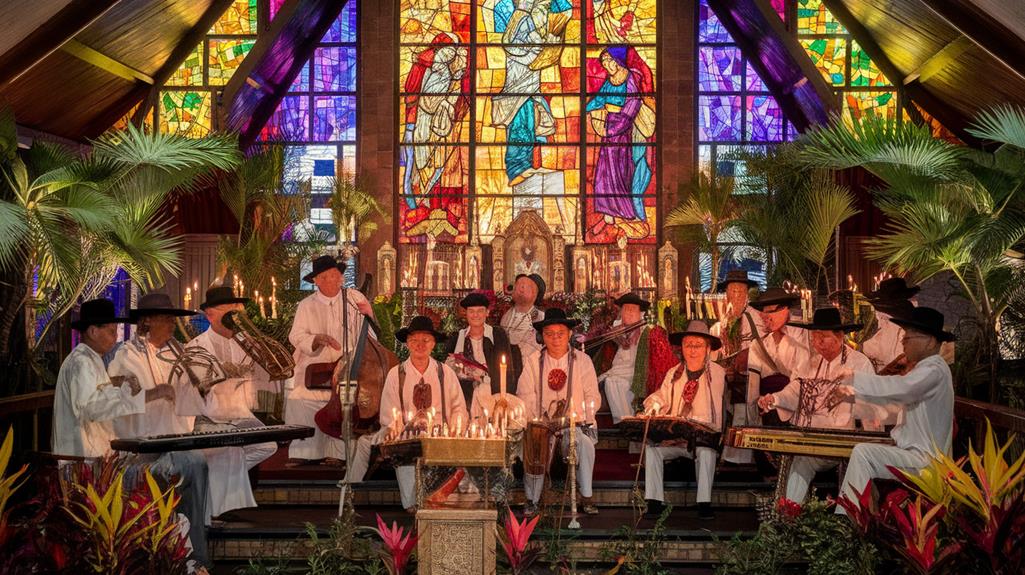
  • The Role of Religion in Filipino Art and Literature

    The Role of Religion in Filipino Art and Literature

    Religion plays a significant role in shaping Filipino art and literature. This is evident in the blending of Catholic traditions with indigenous beliefs, resulting in a unique cultural identity.

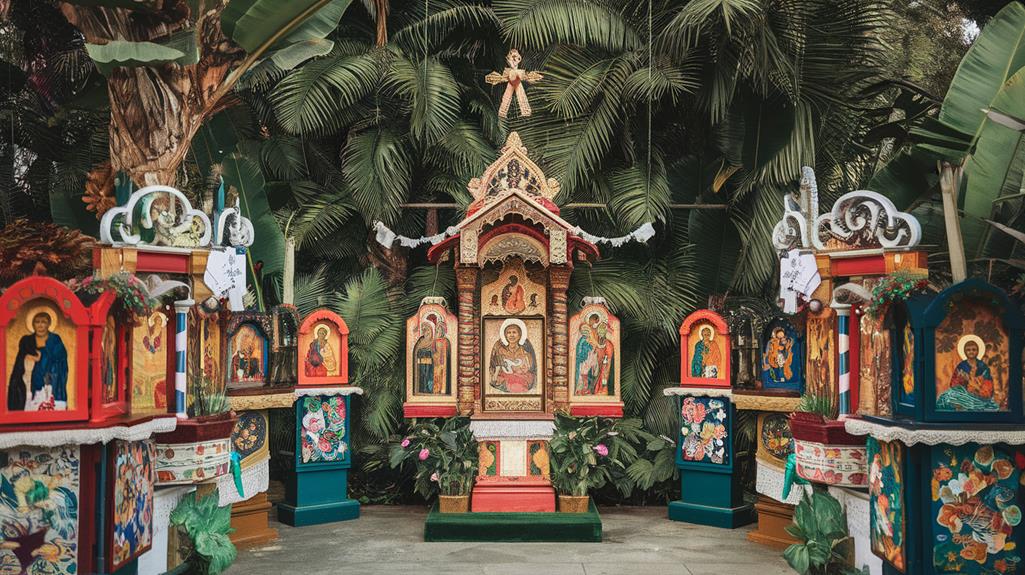
    Catholic imagery is prominent in artworks like retablos, which are traditional Filipino devotional paintings that adorn altar pieces. These artworks often feature vivid depictions of saints, angels, and biblical scenes, reflecting the country's strong Catholic heritage.

    Traditional narratives honor ancestral spirits, such as the "anito" in Filipino folklore, which are believed to inhabit natural elements like trees, rivers, and mountains. These spirits are often depicted in stories, poems, and songs, highlighting the importance of respecting and preserving the natural environment.

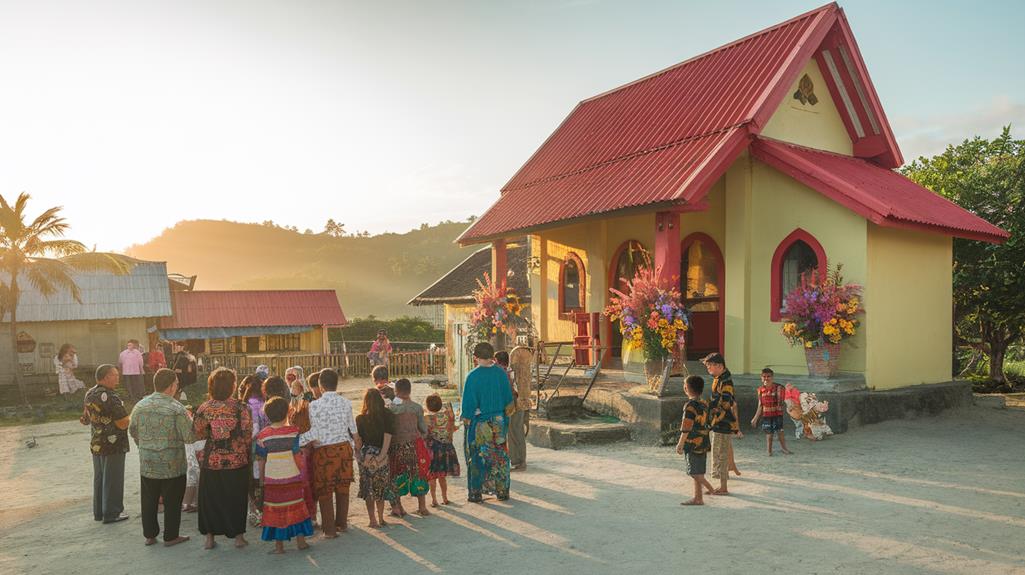
    Syncretism shapes community identity, as seen in lively festivals that merge spiritual and cultural expressions. For example, the Fiesta de Santo Niño celebrates the feast of the Child Jesus, blending Catholic and indigenous traditions through music, dance, and vibrant costumes.

    Contemporary artists tackle social issues, echoing past traditions while inspiring new dialogues. They use their art to raise awareness about pressing concerns, such as environmental degradation, social justice, and cultural preservation.

    Literature reflects this dynamic, intertwining spiritual themes with cultural stories.

    Novels like "Noli Me Tangere" by José Rizal preserve the richness of Filipino culture for future generations, while exploring the complexities of the country's historical and social landscape.

    Historical Overview of Religion in the Philippines

    philippines religious history overview

    Religion in the Philippines: A Blend of Indigenous and Colonial Influences

    Before the arrival of Spanish colonizers, Filipinos worshipped a pantheon of gods, with Bathala as the supreme deity. Shamans conducted rituals to guide the people. The introduction of Islam in 1350 and Christianity in 1565 significantly changed the spiritual landscape.

    Catholicism became the dominant faith, blending with folk traditions and animism, especially in rural areas where indigenous practices persisted. During the colonial period, Spanish efforts to Christianize the population led to a unique fusion of Catholicism and local beliefs.

    This transformation influenced not only faith but also Filipino religious art, which began to reflect a blend of European styles and indigenous motifs.

    The Philippine Revolution in 1898 and subsequent American rule allowed for the emergence of various sects, including the Aglipayans, which challenged the Catholic Church's supremacy.

    Today, about 80% of Filipinos identify as Catholic, signifying the enduring impact of this faith on their culture and identity. This has set the stage for rich artistic expressions that continue to evolve.

    Influence of Catholicism on Art

    Catholicism's Enduring Influence on Filipino Art

    The Catholic Church has profoundly impacted Filipino art, resulting in a unique fusion of faith and culture. Filipino art is characterized by a blend of Christian themes and local identity.

    Iconic Religious Artworks

    Filipino artists have created masterful retablos and altarpieces depicting Biblical scenes, showcasing their mastery of artistic techniques introduced by Spanish friars. These artworks demonstrate exceptional skill in woodcarving, painting, and sculpture.

    Local Materials and Motifs

    Filipino artists have skillfully incorporated indigenous materials and cultural elements into European artistic standards. For example, they used native woods, such as narra and kamagong, to create intricate carvings and ornate decorations.

    This blend of influences has resulted in a distinctive style that reflects both Catholic and local traditions.

    Celebratory Displays

    Major religious celebrations, like Christmas and Holy Week, feature elaborate artistic displays that reinforce the importance of Catholicism in community life and identity. These displays often include colorful processions, vibrant costumes, and ornate floats adorned with flowers and lights.

    Through these artistic expressions, it's clear that Catholicism hasn't only shaped the visual arts but also fostered a sense of belonging and continuity within Filipino culture. This rich tapestry of faith and creativity continues to influence contemporary Filipino art.

    Indigenous Beliefs and Artistic Expressions

    cultural heritage and creativity

    Indigenous Beliefs Shape Filipino Art

    Before Spanish colonization, Filipinos worshipped a pantheon of gods and spirits, with Bathala as the supreme deity. This rich spiritual landscape influenced artistic expressions, particularly in traditional arts like sculpture and ritual performance. Many indigenous artworks depict rituals involving sacrifices to both benevolent and malevolent spirits, directly reflecting the community's beliefs.

    Shamans and Priests: Spiritual Intermediaries

    Shamans and priests, often revered as spiritual intermediaries, are central figures in these narratives. Their supernatural powers and roles are frequently represented in art, emphasizing the importance of the spiritual realm in daily life. Ancestral spirits are depicted through wood and metal images, showcasing the significance of lineage and ancestry in indigenous cultures.

    Syncretism in Contemporary Filipino Art

    As you explore contemporary Filipino art and literature, you'll notice the blending of indigenous beliefs with later introduced religions, particularly Catholicism. Traditional motifs and symbols intermingle, creating a unique artistic dialogue that honors both the past and present.

    This blending enriches the artistic landscape, ensuring that indigenous heritage remains vibrant and influential.

    Contemporary Religious Dynamics

    Contemporary Filipino Society and Shifting Religious Dynamics

    As Filipino society evolves, religious dynamics are changing dramatically. Approximately 80% of the population still identifies as Catholic, but various small sects and fundamentalist groups are emerging, challenging traditional Church authority. This shift reflects a broader struggle for identity and community engagement among Filipinos.

    Decline of the Aglipayan Church

    Once a strong alternative, the Aglipayan Church's influence has dwindled to about 5%, showcasing the shifting landscape of belief systems. This decline highlights the changing religious preferences of Filipinos.

    Grassroots Movements and Social Justice

    Initiatives focusing on social justice are causing friction between the Catholic Church and government, highlighting the disconnect between traditional religious practices and contemporary societal issues.

    For example, some Catholic leaders oppose the government's reproductive health policy, while others support it.

    Cultural Education and Evolving Expressions of Faith

    Programs from organizations like the Asia Society Museum provide a platform for evolving expressions of faith by fostering deeper engagement with the arts and contemporary religious themes.

    These programs encourage Filipinos to explore and express their faith in new and creative ways.

    The Influence of Christian Beliefs on Filipino Arts and Literature

    These contemporary shifts illustrate the strong influence of diverse Christian beliefs on Filipino arts and literature, showcasing how religion continues to shape identity and creativity in this dynamic society.

    Syncretism in Filipino Culture

    filipino cultural syncretism explored

    Syncretism Shapes Filipino Culture

    The blending of beliefs has a profound impact on Filipino culture, particularly the merge of indigenous practices with foreign religions, such as Catholicism. This blend is evident in visual art, where traditional Filipino motifs coexist with Catholic iconography. For example, the Santo Niño image is a powerful symbol that intertwines local customs with religious significance.

    Festivals Reflect Syncretic Spirit

    Festivals showcase the unique blend of Catholic feast days and local traditions, highlighting the rich cultural expression that honors both heritage and faith.

    Each fiesta celebrates the dynamic fusion of diverse influences while retaining the core Filipino identity. This distinct blend stands out in Southeast Asia, demonstrating the ability of Filipino culture to adapt and evolve.

    Literature Mirrors Syncretism

    The works of José Rizal exemplify syncretism in literature, where colonial and indigenous narratives collide to shed light on social injustices.

    Rizal's writings weave local folklore and beliefs into a broader critique of society, emphasizing the enduring impact of syncretism on Filipino identity. By embracing these blended beliefs, one can witness the richness, resilience, and adaptability of Filipino culture through centuries of change.

    Artistic Reflections of Spirituality

    The syncretic nature of Filipino culture profoundly influences artistic expressions of spirituality, where diverse beliefs converge and manifest in various forms.

    Traditional Weaving showcases the fusion of religious themes and cultural identity. Each ethnic group's textiles feature intricate patterns that symbolize their spiritual beliefs. For example, the T'boli people of Mindanao weave dream patterns that reflect their spiritual connection with nature. These patterns are woven into every piece, revealing how their cultural narratives are intertwined with their spiritual beliefs.

    Carving Traditions also reflect the convergence of spiritual and cultural identities. Wood and ivory carvings often depict indigenous figures and ancestral symbols, serving not just as art but as vital representations for spiritual rituals. Anito figures, for instance, are carved to honor ancestral spirits and are used in rituals to ensure good harvests and protection.

    Contemporary Expressions of spirituality in Filipino art continue to address social issues while revitalizing traditional religious art forms. Today's Filipino artists engage with spiritual themes, bridging the past with the present. Jeffrey Gibson's mixed-media artworks, for example, combine traditional Filipino motifs with contemporary materials, exploring the intersection of spirituality and identity.

    Folk literature also illustrates how spiritual narratives and cultural stories intertwine, shaping Filipino identity. This rich tapestry of artistic reflections honors tradition and invites dialogue, allowing both artists and audiences to explore the evolving landscape of spirituality in Filipino art.

    These artistic expressions encourage reflection on one's beliefs and cultural roots.

    Questions and Answers

    Why Is Religion Important to Filipinos?

    Religion plays a vital role in shaping the cultural identity of Filipinos. This is because it's deeply rooted in the country's history and is a significant part of daily life.

    Religion provides a sense of community and belonging, where shared values and beliefs bring people together, strengthening family and social bonds.

    Moral values derived from religious teachings guide daily actions and decisions. For example, the Catholic Church's emphasis on compassion and kindness encourages Filipinos to be charitable and help those in need.

    These values foster a sense of responsibility and promote social harmony across the country.

    How Has Religion Played a Role in Art?

    Religion has significantly influenced art throughout history. By providing spiritual symbolism, artists can convey moral teachings and inspire viewers. For example, Michelangelo's Sistine Chapel ceiling paintings depict scenes from the Book of Genesis, illustrating the story of creation and God's relationship with humans.

    Narrative focus is a key element in religious art, as it allows artists to weave together stories that reflect faith and identity. The frescoes in the Brancacci Chapel, created by Masaccio and Masolino, showcase the life of Saint Peter, demonstrating the artist's ability to convey spiritual messages through visual storytelling.

    Rituals and beliefs serve as a source of artistic inspiration, transforming everyday experiences into profound works. The intricate designs and calligraphy in Islamic art, for instance, reflect the importance of geometric patterns and Arabic script in Muslim culture.

    The connection between spirituality and creativity enriches both the artist's journey and the audience's understanding. By exploring the intersection of faith and art, artists can create works that resonate deeply with communities and inspire meaningful reflection.

    What Is the Role of Religion in Literature?

    Religion significantly influences literature, shaping stories that explore spiritual themes and cultural identity.

    Writers often use narrative symbolism to convey moral lessons, reflecting their beliefs and societal values. For example, in John Bunyan's The Pilgrim's Progress, the character of Christian represents a Christian's journey towards spiritual enlightenment, symbolizing the struggles and triumphs of faith.

    By examining these texts, readers can appreciate the interplay between faith and storytelling, revealing deeper insights into the human experience.

    Religion not only influences characters and plots but also the very essence of a community's identity, as seen in works like James Joyce's Ulysses, which explores the Catholic roots of Irish identity.

    What Effect Does Religion Have on Art Language and Literature?

    Religion influences art, language, and literature by infusing them with cultural identity and moral values.

    Artists and writers often draw on spiritual inspiration to create symbolic expressions that resonate with personal and collective experiences. For instance, Michelangelo's famous painting, the Sistine Chapel ceiling, is a masterpiece of Renaissance art that showcases his Christian faith. The vivid depictions of biblical scenes and figures reflect the artist's spiritual beliefs, making the artwork a testament to the intersection of faith and creativity.

    Religious themes in art, language, and literature reflect societal issues, allowing for a deeper understanding of human existence.

    Through a narrative focus, authors and artists explore complex social issues, such as morality, justice, and forgiveness, using religious themes as a backdrop. For example, John Steinbeck's novel, "The Grapes of Wrath," is set during the Great Depression and explores the struggles of the working class through a Christian lens. The characters' experiences and struggles are mirrored in biblical stories, highlighting the universal themes of hope, perseverance, and redemption.

    The dialogue between faith and creativity deepens our appreciation for diverse artistic expressions.

    By examining the relationship between religion and art, language, and literature, we gain a richer understanding of the cultural and historical contexts in which they were created.

    This interdisciplinary approach reveals the ways in which artists and writers use religious themes to convey complex emotions, ideas, and values, ultimately enriching our appreciation for the diversity of human creative expression.

  • Religion and Healthcare in the Philippines

    Religion and Healthcare in the Philippines

    Religion significantly influences healthcare decisions in the Philippines. This is primarily due to the strong presence of Catholicism, which shapes cultural practices and values.

    For instance, spirituality plays a crucial role in coping with health crises, with many Filipinos relying on prayer and faith-based support to navigate difficult times.

    Traditional healing methods often coexist with modern medical treatments. This can lead to delays in accessing professional care, as some individuals may prioritize alternative approaches over conventional medicine.

    For example, some Filipinos may seek the help of albularyos, or traditional healers, who use herbal remedies and ritualistic practices to treat illnesses.

    Family dynamics also impact healthcare choices. In Filipino culture, the collective well-being of the family often takes precedence over individual needs. This can result in healthcare decisions being made with the family's interests in mind, rather than solely focusing on the individual's health requirements.

    Understanding these cultural influences is crucial for improving health outcomes and access to healthcare in the Philippines.

    By recognizing the complex interplay between religion, traditional practices, and family dynamics, healthcare providers can develop more effective strategies to address the unique needs of Filipino patients.

    Overview of Religion in the Philippines

    diverse faiths shape culture

    The Philippines has a predominantly Catholic population, with approximately 85% of the population identifying as Catholic. This makes it the only Asian country with a significant Catholic majority.

    Catholicism plays a crucial role in shaping Filipino culture, influencing aspects such as healthcare and mental health practices.

    Catholic rituals and celebrations, like patron saint feasts, foster community bonds and provide emotional support during challenging times. For instance, many Filipinos turn to faith healers and spiritual counselors when facing health-related issues, demonstrating the strong connection between religion and spirituality in their health-seeking behaviors.

    The Philippine Mental Health Law of 2018 acknowledges the interplay between religion and mental health by promoting a biopsychosocial spiritual framework. This approach recognizes that mental well-being is often intertwined with religious beliefs and practices, making it essential to consider these elements when addressing healthcare needs in the Philippines.

    Family Influence on Health Decisions

    Family dynamics significantly impact health care decisions among Filipina Americans. This impact often prioritizes collective well-being over individual health needs. In many instances, authority figures within families make these choices, leading individuals to rely on their advice rather than seeking professional medical guidance.

    There are several types of family influences that shape health care decisions:

    Influence Type Description Impact on Health Decisions
    Authority Figures Parents or elders often lead discussions Decisions may prioritize tradition over professional care
    Trusted Family Members Relatives in health professions provide advice Guidance shapes treatment approaches and may delay intervention
    Emotional Ties Strong family bonds create barriers You might avoid seeking professional care, opting for familial support
    Spiritual Well-Being Religiosity and spirituality often guide choices May lead to reliance on faith-based remedies over medical treatment

    These dynamics can complicate long-term health outcomes, especially when emotional ties overshadow the need for immediate and effective medical intervention. Balancing family influence with professional healthcare becomes essential for promoting individual well-being.

    Traditional Healing Practices

    cultural methods for healing

    Traditional healing practices in the Philippines prioritize a holistic approach to health, considering the connection between body, mind, and spirit. These practices often involve herbal remedies and spiritual rituals that reflect a deep understanding of health as a multifaceted concept.

    Many Filipinos initially seek traditional home remedies for ailments. This can delay their access to professional medical care. For instance, some people may use herbal teas or steam inhalation to treat common colds before consulting a doctor.

    Faith healers, known as "albularyo," play a crucial role in traditional healing practices. They provide comfort and alternative therapies that resonate with the community's cultural and spiritual beliefs.

    When facing health concerns, individuals often consult not only medical professionals but also spiritual counselors or healers. This highlights the importance of spirituality in their approach to health.

    The integration of traditional healing practices with modern medicine is common in the Philippines. Many people believe that using both can enhance their overall well-being.

    For example, a patient may use herbal remedies to manage symptoms while also undergoing conventional medical treatment. This coexistence of methodologies allows for a more comprehensive understanding of health, as it respects individual beliefs while addressing medical needs.

    Traditional healing practices remain a vital aspect of healthcare in the Philippines. They reflect the cultural values and spiritual dimensions of health among its people.

    These practices provide a unique perspective on health, emphasizing the importance of spiritual and emotional well-being.

    Barriers to Accessing Care

    Barriers to Accessing Healthcare in the Philippines

    Accessing healthcare in the Philippines can be hindered by various barriers that significantly impact individuals' decisions. These barriers often stem from cultural norms, emotional ties to family, and religious beliefs, leading many to prioritize familial advice over professional medical guidance.

    Cultural Beliefs as a Barrier

    Many Filipina Americans prefer traditional home remedies as their first-line treatment, which can postpone formal medical intervention. This reliance on cultural practices can delay necessary care, worsening health outcomes.

    For instance, some individuals may opt for herbal medicines or spiritual healing instead of seeking professional medical help.

    Emotional and Financial Concerns as a Barrier

    Strong family ties and worries about financial burdens complicate decisions regarding formal healthcare services, making individuals hesitant to seek help. Family members may advise against seeking medical care due to concerns about the financial burden of treatment.

    This can lead to delayed or foregone care, ultimately affecting health outcomes.

    Language and Trust Issues as a Barrier

    Language barriers and a preference for support from clergy may deter individuals from utilizing mental health services and other professional care, further limiting access to essential healthcare.

    For example, individuals may feel more comfortable seeking guidance from a religious leader rather than a mental health professional due to language barriers or trust issues.

    Understanding these barriers is crucial for improving healthcare access in the Philippines. By recognizing the role of cultural beliefs, emotional and financial concerns, and language and trust issues, healthcare providers can develop targeted strategies to address these challenges and improve health outcomes.

    Role of Faith in Coping

    faith s support in coping

    Faith Plays a Crucial Role in Coping with Health Challenges

    When faced with health crises, many individuals turn to their faith for strength and solace. In the Philippines, where 85% of the population practices Roman Catholicism, spirituality is a vital coping mechanism.

    Faith Deepens During Health Crises

    During health challenges, faith often deepens, and individuals may view these challenges as tests of faith that could lead to miraculous healing. This phenomenon is particularly evident in Filipino Americans diagnosed with breast cancer, who frequently turn to prayer for emotional comfort and pain relief.

    Common Spiritual Coping Strategies

    Several spiritual coping strategies are commonly employed by individuals navigating health challenges. These strategies include:

    • Prayer: Engaging in personal or communal prayer to alleviate emotional distress.
    • Rosaries: Using rosaries for meditation and prayer to provide a sense of peace.
    • Novenas: Reciting specific prayers over time to foster hope and resilience.
    • Church Support: Relying on community for emotional backing to enhance mental well-being.
    • Faith Reflection: Contemplating faith's role in health to encourage a positive outlook.

    The Influence of Religious Communities

    The support from religious communities significantly influences the health-seeking behaviors of Filipino Americans, helping them navigate their challenges with greater resilience.

    Spirituality and Health Outcomes

    Spirituality and Health Outcomes in Filipina Americans

    Spirituality plays a significant role in shaping health outcomes for Filipina Americans, particularly when facing serious conditions like cancer. High levels of religiosity often lead individuals to seek comfort in their faith, which can enhance their coping mechanisms and overall well-being.

    Coping Mechanism

    Spirituality serves as a coping mechanism for many Filipina Americans. Prayer, for instance, helps individuals manage physical pain and emotional distress, deepening their spiritual connection and providing comfort during difficult times.

    Support Networks

    Religious communities provide emotional and spiritual support, helping individuals navigate health challenges. This support network fosters resilience, positively affecting recovery.

    Shaping Health-Seeking Behaviors

    Cultural beliefs surrounding spirituality may influence health-seeking behaviors. Filipina Americans may prioritize spiritual remedies over conventional medical interventions, which can impact overall health outcomes.

    Incorporating Spirituality into Healthcare

    Incorporating spirituality into healthcare, especially in cancer treatment, has proven beneficial. It enhances emotional resilience and provides a framework for understanding life's existential challenges.

    Cultural Perspectives on Illness

    illness through cultural lenses

    Cultural Beliefs Shape Illness Perception in the Philippines

    In the Philippines, cultural beliefs significantly influence how people perceive and respond to illness.

    Traditional home remedies are often the first line of defense against illnesses, with many Filipinos relying on these remedies due to a deep-rooted trust in familial and cultural practices.

    Spirituality Plays a Crucial Role

    Spirituality is a vital aspect of Filipino culture, and it plays a crucial role in shaping illness perception.

    Spirituality is a source of strength and hope during health challenges, and many Filipinos attribute health improvements to their faith in God, perceiving them as miracles.

    Emotional Support Prioritizes Group Harmony

    Emotional support from family and religious communities is integral to the Filipino culture.

    Emotional support facilitates coping and prioritizes group harmony over individual needs, often leading to delays in seeking professional healthcare.

    Cultural Beliefs Influence Health-Seeking Behaviors

    These cultural beliefs merge spirituality with everyday health practices, significantly influencing health-seeking behaviors.

    Understanding these perspectives is essential for healthcare providers to tailor their approaches to better serve the Filipino population.

    How Does the Importance of Prayer in Filipino Culture Impact Healthcare Practices in the Philippines?

    The power of prayer in filipino culture plays a significant role in healthcare practices in the Philippines. Many Filipinos believe that prayer can bring healing and comfort, influencing their decision to seek medical treatment. Healthcare providers often incorporate spiritual beliefs into their approach, recognizing the importance of prayer in the healing process.

    Integration of Religion and Healthcare

    In the Philippines, religion plays a significant role in healthcare, influencing health-related decisions and practices. With a predominantly Catholic population, religious beliefs shape various health outcomes.

    Spirituality is incorporated into mental health care, enhancing therapeutic outcomes and emotional resilience. For instance, mental health professionals in the Philippines often consider a patient's spiritual beliefs when developing treatment plans. This holistic approach helps patients cope with mental health issues more effectively.

    Religious leaders serve as key support figures, guiding individuals through health challenges and fostering community connections. They provide emotional support, counseling, and spiritual guidance, which are essential for patients dealing with serious illnesses.

    Faith-based practices, such as prayer and community support, are crucial for patients, especially those diagnosed with serious illnesses like breast cancer. These practices help patients cope with the emotional and psychological aspects of their condition.

    The Philippine Mental Health Law of 2018 emphasizes a biopsychosocial spiritual framework, recognizing the interconnectedness of body, mind, and spirit.

    Regular worship services and prayer venues in hospitals support the spiritual well-being of healthcare workers, highlighting the vital role of faith during crises. By acknowledging these elements, we can better understand how religion and healthcare coexist, ultimately contributing to holistic healing in the Philippines.

    Future Directions for Research

    future research directions ahead

    Future research in the intersection of religion and healthcare in the Philippines should prioritize the integration of spirituality within healthcare frameworks. This approach aligns with the Philippine Mental Health Law of 2018, which advocates for a biopsychosocial spiritual model.

    The role of faith-based organizations in mental health support is crucial, as they can provide insights into community resilience and coping mechanisms, especially in the wake of crises like the COVID-19 pandemic. For instance, investigating their role can uncover how they support mental health during emergencies.

    Exploring the health-seeking behaviors of Filipina Americans with breast cancer will shed light on how cultural beliefs and spiritual practices shape treatment decisions. For example, researching how their beliefs influence their choices can lead to more effective healthcare strategies.

    The impact of religious practices on healthcare access and adherence to treatment is also crucial, given the historical context of religion's influence on health perceptions in the Philippines. Collaboration between mental health providers and religious communities can lead to culturally relevant interventions addressing diverse populations' mental health needs.

    Research Focus Key Insights Potential Impact
    Spirituality in healthcare Enhanced mental health outcomes Improved patient support systems
    Faith-based organizations Community resilience during crises Strengthened coping mechanisms
    Filipina Americans' health behaviors Influence of culture on treatment Tailored health services
    Religious practices and treatment Access to care and adherence Better healthcare outcomes

    Questions and Answers

    What Do Filipinos Believe About Healthcare?

    Filipinos' approach to healthcare is influenced by cultural beliefs and values.

    In the Philippines, family support and traditional remedies are often the first line of defense against illness. Many Filipinos turn to family members and home-based care before seeking professional medical help. This approach reflects a broader cultural understanding of healthcare access, where personal and familial networks play a crucial role.

    This reliance on home-based care can sometimes lead to delays in professional medical intervention, particularly for chronic conditions. For instance, a person experiencing symptoms of diabetes might initially rely on family remedies and home care before seeking medical attention, potentially delaying diagnosis and treatment.

    What Is the Relationship Between Religion and Healthcare?

    Religion and healthcare are interconnected, with spiritual healing and support playing a significant role in promoting wellness. Faith-based initiatives often provide emotional and psychological support to individuals facing health challenges, which is essential for their overall well-being.

    For instance, many people turn to their religious communities for guidance and comfort during illnesses, resulting in increased emotional and psychological resilience.

    The connection between religion and healthcare emphasizes the importance of holistic care. This approach recognizes that spiritual well-being is integral to overall health, addressing both physical and mental health needs.

    What Is the Religious Influence in the Philippines?

    Religious diversity plays a significant role in shaping cultural practices and community life in the Philippines. This diversity is evident in the way people incorporate faith healing into their healthcare practices. For instance, many Filipinos seek faith healing as a complement to traditional medicine, reflecting their belief in the power of spirituality for health.

    This emphasis on spiritual well-being is a common thread across various religious groups, influencing social support systems and fostering a sense of belonging.

    Religion deeply intertwines with daily experiences and health-related decisions in Filipino society, making it an integral part of their cultural identity.

    What Are the Traditional Healthcare Practices in the Philippines?

    In the Philippines, traditional healthcare practices often prioritize herbal remedies. These remedies are frequently used as initial treatments for various ailments. For instance, some Filipinos use lagundi leaves to alleviate coughs and fever, while others consume ginger to relieve nausea.

    Traditional healers, known as "albularyo," also play a significant role in the country's healthcare practices. These healers combine folk medicine with spiritual elements to provide holistic care. They often perform rituals and prayers to treat physical and spiritual ailments.

    Albularyo may also use herbal remedies, massage, and other alternative therapies to promote healing.

    The country's cultural heritage influences health decisions, with family dynamics often playing a crucial role. Individuals may consult with family members or traditional healers before seeking professional medical care. This approach reflects the importance of community and family ties in Filipino culture.

    In many cases, alternative therapies are prioritized over professional medical care. This is because traditional healthcare practices are often more accessible and affordable, particularly in rural areas.

    Additionally, many Filipinos prefer these practices due to their cultural significance and perceived efficacy.

  • Religion and Education in the Philippines

    Religion and Education in the Philippines

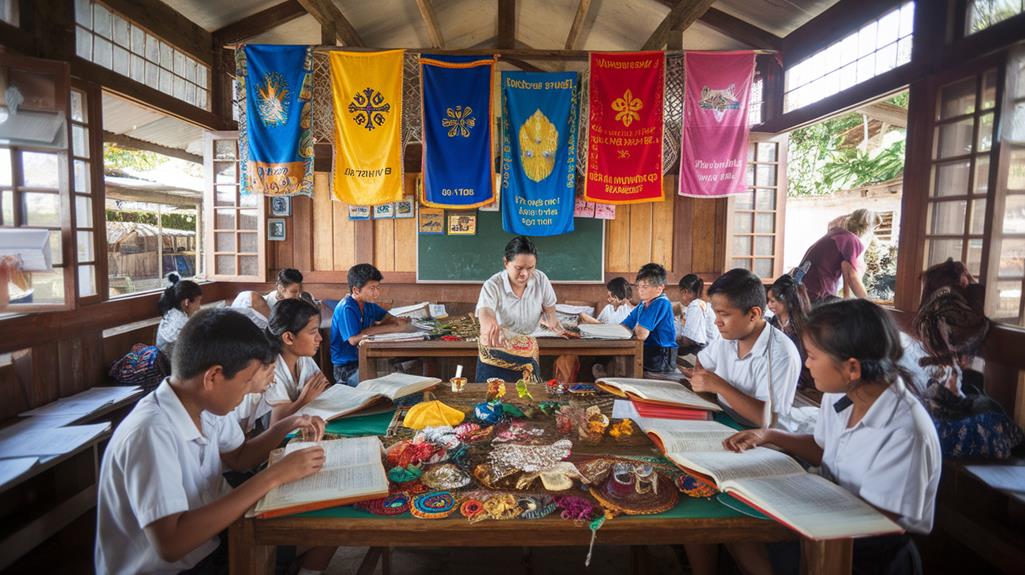
    In the Philippines, the majority of the population identifies as Roman Catholic, significantly influencing the country's education system. The public education system incorporates religious instruction into the curriculum, with the goal of promoting moral development through formal classes. For instance, Catholic schools teach Catholicism as a subject, and students attend masses and participate in religious activities.

    However, this integration faces challenges, particularly when it comes to the significant Muslim minority. There is a growing demand for inclusive approaches that reflect the country's diverse beliefs and cultural heritage. For example, some schools have introduced Islamic studies and Arabic language classes to cater to Muslim students.

    Contemporary issues also affect the relationship between religion and education in the Philippines. Declining church attendance and evolving youth values further complicate this landscape.

    Understanding these dynamics is crucial to revealing deeper insights into the future of education and faith in society.

    Historical Context of Religion

    religious evolution through time

    The Philippines' religious landscape has been shaped by its complex history.

    Before Spanish colonization, indigenous Filipinos practiced animism, believing in a multitude of gods and goddesses, with Bathala as the supreme deity. This ancient belief system was deeply rooted in the daily lives of Filipinos.

    The introduction of Islam in 1350 marked the beginning of a significant Muslim presence, particularly in Mindanao and Sulu. This paved the way for the coexistence of multiple religious beliefs in the Philippines.

    When the Spanish arrived in 1565, they brought Catholicism, which became deeply ingrained in Filipino culture. Parish priests played a crucial role in both spiritual and community governance, influencing the social fabric of the country.

    The American colonial period, which began in 1898, introduced Protestantism through educators who shaped the education system. This led to the growth of nationalized churches, such as the Aglipayan Church.

    Today, the historical context of religion in the Philippines underscores its impact on education. Public schools, established during American rule, often include religious instruction, primarily led by Catholic educators.

    This integration of religion and education reflects the complex interplay of cultural, historical, and social factors that continue to shape the Philippines.

    The ongoing relevance of diverse religious beliefs in contemporary society is a testament to the country's rich cultural heritage.

    Education System Overview

    Religious Instruction in Philippine Public Schools

    The Philippine education system integrates religious instruction in public elementary and high schools. Religious classes are conducted for 30 minutes, three times a week, with instructors often assigned by religious organizations like the Catholic Church. This integration was officially marked by the 1953 Administrative Order by President Quirino, reflecting the values of the Christian majority.

    Religious Education Shapes Moral Framework and Cultural Identity

    Religious education significantly shapes the moral framework and cultural identity of Filipino students, particularly through subjects like Christian Living. This is evident in the values and principles instilled in students, which are essential in molding their character and worldview.

    Challenges in the Education Sector

    However, recent trends indicate challenges within the education sector. Private school enrollment declined by 50% during the 2021-2022 school year, highlighting the need for improvement in the education system.

    Inclusivity and Respect for Muslim Students

    In response to the diverse religious landscape, the Department of Education supports the Values Education (ALIVE) Program. This program serves 173,641 Muslim students across 2,644 public elementary schools, promoting inclusivity and respect for the Muslim population within the broader educational framework.

    This initiative showcases the ongoing interplay between religion and education in the Philippines.

    Role of the Catholic Church

    influence of catholic church

    The Catholic Church's Influence on Education in the Philippines

    The Catholic Church has played a significant role in shaping the educational landscape of the Philippines.

    Historical Roots

    The Church has been involved in education since the American colonial period.

    In the early 20th century, the Church assigned instructors to teach religious classes in public schools, integrating moral values into the educational system.

    Advocating for Religious Education

    The Church successfully campaigned for in-school religious classes through President Quirino's 1953 Administrative Order, reflecting the Filipino people's desire for religious education.

    Addressing Social Concerns

    In the 1950s, concerns about juvenile delinquency and communism led parents to seek education that included Catechism instruction, further solidifying the Church's role in shaping moral values.

    Political Influence

    The Catholic Church's impact extends to politics, influencing presidential elections and advocating for candidates aligned with its interests.

    Challenges in a Pluralistic Society

    As the nation becomes increasingly pluralistic, the Church faces challenges.

    Engaging in inter-faith dialogue and adapting to the selective adherence of younger generations to Church teachings will be crucial for the Catholic Church to maintain its relevance in religious education.

    Religious Instruction Policies

    Religious Instruction in Philippine Public Schools

    In the Philippines, public elementary and high schools incorporate religious instruction, reflecting the strong influence of the Catholic Church on educational policies. This practice was established during the American colonial period and formalized in the 1950s.

    Key Aspects of Religious Instruction Policies

    Aspect Details
    Duration 30 minutes, three times a week
    Instructors Assigned by religious organizations
    Parental Consent Required for student participation
    Historical Context Initiated during the American colonial period
    Legal Framework Supports religious freedom in education

    The 1953 Administrative Order by President Quirino highlights the Catholic Church's significant role in shaping these educational policies. Many parents demand religious education, and some are reluctant to enroll their children in schools lacking such instruction. This reflects a broader societal concern for moral development amidst social issues, emphasizing the intertwining of educational policy and religious values in the Philippines.

    Challenges in Religious Education

    navigating religious education complexities

    Cultural Diversity Challenges Religious Education

    The Philippines' culturally diverse society creates challenges for religious education.

    The country's diverse beliefs and values must be considered when teaching religion. For instance, in public schools, the Catholic curriculum may not resonate with Muslim students, who make up a significant minority.

    Adapting to Generational Shifts

    Traditional religious education must evolve to stay relevant to younger generations.

    Young Filipinos are selective in their adherence to Church teachings, indicating a need for modern and engaging approaches to religious education.

    Fostering Mutual Understanding in Mindanao

    Historical and cultural tensions between Christians and Muslims in Mindanao complicate the teaching of moral values.

    To promote understanding, the curriculum must address these tensions and foster mutual respect.

    Funding Challenges for Islamic Education

    Islamic institutions face difficulties in sustaining themselves within the broader education system in the Philippines.

    Declining funding and attendance for madrassah education highlight the need for support.

    To effectively promote moral values, religious education must address these challenges and respect the diverse beliefs of Filipino society.

    A thoughtful and inclusive approach to education is essential.

    Impact of COVID-19

    The COVID-19 pandemic has significantly impacted religious education in the Philippines. The pandemic has accelerated existing challenges and introduced new dynamics, leading to a decline in church attendance from 34% in 2019 to 28% in 2021.

    Traditional religious practices have adapted to online formats. To comply with health mandates, many religious institutions have shifted their practices online, resulting in a change in the way people engage with their faith.

    Instruction in public schools has been disrupted. Students have been hesitant to return to physical classrooms, mirroring the reluctance seen in congregations. As a result, engagement levels have diminished, and many have prioritized convenience over the deeper values of religious education.

    Clergy have focused on political issues rather than core Church doctrines. This shift has contributed to a dilution of religious significance, particularly among the youth, raising concerns about the long-term implications for both educational and religious institutions.

    Trust and participation have waned, leaving questions about the future of religious instruction in a post-pandemic Philippines.

    The interplay between education and religion requires thoughtful examination. As both sectors navigate recovery and renewal in a changed world, it's essential to examine the relationship between education and religion to ensure a strong foundation for future generations.

    Societal Attitudes Towards Religion

    evolving perspectives on faith

    Societal attitudes towards religion in the Philippines are shaped by cultural, historical, and contemporary factors.

    The Catholic Church significantly influences moral and ethical values, with 79.5% of the population identifying as Roman Catholic. However, recent trends indicate shifts in these attitudes, particularly among younger generations.

    Public schools have seen a demand for religious education, especially Catholic teachings, since the 1950s. This reflects a societal response to social issues like juvenile delinquency.

    Regular church attendance has declined, from 34% in 2019 to 28% in 2021. This suggests that traditional practices may be losing their grip.

    Younger Filipinos adapt church teachings to align with contemporary values, indicating a selective adherence to religious norms. For example, they may choose to prioritize social justice over traditional dogma.

    Discrimination against Muslim Filipinos highlights ongoing societal tensions, revealing the complexities of religious diversity in the country. This discrimination is a significant issue that needs to be addressed.

    These factors illustrate how societal attitudes towards religion aren't static; they evolve, reflecting broader cultural shifts and the dynamic interplay between faith and identity in the Philippines.

    Future of Religious Engagement

    The Future of Religious Engagement in the Philippines

    The Philippines is experiencing a decline in church attendance, with a drop from 34% to 28% between 2019 and 2021. This shift indicates that traditional religious practices may need to evolve to remain relevant.

    In public schools, where there's still high demand for religious education, there is an opportunity to adapt curricula to contemporary realities. For instance, integrating inter-faith dialogue into religious education can foster national integration and enhance inclusivity. This approach enriches the quality of education and prepares students to engage respectfully with diverse beliefs.

    The COVID-19 pandemic has accelerated the shift toward online engagement, which often lacks the depth of in-person experiences.

    To revitalize religious engagement, communities must recommit to core values and actively involve youth in both educational and religious institutions. By doing so, the Philippines can cultivate a future where religious engagement is vibrant, inclusive, and responsive to the needs of an evolving society.

    How Does the Education System in the Philippines Incorporate Religious and Spiritual Teaching?

    The education system in the Philippines acknowledges the important relationship of religion and spirituality by incorporating religious and spiritual teachings into the curriculum. Students have the opportunity to learn about various faith traditions and moral values, helping them develop a deeper understanding of the role of religion in society.

    Cultural Syncretism in Education

    blending traditions in learning

    Cultural Syncretism in Education: Embracing Diversity

    The Philippine Education Landscape

    The Philippines is experiencing a shift in religious engagement, leading to the emergence of cultural syncretism in education.

    Cultural syncretism is the blending of beliefs, which is evident in various educational settings, particularly in public schools.

    Manifestations of Cultural Syncretism

    In public schools, cultural syncretism is seen in:

    • The integration of Catholic doctrines within Christian Living subjects, which reflects indigenous and foreign influences.
    • Educational policies favoring faith-based content, often sidelining the diverse backgrounds of students.
    • The inclusion of Islamic education initiatives, such as the ALIVE program, aimed at fostering multicultural perspectives.
    • The decline in madrassah attendance and funding, illustrating how religious education adapts to modern societal challenges.

    The Role of Religious Organizations

    Religious organizations play a crucial role in promoting inter-faith dialogue.

    The historical context of religious education, shaped by colonial influences, informs not only national identity but also the importance of inclusivity.

    Creating Inclusive Learning Spaces

    Community Involvement and Support

    Community Involvement and Support

    Community involvement plays a vital role in creating an inclusive atmosphere that respects religious diversity in the Philippines.

    Initiatives like the ALIVE program, which supports over 173,000 Muslim students in public schools, demonstrate the impact of community participation on religious education. This program showcases how community involvement enriches religious education.

    Local schools promote moral education through voluntary religious classes, allowing parents to engage actively in their children's spiritual development. This approach enables parents to take an active role in shaping their children's values and beliefs.

    Organizations like the Asia Society Museum facilitate cultural education by hosting exhibitions that enhance understanding of various religious beliefs.

    Community support in resource creation, donations, and active membership is essential for these initiatives to thrive.

    Four key areas of community involvement stand out:

    Public Schools: The ALIVE program supports Muslim students in public schools.

    Religious Education: Voluntary classes allow parental engagement in religious education.

    Cultural Education: Exhibitions promote understanding of religious diversity.

    Moral Education: Community involvement emphasizes values education.

    The U.S. embassy's investment in community learning facilities further highlights the commitment to fostering dialogue about religious freedom, ensuring that every voice is heard within the educational landscape.

    Questions and Answers

    How Does Religion Affect the Educational Context in the Philippines?

    Religion plays a significant role in shaping the educational context in the Philippines.

    In the Philippines, religion influences the curriculum by incorporating faith-based lessons and moral education.

    For example, Catholic schools may include teachings on Catholic values and morals, while Islamic schools may focus on Islamic studies and Arabic language. This integration of religious values into lessons helps foster a sense of spirituality in schools.

    However, with students from diverse religious backgrounds, interfaith dialogue becomes crucial to respect and understand differing beliefs. Educators must create inclusive environments that honor various faiths.

    For instance, teachers can encourage open discussions and debates, promoting mutual respect and understanding among students from different religious backgrounds. By doing so, educators can enrich students' educational experiences and prepare them for a multicultural society.

    Do Public Schools in the Philippines Teach Religion?

    Yes, public schools in the Philippines teach religion through a religious education curriculum. This curriculum allows students to explore their faith while ensuring adherence to broader educational standards.

    The religious education curriculum emphasizes student religious freedom, which means students are free to choose their own religion and beliefs.

    The inclusion of moral values education in public schools reflects the complex dynamics of church-state relations in the Philippines.

    This approach balances educational objectives with diverse religious beliefs, promoting inclusivity within the classroom. For example, students may learn about different religions, such as Catholicism, Islam, and Buddhism, to appreciate the diversity of religious beliefs in the country.

    What Is the Religious Influence in the Philippines?

    Religion plays a significant role in shaping the cultural identity and moral values of the Philippines. The country's cultural landscape is deeply influenced by its rich religious diversity, which combines indigenous beliefs, Christianity, and Islam.

    This unique blend of faiths fosters dialogue and mutual respect among different religious groups.

    Faith-based initiatives are common in the Philippines. Many communities engage in various initiatives that promote spiritual development, such as church-sponsored programs, Islamic missionary work, and indigenous rituals.

    These initiatives bring people together and strengthen community bonds.

    Religious influence affects daily life and societal norms in the Philippines. For example, the majority of Filipinos, who are Christians, observe Sunday as a day of rest and worship.

    Muslims, on the other hand, observe Friday as their day of prayer. Indigenous communities continue to practice their traditional beliefs and customs, which are often intertwined with their daily lives.

    These religious practices shape the country's social fabric and influence its cultural identity.

    What Is the Relationship Between Religion and Education?

    The relationship between religion and education is interconnected through faith-based initiatives. These initiatives focus on spiritual development and moral education, shaping students' characters and guiding them toward ethical behavior and community engagement. For instance, many religious schools integrate character formation into their curricula, teaching students values such as empathy, kindness, and respect for others.

    Acknowledging religious diversity in educational settings enriches the learning experience. This is because it fosters an inclusive environment where students from different religious backgrounds can share their perspectives and learn from one another. For example, a classroom discussion on religious holidays can help students understand and appreciate the diversity of celebrations and traditions.

    Integrating faith-based initiatives and religious diversity promotes a holistic approach to education. This approach supports both individual growth and societal cohesion, ultimately enhancing overall student well-being.

  • The Impact of Religion on Filipino Values and Morality

    The Impact of Religion on Filipino Values and Morality

    Religion significantly influences Filipino values and morality. It combines traditional practices and spiritual beliefs, emphasizing family, respect, and community.

    For instance, the concept of kapwa promotes interconnectedness among people, recognizing that an individual's actions affect others. This cultural blend is reflected in festivals, which merge indigenous rites with Catholic traditions.

    In the Philippines, Catholicism is the dominant religion, shaping the country's moral fabric. However, emerging sects and younger generations are reevaluating traditional norms, leading to a shift in moral perspectives.

    This evolution is crucial in understanding the dynamic relationships between religion, personal behavior, and societal values.

    Understanding these relationships is key to grasping the evolving Filipino identity. By examining the diverse religious landscape, we can uncover how religious beliefs and practices influence individual behavior and societal norms.

    Historical Overview of Religion

    evolution of religious beliefs

    The Philippines has a rich history of diverse religious beliefs and practices. Pre-Hispanic Filipinos worshipped a pantheon of gods, led by Bathala as the supreme deity, and relied on shamans for spiritual guidance. This early religious landscape was altered by the arrival of Islam around 1350, particularly in Mindanao and Sulu, where it established complex political structures that thrived before the Spanish colonization in 1565.

    The Spanish imposition of Catholicism in 1565 marked a pivotal moment in the country's religious landscape, transforming it into the dominant faith, especially in rural areas. The blending of folk Christianity with indigenous beliefs created a unique spiritual identity, fostering a culture rich in traditions and rituals.

    For example, the Sinulog Festival in Cebu, which honors the Santo Niño, combines Catholic and indigenous elements.

    During the American colonial period, Protestantism was introduced, leading to the establishment of nationalized churches like the Aglipayans. Although this sect initially attracted a significant following, its popularity dwindled over time.

    Today, the religious landscape in the Philippines is evolving, with Catholicism remaining influential but facing challenges from small sects and fundamentalist groups. The growing demand for native clergy reflects a shift towards addressing contemporary issues, revealing the dynamic interplay between faith and Filipino values.

    Indigenous Beliefs and Practices

    Indigenous Beliefs and Practices in Pre-Hispanic Philippines

    The pre-Hispanic Filipino belief system was a complex network of spirituality that revolved around a rich pantheon of gods and spirits. Bathala, the supreme deity and creator, was at the center of this belief system, symbolizing the connection between the people and the spiritual world. Rituals involved sacrifices and prayers to appease both benevolent and malevolent spirits, demonstrating the society's deep spiritual engagement and reverence for unseen forces.

    Shamans and Priests Played Key Roles

    Shamans and priests acted as mediators between the physical and spiritual realms, guiding communities through various life stages. Their recognized supernatural powers allowed them to reinforce societal harmony. Ancestral spirits were honored with wooden and metal images, reflecting the significance of lineage and the familial ties that bind generations.

    The Emergence of Syncretic Practices

    The arrival of new religions led to the emergence of syncretic practices, blending indigenous beliefs with foreign influences. This fusion enriched Filipino spirituality and highlighted the adaptability of the culture.

    Today, remnants of these ancient practices continue to shape Filipino values and moral frameworks, illustrating a unique spiritual legacy that endures through time.

    Catholicism's Role in Society

    influence of catholicism today

    Catholicism's Profound Impact on Filipino Society

    Catholicism plays a vital role in shaping the social fabric of the Philippines, influencing daily interactions, national celebrations, and moral values. Over 80% of the population identifies as Roman Catholic, making its teachings an integral part of Filipino values and morality.

    The Catholic Church's Active Role in Community Life

    The Catholic Church goes beyond spiritual guidance, actively participating in community life. Parish priests often become key figures in governance and social services, shaping moral frameworks through their teachings and community initiatives.

    This involvement reinforces the importance of family, respect, and community solidarity, which are core values rooted in Catholic doctrine.

    Catholicism's Influence on Cultural Practices

    Catholicism's impact is evident in cultural practices, such as festivals like Christmas and Holy Week. These celebrations manifest Catholic values, creating a collective identity.

    The blending of indigenous beliefs with Catholicism also results in a unique syncretism, influencing moral decision-making and social interactions.

    Evolving Influence of Catholicism Among Younger Generations

    However, younger generations are selectively adhering to Catholic teachings, posing challenges for the Church as it navigates contemporary moral dilemmas and societal changes.

    While Catholicism continues to shape Filipino values, its influence is evolving, reflecting the dynamic nature of society.

    Current Religious Dynamics

    The religious landscape in the Philippines has become increasingly complex. This complexity is reflected in the coexistence of diverse beliefs alongside the traditional dominance of the Catholic Church.

    Over 80% of the population identifies as religious, but smaller sects and fundamentalist groups are gaining traction, challenging established norms and reshaping community values.

    The low priest-to-people ratio in the Catholic Church has led to decreased community engagement. In response, the Church is adapting by fostering grassroots movements and encouraging native clergy to address local challenges.

    The Catholic Church's social action initiatives often put it at odds with government authorities. This friction showcases the Church's commitment to human rights and social justice.

    This enduring influence on Filipino morality is evident even as new religious movements rise.

    Interfaith dialogues are emerging, indicating a growing willingness to collaborate across diverse beliefs. These dialogues aim to tackle pressing socio-political issues.

    In this evolving landscape, religious dynamics are deeply intertwined with the values and moral fabric of Filipino society, creating a rich dialogue between tradition and modernity.

    Syncretism in Filipino Culture

    blending of cultural influences

    Filipino Culture: A Blend of Beliefs

    Filipino culture is a unique blend of traditional practices and Catholic doctrines. This syncretism is evident in religious celebrations, such as Sinulog and Ati-Atihan, where indigenous rites and Catholic imagery coexist harmoniously, showcasing shared cultural values.

    In rural areas, folk Christianity thrives, as many Filipinos combine animistic beliefs with their Catholic faith. Rituals honoring both local deities and saints are common, creating a distinct spiritual identity that reflects the heart of Filipino culture.

    The Aglipayan Church, established during the Philippine revolution, is an example of how syncretism shapes religious expression and identity, allowing Filipinos to assert their national pride alongside their faith.

    Today, grassroots movements continue to evolve, blending traditional values with modern interpretations of Catholicism. This dynamic landscape fosters a rich diversity in belief systems, demonstrating that Filipino culture is a living testament to resilience and adaptability.

    Through syncretism, Filipino spirituality isn't just about adhering to one doctrine, but rather an intricate dance of faith and tradition that continues to thrive.

    Moral Frameworks in Daily Life

    Filipino spirituality, shaped by the blend of traditional beliefs and Catholic teachings, significantly influences daily moral frameworks. This unique blend of religiosity and cultural values prioritizes family, respect, and community.

    The concept of kapwa, which translates to "shared identity," reinforces communal bonds by recognizing that an individual's identity is interconnected with others. For example, in Filipino culture, addressing older individuals with respect titles such as "Tito" or "Tita" emphasizes the importance of shared identity and respect for elders.

    Celebrations and rituals serve as expressions of collective moral values, such as the Fiesta ng Santa Cruz, which celebrates the town's patron saint and reinforces communal bonds.

    The practice of padrino, or godparenthood, highlights the importance of reciprocity and moral obligations. For instance, a godparent is expected to provide guidance and support to their godchild, demonstrating the value of mutual responsibility.

    These moral values not only dictate personal behavior but also guide community interactions.

    When faced with dilemmas, Filipinos often recontextualize Catholic teachings to resonate with their specific circumstances. The influence of collective standards is palpable, as the community's expectations shape decisions and actions.

    This interconnectedness fosters a harmonious social environment, where ethical behavior is a shared commitment.

    Youth Engagement With Faith

    empowering young faith leaders

    Youth Engagement with Faith in the Philippines

    In the Philippines, over 80% of youth identify as religious, and faith plays a significant role in shaping their personal and communal identities. Prayer is an essential tool for many young Filipinos, guiding them in decision-making and personal development.

    Faith isn't just about rituals; it's a dynamic force that helps navigate life's complexities.

    Catholic Life Formation initiatives have raised environmental awareness among young Filipinos, demonstrating how faith can merge with social responsibility. However, many youth display selective adherence to Catholic teachings, indicating a complex relationship with faith. This may involve negotiating traditional beliefs with modern challenges, seeking relevance in their spiritual journey.

    Engagement with spirituality often leads to deeper personal relationships with God, reinforcing the notion that faith is integral to personal development.

    The Catholic Church needs to adapt its strategies to resonate with contemporary issues faced by young Filipinos. By addressing these challenges, the Church can enhance youth involvement and foster a more meaningful connection with their faith.

    In this evolving landscape, youth engagement with faith is about crafting a relevant identity that balances tradition with modernity.

    Socio-Political Challenges

    The Philippines' socio-political landscape is shaped by the complex interplay between religion and politics.

    The historical introduction of Islam and Christianity has led to enduring socio-political tensions, particularly in Mindanao, where Muslim populations resist the dominance of Catholicism.

    Discrimination against Muslim Filipinos continues to marginalize them within a predominantly Catholic nation. This marginalization hinders their socio-political participation and contributes to feelings of exclusion.

    The 1996 peace agreement aimed to address these grievances, but its implementation reveals complexities in achieving lasting peace. For instance, the agreement's goals of autonomy and self-governance for Muslim regions have been slow to materialize, leading to ongoing unrest.

    Grassroots movements challenge traditional religious authority, demanding a reevaluation of religion's role in socio-political issues. These movements push for change and inclusivity, complicating the socio-political landscape further.

    The Catholic Church's involvement in social justice often clashes with government authorities, revealing an ongoing struggle between governance and religious moral teachings.

    As a result, the intersection of faith and politics continues to shape Filipino values and morality, often leading to both conflict and collaboration in the quest for social justice.

    How Does Animism Affect Filipino Values and Morality Compared to Other Religions?

    The influence of animism on filipino culture can be seen in the strong connection to nature and ancestors. This belief system shapes values and morality, emphasizing respect for the environment and the spirits around them. Compared to other religions, animism fosters a unique perspective on the interconnectedness of all living things.

    Community and Cultural Traditions

    cultural heritage and practices

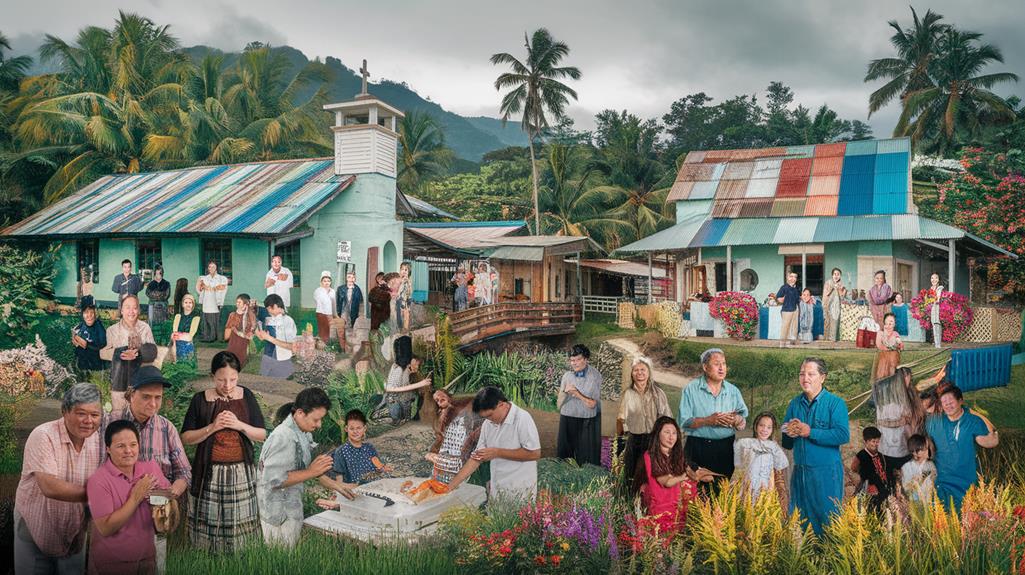
    Community life in the Philippines is deeply rooted in cultural traditions and Catholic teachings. These traditions shape daily interactions and define social structures within communities. For example, wakes and memorials demonstrate a profound respect for the deceased, emphasizing the importance of family bonds that are central to Filipino culture.

    The padrino system is a prime example of how Catholic ritual kinship integrates into social governance, fostering relationships and networks of reciprocity. This highlights the importance of community support.

    Cultural celebrations often intertwine with religious observances, showcasing collective moral beliefs in action and reinforcing community solidarity through shared values.

    Filipino spirituality is a blend of indigenous beliefs and Catholic doctrines, as seen in practices like honoring the dead and participating in festivals. However, the influence of religious iconography in everyday life raises concerns about the integrity of these cultural traditions.

    The commercialization of sacred symbols can challenge their role in shaping moral values.

    The intertwining of community and cultural traditions with Catholicism significantly influences the Filipino way of life, creating a unique and dynamic social fabric.

    Future of Religion and Morality

    Filipino Morality is Undergoing a Shift

    A significant change is taking place in the moral landscape of the Philippines, driven by younger generations questioning traditional values. Over 80% of Filipinos still identify as religious, but many young people are becoming non-religious or less observant.

    This Shift is Manifesting in Various Ways

    • Growing numbers of youth identifying as non-religious or less observant: This trend is evident in the increasing number of young Filipinos who no longer identify with a particular religion or attend religious services regularly.
    • Increased interfaith dialogues promoting moral understanding among diverse groups: Organizations and educational institutions are hosting interfaith dialogues to promote understanding and respect among people of different religious backgrounds.
    • Educational institutions integrating moral education into curricula: Schools are incorporating moral education into their curricula to teach students about different ethical perspectives and values.

    Globalization and Technology are Challenging Established Beliefs

    As globalization and technology expose people to diverse ethical viewpoints, the challenge to established beliefs becomes more pronounced. This has made moral education crucial in fostering ethical development that reflects contemporary societal norms.

    The Church's Response will Play a Significant Role

    The Church's response to pressing social issues, such as environmental concerns and social justice, will play a significant role in its relevance moving forward.

    The Church must adapt to the changing landscape of Filipino values to remain relevant.

    Embracing Interfaith Dialogues is Vital

    Embracing interfaith dialogues will be vital in building a moral framework that resonates with the changing landscape of Filipino values.

    Questions and Answers

    How Does Religion Affect Moral Values?

    Religion influences moral values by providing a spiritual foundation for decision-making. Through religious teachings, individuals develop ethical frameworks that guide their actions and behaviors.

    For instance, many religions emphasize the importance of honesty, encouraging followers to be truthful in their interactions with others.

    Religion fosters community cohesion, promoting a sense of shared responsibility. When individuals engage with their faith, they become part of a community that reinforces positive behaviors and choices.

    This community support system helps individuals uphold moral principles, such as responsibility, and cultivates a sense of belonging among its members.

    How Does Religion Affect Philippine Society or Culture?

    Religion plays a significant role in shaping Philippine society and culture. This is evident in the numerous vibrant religious festivals that take place throughout the year, which foster community cohesion by bringing people together in shared beliefs and traditions.

    For instance, the Sinulog Festival in Cebu and the MassKara Festival in Bacolod are two popular examples of such events. These festivals not only enhance social ties but also reinforce cultural identity.

    Religious institutions also provide ethical teachings that guide daily interactions, promoting values such as respect, compassion, and kindness. These teachings are reflected in the way Filipinos interact with each other, particularly in their strong emphasis on family values and respect for authority.

    In the Philippines, family is considered the basic unit of society, and religious teachings reinforce the importance of family ties and respect for elders.

    Religion's influence is also seen in community engagement, where many religious organizations are involved in various social and charitable activities. This is evident in the many Catholic Church-led initiatives that provide education, healthcare, and other social services to marginalized communities.

    How Does Religion Influence Your Beliefs and Values?

    Religion shapes your beliefs and values through its teachings and practices. These spiritual practices influence your worldview and often intertwine with communal traditions. For instance, many religions emphasize the importance of respect and family, which are reflected in their teachings and customs.

    The influence of your community plays a significant role in shaping your values. As you engage with your religious community, you're more likely to adopt values that align with shared religious teachings. This is because your community reinforces these values through shared practices and discussions.

    Engaging in religious practices strengthens your connection to your faith and community. By participating in spiritual practices, you cultivate a sense of belonging and moral guidance.

    This connection is reinforced as you engage with your community, leading to a deeper understanding of your faith and its values.

    What Is Faith and Religiosity in Filipino Values?

    Faith and religiosity are essential components of Filipino values. These values are deeply rooted in daily life, influencing various aspects of Filipino culture and society.

    Attending Mass and engaging in prayer are common spiritual practices that strengthen one's connection to tradition and cultural heritage. For example, many Filipinos attend Sunday Mass as a way to express their faith and spend time with family.

    Cultural traditions often reflect religious beliefs, emphasizing the importance of family bonds and community respect.

    Participating in these rituals reinforces values that shape one's identity and moral framework within society. For instance, the Filipino tradition of Simbang Gabi, a series of nine dawn Masses leading up to Christmas, is a way to honor one's spirituality and reinforce family bonds.

  • The Relationship Between Religion and Spirituality in the Philippines

    The Relationship Between Religion and Spirituality in the Philippines

    Religion and Spirituality in the Philippines: An Intertwined Fabric

    In the Philippines, religion and spirituality are deeply intertwined, shaped by the country's complex history. This blend is evident in the coexistence of indigenous beliefs, Catholic customs, and emerging Protestant sects.

    Catholicism Remains Prevalent

    The Catholic faith remains the dominant religion, influencing social identity and mental health support. For instance, many Filipinos attend Catholic masses and participate in religious processions, such as the Sinulog Festival in Cebu, which honors the Santo Niño (Child Jesus).

    Spiritual Practices and Syncretic Traditions

    Many Filipinos practice spiritual activities alongside their religious observances, creating syncretic traditions. Examples include the fusion of Catholic and indigenous beliefs in community festivals, such as the Pintados Festival in Tacloban, which honors the Santo Niño and features tattooed dancers.

    Grassroots Movements Emphasize Personal Spirituality

    In recent years, grassroots movements have emerged, focusing on personal spirituality. This shift reflects contemporary cultural changes, as Filipinos seek more individualized and meaningful spiritual experiences.

    Dynamics in Philippine Society

    As you explore the relationship between religion and spirituality in the Philippines, you'll uncover the complex interactions between these dynamics amid challenges and transformations in Philippine society today.

    Historical Overview of Religion

    evolution of religious beliefs

    Religion in the Philippines has been shaped by a rich tapestry of historical influences.

    Before the arrival of foreign influences, pre-Hispanic Filipinos engaged in indigenous religious practices, worshipping a pantheon of gods and spirits, with Bathala recognized as the supreme deity. Shamans and priests led rituals, fostering a deep connection to spirituality that shaped their daily lives.

    The arrival of Islam in 1350 introduced a new religious influence, primarily in Mindanao and Sulu, which established political structures that intertwined with existing beliefs.

    However, Spanish colonization in 1565 brought Catholicism to the forefront, promoting it as the dominant religion while blending with the existing animistic practices among rural populations.

    The American colonial period saw the emergence of Protestantism, and nationalized churches like the Aglipayans gained traction.

    Despite this, the Catholic Church remained the primary religious institution, reflecting the complexity of Filipino spirituality.

    Today, the Philippines features a dynamic religious landscape, with small sects and fundamentalist groups challenging the Catholic Church's supremacy.

    This ongoing evolution of beliefs and practices highlights the country's rich cultural context.

    Indigenous Spiritual Practices

    Indigenous spiritual practices in the Philippines are deeply connected to the environment. This connection is characterized by a rich tapestry of beliefs that predate colonization. In these beliefs, animism reigns, with a pantheon of gods and spirits guiding daily life. For example, Bathala, the supreme deity, represents the universe's creator. Rituals often involve sacrifices and prayers to appease both benevolent and malevolent spirits.

    Shamans or priests possess supernatural powers to navigate these spiritual realms. They're seen as intermediaries between the spiritual and physical worlds.

    Ancestor worship plays a significant role in these beliefs, as ancestral spirits are honored through wooden and metal images. This reverence showcases deep respect for lineage and heritage, highlighting how indigenous practices intertwine with Filipino identity.

    Syncretism emerges when indigenous spiritual beliefs blend with later introduced religions like Catholicism. In many rural communities, a unique fusion exists where traditional practices coexist with Catholic rituals.

    This dynamic reflects a cultural richness that continues to thrive, demonstrating how rooted these practices are within the Filipino experience, even amidst colonization and modernization.

    Christianity's Influence

    impact of christian faith

    The Philippines' cultural landscape is shaped by the interplay between indigenous spirituality and Christianity, with 85% of Filipinos practicing Christianity, predominantly Catholicism. This faith significantly influences daily life and community structures, particularly in rural areas.

    In many communities, Catholicism is a cornerstone of social identity, with parish priests playing a crucial role in spiritual guidance, local governance, and community events.

    For instance, festivals and rituals combine Catholic traditions with indigenous customs, showcasing this integration. The town of Lucban in Quezon Province celebrates the Pahiyas Festival, where residents decorate their homes with vibrant rice paper decorations and hold processions in honor of San Isidro Labrador.

    The Catholic Church's influence also extends to health practices, where faith healing is often merged with conventional medical care. Many Filipinos use spiritual resources to address physical ailments, such as seeking the intercession of saints or reciting prayers alongside medical treatment.

    For example, the Our Lady of Lourdes Grotto in San Jose City, Nueva Ecija, is a popular pilgrimage site for those seeking healing.

    While Catholicism remains dominant, the rise of diverse Protestant sects and fundamentalist groups highlights an evolving religious landscape. This shift demonstrates how Filipino religious practices continue to adapt to changing cultural contexts.

    The growth of Evangelical Christianity, for instance, has led to an increase in Protestant churches and missionary work across the country.

    Contemporary Religious Landscape

    The Philippines' religious landscape is shifting beyond traditional Catholicism.

    While approximately 85% of the population still identifies as Roman Catholic, the country is experiencing a growing diversity in religiosity and spirituality.

    The Catholic Church faces challenges from emerging sects and fundamentalist groups seeking to redefine spiritual engagement.

    Grassroots movements and nationalized churches, such as the Aglipayans, are gaining popularity. This trend reflects a desire for a more localized, culturally resonant faith experience, which often contrasts with the institutional rigidity of the Catholic Church.

    For instance, the Aglipayan Church, established in 1902, has been a prominent example of a nationalized church that has been attracting followers.

    The low priest-to-people ratio affects community engagement. With too few priests to serve the large Catholic population, the Church struggles to respond effectively to these emerging religious movements.

    Tensions between religious groups and government authorities also exist. The complicated interplay of religion and politics is evident in conflicts and collaborations between diverse beliefs seeking common ground.

    Cultural Syncretism in Beliefs

    blending of cultural traditions

    Cultural Syncretism in the Philippines

    Cultural syncretism in the Philippines is a unique blend of beliefs that reflects the deep intertwining of spiritual practices in daily life. This fusion is prominently seen in the coexistence of indigenous beliefs with Catholicism, where traditional rituals rooted in reverence for ancestral spirits are seamlessly integrated into Christian celebrations.

    Festivals celebrating patron saints showcase this syncretism, as they incorporate elements of indigenous animism, such as processions and rituals honoring both Christian and pre-colonial beliefs. For example, in the Fiesta de San Juan, a celebration honoring Saint John the Baptist, Filipinos engage in prayers to the saint while making offerings to local deities, demonstrating their duality in religious identity.

    Grassroots religious movements also illustrate the ongoing evolution of spirituality in the Philippine context. These movements combine Christian teachings with local customs, further blurring the boundaries between established religion and indigenous practices.

    One such movement is the Iglesia ni Cristo**, which incorporates elements of Filipino culture and folk practices into its Christian teachings.

    Cultural syncretism in the Philippines isn't just a historical phenomenon; it's a dynamic interplay of spiritual practices that continues to shape the identities and experiences of Filipinos today.

    Socio-Political Context of Religion

    Religion plays a significant role in shaping the socio-political dynamics in the Philippines. The country's predominantly Catholic population, with around 85% adhering to Roman Catholicism, has led to the Catholic Church's influence in governance and community relations.

    The Church's influence is evident in local festivals and community engagements, where church activities often dictate the events. This historical context, rooted in Spanish colonization, has fostered a strong Catholic identity, particularly in rural areas.

    The Philippines isn't a homogeneous society in terms of religion. Muslim communities in Mindanao and Sulu have resisted Christian imposition, leading to ongoing tensions and separatist movements.

    These movements highlight the nation's religious diversity. The rise of Protestant sects during the American colonial period has further fragmented the religious landscape, challenging the Catholic Church's supremacy and reshaping political affiliations.

    The Catholic Church often finds itself at odds with government authorities. Contemporary issues, such as human rights and social justice advocacy, see the Church pushing for reforms and voicing the marginalized's struggles.

    Spirituality intersects with activism in these instances. This complex interplay between religion and socio-political dynamics reveals how deeply intertwined cultural beliefs are with the quest for justice and equity in the Philippines.

    Mental Health and Spirituality

    mindfulness enhances spiritual well being

    Mental Health and Spirituality in the Philippines

    The Connection Between Mental Health and Spirituality

    Many Filipinos find comfort in spirituality when dealing with mental health issues.

    The Philippine Mental Health Law of 2018 recognizes the interconnectedness of physical, mental, and spiritual well-being. This understanding is rooted in the country's strong spiritual beliefs, which play a significant role in shaping mental health outcomes.

    Spirituality as a Coping Mechanism

    Spiritual practices, such as prayer, serve as essential coping mechanisms for Filipinos during difficult times.

    These practices provide both emotional and spiritual support, enhancing therapeutic outcomes and fostering emotional resilience. In the Filipino context, integrating spirituality into mental health care creates a stronger bond between therapists and clients, promoting a holistic approach to treatment.

    The Influence of Catholicism

    The prevalence of Catholicism, practiced by approximately 85% of the population, strengthens community ties and support networks.

    These networks are crucial in shaping perceptions of mental health and adherence to treatment. Consequently, spirituality and religiosity aren't only personal beliefs but also vital components of coping strategies that impact mental health in the Philippines.

    How Does Filipino Spirituality Influence Religious Practices in the Philippines?

    Filipino spirituality and nature connection deeply influence religious practices in the Philippines. Many Filipino religious traditions incorporate aspects of indigenous spirituality, such as honoring nature spirits and deities. This interconnectedness with the natural world shapes the beliefs and practices of the Filipino people, creating a unique religious experience.

    Education and Community Engagement

    Education and Spirituality in the Philippines

    Education plays a vital role in connecting Filipino communities to their rich spiritual heritage and diverse religious practices. For instance, the Asia Society Museum's exhibition *Comparative Hell* showcases the significance of understanding Filipino religious practices alongside broader Asian cultures.

    Community programs focused on cultural education help families and youth develop a deeper awareness of the complex religious landscape that shapes their identities.

    Integrating Spirituality and Mental Health

    Educational initiatives that intertwine spirituality and mental health are becoming increasingly important in community frameworks. This integration addresses the psychosocial needs of Filipinos influenced by their religious beliefs, enhancing resilience and support systems.

    Faith-based organizations collaborate with mental health providers to deliver culturally relevant resources that resonate with the community's values. For example, the Catholic Educational Association emphasizes the importance of spirituality in education, with 97.40% of Filipino youth acknowledging religion's significance in their lives.

    Fostering Community Engagement

    By intertwining education and spirituality, Filipinos can cultivate a more cohesive and supportive community.

    Active participation in school-based religious activities enriches community engagement and honors heritage. This approach ensures that the essence of Filipino identity thrives.

    Future Trends in Spirituality

    evolving practices in spirituality

    Spirituality in Filipino Communities is Evolving

    As Filipino communities change, spiritual practices are shifting to reflect the broader cultural landscape. A rise in grassroots movements is challenging traditional religious structures, particularly as the Catholic Church faces a low priest-to-people ratio. These movements prioritize individual spirituality, focusing on holistic approaches that align with the Philippine Mental Health Law of 2018, which incorporates spiritual well-being into public health frameworks.

    Individualized Spirituality is on the Rise

    This trend highlights a growing interest in personal practices like prayer and community rituals, allowing individuals to explore their beliefs outside of organized religion.

    Social media and technology play crucial roles in this evolution, creating virtual communities that foster spiritual support and connection among like-minded individuals.

    Cultural Diversity is Enriching the Spiritual Landscape

    As cultural diversity flourishes, the interplay between indigenous spirituality and established religious traditions is likely to result in new forms of syncretism.

    This enrichment of the spiritual landscape reflects the unique identity of Filipino communities, inviting individuals to engage with a more dynamic and inclusive understanding of spirituality that honors both their heritage and personal journey.

    Questions and Answers

    What Are the Religious and Spiritual Practices in Philippines?

    Religious and Spiritual Practices in the Philippines

    Blend of Faith Traditions and Cultural Beliefs

    In the Philippines, religious and spiritual practices are deeply rooted in the country's cultural heritage.

    Filipino rituals often combine Catholicism, Islam, and indigenous beliefs, resulting in a unique blend of faith traditions.

    Community Gatherings and Celebrations

    Community gatherings play a vital role in fostering social connections, often centered around religious festivals and celebrations such as the Sinulog Festival in Cebu and the Feast of the Black Nazarene in Manila.

    These events bring people together, reinforcing communal ties and showcasing the country's rich spiritual tapestry.

    Personal Devotion and Inner Peace

    Filipinos also engage in various spiritual practices to cultivate inner peace and personal devotion.

    Meditation and prayer are common practices, helping individuals find solace in their daily lives.

    These spiritual expressions not only reflect personal faith but also contribute to the country's vibrant cultural landscape.

    What Is the Connection Between Religion and Spirituality?

    Religion and spirituality are interconnected yet distinct concepts.

    Religion provides a structured belief system that shapes cultural identity and offers a framework for understanding the world. For example, Christianity, Islam, and Buddhism are all religions that provide guidelines for their followers. These belief systems often influence daily life, traditions, and values.

    Spirituality, on the other hand, is a more personal and individual experience that transcends religious structures. It involves a deep connection with oneself, others, and the universe, leading to personal growth and self-awareness. Spirituality can be practiced within or outside of religious contexts.

    In diverse religious landscapes, people often intertwine their spiritual journeys with organized practices, fostering a sense of belonging.

    For instance, a Christian might practice meditation to deepen their spiritual connection with God, while a Buddhist might participate in group chanting to cultivate inner peace. This blending of spirituality and religion encourages individuals to reflect on the essence of existence and their place within a broader community.

    Why Is Religion Important to the Philippines?

    Religion plays a vital role in shaping the cultural identity of the Philippines. This is evident in the way it influences daily life, instilling moral values and guiding people's behavior.

    For instance, the Catholic Church's emphasis on family and respect for authority is reflected in Filipino customs and traditions.

    Religion also fosters community bonding, uniting people during festivals and rituals.

    The Philippines' vibrant fiestas, such as the Sinulog Festival in Cebu, showcase the country's rich cultural heritage and strong religious roots. This blend of colonial legacies and local traditions promotes social stability, providing a framework for cooperation and support in times of crisis.

    In essence, religion isn't just a belief system in the Philippines; it's an integral part of the country's social fabric. It provides a sense of belonging, comfort, and guidance, which is essential for building strong communities and a stable society.

    What Is Spirituality in Filipino?

    Spirituality in Filipino culture is deeply rooted in personal identity and collective heritage. It's shaped by a blend of ancestral wisdom and cultural traditions, which influence an individual's worldview.

    Filipino spirituality is characterized by a strong connection to family and ancestors, often expressed through rituals, community gatherings, and prayers.

    These practices serve a dual purpose: they provide personal fulfillment and strengthen bonds within the community.

    For Filipinos, spirituality isn't just a personal journey but an integral part of their collective identity. It is a way to honor ancestors and connect with their cultural heritage.

  • Rituals and Ceremonies of Indigenous Filipino Religions

    Rituals and Ceremonies of Indigenous Filipino Religions

    Indigenous Filipino religions rely heavily on rituals that connect the living with the spirit world. These rituals, rooted in animism, aim to honor ancestor spirits known as anito through various practices.

    Offerings, communal feasts, and purification rites are some of the ways to pay respect to these spirits.

    Shamans play a crucial role in connecting communities with their ancestors by invoking spirits and facilitating communication. During festivals, indigenous and Catholic elements blend together, reinforcing cultural identity and promoting unity among community members.

    These ceremonies also allow participants to show respect for natural deities and address their spiritual needs.

    Observing these rich traditions reveals the dynamic interplay between spirituality and daily life, showcasing the vibrant cultural heritage that continues to evolve.

    Overview of Indigenous Beliefs

    indigenous spirituality and traditions

    Indigenous Filipino beliefs are rooted in animism, where spirits are believed to inhabit all aspects of life. This worldview is centered around the concept of anito, which encompasses ancestor spirits, nature deities, and supernatural beings. This understanding reflects a deep connection to the spirit world, where every entity, from trees to animals, is believed to possess a soul.

    Rituals are essential in indigenous Filipino beliefs, often involving offerings and sacrifices to honor or appease spirits.

    Communal feasting is a vital practice, where reverence and celebration come together, allowing communities to bond over shared beliefs. For example, in the Bagobo tradition, souls are categorized into left-hand (evil) and right-hand (good) spirits, highlighting the duality of spiritual existence. This classification emphasizes the importance of respect towards ancestral spirits, guiding individuals in their daily lives and interactions with the spirit world.

    Understanding indigenous Filipino beliefs provides a glimpse into a rich cultural identity, which continues to thrive amidst modernization.

    Concept of the Soul

    In many Filipino cultures, the concept of the soul is deeply intertwined with the understanding of existence and the afterlife. This concept is rooted in indigenous beliefs, which reveal that both humans and animals possess souls that exist beyond physical life as anito, or spirits.

    The Bagobo tradition illustrates a dualistic perspective on the soul. In this tradition, left-hand souls are seen as malevolent and right-hand souls as benevolent.

    Different ethnic groups have varying beliefs about the number of souls an individual can have. For example, the Tagbanwa propose that individuals may have multiple souls, while the Ifugao culture recognizes two distinct souls per person.

    Ancestral spirits hold a significant place in indigenous Filipino cultures. They're revered as protectors and guides for the living, and disrespect towards them is thought to invite harm.

    This emphasizes the importance of rituals that honor these spirits.

    The transformative journey of the soul fosters a profound reverence for ancestral spirits. As they're seen as integral to the community's spiritual well-being, this interconnectedness reflects how indigenous Filipino cultures navigate the complexities of life, death, and the unseen forces that shape existence.

    Core Ritual Practices

    essential ceremonial activities

    Core Ritual Practices in Filipino Cultures

    Core ritual practices in Filipino cultures maintain the spiritual balance between the living and the spirit world. These rituals involve offerings to Anito, including food, animal sacrifices, and valuable items, to appease ancestor spirits and deities. Led by shamans, Pag-anito rituals facilitate communication with these spirits for guidance and protection.

    Types of Rituals and Their Purposes

    Offerings: Nourish and appease Anito. Key elements: food, sacrifices.

    Bloodletting (Padugo): Purify before events. Key element: cleansing the land.

    Communal Feasting: Strengthen community bonds. Key elements: shared meals, drinks.

    These core practices often conclude with communal feasting, which promotes social cohesion and addresses fears of malevolent spirits through celebratory actions.

    The veneration of natural elements at sacred sites, like balete trees and mountains, reveals a profound spiritual connection to the environment. By engaging in these rituals, individuals participate in a tradition that honors the past while ensuring harmony with the unseen forces that shape daily life.

    Significance of Anito

    Anito: The Bridge Between the Living and the Spiritual Realm

    In Filipino indigenous religions, anito hold a vital place, embodying the connection between the living and the spiritual realm. These supernatural beings, which include ancestor spirits and nature deities, deeply influence daily life and rituals, reflecting a rich spiritual hierarchy.

    Continuity of Existence

    Anito represent continuity of existence beyond physical life, emphasizing the idea that life doesn't end with death. This concept is reflected in the reverence for ancestors, who are believed to continue playing a role in the lives of their descendants.

    Ancestor Worship

    Ancestor worship in Filipino indigenous religions emphasizes practical intercession over mere filial piety. This means that the living seek the guidance and protection of their ancestors, rather than simply showing respect for them.

    Types of Anito

    There are different levels of anito, including deities, spirits, and souls of the deceased. Each type of anito has a distinct role and influence on the lives of the living.

    Rituals and Respect

    Proper rituals and respect for anito are crucial to maintain harmony. The living must show reverence for these supernatural beings through rituals and offerings, lest they face negative consequences.

    Guiding the Living

    The anito aren't just entities to be revered but active participants in the lives of the living. They guide individuals through ceremonies, ensuring protection and wisdom.

    The rituals surrounding anito serve as a bridge, facilitating communication and reinforcing connections between generations.

    Deities and Spirits

    divine beings and entities

    Indigenous Filipino Religions Feature a Diverse Hierarchy of Deities and Spirits

    The spiritual landscape of indigenous Filipino religions is shaped by a complex web of beliefs, with each ethnic group having its unique pantheon of deities and spirits. The Tagalogs, for example, revere Bathala as their supreme god, while the Visayans honor Laon. This diversity reflects the different cultural interpretations of the Filipino people.

    Anito Plays a Central Role in Rituals

    Anito, which encompasses both ancestor spirits and nature deities, occupies a central role in indigenous Filipino rituals. These spirits are believed to impact both physical and spiritual life, guiding community welfare and agricultural success.

    They're thought to influence daily existence, from harvests to community relationships.

    Lesser Gods and Local Mythology

    Lesser gods, often deified ancestors or tribal heroes, enrich the spiritual hierarchy. They emphasize the importance of lineage and local mythology within community rituals.

    The presence of local gods, such as Pamulak Manobo and Tigyama, highlights the interconnectedness of spirituality and daily existence.

    Understanding Deities and Spirits Reveals Community Significance

    Understanding these deities and spirits not only deepens one's appreciation of indigenous Filipino religions but also reveals the profound relationship between spirituality and community life.

    Role of Shamans

    Shamans: Intermediaries between Physical and Spirit Worlds

    In indigenous Filipino cultures, shamans embody the spiritual essence, serving as vital links between the physical and spirit worlds. These spiritual leaders, often women or effeminate men, play a crucial role in community health through their versatile practices.

    Healing and Countering Witchcraft

    Shamans utilize specific rituals and tools, like talismans, to heal physical and spiritual ailments and counteract witchcraft or supernatural disturbances. They engage in profound connections with ancestor spirits, facilitating communication and guidance for the living.

    Leading Rituals and Connecting Communities

    In their ceremonies, shamans lead rituals that connect communities to their ancestors, invoking spirits during events like Pag-anito. This highlights their centrality in spiritual practices, as seen in the role of the babaylan, a specialized type of shaman.

    Key Aspects of Shamans' Roles

    Shamans' roles include:

    • Healing physical and spiritual ailments
    • Leading rituals that connect communities to their ancestors
    • Challenging negative perceptions of witchcraft
    • Utilizing tools and rituals to divine the supernatural
    • Maintaining the community's overall welfare

    Reinforcing Cultural Identity and Community Health

    Through these practices, shamans not only address immediate concerns but also reinforce cultural identity, making them indispensable figures in indigenous Filipino religions.

    Their unique position allows them to navigate complex spiritual landscapes, ensuring the continuity of traditions and the health of their communities.

    Community Ceremonies

    celebrating local traditions together

    Community Ceremonies in Indigenous Filipino Religions

    Unity and Collective Effort

    Community ceremonies in indigenous Filipino religions bring together members of the barangay in a shared quest for agricultural success and overall well-being. These ceremonies promote unity and collective effort, essential for strengthening community bonds.

    Local leaders or wealthy chiefs often lead these elaborate events, fostering a sense of belonging and shared responsibility among participants.

    Honoring Local Gods

    At the heart of these ceremonies lies the appeasement of local gods, such as Pamulak Manobo and Tigyama, believed to influence the community's prosperity. Rituals are meticulously crafted to honor these divine beings, integrating spirituality into the community's daily life.

    The participation of the entire barangay is crucial, as it reinforces the community's connection to the divine and the land.

    Feasting and Communal Celebrations

    As rituals conclude, feasting and communal celebrations emerge, balancing reverence for the spirits with joy and togetherness. Myths and local inventions serve to deepen the understanding of these divine beings, enriching the spiritual landscape.

    These ceremonies reflect the people's hopes and aspirations, highlighting their connection to the divine and the land.

    Maintaining Harmony

    Through community ceremonies, the importance of maintaining harmony between the community and their spiritual beliefs is underscored. This harmony ensures agricultural success and wellness for all.

    What role do superstitions and beliefs play in the rituals and ceremonies of Indigenous Filipino religions?

    Superstitions in filipino folklore are deeply intertwined with the rituals and ceremonies of Indigenous Filipino religions. These beliefs shape the way indigenous communities approach important events, like harvests or births, and influence their daily lives. Superstitions and beliefs provide structure, meaning, and connection to the natural and spiritual worlds.

    Festivals and Celebrations

    Festivals in the Philippines are vibrant expressions of local culture and heritage, blending indigenous spiritual practices with Catholic influences shaped by historical colonization. These celebrations are essential for community bonding and the reinforcement of cultural identity. Each festival carries unique local significance, often marked by rituals that honor both patron saints and local deities.

    Indigenous beliefs are woven into the fabric of modern celebrations, such as the Ati-Atihan festival, which honors a patron saint while showcasing the evolution of indigenous beliefs in a contemporary context. This fusion is evident in the festival's rituals and offerings, which connect participants to their spiritual practices. For instance, the Ati-Atihan festival features dances, songs, and dishes that serve a dual purpose: celebrating the divine and reinforcing cultural heritage.

    Festivals foster community bonding, uniting people in shared experiences. The Ati-Atihan festival, for example, brings together locals and tourists alike to celebrate and honor their cultural identity.

    They reflect the adaptation of traditions over centuries of colonization, demonstrating the resilience of cultural identity in the face of changing times.

    Celebrations highlight the interplay between Catholic influences and local customs. The Ati-Atihan festival is a prime example of this interplay, where indigenous beliefs are woven into Catholic traditions.

    Through these festivals, you witness not just the joy of the moment, but also the persistence of spiritual practices and the resilience of cultural identity.

    Cultural Heritage and Preservation

    protecting cultural heritage sites

    Indigenous Filipino religions are alive and dynamic, evolving within contemporary society. Preservation efforts, such as the NIPAS Law, protect sacred Anitist grounds from degradation, ensuring future generations can connect with their cultural heritage.

    For instance, the Ati-Atihan festival showcases this living tradition, blending ancestral beliefs with community celebration, despite the historical impact of Spanish colonization.

    Your engagement in cultural heritage preservation is vital. Participating in traditional practices fosters a deep understanding of spiritual identity. Ongoing initiatives focus on education and awareness, allowing you to contribute to the revitalization of indigenous religions.

    By attending community events, you can witness firsthand the resilience of these traditions.

    Indigenous elements are integrated into Folk Catholicism and Folk Islam, demonstrating adaptability. Despite the decline of tattoo art, a former symbol of status, communities have maintained their core beliefs.

    River- and sea-related symbols persist, anchoring contemporary practices in rich mythologies. These efforts ensure indigenous Filipino religions thrive, highlighting the lasting power of cultural heritage.

    Questions and Answers

    What Is an Example of Indigenous Rituals in the Philippines?

    Indigenous rituals in the Philippines reflect rich cultural traditions.

    In the Philippines, diverse indigenous groups have their own unique rituals that showcase their cultural heritage.

    Kalinga headbinding, for example, signifies beauty and social status. This ritual involves binding the heads of young girls to shape them into a conical form, which is considered a symbol of beauty and a mark of high social status.

    Rice rituals are an essential part of Ifugao culture. These rituals celebrate the harvest and express gratitude for the bounty of the land.

    In Lumad communities, ritual dances are performed to express community identity. These dances showcase the community's history, traditions, and values.

    Healing ceremonies are an important part of Tagbanua culture. These ceremonies connect spiritual and physical well-being, highlighting the importance of balance and harmony in life.

    Other examples of indigenous rituals include Mangyan rice planting, Bontoc wedding rites, and Tausug cultural festivals, which showcase communal ties.

    Additionally, Igorot agricultural practices and Cebuano baptism traditions honor family and faith.

    What Are the Indigenous Religions of the Philippines?

    Indigenous religions in the Philippines revolve around ancestral worship and spirit veneration. These beliefs connect individuals to their cultural heritage and emphasize the importance of honoring ancestors and nature spirits.

    Ancestral worship involves ritual offerings during community festivals. For example, agricultural ceremonies and healing practices are common ways to engage with nature spirits.

    Death rites reflect a profound respect for ancestors, often incorporating shamanic traditions to guide spirits.

    These practices not only honor the past but also foster communal ties. They highlight the importance of maintaining these rich traditions in modern society, emphasizing the significance of cultural heritage and community bonding.

    What Are Some Filipino Religious Practices?

    Filipino religious practices combine animistic beliefs and ancestral worship. These practices often involve communal gatherings during harvest festivals, where people celebrate nature reverence by making spirit offerings to honor deities. For example, the Igorot people in the Cordillera Mountains hold festivities to thank their gods for the harvest, offering rice, vegetables, and wine.

    Healing ceremonies take place in sacred spaces, emphasizing the connection between the physical and spiritual realms. In these ceremonies, shamans or spiritual leaders use traditional music and rituals to communicate with ancestors and deities, seeking healing and guidance for the community.

    For instance, the T'boli people in Mindanao use the Dreamweaver's song, a traditional melody played on the hegalong, to summon ancestral spirits and guide the healing process.

    These practices reflect the profound respect for the environment and ancestors, which is deeply rooted in Filipino culture. By understanding these practices, we can appreciate the rich cultural heritage of the Filipino people.

    What Are Rituals and Ceremonies in Religion?

    Rituals and ceremonies are essential components of religious practices, fostering a sense of community and spiritual connection. These events often revolve around ancestral worship, healing practices, and crucial life cycles, such as birth, coming of age, marriage, and death.

    Ritual symbols are used to convey deeper meanings, creating connections with nature and the spiritual realm. For instance, in many cultures, the ritual symbol of water is used to represent purification and renewal.

    Sacred spaces play a vital role in religious rituals and ceremonies, providing a platform for storytelling traditions to unfold. These spaces enrich the cultural tapestry, allowing participants to connect with their community and the spiritual realm.

    Engaging in religious rituals and ceremonies enables individuals to connect with their community and the spiritual realm, fostering a deeper understanding of their faith and cultural heritage.

  • The Babaylan: Traditional Filipino Healers and Spiritual Guides

    The Babaylan: Traditional Filipino Healers and Spiritual Guides

    Traditional Filipino Healers and Spiritual Guides

    The Babaylan are traditional Filipino healers and spiritual guides who serve as vital connections between the physical and spiritual worlds. They use ancient rituals, herbal remedies, and chanting to promote community healing and unity. For instance, they perform rituals to cleanse the body and mind, and use herbal remedies to treat physical ailments.

    Historical Significance and Revival

    Historically, the Babaylan faced persecution, but their practices have revived in modern times. This revival promotes cultural identity and indigenous knowledge. Today, the Babaylan continue to play a crucial role in preserving Filipino heritage and cultural traditions.

    Inclusive Roles and Wisdom

    The Babaylan's roles are inclusive, allowing for diverse expressions of identity. Their wisdom addresses contemporary challenges and advocates for indigenous rights. For example, they provide counseling services to individuals and families, and offer guidance on environmental conservation and sustainable living.

    Impact on Filipino Heritage and Community Resilience

    The Babaylan have a profound impact on Filipino heritage and community resilience across generations. Their practices foster a sense of community and promote social cohesion. By preserving traditional practices and cultural traditions, the Babaylan help to build stronger, more resilient communities.

    Definition and Role of Babaylan

    spiritual healer and guide

    The Babaylan: Spiritual Leaders and Healers

    The Babaylan, a vital part of traditional Filipino healing practices, served as both spiritual leaders and healers in pre-colonial society. They mediated between the spiritual and physical worlds, using rituals and healing techniques to address natural and spiritual ailments. Their role extended beyond healing to include conducting community rituals that fostered unity and preserved oral traditions, ensuring the well-being of their communities.

    Inclusivity in the Babaylan Tradition

    Both men and women could become Babaylan, with a significant number being women, reflecting a matriarchal structure in many indigenous societies. This inclusivity allowed diverse perspectives and practices to thrive, enriching the cultural tapestry of the Philippines.

    Babaylan practices incorporated various healing methods, such as chants, herbal remedies, and rituals aimed at communicating with spirits and ancestors.

    Preserving Indigenous Knowledge and Cultural Heritage

    The Babaylan tradition is crucial for preserving indigenous knowledge and cultural heritage, especially in the face of historical colonization and cultural suppression. By understanding their roles, we gain insight into a rich legacy that continues to resonate in contemporary Filipino culture.

    Historical Context and Impact

    Babaylan practices have deep roots in ancient Philippine societies. In these societies, Babaylan spiritual leaders and healers played crucial roles in community wellness and guidance. They connected people with powerful spirits, offering healing and wisdom in times of need.

    The arrival of Spanish colonizers marked a significant turning point. The traditions of the Babaylan faced severe suppression, leading to the persecution of many practitioners and a profound loss of indigenous cultural practices. This suppression led to a shift in power dynamics, marginalizing Babaylan figures who'd once been revered.

    Despite this, many Babaylan emerged as symbols of resistance. They led movements against colonial rule, showcasing resilience amidst oppression. For example, some Babaylan led revolts against Spanish colonizers, fighting for their people's freedom and cultural preservation.

    In the late 20th century, Babaylan practices experienced a revival. This resurgence emphasized the importance of cultural identity and the reclamation of indigenous knowledge. It countered modern influences that threatened to erase the cultural heritage of the Filipino people.

    Today, understanding the historical context of the Babaylan is crucial, as it reflects not just a struggle for survival but a powerful assertion of cultural continuity within the Filipino identity.

    Cultural Significance of Babaylan

    babaylan spiritual cultural leaders

    The Babaylan: Guardians of Cultural Significance

    In many Filipino communities, the Babaylan hold a profound cultural significance that extends beyond their traditional healing practices.

    They serve as vital links between the human and spirit worlds, ensuring spiritual guidance and healing are deeply woven into community life.

    Preserving Cultural Identity

    The Babaylan conduct rituals that honor ancestors and the spirit world, fostering a sense of belonging within the community.

    They embody both feminine and masculine energies, allowing for diverse expressions of identity in their practices.

    They emphasize oral histories, ensuring that stories and traditions are transmitted across generations.

    Promoting Holistic Health and Wellness

    Through their work, the Babaylan promote holistic health and wellness, reinforcing the interconnectedness of body, mind, and spirit.

    Historically respected figures, they faced marginalization due to colonization, leading to a cultural loss that contemporary movements strive to reclaim.

    Reclaiming Indigenous Knowledge and Community Unity

    In revitalizing these practices, a resurgence of indigenous knowledge and community unity is witnessed, reaffirming the Babaylan's indispensable role in maintaining cultural heritage.

    Their presence not only honors the past but also shapes the future of Filipino identity and spirituality.

    Modern-Day Relevance

    The Babaylan's Modern-Day Relevance

    Advocating for Indigenous Rights and Cultural Preservation

    The Babaylan, traditional Filipino healers, are at the forefront of contemporary wellness movements, advocating for indigenous rights, cultural preservation, and environmental justice. They address pressing social issues like mental health and community healing, taking on leadership roles in their communities.

    Integrating Babaylan Teachings into Education

    Many Babaylan teachings are now integrated into educational programs, fostering cultural appreciation among younger generations. This integration promotes a deeper understanding of indigenous traditions and their relevance in modern times.

    Collaboration and Revitalization of Indigenous Traditions

    The collaboration between Babaylan and other cultural or spiritual leaders is crucial for the revitalization of indigenous traditions. This synergy enriches healing practices and amplifies their impact on holistic health.

    Local wellness initiatives recognize the efficacy of traditional methods in modern contexts, leading to a greater appreciation for the Babaylan's wisdom.

    Honoring the Past, Addressing Contemporary Challenges

    By embracing the wisdom of the Babaylan, you're supporting a movement that honors the past while addressing contemporary challenges.

    The integration of ancient knowledge into modern frameworks reinforces the ongoing significance of the Babaylan in today's society.

    Empowerment Through Tradition

    cultural legacy and strength

    Empowerment through tradition is a vital force in the lives of many Filipinos today, as they reconnect with the rich heritage of their ancestors. By embracing the Babaylan tradition, individuals find guidance from spirit guides, fostering a sense of identity and community. This resurgence promotes resilience and collective empowerment, particularly in the face of modern challenges.

    Cultural Heritage is a key aspect of empowerment through tradition. For example, people are integrating traditional practices into contemporary activism, advocating for social justice and cultural preservation. This integration helps to preserve cultural identity and promote social change.

    Holistic Healing is another important aspect of empowerment through tradition. The Babaylan's role as spiritual guides emphasizes wellness, encouraging practices rooted in ancestral wisdom that promote mental, emotional, and physical health.

    For instance, traditional healing practices like meditation and herbal remedies are being used to address modern health issues.

    Identity Reclamation is also a crucial aspect of empowerment through tradition. Through rituals and community engagement, individuals can reclaim their personal and cultural narratives, allowing them to freely marry their past with their present.

    This reclamation helps individuals to assert their cultural identity and pride.

    As individuals delve into these practices, they contribute to a broader movement toward decolonization, asserting their cultural identity. The Babaylan tradition offers a pathway to empowerment, inviting individuals to honor their roots while navigating the complexities of modern life.

    Decolonization and Healing

    Decolonization and Healing: A Vital Journey

    Decolonization and healing are intricately connected for many Filipinos, allowing them to reclaim their cultural identity and heritage. This transformative process involves confronting the traumas inflicted by colonization, which fosters a deeper connection with ancestors and spirits.

    Confronting Traumatic Memories

    By recovering traumatic memories linked to activism, individuals and their communities can collectively address historical injustices, paving the way for a more empowered future.

    For example, understanding the impact of Spanish colonization on indigenous practices helps individuals confront the erasure of their cultural heritage.

    Embracing Babaylan Traditions

    Engaging with Babaylan traditions amplifies the healing journey by emphasizing the importance of preserving indigenous knowledge.

    Healing isn't just personal; it's a communal promise and hope for future generations. By exploring these practices, individuals can redefine their cultural narratives and identities, leading to a stronger sense of community and cultural identity.

    Empowerment through Cultural Reclamation

    Embracing Babaylan traditions reinforces cultural identity against the backdrop of colonial history.

    This journey empowers individuals and strengthens their communities, ensuring that the wisdom of their ancestors and spirits continues to guide them on the path of reclamation and renewal.

    Community Engagement and Events

    local events and participation

    Connecting with Cultural Heritage through Community Events

    Participating in community events rooted in Babaylan wisdom offers a powerful way to connect with cultural heritage while fostering collective healing. These events create vibrant spaces where individuals can immerse themselves in traditional healing rituals and learn invaluable ancestral knowledge.

    The Center for Babaylan Studies (CfBS) organizes events that allow individuals to experience:

    Healing rituals that integrate ancient practices with contemporary issues, promoting both individual and collective wellness. For example, these rituals may address modern concerns such as stress management and mental health.

    Workshops that deepen understanding of Babaylan traditions, equipping individuals to share these insights within their community. These workshops may cover topics like traditional herbal medicine and spiritual practices.

    Cultural celebrations that honor the Babaylan's role in Filipino heritage, fostering a sense of identity and belonging. These celebrations may include traditional music, dance, and food.

    By participating in these events, individuals contribute to the preservation and revitalization of Babaylan traditions, ensuring they remain a vital part of the cultural landscape.

    Their involvement can spark awareness and inspire others, creating a ripple effect of healing and empowerment within the community.

    How Do Babaylans Play a Role in Filipino Healing Traditions and Practices?

    Babaylans are integral to Filipino healing traditions practices. These spiritual leaders conduct rituals and use traditional herbal remedies to heal physical and spiritual ailments. Their role is rooted in the belief that connection to ancestral spirits is essential for maintaining wellness in the community.

    Terminology and Linguistic Insights

    Language and Filipino Healing Traditions

    The Babaylan: A Mediator Between Realms

    In Filipino healing traditions, the term babaylan originates from Proto-Western-Malayo-Polynesian *balian*, signifying a mediator between the physical and spiritual realms. This term is often associated with traditional healers who connect with spirits.

    Alternative Terms and Their Significance

    Other terms, such as catalonan, directly relate to communication with spirits, highlighting the depth of these healers' roles. catalonan is rooted in Tagalog and emphasizes dialogue.

    Key Terms Associated with the Babaylan

    The following table summarizes key terms associated with the babaylan:

    Term Meaning Notes
    Babaylan Traditional healer & mediator Often female, connects with spirits
    Catalonan Communicator with spirits Rooted in Tagalog, emphasizes dialogue
    Asog/Bayok Male counterparts Often feminized, embody spiritual roles

    Colonization and Its Impact on Terminology

    The evolution of terminology reflects not only linguistic shifts but also historical contexts. Colonization introduced negative connotations, altering perceptions of gender and spirituality. Understanding these terms enriches our appreciation for the babaylan and their vital connections to spirits and deities, illustrating the complexity of their cultural significance.

    Spiritual Practices and Beliefs

    faith based rituals and traditions

    The Spiritual Practices and Beliefs of the Babaylan

    The babaylan's spiritual practices and beliefs are deeply rooted in their connection with the spirit world.

    They act as mediators, invoking ancestral spirits to provide divine guidance and healing for individuals and the community.

    Their rituals are designed to counteract the effects of malevolent spirits and are rich in symbolism and purpose.

    Three key elements of their spiritual practices are:

    • Unique Songs and Chants: Each babaylan uses specific songs passed down through generations to facilitate communication with the spiritual realm.
    • Ceremonial Invocations (Daging): These rituals seek divine assistance, emphasizing a strong communal bond in the healing process.
    • Trance States (Paramag): Induced during rituals, these states allow the babaylan to deepen their connection with the spiritual world, enhancing their ability to heal.

    Through these practices, the babaylan address physical and emotional ailments, fostering a sense of unity and spiritual strength in their communities.

    Questions and Answers

    What Is a Babaylan Spirit Guide?

    A babaylan spirit guide, also known as an Abyan, represents the bridge between the spiritual realm and healing practices.

    This guide plays a crucial role in rituals, communicating vital insights to help navigate challenges.

    To maintain a strong connection with your spirit guide, regular offerings are essential, ensuring harmony and support.

    What Is a Babaylan in the Philippines?

    In the Philippines, a babaylan is a traditional healer and spiritual leader deeply rooted in history. These spiritual leaders practice healing rituals, invoke spirits, and guide their communities.

    Historically, babaylan were predominantly women, embodying both feminine and masculine energies. They played vital roles in pre-colonial societies, preserving indigenous knowledge and cultural heritage.

    Today, there's a revival of babaylan traditions, which emphasize cultural identity and community healing against colonial legacies. This revival aims to reconnect people with their cultural roots and promote community well-being.

    Who Are the Traditional Healers in the Philippines?

    Traditional healers in the Philippines play a vital role in preserving indigenous healing practices. These healers, often respected within their communities, use age-old techniques and rituals to address physical and emotional ailments.

    Their methods combine spirituality and medicine, which involves engaging with nature and spiritual entities to foster a deep connection to their heritage.

    These healers are important cultural preservers, as they keep ancestral knowledge and community identity alive.

    For example, they use herbal remedies and rituals to treat illnesses, such as fever, cough, and diarrhea.

    They also perform rituals to ward off evil spirits and bring good luck. By doing so, they ensure that these practices endure amidst modern challenges.

    What Are the Rituals Performed by the Babaylan?

    Babaylan rituals involve spiritual cleansing ceremonies where chants and songs are used to invoke ancestral spirits, creating a profound connection between the healer and the divine.

    These ceremonies often induce trance states, which enhance the spiritual experience for everyone involved.

    Community participation is vital in these rituals, as it fosters collective healing and addresses both individual and communal needs through deeply rooted traditions.

  • Animism and Its Influence on Filipino Culture

    Animism and Its Influence on Filipino Culture

    Animism is a fundamental aspect of Filipino culture, connecting people to the spiritual energy of nature. This is evident in the reverence for Anito, where every element of the environment is believed to possess a soul.

    In Pag-anito rituals, people honor ancestral spirits, emphasizing respect and harmony with nature.

    The Ati-Atihan festival is a prime example of this heritage, blending indigenous beliefs with contemporary expressions.

    This spiritual connection influences daily interactions with the environment and reinforces community bonds.

    Understanding this relationship reveals insights into modern Filipino identity and environmental stewardship.

    Overview of Animism

    belief in spiritual essence

    Animism in Filipino Culture

    A Spirit-Filled World

    In Filipino culture, animism is a belief system where every aspect of nature, such as trees, rivers, and mountains, is infused with spiritual energy. This energy is thought to be inhabited by numerous spiritual beings and nature deities, known as Anito, which significantly influence human affairs.

    Rituals and Offerings

    To maintain harmony and balance, rituals and offerings are necessary. Pag-anito, a ritual led by shamans, facilitates communication with these spirits. Shamans ensure that the connection between the human and spirit realms remains intact, promoting community cohesion.

    Respect for Nature

    The mariit belief system emphasizes respect for nature and its spirits, promoting environmental stewardship. This worldview intertwines spirituality with daily life, fostering a profound respect for the environment and a sense of belonging within the community.

    Historical Significance

    Before the arrival of Abrahamic religions during Spanish colonization, folk religions like animism constituted a significant portion of the population, shaping the Filipino worldview.

    Understanding animism provides insight into how these beliefs continue to influence Filipino culture.

    Spiritual Connection to Nature

    Filipino Culture Embeds a Deep Spiritual Connection to Nature

    In Filipino culture, every element of the environment is believed to possess a soul, fostering a profound respect for nature spirits and ancestral spirits that guide and protect communities. This animistic belief is reflected in the concept of Taglugar, which emphasizes the importance of recognizing spirit dwellers in specific natural locations.

    Rituals are performed to honor these spirits and maintain harmony with the surroundings, preventing disasters and promoting a sense of community awareness.

    Rituals Strengthen Spiritual Ties with the Environment

    Rituals like Pag-anito allow shamans to communicate with ancestral and nature spirits, reinforcing the deep spiritual ties between people and their environment. This connection highlights the need to respect areas where nature spirits reside, ensuring communal safety.

    Locals identify danger zones and take necessary precautions to avoid disturbing these areas.

    Spirituality Fosters Sustainable Environmental Practices

    The integration of spiritual beliefs into environmental protection efforts underscores the significance of this connection. Initiatives like the Mariit Wildlife and Conservation Park in Lambunao, Iloilo, illustrate how spirituality can foster sustainable practices and biodiversity conservation.

    By recognizing the spiritual importance of nature, Filipinos are motivated to protect and preserve their environment.

    The Spiritual Connection Shapes Filipino Culture and Environment

    This spiritual connection to nature is vital in shaping Filipino culture and promoting a harmonious coexistence with the environment.

    Rituals and Practices

    cultural traditions and customs

    Rituals and Practices in Filipino Culture

    In Filipino culture, rituals and practices are essential expressions of deep-seated animistic beliefs that influence daily life. These rituals serve as bridges between the human and spirit worlds, ensuring harmony and balance.

    Connecting with Ancestral Spirits

    Pag-anito is a shaman-led séance that allows individuals to connect with ancestral spirits, reinforcing the belief in a parallel spirit world that significantly influences daily existence.

    Respecting Nature

    Filipinos participate in ceremonies that involve offerings to spirits associated with natural elements like thunder, the sun, and the moon, emphasizing the community's respect for nature.

    Festivals and Celebrations

    Events like the Ati-Atihan festival showcase how animism continues to thrive, blending indigenous beliefs with contemporary cultural celebrations, despite colonial histories.

    The Role of Shamans

    The role of shamans, often female or effeminate men known as babaylan, is crucial in these rituals. They act as mediators, guiding the community in healing and divination practices that connect individuals with the spirit world.

    How Does Animism Impact the Religious Landscape in the Philippines?

    Animism presents unique challenges in religious institutions in the Philippines. With many Filipinos integrating animistic beliefs into Catholicism, it can create tensions and conflicts within religious communities. This blending of animism with established religions impacts the religious landscape, leading to a complex and diverse spiritual environment.

    Influence on Filipino Identity

    Filipino Identity and Animism

    Filipino identity is deeply rooted in animism, which is the belief that all things, including objects and natural elements, possess a spiritual essence. This belief system shapes various cultural practices, emphasizing respect for nature and spiritual beings.

    Rituals and Community Bonds

    Rituals like Pag-anito foster personal reflection and strengthen community bonds among diverse ethnic groups. These rituals honor spiritual beings and ancestral spirits, known as Anito, and emphasize the importance of family structures.

    By communicating with ancestors, Filipinos maintain cultural continuity.

    Syncretism and Festivals

    Festivals such as Ati-Atihan showcase the syncretism of animistic traditions with Catholic practices. This blend of beliefs celebrates the vibrant tapestry of Filipino identity, resisting colonial influences.

    Influence on Filipino Culture

    In this rich cultural landscape, animism influences the way Filipinos relate to each other and their environment.

    The reverence for nature and interconnectedness with spiritual beings create a unique identity that persists through generations.

    Contemporary Relevance of Animism

    modern significance of animism

    Many Filipinos today still find resonance in animistic beliefs, seamlessly integrating them into their daily lives. These traditions shape various aspects of Philippine culture, from rituals honoring nature spirits to the presence of shamans, or babaylan, guiding communities through modern challenges while preserving folk beliefs.

    Animism is still relevant today in three key ways:

    Festivals like the Ati-Atihan celebrate ancestral and nature spirits, blending traditional practices with contemporary expressions. For instance, during this festival, participants dress up in colorful costumes and paint their faces to honor the spirits.

    Environmental Conservation efforts are influenced by Mariit beliefs, which emphasize the spiritual significance of natural features. This promotes sustainable practices that respect the environment.

    For example, in some Filipino communities, sacred forests are protected because they're believed to be inhabited by ancestral spirits.

    Spiritual Guidance is provided by shamans, who continue to play a vital role in Filipino communities. They act as mediators between the spiritual and physical realms, helping individuals navigate life's complexities.

    Shamans offer guidance on matters such as health, relationships, and livelihood, often using rituals and ceremonies to invoke the power of nature spirits.

    This ongoing integration of animistic beliefs reflects a deep-rooted respect for nature and spiritual significance, enriching Filipino identity.

    Questions and Answers

    What Is Animism Culture in the Philippines?

    Animism in the Philippines is a cultural practice that emphasizes spiritual connections with nature and reverence for ancestors. In this culture, communities engage in ritual practices to honor divine spirits, often within sacred spaces such as forests, mountains, or rivers. These rituals aim to maintain harmony and balance with the natural environment.

    Folk narratives play a significant role in animism, highlighting the importance of totemic symbols. For example, the T'boli people of Mindanao believe in the symbolic power of the dreamcatcher, which is thought to ward off evil spirits and bring good fortune. These symbols illustrate the importance of cosmic balance and the interconnectedness of all living things.

    Community rituals are an essential part of animist practices, allowing people to communicate with spiritual forces. During these rituals, spiritual leaders or shamans act as intermediaries between the physical and spiritual worlds. They perform ceremonies to ensure the well-being of the community, such as rituals for good harvests or healing ceremonies.

    These practices showcase the enduring legacy of indigenous practices in contemporary Philippine society.

    What Is Filipino Culture Influenced By?

    Filipino culture is influenced by a mix of traditional practices, indigenous rituals, and foreign customs. These influences have shaped the country's unique cultural identity.

    Traditional practices and indigenous rituals emphasize ancestral worship and spiritual connection. For example, the Ifugao people of northern Luzon practice a ritual called "hagabi," where they honor their ancestors through music, dance, and food offerings.

    Similarly, the T'boli people of Mindanao have a ritual called "nefo," where they communicate with spirits through a medium.

    Folk traditions and oral storytelling foster communal harmony. In the Philippines, folk tales and myths are passed down through generations, teaching important values such as respect for elders and the importance of community.

    For instance, the legend of "Aswang," a supernatural being, teaches children about the dangers of disobeying their parents.

    Sacred spaces play a vital role in cultural expressions. These spaces, such as ancestral homes and sacred mountains, allow individuals to honor their ancestors and connect with the divine.

    The Ifugao people, for example, consider their rice terraces sacred because they believe the land was given to them by their ancestors.

    Foreign customs have also shaped Filipino culture. The country was colonized by Spain, the United States, and Japan, introducing new customs and traditions.

    For example, the Filipino celebration of Christmas is a mix of Spanish and American traditions, with decorations, gift-giving, and feasting.

    What Is the Pre Hispanic Belief System in the Philippines?

    The pre-Hispanic belief system in the Philippines was rooted in nature spirits and ancestral worship.

    In this belief system, people honored nature deities through oral traditions and sacred rituals. These rituals fostered communal harmony and reinforced cultural identity. For example, agricultural rites ensured a bountiful harvest, while healing ceremonies promoted physical and spiritual well-being.

    The connection between the people and their environment was vital, as it maintained balance and cooperation within the community and with nature.

    Respecting nature spirits was crucial to the pre-Hispanic Filipinos, as it ensured the well-being of both the community and the natural world. This respect was reflected in their spiritual practices, which emphasized harmony with nature.

    What Were the Beliefs of the Precolonial Philippines?

    Ancestor Worship Was a Central Belief

    In precolonial Philippines, ancestor worship was a core belief that shaped community identity. This involved honoring spirits of deceased ancestors, which was thought to maintain balance and harmony in the community.

    Nature Spirits and Communal Rituals

    People believed in nature spirits that inhabited the environment, and participated in communal rituals to celebrate agricultural practices and healing traditions. For example, rituals were performed to ensure a good harvest, and to seek healing from spirits believed to possess medicinal powers.

    Sacred Objects and Divine Connection

    Sacred objects, such as anting-anting (amulets) and агulo (ritual paraphernalia), were believed to link individuals to the divine. These objects were thought to possess spiritual power, and were used in rituals to communicate with the divine.

    Oral Traditions and Cosmological Views

    Oral traditions passed down stories that explained the world and its creation. These stories, known as sugidanon, described the origins of the universe, the creation of humans, and the role of gods and goddesses in shaping the world.

    Hierarchy of Deities

    A hierarchy of deities existed, with each deity associated with a specific aspect of life, such as Bathala, the supreme god, and Diwata, the goddess of fertility. This hierarchy reinforced the interconnectedness of life and spirituality in everyday existence.

  • Indigenous Religions of the Philippines: Preserving Ancient Beliefs

    Indigenous Religions of the Philippines: Preserving Ancient Beliefs

    Indigenous religions in the Philippines are rooted in a deep connection to the spirit world and nature. At their core is animism, which acknowledges the existence of ancestors (anito) and nature deities (diwata). These spiritual beings play a vital role in everyday life, influencing rituals and communal offerings that foster community bonds and honor these beliefs.

    For instance, the Ifugao people of northern Luzon hold an annual festival, Hudhud ni Aliguyon, to honor their ancestors and deities.

    Historical injustices and modern influences have threatened the preservation of these ancient beliefs. However, there is a growing interest in cultural expressions and educational initiatives that highlight the importance of preserving indigenous religions.

    Contemporary representations in media, such as films and documentaries, offer a window into the lives of indigenous communities and their spiritual practices. These representations can provide valuable insights into how these rich traditions continue to endure today.

    Overview of Indigenous Religions

    indigenous spiritual practices overview

    Indigenous Religions in the Philippines

    Indigenous religions in the Philippines make up about 0.23% of the population as of the 2020 census. These religions are primarily animistic, recognizing a parallel spirit world where ancestral spirits (anito) and nature deities (diwata) coexist with the material realm. Before Spanish colonization in 1521, nearly all pre-colonial Filipinos practiced these beliefs.

    Rituals and Spiritual Leaders

    Rituals like Pag-anito showcase the crucial role of spiritual leaders, or shamans, in invoking ancestor spirits for guidance and protection. These rites reflect the deep connection between community and spirituality. For example, in Pag-anito, shamans use rituals to communicate with ancestral spirits, seeking their guidance and protection for the community.

    Impact of Colonization and Cultural Preservation

    The arrival of Abrahamic religions during Spanish colonization led to significant declines in these practices. However, cultural preservation efforts have led to a slight increase in adherents from 0.19% in 2010.

    Today, indigenous beliefs are often syncretized with Folk Catholicism and Folk Islam, highlighting the adaptability and resilience of these traditional practices in contemporary society.

    Understanding Indigenous Religions

    Understanding these indigenous religions reveals not just a spiritual framework, but also a cultural identity that continues to evolve. By exploring these beliefs and practices, we gain insight into the history, values, and traditions of the Filipino people.

    Spiritual Beliefs and Practices

    The Philippines' spiritual beliefs and practices are rooted in animism, where the material and spirit worlds blend together.

    In this belief system, spirits known as anito and diwata inhabit both the natural and spiritual realms, significantly influencing daily life. These spirits are believed to reside in natural elements like trees, rocks, and animals, which are revered by indigenous groups.

    Rituals like Pag-anito connect people with ancestor spirits. Shamans act as mediums, conducting ceremonies that involve communal feasts and offerings of food, rice, and even gold to seek guidance and protection.

    Nature worship is a vital part of Filipino spirituality. Specific trees, rocks, and animals are considered sacred, highlighting the strong bond between ethnic groups and their environment. Offerings are made at sacred sites to honor the spirits residing in these elements, reinforcing this connection.

    Ancestor worship is also integral to Filipino spirituality. Practices vary across groups, but offerings are made to ensure the guidance of ancestors in the afterlife.

    Superstitions and divination practices are woven into daily life. Many people interpret natural signs and consult soothsayers to navigate life's challenges.

    This spiritual worldview shapes cultural identity and guides decision-making, drawing on ancient traditions.

    Role of Nature and Ancestors

    nature and ancestors influence

    Nature and Ancestors in Filipino Indigenous Religions

    Nature's Active Role

    In Filipino indigenous religions, nature isn't just a backdrop, but an active participant in the spiritual realm.

    Every element is believed to possess a spirit, leading to a profound reverence for trees, rocks, and mountains, which are often seen as homes to diwata.

    Ancestor Spirits

    Ancestor spirits, or anito, serve as protectors and guides, with rituals like pag-anito inviting them to bless significant life events.

    These ancestor spirits play a crucial role in the spiritual landscape of Filipino indigenous religions.

    Vivid Aspects of Beliefs

    Sacred sites like balete trees and burial caves embody the connection between the living and the spiritual realm.

    These sites are believed to be inhabited by spirits and are often visited for rituals and ceremonies.

    Offerings to the Spirits

    Offerings of rice, meat, and fish are communal acts that honor the deceased and seek favor from the spirits.

    These offerings are made to maintain a harmonious relationship between the community and the spiritual world.

    Reincarnation Beliefs

    Reincarnation beliefs emphasize that one's actions in life directly influence their soul's journey.

    This belief encourages individuals to live a virtuous life, as their actions will have consequences in their future lives.

    Balance and Harmony

    By respecting nature and honoring ancestors through rituals and offerings, one helps maintain balance within the community and the spiritual world.

    This balance is essential for the well-being of both the living and the spiritual realm.

    Rituals and Community Involvement

    Rituals Shape Community Bonds

    In Filipino spiritual traditions, rituals play a crucial role in fostering deep connections among community members while bridging the living and ancestral spirits.

    Community involvement is central to these practices, as shamans, often women, facilitate ceremonies that promote healing and guidance.

    Rituals and Offerings

    Pag-anito rituals involve offerings of rice, meat, and fish, which are placed in shrines made of bamboo.

    Ati-Atihan Festival features spirit boats (taltalabong) as offerings, highlighting the unity of sacred and natural worlds.

    Collective worship and ancestral spirit invocation involve communal feasts and traditional items, respectively.

    Sacred Spaces and Community Participation

    Natural materials are used to create sacred spaces for rituals.

    Focal points for rituals, such as shrines and gathering places, serve as a testament to the resilience of cultures.

    Community participation is essential in these rituals, ensuring the legacy of spiritual practices thrives within the community.

    Festivals and Collective Identity

    Ati-Atihan Festival exemplifies the unity of sacred and natural worlds, showcasing vibrant traditions that persist despite historical challenges.

    These rituals not only honor ancestral spirits but also reinforce collective identity, ensuring the legacy of spiritual practices thrives within the community.

    How does the concept of “Kapalaran” tie into the preservation of indigenous beliefs in the Philippines?

    In Philippine beliefs, the concept of “kapalaran” holds a significant place in the preservation of indigenous traditions. Kapalaran in filipino beliefs refers to one’s destiny or fate, which is deeply rooted in the cultural and spiritual practices of indigenous communities. Embracing kapalaran helps to uphold and pass down age-old traditions, strengthening the preservation of indigenous beliefs in the Philippines.

    Challenges to Cultural Preservation

    cultural heritage under threat

    Cultural Preservation in the Philippines: Challenges and Threats

    The preservation of indigenous religions in the Philippines faces significant challenges, threatening their very survival. Only 2% of the population adheres to traditional beliefs today, a drastic decline from nearly 100% in 1521. Historical injustices, primarily stemming from Spanish colonization, have led to the marginalization and discrimination of indigenous peoples, hindering the transmission of their beliefs and practices.

    Language Loss and Cultural Erosion

    The loss of languages is a significant challenge to cultural preservation. Many indigenous languages are disappearing, erasing the words that hold cultural significance. For example, the Blaan language, spoken by the Blaan people of Mindanao, is considered endangered, with fewer than 100 fluent speakers remaining.

    Threats to Rituals and Traditions

    The fading of rituals and traditions is another challenge to cultural preservation. Foreign influences have replaced traditional practices, leading to a loss of cultural heritage. For instance, the traditional Ifugao rice terraces, a UNESCO World Heritage Site, are threatened by the introduction of modern farming practices.

    Urgent Need for Action

    The threat of extinction for ethnic religions is real, with predictions suggesting they could disappear by 2078. This emphasizes the need for urgent action to preserve indigenous cultures.

    Constitutional guarantees for indigenous rights must be enforced, and initiatives like House Bill 4832, which promotes Moro history and culture, are crucial. These efforts serve as lifelines, safeguarding the heritage of the 14% of the population that still identifies with ethnic religions.

    Modern Representations and Adaptations

    Indigenous religions in the Philippines are experiencing a revival through modern representations. This resurgence is evident in various forms of media, where ancient beliefs are reimagined and reinvigorated.

    Television shows like "Amaya" celebrate iconic figures like the diwata, a mythological being with supernatural powers. Similarly, video games like Warframe feature characters inspired by Philippine mythology, such as Titania, the queen of the faeries. These modern interpretations not only entertain but also educate audiences about the country's rich cultural heritage.

    The first Filipino-developed role-playing game, "Anito: Defend a Land Enraged," immerses players in indigenous narratives, allowing them to connect with their cultural roots. This game is a prime example of how modern media can be used to preserve and promote cultural identity.

    Festivals like Ati-Atihan showcase a blend of traditional and colonial influences, highlighting the resilience of the Filipino people in maintaining their cultural identity. The Aswang Project plays a crucial role in documenting Philippine folklore, ensuring that these stories remain relevant in contemporary discourse.

    The following table summarizes key modern representations of indigenous religions in the Philippines:

    Representation Medium Significance
    Diwata in "Amaya" Television Series Revives folklore
    Titania in Warframe Video Game Engages with mythology
    "Anito" RPG Role-Playing Game Interactive cultural narratives
    Ati-Atihan Festival Cultural Festival Blends tradition and modernity
    Aswang Project Documentation Preserves narratives

    These modern representations demonstrate a dynamic interplay between ancient beliefs and modern expressions, ensuring the continued relevance of indigenous religions in the Philippines.

    Questions and Answers

    What Are the Religious Experiences and Spirituality Indigenous Religions in Pre-Colonial Philippines?

    Indigenous religions in pre-colonial Philippines were characterized by rich religious experiences rooted in ritual significance and nature reverence.

    Ancestral worship was a vital component, where people honored the spirits through offerings in sacred spaces, such as ancestral shrines or sacred mountains.

    Shamanic practices guided communal ceremonies, which often involved healing rituals and dream interpretations. For example, in some indigenous groups, shamans would perform rituals to heal the sick or interpret dreams to guide communal decision-making.

    Mythology narratives wove together people's connection to the spirit world, while spirit offerings ensured ongoing relationships with ancestors, shaping both daily life and spiritual journey.

    What Are the Religious and Spiritual Practices and Beliefs of Early Filipinos?

    Early Filipinos practiced rich spiritual traditions centered around ancestral worship and animistic beliefs.

    These traditions involved community ceremonies to honor nature spirits, where ritual offerings were made to maintain harmony. For example, they believed in the existence of spirits in natural elements like mountains, rivers, and trees. To appease these spirits, they'd offer food, drinks, or other items to ensure a balanced relationship between humans and nature.

    Shamanic practices played a crucial role in healing rituals.

    Guided by mythological narratives passed down through oral traditions, shamans would perform rituals to heal the sick. These narratives told stories of how the gods and goddesses created the world and the first humans. Shamans believed that they could communicate with these gods and goddesses to diagnose and cure illnesses.

    Sacred objects were integral to these practices, serving as conduits between the physical and spiritual realms.

    These objects, such as amulets and talismans, were believed to hold spiritual power and were used in rituals to connect with ancestors and nature spirits. For instance, an amulet made from a piece of wood or stone was believed to protect its wearer from harm or bring good luck.

    What Is an Indigenous Belief System or Early Filipinos Worshipped Before Islam Took Hold on the Philippines?

    Before Islam was introduced to the Philippines, early Filipinos believed in animism, a system that attributes spiritual significance to non-human entities like animals, plants, and natural elements. They worshipped a pantheon of nature spirits and deities, such as Bathala, the supreme god, and Diwata, the forest goddess.

    In their sacred rituals and community ceremonies, early Filipinos honored these spirits and deities to ensure the balance and harmony of nature.

    Ancestral worship was vital, as they believed that their ancestors played a crucial role in their daily lives.

    Shamanic roles were crucial for spiritual healing, and these shamans would often invoke mythological stories during their gatherings to connect with the spiritual realm.

    Oral traditions passed down these beliefs from one generation to the next, emphasizing the interconnectedness of their lives with the spiritual realm.

    This understanding shaped their view of existence and community, highlighting the importance of living in harmony with nature and respecting their ancestors.

    What Is the Religious Belief System in the Philippines?

    The Philippines has a diverse religious belief system shaped by Catholicism and indigenous traditions.

    The country's religious practices often blend Catholic observances with folk rituals, such as ancestral worship. For example, many Filipinos celebrate the Feast of the Santo Niño, which combines Catholicism with indigenous traditions to honor the child Jesus.

    This spiritual syncretism is also reflected in community festivals that celebrate nature spirits and mythological stories.

    Ritual offerings play a significant role in the Philippines' religious belief system.

    Filipinos make offerings to both the divine and their ancestors, demonstrating the importance of honoring one's heritage. These offerings often take the form of food, incense, or other items, which are believed to bring blessings and protection.

    Sacred spaces are abundant in the Philippines.

    Churches, shrines, and other sacred sites can be found throughout the country, reflecting the importance of religion in Filipino life. These spaces serve as community gathering places for worship, celebrations, and other religious events.

    Healing traditions in the Philippines emphasize the connection between the physical and spiritual.

    Filipino healing practices, such as albularyo, recognize the interconnectedness of body and spirit. These practices often involve rituals, herbal remedies, and other traditional methods to promote holistic well-being.

  • Islamic Festivals and Celebrations in the Philippines

    Islamic Festivals and Celebrations in the Philippines

    Islamic Festivals in the Philippines

    In the Philippines, Islamic festivals play a significant role in showcasing the vibrant culture of the Muslim community.

    Eid al-Fitr and Eid al-Adha are two prominent festivals that bring the community together. During Eid al-Fitr, Muslims gather for communal prayers and share festive meals, strengthening family bonds and expressing gratitude for Allah's blessings.

    Eid al-Adha, also known as the Feast of Sacrifice, involves animal sacrifices that symbolize charity and compassion. These festivals foster social ties and reinforce cultural identity, particularly in regions like Mindanao.

    In a predominantly Catholic society, celebrating these festivals helps strengthen community unity.

    Overview of Islamic Festivals

    celebration of islamic traditions

    Islamic Festivals in the Philippines

    Islamic festivals in the Philippines are vibrant expressions of faith and community, primarily centered around Eid al-Fitr and Eid al-Adha. These celebrations are significant events that foster unity within the Muslim community, which makes up approximately 10% of the population.

    Eid al-Fitr

    Eid al-Fitr marks the end of Ramadan, featuring special prayers, communal feasts, and gift exchanges. This occasion emphasizes gratitude for Allah's blessings and encourages bonds among family and friends.

    For instance, during Eid al-Fitr, Muslims gather for special prayers, followed by communal feasts and gift exchanges, strengthening their relationships with loved ones.

    Eid al-Adha

    Eid al-Adha, known as the Feast of Sacrifice, commemorates Prophet Abraham's obedience to God. This festival involves the ritual sacrifice of animals, with the meat shared among family, friends, and the needy, highlighting the values of charity and compassion.

    For example, during Eid al-Adha, Muslims perform the ritual sacrifice of animals, distributing the meat to those in need, demonstrating their commitment to charitable acts.

    Celebrations and Solidarity

    During these festivals, you'll notice communal prayers and gatherings at venues like Quezon Memorial Circle, showcasing the solidarity of the Muslim community.

    Despite being a minority in a predominantly Catholic nation, these vibrant celebrations reflect the rich cultural tapestry and resilience of Filipino Muslims.

    Key Celebrations in the Philippines

    Celebrations in the Philippines: Eid al-Fitr and Eid al-Adha

    Eid al-Fitr and Eid al-Adha are significant celebrations in the Philippines that highlight the unique ways the Muslim community expresses its faith and strengthens social ties.

    Eid al-Fitr: A Time for Gratitude

    Eid al-Fitr marks the end of Ramadan, the Islamic holy month of fasting. This celebration is filled with special prayers and feasting, emphasizing gratitude and communal gatherings that reinforce bonds with family and friends.

    Eid al-Adha: The Feast of Sacrifice

    Eid al-Adha, or the Feast of Sacrifice, commemorates Abraham's willingness to sacrifice his son. This celebration emphasizes sharing, featuring the ritual slaughter of animals and distributing meat to the needy.

    Key Aspects of These Celebrations

    Communal prayers are held at venues like Quezon Memorial Circle and Khalid Bin Alwaleed Mosque. These prayers are attended by thousands of Muslims, strengthening their bond with their faith and community.

    The significant attendance in regions such as Mindanao and the Sulu archipelago highlights the importance of these celebrations in the Philippines.

    The cultural heritage of the Muslim community is reflected in the festivities, especially in the Bangsamoro Autonomous Region in Muslim Mindanao (BARMM). This region is known for its rich cultural traditions and customs.

    Strengthened social ties are a key outcome of these celebrations, as families and communities come together during these important occasions.

    Through these vibrant celebrations, Filipino Muslims not only observe their faith but also contribute to a sense of unity and shared cultural identity within the broader Philippine society.

    Significance of Eid Al-Fitr

    celebration marking ramadan s end

    Eid al-Fitr: A Celebration of Community and Gratitude

    Eid al-Fitr marks the joyous conclusion to Ramadan, a month of fasting and spiritual reflection, and is a significant occasion for Filipino Muslims.

    This celebration embodies the essence of community and gratitude, as thousands gather in mosques and open spaces for Eid prayers, reinforcing unity among Muslim Filipinos.

    The practice of Zakat al-Fitr is a key element of Eid al-Fitr. By providing this charity, individuals ensure that less fortunate members of the community can also participate in the celebrations, fostering a sense of inclusivity and compassion.

    This act of generosity reflects the core values of Islam, emphasizing that no one should be left behind during significant occasions.

    Festive meals are a vibrant display of culinary tradition during Eid al-Fitr. Families prepare and share an array of traditional foods and sweet dishes, reinforcing communal ties and the spirit of sharing.

    In the Philippines, Eid al-Fitr celebrations bring together diverse communities, highlighting the rich tapestry of cultural and religious identity that thrives within the nation.

    Observing Eid Al-Adha

    Filipino Muslims Embody the Spirit of Sacrifice and Community during Eid al-Adha

    Eid al-Adha, also known as the Feast of Sacrifice, commemorates Prophet Abraham's willingness to sacrifice his son Ishmael. During this celebration, Filipino Muslims demonstrate their faith and togetherness through various practices.

    Unity through Communal Prayers

    Early morning gatherings bring the Muslim community together, fostering a sense of unity among believers.

    These communal prayers set the tone for the rest of the celebration.

    Symbolizing Sacrifice through Animal Sacrifice

    The act of animal sacrifice symbolizes gratitude to Allah and the essence of sacrifice.

    This practice is a powerful reminder of Prophet Abraham's willingness to sacrifice his son.

    Sharing and Generosity through Meat Distribution

    After the sacrifice, the meat is divided into three parts: one for the family, one for friends, and one for those in need.

    This act of sharing and generosity reinforces the importance of kindness and charity.

    A Public Holiday for Broader Participation

    Eid al-Adha is recognized as a non-working day, allowing for broader participation in festivities.

    This enables more people to come together and celebrate with their families and communities.

    Strengthening Community Ties

    As families gather in public venues like Quezon Memorial Circle, they reinforce social bonds and cultivate a spirit of inclusivity.

    This collective celebration not only honors tradition but also strengthens community ties, making Eid al-Adha a significant occasion in the Philippines.

    Rituals and Traditions

    cultural practices and ceremonies

    Rituals and Traditions in the Philippines During Eid al-Adha

    Eid Prayer and Community

    The Eid prayer is a crucial ritual during Eid al-Adha in the Philippines, where Filipino Muslims gather at mosques for a special morning service.

    During this prayer, they perform two Rakat with seven Takbeers, followed by a sermon that emphasizes community values and responsibilities. This prayer not only serves as a spiritual act but also strengthens communal ties.

    Animal Sacrifices and Communal Meals

    Animal sacrifices, typically goats or cows, are central to the festivities. This act is both a form of worship and a gesture of thanksgiving, as the meat is shared among family, friends, and those in need.

    Families come together to celebrate, reinforcing bonds through communal meals that embody collective joy.

    Charitable Acts and Spiritual Connection

    During Eid al-Adha, charitable acts are highly encouraged, reflecting the spirit of giving that's integral to the celebration. While Eid al-Fitr is characterized by gratitude for Allah's blessings, Eid al-Adha also incorporates significant events like Shab e Miraj and Ashura, where prayers and reflections deepen the spiritual connection within the Filipino Muslim community.

    These rituals and traditions encapsulate a rich tapestry of faith, unity, and shared values.

    Community Involvement and Unity

    Fostering a sense of community and unity, Filipino Muslims actively participate in various events during Islamic festivals, transforming these occasions into vibrant celebrations of cultural identity.

    Thousands gather at venues like Quezon Memorial Circle for prayers and communal feasts, showcasing their commitment to togetherness.

    Community involvement during Islamic festivals emphasizes several key aspects:

    Charitable acts strengthen communal ties. For instance, sharing meat from sacrifices during Eid al-Adha brings the community closer together.

    Events serve as moments for reflection on historical challenges. Eid celebrations, for example, serve as a reminder of the historical challenges faced by the Bangsamoro Autonomous Region in Muslim Mindanao (BARMM).

    Government recognition of Islamic holidays promotes inclusivity. The recognition of Islamic holidays as national holidays fosters a sense of inclusivity within Filipino society.

    Celebrations encourage interfaith dialogue. These events provide opportunities for interfaith dialogue, bridging gaps between diverse communities.

    These festivities not only highlight community resilience but also serve as essential platforms for unity and support.

    By participating in these events, Filipino Muslims nurture a collective identity, embracing their heritage while contributing to a more harmonious society.

    How is Simbang Gabi related to Islamic Festivals and Celebrations in the Philippines?

    Simbang Gabi, a filipino christmas tradition, is not directly related to Islamic festivals and celebrations in the Philippines. However, it reflects the country’s diversity and tolerance of different religious practices. It is a testament to the inclusive spirit of the Filipino people during the holiday season.

    Cultural Impact of Islamic Events

    islamic events cultural influence

    Islamic Festivals Shape Cultural Landscape

    Islamic festivals in the Philippines significantly impact the cultural landscape, blending religious practices with broader societal values. Approximately 12 million Muslims celebrate these events, emphasizing community unity and the importance of shared experiences.

    Eid al-Fitr and Eid al-Adha: Community Building

    Eid al-Fitr and Eid al-Adha are two significant Islamic festivals marked on the Islamic Calendar. These events bring large gatherings at notable venues like the Quezon Memorial Circle, where communal prayers and feasting foster a sense of community.

    The act of sharing meat from sacrificial animals during Eid al-Adha reflects Abraham's willingness to sacrifice, serving as a powerful reminder of faith and selflessness. This ritual strengthens community bonds and instills values of charity and generosity.

    Government Recognition Fosters Inclusivity

    The government's recognition of these festivals as public holidays promotes inclusivity, allowing all Filipinos to appreciate the rich cultural heritage embedded in these celebrations.

    This recognition enhances cultural awareness among the broader Filipino society, promoting understanding and respect across diverse religious landscapes.

    Islamic Events Shape National Identity

    In essence, Islamic events play a critical role in shaping a more harmonious and interconnected national identity.

    They reflect on historical struggles, particularly in the Bangsamoro Autonomous Region, and promote a deeper understanding of the cultural heritage of Muslim communities in the Philippines.

    Notable Islamic Dates in 2024

    Notable Islamic Dates in 2024

    The Islamic calendar is a lunar calendar, and its dates vary each year. In 2024, March 10 marks the start of Ramadan, a month of fasting, prayer, and introspection for Muslims. During this period, Muslims fast from dawn to sunset, abstaining from food and drink.

    This observance culminates in Eid ul Fitr, which is expected to fall on April 9, a day of celebration and gratitude.

    The Hajj pilgrimage to Mecca is a significant event in the Islamic calendar. In 2024, it's anticipated to take place from June 6 to June 11. This pilgrimage is a once-in-a-lifetime obligation for Muslims who are physically and financially able.

    The Hajj culminates in Eid ul Adha, which is expected to fall on June 16. This festival commemorates Ibrahim's willingness to sacrifice his son, emphasizing themes of faith and sacrifice.

    Key dates to note for 2024 include:

    • March 10: Start of Ramadan
    • April 9: Eid ul Fitr
    • June 6-11: Hajj pilgrimage
    • June 16: Eid ul Adha

    Questions and Answers

    What Are the Major Islamic Festivals?

    Major Islamic Festivals: Eid al-Fitr and Eid al-Adha

    Islamic festivals revolve around prayer practices and cultural significance.

    Eid al-Fitr marks the end of Ramadan, the Islamic holy month of fasting, fostering gratitude and community spirit. This festival celebrates the completion of Ramadan, a period of spiritual growth and self-reflection. During Eid al-Fitr, Muslims gather for prayer, exchange gifts, and share meals with family and friends.

    Eid al-Adha, on the other hand, focuses on sacrifice and charity. This festival commemorates the willingness of Prophet Ibrahim to sacrifice his son Ismail as an act of obedience to God.

    Eid al-Adha emphasizes the importance of devotion and generosity, as Muslims sacrifice animals and distribute meat to the poor and needy.

    Both Eid al-Fitr and Eid al-Adha strengthen bonds among families and communities, reflecting the values of unity and generosity inherent in Islamic culture.

    What Is Hari Raya in the Philippines?

    Hari Raya, a significant cultural celebration in the Philippines, marks the end of Ramadan.

    This festival is characterized by communal prayers and feasting, emphasizing community spirit and unity. During Hari Raya, families and friends gather to share traditional dishes and engage in Zakat al-Fitr, a charitable act that promotes gratitude and generosity.

    This celebration not only strengthens familial bonds but also reinforces shared values within the community.

    How Is Eid Al-Adha Celebrated in the Philippines?

    Eid al-Adha Celebrations in the Philippines

    In the Philippines, Eid al-Adha is celebrated with meaningful community gatherings that highlight the cultural significance of the occasion.

    These gatherings begin with a special morning prayer, followed by a sermon that fosters unity among attendees.

    Traditional Dishes

    After the prayers, families prepare traditional dishes using the meat from sacrificed animals.

    They share portions with friends and the less fortunate, which underscores the spirit of charity.

    This act of giving makes the celebration not just a feast, but a profound expression of gratitude.

    What Is Eid Al-Fitr and Eid Al-Adha?

    Eid al-Fitr and Eid al-Adha are two significant Islamic festivals.

    Eid al-Fitr marks the end of Ramadan, a month of fasting. During this festival, Muslims engage in communal prayers and reflect on their spiritual journey throughout the month.

    They break their fast and celebrate with family and friends, exchanging gifts and sharing meals.

    Eid al-Adha commemorates Prophet Abraham's devotion to God through sacrifice. This festival highlights the importance of generosity and obedience to God's commands.

    It is celebrated by sacrificing an animal, usually a goat or sheep, and distributing the meat to the poor and needy.

    Both festivals emphasize important values in Islamic teachings, such as community bonding, gratitude, and charity.

    They bring Muslims together, strengthening their bonds and promoting a sense of unity and compassion.